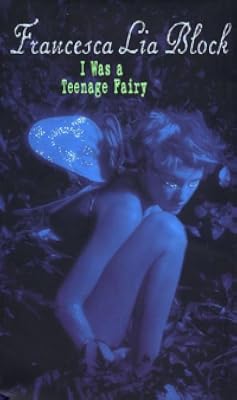
I Was a Teenage Fairy
by Francesca Lia Block
On This Page
Description
A feisty, sexy fairy helps a young girl heal traumas of her past.Tags
Recommendations



Member Recommendations
Member Reviews
A young woman comes to terms with an horrific event from her childhood, with a little help from a pint-sized pixie named Mab.
I remember the first time I read this book. I started it right before bed. I read a big chunk, then tried to sleep. I just couldn't. I needed to finish the story; I needed to see how things would play out for Barbie and Mab, Todd and Griffin. I got up, headed downstairs, and finished it. Then I cried my eyes out.
I've said it before and I'll say it again: I am in awe of Francesca Lia Block. In some ways, her writing is very simple. Her work has much in common with poetry; it's brief and concise, and each word is chosen with the utmost care. Her writing is often technically incorrect, but it's never less than show more evocative. It's a rare FLB novel indeed that doesn't leave me in tears.
Many of her books explore darker themes, and I WAS A TEENAGE FAIRY is no exception. It deals with the effects of child sex abuse. The story itself isn't graphic; there's no gratuitous violence here, and Block plays nothing for shock value. Instead, she delves into Barbie's emotional state before and after the abuse occurs. She submerges us in Barbie's world and lets us see her life through her eyes. The result is an intense, emotional read that cuts into your very soul.
The story is beautifully layered; each piece adds to what's come before to create a deep, complex story that packs a huge wallop despite its brevity. So often, I'd find that some careful turn of phrase illuminated Barbie's situation in such a way that I was sobbing before I realized it. Barbie starts off in a dark place, yes, but there's still so much beauty in here. So much beauty, and so much hope.
I highly recommend this, but please keep in mind that it may be triggering for some readers.
(This review also appears on my blog, Stella Matutina, albeit in a slightly different form). show less
I remember the first time I read this book. I started it right before bed. I read a big chunk, then tried to sleep. I just couldn't. I needed to finish the story; I needed to see how things would play out for Barbie and Mab, Todd and Griffin. I got up, headed downstairs, and finished it. Then I cried my eyes out.
I've said it before and I'll say it again: I am in awe of Francesca Lia Block. In some ways, her writing is very simple. Her work has much in common with poetry; it's brief and concise, and each word is chosen with the utmost care. Her writing is often technically incorrect, but it's never less than show more evocative. It's a rare FLB novel indeed that doesn't leave me in tears.
Many of her books explore darker themes, and I WAS A TEENAGE FAIRY is no exception. It deals with the effects of child sex abuse. The story itself isn't graphic; there's no gratuitous violence here, and Block plays nothing for shock value. Instead, she delves into Barbie's emotional state before and after the abuse occurs. She submerges us in Barbie's world and lets us see her life through her eyes. The result is an intense, emotional read that cuts into your very soul.
The story is beautifully layered; each piece adds to what's come before to create a deep, complex story that packs a huge wallop despite its brevity. So often, I'd find that some careful turn of phrase illuminated Barbie's situation in such a way that I was sobbing before I realized it. Barbie starts off in a dark place, yes, but there's still so much beauty in here. So much beauty, and so much hope.
I highly recommend this, but please keep in mind that it may be triggering for some readers.
(This review also appears on my blog, Stella Matutina, albeit in a slightly different form). show less
CONTENT WARNING: This book mentions pedophilia flippantly, uses child molestation as a plot device, tries to drum up sympathy for child molesters, plays on old, tired tropes of child molestation; sexualizes teenagers while still very aware that they're essentially older children in certain regards; has a clinical narcissist mother and an arc around that which has always had me seething; portrays a mentor/imaginary friend as an asshole and somehow this is supposed to be endearing or something?; and is overall--when I finished this book, I felt like I needed three or five hot showers and my hands shook.
It is against this background that I write this review. I puzzled and puzzled on how to begin the review--should I get personal? Should I show more spend paragraphs on what got me here? No to the first. Yes to the second. I had only the vaguest of structure ideas and knew I'd wind up meandering anyway, unable to likely express coherently or adequately how I connected to this book. I checked out a stack of books today, and a new-to-me Francesca Lia Block book published in 2018. As I plotted the structure of this review for the fifth time, I flipped the new-to-me book open and a thought popped into my head: "Yep. Sex." [I'll stick a pin in this and come back to it.]
I'M GOING TO ADDRESS PEDOPHILIA AND CHILD MOLESTATION A LOT. I'LL WRITE WHEN I'VE PAUSED.
EL James and Stephenie Meyer both wrote gross, poorly written, vaguely pedophilic that turns out to -not- be vague at all, I'll argue, books. I read through the Das Sporking recaps of their works, and often had PTSD flashbacks. Quickly, I learned to have a mug of tea near me and schedule my reading around times I could do self-care when needed, specifically taking a hot shower and eating blueberries afterward. I cannot move forward in this review without acknowledging that Francesca Lia Block did the same thing, only this time I had already had tea, didn't have blueberries, and it's too late/early to shower. More devout fans of Block's have eagerly pointed out many of her works are retellings of faery tales. I learned this today, and feel that "I Was A Teenage Fairy" maps clearly to "Peter Pan" in a lot of ways. It's subtly done, and I appreciate that Mab was just as much a rude bitch as Tinkerbell, but in different ways for different reasons. Tinkerbell was homicidal; Mab isn't. There are likely quite a few other differences but I don't care; I want to review the book that shaped me in a lot of ways.
No book could take me back to being eleven years old faster. I looked at the cover and was transported back to my seventh-grade classroom in an instant, furious all over again with my whole comp/lit class that I was the only one who had even heard of FLB, let alone read her books. As an adult, I acknowledged the feeling and paused. I realized--this was one of the last books I read before becoming a troubled teen. I was already an at-risk youth, but I hit puberty and a sinister switch was flipped. This book, looking back, did not help. I was angry in seventh grade. I wasn't twelve yet, or had just turned twelve. I remember thinking I'd read the book nearly a dozen times in the past two years. This means I read the book when I was ten, or worse, nine. What horrible timing, to read a book that portrays child molestation in this way, the same year or the year after my own assault took place.
I PAUSE IN MY DISCUSSION OF PEDOPHILIA AND CHILD MOLESTATION TO DISCUSS OTHER STUFF IN THE BOOK
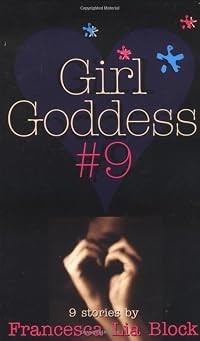
This was the first book of FLB's I read, and remains the favored one. The second is "Girl Goddess #9," but really I only liked two stories from it and the rest seriously creeped me out. I tried to read them as a teen and adult later, and ew, creepy. The stories are either disturbing, disturbing and sad, or a horrid combination of disturbing, sad, and sensual/lyrical-erotic. FLB has this way of writing--I never got into her other stuff. I tried to get into "Weetzie Bat," and a few others. Nothing happened. So, I shall amend the sentence. The two books by FLB that I read are written in such a way that--they're described as lyrical. Yeah, I'd definitely give them that. Just--somehow from the first half of the first sentence, I'm absorbed. FLB has -beautiful- imagery and can be enchanting stylistically. In this book, she describes cities hypothetically as women, to tell you where it takes place. At twelve years old, or eleven or however old, I didn't know how to describe what I felt when I read the passages of cities as women.
Remember in an above paragraph when I noted I flipped another book of hers open and thought "Yep. Sex." ? I was trying to think of a word to describe how I felt. I was ten, eleven, or twelve, and dealing with my own budding sexuality. The written passages of cities as women did it for me, and I didn't understand what was going on but I was thrilled. And then I read the whole goddamn book and it just turned out to be gross. Due to the choices FLB made, I choose to place it unfortunately in the categories I did, as an adult.
TL; DR: She writes beautifully but this book is so, so problematic.
Haha not done. I really held this book up in high regard for so many years. Even as an adult, when I wanted to read novels about faeries, I always compared whatever I was reading, to this book. None of the other faeries were modern-day enough, I thought. A more accurate way of expressing what I wanted is: I wanted magical realism, and was irritated that I kept often getting high fantasy, or the mind numbing "I'm an immortal faery in a human high school." I wanted a nicer Mab. I'm--not going to get what I wanted, I think, and it feels somehow a letdown. I think my own nostalgia and limited understanding of the book as a child, built it into something it wasn't. This book is for the older-teen YA crowd, and even then, it brings up real, serious topics only to skate over them. Maybe skate in a few circles before jumping in the air and spinning a few times. (sigh) I laughed at parts that weren't meant to be funny because of how FLB so clearly wanted me to feel one way, and I didn't. Todd really was a jerk, and hello, fellow sex and love addict. Get treatment. This book takes place in the 90s. There may not have been many groups available, but he could have gotten help somehow. Griffin deserved better. So did Barbie, but at the same time, I'm really glad the book was about her. I built Mab up to be someone she isn't, and have tried for years to write my own short story about nicer Mab cousins with different names. Hasn't worked yet.
I'm really glad I was able to read this book again. I'm glad I felt the same way towards parts of it, and that I understand it differently as an adult. I'm glad I have a different opinion of FLB, as well. I've been praising this book for a long time, and um, now she is in some of the same categories as EL James and Stephenie Meyer, only she's far, far more skilled and successful as a writer. I'm glad for what I did get out of this book, the experiences and feelings I had then and now, and the knowledge that I can change. show less
It is against this background that I write this review. I puzzled and puzzled on how to begin the review--should I get personal? Should I show more spend paragraphs on what got me here? No to the first. Yes to the second. I had only the vaguest of structure ideas and knew I'd wind up meandering anyway, unable to likely express coherently or adequately how I connected to this book. I checked out a stack of books today, and a new-to-me Francesca Lia Block book published in 2018. As I plotted the structure of this review for the fifth time, I flipped the new-to-me book open and a thought popped into my head: "Yep. Sex." [I'll stick a pin in this and come back to it.]
I'M GOING TO ADDRESS PEDOPHILIA AND CHILD MOLESTATION A LOT. I'LL WRITE WHEN I'VE PAUSED.
EL James and Stephenie Meyer both wrote gross, poorly written, vaguely pedophilic that turns out to -not- be vague at all, I'll argue, books. I read through the Das Sporking recaps of their works, and often had PTSD flashbacks. Quickly, I learned to have a mug of tea near me and schedule my reading around times I could do self-care when needed, specifically taking a hot shower and eating blueberries afterward. I cannot move forward in this review without acknowledging that Francesca Lia Block did the same thing, only this time I had already had tea, didn't have blueberries, and it's too late/early to shower. More devout fans of Block's have eagerly pointed out many of her works are retellings of faery tales. I learned this today, and feel that "I Was A Teenage Fairy" maps clearly to "Peter Pan" in a lot of ways. It's subtly done, and I appreciate that Mab was just as much a rude bitch as Tinkerbell, but in different ways for different reasons. Tinkerbell was homicidal; Mab isn't. There are likely quite a few other differences but I don't care; I want to review the book that shaped me in a lot of ways.
No book could take me back to being eleven years old faster. I looked at the cover and was transported back to my seventh-grade classroom in an instant, furious all over again with my whole comp/lit class that I was the only one who had even heard of FLB, let alone read her books. As an adult, I acknowledged the feeling and paused. I realized--this was one of the last books I read before becoming a troubled teen. I was already an at-risk youth, but I hit puberty and a sinister switch was flipped. This book, looking back, did not help. I was angry in seventh grade. I wasn't twelve yet, or had just turned twelve. I remember thinking I'd read the book nearly a dozen times in the past two years. This means I read the book when I was ten, or worse, nine. What horrible timing, to read a book that portrays child molestation in this way, the same year or the year after my own assault took place.
I PAUSE IN MY DISCUSSION OF PEDOPHILIA AND CHILD MOLESTATION TO DISCUSS OTHER STUFF IN THE BOOK
This was the first book of FLB's I read, and remains the favored one. The second is "Girl Goddess #9," but really I only liked two stories from it and the rest seriously creeped me out. I tried to read them as a teen and adult later, and ew, creepy. The stories are either disturbing, disturbing and sad, or a horrid combination of disturbing, sad, and sensual/lyrical-erotic. FLB has this way of writing--I never got into her other stuff. I tried to get into "Weetzie Bat," and a few others. Nothing happened. So, I shall amend the sentence. The two books by FLB that I read are written in such a way that--they're described as lyrical. Yeah, I'd definitely give them that. Just--somehow from the first half of the first sentence, I'm absorbed. FLB has -beautiful- imagery and can be enchanting stylistically. In this book, she describes cities hypothetically as women, to tell you where it takes place. At twelve years old, or eleven or however old, I didn't know how to describe what I felt when I read the passages of cities as women.
Remember in an above paragraph when I noted I flipped another book of hers open and thought "Yep. Sex." ? I was trying to think of a word to describe how I felt. I was ten, eleven, or twelve, and dealing with my own budding sexuality. The written passages of cities as women did it for me, and I didn't understand what was going on but I was thrilled. And then I read the whole goddamn book and it just turned out to be gross. Due to the choices FLB made, I choose to place it unfortunately in the categories I did, as an adult.
TL; DR: She writes beautifully but this book is so, so problematic.
Haha not done. I really held this book up in high regard for so many years. Even as an adult, when I wanted to read novels about faeries, I always compared whatever I was reading, to this book. None of the other faeries were modern-day enough, I thought. A more accurate way of expressing what I wanted is: I wanted magical realism, and was irritated that I kept often getting high fantasy, or the mind numbing "I'm an immortal faery in a human high school." I wanted a nicer Mab. I'm--not going to get what I wanted, I think, and it feels somehow a letdown. I think my own nostalgia and limited understanding of the book as a child, built it into something it wasn't. This book is for the older-teen YA crowd, and even then, it brings up real, serious topics only to skate over them. Maybe skate in a few circles before jumping in the air and spinning a few times. (sigh) I laughed at parts that weren't meant to be funny because of how FLB so clearly wanted me to feel one way, and I didn't. Todd really was a jerk, and hello, fellow sex and love addict. Get treatment. This book takes place in the 90s. There may not have been many groups available, but he could have gotten help somehow. Griffin deserved better. So did Barbie, but at the same time, I'm really glad the book was about her. I built Mab up to be someone she isn't, and have tried for years to write my own short story about nicer Mab cousins with different names. Hasn't worked yet.
I'm really glad I was able to read this book again. I'm glad I felt the same way towards parts of it, and that I understand it differently as an adult. I'm glad I have a different opinion of FLB, as well. I've been praising this book for a long time, and um, now she is in some of the same categories as EL James and Stephenie Meyer, only she's far, far more skilled and successful as a writer. I'm glad for what I did get out of this book, the experiences and feelings I had then and now, and the knowledge that I can change. show less
Yr. 9 - Yr. 10. Maybe Mab was real. Maybe not. Maybe Mab was the fury. Maybe she was the courage. A tiny fairy winging her way through the jasmine-scented L.A. night. A little girl caught in a grown-up glitz-and-glitter world of superstars and supermodels. A too beautiful boy with a secret he can never share...
This is the story of Barbie Marks, who dreams of being the one behind the Cyclops eye of the camera, not the voiceless one in front of it; who longs to run away to New York City where she can be herself, not some barley flesh-and-blood version of the plastic doll she was named after. It is the story of Griffin Tyler, whose androgynous beauty hides the dark pain he holds inside. And finally it is the story of Mab, a pinkie-sized, show more magenta-haired, straight-talking fairy, who may or may not be real but who helps Barbie and Griffin uncover the strength beneath the pain, and who teaches that love--like a sparkling web of light spinning around our bodies and our souls--is what can heal even the deepest scars. show less
This is the story of Barbie Marks, who dreams of being the one behind the Cyclops eye of the camera, not the voiceless one in front of it; who longs to run away to New York City where she can be herself, not some barley flesh-and-blood version of the plastic doll she was named after. It is the story of Griffin Tyler, whose androgynous beauty hides the dark pain he holds inside. And finally it is the story of Mab, a pinkie-sized, show more magenta-haired, straight-talking fairy, who may or may not be real but who helps Barbie and Griffin uncover the strength beneath the pain, and who teaches that love--like a sparkling web of light spinning around our bodies and our souls--is what can heal even the deepest scars. show less
Have you ever read a book that made you feel simultaneously both happy and sad at the end? This may be the first that accomplished it for me. This story is one told on different levels; one very true and traumatic and the other, supernatural, dreamlike and hopeful. Not many stories could pull it off but this one does it.
On the surface this is a story about a girl named Barbie (yes, after the doll) whose mother's only dream is for her daughter to become the successful model she had failed to be. Just as Barbie's childhood feelings of aloneness become overwhelming, she discovers a new, if diminutive, fairy friend named Mab.
This is not your average innocent fairy tale. What has happened to the characters is unsettling and the show more repercussions are dealt with in a realistic manner, especially considering the vocations of the primary characters and the atmosphere they are in. These scenes are not presented gratuitously and really have meaning in the plot of the book.
I didn't really get the parts describing the cities as various types of women...well, I did in the beginning, but not so much closer to the end of the book. I did like all the characters from the melancholy Barbie and Griffin to the wisecracking Mab and even Todd whose sincerity I sometimes had to question. However, even though I liked them I still felt a little distanced from them. This could have been in part due to the dreamy and rather disconnected feeling that prevails throughout the book. Although I usually like to feel more personally involved with a book's characters, in this case it was kind of a relief considering the type of trauma the book deals with. I'm not really sure I would have felt comfortable with having any stronger feelings drawn from me.
As one last thought on the book I would have to say that I know that this is a fantasy, but it is a rather comforting thought that there could be Mabs available for all those children that need them. Not a book I’d suggest for tweens but a good one for mature and older teens. show less
On the surface this is a story about a girl named Barbie (yes, after the doll) whose mother's only dream is for her daughter to become the successful model she had failed to be. Just as Barbie's childhood feelings of aloneness become overwhelming, she discovers a new, if diminutive, fairy friend named Mab.
This is not your average innocent fairy tale. What has happened to the characters is unsettling and the show more repercussions are dealt with in a realistic manner, especially considering the vocations of the primary characters and the atmosphere they are in. These scenes are not presented gratuitously and really have meaning in the plot of the book.
I didn't really get the parts describing the cities as various types of women...well, I did in the beginning, but not so much closer to the end of the book. I did like all the characters from the melancholy Barbie and Griffin to the wisecracking Mab and even Todd whose sincerity I sometimes had to question. However, even though I liked them I still felt a little distanced from them. This could have been in part due to the dreamy and rather disconnected feeling that prevails throughout the book. Although I usually like to feel more personally involved with a book's characters, in this case it was kind of a relief considering the type of trauma the book deals with. I'm not really sure I would have felt comfortable with having any stronger feelings drawn from me.
As one last thought on the book I would have to say that I know that this is a fantasy, but it is a rather comforting thought that there could be Mabs available for all those children that need them. Not a book I’d suggest for tweens but a good one for mature and older teens. show less
I don't know how many times I've started this review only to erase it and begin again. That's because it can be incredibly hard to review a book you loved growing up, especially when grown up you has realized that she doesn't really love the book anymore now that the rose-colored glasses have come off.
It's no secret that Francesca Lia Block is an amazing wordsmith. The way she weaves her words are the closest we'll ever come to IRL magic. However, as gorgeous as her prose may be, her storytelling can leave a lot to be desired. This is 100 percent the case with I Was a Teenage Fairy.
Francesca Lia Block's books are known for their ethereal quality and the way they grapple with big topics. However, the actual plots of her novels, including show more I Was a Teenage Fairy can be a bit sparse and confusing to the point where even writing a coherent synopsis would be difficult. And perhaps that is a purposeful stylistic choice that helps to enhance the novel's vague, dream-like world.
To me, though, it is frustrating as heck, especially when you have flashbacks with absolutely no setup or changing voices with no indicators as to when the change happened. Everything is abstract and disjointed, and I guess I just need a little more meat on dem bones to feel satisfied.
Look, this isn't the worst book, but it really could have done with a "kill your darlings" approach. Saved by Francesca Lia Block's spellbinding writing, I'm giving I Was a Teenage Fairy a 2.5 out of 5. show less
It's no secret that Francesca Lia Block is an amazing wordsmith. The way she weaves her words are the closest we'll ever come to IRL magic. However, as gorgeous as her prose may be, her storytelling can leave a lot to be desired. This is 100 percent the case with I Was a Teenage Fairy.
Francesca Lia Block's books are known for their ethereal quality and the way they grapple with big topics. However, the actual plots of her novels, including show more I Was a Teenage Fairy can be a bit sparse and confusing to the point where even writing a coherent synopsis would be difficult. And perhaps that is a purposeful stylistic choice that helps to enhance the novel's vague, dream-like world.
To me, though, it is frustrating as heck, especially when you have flashbacks with absolutely no setup or changing voices with no indicators as to when the change happened. Everything is abstract and disjointed, and I guess I just need a little more meat on dem bones to feel satisfied.
Look, this isn't the worst book, but it really could have done with a "kill your darlings" approach. Saved by Francesca Lia Block's spellbinding writing, I'm giving I Was a Teenage Fairy a 2.5 out of 5. show less
I almost had the material for a real review but I think I just lost steam so anyways here's this
Full disclosure, if I hadn't read this as a kid, and this was the first time, I would'a forgotten it instantly. That stuff about there being better times to read things or times that things will impact you more applies so much to this. It was the first time I really ever saw writing like this, what with the style, magical realism, and [gasps] sex. (but mostly the style, which obviously made a huge impression on me if my writing from the era is any indication lmao dear god).
It's inoffensively just...there, with some nice ideas and a lot of pretty imagery and a metaphor that never quite gets there. Since this I've read lots of stuff that show more handles their material (and similar styles) with a clearer target and a harder swing, but who knows, maybe that's the appeal of Block's writing anyways. There's little drama and little clarity - everything's quiet and with a soft blur focus, lush and airy. I'm not mad. I think my standards are just higher and I want to be punched in the face with symbolism, not have them whispered at me and vaguely come together.
but ehhhh maybe that's the point, and it did honestly suit the subject matter, this gentleness when dealing with childhood trauma and the constant dull pain caused by it. maybe i'm just too old. i'm so reassured to say that it isn't as aggressively faux-deep as Weetzie Bat.
also, Todd was an asshole and was boring and I just want to escape ever reading about characters like him gaaaaahhh show less
Full disclosure, if I hadn't read this as a kid, and this was the first time, I would'a forgotten it instantly. That stuff about there being better times to read things or times that things will impact you more applies so much to this. It was the first time I really ever saw writing like this, what with the style, magical realism, and [gasps] sex. (but mostly the style, which obviously made a huge impression on me if my writing from the era is any indication lmao dear god).
It's inoffensively just...there, with some nice ideas and a lot of pretty imagery and a metaphor that never quite gets there. Since this I've read lots of stuff that show more handles their material (and similar styles) with a clearer target and a harder swing, but who knows, maybe that's the appeal of Block's writing anyways. There's little drama and little clarity - everything's quiet and with a soft blur focus, lush and airy. I'm not mad. I think my standards are just higher and I want to be punched in the face with symbolism, not have them whispered at me and vaguely come together.
but ehhhh maybe that's the point, and it did honestly suit the subject matter, this gentleness when dealing with childhood trauma and the constant dull pain caused by it. maybe i'm just too old. i'm so reassured to say that it isn't as aggressively faux-deep as Weetzie Bat.
also, Todd was an asshole and was boring and I just want to escape ever reading about characters like him gaaaaahhh show less
Barbie's mom lives vicariously through her fashion model daughter, subjecting Barbie to some dangerous, predatory people and causing her to take refuge in a friendship with a tiny fairy who maybe is or isn't there.
The writing here is sparse and ethereal and it's difficult to tell what actually is or isn't happening. Maybe if I'd read this as a teenager myself, I'd have been more enamored of it because in a way it's pretty similar to some books I just adored at that age, including ones by this very author.
The writing here is sparse and ethereal and it's difficult to tell what actually is or isn't happening. Maybe if I'd read this as a teenager myself, I'd have been more enamored of it because in a way it's pretty similar to some books I just adored at that age, including ones by this very author.
Members
- Recently Added By
Lists

Florida
366 works; 3 members
Author Information

68+ Works 17,215 Members
Francesca Lia Block was born in Los Angeles, California on December 3, 1962. She graduated from the University of California Berkeley and wrote her first book, Weetzie Bat, while a student there. It was published in 1989. Her other young adult works include Baby Be-Bop, Violet and Claire, How to (Un)cage a Girl, and The Waters and the Wild. She is show more also the author of the Weetzie Bat series. She has won several awards including the Margaret A. Edwards Lifetime Achievement Award from the American Library Association in 2005 and the Phoenix Award. (Bowker Author Biography) show less
Awards and Honors
Common Knowledge
- Canonical title
- I Was a Teenage Fairy
- Original title
- I Was a Teenage Fairy
- Original publication date
- 1998
- People/Characters
- Barbie Marks; Mab
- Important places
- Los Angeles, California, USA
- First words
- If Los Angeles is a woman reclining billboard model with collagen-puffed lips and silicone-inflated breasts, a woman in a magenta convertible with heart-shaped sunglasses and cotton candy hair; if Los Angeles is this woman, t... (show all)hen the San Fernando Valley is her teeny-bopper sister.
- Last words
- (Click to show. Warning: May contain spoilers.)Whatever Mab had been, now, joined with her tiny winged red-haired biscuit, Mab was in love, flying through the night like an errant star that longed to know, even briefly, what made planet Earth's children weep and sing.
Classifications
- Genres
- Teen, Fiction and Literature, Fantasy, Young Adult
- DDC/MDS
- 813.54 — Literature & rhetoric American literature in English American fiction in English 1900-1999 1945-1999
- LCC
- PZ7 .B61945 .I — Language and Literature Fiction and juvenile belles lettres Fiction and juvenile belles lettres Juvenile belles lettres
- BISAC
Statistics
- Members
- 1,164
- Popularity
- 21,620
- Reviews
- 23
- Rating
- (3.73)
- Languages
- English, German
- Media
- Paper, Ebook
- ISBNs
- 11
- UPCs
- 1
- ASINs
- 2