On This Page
Description
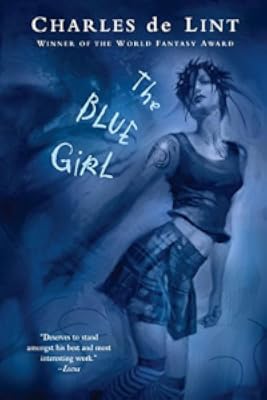
New at her high school, Imogene enlists the help of her introverted friend Maxine and the ghost of a boy who haunts the school after receiving warnings through her dreams that soul-eaters are threatening her life.Tags
Recommendations
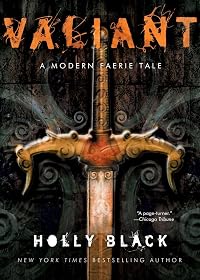

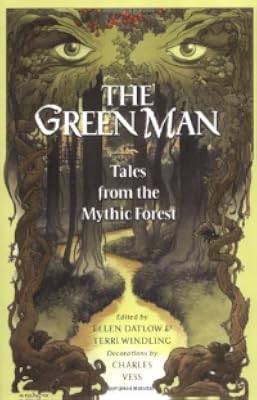
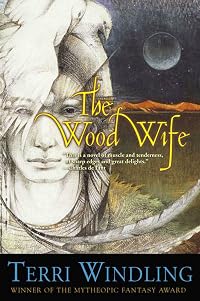
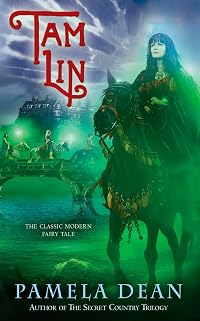









Member Recommendations
Member Reviews
When Imogene starts high school in Newford, she's not surprised when her punk looks attract bullies right away. However, she's determined to stay out of the sort of trouble she fell into deep at her last school. She soon makes friends with Maxine, a straight-laced girl who attracts her share of bullying, too. With this being Newford, though, there's something more going on. Imogene also attracts the admiration of the geeky school ghost--and because of him, the resident fairies also take an interest--and when the fairies focus on someone, that draws the attention of much darker creatures...
I've loved all of my adventures in Newford so far and this book is no exception. Charles de Lint awes me with his writing ability. This book was show more painful for me since the first part dwelled so much on high school and bullying--hello, flashbacks--but the supernatural elements sucked me in. Imogene and Maxine are fantastic characters, flawed and full of teenager issues, and all the more real because of it. Even the minor characters zing as though de Lint writes of things he has really known, just like his recurring storyteller character Christy Riddell.
This may be a young adult book, but anyone who loves fantasy should seek this one out--and have some salt and blue dye handy, just in case darker beings take note. show less
I've loved all of my adventures in Newford so far and this book is no exception. Charles de Lint awes me with his writing ability. This book was show more painful for me since the first part dwelled so much on high school and bullying--hello, flashbacks--but the supernatural elements sucked me in. Imogene and Maxine are fantastic characters, flawed and full of teenager issues, and all the more real because of it. Even the minor characters zing as though de Lint writes of things he has really known, just like his recurring storyteller character Christy Riddell.
This may be a young adult book, but anyone who loves fantasy should seek this one out--and have some salt and blue dye handy, just in case darker beings take note. show less
I just finished rereading "The Blue Girl" for the first time in about four years (and unfortunately, only during this reading did I realize there are many, many more stories that take place in Newford). My favorite part about the story was Imogene's voice. She's brilliant and quirky and brave and fun, and of course, don't we all wish we were brilliant, quirky, brave and fun?
The adults--the parents, in particular, stood out to me as well. They weren't absentee parents, as is common in so many other YA books. Maxine's father didn't play much of a role in the story, and Imogene's father didn't at all, but both of their mothers featured relatively prominently. They were minor characters, of course, but what I like to call major-minor show more characters (as in, they show up and interact with major characters more than other minor characters). Maxine's mother even had her own character arch where she grew and began to recover from her divorce. It was interesting, because both mothers were very clearly supportive characters.
The best part of this story was when Imogene accepts the existence of fairies and realizes she hasn't been dreaming when she sees them. The reader already knew it, Maxine suspected, Christy knew it, Adrian knew it, Tommery knew it--it was totally common knowledge, and all that was left was for Imogene to discover her new reality. When she did, though--that one line ("It wasn't a dream.") was the single most chilling thing I've come across in I don't know how long. It was beautifully done, and it was a stroke of genius on Charles de Lint's part.
It was chilling because bad dreams aren't real. That's what everyone tells themselves, or each other, when we wake up in the middle of the night. "It's okay. It was only a dream. It's over now, it wasn't real. It was only a dream." But to discover that it wasn't just a dream, and that it isn't okay--that's one of the most horrifying things that can happen to someone.
After Imogene comes to that realization, though, the story drops off for a bit. It just isn't as exciting. The pace isn't kept up or anything; they're planning out how to defeat the bad guys and it's just unnecessary word fluff. I honestly got bored enough to think about quitting in the middle of the book, though I'm glad I stuck with it. The climax at the end is worth it. show less
The adults--the parents, in particular, stood out to me as well. They weren't absentee parents, as is common in so many other YA books. Maxine's father didn't play much of a role in the story, and Imogene's father didn't at all, but both of their mothers featured relatively prominently. They were minor characters, of course, but what I like to call major-minor show more characters (as in, they show up and interact with major characters more than other minor characters). Maxine's mother even had her own character arch where she grew and began to recover from her divorce. It was interesting, because both mothers were very clearly supportive characters.
The best part of this story was when Imogene accepts the existence of fairies and realizes she hasn't been dreaming when she sees them. The reader already knew it, Maxine suspected, Christy knew it, Adrian knew it, Tommery knew it--it was totally common knowledge, and all that was left was for Imogene to discover her new reality. When she did, though--that one line ("It wasn't a dream.") was the single most chilling thing I've come across in I don't know how long. It was beautifully done, and it was a stroke of genius on Charles de Lint's part.
It was chilling because bad dreams aren't real. That's what everyone tells themselves, or each other, when we wake up in the middle of the night. "It's okay. It was only a dream. It's over now, it wasn't real. It was only a dream." But to discover that it wasn't just a dream, and that it isn't okay--that's one of the most horrifying things that can happen to someone.
After Imogene comes to that realization, though, the story drops off for a bit. It just isn't as exciting. The pace isn't kept up or anything; they're planning out how to defeat the bad guys and it's just unnecessary word fluff. I honestly got bored enough to think about quitting in the middle of the book, though I'm glad I stuck with it. The climax at the end is worth it. show less
Charles de Lint is one of the foremost authors in a type of modern fantasy dubbed "urban fantasy" as it incorporates magical realism and folklore into the urban setting. His "Newford" series has been received with great acclaim, and personally I enjoyed them, particularly the profoundly moving Onion Girl. Unfortunately, de Lint's usual whimsy and mysticism was missing from this YA novel, which felt distracted and oversimplified. While his adult novels have depth and honesty wound into the fantastical elements, Imogene and her friend, Maxine, are too close to stereotypes to really ring true. When the supernatural villains and magical creatures show up, they are a welcome change from Imogene's random nature. Charming, but not as show more worthwhile as his other works. show less
The first time I read a book by Charles de Lint, I fell in love with his punk girls and dark folklore. The Blue Girl did not disappoint on either of these fronts… which is actually sort of a problem, because it didn’t give me a lot of negative things to point out in this critique. It is so much easier to make fun of something than to praise it =P
I can say that how Charles de Lint writes in his adult fiction versus his youth fiction is very distinctive. The content is similar, but the style and voice he uses are quite different. Personally I enjoy his adult books more because I am not one for a ton of teen angst.
But I still enjoyed this book a lot.
Complaints? The only real thing that bothered me was the climax. It seemed the entire show more time like Charles de Lint was building up to this huge dangerous confrontation, but then… it just didn’t. You get right up to the confrontation, and then it is just dealt with. Simply.
That didn’t ruin the book for me, though. It made since with some of the points that Lint was trying to get across in the book. I just like there to be epic-ness that was sadly lacking in what I thought was going to be the main part of the book.
Points I really liked: imaginary friends, mentioning Neil Gaiman (fantastic author), uplifting being a misfit, fairies that aren’t all laughter and pixie dust, bringing up “the Adversary” (which I guess is something that has been throughout and in fairy tales, but I had never come across the term before reading the graphic novel series, Fables… which I recommend), a ghost that resembles Harry Potter, and the lack of what is considered “normal” romance in most teen novels. show less
I can say that how Charles de Lint writes in his adult fiction versus his youth fiction is very distinctive. The content is similar, but the style and voice he uses are quite different. Personally I enjoy his adult books more because I am not one for a ton of teen angst.
But I still enjoyed this book a lot.
Complaints? The only real thing that bothered me was the climax. It seemed the entire show more time like Charles de Lint was building up to this huge dangerous confrontation, but then… it just didn’t. You get right up to the confrontation, and then it is just dealt with. Simply.
That didn’t ruin the book for me, though. It made since with some of the points that Lint was trying to get across in the book. I just like there to be epic-ness that was sadly lacking in what I thought was going to be the main part of the book.
Points I really liked: imaginary friends, mentioning Neil Gaiman (fantastic author), uplifting being a misfit, fairies that aren’t all laughter and pixie dust, bringing up “the Adversary” (which I guess is something that has been throughout and in fairy tales, but I had never come across the term before reading the graphic novel series, Fables… which I recommend), a ghost that resembles Harry Potter, and the lack of what is considered “normal” romance in most teen novels. show less
Imogene ran with a bad crowd in her last school, but when she, her mother, and her brother move to Newford, she meets a girl, Maxine, who gets picked on and they become best friends. Imogene decides she’ll try to be straight and narrow. At the same time, she is no stranger to standing up for herself against the school bullies – in this case the head cheerleader and her football-playing boyfriend. When Adrian sees this from a distance, he falls for Imogene. But, Adrian is a ghost… with friends who are fairies. When he actually meets Imogene, he manages to get her into something dangerous. In the meantime, Imogene’s childhood imaginary friend, Pelly, shows up, but there’s something different about him.
I don’t believe any of show more my summary is a spoiler. It’s all on the blurb on the back of the book, and it’s all revealed very early on in the book. I really liked this! I do love the references to other characters in some of de Lint’s other Newford books, as well. The viewpoint changes between Imogene, Maxine, and Adrian, and a bit of back and forth in time, but you are told at the beginning of each chapter whose POV you are following and when, so I didn’t find it too tricky to follow. I would love to read more from Newford, but always hard to choose which one next! show less
I don’t believe any of show more my summary is a spoiler. It’s all on the blurb on the back of the book, and it’s all revealed very early on in the book. I really liked this! I do love the references to other characters in some of de Lint’s other Newford books, as well. The viewpoint changes between Imogene, Maxine, and Adrian, and a bit of back and forth in time, but you are told at the beginning of each chapter whose POV you are following and when, so I didn’t find it too tricky to follow. I would love to read more from Newford, but always hard to choose which one next! show less
Imogene is new to Redding High, in the town of Newford. Having left her previous school because of fighting and gang activity, she resolves to work harder in school, and otherwise re-invent herself. But she refuses to give up her punk/thrift store wardrobe.
Imogene's first friend is Maxine, who everyone thinks of as a loser. It's because Maxine's mother is extremely domineering. Oddly enough, the friendship works.
Trouble is brewing. Imogene is noticed by the school bully, who is also captain of the football team. She makes the acquaintance of Adrian, the school's ghost. He is a former student who fell off the multi-story roof. He has also developed a crush on Imogene. She gets on the wrong side of a group of trouble-making fairies (no, show more they don't have wings and carry magic wands). As if that wasn't enough, Pelly, Imogene's imaginary playmate from when she was a child, is now real.
Adrian, inadvertently, makes Imogene known to the Soul Snatchers, beings who are best avoided at all costs. Pelly finds a Soul Snatcher "repellent", which temporarily turns Imogene's skin blue. Halloween is coming, when the barrier between worlds is at its thinnest. Is it possible to convince the Soul Snatchers to leave Imogene permanently alone? Does someone else get snatched in her place?
This is a very enjoyable young adult novel. The author is said to be the founder of the urban fantasy genre, and it certainly shows. The depiction of high school is very realistic, and it is just weird enough, without being too weird. Teens will love this story; so will adults. show less
Imogene's first friend is Maxine, who everyone thinks of as a loser. It's because Maxine's mother is extremely domineering. Oddly enough, the friendship works.
Trouble is brewing. Imogene is noticed by the school bully, who is also captain of the football team. She makes the acquaintance of Adrian, the school's ghost. He is a former student who fell off the multi-story roof. He has also developed a crush on Imogene. She gets on the wrong side of a group of trouble-making fairies (no, show more they don't have wings and carry magic wands). As if that wasn't enough, Pelly, Imogene's imaginary playmate from when she was a child, is now real.
Adrian, inadvertently, makes Imogene known to the Soul Snatchers, beings who are best avoided at all costs. Pelly finds a Soul Snatcher "repellent", which temporarily turns Imogene's skin blue. Halloween is coming, when the barrier between worlds is at its thinnest. Is it possible to convince the Soul Snatchers to leave Imogene permanently alone? Does someone else get snatched in her place?
This is a very enjoyable young adult novel. The author is said to be the founder of the urban fantasy genre, and it certainly shows. The depiction of high school is very realistic, and it is just weird enough, without being too weird. Teens will love this story; so will adults. show less
A fun and entertaining book. While The Blue Girl retains the familiar grittiness that I tasted in The Onion Girl and Forests of the Heart, it's a little more lighthearted, even though it deals with some serious subject matter. Between mischievous and somewhat mean fairies and the definitely malevolent shadows, it can get pretty rough. The otherworldly flavor is light, but intriguing nonetheless. I love the friendship of the two high school girls and the descriptions coming alternately from one then the other. The plot revolves around mysteries and fey, but it also addresses issues that many face in high school with parents and peers. Definitely recommend for a lighter but still engaging read.
Members
- Recently Added By
Lists

Saiyuki Reload Best Summer Reads
159 works; 2 members

The Best of Canadian Literature
235 works; 33 members

Books Read in 2014
2,344 works; 86 members

Allie's Wishlist
217 works; 2 members

Books with Colourful Titles
171 works; 8 members
Author Information

196+ Works 43,464 Members
Charles de Lint, an extraordinarily prolific writer of fantasy works, was born in the Netherlands in 1951. Due to his father's work as a surveyor, the family lived in many different places, including Canada, Turkey, and Lebanon. De Lint was influenced by many writers in the areas of mythology, folklore, and science fiction. De Lint originally show more wanted to play Celtic music. He only began to write seriously to provide an artist friend with stories to illustrate. The combination of the success of his work, The Fane of the Grey Rose (which he later developed into the novel The Harp of the Grey Rose), the loss of his job in a record store, and the support of his wife, Mary Ann, helped encourage de Lint to pursue writing fulltime. After selling three novels in one year, his career soared and he has become a most successful fantasy writer. De Lint's works include novels, novellas, short stories, chapbooks, and verse. He also publishes under the pseudonyms Wendelessen, Henri Cuiscard, and Jan Penalurick. He has received many awards, including the 2000 World Fantasy Award for Best Collection for Moonlight and Vines, the Ontario Library Association's White Pine Award, as well as the Great Lakes Great Books Award for his young adult novel The Blue Girl. His novel Widdershins won first place, Amazon.com Editors' Picks: Top 10 Science Fiction & Fantasy Books of 2006. In 1988 he won Canadian SF/Fantasy Award, the Casper, now known as the Aurora for his novel Jack, the Giant Killer. Also, de Lint has been a judge for the Nebula Award, the World Fantasy Award, the Theodore Sturgeon Award and the Bram Stoker Award. (Bowker Author Biography) show less
Awards and Honors
Awards
Distinctions
Notable Lists
Series

Common Knowledge
- Canonical title
- The Blue Girl
- Original title
- The Blue Girl
- Original publication date
- 2004
- People/Characters
- Imogene Yeck; Maxine; Adrian; Christy Riddell
- Important places
- Newford (fictitious city)
- Epigraph
- If I can dream
of waking in a dream,
how can I tell
I'm not dreaming now?
—Saskia Madding,
from "Thinking After Midnight"
(Spirits and Ghosts, 2000) - Dedication
- For my nieces, Cassie, Jaz, & Kmore
with special thanks for astute aditorial advice to Julie Bartel, Sharyn November, and my dear wife MaryAnn - First words
- It starts with this faint sound that pulls me out of sleep: a sort of calliope music played on an ensemble of toy instruments.
- Last words
- (Click to show. Warning: May contain spoilers.)He says, "Me, too."
- Original language
- English
Classifications
Statistics
- Members
- 1,687
- Popularity
- 13,254
- Reviews
- 47
- Rating
- (3.88)
- Languages
- English
- Media
- Paper
- ISBNs
- 7
- ASINs
- 1