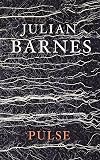
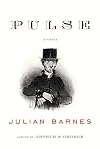
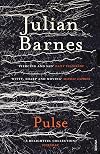
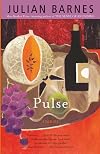
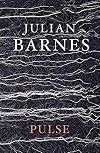
Pulse
by Julian Barnes
On This Page
Description
A volume of fourteen stories about loss, friendship, and longing includes the tales of a recently divorced real-estate agent who invades a reticent girlfriend's privacy, a couple that meets over an illicit cigarette, and a widower who struggles to let go of grief.Tags
Recommendations











Member Recommendations
Member Reviews
Pulse is a sublime collection of short stories by Julian Barnes. In 14 stories Barnes explores the theme of what makes a good marriage, in particular focussing on the role of communication in relationships. It is sometimes said that great artistry is borne out of misery, and that a happy marriage is often improductive, at least to some authors. Barnes collection Pulse seems some proof towards that statement. While Barnes openly mourned his wife, who died in 2008, in Levels of Life, Pulse published in 2011 is a superb collection of tales looking at various aspects of perfect and failed marriages.
Various stories in the collection explore the role of communication in relationships: what is said, and what isn't; what cannot be talked about, show more or a free flow of banter. The four stories centred on Phil and Joanna are about such a flow of easy-going, witty but not overly serious conversation. In "East Wind" the lover's prying into privacy and (unspoken) acknowledgement of what the woman tried to conceal breaks up the relation, while in “Trespass” the man treats his new girlfriend as a pure substitute for his ex, falling into the same behavioural patterns, and failing to see why she does not want to marry him. His need to make that explicit is just why.
Several of the stories deal with rutted-in behavioural patterns, including, for instance, 'dirty talk' in the title story, "Pulse" which is the last story in the collection.
Most stories are characterized by a sublime subtlety, surpassing Barnes previous work. As the theme of the stories is language, likewise the reader must be fine-tuned to listen and spot Barnes' subtle wit, as some irony is explicit and some implicit. Still, there are a number of hilarious moments, which may make you laugh out loud, as in the story Carcassonne".
The 14 stories in Pulse are divided into two sections, the division is not very clear, except that the first nine stories in Part One seem a bit closer to everyday life, while the five longer stories in Part 2 seem more serious. Conversation in fiction does not seem Barnes strongest point, nonetheless the conversations in the various stories, while perhaps not the most natural, serve their purpose. In prose, Julian Barnes seems best when the stories take on the hue of non-fiction, as do the stories in Part 2. These stories, with apparently fictionalized autobiographical elements, are most effective, and various are unforgettable.
Having read several works by Julian Barnes, it must be said that Pulse belongs to the toppers, on a par with Flaubert's Parrot.
Highly recommended. show less
Various stories in the collection explore the role of communication in relationships: what is said, and what isn't; what cannot be talked about, show more or a free flow of banter. The four stories centred on Phil and Joanna are about such a flow of easy-going, witty but not overly serious conversation. In "East Wind" the lover's prying into privacy and (unspoken) acknowledgement of what the woman tried to conceal breaks up the relation, while in “Trespass” the man treats his new girlfriend as a pure substitute for his ex, falling into the same behavioural patterns, and failing to see why she does not want to marry him. His need to make that explicit is just why.
Several of the stories deal with rutted-in behavioural patterns, including, for instance, 'dirty talk' in the title story, "Pulse" which is the last story in the collection.
Most stories are characterized by a sublime subtlety, surpassing Barnes previous work. As the theme of the stories is language, likewise the reader must be fine-tuned to listen and spot Barnes' subtle wit, as some irony is explicit and some implicit. Still, there are a number of hilarious moments, which may make you laugh out loud, as in the story Carcassonne".
The 14 stories in Pulse are divided into two sections, the division is not very clear, except that the first nine stories in Part One seem a bit closer to everyday life, while the five longer stories in Part 2 seem more serious. Conversation in fiction does not seem Barnes strongest point, nonetheless the conversations in the various stories, while perhaps not the most natural, serve their purpose. In prose, Julian Barnes seems best when the stories take on the hue of non-fiction, as do the stories in Part 2. These stories, with apparently fictionalized autobiographical elements, are most effective, and various are unforgettable.
Having read several works by Julian Barnes, it must be said that Pulse belongs to the toppers, on a par with Flaubert's Parrot.
Highly recommended. show less
I beg to differ from the opinions on the review pages of the English press, the kinds of things I guess one can predict about such a solid figure in the literary department. 'Literary pearls' not. 'The very best short fiction'. I don't think so. 'Masterclasses in the form'. Nup.
This collection is plain disappointing compared with as a fine modern exponent of the short story as, say, Michael Chabon. The observations on life are neither here nor there and delivered without either the wit or the humour, not to mention the exquisite technique of Chabon. Barnes should stick to novels. This is the second time I've been disappointed lately by his stepping out into other areas.
I'm not even sure how he misses the mark. Maybe that his characters show more are all such miserable sods without any of the counterbalances that one finds in Chabon's stories - or Mansfield's or Chekhov's, for that matter. It's sort of like having to put up with Neil of The Young Ones without anybody else ever coming on stage. Too much of a downer, man. show less
This collection is plain disappointing compared with as a fine modern exponent of the short story as, say, Michael Chabon. The observations on life are neither here nor there and delivered without either the wit or the humour, not to mention the exquisite technique of Chabon. Barnes should stick to novels. This is the second time I've been disappointed lately by his stepping out into other areas.
I'm not even sure how he misses the mark. Maybe that his characters show more are all such miserable sods without any of the counterbalances that one finds in Chabon's stories - or Mansfield's or Chekhov's, for that matter. It's sort of like having to put up with Neil of The Young Ones without anybody else ever coming on stage. Too much of a downer, man. show less
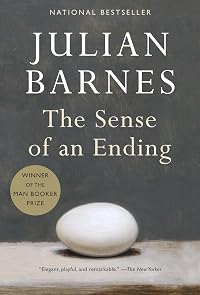
I have come late to Julian Barnes, to my regret, but I’m glad to have finally arrived. His Booker-winning [b:The Sense of an Ending|10746542|The Sense of an Ending|Julian Barnes|http://photo.goodreads.com/books/1311704453s/10746542.jpg|15657664] was my introduction, save for some short stories I’d read here and there in the New Yorker and Granta. Some of the short stories in ‘Pulse’ were published between 2003 and 2011, and Sense of Ending was released in mid 2011. Some of these short stories are echoed in Sense of an Ending.
In “At Phil & Joanna’s 4: One in Five”, a character says “…I remember some intellectual on the radio discussing the start of the second World War, and coming to the conclusion that all you could show more say for certain was, ‘Something happened'." This was a key launch point for the story in Sense of an Ending, in which Adrian says, “But there is one line of thought according to which all you can truly say of any historical event — even the outbreak of the First World War, — is that ‘something happened’.”
"Something Happened" could be a good title for several Julian Barnes stories (but the title has been well used already by Joseph Heller).
In “Trespass”, first published in 2003 in the New Yorker, Geoff struggles to understand the disintegration of his relationship with Cath. He says to her, “I thought we were going to get married.” And she replies, “That’s why we aren’t,” When he asks her to explain she refuses. Why won’t she explain? “Because that’s the whole point. If you can’t see, if I have to explain — that’s why we’re not getting married.” This is redone again in Sense of an Ending, where Veronica says “You just don’t get it, do you? You never did, and you never will.’, and she refuses to explain further.
These are not sentimental stories yet they are often poignant (Pulse, Marriage Lines), and often funny too. Geoff in “Trespass” is trying to make a go of it with a new girlfriend. He becomes ever more pedantic but just can’t stop himself and it’s killing them. He really just doesn’t get it. He is unrelenting in his unwanted helpfulness. He and his girlfriend are avid hikers, but she is tiring of him. At one point toward the end of their time, he advises her not to walk in the bracken, or downwind of it for that matter, between August and October. — “you’re going to tell me why, aren’t you?” she says. So he proceeds to tell her about spores, which could get into lungs or stomach and become carcinogenic, and Lyme-disease-causing ticks; she would need to wear a face mask. “ ‘A face mask?’ ‘Respro makes one.’ Well, she’d asked, and she was getting the bloody answer."
There are several related “Phil & Joanna” short stories, which recount the witty banter amongst two married couples who get together several times for dinner, and those were fun reads. “Pulse” was especially good; it described simultaneously his perception of his parents’ wonderful marriage and his own failing marriage. Again he plays on the theme of perception vs versions of reality. And he does this again in a different way in “Limner’, the story of an itinerant portrait painter in the 1800s.
His prose is wonderful. He captures the intangibles and then presents them to us, and we feel a jolt of recognition. That is the best kind of writing. show less
In “At Phil & Joanna’s 4: One in Five”, a character says “…I remember some intellectual on the radio discussing the start of the second World War, and coming to the conclusion that all you could show more say for certain was, ‘Something happened'." This was a key launch point for the story in Sense of an Ending, in which Adrian says, “But there is one line of thought according to which all you can truly say of any historical event — even the outbreak of the First World War, — is that ‘something happened’.”
"Something Happened" could be a good title for several Julian Barnes stories (but the title has been well used already by Joseph Heller).
In “Trespass”, first published in 2003 in the New Yorker, Geoff struggles to understand the disintegration of his relationship with Cath. He says to her, “I thought we were going to get married.” And she replies, “That’s why we aren’t,” When he asks her to explain she refuses. Why won’t she explain? “Because that’s the whole point. If you can’t see, if I have to explain — that’s why we’re not getting married.” This is redone again in Sense of an Ending, where Veronica says “You just don’t get it, do you? You never did, and you never will.’, and she refuses to explain further.
These are not sentimental stories yet they are often poignant (Pulse, Marriage Lines), and often funny too. Geoff in “Trespass” is trying to make a go of it with a new girlfriend. He becomes ever more pedantic but just can’t stop himself and it’s killing them. He really just doesn’t get it. He is unrelenting in his unwanted helpfulness. He and his girlfriend are avid hikers, but she is tiring of him. At one point toward the end of their time, he advises her not to walk in the bracken, or downwind of it for that matter, between August and October. — “you’re going to tell me why, aren’t you?” she says. So he proceeds to tell her about spores, which could get into lungs or stomach and become carcinogenic, and Lyme-disease-causing ticks; she would need to wear a face mask. “ ‘A face mask?’ ‘Respro makes one.’ Well, she’d asked, and she was getting the bloody answer."
There are several related “Phil & Joanna” short stories, which recount the witty banter amongst two married couples who get together several times for dinner, and those were fun reads. “Pulse” was especially good; it described simultaneously his perception of his parents’ wonderful marriage and his own failing marriage. Again he plays on the theme of perception vs versions of reality. And he does this again in a different way in “Limner’, the story of an itinerant portrait painter in the 1800s.
His prose is wonderful. He captures the intangibles and then presents them to us, and we feel a jolt of recognition. That is the best kind of writing. show less
I have come late to Julian Barnes, to my regret, but I’m glad to have finally arrived. His Booker-winning [b:The Sense of an Ending|10746542|The Sense of an Ending|Julian Barnes|http://photo.goodreads.com/books/1311704453s/10746542.jpg|15657664] was my introduction, save for some short stories I’d read here and there in the New Yorker and Granta. Some of the short stories in ‘Pulse’ were published between 2003 and 2011, and Sense of Ending was released in mid 2011. Some of these short stories are echoed in Sense of an Ending.
In “At Phil & Joanna’s 4: One in Five”, a character says “…I remember some intellectual on the radio discussing the start of the second World War, and coming to the conclusion that all you could show more say for certain was, ‘Something happened'." This was a key launch point for the story in Sense of an Ending, in which Adrian says, “But there is one line of thought according to which all you can truly say of any historical event — even the outbreak of the First World War, — is that ‘something happened’.”
"Something Happened" could be a good title for several Julian Barnes stories (but the title has been well used already by Joseph Heller).
In “Trespass”, first published in 2003 in the New Yorker, Geoff struggles to understand the disintegration of his relationship with Cath. He says to her, “I thought we were going to get married.” And she replies, “That’s why we aren’t,” When he asks her to explain she refuses. Why won’t she explain? “Because that’s the whole point. If you can’t see, if I have to explain — that’s why we’re not getting married.” This is redone again in Sense of an Ending, where Veronica says “You just don’t get it, do you? You never did, and you never will.’, and she refuses to explain further.
These are not sentimental stories yet they are often poignant (Pulse, Marriage Lines), and often funny too. Geoff in “Trespass” is trying to make a go of it with a new girlfriend. He becomes ever more pedantic but just can’t stop himself and it’s killing them. He really just doesn’t get it. He is unrelenting in his unwanted helpfulness. He and his girlfriend are avid hikers, but she is tiring of him. At one point toward the end of their time, he advises her not to walk in the bracken, or downwind of it for that matter, between August and October. — “you’re going to tell me why, aren’t you?” she says. So he proceeds to tell her about spores, which could get into lungs or stomach and become carcinogenic, and Lyme-disease-causing ticks; she would need to wear a face mask. “ ‘A face mask?’ ‘Respro makes one.’ Well, she’d asked, and she was getting the bloody answer."
There are several related “Phil & Joanna” short stories, which recount the witty banter amongst two married couples who get together several times for dinner, and those were fun reads. “Pulse” was especially good; it described simultaneously his perception of his parents’ wonderful marriage and his own failing marriage. Again he plays on the theme of perception vs versions of reality. And he does this again in a different way in “Limner’, the story of an itinerant portrait painter in the 1800s.
His prose is wonderful. He captures the intangibles and then presents them to us, and we feel a jolt of recognition. That is the best kind of writing. show less
In “At Phil & Joanna’s 4: One in Five”, a character says “…I remember some intellectual on the radio discussing the start of the second World War, and coming to the conclusion that all you could show more say for certain was, ‘Something happened'." This was a key launch point for the story in Sense of an Ending, in which Adrian says, “But there is one line of thought according to which all you can truly say of any historical event — even the outbreak of the First World War, — is that ‘something happened’.”
"Something Happened" could be a good title for several Julian Barnes stories (but the title has been well used already by Joseph Heller).
In “Trespass”, first published in 2003 in the New Yorker, Geoff struggles to understand the disintegration of his relationship with Cath. He says to her, “I thought we were going to get married.” And she replies, “That’s why we aren’t,” When he asks her to explain she refuses. Why won’t she explain? “Because that’s the whole point. If you can’t see, if I have to explain — that’s why we’re not getting married.” This is redone again in Sense of an Ending, where Veronica says “You just don’t get it, do you? You never did, and you never will.’, and she refuses to explain further.
These are not sentimental stories yet they are often poignant (Pulse, Marriage Lines), and often funny too. Geoff in “Trespass” is trying to make a go of it with a new girlfriend. He becomes ever more pedantic but just can’t stop himself and it’s killing them. He really just doesn’t get it. He is unrelenting in his unwanted helpfulness. He and his girlfriend are avid hikers, but she is tiring of him. At one point toward the end of their time, he advises her not to walk in the bracken, or downwind of it for that matter, between August and October. — “you’re going to tell me why, aren’t you?” she says. So he proceeds to tell her about spores, which could get into lungs or stomach and become carcinogenic, and Lyme-disease-causing ticks; she would need to wear a face mask. “ ‘A face mask?’ ‘Respro makes one.’ Well, she’d asked, and she was getting the bloody answer."
There are several related “Phil & Joanna” short stories, which recount the witty banter amongst two married couples who get together several times for dinner, and those were fun reads. “Pulse” was especially good; it described simultaneously his perception of his parents’ wonderful marriage and his own failing marriage. Again he plays on the theme of perception vs versions of reality. And he does this again in a different way in “Limner’, the story of an itinerant portrait painter in the 1800s.
His prose is wonderful. He captures the intangibles and then presents them to us, and we feel a jolt of recognition. That is the best kind of writing. show less
Barnes is one of my favorite authors and there are a few gems here. The waitress. The dinner party conversations. Perhaps I would have not listened one after the other, but I got a bit bored with the narrator’s tone. The world-weary Britishness of it was a bit much and not appropriate for all stories. Stilling worth a read in these dark times of Covid lockdown.
I beg to differ from the opinions on the review pages of the English press, the kinds of things I guess one can predict about such a solid figure in the literary department. 'Literary pearls' not. 'The very best short fiction'. I don't think so. 'Masterclasses in the form'. Nup.
This collection is plain disappointing compared with as a fine modern exponent of the short story as, say, Michael Chabon. The observations on life are neither here nor there and delivered without either the wit or the humour, not to mention the exquisite technique of Chabon. Barnes should stick to novels. This is the second time I've been disappointed lately by his stepping out into other areas.
I'm not even sure how he misses the mark. Maybe that his characters show more are all such miserable sods without any of the counterbalances that one finds in Chabon's stories - or Mansfield's or Chekhov's, for that matter. It's sort of like having to put up with Neil of The Young Ones without anybody else ever coming on stage. Too much of a downer, man. show less
This collection is plain disappointing compared with as a fine modern exponent of the short story as, say, Michael Chabon. The observations on life are neither here nor there and delivered without either the wit or the humour, not to mention the exquisite technique of Chabon. Barnes should stick to novels. This is the second time I've been disappointed lately by his stepping out into other areas.
I'm not even sure how he misses the mark. Maybe that his characters show more are all such miserable sods without any of the counterbalances that one finds in Chabon's stories - or Mansfield's or Chekhov's, for that matter. It's sort of like having to put up with Neil of The Young Ones without anybody else ever coming on stage. Too much of a downer, man. show less
I beg to differ from the opinions on the review pages of the English press, the kinds of things I guess one can predict about such a solid figure in the literary department. 'Literary pearls' not. 'The very best short fiction'. I don't think so. 'Masterclasses in the form'. Nup.
This collection is plain disappointing compared with as a fine modern exponent of the short story as, say, Michael Chabon. The observations on life are neither here nor there and delivered without either the wit or the humour, not to mention the exquisite technique of Chabon. Barnes should stick to novels. This is the second time I've been disappointed lately by his stepping out into other areas.
I'm not even sure how he misses the mark. Maybe that his characters show more are all such miserable sods without any of the counterbalances that one finds in Chabon's stories - or Mansfield's or Chekhov's, for that matter. It's sort of like having to put up with Neil of The Young Ones without anybody else ever coming on stage. Too much of a downer, man. show less
This collection is plain disappointing compared with as a fine modern exponent of the short story as, say, Michael Chabon. The observations on life are neither here nor there and delivered without either the wit or the humour, not to mention the exquisite technique of Chabon. Barnes should stick to novels. This is the second time I've been disappointed lately by his stepping out into other areas.
I'm not even sure how he misses the mark. Maybe that his characters show more are all such miserable sods without any of the counterbalances that one finds in Chabon's stories - or Mansfield's or Chekhov's, for that matter. It's sort of like having to put up with Neil of The Young Ones without anybody else ever coming on stage. Too much of a downer, man. show less
Members
- Recently Added By
Published Reviews
ThingScore 50
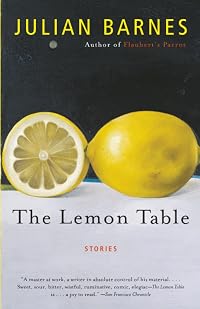
Mr. Barnes’s latest collection, “Pulse,” is filled with both gems and should-have-been discards. The title story and “Marriage Lines” are beautiful, elegiac tales about how marriages endure or change over time: stories that attest to the new emotional depth Mr. Barnes discovered in his 2004 collection “The Lemon Table.” Unfortunately, many other entries in this volume are brittle show more exercises in craft: a writer writing on automatic pilot, substituting verbal facility for genuine humor or real feeling, a scattering of social details for a persuasive sense of time and place. show less
added by Shortride
Lists

Llibres que he llegit el 2012
28 works; 1 member
Author Information

89+ Works 43,049 Members
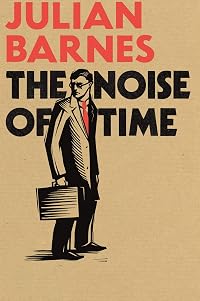
Julian Barnes was born in Leicester, England, on January 19, 1946. He received a degree in modern languages from Magdalen College, Oxford University in 1968. He has held jobs as a lexicographer for the Oxford English Dictionary, a reviewer and literary editor for the New Statesmen and the New Review, and a television critic. He has written show more numerous works of fiction including Arthur and George, Pulse: Stories, The Noise of Time, and England, England. He received the Somerset Maugham Award in 1980 for Metroland, the Geoffrey Faber Memorial Prize in 1985 and a Prix Medicis in 1986 for Flaubert's Parrot, and the Man Booker Prize in 2011 for The Sense of an Ending. He also writes non-fiction works including Letters from London, The Pedant in the Kitchen, and Nothing to Be Frightened Of. He received the Shakespeare Prize by the FVS Foundation in 1993, the Austrian State Prize for European Literature in 2004, and the David Cohen Prize for Literature in 2011. He writes detective novels under the pseudonym Dan Kavanaugh. His works under this name include Duffy, Fiddle City, Putting the Boot In, and Going to the Dogs. (Bowker Author Biography) show less
Some Editions
Work Relationships
Common Knowledge
- Canonical title*
- Unbefugtes Betreten
- Original title
- Pulse
- Original publication date
- 2011-01-06
- People/Characters
- Maria Theresia von Paradis; Garibaldi
- Dedication
- for Pat
- First words
- Im vorigen November war eine Reihe hölzerner Strandhütten, deren Farbe der steife Ostwind weggefetzt hatte, bis auf den Grund abgebrannt.
The previous November, a row of wooden beach huts, their paintwork lifted and flaked by the hard east wind, had burnt to the ground. - Quotations
- He had thought he could recapture, and begin to say farewell. He had thought grief might be assuaged, or if not assuaged, at least speeded up, hurried on its way a little, by going back to a place where they had been happy. B... (show all)ut he was not in charge of grief. Grief was in charge of him. And in the months and years ahead, he expected grief to teach him many other things as well. This was just the first of them.
He told Calum the story he was already weary with repeating. The sudden tiredness, the dizzy spells, the blood tests, the scans, hospital, more hospital, the hospice. The speed of it all, the process, the merciless tramp of e... (show all)vents. He told it without tears, in a neutral voice, as if it might have happened to someone else. It was the only way, so far, that he knew how.
In theory, going to the doctor is a win-win situation: either you come out confirmed as healthy, or else it's true that you haven't been wasting the doctor's time.
Those who are close to someone who's seriously ill often take to doing crossword puzzles or jigsaws.... Consciously or unconsciously, they need to work at something with rules, laws, answers, and an overall solution; somethin... (show all)g fixable. - Last words*
- (Click to show. Warning: May contain spoilers.)Ich stelle es mir vor.
- Original language
- English
*Some information comes from Common Knowledge in other languages. Click "Edit" for more information.
Classifications
Statistics
- Members
- 543
- Popularity
- 54,791
- Reviews
- 27
- Rating
- (3.64)
- Languages
- 10 — Catalan, Danish, Dutch, English, French, German, Polish, Portuguese, Russian, Spanish
- Media
- Paper, Audiobook, Ebook
- ISBNs
- 37
- UPCs
- 1
- ASINs
- 9