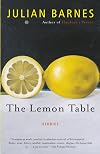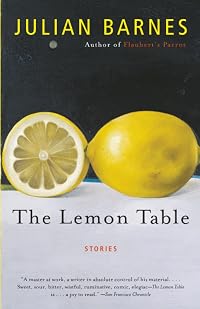
The Lemon Table
by Julian Barnes
On This Page
Description
Fiction. Literature. Short Stories. HTML:In his widely acclaimed new collection of stories, Julian Barnes addresses what is perhaps the most poignant aspect of the human condition: growing old.The characters in The Lemon Table are facing the ends of their lives–some with bitter regret, others with resignation, and others still with defiant rage. Their circumstances are just as varied as their responses. In 19th-century Sweden, three brief conversations provide the basis for a lifetime of show more longing. In today's England, a retired army major heads into the city for his regimental dinner–and his annual appointment with a professional lady named Babs. Somewhere nearby, a devoted wife calms (or perhaps torments) her ailing husband by reading him recipes.
In stories brimming with life and our desire to hang on to it one way or another, Barnes proves himself by turns wise, funny, clever, and profound–a writer of astonishing powers of empathy and invention. show less
Tags
Recommendations




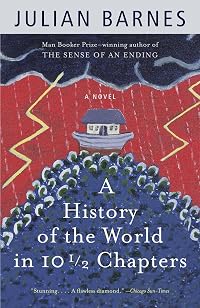














Member Recommendations


by rrmmff2000
KayCliff The stories "A Short History of Hairdressing" (Barnes)and "Medusa'a Ankles" (Byatt) both refer to a client at a hairdresser's - one male, one female.
Member Reviews
This is a book to be read carefully without distraction. It was published when Barnes’s was 48, which is significant because several times in the stories Barnes gives the age of physical and mental aging as starting at the age of 40. The Lemon Table is said to be a place in Chinese culture where people can sit to discuss decline and death. There are 11 stories in total, the first three “A Short History of Hairdressing”, “The Story of Mats Israelson” and “The Things You Know”, form the sentinels . The stories are connected by themes rather than by space time. The book needs to be read as a whole. It’s about life, renunciation, memory and death, but mostly about aging.
The first story, “A Short History of Hairdressing”, show more although historically accurate mainly serves to introduce the physical and thematic structure into which subsequent stories expand. The. story starts in the 1950s when its main character Gregory get his first haircut at a barbershop. After describing his experience Gregory goes on to describe how barbershops evolved from the short-back-and-sides one room shops to extravagant hairstylists with music and cafés. It can be seen as a structure for a human’s travel through life, from childhood to aging. As a child, while looking at himself in the mirror, Gregory finds lubricant in his parents’ medicine cabinet. He is disgusted but works out how to use it on himself. Along with generational changes that affect individual lives and approaching death, Gregory goes from the innocent boy through the cool guy wearing about his hair, to the old man who could not care less, and does not like looking in the mirror when he can only see decay, missed opportunities, regret, renunciation, and old-age.
The second two stories move from adulthood to the final years. But they are not chronological in style. All sentinel stories need the other eight stories, long vignettes, for the whole book to be complete.
I particularly like some “minor “ storiies, such as “Knowing French”. This is. an epistolary story of letters written by a fictional character, Sylvia to Julian Barnes. She’s in a nursing home, her body decaying but her mind alert. Sylvia is raging against the “dying of the lightt”. In her letters refers to published books by various writers including Barnes himself, Austen,Flaubert and Proust. She keeps Barnes’ answers in a locked fridge in her unit - in the freezer section. This physical detail is typical of Barnes’ story collection . This, when the theme is about death, memory, love and decline and mirrors the experience of other main characters in the stories. There is Barnes’ usual irony as his letters are later found to have been thrown away by cleaners, damaged by the melting refrigerator ice, dissolved after Sylvia’s death.
In “Appetite” an elderly woman reads to her elderly lover who is in end-stage memory decline. They were once avid lovers. Long ago the man’s physical ability for sex and interest in food had declined, but not his appetite. He cannot focus on anything, exept when the elderly woman reads. He begins to remember details of when he may have eaten the food, the cultural contexts, and the restaurant names. She reads aloud to to make him happy, and whole sections of this story are recipes. I loved this short story. I even enjoyed the recipes which seemed to go on for pages. The descriptions of age and memory, and physical discomfort ties with the first story with Gregory’s passage of time in the first story. The physical mirroring the mental.
Throughout the book sexual attraction, and sexual acts align with the aging process. "Hygiene", "Appetite", "The Fruit Cage", and “I A Short History of Hairdressing" all refer in part to sexual desire continuing into old age though the body is unable to consummate desire. In “Appetite” elderly man suddenly, and out of character starts to ask his old lover also elderly to do sexually weird things to him using course language, things and words he would have never voiced during their love-making days. We get the point.
An amazing book; so amazing that I find it difficult to describe. I can only say it’s well worth the read, especially for those middle-aged and older. Or over forty as Barnes saw the turning point when he was in his sixties. show less
The first story, “A Short History of Hairdressing”, show more although historically accurate mainly serves to introduce the physical and thematic structure into which subsequent stories expand. The. story starts in the 1950s when its main character Gregory get his first haircut at a barbershop. After describing his experience Gregory goes on to describe how barbershops evolved from the short-back-and-sides one room shops to extravagant hairstylists with music and cafés. It can be seen as a structure for a human’s travel through life, from childhood to aging. As a child, while looking at himself in the mirror, Gregory finds lubricant in his parents’ medicine cabinet. He is disgusted but works out how to use it on himself. Along with generational changes that affect individual lives and approaching death, Gregory goes from the innocent boy through the cool guy wearing about his hair, to the old man who could not care less, and does not like looking in the mirror when he can only see decay, missed opportunities, regret, renunciation, and old-age.
The second two stories move from adulthood to the final years. But they are not chronological in style. All sentinel stories need the other eight stories, long vignettes, for the whole book to be complete.
I particularly like some “minor “ storiies, such as “Knowing French”. This is. an epistolary story of letters written by a fictional character, Sylvia to Julian Barnes. She’s in a nursing home, her body decaying but her mind alert. Sylvia is raging against the “dying of the lightt”. In her letters refers to published books by various writers including Barnes himself, Austen,Flaubert and Proust. She keeps Barnes’ answers in a locked fridge in her unit - in the freezer section. This physical detail is typical of Barnes’ story collection . This, when the theme is about death, memory, love and decline and mirrors the experience of other main characters in the stories. There is Barnes’ usual irony as his letters are later found to have been thrown away by cleaners, damaged by the melting refrigerator ice, dissolved after Sylvia’s death.
In “Appetite” an elderly woman reads to her elderly lover who is in end-stage memory decline. They were once avid lovers. Long ago the man’s physical ability for sex and interest in food had declined, but not his appetite. He cannot focus on anything, exept when the elderly woman reads. He begins to remember details of when he may have eaten the food, the cultural contexts, and the restaurant names. She reads aloud to to make him happy, and whole sections of this story are recipes. I loved this short story. I even enjoyed the recipes which seemed to go on for pages. The descriptions of age and memory, and physical discomfort ties with the first story with Gregory’s passage of time in the first story. The physical mirroring the mental.
Throughout the book sexual attraction, and sexual acts align with the aging process. "Hygiene", "Appetite", "The Fruit Cage", and “I A Short History of Hairdressing" all refer in part to sexual desire continuing into old age though the body is unable to consummate desire. In “Appetite” elderly man suddenly, and out of character starts to ask his old lover also elderly to do sexually weird things to him using course language, things and words he would have never voiced during their love-making days. We get the point.
An amazing book; so amazing that I find it difficult to describe. I can only say it’s well worth the read, especially for those middle-aged and older. Or over forty as Barnes saw the turning point when he was in his sixties. show less
This is my introduction to Julian Barnes's short stories and I was delighted, overall, with the presentation. A few of the stories left me a little less than impressed, but as a sum it was much greater than all its parts. I am teetering on the edge of being a great fan. (It wouldn't take much.)
A Short History of Hairdressing - 3 stars
A creepy, self-obsessed, neurotic child turns into a creepy, self-obsessed, neurotic man. I didn't much care for any iterations, with their disturbing little thoughts, but can concede that Barnes has captured that sort rather well. So the dilemma is: do I rate this on the story, or the writer? Let's split the difference, and say 3 stars. (I wouldn't read an entire novel of his, for instance, on this show more repellent little rotter: would have abandoned it 50 pages in because it would have depressed me to the core; not to mention I would have needed a series of showers to get rid of the stink.)
The Story of Mats Israelson - 3 stars
"Gossip about gossip" is a good way to sum this one up, and Barnes does it beautifully, but once again, I found myself not caring a whit for these less-than-likeable characters. These are wasted lives predicated on the inability to follow through, with honesty, on anything in life.
The Things You Know - 3 stars
Two little old ladies -- allies, rather than friends, Barnes suggests. I would suggest that they are neither. They are merely acquaintances with personal agendas. "Allies" suggests that there is support, in time of need; neither of these old biddies strikes me as being that way. More, they strike me as people who will be there for you, if and when the situation suits or meets their own personal agenda at the time. Their monthly meetings suggested to me they were no better off than if they had stayed at home, talking into the mirror.
Hygiene - 4 stars
A retired soldier has been "stepping out" on his wife for years, with "another woman". This is a nice spin on an old, oft-told tale, with some keen insights into the constructs of love and desire.
The Revival - 5 stars
What is real, and what is not, in love? Is the imagination bigger and better than reality? What does it matter in the end: does it matter if love is fictional? If one gets the same fulfillment from a perceived emotion, is it any less valid? A beautiful story.
Vigilance - 4 stars
What is bad behaviour? And who defines it? A nice spin on the niceties of nice society.
Bark - 3 stars
"What is the reason for living if it is only to outlive others?" A bizarre tale of meaningless revenge. I could not connect to these people in any way, nor understand them. They were small-minded and absurd.
Knowing French - 5 stars (at least)
A lovely, funny, sad, heartwarming tale: the ultimate in elderly fangirling. Too precious, delightful for words!
Appetite - 3 stars
Blech! A spouse reads a series of cookbooks to her hubby who has dementia, in the hope of triggering his memories. All it seems to do is trigger his past (perverted?) sexual urges. Is that all that's left in the end? The nature of his recalled memories suggests it wasn't the healthiest of sex lives, and therefore not the healthiest of relationships.
The Fruit Cage - 5 stars
An abused spouse puts up with his harpie of a wife for years, until he leaves her -- but a little too late. Sad, poignant, disturbing, heartbreaking.
The Silence - 3 stars
"My music is molten ice." Yes. So is this story. Silence would have been preferable.
=====
Thanks to both Netta and Ilse for recommending this one! show less
A Short History of Hairdressing - 3 stars
A creepy, self-obsessed, neurotic child turns into a creepy, self-obsessed, neurotic man. I didn't much care for any iterations, with their disturbing little thoughts, but can concede that Barnes has captured that sort rather well. So the dilemma is: do I rate this on the story, or the writer? Let's split the difference, and say 3 stars. (I wouldn't read an entire novel of his, for instance, on this show more repellent little rotter: would have abandoned it 50 pages in because it would have depressed me to the core; not to mention I would have needed a series of showers to get rid of the stink.)
The Story of Mats Israelson - 3 stars
"Gossip about gossip" is a good way to sum this one up, and Barnes does it beautifully, but once again, I found myself not caring a whit for these less-than-likeable characters. These are wasted lives predicated on the inability to follow through, with honesty, on anything in life.
The Things You Know - 3 stars
Two little old ladies -- allies, rather than friends, Barnes suggests. I would suggest that they are neither. They are merely acquaintances with personal agendas. "Allies" suggests that there is support, in time of need; neither of these old biddies strikes me as being that way. More, they strike me as people who will be there for you, if and when the situation suits or meets their own personal agenda at the time. Their monthly meetings suggested to me they were no better off than if they had stayed at home, talking into the mirror.
Hygiene - 4 stars
A retired soldier has been "stepping out" on his wife for years, with "another woman". This is a nice spin on an old, oft-told tale, with some keen insights into the constructs of love and desire.
The Revival - 5 stars
What is real, and what is not, in love? Is the imagination bigger and better than reality? What does it matter in the end: does it matter if love is fictional? If one gets the same fulfillment from a perceived emotion, is it any less valid? A beautiful story.
Vigilance - 4 stars
What is bad behaviour? And who defines it? A nice spin on the niceties of nice society.
Bark - 3 stars
"What is the reason for living if it is only to outlive others?" A bizarre tale of meaningless revenge. I could not connect to these people in any way, nor understand them. They were small-minded and absurd.
Knowing French - 5 stars (at least)
A lovely, funny, sad, heartwarming tale: the ultimate in elderly fangirling. Too precious, delightful for words!
Appetite - 3 stars
Blech! A spouse reads a series of cookbooks to her hubby who has dementia, in the hope of triggering his memories. All it seems to do is trigger his past (perverted?) sexual urges. Is that all that's left in the end? The nature of his recalled memories suggests it wasn't the healthiest of sex lives, and therefore not the healthiest of relationships.
The Fruit Cage - 5 stars
An abused spouse puts up with his harpie of a wife for years, until he leaves her -- but a little too late. Sad, poignant, disturbing, heartbreaking.
The Silence - 3 stars
"My music is molten ice." Yes. So is this story. Silence would have been preferable.
=====
Thanks to both Netta and Ilse for recommending this one! show less
Collection of 11 short stories examining the aging process and contemplation of the end of life. A Short History of Hairdressing: frightened youth, insolent young adult, complacent mature adult. The Story of Mats Israelson: unrequieted love in 18thC Sweden (referencing a true story of a body of a man identified by his fiancee after missing for 40 years) as two people who cannot speak openly and who are already married, ponder a life not chosen (although never offered, really); how the right/wrong word at a specific moment can set in motion events which come to signify a larger meaning in one's life. Best two stories are The Silence and The Revival.
Lots of really lovely prose, often about pretty unpleasant things. Barnes confronts aging with a variety of treatments. You'd think such a collection would start to feel a little one-note, but it didn't. Will read again.
This little collection of short stories by Barnes is all centred around characters in the twilight years of their lives. The stories vary enormously, but they have elements in common; loss of independence, fond reminiscences of past events, decline in health and well being, love lost and gained and inevitably death. They tales are set in barbers shops, old people’s and family homes; some concern family secrets, one is letters between a reader and a writer and the tragic theft of a mind from Alzheimer's.
Barnes writes with a light touch for subjects that are quite deep and poignant. The prose is brief, almost clipped at times, giving us the barest of plot elements and outline sketches of the characters in each story. As with any short show more story collection, some work better than others, and even though it is a tough subject to write about, and could be depressing, Barnes does it with humour and wit at times. It is a good introduction to the quality of Barnes writing, and even though it can be a tad depressing, it is not bad overall. show less
Barnes writes with a light touch for subjects that are quite deep and poignant. The prose is brief, almost clipped at times, giving us the barest of plot elements and outline sketches of the characters in each story. As with any short show more story collection, some work better than others, and even though it is a tough subject to write about, and could be depressing, Barnes does it with humour and wit at times. It is a good introduction to the quality of Barnes writing, and even though it can be a tad depressing, it is not bad overall. show less
Listened to by the magic of downloading to my phone and connecting the phone to the car to play it through the speakers while driving. And I managed that all by myself. Very proud!
And it was worth the effort.
If there is a theme, this is remembrance and loss. Most of the stories have a air of sadness about them with the characters either remembering times past, or pondering the end of life and the complications that brings. Whgich doesn;t sound very cheery, but I would not say that this is a sad colleciton. Wistful, maybe. In a couple of stories there are several segments that are told at diifferent times, with a common theme. The first takes this form, with the key being the trip to the barber's for a haircut. It's all very show more understated, but nonetheless enjoyable for that. show less
And it was worth the effort.
If there is a theme, this is remembrance and loss. Most of the stories have a air of sadness about them with the characters either remembering times past, or pondering the end of life and the complications that brings. Whgich doesn;t sound very cheery, but I would not say that this is a sad colleciton. Wistful, maybe. In a couple of stories there are several segments that are told at diifferent times, with a common theme. The first takes this form, with the key being the trip to the barber's for a haircut. It's all very show more understated, but nonetheless enjoyable for that. show less
I picked up this collection of short stories on the strength of Barnes's Booker-winning novel, The Sense of an Ending. Similarly, most of these stories also deal with aging--but without the humor and touch of hope found there. Quite a few deal wiuth artists, musicians and writers who have lost their talent; several others involve elderly people who suffer from Alzheimer's and their caretakers. Overall, I found it rather sad and depressing, although finely written.
Members
- Recently Added By
Published Reviews
ThingScore 100
This is a book about old age and disappointment, among other things. (...) If one wanted to see how various and how controlled Barnes can be, a good place to look is "The Story of Mats Israelson", set in 18th-century Sweden. (...) the story delicately treats a love relationship frustrated by time, reticence, misunderstanding and finally death. (...) The Lemon Table leaves one in no doubt as show more to Barnes's virtuosity. show less
added by SandraArdnas
Lists

Short Story Collections and Anthologies
261 works; 42 members

Books whose title names an object usually found in the kitchen
171 works; 14 members
Author Information

89+ Works 43,196 Members
Julian Barnes was born in Leicester, England, on January 19, 1946. He received a degree in modern languages from Magdalen College, Oxford University in 1968. He has held jobs as a lexicographer for the Oxford English Dictionary, a reviewer and literary editor for the New Statesmen and the New Review, and a television critic. He has written show more numerous works of fiction including Arthur and George, Pulse: Stories, The Noise of Time, and England, England. He received the Somerset Maugham Award in 1980 for Metroland, the Geoffrey Faber Memorial Prize in 1985 and a Prix Medicis in 1986 for Flaubert's Parrot, and the Man Booker Prize in 2011 for The Sense of an Ending. He also writes non-fiction works including Letters from London, The Pedant in the Kitchen, and Nothing to Be Frightened Of. He received the Shakespeare Prize by the FVS Foundation in 1993, the Austrian State Prize for European Literature in 2004, and the David Cohen Prize for Literature in 2011. He writes detective novels under the pseudonym Dan Kavanaugh. His works under this name include Duffy, Fiddle City, Putting the Boot In, and Going to the Dogs. (Bowker Author Biography) show less
Some Editions
Awards and Honors
Distinctions
Series
Belongs to Publisher Series
Common Knowledge
- Canonical title*
- La table citron
- Original title
- The Lemon Table
- Original publication date
- 2004
- First words
- That first time, after they moved, his mother had come with him.
- Quotations
- Occasionally a programme will contain a small piece of information, vaguely bordering on advice, about mobile phones, or the use of a handkerchief to cough into. But does anyone pay any heed? ("Viigilance")
My mother would talk practically of the Four Last Things. That's to say the Four Last Things of modern life: making a will, planning for old age, facing death, and not being able to believe in an afterlife. - Last words
- (Click to show. Warning: May contain spoilers.)I walked slowly back to the house. I stood in the doorway, calling for a lemon.
- Original language
- English
*Some information comes from Common Knowledge in other languages. Click "Edit" for more information.
Classifications
Statistics
- Members
- 947
- Popularity
- 28,196
- Reviews
- 19
- Rating
- (3.59)
- Languages
- 13 — Danish, Dutch, English, French, German, Portuguese, Romanian, Serbian, Croatian, Slovenian, Spanish, Swedish, Turkish
- Media
- Paper, Audiobook, Ebook
- ISBNs
- 46
- UPCs
- 1
- ASINs
- 10