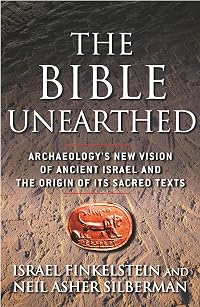
The Bible Unearthed: Archaeology's New Vision of Ancient Israel and the Origin of Its Sacred Texts
by Israel Finkelstein, Neil Asher Silberman
On This Page
Description
In this groundbreaking work that sets apart fact and legend, authors Finkelstein and Silberman use significant archeological discoveries to provide historical information about biblical Israel and its neighbors. In this iconoclastic and provocative work, leading scholars Israel Finkelstein and Neil Asher Silberman draw on recent archaeological research to present a dramatically revised portrait of ancient Israel and its neighbors. They argue that crucial evidence (or a telling lack of show more evidence) at digs in Israel, Egypt, Jordan, and Lebanon suggests that many of the most famous stories in the Bible--the wanderings of the patriarchs, the Exodus from Egypt, Joshua's conquest of Canaan, and David and Solomon's vast empire--reflect the world of the later authors rather than actual historical facts. Challenging the fundamentalist readings of the scriptures and marshaling the latest archaeological evidence to support its new vision of ancient Israel, The Bible Unearthed offers a fascinating and controversial perspective on when and why the Bible was written and why it possesses such great spiritual and emotional power today. show lessTags
Recommendations







Member Reviews
Set aside for a long while to tackle a handful of ARCs along with a three week trip to Europe, I finally carved out time to finish this. Messrs. Finkelstein and Silberman put together a compelling (to anyone with a an open mind, their opposition excluded, of course) set of arguments and propositions as to what can and can’t be believed from the Bible, at least from a historical/archeological perspective. They make the case with a lot of supporting material that the Deuteronomical parts of the Bible were composed far later than claimed, mostly around the seventh century BCE. Events leading to the condition of the nation/kingdom at that time color the narratives of what came before.
They tell the stories, first from the Bible, as if it show more were literal and true (you’ll get a lot of synopses, which are pretty good summaries, minus most the unnatural stuff), and then of the archeological and historical record, which are more true, if less specific at times (and very specific at others). He also discusses stages of archaeological thought… early undisciplined excavations and the biased attempts to tie findings to biblical passages to later, rigorous and careful excavations that identified the strata much better and made more logical/rational deductions.
The authors present the various theories of how the Israelites rose, how the stories could have come to be, of interpretations of the archeological and historical records, offering the pros and cons and arguments for and against each.
Redrawing the lines of when biblical stories correlated with non-biblical sources (much later than the stories claim), when archeological finds correlate with much much later architectural styles, when they don’t correlate at all with any evidence, shifts the stories from historical to mythical. The archeology disputes many (most) of the legends - more probable than not the Israelites did not conquer Canaan, rather were fragments of Canaanite holdings that either rebelled, or survived a collapse and retold the stories to favor themselves. They did that a lot, it seems.
In short, while there are geographical correlations between actual sites and biblical references, there is slim evidence to support the Bible as a historical narrative. There are some places, names, even events in the Bible that appear to be actual, but the timelines do not align. There is archaeological evidence to contradict the biblical narrative. And there are other extra-biblical sources that corroborate that at least some of the later kings existed.
Anyway, if I was already predisposed to discount most of the biblical narrative, this didn’t move the needle toward belief; more firmly in the mythological camp for me, confirming my bias.
A few curated highlights:
“How strange it is to think that Jerusalem only belatedly—and suddenly—rose to the center of Israelite consciousness. Such is the power of the Bible’s own story that it has persuaded the world that Jerusalem was always central to the experience of all Israel and that the descendants of David were always blessed with special holiness, rather than being just another other aristocratic clan fighting to remain in power despite internal strife and unprecedented threats from outside.”
{They cover in extensive detail the archeology of Jerusalem as a backwater through most of its early biblical history, contrary to the biblical … history.}
“A careful reading of the book of Genesis, for example, revealed two conflicting versions of the creation ( 1 : 1 – 2 : 3 and 2 : 4 – 25 ), two quite different genealogies of Adam’s offspring ( 4 : 17 – 26 and 5 : 1 – 28 ), and two spliced and rearranged flood stories ( 6 : 5 – 9 : 17 ).”
{Gasp! And they had so much time to edit and fix things!}
“The biblical account of the life of the patriarchs is a brilliant story of both family and nation. It derives its emotional power from being the record of the profound human struggles of fathers, mothers, husbands, wives, daughters, and sons.”
{Emotional power? Right. Oops… did I key that out loud?}
“The most important clue is the note in 1 Kings 6 : 1 that the Exodus took place four hundred eighty years before the construction of the Temple began in Jerusalem, in the fourth year of the reign of Solomon. Furthermore, Exodus 12 : 40 states that the Israelites endured four-hundred thirty years of slavery in Egypt before the Exodus. Adding a bit over two hundred years for the overlapping life spans of the patriarchs in Canaan before the Israelites left for Egypt, we arrive at a biblical date of around 2100 BCE for Abraham’s original departure for Canaan.”
{Well, the OT concept of time was pretty skewed. }
“So the combination of camels, Arabian goods, Philistines, and Gerar— as well as other places and nations mentioned in the patriarchal stories in Genesis—are highly significant. All the clues point to a time of composition many centuries after the time in which the Bible reports the lives of the patriarchs took place. These and other anachronisms suggest an intensive period of writing the patriarchal narratives in the eighth and seventh centuries BCE .”
{Write the stories to support the mission. Who’s going to question them? Literacy wasn’t common for a millennia and a half…}
“The saga of Israel’s Exodus from Egypt is neither historical truth nor literary fiction. It is a powerful expression of memory and hope born in a world in the midst of change. The confrontation between Moses and pharaoh mirrored the momentous confrontation between the young King Josiah and the newly crowned Pharaoh Necho. To pin this biblical image down to a single date is to betray the story’s deepest meaning. Passover proves to be not a single event but a continuing experience of national resistance against the powers that be.”
{This might be the most sensical explanation I’ve read.}
“The great Canaanite cities of the coastal plain and the northern valleys, such as Megiddo, Beth-shean, Dor, and Gezer, were listed in the book of Judges as uncaptured—even though their rulers were included in the book of Joshua in its list of defeated Canaanite kings”
{Oops, there’s that editing problem again.}
“It is also noteworthy—in contrast to the Bible’s accounts of almost continual warfare between the Israelites and their neighbors—that the villages were not fortified. Either the inhabitants felt secure in their remote settlements and did not need to invest in defenses or they did not have the means or proper organization to undertake such work. No weapons, such as swords or lances, were uncovered—although such finds are typical of the cities in the lowlands. Nor were there signs of burning or sudden destruction that might indicate a violent attack.”
{Darn that thing called science…}
“The process that we describe here is, in fact, the opposite of what we have in the Bible: the emergence of early Israel was an outcome of the collapse of the Canaanite culture, not its cause. And most of the Israelites did not come from outside Canaan—they emerged from within it. There was no mass Exodus from Egypt. There was no violent conquest of Canaan. Most of the people who formed early Israel were local people—the same people whom we see in the highlands throughout the Bronze and Iron Ages. The early Israelites were—irony of ironies—themselves originally Canaanites!”
{Surprise! Although this is something I’d read/seen at least ten years ago.}
“The reports of Solomon’s fabulous wealth (making “silver as common in Jerusalem as stone,” according to 1 Kings 10 : 27 ) and his legendary harem (housing seven hundred wives and princesses and three-hundred concubines, according to 1 Kings 11 : 3 ) are details too exaggerated to be true. Moreover, for all their reported wealth and power, neither David nor Solomon is mentioned in a single known Egyptian or Mesopotamian text. And the archaeological evidence in Jerusalem for the famous building projects of Solomon is nonexistent.”
“This Egyptian invasion is mentioned in the Bible, from a distinctly Judahite perspective, in a passage that offers the earliest correlation between external historical records and the biblical text: “In the fifth year of Rehoboam, Shishak king of Egypt came up against Jerusalem; he took away the treasures of the house of the Lord and the treasures of the king’s house; he took away everything. He also took away the shields of gold that Solomon had made” ( 1 Kings 14 : 25 – 26 ). Yet we now know that Jerusalem was hardly the only or even the most important target. A triumphal inscription commissioned by Sheshonq for the walls of the great temple of Karnak in Upper Egypt lists about one-hundred fifty towns and villages devastated in the operation. They are located in the south, through the central hill country, and across the Jezreel valley and the coastal plain.”
“We can never know how reliable were the traditions, texts, or archives used by the biblical authors to compile their history of the kingdom of Israel. Their aims were not to produce an objective history of the northern kingdom but rather to provide a theological explanation for a history that was probably already well known, at least in its broad details.”
“Despite Judah’s prominence in the Bible, however, there is no archaeological indication until the eighth century BCE that this small and rather isolated highland area, surrounded by arid steppe land on both east and south, possessed any particular importance. As we have seen, its population was meager; its towns—even Jerusalem—were small and few. It was Israel, not Judah, that initiated wars in the region. It was Israel, not Judah, that conducted wide-ranging diplomacy and trade. When the two kingdoms came into conflict, Judah was usually on the defensive, forced to call in neighboring powers to come to its aid. Until the late eighth century, there is no indication that Judah was anything more than a marginal factor in regional affairs. “
“Sometime in the late eighth century BCE there arose an increasingly vocal school of thought that insisted that the cults of the countryside were sinful—and that YHWH alone should be worshiped. We cannot be sure where the idea originated. It is expressed in the cycle of stories of Elijah and Elisha (set down in writing long after the fall of the Omrides) and, more important, in the works of the prophets Amos and Hosea, both of whom were active in the eighth century in the north.”
{They eventually settled down and decided to be content with being the chosen people, tolerating other gods because they had their one. Now, their decendant… well, those guys originated exclusivity. They were right and everybody else was wrong (even the other versions of themselves.)}
“Despite the biblical report of the miraculous deliverance of Jerusalem, contemporary Assyrian records provide a very different picture of the outcome of Hezekiah’s revolt. The Assyrian account of Sennacherib’s devastation of the Judahite countryside is presented concisely and coldly:”
{Supported by the archeological evidence, too.} show less
They tell the stories, first from the Bible, as if it show more were literal and true (you’ll get a lot of synopses, which are pretty good summaries, minus most the unnatural stuff), and then of the archeological and historical record, which are more true, if less specific at times (and very specific at others). He also discusses stages of archaeological thought… early undisciplined excavations and the biased attempts to tie findings to biblical passages to later, rigorous and careful excavations that identified the strata much better and made more logical/rational deductions.
The authors present the various theories of how the Israelites rose, how the stories could have come to be, of interpretations of the archeological and historical records, offering the pros and cons and arguments for and against each.
Redrawing the lines of when biblical stories correlated with non-biblical sources (much later than the stories claim), when archeological finds correlate with much much later architectural styles, when they don’t correlate at all with any evidence, shifts the stories from historical to mythical. The archeology disputes many (most) of the legends - more probable than not the Israelites did not conquer Canaan, rather were fragments of Canaanite holdings that either rebelled, or survived a collapse and retold the stories to favor themselves. They did that a lot, it seems.
In short, while there are geographical correlations between actual sites and biblical references, there is slim evidence to support the Bible as a historical narrative. There are some places, names, even events in the Bible that appear to be actual, but the timelines do not align. There is archaeological evidence to contradict the biblical narrative. And there are other extra-biblical sources that corroborate that at least some of the later kings existed.
Anyway, if I was already predisposed to discount most of the biblical narrative, this didn’t move the needle toward belief; more firmly in the mythological camp for me, confirming my bias.
A few curated highlights:
“How strange it is to think that Jerusalem only belatedly—and suddenly—rose to the center of Israelite consciousness. Such is the power of the Bible’s own story that it has persuaded the world that Jerusalem was always central to the experience of all Israel and that the descendants of David were always blessed with special holiness, rather than being just another other aristocratic clan fighting to remain in power despite internal strife and unprecedented threats from outside.”
{They cover in extensive detail the archeology of Jerusalem as a backwater through most of its early biblical history, contrary to the biblical … history.}
“A careful reading of the book of Genesis, for example, revealed two conflicting versions of the creation ( 1 : 1 – 2 : 3 and 2 : 4 – 25 ), two quite different genealogies of Adam’s offspring ( 4 : 17 – 26 and 5 : 1 – 28 ), and two spliced and rearranged flood stories ( 6 : 5 – 9 : 17 ).”
{Gasp! And they had so much time to edit and fix things!}
“The biblical account of the life of the patriarchs is a brilliant story of both family and nation. It derives its emotional power from being the record of the profound human struggles of fathers, mothers, husbands, wives, daughters, and sons.”
{Emotional power? Right. Oops… did I key that out loud?}
“The most important clue is the note in 1 Kings 6 : 1 that the Exodus took place four hundred eighty years before the construction of the Temple began in Jerusalem, in the fourth year of the reign of Solomon. Furthermore, Exodus 12 : 40 states that the Israelites endured four-hundred thirty years of slavery in Egypt before the Exodus. Adding a bit over two hundred years for the overlapping life spans of the patriarchs in Canaan before the Israelites left for Egypt, we arrive at a biblical date of around 2100 BCE for Abraham’s original departure for Canaan.”
{Well, the OT concept of time was pretty skewed. }
“So the combination of camels, Arabian goods, Philistines, and Gerar— as well as other places and nations mentioned in the patriarchal stories in Genesis—are highly significant. All the clues point to a time of composition many centuries after the time in which the Bible reports the lives of the patriarchs took place. These and other anachronisms suggest an intensive period of writing the patriarchal narratives in the eighth and seventh centuries BCE .”
{Write the stories to support the mission. Who’s going to question them? Literacy wasn’t common for a millennia and a half…}
“The saga of Israel’s Exodus from Egypt is neither historical truth nor literary fiction. It is a powerful expression of memory and hope born in a world in the midst of change. The confrontation between Moses and pharaoh mirrored the momentous confrontation between the young King Josiah and the newly crowned Pharaoh Necho. To pin this biblical image down to a single date is to betray the story’s deepest meaning. Passover proves to be not a single event but a continuing experience of national resistance against the powers that be.”
{This might be the most sensical explanation I’ve read.}
“The great Canaanite cities of the coastal plain and the northern valleys, such as Megiddo, Beth-shean, Dor, and Gezer, were listed in the book of Judges as uncaptured—even though their rulers were included in the book of Joshua in its list of defeated Canaanite kings”
{Oops, there’s that editing problem again.}
“It is also noteworthy—in contrast to the Bible’s accounts of almost continual warfare between the Israelites and their neighbors—that the villages were not fortified. Either the inhabitants felt secure in their remote settlements and did not need to invest in defenses or they did not have the means or proper organization to undertake such work. No weapons, such as swords or lances, were uncovered—although such finds are typical of the cities in the lowlands. Nor were there signs of burning or sudden destruction that might indicate a violent attack.”
{Darn that thing called science…}
“The process that we describe here is, in fact, the opposite of what we have in the Bible: the emergence of early Israel was an outcome of the collapse of the Canaanite culture, not its cause. And most of the Israelites did not come from outside Canaan—they emerged from within it. There was no mass Exodus from Egypt. There was no violent conquest of Canaan. Most of the people who formed early Israel were local people—the same people whom we see in the highlands throughout the Bronze and Iron Ages. The early Israelites were—irony of ironies—themselves originally Canaanites!”
{Surprise! Although this is something I’d read/seen at least ten years ago.}
“The reports of Solomon’s fabulous wealth (making “silver as common in Jerusalem as stone,” according to 1 Kings 10 : 27 ) and his legendary harem (housing seven hundred wives and princesses and three-hundred concubines, according to 1 Kings 11 : 3 ) are details too exaggerated to be true. Moreover, for all their reported wealth and power, neither David nor Solomon is mentioned in a single known Egyptian or Mesopotamian text. And the archaeological evidence in Jerusalem for the famous building projects of Solomon is nonexistent.”
“This Egyptian invasion is mentioned in the Bible, from a distinctly Judahite perspective, in a passage that offers the earliest correlation between external historical records and the biblical text: “In the fifth year of Rehoboam, Shishak king of Egypt came up against Jerusalem; he took away the treasures of the house of the Lord and the treasures of the king’s house; he took away everything. He also took away the shields of gold that Solomon had made” ( 1 Kings 14 : 25 – 26 ). Yet we now know that Jerusalem was hardly the only or even the most important target. A triumphal inscription commissioned by Sheshonq for the walls of the great temple of Karnak in Upper Egypt lists about one-hundred fifty towns and villages devastated in the operation. They are located in the south, through the central hill country, and across the Jezreel valley and the coastal plain.”
“We can never know how reliable were the traditions, texts, or archives used by the biblical authors to compile their history of the kingdom of Israel. Their aims were not to produce an objective history of the northern kingdom but rather to provide a theological explanation for a history that was probably already well known, at least in its broad details.”
“Despite Judah’s prominence in the Bible, however, there is no archaeological indication until the eighth century BCE that this small and rather isolated highland area, surrounded by arid steppe land on both east and south, possessed any particular importance. As we have seen, its population was meager; its towns—even Jerusalem—were small and few. It was Israel, not Judah, that initiated wars in the region. It was Israel, not Judah, that conducted wide-ranging diplomacy and trade. When the two kingdoms came into conflict, Judah was usually on the defensive, forced to call in neighboring powers to come to its aid. Until the late eighth century, there is no indication that Judah was anything more than a marginal factor in regional affairs. “
“Sometime in the late eighth century BCE there arose an increasingly vocal school of thought that insisted that the cults of the countryside were sinful—and that YHWH alone should be worshiped. We cannot be sure where the idea originated. It is expressed in the cycle of stories of Elijah and Elisha (set down in writing long after the fall of the Omrides) and, more important, in the works of the prophets Amos and Hosea, both of whom were active in the eighth century in the north.”
{They eventually settled down and decided to be content with being the chosen people, tolerating other gods because they had their one. Now, their decendant… well, those guys originated exclusivity. They were right and everybody else was wrong (even the other versions of themselves.)}
“Despite the biblical report of the miraculous deliverance of Jerusalem, contemporary Assyrian records provide a very different picture of the outcome of Hezekiah’s revolt. The Assyrian account of Sennacherib’s devastation of the Judahite countryside is presented concisely and coldly:”
{Supported by the archeological evidence, too.} show less
I found this book through a referral on, of all places, /r/AskHistorians on reddit, and, more to the point, the "How Much of the Bible is Historical" question linked to in the subreddit's FAQ where it was referred to as a decent reference. Having not read much Biblical Archeology in a while and finding the book in Amazon's Kindle Store, I downloaded it to my Kindle.
The Bible Unearthed is a dry, fairly technical text dealing with matching Archeology with books of the Old Testament, mainly Genesis, Exodus, Deuteronomy, Joshua, Judges, 1 Samuel, 2 Samuel, 1 Kings, 2 Kings and pieces of Jeremiah, Isaiah, Ezekiel, and lesser Prophets. Working from the beginning with Abraham and concluding at the Exile into Babylon, the authors methodically show more dissect the Old Testament chapter by chapter and, in some places, verse by verse and compare it to the known archeological evidence to prove their core supposition: the Old Testament and the Torah were compiled, and in no small part written, in the mid-to-late 7th Century BC in Judah for a combination of political and religious aims by likely two Kings: Hezekiah and, later, Josiah. These are not historical recordings of mid-Bronze Age wanders but of Iron Age Kings under the Assyrian yoke who were trying to forge a national identity through myths, tales, stories of various tribal peoples, and political propaganda, stamp out the local religions and create a theocratic state.
Although the book is a little out of date, as it was written in 2000, the evidence presented is pretty plausible stuff if one can slog through chapters based on the settlement patterns of Iron Age bedouins and their village layouts or read 100 pages on pottery sherds at different strata.
The authors present:
* No historical record of the patriarchs in any form;
* Moses's Pharaoh is far more the Pharaoh of Late Period 26th Dynasty and not a New Kingdom Monarch;
* Joshua conquers cities that do not exist in the 12th century BCE but certainly do in the 7th, and those that did exist likely collapsed in the Bronze Age Collapse at different times over a hundred years;
* No sign exists of David's Kingdom and all that remains is that of a small hill fort and David's name in secondary sources;
* No sign exists of Solomon or his works;
* The Omrides, who kindly left heaps of archeological evidence and secondary sources, were likely quite good Kings;
* Israel was likely a victim of its enduring financial success making it a tempting target for a sack;
* Deuteronomy written in the format of an Assyrian legal document to a vassal describing the rules and rights therein;
* Etc... it goes on like this for ~400 pages.
All signs point to a 7th century BC compilation of books, tales and sources into one unified whole, smoothing over the lumps and presenting the people -- many suddenly pouring into Judah from the sack of Samaria -- a new complete identity with their One God. One shouldn't besmirch the power of an enduring document that managed to forge a people, see them through the Babylonian Exile, and then become the root of three major world religions. But no archeological evidence points to the Old Testament being a reliable historical document, either.
For me, it's fascinating book showing the pressures and the prejudices of a people who were living in uncertain times with two crazed superpowers (the Assyrians and the Late Egyptians) on their borders and smaller enemies all around them and just before the Phoenicians would become "a thing." These were Kings who wanted to reconquer Israel back from Assyria and return it to its once financial glory, and they saw the way forward was to unite all these people pouring into their tiny kingdom filled with bedouins under One God and One Temple. The plan didn't work out because sticking a finger into the side of a crazed kingdom loaded with mercenaries and a religion that tells them to kill and bathe in blood _never_ works out well but the legacy of that time endures.
It's doubly fascinating to think this: in the 7th Century BCE, the great Egyptian Kingdom of Ramesses II, the Hittites, the fall of Sumeria and founding of Assyria, were as far away from them as the /Fall of Rome is from Modern Day/. The time of great civilizations and great kings was destroyed by the Bronze Age Collapse and left huge mounds where cities once stood -- and no one of Iron Age II knew why. No one read those languages. No one did satellite-based archeology. This is something to think about -- the time of Moses and Joshua and Judges were all distant myth at a time when real 7th century enemies were on the doorstep. Why _wouldn't_ there be stories about how those ancient dimly remembered cities? Why _weren't_ there be ancient kings and great heroes and an explanation of how those civilizations of the great antiquity fell? Why wouldn't those stories be forged in one narrative of one God who destroyed them in the past and will destroy them now?
Not for the highly religious, obviously. Interesting if one wants to read the constant debates on reddit, though.
ALSO: if you have no time to read the book, the BBC did a 4 part series with the authors which is available on Youtube some years ago. show less
The Bible Unearthed is a dry, fairly technical text dealing with matching Archeology with books of the Old Testament, mainly Genesis, Exodus, Deuteronomy, Joshua, Judges, 1 Samuel, 2 Samuel, 1 Kings, 2 Kings and pieces of Jeremiah, Isaiah, Ezekiel, and lesser Prophets. Working from the beginning with Abraham and concluding at the Exile into Babylon, the authors methodically show more dissect the Old Testament chapter by chapter and, in some places, verse by verse and compare it to the known archeological evidence to prove their core supposition: the Old Testament and the Torah were compiled, and in no small part written, in the mid-to-late 7th Century BC in Judah for a combination of political and religious aims by likely two Kings: Hezekiah and, later, Josiah. These are not historical recordings of mid-Bronze Age wanders but of Iron Age Kings under the Assyrian yoke who were trying to forge a national identity through myths, tales, stories of various tribal peoples, and political propaganda, stamp out the local religions and create a theocratic state.
Although the book is a little out of date, as it was written in 2000, the evidence presented is pretty plausible stuff if one can slog through chapters based on the settlement patterns of Iron Age bedouins and their village layouts or read 100 pages on pottery sherds at different strata.
The authors present:
* No historical record of the patriarchs in any form;
* Moses's Pharaoh is far more the Pharaoh of Late Period 26th Dynasty and not a New Kingdom Monarch;
* Joshua conquers cities that do not exist in the 12th century BCE but certainly do in the 7th, and those that did exist likely collapsed in the Bronze Age Collapse at different times over a hundred years;
* No sign exists of David's Kingdom and all that remains is that of a small hill fort and David's name in secondary sources;
* No sign exists of Solomon or his works;
* The Omrides, who kindly left heaps of archeological evidence and secondary sources, were likely quite good Kings;
* Israel was likely a victim of its enduring financial success making it a tempting target for a sack;
* Deuteronomy written in the format of an Assyrian legal document to a vassal describing the rules and rights therein;
* Etc... it goes on like this for ~400 pages.
All signs point to a 7th century BC compilation of books, tales and sources into one unified whole, smoothing over the lumps and presenting the people -- many suddenly pouring into Judah from the sack of Samaria -- a new complete identity with their One God. One shouldn't besmirch the power of an enduring document that managed to forge a people, see them through the Babylonian Exile, and then become the root of three major world religions. But no archeological evidence points to the Old Testament being a reliable historical document, either.
For me, it's fascinating book showing the pressures and the prejudices of a people who were living in uncertain times with two crazed superpowers (the Assyrians and the Late Egyptians) on their borders and smaller enemies all around them and just before the Phoenicians would become "a thing." These were Kings who wanted to reconquer Israel back from Assyria and return it to its once financial glory, and they saw the way forward was to unite all these people pouring into their tiny kingdom filled with bedouins under One God and One Temple. The plan didn't work out because sticking a finger into the side of a crazed kingdom loaded with mercenaries and a religion that tells them to kill and bathe in blood _never_ works out well but the legacy of that time endures.
It's doubly fascinating to think this: in the 7th Century BCE, the great Egyptian Kingdom of Ramesses II, the Hittites, the fall of Sumeria and founding of Assyria, were as far away from them as the /Fall of Rome is from Modern Day/. The time of great civilizations and great kings was destroyed by the Bronze Age Collapse and left huge mounds where cities once stood -- and no one of Iron Age II knew why. No one read those languages. No one did satellite-based archeology. This is something to think about -- the time of Moses and Joshua and Judges were all distant myth at a time when real 7th century enemies were on the doorstep. Why _wouldn't_ there be stories about how those ancient dimly remembered cities? Why _weren't_ there be ancient kings and great heroes and an explanation of how those civilizations of the great antiquity fell? Why wouldn't those stories be forged in one narrative of one God who destroyed them in the past and will destroy them now?
Not for the highly religious, obviously. Interesting if one wants to read the constant debates on reddit, though.
ALSO: if you have no time to read the book, the BBC did a 4 part series with the authors which is available on Youtube some years ago. show less
Good intro to a particular view of the real history behind the bible (up to the return from the Babylonian exile). Summary-ish
- Most of the major stories that happened before 800-700BC contain many significant historical errors that make it clear that they're written from a later context - sometimes it's likely the errors are intentional to create a greater parallel with the current story of Judah, other times it's simply ignorance (eg the story of Abraham is attempting to write about a pastoral history but includes camels which didn't exist for hundreds of years afterwards)
- Therefore the patriarchs didn't exist, at least not in the story the bible suggests. Parts may have been based on folk tales
- The Exodus didn't happen. There's no show more evidence of anything even vaguely like it and Egypt controlled the areas the Israelites supposedly escaped to the whole time period anyway. It's possible there was an initial basis in particular anti-Egypt experiences due to the occupation and certain conflicts (eg the Hyksos and Apiru) but the story itself is fiction.
- The Israelites were always Canaanites and although the circumstances of the initial separation are murky the bible's insistence on total division is nonsense. Interestingly our first evidence of Israelite cultural separation is the lack of pig bones in their refuse in the ~1200s BC
- There was no invasion as portrayed in Joshua - most of the places supposed to have been destroyed were either destroyed much earlier or later than the timeframe the story demands. Jericho was settled at the time but was a small settlement with no walls.
- The bible is incredibly biased against Israel, which was far richer and more powerful than Judah. Because it's written retrospectively after the Assyrian destruction of Israel it's easy for the authors to present any successes of Israel as a temporary reprieve while the trading and cosmopolitanism that made them wealthy is used as a reason for their destruction, because they didn't keep their purity to God.
- There was likely no United Monarchy of Israel and Judah and this was a later propaganda invention to justify Judah's dreams of conquest of Israel's former territories. If there was any sort of United Monarchy it had a very limited territory.
- The golden age of Solomon is a total myth. Archaeology makes clear things that were previously attributed to Solomon were mostly the product of Israel's Omride dynasty, who were rich and involved in many building projects across a large territory. The Solomonide golden age is again a later propaganda creation likely based on the stories of the great wealth and trade that Israel experienced before the Assyrian destruction (and possibly partly the new status as a wealthier nation Judah gained as an Assyrian vassal on a major trading route during Josiah's reign)
- The first 5 books of the bible and the whole Deuteronomic history of Joshua, Samuel and Kings was likely first compiled in the reign of King Josiah. Most of the historical details in it match up to that era and the whole narrative is presenting Josiah as an ideal messianic character who'll finally restore a great kingdom through devotion to God, who always rewards the truly faithful. Later, there were edits that changed the emphasis somewhat to the holiness of the whole *nation* of Israel to recover from his unceremonious death in an obscure meeting with an Egyptian army, paving the way both for the dominance of the priesthood as well as helping retain the faith among the whole people even after the major losses. (Worth nothing he only touches on the composition of the Pentateuch in general, which is fair, because it's an absurdly complicated subject)
- The Babylonian Captivity only carried away a small percentage of people, not even all the upper classes, but they later were able to impose their particular views of worship and "pure" identity on those who remained due to being backed by the power of the Persians.
There's obviously stuff in this book that's hotly contested - history always is and especially stuff like this, which is heavily emotive and the evidence is complicated - so to be clear it's just one particular "school"'s idea of what happened from the evidence at the time (the evidence base is constantly moving too, obviously). There's also maybe a bit too much recounting of what the bible says before leading into what the evidence says, which is maybe a bit of a waste if you're already familiar. Sometimes it does get a little bit dry while detailing the various archaeological finds, which are fascinating but very hard to picture and a bit repetitive due to the similar architectural styles. However, if you have an interest in the topic you'll definitely be fascinated anyway and I can recommend it if the topic of the actual history behind the bible and the region is interesting to you. show less
- Most of the major stories that happened before 800-700BC contain many significant historical errors that make it clear that they're written from a later context - sometimes it's likely the errors are intentional to create a greater parallel with the current story of Judah, other times it's simply ignorance (eg the story of Abraham is attempting to write about a pastoral history but includes camels which didn't exist for hundreds of years afterwards)
- Therefore the patriarchs didn't exist, at least not in the story the bible suggests. Parts may have been based on folk tales
- The Exodus didn't happen. There's no show more evidence of anything even vaguely like it and Egypt controlled the areas the Israelites supposedly escaped to the whole time period anyway. It's possible there was an initial basis in particular anti-Egypt experiences due to the occupation and certain conflicts (eg the Hyksos and Apiru) but the story itself is fiction.
- The Israelites were always Canaanites and although the circumstances of the initial separation are murky the bible's insistence on total division is nonsense. Interestingly our first evidence of Israelite cultural separation is the lack of pig bones in their refuse in the ~1200s BC
- There was no invasion as portrayed in Joshua - most of the places supposed to have been destroyed were either destroyed much earlier or later than the timeframe the story demands. Jericho was settled at the time but was a small settlement with no walls.
- The bible is incredibly biased against Israel, which was far richer and more powerful than Judah. Because it's written retrospectively after the Assyrian destruction of Israel it's easy for the authors to present any successes of Israel as a temporary reprieve while the trading and cosmopolitanism that made them wealthy is used as a reason for their destruction, because they didn't keep their purity to God.
- There was likely no United Monarchy of Israel and Judah and this was a later propaganda invention to justify Judah's dreams of conquest of Israel's former territories. If there was any sort of United Monarchy it had a very limited territory.
- The golden age of Solomon is a total myth. Archaeology makes clear things that were previously attributed to Solomon were mostly the product of Israel's Omride dynasty, who were rich and involved in many building projects across a large territory. The Solomonide golden age is again a later propaganda creation likely based on the stories of the great wealth and trade that Israel experienced before the Assyrian destruction (and possibly partly the new status as a wealthier nation Judah gained as an Assyrian vassal on a major trading route during Josiah's reign)
- The first 5 books of the bible and the whole Deuteronomic history of Joshua, Samuel and Kings was likely first compiled in the reign of King Josiah. Most of the historical details in it match up to that era and the whole narrative is presenting Josiah as an ideal messianic character who'll finally restore a great kingdom through devotion to God, who always rewards the truly faithful. Later, there were edits that changed the emphasis somewhat to the holiness of the whole *nation* of Israel to recover from his unceremonious death in an obscure meeting with an Egyptian army, paving the way both for the dominance of the priesthood as well as helping retain the faith among the whole people even after the major losses. (Worth nothing he only touches on the composition of the Pentateuch in general, which is fair, because it's an absurdly complicated subject)
- The Babylonian Captivity only carried away a small percentage of people, not even all the upper classes, but they later were able to impose their particular views of worship and "pure" identity on those who remained due to being backed by the power of the Persians.
There's obviously stuff in this book that's hotly contested - history always is and especially stuff like this, which is heavily emotive and the evidence is complicated - so to be clear it's just one particular "school"'s idea of what happened from the evidence at the time (the evidence base is constantly moving too, obviously). There's also maybe a bit too much recounting of what the bible says before leading into what the evidence says, which is maybe a bit of a waste if you're already familiar. Sometimes it does get a little bit dry while detailing the various archaeological finds, which are fascinating but very hard to picture and a bit repetitive due to the similar architectural styles. However, if you have an interest in the topic you'll definitely be fascinated anyway and I can recommend it if the topic of the actual history behind the bible and the region is interesting to you. show less
"The Bible Unearthed" compares the earlier books of the Old Testament of the Bible with the many archeological findings in the Mideast, and infers what the differences may teach us about what actually happened there and also about the sources, motivations, and times of the writers of those books. This is the best exposition I have read on this subject. It is also a way to learn a little Bible without having to wade through some duller stuff in it such as details of rituals and lists.
The account seems balanced and without any intention either to justify or to undermine any religious ideology. Previous historical criticism assumed that the biblical narrative is true and then used archaeological investigation as a tool to prove the show more narrative. Practices over the last 40 years, based on more recent and extensive findings, constrain the Bible to serving as one of the artifacts to be examined.
Two reflections. The more un-historical the biblical accounts are, the more we learn thereby about the motives of the (mostly seventh-century BCE) writers, who were intending to fashion not an accurate history but rather, retaining the wisdom of the ancient laws but freely adapting the echoes of a history long past, a foundation tale in support of political aims. Knowledge of the true nature of the development of the Old Testament is surely more important to the western world today than the corresponding historical facts themselves, even as the former rests upon the latter.
The book has been well received by biblical scholars. Limited professional disagreement with the authors appears to emerge from fundamentalist tendency.
Highly recommended. Wikipedia has an excellent summary of this book. If you don’t have time for the book, then check out the article. show less
The account seems balanced and without any intention either to justify or to undermine any religious ideology. Previous historical criticism assumed that the biblical narrative is true and then used archaeological investigation as a tool to prove the show more narrative. Practices over the last 40 years, based on more recent and extensive findings, constrain the Bible to serving as one of the artifacts to be examined.
Two reflections. The more un-historical the biblical accounts are, the more we learn thereby about the motives of the (mostly seventh-century BCE) writers, who were intending to fashion not an accurate history but rather, retaining the wisdom of the ancient laws but freely adapting the echoes of a history long past, a foundation tale in support of political aims. Knowledge of the true nature of the development of the Old Testament is surely more important to the western world today than the corresponding historical facts themselves, even as the former rests upon the latter.
The book has been well received by biblical scholars. Limited professional disagreement with the authors appears to emerge from fundamentalist tendency.
Highly recommended. Wikipedia has an excellent summary of this book. If you don’t have time for the book, then check out the article. show less
A controversial Book, dedicated to the present stage of archaeological investigations in Israel. This book will probably not be on the reading lists at Oral Roberts University. The main theme is that there is little or no evidence of a great deal of the historical account of the origin of the Hebrew kingdom in Palestine, prior to Ahab, the Northern king in the 880's BCE. If the account in the historical books of the old testament is somewhat true, it must relate to events a great deal more modest in scope than the biblical account. Finkelstein and Silberman appear to have a lot of evidence for their reconstruction. A very careful book.
very interesting, well written scholarly work, yet accessible to a non archaeologist. the idea that the pentateuch is just one of many historical artifacts that we can use to reconstruct the bronze and iron age near east. the idea that the pentateuch was primarily a propaganda piece for king Josiah, and it was setting him up to be the Savior, creating and embellishing the older stories just to point to Josiah. fascinating and very different point of view of the Bible.
remember that there are historical, semi historical, and non historical verses in the Bible, sometimes right next to each other, so you can neither take the entire thing to be absolute history, nor can you throw it all out as fable.
remember that there are historical, semi historical, and non historical verses in the Bible, sometimes right next to each other, so you can neither take the entire thing to be absolute history, nor can you throw it all out as fable.
The Bible Unearthed by Israel Finkelstein and Neil Asher Silberman. Age: adult. Library section: 7 A: The Church in the World: World Religions. This fascinating book shows how archaeological finds of the last 30 years have revolutionized thought about ancient Israel and the origin of the Old Testament. Who wrote the books of the Bible? When and where were its various books written? Were books of the OT written as the events took place or were they written long afterward? Were Biblical writings visions of what the writers wished had happened rather than what really happened? Or were the writings predicting the future? What happened when those predictions came to pass, and also when they did not come to pass? Did the ancient Hebrews lose show more their faith and turn away from God?
Archaeologists help us answer more and more of these questions as more and more excavations take place throughout Israel. What’s fascinating though, is that the Bible’s integrity and historicity do not depend on “proof” of any of its particular events such as the parting of the Red Sea or David’s slaying of Goliath with a single slingshot. The power of the Bible lies in its being a compelling and coherent narrative of the timeless themes of a people’s liberation, continuing resistance to oppression, and quest for social stability. It eloquently expresses the deeply rooted sense of shared origins, experiences and destiny that every human community needs in order to survive. This is why the Bible still feels so relevant to our struggles today. And we are not Jews, but Christians. That’s a pretty impressive thing for a collection of books to be able to do.
This book gave me a good overview of how the ancient Hebrews arrived in Canaan from the eastern wastes of desert (the later Biblical writers claimed that Abraham came from Ur, a city reknowned and respected for its educated elite, but no one knows for sure where he and his clan originated); and how the ancient Israelites first formed a strong kingdom of Israel in the north of what we know as the area west of the Sea of Galilee. After this kingdom declined, the southern kingdom of Judah, always considered the “poor cousin” to the north -- a motley group of isolated hill villages – grew quickly in population and the small backwater of Jerusalem became a mighty city. Archaeologists tell us that the ancient temple was not built in Solomon’s day, but much later. This book tells how Israel/Judah was a buffer zone between the powerful nations of Egypt, Assyria, and Babylon, and it kept being overrun by these powerful nations which plundered the Hebrew kingdoms at will over the centuries, carrying off booty and Hebrews to exile in these other kingdoms.
No wonder the Hebrews needed a book that would remind them of who they were, to make holy their covenantal relationship with their one God; a family, national and religious narrative with which every Jew could identify. The Bible as we know it today, which first crystallized during the reign of Josiah, king of Judah (639-609 BCE), provided the world’s first fully articulated national and social compact, including men, women and children, rich, poor and destitute of an entire human community.
So if we bicker about whether the earth was made in six days or six eons, whether Abraham came from Ur or Haran, whether Solomon built the temple, whether Moses wrote the first five Biblical books – none of that really matters. It’s a smoke screen that hides the real importance of the Bible. And there are questions we will NEVER have answers to – archaeology cannot answer them all! What matters is that the Bible served as a tool to unify the early Hebrews, and it became a sacred expression of their covenant with God. It helped them retain and deepen their faith, and survive in a dangerous place and time. It still speaks to us in the same way today. show less
Archaeologists help us answer more and more of these questions as more and more excavations take place throughout Israel. What’s fascinating though, is that the Bible’s integrity and historicity do not depend on “proof” of any of its particular events such as the parting of the Red Sea or David’s slaying of Goliath with a single slingshot. The power of the Bible lies in its being a compelling and coherent narrative of the timeless themes of a people’s liberation, continuing resistance to oppression, and quest for social stability. It eloquently expresses the deeply rooted sense of shared origins, experiences and destiny that every human community needs in order to survive. This is why the Bible still feels so relevant to our struggles today. And we are not Jews, but Christians. That’s a pretty impressive thing for a collection of books to be able to do.
This book gave me a good overview of how the ancient Hebrews arrived in Canaan from the eastern wastes of desert (the later Biblical writers claimed that Abraham came from Ur, a city reknowned and respected for its educated elite, but no one knows for sure where he and his clan originated); and how the ancient Israelites first formed a strong kingdom of Israel in the north of what we know as the area west of the Sea of Galilee. After this kingdom declined, the southern kingdom of Judah, always considered the “poor cousin” to the north -- a motley group of isolated hill villages – grew quickly in population and the small backwater of Jerusalem became a mighty city. Archaeologists tell us that the ancient temple was not built in Solomon’s day, but much later. This book tells how Israel/Judah was a buffer zone between the powerful nations of Egypt, Assyria, and Babylon, and it kept being overrun by these powerful nations which plundered the Hebrew kingdoms at will over the centuries, carrying off booty and Hebrews to exile in these other kingdoms.
No wonder the Hebrews needed a book that would remind them of who they were, to make holy their covenantal relationship with their one God; a family, national and religious narrative with which every Jew could identify. The Bible as we know it today, which first crystallized during the reign of Josiah, king of Judah (639-609 BCE), provided the world’s first fully articulated national and social compact, including men, women and children, rich, poor and destitute of an entire human community.
So if we bicker about whether the earth was made in six days or six eons, whether Abraham came from Ur or Haran, whether Solomon built the temple, whether Moses wrote the first five Biblical books – none of that really matters. It’s a smoke screen that hides the real importance of the Bible. And there are questions we will NEVER have answers to – archaeology cannot answer them all! What matters is that the Bible served as a tool to unify the early Hebrews, and it became a sacred expression of their covenant with God. It helped them retain and deepen their faith, and survive in a dangerous place and time. It still speaks to us in the same way today. show less
Members
- Recently Added By
Lists

r/AskHistorians' Recommended Books
1,068 works; 18 members

Atheism, humanism, freethought, &c. — Best nonfiction books in favour of
167 works; 14 members

r/History Recommended Reading List
603 works; 12 members
Author Information

24+ Works 2,131 Members
Israel Finkelstein is Professor of Archaeology at Tel Aviv University. He has conducted numerous field projects, including excavations at biblical Shiloh and Megiddo. He is the author of many books, notably The Archaeology of the Israelite Settlement (Israel Exploration Society) and Living on the Fringe (Sheffield Academic Press), the co-author, show more with Neil A. Silberman, of The Bible Unearthed and David and Solomon (both from Free Press), and was awarded the prestigious Dan David Prize in the Past Dimension in 2005. show less

17+ Works 2,662 Members
Work Relationships
Has the adaptation
Common Knowledge
- Canonical title
- The Bible Unearthed: Archaeology's New Vision of Ancient Israel and the Origin of Its Sacred Texts
- Original publication date
- 2001
- Important places
- Israel
- First words
- The world in which the Bible was created was not a mythic realm of great cities and saintly heroes, but a tiny, down-to-earth kingdom where people struggled for their future against the all-too-human fears of war, poverty, in... (show all)justice, disease, famine and drought.
- Last words
- (Click to show. Warning: May contain spoilers.)Such a realization is crucial, for it is only when we recognize when and why the ideas, images, and events described in the Bible came to be so skillfully woven together that we can at last begin to appreciate the true genius and continuing power of this single most influential literary and spiritual creation in the history of humanity.
- Original language
- English
Classifications
Statistics
- Members
- 1,491
- Popularity
- 15,558
- Reviews
- 26
- Rating
- (3.98)
- Languages
- 10 — Czech, Dutch, English, French, German, Hebrew, Hungarian, Italian, Portuguese, Spanish
- Media
- Paper, Audiobook, Ebook
- ISBNs
- 28
- ASINs
- 12