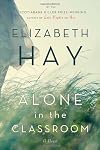
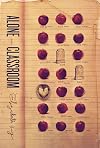
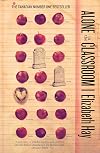
Alone in the Classroom
by Elizabeth Hay
On This Page
Description
Having earned a Scotiabank Giller Prize for her poignant novel Late Nights on Air, best-selling author Elizabeth Hay further enhances her literary legacy with another complex, captivating drama, Alone in the Classroom. Set in Saskatchewan and the Ottawa Valley, this finely honed tale begins in 1929 with a small-town school teacher helping an underprivileged child learn to read-all under the watchful eye of the school's domineering, enigmatic principal. From there, the story takes listeners show more on a mesmerizing journey probing the roots of obsession and revealing how the pains and passions of childhood follow us into adulthood and beyond. show lessTags
Recommendations

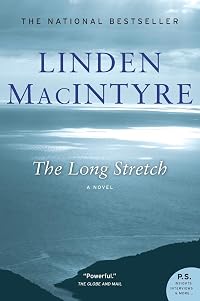

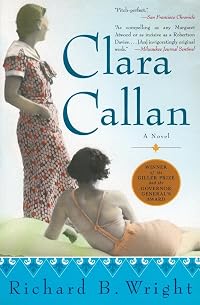
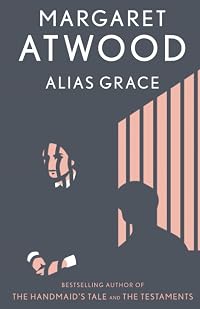
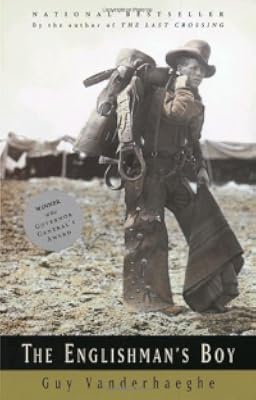





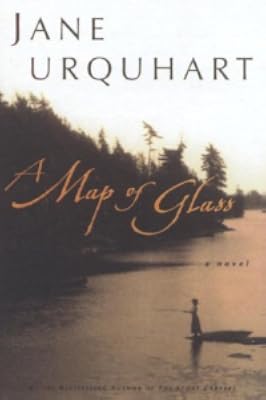
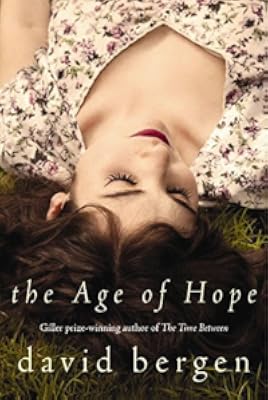
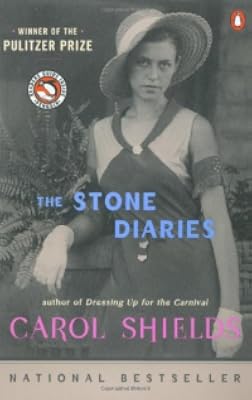
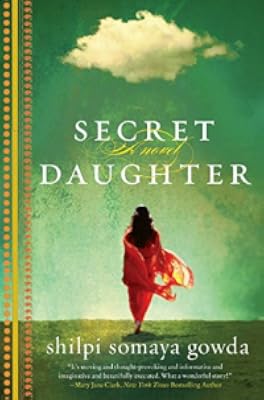





Member Recommendations
Member Reviews
Sometimes the characters a writer pursues take on a seeming life of their own, wresting control of a tale from the hand that holds the pen. In Alone in the Classroom, the narrator, Anne, sets out to write about her mother but gets diverted into the lives of her father's older sister, Connie, an unsettling sexual predator named Parley, a traumatized dyslexic boy named Michael, and the disturbing events that tie them together over the course of more than sixty years. Anne's mother still appears but she has become a minor character, and ultimately what sets out as biography reveals itself as autobiography. Or maybe that is always the case in some respect. And, if so, does it have its analog in fiction? Has Elizabeth Hay, herself, suffered show more the same befuddling as her narrator? Certainly the results here appear jumbled, moving forward (or back) in fits and starts. What appears to be the centre of the story collapses or suddenly shifts out of sight. As the details begin to emerge, connections between characters become clearer but their significance is obscured. And what you are left with is the muddled mess of lives lived. Only a writer with the expressive power and observational talent of a fine poet could turn such a muddle into a compelling narrative. A writer like Elizabeth Hay.
The story turns on the relationship between Connie, who is 18 in her first teaching post in a small town in Saskatchewan, her sadistic and frighteningly self-absorbed school principal, Parley, and the severely dyslexic (at the time dyslexia is not a recognized condition) student, Michael, who is, in Connie's eyes, clearly intelligent and sensitive. Both in this initial encounter and when Connie crosses paths with Parley again eight years later, Connie's strength and Parley's weakness are revealed. But the tripartite construction continues to re-emerge again and again, in different forms and often with different participants. What does it all mean? For Anne, the narrator imposing narrative order on disordered lives, its significance is rich. But Anne's need for order is just a further hue for Hay's palette, so the meaning for the reader remains open.
Writing that so faithfully brings its characters to life, escaping the simplifying tendency of art will, I think, naturally be at times confusing. At least I was confused at times. Certainly this writing forces the reader to slow down, to work things out, to make connections, even to reread sections. (I wanted to reread the book from the start numerous times as I went along, realizing that I had missed vital aspects on my first pass.) It's like the difference between reading a longhand letter from a dear friend and a scrabbled email; the former gives you pause, gladly. Elizabeth Hay's writing gives me pause. Highly recommended. show less
The story turns on the relationship between Connie, who is 18 in her first teaching post in a small town in Saskatchewan, her sadistic and frighteningly self-absorbed school principal, Parley, and the severely dyslexic (at the time dyslexia is not a recognized condition) student, Michael, who is, in Connie's eyes, clearly intelligent and sensitive. Both in this initial encounter and when Connie crosses paths with Parley again eight years later, Connie's strength and Parley's weakness are revealed. But the tripartite construction continues to re-emerge again and again, in different forms and often with different participants. What does it all mean? For Anne, the narrator imposing narrative order on disordered lives, its significance is rich. But Anne's need for order is just a further hue for Hay's palette, so the meaning for the reader remains open.
Writing that so faithfully brings its characters to life, escaping the simplifying tendency of art will, I think, naturally be at times confusing. At least I was confused at times. Certainly this writing forces the reader to slow down, to work things out, to make connections, even to reread sections. (I wanted to reread the book from the start numerous times as I went along, realizing that I had missed vital aspects on my first pass.) It's like the difference between reading a longhand letter from a dear friend and a scrabbled email; the former gives you pause, gladly. Elizabeth Hay's writing gives me pause. Highly recommended. show less
If an author can write, I mean really write, then I'm willing to read pretty much anything they care to put out there. Elizabeth Hay can write. It's an odd writing style, one which features both worn-out phrases and metaphors so startling that you have to read them a few times, both for comprehension and for the sheer enjoyment of the pictures she paints.
For a while I was able to carry it all inside me, like a big bouquet of peonies, and then I couldn't anymore. The moist, plump peony heads got to be too heavy. They were like pounds of raw hamburger hanging upside down.
The book concerns Connie, a brand new and very young teacher sent to a small Saskatchewan school in a farming community at the brink of the Great Depression. There, she show more tutors an older boy who can't read and is menaced in vague and uncomfortable ways by the school's principal. Her story is told by her niece, a woman who worships the strong, independent woman Connie later became and who has an unsatisfactory relationship with her own mother.
The first part of the book is perfect; an interesting story beautifully told and with a strong sense of the isolated prairie community. The book loses momentum as it continues on, so that the final chapters seem to be just treading water. However, Hay is such an accomplished writer that I found it pleasant enough to float around with her through those final chapters. show less
For a while I was able to carry it all inside me, like a big bouquet of peonies, and then I couldn't anymore. The moist, plump peony heads got to be too heavy. They were like pounds of raw hamburger hanging upside down.
The book concerns Connie, a brand new and very young teacher sent to a small Saskatchewan school in a farming community at the brink of the Great Depression. There, she show more tutors an older boy who can't read and is menaced in vague and uncomfortable ways by the school's principal. Her story is told by her niece, a woman who worships the strong, independent woman Connie later became and who has an unsatisfactory relationship with her own mother.
The first part of the book is perfect; an interesting story beautifully told and with a strong sense of the isolated prairie community. The book loses momentum as it continues on, so that the final chapters seem to be just treading water. However, Hay is such an accomplished writer that I found it pleasant enough to float around with her through those final chapters. show less
It's not all that often anymore that I want, more than anything else, to start a review with "I LOVED this book!" or my other stock response, "Holy CRAP, this man/woman can write!" Well, consider both responses rendered for Elizabeth Hay's ALONE IN THE CLASSROOM. Because this is simply an outstandingly beautiful and profoundly satisfying book.
A multi-generational story spanning most of the twentieth century, Hay's story of the Flood and Soper families contains none of the tedium or stock sensationalism that often characterizes so many of the so-called 'sweeping family sagas' that I usually run screaming from, but women seem to love - think Danielle Steele or Belva Plain, for example. Nope. Hay's people are real, believable, utterly show more human. The narrator is Anne Flood, but the heroine, at least for the first half or more of the book is her aunt, Connie Flood, a strong and independent character who Anne has admired her whole life. And there is a 'villain' in Ian 'Parley' Burns, who is certainly evil, but also tortured, thwarted and pathetic. There are strong admirable male characters too, in Sid Goodwin and Michael Graves. But they too have their all-too-human flaws, as does the narrator Anne.
The story turns on a couple of violent crimes, separated by many years, and Parley Burns figures into both. Both Connie and Anne are intricately caught up in the histories of Burns and, later, the attractive and artistically talented dyslexic, Michael Graves. Connie, a schoolteacher turned journalist, and Anne, a schoolteacher and writer, form a strange triagle with Michael, a plot which forms the heart of the novel. But this is also a story about personal histories and confusing and tragic family relationships, particularly the ones between mothers and daughters. Here's a sample -
"Connie indulged Michael the way mothers indulge their sons, so I've come to believe. The mothers can't help it. And the reverse is true. Daughters quicken a mother's critical faculties. None of this is deliberate or thought out - it's on the level of the physical. And so sons bask. And daughters fume. And women brood. And men move on. And yet they don't move on either."
Hay is also expert in evoking a feeling one can remember from childhood, like this one about the importance of the Sunday funnies -
"Newspapers of old smelled damp, inky, pungent. We would lie on the floor when we were kids, our noses inches above the paper, and devour the comic strips that were so glamorous in those days, the women and the men bewitching, all chiselled cheekbones and thick hair, full lips and swelling breasts. The damp wonder of sex and romance, and the excitement of the world out there awaiting us - it was all transmitted directly into our noses through newsprint and ink."
YES, Elizabeth! I remember it too - sprawled on our living room floor checking out the latest installments of "Li'l Abner", "Rex Morgan, M.D.", "Terry and the Pirates", "Steve Canyon", and so many other now nearly forgotten comic strips.
I dont' want to sound sexist, but ALONE IN THE CLASSROOM is a book only a woman could have written. Men, I think, simply lack the sensibility needed to write this way. The erotic tensions and undercurrents of fear and sexual vulnerability are almost palpable, yet as delicately nuanced as a Japanese watercolor. This is simply fine writing. I tried, nearly in vain, to think of anything else I've read that might compare to this book. The only one I could think of was, coincidentally, another Canadian novel, Anne-Marie MacDonald's THE WAY THE CROW FLIES, an enormous tome I enjoyed tremendously some years back.
So yeah. Holy crap, even. I loved this book. My advice? READ it! show less
A multi-generational story spanning most of the twentieth century, Hay's story of the Flood and Soper families contains none of the tedium or stock sensationalism that often characterizes so many of the so-called 'sweeping family sagas' that I usually run screaming from, but women seem to love - think Danielle Steele or Belva Plain, for example. Nope. Hay's people are real, believable, utterly show more human. The narrator is Anne Flood, but the heroine, at least for the first half or more of the book is her aunt, Connie Flood, a strong and independent character who Anne has admired her whole life. And there is a 'villain' in Ian 'Parley' Burns, who is certainly evil, but also tortured, thwarted and pathetic. There are strong admirable male characters too, in Sid Goodwin and Michael Graves. But they too have their all-too-human flaws, as does the narrator Anne.
The story turns on a couple of violent crimes, separated by many years, and Parley Burns figures into both. Both Connie and Anne are intricately caught up in the histories of Burns and, later, the attractive and artistically talented dyslexic, Michael Graves. Connie, a schoolteacher turned journalist, and Anne, a schoolteacher and writer, form a strange triagle with Michael, a plot which forms the heart of the novel. But this is also a story about personal histories and confusing and tragic family relationships, particularly the ones between mothers and daughters. Here's a sample -
"Connie indulged Michael the way mothers indulge their sons, so I've come to believe. The mothers can't help it. And the reverse is true. Daughters quicken a mother's critical faculties. None of this is deliberate or thought out - it's on the level of the physical. And so sons bask. And daughters fume. And women brood. And men move on. And yet they don't move on either."
Hay is also expert in evoking a feeling one can remember from childhood, like this one about the importance of the Sunday funnies -
"Newspapers of old smelled damp, inky, pungent. We would lie on the floor when we were kids, our noses inches above the paper, and devour the comic strips that were so glamorous in those days, the women and the men bewitching, all chiselled cheekbones and thick hair, full lips and swelling breasts. The damp wonder of sex and romance, and the excitement of the world out there awaiting us - it was all transmitted directly into our noses through newsprint and ink."
YES, Elizabeth! I remember it too - sprawled on our living room floor checking out the latest installments of "Li'l Abner", "Rex Morgan, M.D.", "Terry and the Pirates", "Steve Canyon", and so many other now nearly forgotten comic strips.
I dont' want to sound sexist, but ALONE IN THE CLASSROOM is a book only a woman could have written. Men, I think, simply lack the sensibility needed to write this way. The erotic tensions and undercurrents of fear and sexual vulnerability are almost palpable, yet as delicately nuanced as a Japanese watercolor. This is simply fine writing. I tried, nearly in vain, to think of anything else I've read that might compare to this book. The only one I could think of was, coincidentally, another Canadian novel, Anne-Marie MacDonald's THE WAY THE CROW FLIES, an enormous tome I enjoyed tremendously some years back.
So yeah. Holy crap, even. I loved this book. My advice? READ it! show less
The first 3/4th of this novel is a very readable (if occasionally annoyingly incomplete) historical novel set in the late 20s and 30s in Canada. The last 1/4th changes that to something totally different. We know it is not just a historical novel - even at this first start there is a narrator voice who does not belong completely but I really enjoyed the story set in the past. Once she moved to recent past and current times, things went downhill.
The narrator, Anne, starts a story about her mother -- but somewhere in the novel she does admit that she went sideways to it. And it ends up being a novel about an aunt and about Anne herself - and the memories that bind a family.
When a novel starts with a murder (in 1937), you would expect that show more this will be the main story. Hay does not do that - she opens with a murder but it is there mostly to allow the story of Connie to the introduced - the aunt who went teaching in the Canadian prairies in 1929 (when she was 18) and where she met the two men whose lives will fascinate Anne a few decades later. The story of 1929 and then 1937 is the part of this novel I really liked -- the young girl who teaches the kids who are almost her age, the principal who seems to have something broken inside of him, the school and the details of the life in the area and in the school - despite a lot of unsettling moments, including another dead girl (Susan).
But then Anne comes into the picture, not just researching the past but interacting with the characters (now in their 60s or older) and the run through the next 30 years or so change the whole tone of the novel. I suspect that the beginning and the past were there to support this last part but it just did not work for me. I had no issues with the affair or with Anne's obsession with the past (or that we never learned the truth about that murder that opened the book) but this part felt overwritten and repetitive in places.
Looking back at the novel, I liked it more than I expected but I wish it had been just Connie's story - even if it was the complete Connie story, with the last years' affair - adding Anne's existential thoughts just did not match. And then there is the very end where an old play emerges which makes you (and Anne) wonder if all we just read was ever the truth - did she really get the full story while she was looking for it or did she just get one side of the story - do we really know what happened to Susan and later in the lives of everyone who was there.
I liked the author's style - I am not planning on seeking her other works but if I find one, I may read another one. show less
The narrator, Anne, starts a story about her mother -- but somewhere in the novel she does admit that she went sideways to it. And it ends up being a novel about an aunt and about Anne herself - and the memories that bind a family.
When a novel starts with a murder (in 1937), you would expect that show more this will be the main story. Hay does not do that - she opens with a murder but it is there mostly to allow the story of Connie to the introduced - the aunt who went teaching in the Canadian prairies in 1929 (when she was 18) and where she met the two men whose lives will fascinate Anne a few decades later. The story of 1929 and then 1937 is the part of this novel I really liked -- the young girl who teaches the kids who are almost her age, the principal who seems to have something broken inside of him, the school and the details of the life in the area and in the school - despite a lot of unsettling moments, including another dead girl (Susan).
But then Anne comes into the picture, not just researching the past but interacting with the characters (now in their 60s or older) and the run through the next 30 years or so change the whole tone of the novel. I suspect that the beginning and the past were there to support this last part but it just did not work for me. I had no issues with the affair or with Anne's obsession with the past (or that we never learned the truth about that murder that opened the book) but this part felt overwritten and repetitive in places.
Looking back at the novel, I liked it more than I expected but I wish it had been just Connie's story - even if it was the complete Connie story, with the last years' affair - adding Anne's existential thoughts just did not match. And then there is the very end where an old play emerges which makes you (and Anne) wonder if all we just read was ever the truth - did she really get the full story while she was looking for it or did she just get one side of the story - do we really know what happened to Susan and later in the lives of everyone who was there.
I liked the author's style - I am not planning on seeking her other works but if I find one, I may read another one. show less
Narrator, Anne, sets out to write a book about her mother but finds herself writing about her mother's sister, Connie, while her mother remains a in the background. The story begins around 1930 when Connie becomes a teacher in a small town in Saskatchewan. Michael, a pupil who is obviously dyslexic, a condition unrecognized at the time, is unfortunately regarded as stupid yet he is talented in other areas. Connie provides some extra tuition after classes. His sister, Susan, is a blossoming actor under the direction of head teacher, Parley Burns. Then something terrible happens to Susan with consequences even more horrendous. Hay continues several decades of the charismatic Connie's life of which Michael, who is just as appealing, forms show more a major part.
Hay's sprawling novel has more to do with memories and how they affect lives than with the characters themselves. As a result the story develops a nebulous focus, that drifts somewhat. Even at the inconclusive end, Anne throws some doubt into what she has written before, which was annoying. The novel may elicit unpleasant memories of school for some readers, while for others, there will be little connection. Hay's writing is beautiful but there was something missing, especially in the second half of the book. show less
Hay's sprawling novel has more to do with memories and how they affect lives than with the characters themselves. As a result the story develops a nebulous focus, that drifts somewhat. Even at the inconclusive end, Anne throws some doubt into what she has written before, which was annoying. The novel may elicit unpleasant memories of school for some readers, while for others, there will be little connection. Hay's writing is beautiful but there was something missing, especially in the second half of the book. show less
The plot involves a schoolgirl murdered in the Upper Ottawa Valley during the 1940s, another one who died in a fire in Saskatchewan years earlier, the creepy, sadistic principal linked to both girls, and the teacher who brings these stories together and tells them to her niece Annie, the narrator.
At times the structure is confusing since the narrative meanders back and forth in both time and place. This structure, however, suggests the process of learning, a slow discovery of truths as we progress through life's classrooms.
The book is a study of three characters whose lives are interconnected: Connie Flood, the beloved and admired aunt of the narrator; Parley Burns, the troubled and troubling principal; and Michael Graves, the dyslexic show more student whom Connie tutors and loves.
Sometimes the reader's credulity is strained by the main characters meeting and re-meeting in different times and places, but these seeming coincidences are foreshadowed and so intentional: Hay suggests that there is perhaps a hidden symmetry that guides our lives.
Annie represents the human desire to understand the stories, experiences and people that shape individual lives and the lives of those who come after them: ". . . we carry the past forward even when things and people are obliterated" (246). She learns that our patterns of learning set the patterns of our lives: "Everything you learn blurs and merges and contributes to a way of seeing the world" (275).
This is a novel that is worth re-reading. There is so much in it to ponder (e.g. education and learning, the myriad connections between past, present and future) that one reading is insufficient. show less
At times the structure is confusing since the narrative meanders back and forth in both time and place. This structure, however, suggests the process of learning, a slow discovery of truths as we progress through life's classrooms.
The book is a study of three characters whose lives are interconnected: Connie Flood, the beloved and admired aunt of the narrator; Parley Burns, the troubled and troubling principal; and Michael Graves, the dyslexic show more student whom Connie tutors and loves.
Sometimes the reader's credulity is strained by the main characters meeting and re-meeting in different times and places, but these seeming coincidences are foreshadowed and so intentional: Hay suggests that there is perhaps a hidden symmetry that guides our lives.
Annie represents the human desire to understand the stories, experiences and people that shape individual lives and the lives of those who come after them: ". . . we carry the past forward even when things and people are obliterated" (246). She learns that our patterns of learning set the patterns of our lives: "Everything you learn blurs and merges and contributes to a way of seeing the world" (275).
This is a novel that is worth re-reading. There is so much in it to ponder (e.g. education and learning, the myriad connections between past, present and future) that one reading is insufficient. show less
elizabeth hay is magical with her words and stories. it's amazing to me, her quiet but nuanced prose (if that makes sense?). i find that hay has a great ability to capture intimate details of human nature and convey them in her writing. but her style doesn't punch you in the face. it just sort of envelopes you gently yet she will still get deep into your bones. i sound like such a prig. sorry! :) i had the chance to hear hay read from this book a while ago and so it was nice having her voice in my mind while i was reading; she has a wonderful voice which isn't all that surprising given her years working in radio for the CBC. i never listen to audio books - but i wonder if she narrates her own works?
anyway...this story is great. it's show more unsettling and surprising. i was most fixated on the one thread woven through the story: the idea that the past is constantly being rediscovered and effects the lives of our families for years to come.
i was a bit surprised by the tiny, tiny bit of magical realism being dabbled with here - the idea of people being born as others from past lives - bringing memories, and birthmarks, into the new life they occupy. this was very interesting.
the only reason i didn't give this 5-stars is because of the structure. it's almost like two connected novellas and the move from one to the next was sudden. which is, for me, a marked contrast to the smooth nature of hay's style. show less
anyway...this story is great. it's show more unsettling and surprising. i was most fixated on the one thread woven through the story: the idea that the past is constantly being rediscovered and effects the lives of our families for years to come.
i was a bit surprised by the tiny, tiny bit of magical realism being dabbled with here - the idea of people being born as others from past lives - bringing memories, and birthmarks, into the new life they occupy. this was very interesting.
the only reason i didn't give this 5-stars is because of the structure. it's almost like two connected novellas and the move from one to the next was sudden. which is, for me, a marked contrast to the smooth nature of hay's style. show less
Members
- Recently Added By
Published Reviews
ThingScore 83
Lists

Academia in Fiction
158 works; 23 members

Maybe This Year? Books to Look Forward To
414 works; 9 members
Author Information

12+ Works 2,522 Members
Elizabeth Hay was born in Owen Sound, Ontario on October 22, 1951. She attended Victoria College, University of Toronto. She worked for Canadian Broadcasting Corporation radio for ten years as a host, interviewer, and documentary maker. She has written several books including Small Change, A Student of Weather, Garbo Laughs, and The Only Snow in show more Havana. She won the 2007 Scotiabank Giller Prize for Late Nights on Air. In 2002, she received the Marian Engel Award for her body of work, which includes novels, short fiction, and creative non-fiction. (Bowker Author Biography) show less
Awards and Honors
Awards
Distinctions
Common Knowledge
- Canonical title
- Alone in the Classroom
- Original publication date
- 2011
- People/Characters
- Connie Flood; Michael Graves; Parley Burns
- Important places
- Ottawa Valley, Canada; Jewel, Saskatchewan, Canada
- Epigraph
- Nothing would give up life:
Even the dirt kept breathing a small breath.
-- -- -- -- Theodore Roethke - Dedication
- For my mother and father
Classifications
Statistics
- Members
- 276
- Popularity
- 118,373
- Reviews
- 24
- Rating
- (3.41)
- Languages
- English
- Media
- Paper, Audiobook, Ebook
- ISBNs
- 16
- ASINs
- 4