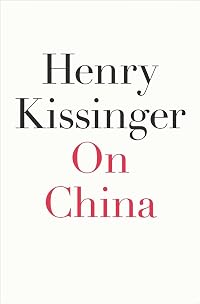
On China
by Henry Kissinger
On This Page
Description
"In this sweeping and insightful history, Henry Kissinger turns for the first time at book-length to a country he has known intimately for decades, and whose modern relations with the West he helped shape. Drawing on historical records as well as his conversations with Chinese leaders over the past forty years, Kissinger examines how China has approached diplomacy, strategy, and negotiation throughout its history, and reflects on the consequences for the global balance of power in the 21st show more century. Since no other country can claim a more powerful link to its ancient past and classical principles, any attempt to understand China's future world role must begin with an appreciation of its long history. For centuries, China rarely encountered other societies of comparable size and sophistication; it was the "Middle Kingdom," treating the peoples on its periphery as vassal states. At the same time, Chinese statesmen-facing threats of invasion from without, and the contests of competing factions within-developed a canon of strategic thought that prized the virtues of subtlety, patience, and indirection over feats of martial prowess. In 'On China', Kissinger examines key episodes in Chinese foreign policy from the classical era to the present day, with a particular emphasis on the decades since the rise of Mao Zedong. He illuminates the inner workings of Chinese diplomacy during such pivotal events as the initial encounters between China and modern European powers, the formation and breakdown of the Sino-Soviet alliance, the Korean War, Richard Nixon's historic trip to Beijing, and three crises in the Taiwan Straits. Drawing on his extensive personal experience with four generations of Chinese leaders, he brings to life towering figures such as Mao, Zhou Enlai, and Deng Xiaoping, revealing how their different visions have shaped China's modern destiny. With his singular vantage on U.S.-China relations, Kissinger traces the evolution of this fraught but crucial relationship over the past 60 years, following its dramatic course from estrangement to strategic partnership to economic interdependence, and toward an uncertain future. With a final chapter on the emerging superpower's 21st-century world role, 'On China' provides an intimate historical perspective on Chinese foreign affairs from one of the premier statesmen of the 20th century"-- show lessTags
Recommendations





Member Recommendations
by anonymous user
Member Reviews
Chinese written history goes back more than 2500 years. Its earliest myths speak of a Yellow Emperor, who does not establish or found the civilization, but rather restores order to an already ancient kingdom. Throughout their long history, the Chinese thought of themselves as the center of the world, the “Middle Kingdom.” The Chinese believe their empire grew not from conquest, but rather by absorption of surrounding barbarian peoples who fervently wished to become Chinese. The Chinese persisted in perceiving themselves as innately superior to other ethnicities throughout their long history until much of their country was colonized by Europeans and the Japanese in the 19th century.
Henry Kissinger’s On China begins with a synopsis show more of that long history because he believes it is necessary in order to understand the path of Chinese diplomacy in the modern world. His account details Chinese diplomacy from the 19th century through the present day, with an emphasis on the period after the founding of the People’s Republic in 1948. He credits modern Chinese leaders from Mao Zedong through Deng Xiaoping through Jiang Zemin with having great patience and an extraordinarily long-term view of world history. Zhou Enlai, Kissinger’s counterpart under Mao, when asked what he thought of the French Revolution, replied that “it was too early to tell.”
An organizing theme in Kissinger’s analysis of relations between China and the West is the contrast between the board games of wei qi and chess. [Wei qi is the game known as “Go” in English.] The Chinese approach, like good strategy in wei qi, requires the avoidance of encirclement. The Western powers historically have sought head-on clashes with clear winners and losers, more like chess. Kissinger uses this analogy to describe Chinese behavior in the Korean War, the Taiwan Strait crises of the 1950’s, and China’s 1962 war with India.
Not renowned for his humility, Kissinger might have subtitled this book “How I personally Saved Western Civilization.” Nevertheless, he is an appropriate chronicler of recent Chinese history since he (along with Richard Nixon, Mao, and Zhou) may have had as much to do with China’s “opening up” to the West as any other human being. The implicit evaluations in his account are somewhat influenced by his personal interactions with the other dramatis personae. For example, Kissinger seems to admire Mao, crediting him with great wisdom despite the fact that his Great Leap Forward and Cultural Revolution resulted in starvation or political persecution for millions of Chinese, in addition to stultifying China’s economy for at least a decade.
Kissinger argues that China, unlike the Soviet Union, has not attempted to expand communism beyond its historical territorial limits. China’s principal strategic problem since the founding of the Peoples’ Republic has been that it is surrounded by unfriendly neighbor states that claim some of the territory historically ruled by China. For example, the Soviet Union sought to control Outer Mongolia despite its ostensible communal bonds of communist ideology. In addition, India and China have long disputed their boundary in the Himalayas, and even fought a short nasty war over its location in 1962. In Kissinger’s view, China’s intervention in the Korean War was not motivated so much by a desire to protect a fraternal communist state as it was a straight forward defense of its own frontier.
Nixon and Kissinger were relatively indifferent to Chinese internal politics, and were able to reach an accommodation with Mao over many international issues because of their mutual distrust of Soviet expansionism. China did not intervene in America’s Vietnam War in any meaningful way because it valued its growing relationship with the United States. In fact, China and Vietnam are historical rivals and even fought a brief war with each other once the United States abandoned the area.
The most difficult issue between the United States and China has been the status of Taiwan, which China views as its own breakaway province. Kissinger and Nixon had to contend with a powerful “China lobby” in the U.S. Congress that favored recognizing the Nationalist government in Taipei over Mao’s government. Nevertheless, Kissinger was able to reach an accommodation with the communists because of their patience and long-term approach to international relations. The temporary “solution” was embodied in the so-called Shanghai Communiqué, whereby the United States recognized that there was only one China, which included both the mainland and Taiwan. For their part, the Chinese communist government was willing to wait (Mao said for “a hundred years”) to settle who was to rule that entire single country. Mao did not renounced the potential use of force to unite the country and tested Western resolve with several probes by artillery shelling two offshore islands controlled by the Nationalists. However, communist forbearance from escalating the violence has made it possible to live in relative peace.
Mao’s successor, Deng Xiaoping, pretty much abandoned the centrally controlled communist economic ideology in favor of a more market-driven model. As a result, China’s economy has made great strides. Deng and his successors, however, have maintained tight control over the political process. China remains a one party state, with all political power residing in the “Party,” even if it remains communist in name only.
Kissinger muses on the tension between the “realist” and “idealist” schools of American foreign policy. Complicating the current relationship between the U.S. and China has been the idealistic movement in U.S. policy to push for the recognition of “human rights” in foreign countries, something that probably never occurred to Kissinger when he was in power. Ever pragmatic, Kissinger recognizes that a realistic approach to policy must be aware of the power of idealistic concepts to influence behavior. The Chinese, on the other hand, highly resent any effort by foreigners to influence the internal affairs of China.
Mutual distrust of the Soviet Union thrust the U.S. and China together. One might expect that the disintegration of the U.S.S.R. would provide the occasion to cease cooperation. In fact, one of the tensest periods in U.S.-China relations occurred in the aftermath of the collapse of the Soviet Union when the Chinese brutally suppressed their own people in the Tiananmen Square riots. Careful diplomacy by George H. W. Bush’s government assured the Chinese that the U.S. would not interfere with China’s internal politics, although it had to make some disparaging remarks to assuage American domestic opinion. Thus, despite the significant differences in perceptions and approaches, the U.S. and China have avoided armed conflict with one another since 1954 and have become highly integrated with each other’s economy.
In the final chapter, Kissinger discusses the difficulty in maintaining peaceful relations with China stemming from the inevitable tension caused by overlapping of national interests of the two nations in East Asia and the Western Pacific. Major challenges to dealing with China in the future will be how much the U.S. attempts to prod the Chinese toward establishing democratic institutions and how aggressively China asserts its new found economic and military power in that area. Kissinger remains cautiously optimistic that competent diplomacy on both sides can avoid serious conflict.
Evaluation: Although one can make fun of Kissinger’s enormous self-confidence, he really knows his stuff. This book is articulate, accurate, probing, and comprehensive. I highly recommend it. show less
Henry Kissinger’s On China begins with a synopsis show more of that long history because he believes it is necessary in order to understand the path of Chinese diplomacy in the modern world. His account details Chinese diplomacy from the 19th century through the present day, with an emphasis on the period after the founding of the People’s Republic in 1948. He credits modern Chinese leaders from Mao Zedong through Deng Xiaoping through Jiang Zemin with having great patience and an extraordinarily long-term view of world history. Zhou Enlai, Kissinger’s counterpart under Mao, when asked what he thought of the French Revolution, replied that “it was too early to tell.”
An organizing theme in Kissinger’s analysis of relations between China and the West is the contrast between the board games of wei qi and chess. [Wei qi is the game known as “Go” in English.] The Chinese approach, like good strategy in wei qi, requires the avoidance of encirclement. The Western powers historically have sought head-on clashes with clear winners and losers, more like chess. Kissinger uses this analogy to describe Chinese behavior in the Korean War, the Taiwan Strait crises of the 1950’s, and China’s 1962 war with India.
Not renowned for his humility, Kissinger might have subtitled this book “How I personally Saved Western Civilization.” Nevertheless, he is an appropriate chronicler of recent Chinese history since he (along with Richard Nixon, Mao, and Zhou) may have had as much to do with China’s “opening up” to the West as any other human being. The implicit evaluations in his account are somewhat influenced by his personal interactions with the other dramatis personae. For example, Kissinger seems to admire Mao, crediting him with great wisdom despite the fact that his Great Leap Forward and Cultural Revolution resulted in starvation or political persecution for millions of Chinese, in addition to stultifying China’s economy for at least a decade.
Kissinger argues that China, unlike the Soviet Union, has not attempted to expand communism beyond its historical territorial limits. China’s principal strategic problem since the founding of the Peoples’ Republic has been that it is surrounded by unfriendly neighbor states that claim some of the territory historically ruled by China. For example, the Soviet Union sought to control Outer Mongolia despite its ostensible communal bonds of communist ideology. In addition, India and China have long disputed their boundary in the Himalayas, and even fought a short nasty war over its location in 1962. In Kissinger’s view, China’s intervention in the Korean War was not motivated so much by a desire to protect a fraternal communist state as it was a straight forward defense of its own frontier.
Nixon and Kissinger were relatively indifferent to Chinese internal politics, and were able to reach an accommodation with Mao over many international issues because of their mutual distrust of Soviet expansionism. China did not intervene in America’s Vietnam War in any meaningful way because it valued its growing relationship with the United States. In fact, China and Vietnam are historical rivals and even fought a brief war with each other once the United States abandoned the area.
The most difficult issue between the United States and China has been the status of Taiwan, which China views as its own breakaway province. Kissinger and Nixon had to contend with a powerful “China lobby” in the U.S. Congress that favored recognizing the Nationalist government in Taipei over Mao’s government. Nevertheless, Kissinger was able to reach an accommodation with the communists because of their patience and long-term approach to international relations. The temporary “solution” was embodied in the so-called Shanghai Communiqué, whereby the United States recognized that there was only one China, which included both the mainland and Taiwan. For their part, the Chinese communist government was willing to wait (Mao said for “a hundred years”) to settle who was to rule that entire single country. Mao did not renounced the potential use of force to unite the country and tested Western resolve with several probes by artillery shelling two offshore islands controlled by the Nationalists. However, communist forbearance from escalating the violence has made it possible to live in relative peace.
Mao’s successor, Deng Xiaoping, pretty much abandoned the centrally controlled communist economic ideology in favor of a more market-driven model. As a result, China’s economy has made great strides. Deng and his successors, however, have maintained tight control over the political process. China remains a one party state, with all political power residing in the “Party,” even if it remains communist in name only.
Kissinger muses on the tension between the “realist” and “idealist” schools of American foreign policy. Complicating the current relationship between the U.S. and China has been the idealistic movement in U.S. policy to push for the recognition of “human rights” in foreign countries, something that probably never occurred to Kissinger when he was in power. Ever pragmatic, Kissinger recognizes that a realistic approach to policy must be aware of the power of idealistic concepts to influence behavior. The Chinese, on the other hand, highly resent any effort by foreigners to influence the internal affairs of China.
Mutual distrust of the Soviet Union thrust the U.S. and China together. One might expect that the disintegration of the U.S.S.R. would provide the occasion to cease cooperation. In fact, one of the tensest periods in U.S.-China relations occurred in the aftermath of the collapse of the Soviet Union when the Chinese brutally suppressed their own people in the Tiananmen Square riots. Careful diplomacy by George H. W. Bush’s government assured the Chinese that the U.S. would not interfere with China’s internal politics, although it had to make some disparaging remarks to assuage American domestic opinion. Thus, despite the significant differences in perceptions and approaches, the U.S. and China have avoided armed conflict with one another since 1954 and have become highly integrated with each other’s economy.
In the final chapter, Kissinger discusses the difficulty in maintaining peaceful relations with China stemming from the inevitable tension caused by overlapping of national interests of the two nations in East Asia and the Western Pacific. Major challenges to dealing with China in the future will be how much the U.S. attempts to prod the Chinese toward establishing democratic institutions and how aggressively China asserts its new found economic and military power in that area. Kissinger remains cautiously optimistic that competent diplomacy on both sides can avoid serious conflict.
Evaluation: Although one can make fun of Kissinger’s enormous self-confidence, he really knows his stuff. This book is articulate, accurate, probing, and comprehensive. I highly recommend it. show less
Kissinger artfully and deftly takes us from ancient China to that of today in a way that is enlightening and engaging. It is a timely read to understand this slowly emerging global power that plans for the millienia, not the news cycle and that envelopes while refusing encirclement as opposed to charging and re-forming.
Wilie it has been covered elsewhere, the secret meetings with China during the Vietnam War and the candid observations on aging China leaders like Mao and others make for interesting reading.
It is also reaussring, when so many seem to only see the China-U.S. interaction as one that must lead to international armed conflict that Kissinger assess the future of China as largely focuses on internal development and raising show more the standard of living of so many millions in poverty. Of course, to do that China is locking up resources in East Africa, Central Asia and even sometimes in the Western Hemisphere... show less
Wilie it has been covered elsewhere, the secret meetings with China during the Vietnam War and the candid observations on aging China leaders like Mao and others make for interesting reading.
It is also reaussring, when so many seem to only see the China-U.S. interaction as one that must lead to international armed conflict that Kissinger assess the future of China as largely focuses on internal development and raising show more the standard of living of so many millions in poverty. Of course, to do that China is locking up resources in East Africa, Central Asia and even sometimes in the Western Hemisphere... show less
"On China" is quite an interesting book. I would call it "America & China", which is what the book is all about really.
Henry Kissinger has taken a somewhat chronological approach. The first section goes back to 'the century of humiliation', and he explains how this has influenced the Chinese.
From there, there is a broad swathe until the time of Hu Jintao.
He has dedicated a large section of the book to the Mao/Zhou Enlai/Deng Xiaoping era, and I assume that this is because this is the time he was involved with China.
His writing on Jiang Zemin and Hu Jintao are more cursory.
I do not think that he has explored geopolitics in its entirety, and this is fine because it would have complicated the narrative.
Along the way, you get some show more insights into how the Chinese negotiate and their approach to relationships and strategy. This is why I have given it a 5-star.
I am sure he has glossed over, and ignored his missteps and miscalculations insofar as China is concerned. show less
Henry Kissinger has taken a somewhat chronological approach. The first section goes back to 'the century of humiliation', and he explains how this has influenced the Chinese.
From there, there is a broad swathe until the time of Hu Jintao.
He has dedicated a large section of the book to the Mao/Zhou Enlai/Deng Xiaoping era, and I assume that this is because this is the time he was involved with China.
His writing on Jiang Zemin and Hu Jintao are more cursory.
I do not think that he has explored geopolitics in its entirety, and this is fine because it would have complicated the narrative.
Along the way, you get some show more insights into how the Chinese negotiate and their approach to relationships and strategy. This is why I have given it a 5-star.
I am sure he has glossed over, and ignored his missteps and miscalculations insofar as China is concerned. show less
Henry Kissinger's reputation remains controversial at best today, but many consider one of his most profound achievements in foreign policy to be the opening of China in the 1970s. Few, past or present, could dare to approach the depth of his expertise in this area.
The first few chapters of the book cover a broad outline of Chinese history up to the early 20th century, and ventures an explanation of the nature of their relations with other nations - primarily as tributary states, as all challengers were played off against each other, or were eventually absorbed. One metaphor that stood out was his usage of wei qi, better known in the west by its alternate form, go. The great game of politics is not like a decisive battle, as in chess, show more where all of the pieces are visisble and strengths can be calculated easily. Rather, it is a constantly shifting array of multiple factors, which can be negotiated only by a skilled professional.
The meat of the book concerns the latter part of the 20th century. The inner machinations and major players of the enigmatic government, from the charming Zhou Enlai to the paradox of Mao, to the reformer Deng Xiaopeng, and outlines of some of the modern day leaders too. The ups and downs of China's relationship with the world, particularly with the US, are explored with good detail and piercing analysis.
One of the main criticisms that can be made about the book - and the author - is his adherence to Realpolitik, at the very real detraction of moral issues. His almost neutral reaction to the events of Tienanmen Square is a bit shocking, but still interesting nonetheless. His criticisms of Mao are far too understated to be considered a form of mere diplomacy.
The end of the book offers a pragmatic but optimistic view of the future of Sino-American relations. These two nations have the power to shape the world for the better, if they both want it.
All things considered, this is an extremely valuable look at the situation, and of paramount interest to anybody interested in international politics. Recommended. show less
The first few chapters of the book cover a broad outline of Chinese history up to the early 20th century, and ventures an explanation of the nature of their relations with other nations - primarily as tributary states, as all challengers were played off against each other, or were eventually absorbed. One metaphor that stood out was his usage of wei qi, better known in the west by its alternate form, go. The great game of politics is not like a decisive battle, as in chess, show more where all of the pieces are visisble and strengths can be calculated easily. Rather, it is a constantly shifting array of multiple factors, which can be negotiated only by a skilled professional.
The meat of the book concerns the latter part of the 20th century. The inner machinations and major players of the enigmatic government, from the charming Zhou Enlai to the paradox of Mao, to the reformer Deng Xiaopeng, and outlines of some of the modern day leaders too. The ups and downs of China's relationship with the world, particularly with the US, are explored with good detail and piercing analysis.
One of the main criticisms that can be made about the book - and the author - is his adherence to Realpolitik, at the very real detraction of moral issues. His almost neutral reaction to the events of Tienanmen Square is a bit shocking, but still interesting nonetheless. His criticisms of Mao are far too understated to be considered a form of mere diplomacy.
The end of the book offers a pragmatic but optimistic view of the future of Sino-American relations. These two nations have the power to shape the world for the better, if they both want it.
All things considered, this is an extremely valuable look at the situation, and of paramount interest to anybody interested in international politics. Recommended. show less
Before 1969 the People's Republic of China and USSR were seen as one large Communist bloc whose power centre was in Moscow however as 1969 rolled around and Russian troops massed on the Chinese border, nuclear war between Russia and China appeared probable (so much so that Chinese leaders were dispersed from Beijing around the country). At this point President Nixon decided that Russia was the worse of the two evils which made possible a heretofore unlikely meeting with Chairman Mao in 1972 and a relatively stable period of peaceful co-existence has existed between the USA and China since.
Henry Kissinger was the National Security Advisor to Nixon and was a key figure in setting up the meeting between the unlikely bedfellows. His book show more charts the history of China from its ancient origins, commenting on the nature of Chinese society and its early belief in its own superiority in the world, not in a proselytizing or crusading manner as one thinks of the neo-con crusade for the democratisation of the third world, but through sheer confidence in ones cultural superiority. And this confidence was badly shaken following the opium wars with the UK with one embarrassing concession after another to host of Western nations on trade, diplomatic relations and even ownership of Chinese lands.
It deals with the civil war that led to the Communist victory (the nationalists escaping to settle what is now known as Taiwan) as well as successive Communist policy blunders such as the Great Leap Forward, an aim to increase industrial output rapidly to overtake the West in 15 years with goals so unrealistic that local officials faked their grain figures which were then relied upon as Mao sold off much of China's remaining grain to Russia in exchange for weapons triggering a famine that killed as many as 45 million people. There is also the Cultural Revolution, part of Mao's vision of continual revolution, an attempt to wipe out all traces of China's Confucian inspired civil service in which many senior mandarins were removed from their positions and sent to labour in the fields, including in their ranks the future leads of the country Deng Xiaoping and Jiang Zemin and very nearly Mao's right hand man Zhao Enlai.
The book is a very useful grounding in modern Chinese political history and it is interesting to observe Chinese foreign policy from the viewpoint of a game of Wei Qi in which two players place down respectively black and white tiles, the object being to encircle ones enemy. Kissinger is at some times almost an apologist for Mao and whilst some of the worst excesses are noted, more effort is put into understanding his decisions in the framework of Chinese history. An explanation for the softer tone towards Mao could be to lesson the burden of being the man to have established relations with a man responsible for more that 45 million deaths.
Henry Kissinger is very much a Republican and top marks to American forgeign policy go to Nixon, Reagan and both Bushes. Clinton and Carter are both criticised as being too gun-ho about trying to spread and apply Western values in a Chinese context.
Whatever the problems with this book I would certainly recommend it as an introductory book on Modern China because it is one that will make you want to read more. show less
Henry Kissinger was the National Security Advisor to Nixon and was a key figure in setting up the meeting between the unlikely bedfellows. His book show more charts the history of China from its ancient origins, commenting on the nature of Chinese society and its early belief in its own superiority in the world, not in a proselytizing or crusading manner as one thinks of the neo-con crusade for the democratisation of the third world, but through sheer confidence in ones cultural superiority. And this confidence was badly shaken following the opium wars with the UK with one embarrassing concession after another to host of Western nations on trade, diplomatic relations and even ownership of Chinese lands.
It deals with the civil war that led to the Communist victory (the nationalists escaping to settle what is now known as Taiwan) as well as successive Communist policy blunders such as the Great Leap Forward, an aim to increase industrial output rapidly to overtake the West in 15 years with goals so unrealistic that local officials faked their grain figures which were then relied upon as Mao sold off much of China's remaining grain to Russia in exchange for weapons triggering a famine that killed as many as 45 million people. There is also the Cultural Revolution, part of Mao's vision of continual revolution, an attempt to wipe out all traces of China's Confucian inspired civil service in which many senior mandarins were removed from their positions and sent to labour in the fields, including in their ranks the future leads of the country Deng Xiaoping and Jiang Zemin and very nearly Mao's right hand man Zhao Enlai.
The book is a very useful grounding in modern Chinese political history and it is interesting to observe Chinese foreign policy from the viewpoint of a game of Wei Qi in which two players place down respectively black and white tiles, the object being to encircle ones enemy. Kissinger is at some times almost an apologist for Mao and whilst some of the worst excesses are noted, more effort is put into understanding his decisions in the framework of Chinese history. An explanation for the softer tone towards Mao could be to lesson the burden of being the man to have established relations with a man responsible for more that 45 million deaths.
Henry Kissinger is very much a Republican and top marks to American forgeign policy go to Nixon, Reagan and both Bushes. Clinton and Carter are both criticised as being too gun-ho about trying to spread and apply Western values in a Chinese context.
Whatever the problems with this book I would certainly recommend it as an introductory book on Modern China because it is one that will make you want to read more. show less
About five years ago, I'd already enjoyed Kissinger's highly readable and lucid [b:World Order|20821140|World Order|Henry Kissinger|https://i.gr-assets.com/images/S/compressed.photo.goodreads.com/books/1400873909l/20821140._SY75_.jpg|40167028], so I was curious to what insights he would be able to treat me in his 2011 book "On China". Despite the fact that it is obviously quite dated in the era of Trump (and certainly deserves an update now that the the relations between the US and China seem to be deteriorating), it provided clear insights into the workings, pitfalls, constraints and possibilities of navigating the difficulties of international relations in a world where global order is adrift.
It has certainly left me hungry for some show more other books in a similar vein in my "tsundoku" including [b:Destined for War: Can America and China Escape Thucydides’s Trap?|31125556|Destined for War Can America and China Escape Thucydides’s Trap?|Graham Allison|https://i.gr-assets.com/images/S/compressed.photo.goodreads.com/books/1488552414l/31125556._SY75_.jpg|51739339], [b:The Back Channel: A Memoir of American Diplomacy and the Case for Its Renewal|40405442|The Back Channel A Memoir of American Diplomacy and the Case for Its Renewal|William J. Burns|https://i.gr-assets.com/images/S/compressed.photo.goodreads.com/books/1538745305l/40405442._SY75_.jpg|62723493] and [b:A Political History of the World: Three Thousand Years of War and Peace|39074559|A Political History of the World Three Thousand Years of War and Peace|Jonathan Holslag|https://i.gr-assets.com/images/S/compressed.photo.goodreads.com/books/1531841329l/39074559._SY75_.jpg|60629808]. Now to find the time... show less
It has certainly left me hungry for some show more other books in a similar vein in my "tsundoku" including [b:Destined for War: Can America and China Escape Thucydides’s Trap?|31125556|Destined for War Can America and China Escape Thucydides’s Trap?|Graham Allison|https://i.gr-assets.com/images/S/compressed.photo.goodreads.com/books/1488552414l/31125556._SY75_.jpg|51739339], [b:The Back Channel: A Memoir of American Diplomacy and the Case for Its Renewal|40405442|The Back Channel A Memoir of American Diplomacy and the Case for Its Renewal|William J. Burns|https://i.gr-assets.com/images/S/compressed.photo.goodreads.com/books/1538745305l/40405442._SY75_.jpg|62723493] and [b:A Political History of the World: Three Thousand Years of War and Peace|39074559|A Political History of the World Three Thousand Years of War and Peace|Jonathan Holslag|https://i.gr-assets.com/images/S/compressed.photo.goodreads.com/books/1531841329l/39074559._SY75_.jpg|60629808]. Now to find the time... show less
Excellent - especially the historical introduction. Gives a new meaning to China's politics and shows how very predictable in a positive sense they have worked over the past decades. Chinese politics are profound, far-sighted and much less aggressive than I imagined. Goes a long way to prove that long-term politics is positive and that the fast turn-over in western democracies is ambiguous to say the least. Perhaps it is not such a bad thing after all if Africa looks more to China than elsewhere for political allies - and does not hope too much on empty promises of those only out to make a quick buck. Isn't it fascinating that Kissinger did most of his diplomatic stuff with China when he had just turned 50?
Members
- Recently Added By
Published Reviews
Kissinger chooses to ascribe huge insight to virtually everything Mao says.
added by mercure
Henry Kissinger will always remain a controversial historical figure. But this elegantly written and erudite book reminds us that on one of the biggest questions of the post-World War II world his judgment was right, and showed a long-term vision that few politicians of any country could match today. Unless, of course, Hillary Clinton is even now on a secret mission to Tehran.
added by mercure
Henry Kissinger in China was always a gratingly and irritatingly smug presence, but Henry Kissinger "on China" is madly baffling.
added by mercure
Lists

Donald J. Trump Favorites
31 works; 1 member

Entender el mundo
46 works; 1 member
Author Information

89+ Works 9,122 Members
Former Secretary of State Henry Kissinger is the recipient of the Nobel Peace Prize, the Presidential Medal of Freedom, and the Medal of Liberty. He is the bestselling author of numerous books, including Years of Renewal and Diplomacy. Dr. Kissinger is currently the chair of Kissinger Associates, Inc., an international consulting firm. Born in show more Germany and a U.S. citizen since 1943, he lives in New York. Henry Kissinger was born in Fuerth, Germany on May 27, 1923. He came to the United States in 1938 and became a United States citizen in 1943. He served in the Army from 1943 to 1946. He graduated summa cum laude from Harvard College in 1950 and received M.A. and Ph.D. degrees from Harvard University in 1952 and 1954. From 1954 until 1969 he was a member of the faculty of Harvard University. He was the United States Secretary of State from September 22, 1973, until January 20, 1977. He also served as Assistant to the President for National Security Affairs from January 20, 1969, until November 3, 1975. He also held positions on the National Bipartisan Commission on Central America, the President's Foreign Intelligence Advisory Board, the Commission on Integrated Long-Term Strategy of the National Security Council and Defense Department, and the Defense Policy Board. He received several awards for his diplomatic work including the Nobel Peace Prize in 1973, the Presidential Medal of Freedom in 1977, and the Medal of Liberty in 1986. He has written numerous books including American Foreign Policy, A World Restored: Metternich, Castlereagh and the Problems of Peace, 1812-22, The White House Years, Years of Upheaval, Diplomacy, Years of Renewal, and On China. In 2014, his book entitled World Order was listed as a New York Times bestseller. He has also published numerous articles on United States foreign policy, international affairs and diplomatic history. He is currently the chairman of Kissinger Associates, Inc., an international consulting firm. (Bowker Author Biography) show less
Some Editions
Awards and Honors
Awards
Distinctions
Common Knowledge
- Original publication date
- 2011
- People/Characters
- Confucius (Latinization of Kong Fu-zi); Lord Elgin; Qin Shihuang; Lyndon Baines Johnson; Richard M. Nixon; Zhou Enlai (show all 7); Mao Zedong
- Important places
- China
- Important events
- Vietnam War
- Dedication
- To Annette and Oscar de la Renta
- First words
- Societies and nations tend to think of themselves as eternal.
Classifications
Statistics
- Members
- 1,087
- Popularity
- 23,545
- Reviews
- 16
- Rating
- (3.97)
- Languages
- 11 — Chinese, Dutch, English, French, German, Hungarian, Italian, Polish, Portuguese, Spanish, Turkish
- Media
- Paper, Audiobook, Ebook
- ISBNs
- 35
- ASINs
- 12