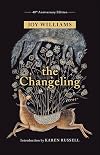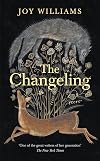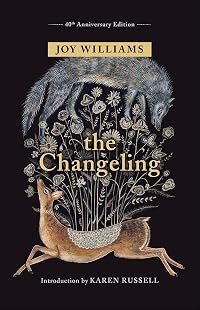
The Changeling
by Joy Williams
On This Page
Description
"Forty years later, The Changeling is no less haunting and no less visionary than the day it was published, but it has only become clearer that Joy Williams is a virtuosic stylist and a singular thinker--a genius in every sense of the word. When we first meet Pearl--young in years but advanced in her drinking--she's on the lam, sitting at a hotel bar in Florida, throwing back gin and tonics with her infant son cradled in the crook of her arm. But her escape is brief, and the relief she feels show more at having fled her abusive husband, and the Northeastern island his family calls home, doesn't last for long. Soon she's being shepherded back. The island, for Pearl, is a place of madness and pain, and her round-the-clock drinking spurs on the former even if it dulls the latter. And through this lens--Pearl's fragile consciousness--readers encounter the horror and triumph of both childhood and motherhood in a new light. With language that flits between exuberance and elegy, the plainspoken and the poetic, Joy Williams has blended, as Rick Moody writes, "the arresting improbabilities of magic realism, with the surrealism of the folkloric revival . . . and with the modernist foreboding of Under the Volcano," and created something entirely original and entirely consuming."-- show lessTags
Recommendations


Member Reviews
This is unlike anything I have ever read. Not fully surrealist or even magic realism, but an almost Lynchian Americana folklore tragedy with the disintegration of the self. Utterly beautiful, discombobulating, nauseatingly unsettling with little to really say why. There is a magic infused in writing that absorbs and warps the reader as they read it.
While The Changeling is not plot heavy, the story follows Pearl, a new mother, leaving her husband and the family island they have been living on. He comes to bring her back and tragedy strikes in the way home, leaving Pearl back on the island, lost, adrift, and a focus for the various children of her in laws. She loses herself in alcoholism and things get very weird, leaving us unsure as to show more what has actually happened in the closing of the novel.
What truly sets this story apart for me is the hypnotic, lyrical incisive nonsense of the prose. It truly is spellbinding in its poetry and denaturing of grammar as Pearl's self begins to come apart. The opening third of this book is written so majestically that I actually found it hard to read as the prose was so evocative and effecting that I was constantly finding myself inspired, making notes and working on my own writing, as Williams' words just unlocked my brain.
I would remiss to not acknowledge that there was a section on the middle in which Pearl's alcoholism and abdication of life and reality are being established that I actually found tough going because the prose suffered and the section felt particularly drawn out. This may well be purposeful, but going from being enraptured to uncomfortable less engaged in the writing was a little off putting. But as things truly start to spiral the text gets really weird and wonderful again.
There are a couple of full, unpunctuated streams of consciousness that appear to be the children's odd sayings, vying for Pearl's attention, and the thought to speech children (and myself) are so prone to, that are incredibly effective. I truly can't quite pin down why exactly, but one of them all but reduced me to tears, it was so powerful. Towards the end there is also the description of an old woman and likening her to a bird, and again I can't put my finger on exactly why, but it is one of the most unsettling and creepy things I've ever read, especially for something not writing anything extreme or explicitly discomforting. Williams just has an absolute mastery of tone and vibe from the fairy tale, both modern sanitised and traditional, to hallucinatory and disassociative, and the uncanny and disturbing.
You'll see clearly from other reviews that it's almost impossible to say what is or isn't real in this story. Who or what is/ are the Changeling/s, and exactly what they represent. Are all the characters separate entities or aspects of certain other characters. Pearl is an unreliable narrator and her world is unreliable, which is extremely appropriate with this being written in the late 70s that was still very much dealing with the fallout and reckoning with what women were and should be. Following the increased freedoms that came during the second world war and the subsequent brutal banishment to home and baby makers that took an unbelievable toll on many's psyche, as did the chauvinist gender politics that dominated the following decades.
Pearl is a person purposely shown without agency. We see her swept off her feet and whisked away, unable to get away when she wants, and ultimately trapped on the island, surrounded by children, and lost in a depressive, alcoholic haze. Through Pearl we really see what tragedy on top of the utterly controlling patriarchy does to a motherfucker. This is her own private Twin Peaks.
There's infinitely more to say about this book that I still can barely wrap my head around. The animal motifs and echoes of family history that burrow and vibrate through the narrative. How much of anything, especially the ending, is real? Does that even matter? What are all the goodness knows how many other elements and allusions I'm missing? I'm truly fascinated and besotted with this bizarre book.
Truly one of the most singular and mentally, emotionally stimulating books I've ever had the pleasure of reading. Please and thank you!
***
Initial Thoughts:
OK. I really needed a book that absolutely knocked my socks off as I've been in a slump of disappointments and this delivered! It has just taken me a relative age to read as I struggle with text somewhat, but thus is one of the weirdest, most beautiful and hauntingly bleak books I've ever read. Just breathtaking!
More thoughts when I've had time to process and it's not 0515. show less
While The Changeling is not plot heavy, the story follows Pearl, a new mother, leaving her husband and the family island they have been living on. He comes to bring her back and tragedy strikes in the way home, leaving Pearl back on the island, lost, adrift, and a focus for the various children of her in laws. She loses herself in alcoholism and things get very weird, leaving us unsure as to show more what has actually happened in the closing of the novel.
What truly sets this story apart for me is the hypnotic, lyrical incisive nonsense of the prose. It truly is spellbinding in its poetry and denaturing of grammar as Pearl's self begins to come apart. The opening third of this book is written so majestically that I actually found it hard to read as the prose was so evocative and effecting that I was constantly finding myself inspired, making notes and working on my own writing, as Williams' words just unlocked my brain.
I would remiss to not acknowledge that there was a section on the middle in which Pearl's alcoholism and abdication of life and reality are being established that I actually found tough going because the prose suffered and the section felt particularly drawn out. This may well be purposeful, but going from being enraptured to uncomfortable less engaged in the writing was a little off putting. But as things truly start to spiral the text gets really weird and wonderful again.
There are a couple of full, unpunctuated streams of consciousness that appear to be the children's odd sayings, vying for Pearl's attention, and the thought to speech children (and myself) are so prone to, that are incredibly effective. I truly can't quite pin down why exactly, but one of them all but reduced me to tears, it was so powerful. Towards the end there is also the description of an old woman and likening her to a bird, and again I can't put my finger on exactly why, but it is one of the most unsettling and creepy things I've ever read, especially for something not writing anything extreme or explicitly discomforting. Williams just has an absolute mastery of tone and vibe from the fairy tale, both modern sanitised and traditional, to hallucinatory and disassociative, and the uncanny and disturbing.
You'll see clearly from other reviews that it's almost impossible to say what is or isn't real in this story. Who or what is/ are the Changeling/s, and exactly what they represent. Are all the characters separate entities or aspects of certain other characters. Pearl is an unreliable narrator and her world is unreliable, which is extremely appropriate with this being written in the late 70s that was still very much dealing with the fallout and reckoning with what women were and should be. Following the increased freedoms that came during the second world war and the subsequent brutal banishment to home and baby makers that took an unbelievable toll on many's psyche, as did the chauvinist gender politics that dominated the following decades.
Pearl is a person purposely shown without agency. We see her swept off her feet and whisked away, unable to get away when she wants, and ultimately trapped on the island, surrounded by children, and lost in a depressive, alcoholic haze. Through Pearl we really see what tragedy on top of the utterly controlling patriarchy does to a motherfucker. This is her own private Twin Peaks.
There's infinitely more to say about this book that I still can barely wrap my head around. The animal motifs and echoes of family history that burrow and vibrate through the narrative. How much of anything, especially the ending, is real? Does that even matter? What are all the goodness knows how many other elements and allusions I'm missing? I'm truly fascinated and besotted with this bizarre book.
Truly one of the most singular and mentally, emotionally stimulating books I've ever had the pleasure of reading. Please and thank you!
***
Initial Thoughts:
OK. I really needed a book that absolutely knocked my socks off as I've been in a slump of disappointments and this delivered! It has just taken me a relative age to read as I struggle with text somewhat, but thus is one of the weirdest, most beautiful and hauntingly bleak books I've ever read. Just breathtaking!
More thoughts when I've had time to process and it's not 0515. show less
What to say about this book? For starters, it's certainly like nothing else I have ever read. We begin with Pearl, drinking in a bar while clutching her newborn son, having run away from her husband and their home on an island inhabited solely by his family. Then a plane crash upends everything. Pearl returns to the island, spends all her time drinking, and begins to have odd feelings about her son that may be alcoholic delusions or may be revelations of something very strange going on.
This is definitely not a book for everyone. Answers are not provided. Potential plots drift in and out, never really pursued to their conclusions. The story is much more concerned with emotional states than with telling any sort of rational story. But for show more readers who are not bothered by ambiguity and strangeness, it is fascinating. Pearl is both an appealing and offputting character; her observations are both pricelessly acute and ridiculous, and the reader can never be certain whether what she thinks is happening is actually real. Joy Williams wants to ask questions that don't have clear answers -- about connections between parents and children, what it means for that connection when children grow up, how we process trauma, how we lose touch with reality. She turns the world upside down and gives you a glimpse of how alien it can be. It's not an easy read, but it's an intriguing one. show less
This is definitely not a book for everyone. Answers are not provided. Potential plots drift in and out, never really pursued to their conclusions. The story is much more concerned with emotional states than with telling any sort of rational story. But for show more readers who are not bothered by ambiguity and strangeness, it is fascinating. Pearl is both an appealing and offputting character; her observations are both pricelessly acute and ridiculous, and the reader can never be certain whether what she thinks is happening is actually real. Joy Williams wants to ask questions that don't have clear answers -- about connections between parents and children, what it means for that connection when children grow up, how we process trauma, how we lose touch with reality. She turns the world upside down and gives you a glimpse of how alien it can be. It's not an easy read, but it's an intriguing one. show less
I cannot put into words the feeling I got when I finished this masterpiece.
This is the kind of book, though, that most people will hate with a fury that is rarely extinguished, and I can't deny them their hate, because this book is for people who don't mind loose ends dangling just beyond reach, and the plot still unexplainable after one tells it you what it meant (if there actually is one), and no one else.
This is about many things - alcohol, madness, children, trauma, consent, clairvoyance, solitude - and at the same time, it may seem rambling, precisely due to so many converging and diverging themes. Most books run with one or two, three seems like a stretch. This masterpiece handled seven themes with aplomb, and you get the show more suspicious feeling that this was because the author limited herself to seven.
TL;DR - read it if you're into Gainax endings, don't read if you like linear narratives and storytelling. show less
This is the kind of book, though, that most people will hate with a fury that is rarely extinguished, and I can't deny them their hate, because this book is for people who don't mind loose ends dangling just beyond reach, and the plot still unexplainable after one tells it you what it meant (if there actually is one), and no one else.
This is about many things - alcohol, madness, children, trauma, consent, clairvoyance, solitude - and at the same time, it may seem rambling, precisely due to so many converging and diverging themes. Most books run with one or two, three seems like a stretch. This masterpiece handled seven themes with aplomb, and you get the show more suspicious feeling that this was because the author limited herself to seven.
TL;DR - read it if you're into Gainax endings, don't read if you like linear narratives and storytelling. show less
it's challenging to spend a whole book in Pearl's mind, Pearl who herself seems to be hardly there at all. yet the book, swimming in gin and thereby skimming over so much of the real world outside herself until she achieves the condition, by refusing to engage, of transcending, transforming the real, creates its own reality in the drift, in the wild children who may or may not exist, who tell her everything and protect her, willingly caught inside her/their stories. it begins as a plane wreck, Pearl floating, rescued/not rescued, resurfacing on an island she cannot bear to inhabit or to leave. it's a force of life, caught perhaps in a moment of death or self-destruction, connected and tragically unconnected to the world around it, even show more to the inner life it still feels. first published in 1978, it resides in a profoundly female consciousness, set in another time we hardly can (manage to)(bear to) inhabit, where the mother splits, dissolves, after childbirth, and the child left behind is perceived as loved, as other, and as gone. show less
It's a dazzling book. Not at all a conventional narrative. Elements of magical realism and deep mythology. The protagonist and primary narrator is an admitted drunk, but I think it a mistake to think about this in terms of a personality characteristic... it is more a device that lets us, as readers, experience the world of the novel while dodging the limitations of conventional, rational explanation and unambiguous description. A tough read at times, but ultimately well worth it.
This is a re-release of a book written in the 70s (and severely panned by the critics). I finished the book two days ago and am still thinking about it. Did I read a book about a cult? An alcoholic woman's crazy thoughts? A dream? The truth or a bunch of lies? If you enjoy books with creepy children, a gothic horror sensibility and no true resolution of what you've invested hours in reading, then this is your book.
"People try living without knowing what it is they're supposed to be doing, and then one is changed and it is over. There is one side and there is the other. And one travels back and forth and it becomes simply too much to bear, the moving back and forth between advent and farewell." Wonderfully weird tale fully grounded in deep human insight with an intoxicating, shapeshifting twist of the uncanny. Unfortunately went off the rails a bit for me at the end.
"Oh the idea of the infinite is always present, the marvelous is so near, and then one gets bogged down in the arbitrariness of life. It is all hopeless. Absurd."
"Oh the idea of the infinite is always present, the marvelous is so near, and then one gets bogged down in the arbitrariness of life. It is all hopeless. Absurd."
Members
- Recently Added By
Author Information

68+ Works 3,222 Members
Joy Williams is the author of four novels-the most recent, The Quick and the Dead, was a finalist for the Pulitzer Prize in 2001-and two earlier collections of stories, as well as Ill Nature, a book of essays that was a finalist for the National Book Critics Circle Award for criticism. Among her many honors are the Rea Award for the short story show more and the Strauss Living Award from the American Academy of Arts and Letters. She lives in Key West, Florida, and Tucson, Arizona show less
Some Editions
Common Knowledge
Classifications
Statistics
- Members
- 278
- Popularity
- 116,550
- Reviews
- 11
- Rating
- (3.77)
- Languages
- English, Italian
- Media
- Paper, Ebook
- ISBNs
- 8
- ASINs
- 2