
Nicholas Mosley (1923–2017)
Author of Hopeful Monsters
About the Author
Nicholas Mosley was born on June 25, 1923. During World War II, he joined the Rifle Brigade and won the Military Cross. He read philosophy for one year at Oxford University. His first novel, Spaces in the Dark, was published in 1951. His other novels included Accident, Impossible Object, and show more Hopeful Monsters, which won the Whitbread book of the year in 1990. He wrote biographies of poet Julian Grenfell, Russian leader Leon Trotsky, and Father Raymond Raynes. He was best known for his two-part biography on his father Sir Oswald Mosley, the founder of the British Union of Fascists, entitled The Rules of the Game and Beyond the Pale. He died on February 28, 2017 at the age of 93. (Bowker Author Biography) show less
Image credit: Courtesy of Persephone Books
Series
Works by Nicholas Mosley
Rules of the Game/Beyond the Pale: Memoirs of Sir Oswald Mosley and Family/2 Volumes in 1 (1991) 32 copies
The Assassination of Trostsky 2 copies
Spaces of the Dark 1 copy
Associated Works
Tagged
Common Knowledge
- Other names
- Mosley, Sir Nicholas
Lord Ravensdale
3rd Baron Ravensdale, 7th Baronet, Nicholas Mosley, - Birthdate
- 1923-06-25
- Date of death
- 2017-02-28
- Gender
- male
- Education
- University of Oxford (Balliol College)
Eton College - Occupations
- novelist
biographer - Organizations
- British Army
- Awards and honors
- Military Cross
Royal Society of Literature (Fellow) - Agent
- Michael Sissons (PFD)
- Relationships
- Mosley, Oswald (father)
Mosley, Diana (stepmother)
Mosley, Charlotte (sister-in-law)
Curzon, George Nathaniel (grandfather)
Curzon, Lady Mary (grandmother)
Curzon, Cynthia (mother) (show all 9)
Ravensdale, Baroness (aunt)
Salmond, Monica Grenfell (mother-in-law)
Mosley, Ivo (son) - Nationality
- UK
- Birthplace
- London, England, UK
- Places of residence
- London, England, UK
- Place of death
- London, England, UK
- Associated Place (for map)
- London, England, UK
Members
Reviews
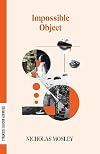
I wanted to write you something impossible, like a staircase climbing a spiral to come out where it started or a cube with a vertical line at the back overlapping a horizontal one in front. These cannot exist in three dimensions but can be drawn in two; by cutting out one dimension a fourth is created. The object is that life is impossible; one cuts out fabrication and creates reality. A mirror is held to the back of the head and one's hand has to move the opposite way from what wasshow more
intended.It's important to remember that writers are magicians. Their art always starts with deception. In this way, writing is closely related to love. In the last section of the book, the author--Mosley--who happens to be a master magician, weaves an allegory about a princess and a woodcutter. But the magician--Mosley--casts his spell over his tale and reveals them as the witch and magician they really were. Thus another romance starts with deception and ends in the deception of art. For we find out later--too late?--that the magician--woodcutter--and the witch--princess--are both on stage, performing a ridiculous tableau.
"What is the point of being a witch and a magician," said the magician, "if we cannot become something different?"Meanwhile back in the "real"/main story, the female lover disagrees:
I knew that he always thought that life could be refashioned and go on, but I thought that it should not. There are some things for which one cannot be forgiven.But the magician--Mosley, in this case--does believe in this refashioning. His mode of magicianship has always been this art of transformation--rabbits out of hats, if you will--the metaphor and the simile, and he has never been shy about either.
p16: She sat with her hands between her legs; like mimosa.And he's written his novel around this heavy-handed sleight of hand: story after story, the interlocking mechanism is at first unclear--maybe a connection is made by a similar comparison of a face to Cleopatra's, or a mention of a seaside town. At first the pieces do not add up, like a jigsaw puzzle in which you have focused too much on one problematic piece. By the end, you see that all the pieces do indeed fit, but the problem is now that they fit in too well, like a staircase that has connected itself back to its origin, making a convincing but impossible whole.
p14: She had a soft mouth which birds could peck crumbs off.
p215: Beyond the waves their heads kept appearing and disappearing like oil.
"Nietzsche said that everything goes round and round ... He said that everything eternally recurs; or rather that we should act as if everything did." My wife said "Why?" ... I said "Because this is the only way in which life is bearable." My wife looked disinterested. I said "As if everything that we do were such that we were going to go on doing it for ever."This is a theme in the book. The male idea of being able to repeat something over and over, and the female idea that some things cannot. Thus Mosley--magician-- repeats the age-old, almost impossible theme of love. Can it or can it not be repeated? Likewise can love be repeated or only the disposable actions of love. The idea of acting comes in often, artifice:
We had been sitting in the pub in London one day and I had asked--Then what is our point?--and he had said in his voice that suddenly became like an actor--To maintain ecstasy. (p. 208, emphasis mine)And the idea of a point. If the point is ecstasy, then love is just artifice, like writing. A set of mirrors to trick ourselves into thinking we are constantly at its height:
What I did not like was that for him life seemed to depend on complexity and flux: and this was not quite real, it was stimulated.This is a carefully constructed, cynically dosed conception of love, art, and war (if they are not the same thing) that may or may not have anything to do with reality. But I highly recommend you read it anyway. show less
When you fall in love you don't want to get what you want, or how could you be in love with it?Do we love out of narcissism? Masochism? Do we truly desire the one for whom we claim we would willingly lay down our life, or is there a more selfish motive at work? Why do we continually place ourselves in vulnerable positions, time and time again—and is not loving one of the most vulnerable of all positions?—despite the lacerations, the recollections, and the bodily wounds that would have it show more otherwise?
There are so many myths and stories about love, about desire; from oral histories to legends, from folktales to tragedies, from songs to visual art—love is the most aestheticized topic, and, because of this, is the "impossible object," as Nicholas Mosley phrases it. As a fetishized, internalized, and always externalized force, love is something from which we can never make any concrete sense no matter how hard we try. And yet try and try we do.
Why is there this compulsion, then? And why is another book about love, like Mosley's Impossible Object, a warranted undertaking? As with all questions concerning love, there are no easy answers to these questions, nor are there to many others that arise when thinking about the complex matrices involving love, desire, sex, and both physical and psychological violence.
What is difficult, though, is to speak of love outside the realm of cliché and the many mythopoetic images that come to mind when we talk about love. Mosley is able to invent a language all his own here, one that is truly a feat in that it combines immense technical skill in the art of poetics: relying on repetition, recurring images (the narrator, or one of the narrators, is rather obsessed with Nietzsche's ides of recurrence), and motifs and redolent rhythms that meander out and then return back with such ease into prose that is a gem to the ears if read aloud. There is nothing sentimental about love here whatsoever: this is humanity and all of our stories laid bare, rough as if left exposed on a rock in the heat of an unblinking day with carrion circling overhead as if in some Greek myth.
No review can do this book justice: in fact, this has to be the finest book I've read in years, hands down. I was floored over and over again, and not only do I feel as lacerated as we all do when opening ourselves up to the idea of loving again, after immense loss or pain or anguish, but I also readily look forward with enthusiasm to another encounter with Mosley's work very, very soon. An impeccable, impeccable novel. show less
Just finished [Julian Grenfell] in its Persephone edition: not so much a biography of the World War One ‘poet’ as a long series of personal letters between members of a family who collectively slaughtered thousands of pheasants and wild animals (including tigers and elephants) before themselves walking into the gunfire at Ypres. No spoilers here – Grenfell’s death is listed by date in the title of the book and - unless you are hoping he was kicked to death by a marauding bull show more elephant - logic has to point you to a death in the trenches. Indeed, the author tells us that Julian 'loved war' and even wrote to his doting mother from France... 'Isn't it luck for me to have been born so as to be just the right age and just in the right place?'
The death of a son is a terrible blow for any mother and yet Ettie Grenfell was not ‘any’ mother. Not content with ‘her unrivalled position in the Edwardian worlds of wit and fashion’, she had always insisted on first place in her sons’ affections while, at the same time, indulging in a series of ‘open affinities’ with their male contemporaries, most of whom also died in the war. And yet even after the loss of a second son Ettie refused to succumb to grief. Deciding that ‘life is a series of farewells’, she instead used their deaths ‘to provide the context of her living’ and even to ‘accentuate her brio’.
What brio? I ask myself. For, her sexual availability aside, Ettie Grenfell had nothing to offer the world and, along with Julian Grenfell, no staying power in history. So why an ill-written 400 page biography of such an odious pair? And why, given the fact that I disliked almost everyone in the book, did I slog through it to the bitter end? show less
The death of a son is a terrible blow for any mother and yet Ettie Grenfell was not ‘any’ mother. Not content with ‘her unrivalled position in the Edwardian worlds of wit and fashion’, she had always insisted on first place in her sons’ affections while, at the same time, indulging in a series of ‘open affinities’ with their male contemporaries, most of whom also died in the war. And yet even after the loss of a second son Ettie refused to succumb to grief. Deciding that ‘life is a series of farewells’, she instead used their deaths ‘to provide the context of her living’ and even to ‘accentuate her brio’.
What brio? I ask myself. For, her sexual availability aside, Ettie Grenfell had nothing to offer the world and, along with Julian Grenfell, no staying power in history. So why an ill-written 400 page biography of such an odious pair? And why, given the fact that I disliked almost everyone in the book, did I slog through it to the bitter end? show less
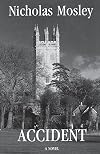
This is an obsessive short novel that opens with an accident. The narrator, Stephen Jervis - a don at Oxford, has come upon two of his students, Anna and William, who have just crashed their car. The story flashes back to the moment when Anna has just met Stephen, as he has become her Philosophy tutor. As a tutor in Philosophy Stephen seems conflicted. In order to hide from his emotions he focuses on his work. "The consolations of work are that you come from it tired at the end of a long show more day. A robot, with men working inside you. They pull levers; switch. You watch and move. At the end you have something to look forward to. You go home. To rest. The mechanism sleeps. The men open doors, windows. Look out into the air."(p 18)
In the first meeting with Anna he gives her a brief introduction to the nature of philosophy and how much she must learn about it - existence and persons. What makes a person an enduring entity? What is the real substance of existence and what is an "accident." In his discussion with her it comes to the point where "Now we've got a choice. Before it was Just accident."(p 31)
With this introductory moment we have the theme of the novel. There is the real and the accidents of our existence. These will be played out through the lives of Stephen and his wife Rosalind, lives that include infidelity and the games that Stephen plays with the lives of others; both his student Anna and, in London, Francesca. As he thinks about the events leading up to the accident he wonders: "At what point did the course of events go wrong?" He thinks, "An accident is different from reality."(p 61) But what is reality? Is it the truth or an accident? The novel provides questions, not answers.
The culmination of his affairs comes in the relation of various incidents to the accident of the title, one that is on more physical grounds and one where, another one of Stephen's students, a young man he really doesn't like, William, is killed. What role does Stephen play in all of this? Should he feel guilt or is he even guilty? During the course of the book Anna has exercised quite an influence not only on William, but on Stephen and his colleague, Charlie. And at the close of what has been a demonstration and a defense of free will, worrying about the questions of guilt versus responsibility, Stephen (and Charlie) are left to determine their own conduct. Mosley writes in a style that commands attention. It is allusive, controlled, and with ideas that are implicit. For those who love novels of ideas and their relation to human emotions this is a perfect short novel. show less
In the first meeting with Anna he gives her a brief introduction to the nature of philosophy and how much she must learn about it - existence and persons. What makes a person an enduring entity? What is the real substance of existence and what is an "accident." In his discussion with her it comes to the point where "Now we've got a choice. Before it was Just accident."(p 31)
With this introductory moment we have the theme of the novel. There is the real and the accidents of our existence. These will be played out through the lives of Stephen and his wife Rosalind, lives that include infidelity and the games that Stephen plays with the lives of others; both his student Anna and, in London, Francesca. As he thinks about the events leading up to the accident he wonders: "At what point did the course of events go wrong?" He thinks, "An accident is different from reality."(p 61) But what is reality? Is it the truth or an accident? The novel provides questions, not answers.
The culmination of his affairs comes in the relation of various incidents to the accident of the title, one that is on more physical grounds and one where, another one of Stephen's students, a young man he really doesn't like, William, is killed. What role does Stephen play in all of this? Should he feel guilt or is he even guilty? During the course of the book Anna has exercised quite an influence not only on William, but on Stephen and his colleague, Charlie. And at the close of what has been a demonstration and a defense of free will, worrying about the questions of guilt versus responsibility, Stephen (and Charlie) are left to determine their own conduct. Mosley writes in a style that commands attention. It is allusive, controlled, and with ideas that are implicit. For those who love novels of ideas and their relation to human emotions this is a perfect short novel. show less
Lists
Awards


You May Also Like


Associated Authors
Statistics
- Works
- 34
- Also by
- 2
- Members
- 1,533
- Popularity
- #16,782
- Rating
- 3.7
- Reviews
- 25
- ISBNs
- 94
- Languages
- 4
- Favorited
- 4
