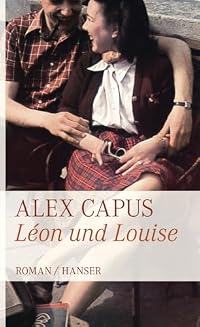
Léon and Louise
by Alex Capus
On This Page
Description
Fiction. Literature. HTML:Longlisted for the German Book Prize.A life-long love affair that survives the tribulations of two World Wars, Léon and Louise beautifully tells the story of Alex Capus' French grandfather. It charmed German readers, never leaving the Der Spiegel bestseller list since publication a year ago, selling nearly two hundred thousand copies.Summer 1918. The First World War is drawing to a close when Léon falls in love with Louise Janvier. Both are severely wounded by show more German artillery fire, are separated, and believe each other to be dead. Briefly reunited two decades later, the lovers are torn apart again by Louise's refusal to destroy Leon's marriage and the German invasion of France. Through occupied Paris during the Second World War, where Léon struggles against the abhorrent tasks imposed on him by the SS, and the wilds of Africa, where Louise confronts the hardships of her primitive environment, they battle the vicissitudes of history and the passage of time for the survival of their love.Léon and Louise's is an enduring passion, an enchanting tale of love's triumph against improbable odds, and a story masterfully told. Alex Capus' poetic, understated language is beautifully translated by John Brownjohn.Alex Capus is the author of Sailing by Starlight. show lessTags
Recommendations

















































Member Reviews
Set in France beginning in 1918, Léon and Louise is a wonderfully diverting love story. Told by Léon's grandson as family history or, perhaps, family folktale, the story (all 265 pages) is filled with a wry humor.
When we first meet Léon Le Gall he is 17—no, that's not true—when we first meet Léon he's in a casket, dead. It's his funeral and all of his family is in attendance in the cathedral of Notre Dame waiting for the priest to arrive:
Then, far behind us, a little side door beside the main entrance opened with a faint creak. We turned to look. Streaming in through the widening gap came the light of a warm spring morning and the sounds of the Rue de la Cité. A small grey figure wearing a bright red foulard slipped into the show more nave....The front row of pews in Notre Dame was vibrating with suppressed excitement. Could the new arrival really be Mademoiselle Janvier? Had she really dared to turn up? The womenfolk looked rigidly to the front again and stiffened their backs as if the coffin and the eternal light over the high altar where their sole focus of attention. But we men, who knew our women, realized that they were tensely listening to the staccato click of the little footsteps that made their way sideways into the central aisle. They then performed a ninety-degree turn and, without the least hesitation, without any ritardando or accelerando, pressed on with the regular beat of a metronome. Those of us who were peering out of the corner of our eye could then see a little woman, light-footed as a young girl, climb the two red-carpeted steps to the foot of the coffin, rest her right hand on the side, and silently move along it to the head, where she at last came to a halt and remained for several seconds, almost like a soldier standing at attention. She raised her veil and bent over. Spreading her arms and supporting herself on the sides of the coffin, she kissed my grandfather on the forehead and rested her cheek against his waxen visage as if intending to stay there for a while. She did so with her face in full view, not protectively averted in the direction of the altar. This enabled us to see that her eyes were closed and that her red, carefully made-up lips were curved in a smile that grew steadily broader until they parted to emit an inaudible chuckle.
She released the dead man at the last and resumed her erect stance. Taking her handbag from the crook of her arm, she opened it and quickly removed a circular, dully glinting object the size of a fist. This, as we were to discover soon afterwards, was an old bicycle bell....Having closed the handbag and replaced it in the crook of her arm, she rang the bell twice. Rri-ing. Rri-ing. While the sound went echoing down the nave, she deposited the bell in the coffin, then turned and looked us in the eye, one after the other...When she got to the far right she gave us a triumphant smile and set off. Heels clicking, she hurried past the family and down the central aisle to the exit.
Leon is a bit of an everyman, moderate in most things, with a penchant for collecting up odd, cast-off items; while Louise is a bit of a spitfire. As we see in an early bicycle scene, Leon has to apply some effort to keep up with her. The story, which spans two world wars and beyond, is captivating and nimble, without sentimentality and syrup, and often makes one smile or chuckle. I'll not spoil it for you with an extensive plot summary, except to say that the two are more apart than they are together—you've read the ending, which is also the beginning, now go read the rest.
** I've tried to edit a bit out of the excerpt at an attempt at brevity, without much luck. What you are missing, as indicated by that very first ellipsis, is a brief detour by the narrator as he gives a general description and history of the Le Gall men. show less
When we first meet Léon Le Gall he is 17—no, that's not true—when we first meet Léon he's in a casket, dead. It's his funeral and all of his family is in attendance in the cathedral of Notre Dame waiting for the priest to arrive:
Then, far behind us, a little side door beside the main entrance opened with a faint creak. We turned to look. Streaming in through the widening gap came the light of a warm spring morning and the sounds of the Rue de la Cité. A small grey figure wearing a bright red foulard slipped into the show more nave....The front row of pews in Notre Dame was vibrating with suppressed excitement. Could the new arrival really be Mademoiselle Janvier? Had she really dared to turn up? The womenfolk looked rigidly to the front again and stiffened their backs as if the coffin and the eternal light over the high altar where their sole focus of attention. But we men, who knew our women, realized that they were tensely listening to the staccato click of the little footsteps that made their way sideways into the central aisle. They then performed a ninety-degree turn and, without the least hesitation, without any ritardando or accelerando, pressed on with the regular beat of a metronome. Those of us who were peering out of the corner of our eye could then see a little woman, light-footed as a young girl, climb the two red-carpeted steps to the foot of the coffin, rest her right hand on the side, and silently move along it to the head, where she at last came to a halt and remained for several seconds, almost like a soldier standing at attention. She raised her veil and bent over. Spreading her arms and supporting herself on the sides of the coffin, she kissed my grandfather on the forehead and rested her cheek against his waxen visage as if intending to stay there for a while. She did so with her face in full view, not protectively averted in the direction of the altar. This enabled us to see that her eyes were closed and that her red, carefully made-up lips were curved in a smile that grew steadily broader until they parted to emit an inaudible chuckle.
She released the dead man at the last and resumed her erect stance. Taking her handbag from the crook of her arm, she opened it and quickly removed a circular, dully glinting object the size of a fist. This, as we were to discover soon afterwards, was an old bicycle bell....Having closed the handbag and replaced it in the crook of her arm, she rang the bell twice. Rri-ing. Rri-ing. While the sound went echoing down the nave, she deposited the bell in the coffin, then turned and looked us in the eye, one after the other...When she got to the far right she gave us a triumphant smile and set off. Heels clicking, she hurried past the family and down the central aisle to the exit.
Leon is a bit of an everyman, moderate in most things, with a penchant for collecting up odd, cast-off items; while Louise is a bit of a spitfire. As we see in an early bicycle scene, Leon has to apply some effort to keep up with her. The story, which spans two world wars and beyond, is captivating and nimble, without sentimentality and syrup, and often makes one smile or chuckle. I'll not spoil it for you with an extensive plot summary, except to say that the two are more apart than they are together—you've read the ending, which is also the beginning, now go read the rest.
** I've tried to edit a bit out of the excerpt at an attempt at brevity, without much luck. What you are missing, as indicated by that very first ellipsis, is a brief detour by the narrator as he gives a general description and history of the Le Gall men. show less
I loved the book very much, even if it is hard for me to explain why.
The plot is quite casual, and not always the motives of the characters are clear, but somehow I think this book is exciting and pleasant to read.
There is something about the writing and something about characters that is utterly charming. Even when terrible events described, there is some magic that comes from the way the story told. Also, the characters presented in a way that made me relate them and to their thoughts. Many times when I read novels that take place in a different period, it seems that I don't understand what goes through their mind. In this case, I felt a deep connection.
The plot is quite casual, and not always the motives of the characters are clear, but somehow I think this book is exciting and pleasant to read.
There is something about the writing and something about characters that is utterly charming. Even when terrible events described, there is some magic that comes from the way the story told. Also, the characters presented in a way that made me relate them and to their thoughts. Many times when I read novels that take place in a different period, it seems that I don't understand what goes through their mind. In this case, I felt a deep connection.
This is a hard book for me to review because while I admired the writing I never became emotionally involved in the story. When one talks about fabulous love stories, I think of Dr. Zhivago, Gone with the Wind, The English Patient, or some such. This love affair, while it was enduring, was mostly spent apart. It was very literary, not at all touchy feely. I did like the character of Leon, who I gather was the author's grandfather and is the character the reader come to know the most. This book is almost written as a memoir, somewhat in a removed, detached way. There is some humor and the book gets more interesting in the second half, after the Germans take Paris. So there is much to admire, it is worth reading, I just never really show more wholeheartedly connected with the story. show less
„Da haben wir uns ein paar Jahre lang ziemlich nah beieinander die Hintern plattgesessen. Das nennt man Pech.“ (Zitat Seite 135)
Inhalt
Der junge Morseassistent Léon Le Gall ist siebzehn Jahre alt, als er Louise Janvier im Frühling 1918 kennenlernt. Pfingsten 1918 hat er drei Tage dienstfrei und er fährt mit ihr an den Ozean. Auf der Heimfahrt geraden sie in einen Angriff der Deutschen, Léon wird schwer verletzt und er erhält die Nachricht, Louise habe nicht überlebt. Auch Louise sagt man, dass Léon tot sei. 1928 begegnen sie einander zufällig in Paris wieder, doch Léon ist inzwischen mit Yvonne verheiratet und Vater, obwohl er nie aufgehört hat, an Louise zu denken.
Thema und Genre
In diesem Roman geht es um eine große show more Liebe, die sich durch ein ganzes Menschenleben zieht, die durch schicksalshafte Ereignisse jedoch nur heimlich gelebt werden kann, mit jeweils jahrelangen Unterbrechungen. Es geht um Familie, Verantwortung und Entscheidungen. Gleichzeitig ist dies die Geschichte Frankreichs während der beiden Weltkriege.
Erzählform und Sprache
Es ist der Enkel von Léon Le Gall, der die Lebensgeschichte seines Großvaters schildert, aktuell beginnend mit den Ereignissen vom 16. April 1986, an dem eine Frau eine Fahrradklingel in den Sarg seines Großvaters legt. Von hier aus schwenkt die Geschichte direkt in die Vergangenheit und beginnt mit dem Tag, an dem der junge Léon dieses besondere Mädchen mit der gepunkteten Bluse zum ersten Mal sieht. Von da an zieht sich diese besondere Liebesgeschichte durch das ganze Leben von Léon und Louise und wird durch Details aus der großen Familie Le Gall auch zu einer Generationengeschichte. Die fiktiven Ereignisse fügen sich in die historischen Fakten ein, besonders in die Zeit der beiden Weltkriege und damit verbunden, das Leben in Paris während der deutschen Besatzung. Die Sprache erzählt eindrücklich, einfühlsam, doch immer mit leichtem Humor und niemals kitschig.
Fazit
Eine ungewöhnliche, mit charmanter Leichtigkeit erzählte Liebes- und Lebensgeschichte, deren Ereignisse eingebettet sind in den realen historischen Hintergrund Frankreichs im 20. Jahrhundert. show less
Inhalt
Der junge Morseassistent Léon Le Gall ist siebzehn Jahre alt, als er Louise Janvier im Frühling 1918 kennenlernt. Pfingsten 1918 hat er drei Tage dienstfrei und er fährt mit ihr an den Ozean. Auf der Heimfahrt geraden sie in einen Angriff der Deutschen, Léon wird schwer verletzt und er erhält die Nachricht, Louise habe nicht überlebt. Auch Louise sagt man, dass Léon tot sei. 1928 begegnen sie einander zufällig in Paris wieder, doch Léon ist inzwischen mit Yvonne verheiratet und Vater, obwohl er nie aufgehört hat, an Louise zu denken.
Thema und Genre
In diesem Roman geht es um eine große show more Liebe, die sich durch ein ganzes Menschenleben zieht, die durch schicksalshafte Ereignisse jedoch nur heimlich gelebt werden kann, mit jeweils jahrelangen Unterbrechungen. Es geht um Familie, Verantwortung und Entscheidungen. Gleichzeitig ist dies die Geschichte Frankreichs während der beiden Weltkriege.
Erzählform und Sprache
Es ist der Enkel von Léon Le Gall, der die Lebensgeschichte seines Großvaters schildert, aktuell beginnend mit den Ereignissen vom 16. April 1986, an dem eine Frau eine Fahrradklingel in den Sarg seines Großvaters legt. Von hier aus schwenkt die Geschichte direkt in die Vergangenheit und beginnt mit dem Tag, an dem der junge Léon dieses besondere Mädchen mit der gepunkteten Bluse zum ersten Mal sieht. Von da an zieht sich diese besondere Liebesgeschichte durch das ganze Leben von Léon und Louise und wird durch Details aus der großen Familie Le Gall auch zu einer Generationengeschichte. Die fiktiven Ereignisse fügen sich in die historischen Fakten ein, besonders in die Zeit der beiden Weltkriege und damit verbunden, das Leben in Paris während der deutschen Besatzung. Die Sprache erzählt eindrücklich, einfühlsam, doch immer mit leichtem Humor und niemals kitschig.
Fazit
Eine ungewöhnliche, mit charmanter Leichtigkeit erzählte Liebes- und Lebensgeschichte, deren Ereignisse eingebettet sind in den realen historischen Hintergrund Frankreichs im 20. Jahrhundert. show less
Feb 12, 2024German
Léon und Louise lernen sich mit 17 Jahren kennen und verlieben sich, doch schon an ihrem ersten gemeinsamen Wochenende werden sie durch einen Fliegerangriff getrennt. Erst 10 Jahre später treffen sie sich zufällig in Paris wieder. Doch auch nun kann keine ernsthafte Beziehung entstehen. Léon ist verheiratet und hat Kinder. Der zweite Weltkrieg kommt. Leon arbeitet bei der Polizei, versucht durchzukommen und dennoch nicht gebrochen zu werden. Louise ist als Sekretätin im Sudan. Von ihrem Leben erfährt man durch die drei Briefe, die sie Léon schickt. Nach dem Krieg treffen sie sich wieder. Léon besitzt inzwischen ein Boot, auf dem sich die beiden treffen.
Alex Capus erzählt in einem Interview auf Youtube, dass viel von seinem show more Großvater in diesem Léon steckt. Von ihm erzählt er viel, von Louise erfährt man weniger. Die Geschichte dieser Liebe ist vor allem vor dem Zeithintergrund interessant: Frankreich in den beiden Kriegen, erzählt aus Sicht eines einfachen Mannes, der überleben und lieben möchte.
Zudem ist da noch der Glauben an die eine große Liebe, der in diesem Buch als Tatsache feststeht und es fast kitschig werden lässt- doch da diese Liebe so pragmatisch mit den Gegebenheiten ihrer Zeit umgehen muss, ist es einfach ein schönes, nicht kitschiges oder sentimentales Buch . show less
Alex Capus erzählt in einem Interview auf Youtube, dass viel von seinem show more Großvater in diesem Léon steckt. Von ihm erzählt er viel, von Louise erfährt man weniger. Die Geschichte dieser Liebe ist vor allem vor dem Zeithintergrund interessant: Frankreich in den beiden Kriegen, erzählt aus Sicht eines einfachen Mannes, der überleben und lieben möchte.
Zudem ist da noch der Glauben an die eine große Liebe, der in diesem Buch als Tatsache feststeht und es fast kitschig werden lässt- doch da diese Liebe so pragmatisch mit den Gegebenheiten ihrer Zeit umgehen muss, ist es einfach ein schönes, nicht kitschiges oder sentimentales Buch . show less
May 2, 2013German
1
In het voorjaar van 1918 ontmoet Léon Le Gall in het Franse Cherbourg een meisje, Louise Janvier. Voorzichtig leren ze mekaar kennen, kort maar heftig. Tijdens een bombardement verliezen ze mekaar uit het oog en allebei denken ze dat de ander het niet overleefde. Léon trouwt met Yvonne en woont in Parijs in de Rue des Ecoles, Louise blijft alleen achter en belandt ook in Parijs. Tien jaar later ontmoeten ze mekaar opnieuw.
Tot de dood van Léon in 1986 leiden ze een dubbelleven.
Een wondermooie roman, prima opgebouwd, knappe pen, Je hoopt dat je in een volgend leven een Léon of Louise mag ontmoeten. Achtergrond is de Europese geschiedenis, de twee wereldoorlogen.
Tot de dood van Léon in 1986 leiden ze een dubbelleven.
Een wondermooie roman, prima opgebouwd, knappe pen, Je hoopt dat je in een volgend leven een Léon of Louise mag ontmoeten. Achtergrond is de Europese geschiedenis, de twee wereldoorlogen.
Sep 10, 2020Dutch
Léon und Louise lernen sich am Ende des 1. Weltkriegs kennen und verlieben sich ineinander. Durch einen Bombenangriff jedoch trennen sich ihre Wege, beide halten einander für tot. 10 Jahre später kreuzen sich ihre Wege wieder, wahre Liebe lässt sich leugnen, aber lässt sie sich noch leben?
Die Geschichte von Léon und Louise wird in der Retrospektive von Léons Enkel erzählt und beginnt mit Léons Beerdigung. Der Erzählstil ist flott und erfrischend, trotz der schwerwiegenden Ereignisse in der Weltgeschichte lässt Alex Capus seinen Figuren viel Raum für Humor. Ich habe das Buch sehr gern gelesen. Leider sind für mich Anfang und Ende des Buches nicht stimmig. Ich habe die ersten Seiten am Ende gleich noch einmal gelesen, weil show more ich dachte, ich hätte da etwas missverstanden, aber nein...Dennoch hat mich das Buch beeindruckt und ich werde bestimmt noch eine ganze Weile daran denken. show less
Die Geschichte von Léon und Louise wird in der Retrospektive von Léons Enkel erzählt und beginnt mit Léons Beerdigung. Der Erzählstil ist flott und erfrischend, trotz der schwerwiegenden Ereignisse in der Weltgeschichte lässt Alex Capus seinen Figuren viel Raum für Humor. Ich habe das Buch sehr gern gelesen. Leider sind für mich Anfang und Ende des Buches nicht stimmig. Ich habe die ersten Seiten am Ende gleich noch einmal gelesen, weil show more ich dachte, ich hätte da etwas missverstanden, aber nein...Dennoch hat mich das Buch beeindruckt und ich werde bestimmt noch eine ganze Weile daran denken. show less
Mar 29, 2014German
Members
- Recently Added By
Published Reviews
ThingScore 75
Rezensionsnotiz zu Süddeutsche Zeitung, 07.09.2011
Mehr als eine Liebesgeschichte hat Kristina Maidt-Zinke da gelesen. Nichts Geringeres als eine gelungene Ergänzung ihres Bildes der Jahre 1940 bis 1945 im besetzten Paris vermag Alex Capus mit seinem Roman der Rezensentin zu schenken. Dabei kommt das unter den Flaggen von Krieg, Liebe und Familienchronik segelnde Buch als rückwärtsgewandte show more Utopie daher und rauscht hin und wieder nur knapp an den Kitschklippen vorbei, meint Maidt-Zinke. Wie sich zwei finden, in den Wirren des Krieges verlieren, um sich wieder zu finden, sieht sie, vermittelt durch des Autors leichte Hand, bei aller Unwahrscheinlichkeit doch als glaubwürdige Geschichte an, die sofern sie nicht wahr, doch sehr gut erfunden ist. show less
Mehr als eine Liebesgeschichte hat Kristina Maidt-Zinke da gelesen. Nichts Geringeres als eine gelungene Ergänzung ihres Bildes der Jahre 1940 bis 1945 im besetzten Paris vermag Alex Capus mit seinem Roman der Rezensentin zu schenken. Dabei kommt das unter den Flaggen von Krieg, Liebe und Familienchronik segelnde Buch als rückwärtsgewandte show more Utopie daher und rauscht hin und wieder nur knapp an den Kitschklippen vorbei, meint Maidt-Zinke. Wie sich zwei finden, in den Wirren des Krieges verlieren, um sich wieder zu finden, sieht sie, vermittelt durch des Autors leichte Hand, bei aller Unwahrscheinlichkeit doch als glaubwürdige Geschichte an, die sofern sie nicht wahr, doch sehr gut erfunden ist. show less
added by Goethe-InstitutAthen
Lists

Books Read in 2022
5,164 works; 113 members

IMPAC Dublin Literary Award 2014 longlist
150 works; 3 members

CH-Autoren (Swiss Authors)
265 works; 9 members

EU Fiction: 1950-2022
223 works; 70 members
Author Information

Some Editions
Awards and Honors
Awards
Distinctions
Series
Belongs to Publisher Series
dtv (14128)
Common Knowledge
- Canonical title
- Léon and Louise
- Original title
- Léon und Louise
- Original publication date
- 2011
- People/Characters*
- Léon Gall; Louise Janvier
- Important places
- Paris, France; Paris, Rue des Ecoles; Paris, Quai des Orfèvres; Cherbourg, France
- Epigraph*
- Il ne faut pas trop regarder
la nudité des parents.
Erik Orsenna - Dedication*
- Für Ruben
- First words
- Wir sassen in der Kathedrale von Notre-Dame und warteten auf den Pfarrer.
Door het vensterrozet viel kleurig zonlicht op de open kist, die versierd was met bloemen en op een rood tapijt voor het hoofdaltaar stond. In de ko... (show all)oromgang knielde een kapucijner monnik voor de miëta, in de linkerzijbeuk stond een metselaar op een steiger en maakte met zijn troffel schrapende geluiden, die tussen de achthonderdjaar oude muren echoden. Verder was het stil. Het was negen uur in ochtend, de toeristen zatn no in hun hotels te ontbijten. - Last words*
- (Click to show. Warning: May contain spoilers.)Dann machten sie die Leinen los, legten ab und fuhren aus dem Hafenbecken hinaus auf die Seine und flussabwärts, dem Ozean entgegen.
- Original language
- German
*Some information comes from Common Knowledge in other languages. Click "Edit" for more information.
Classifications
- Genres
- Fiction and Literature, General Fiction, Historical Fiction
- DDC/MDS
- 833.92 — Literature & rhetoric German & related literatures German fiction 1900- 1990-
- LCC
- PT2663 .A64 — Language and Literature German, Dutch and Scandinavian literatures German literature Individual authors or works 1961-2000
- BISAC
Statistics
- Members
- 290
- Popularity
- 110,355
- Reviews
- 12
- Rating
- (4.01)
- Languages
- 9 — Dutch, English, Finnish, French, German, Italian, Spanish, Swedish, Turkish
- Media
- Paper, Audiobook, Ebook
- ISBNs
- 24
- ASINs
- 6