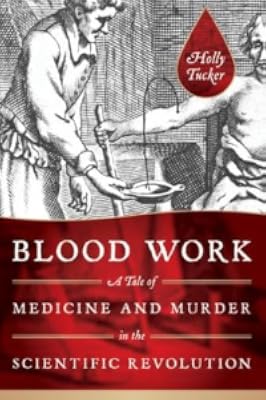
Blood Work: A Tale of Medicine and Murder in the Scientific Revolution
by Holly Tucker
On This Page
Description
A sharp-eyed expose of the deadly politics, murderous plots, and cutthroat rivalries behind the first blood transfusions in seventeenth-century Europe.Tags
Recommendations














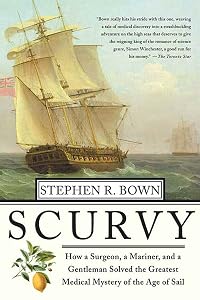

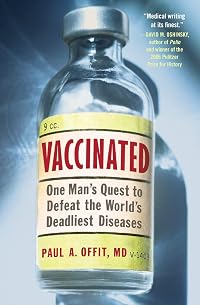
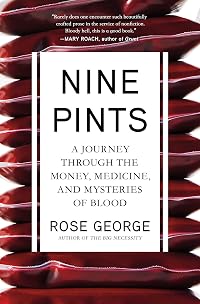
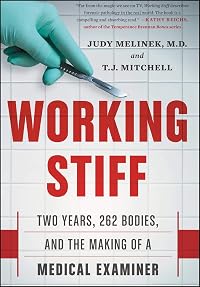






Member Reviews
You realize that you're a nerd when you get excited for a book with footnotes. The probably with this particular book was that the footnotes were actually endnotes which meant a lot of page flipping which I found tedious and annoying. I have to say though that this minor inconvenience was the only issue that I had with Blood Work. As you know already, I'm a huge fan of scientific nonfiction and this definitely fit the bill (with a side of history and murder to make it even better!). Learning about the history of something (blood transfusion) which I've never given much thought about was more engrossing than I had originally anticipated. Tucker made great use of resources to paint a vivid picture of Parisian life (specifically among show more scientists and academics) in the 17th century. The conditions of the time which included religious bias and political favor (or disfavor) effected any advances that were being attempted by the scientific community. In fact, because of the events which unfolded in this story there was no experimentation whatsoever regarding blood transfusion for over 150 years. It was essentially a dead end that no one dared to attempt (or even cared to attempt). For anyone who's interested in either history or science this book will be ideal for you (and it's a quick read!). show less
I love how the author styled the book to be immersive in the time period and the cast. At first I had mixed feelings about this because it adds too much filler if you want to read the book for explicit facts about the history of blood transfusion, but in retrospect I see how it comes together to form a unique story.
It was difficult to read the details of the animal experiments. I wouldn't have it any other way--there's no point in blinding ourselves from what actually happened--but despite keeping that in mind it kept the book's overall likeability factor down.
It was amazing how some of the content initially seemed irrelevant to the title and subtitle, but those apparent irrelevances weaved into the time's societal conscience toward show more medicine and research. It can be easy to look down upon the thoughts of a time period without context--often students in high school, who merely memorize enough to get the grade they want, sharply state how "stupid people were back then".
For instance there is a part where Rene Descartes suggested that animals lacked souls and therefore could not feel pain. But Tucker addressed that some of the populous opposed Descartes's philosophy and the experimentation. Good to know that despite the lack of legal protection back then some people did value ethical treatment of animals.
There's also interesting insight the history of physicians. We may tease modern doctors for not spending time with patients, but the 1600s they merely told other people how to administer treatments. Arguably they didn't learn medicine--none of the philosophies mentioned in the book came from biology, and even shunned chemistry. I would love to find a book that more broadly addresses the history of medicine. show less
It was difficult to read the details of the animal experiments. I wouldn't have it any other way--there's no point in blinding ourselves from what actually happened--but despite keeping that in mind it kept the book's overall likeability factor down.
It was amazing how some of the content initially seemed irrelevant to the title and subtitle, but those apparent irrelevances weaved into the time's societal conscience toward show more medicine and research. It can be easy to look down upon the thoughts of a time period without context--often students in high school, who merely memorize enough to get the grade they want, sharply state how "stupid people were back then".
For instance there is a part where Rene Descartes suggested that animals lacked souls and therefore could not feel pain. But Tucker addressed that some of the populous opposed Descartes's philosophy and the experimentation. Good to know that despite the lack of legal protection back then some people did value ethical treatment of animals.
There's also interesting insight the history of physicians. We may tease modern doctors for not spending time with patients, but the 1600s they merely told other people how to administer treatments. Arguably they didn't learn medicine--none of the philosophies mentioned in the book came from biology, and even shunned chemistry. I would love to find a book that more broadly addresses the history of medicine. show less
Full disclosure, I read about 80 pages into this book, then I skimmed the rest. It was too difficult reading about the horrible experiments and what scientists did to both humans and animals. So, let's talk about why I gave this four stars.
Blood Work is the story of the first blood transfusion experiments in the 17th century. I say story because Tucker has created a really strong narrative voice in her book. The subject matter is interesting, but the way Tucker writes makes it even more interesting.
If you like very minutely detailed writing of historical scientific procedures (and you have a strong stomach), this book is for you. I have the former, but not the latter. The level of detail that Tucker uses to describe the procedures was show more too much for me. It made me sad and alarmed, which did not make for good reading. But, I still think the subject of the book is infinitely interesting (blood, it's so weird), and it's a story well told, so hence the 4 stars. show less
Blood Work is the story of the first blood transfusion experiments in the 17th century. I say story because Tucker has created a really strong narrative voice in her book. The subject matter is interesting, but the way Tucker writes makes it even more interesting.
If you like very minutely detailed writing of historical scientific procedures (and you have a strong stomach), this book is for you. I have the former, but not the latter. The level of detail that Tucker uses to describe the procedures was show more too much for me. It made me sad and alarmed, which did not make for good reading. But, I still think the subject of the book is infinitely interesting (blood, it's so weird), and it's a story well told, so hence the 4 stars. show less
Blood Work: A Tale of Medicine and Murder in the Scientific Revolution is a thoroughly researched and richly illustrated early history of blood transfusions.
The writing is clear and easy to understand. I had no trouble following the history. It is written as if the author was directly telling you the story.
In the Epilogue, Holly Tucker explains why she wanted to write this book. There were two reasons but the important one to me was George W. Bush's State of the Union in 2006. He wanted a ban on "animal human stem cell research”. I have never forgotten his words.
Stem cell research is a controversial subject, there were fears of human cloning, animal human hybrids and all of this is tied up with political, ethical and religious show more concerns. The same fears surrounding stem cell research used to envelop blood transfusion research long ago
Holly Tucker takes us through the history of blood transfusions to discuss this question. The knowledge of transfusions started with animal transfusions. At one point, the French Parliament banned all transfusions. What made them decide to do that? What if the researchers had given up? What was the important mystery connected to that decision?
Why did England and France participate in a blood transfusion race similar to the space race between United States and Russia?
There are some gruesome experiments involving dogs and other animals and even humans but the fact is that they are the history of the blood transfusions. Without them, the author would not be able to give a full and truthful account.
I highly recommend this book to those interested in medical history and those who debate whether some medical research is immoral and should be prevented.
I received this book from the author but that did not influence my review, my thoughts are my own. show less
The writing is clear and easy to understand. I had no trouble following the history. It is written as if the author was directly telling you the story.
In the Epilogue, Holly Tucker explains why she wanted to write this book. There were two reasons but the important one to me was George W. Bush's State of the Union in 2006. He wanted a ban on "animal human stem cell research”. I have never forgotten his words.
Stem cell research is a controversial subject, there were fears of human cloning, animal human hybrids and all of this is tied up with political, ethical and religious show more concerns. The same fears surrounding stem cell research used to envelop blood transfusion research long ago
Holly Tucker takes us through the history of blood transfusions to discuss this question. The knowledge of transfusions started with animal transfusions. At one point, the French Parliament banned all transfusions. What made them decide to do that? What if the researchers had given up? What was the important mystery connected to that decision?
Why did England and France participate in a blood transfusion race similar to the space race between United States and Russia?
There are some gruesome experiments involving dogs and other animals and even humans but the fact is that they are the history of the blood transfusions. Without them, the author would not be able to give a full and truthful account.
I highly recommend this book to those interested in medical history and those who debate whether some medical research is immoral and should be prevented.
I received this book from the author but that did not influence my review, my thoughts are my own. show less
This microhistory of experiments leading up to the practice of blood transfusion, which involved not only myriad farm animals but murder, definitely has an interesting story to tell -- one can only imagine how grotesque some of these experiments would have been to witness in person! My interest was piqued when I heard her speak about the book on a podcast a number of years ago, and it's been on my to-read list since. Overall, the narrative is somewhat dry, with lots of filler and minimal action, but I recommend it with reservations if you're into the history of medicine.
Blood Work: A Tale of Medicine and Murder in the Scientific Revolution by Holly Tucker is meticulously researched and retold in a way that sucks the reader right in. While the subject matter is itself very interesting, the fabulous writing by Ms. Tucker raises it to an even more impressive level. With her extensive education and experience, I feel that there is no one better to bring us this true tale of life and death than Holly Tucker.
I very much enjoyed the religion versus science debate. With regards to the current stem-cell research controversy, it’s clear that the old adage is still true: Those that don’t learn from history are bound to repeat it. Often with seriously negative consequences.
Great surprise ending! I thought I show more knew what the outcome was going to be, but I admit I was fooled. I never would have guessed who the real culprit(s) was. And it was a happy ending of sorts. I was worried that Denis would be punished for trying to help others. Although Denis did want fame and fortune, he was able to affect others in a positive fashion, especially with his last, and greatest invention.
Even though some parts made me feel a little bit squeamish, this book is by no means gruesome -- just intriguing. Blood Work is a terrific read and should be considered a must for anyone interested in medical history. show less
I very much enjoyed the religion versus science debate. With regards to the current stem-cell research controversy, it’s clear that the old adage is still true: Those that don’t learn from history are bound to repeat it. Often with seriously negative consequences.
Great surprise ending! I thought I show more knew what the outcome was going to be, but I admit I was fooled. I never would have guessed who the real culprit(s) was. And it was a happy ending of sorts. I was worried that Denis would be punished for trying to help others. Although Denis did want fame and fortune, he was able to affect others in a positive fashion, especially with his last, and greatest invention.
Even though some parts made me feel a little bit squeamish, this book is by no means gruesome -- just intriguing. Blood Work is a terrific read and should be considered a must for anyone interested in medical history. show less
This is a very confused book. Is it a murder story, like the subtitle seems to suggest? Is it about the discovery and abandonment of technology, out of step with our normal understanding of scientific history, like the first few chapters harp on about? The epilogue explains that it's actually about the way moral concerns influence the development of important and life-saving science, which would have been nice to know earlier. The story of Denis and his sabotaged transfusion experiments is interesting, but I'm not sure there's a whole book in it, or at least not this book.
Members
- Recently Added By
Published Reviews
ThingScore 75
In Blood Work, medical historian Holly Tucker looks at the beginnings of transfusion in the seventeenth century. Adding material from her own archival research to the standard historical account, she fleshes out the start of physiological experimentation and examines historical attitudes to blood. The result is a page-turning insight into early scientific attitudes and disputes over priority.
added by jlelliott
Lists

A Brilliant List of Science Books for People Who Want Their Minds Blown
16 works; 3 members
Author Information

6 Works 882 Members
Holly Tucker is the author of Blood Work, a finalist for the Los Angeles Times Book Prize and the Times Literary Supplement Book of the Year, and is a professor of French at Vanderbilt University. She Lives in Nashville, Tennessee, and Aix-en-Provence, France.
Awards and Honors
Common Knowledge
- Alternate titles
- Blood Work
- Original publication date
- 2010
- People/Characters
- Jean-Baptiste Denis; Antoine Mauroy; Henri-Louis de Montmor; Paul Emmerez; Carl Lansteiner; Perrine Mauroy (show all 30); William Harvey; Amatus Lusitanus; Christopher Wren; John Wilkins; Robert Hooke; Richard Lower; Thomas Willis; Henry Oldenburg; Henri Justel; Simon Boullot; Pierre Gassendi; Nicolas Fouquet; Jean-Baptiste Colbert; Claude Perrault; Dom Robert Desgabets; Joseph Williamson; George Ent; Arthur Coga; Martin de la Martiniere; Guillaume Lamy; Samuel Sorbiere; Honorable Jacques Defita; Chretien de Lamoignon; Matthieu Mole
- Important places
- Paris, Île-de-France, France; Bethlem Royal Hospital, London, England, UK; Arundel House, Temple, London, England, UK
- Important events
- Age of Vivisection (1600s)
- Epigraph
- Very many maintain that all we know is still infinitely less than all that still remains unknown. - William Harvey, De montu cordis (1628)
Blood is a juice of a very special kind. - Johann Wolfgang von Goethe, Faust, Part 1 (1808) - Dedication
- For Audrey, heart and soul, moon and stars, always and forever...
- First words
- On December 4, 1799, America's first president awoke with a sore throat, which was soon accompanied by a fever.
- Quotations
- "Men will cut one another's throat to preserve their life...Whoever is unscrupulous enough to fill their veins with the blood of another, will find little trouble in eating human flesh to heal himself." - Martin de la Martini... (show all)ere
- Last words
- (Click to show. Warning: May contain spoilers.)My greatest hope is that when historians tell our own story decades and centuries from now, they will be able to say that we thought these issues through well and addressed them with fearless curiosity.
- Blurbers
- Blum, Deborah; Zimmer, Carl; Verghese, Abraham; Laskin, David; Mancall, Peter C.
Classifications
- Genres
- Nonfiction, General Nonfiction, History, Science & Nature
- DDC/MDS
- 615.39 — Applied science & technology Medicine & health Pharmacology and therapeutics Organic drugs
- LCC
- RM171 .T787 — Medicine Therapeutics. Pharmacology Therapeutics. Pharmacology Administration of drugs and other therapeutic agents
- BISAC
Statistics
- Members
- 458
- Popularity
- 66,663
- Reviews
- 13
- Rating
- (3.68)
- Languages
- English
- Media
- Paper, Audiobook, Ebook
- ISBNs
- 4
- ASINs
- 6