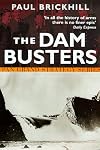
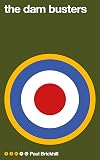
The Dam Busters
by Paul Brickhill
On This Page
Description
A special edition of The Dam Busters by Paul Brickhill reissued with a bright retro design to celebrate Pan's 70th anniversary. On 17 May 1943, nearly 350 million tons of water crashed into the valleys of the Ruhr when the Lancaster bombers of 617 Squadron breached the giant Moehne and Eder Dams with colossal 'blockbuster' bombs. The Dam Busters tells the story of the raid and the squadron of fearless airmen who carried it through. Again and again, the crews of 617 Squadron Bomber Command show more used their flying skills, their tremendous courage and Barnes Wallis' highly accurate bouncing bombs to deal devastating blows to Nazi Germany.One of the most daring true stories to emerge from the Second World War, Paul Brickhill's The Dam Busters inspired the famous 1955 film starring Michael Redgrave and Richard Todd. show lessTags
Recommendations


















Member Reviews
A remarkable story of the Scientist who created a technological military breakthrough, its evolution into a weapon of mass destruction & the courageous RAF men who risked and sacrificed to deliver it into the heart of Nazi Germany causing a stunning amount of damage to people, buildings, transport and the morale of the enemy.
In the modern era it is unfortunately common for revisionist 'historians' to debunk the overall value & effects of the Dam Busters, however, it is my opinion such people neglect a vital point: At the time of the raid no one knew with any certainty what the result of the attack or the outcome of WW2 would be - it is too easy to now assert the impact was limited - at the time no one could do anything other than show more admire the ambition and devotion of the airmen and with that in mind this book reveals their immense personal resolve and unchallenged skills which make the Dam Buster Raid one of the most significant events of the WW2 AIR WAR. show less
In the modern era it is unfortunately common for revisionist 'historians' to debunk the overall value & effects of the Dam Busters, however, it is my opinion such people neglect a vital point: At the time of the raid no one knew with any certainty what the result of the attack or the outcome of WW2 would be - it is too easy to now assert the impact was limited - at the time no one could do anything other than show more admire the ambition and devotion of the airmen and with that in mind this book reveals their immense personal resolve and unchallenged skills which make the Dam Buster Raid one of the most significant events of the WW2 AIR WAR. show less
A rather dry account of 617 Squadron in World War Two, whose exploits should need no introduction. It is told enthusiastically by author Paul Brickhill but, particularly when discussing the missions in the years after the famous Dam Busters raid, it is easy to lose the narrative thread and get lost in the mass of detail. Brickhill seemed acutely aware of this, which is why he focused more on inventor Barnes Wallis than on the procession of squadron commanders, bomber crews and flak-riddled missions over Germany.
Those bombing campaigns are deeply seeded into the book – and the heroism and flying skill is often astonishing – but the book is never as good as when it is with Wallis, poking around in his garden and trying to figure out show more new ways of planting one on Hitler's nose. It is this sense of underdog ingenuity – not only in Wallis trying to get his eccentric 'bouncing bombs' greenlit by RAF top brass, but in various little inventions like the plywood bombsight knocked up by a carpenter in five minutes (pg. 71) – which really appeals to the British reader's sense of pluck and patriotism. Any bloke who has ever played snooker in a pub can sympathise with Wallis' attempts to control the backspin on his bombs and land them in the right place at the dam wall, and the success of this true story is, as Brickhill writes, something that reassures "those who are dismayed by the fact that the British and their allies are outnumbered in this not too amicable world" (pg. 9). show less
Those bombing campaigns are deeply seeded into the book – and the heroism and flying skill is often astonishing – but the book is never as good as when it is with Wallis, poking around in his garden and trying to figure out show more new ways of planting one on Hitler's nose. It is this sense of underdog ingenuity – not only in Wallis trying to get his eccentric 'bouncing bombs' greenlit by RAF top brass, but in various little inventions like the plywood bombsight knocked up by a carpenter in five minutes (pg. 71) – which really appeals to the British reader's sense of pluck and patriotism. Any bloke who has ever played snooker in a pub can sympathise with Wallis' attempts to control the backspin on his bombs and land them in the right place at the dam wall, and the success of this true story is, as Brickhill writes, something that reassures "those who are dismayed by the fact that the British and their allies are outnumbered in this not too amicable world" (pg. 9). show less
The Dam Busters was a timely read in 2018, the 75th anniversary year of the historic Dam Busters raid. This book is about more than that raid, though: it is about the development of the bombs that were used in the raid, the work that the lead scientist was doing in the years leading up to the raid, and the adventures of the squadron for the rest of the war.
It is a book filled with colourful characters who go on sorties and perform acts of derring-do. It also contains, unfortunately, a patronizing attitude toward women. The WAAFs mentioned in this book are few and far between, which is perhaps understandable if you're focusing on the people in the planes, but almost every single reference to any woman in the book had them being referred show more to as "girls", being described by their looks (or as "slim", or "languid", which was just weird), or appearing in the context of them getting in the men's way or making what the men saw as mistakes, but whose actions made perfect sense to the reader because they had the context. ("What she said was perfectly natural given the mental model she had of the situation!" I grumbled at one point. "Stupid men, assuming that the woman could read their minds!")
Apart from that, there were a couple of totally unnecessary similes that fed into stereotypes about women: likening memory to a woman, for example, because it isn't around when you want it...and the one that talked about something being "as reliable as women's intuition" (in this case, not very). This sort of attitude could be seen as unfortunate but natural given the vintage of the author (born 1916), but the throwaway similes could easily have been rewritten in a non-sexist manner (usually cats are painted as capricious, and there are surely other habitually unreliable things that could have been used in the other simile).
The writing about the actual raids and the men of the squadron was perfectly fine, as these things go, but I would only recommend this book more for its immediacy (it was written in 1951 and so more of the major players were alive) than for its writing style. show less
It is a book filled with colourful characters who go on sorties and perform acts of derring-do. It also contains, unfortunately, a patronizing attitude toward women. The WAAFs mentioned in this book are few and far between, which is perhaps understandable if you're focusing on the people in the planes, but almost every single reference to any woman in the book had them being referred show more to as "girls", being described by their looks (or as "slim", or "languid", which was just weird), or appearing in the context of them getting in the men's way or making what the men saw as mistakes, but whose actions made perfect sense to the reader because they had the context. ("What she said was perfectly natural given the mental model she had of the situation!" I grumbled at one point. "Stupid men, assuming that the woman could read their minds!")
Apart from that, there were a couple of totally unnecessary similes that fed into stereotypes about women: likening memory to a woman, for example, because it isn't around when you want it...and the one that talked about something being "as reliable as women's intuition" (in this case, not very). This sort of attitude could be seen as unfortunate but natural given the vintage of the author (born 1916), but the throwaway similes could easily have been rewritten in a non-sexist manner (usually cats are painted as capricious, and there are surely other habitually unreliable things that could have been used in the other simile).
The writing about the actual raids and the men of the squadron was perfectly fine, as these things go, but I would only recommend this book more for its immediacy (it was written in 1951 and so more of the major players were alive) than for its writing style. show less
If you only know the Dam Busters form the theme tune or the film, you really should read this book. If you flew with the squadron, you should really read this book, although I have no doubt the few of you left have.
As a book, it is decent, it does its job well and clearly enough for a book written in that period on this type of subject. There are a few niggles when the author gets slightly over-personal with Cheshire, but having just read "Cheshire VC", I can understand and readily forgive that.
It is, however, not a book, but more a biography of a squadron, and what a squadron.
This is a study in tenacity, determination, unbelievable bravery, invention (not just by Barnes Wallis) and camaraderie. If you have any interest in war, not show more just the air war, WWII or the RAF, you simply must read it. I would, however, recommend it to almost anyone as, as much as it is about anything, this is a book about people, the members, the sadly ever-changing members, of 617 Squadron.
Not convinced? Then consider one raid where they had to fly a heavy bomber with a wingspan of over 100' at only 60' above a lake to succeed, "jumping" over electricity pylons on their way to the target. Consider when asked to destroy a bridge, that from over 12,000 feet up, separate planes dropping one single massive bomb each, managed to hit both ends of the bridge at the same time and as it lifted into the air, hit the centre of it with yet another bomb to completely destroy it. Hollywood would not consider such feats acceptable in a script, but men did it. show less
As a book, it is decent, it does its job well and clearly enough for a book written in that period on this type of subject. There are a few niggles when the author gets slightly over-personal with Cheshire, but having just read "Cheshire VC", I can understand and readily forgive that.
It is, however, not a book, but more a biography of a squadron, and what a squadron.
This is a study in tenacity, determination, unbelievable bravery, invention (not just by Barnes Wallis) and camaraderie. If you have any interest in war, not show more just the air war, WWII or the RAF, you simply must read it. I would, however, recommend it to almost anyone as, as much as it is about anything, this is a book about people, the members, the sadly ever-changing members, of 617 Squadron.
Not convinced? Then consider one raid where they had to fly a heavy bomber with a wingspan of over 100' at only 60' above a lake to succeed, "jumping" over electricity pylons on their way to the target. Consider when asked to destroy a bridge, that from over 12,000 feet up, separate planes dropping one single massive bomb each, managed to hit both ends of the bridge at the same time and as it lifted into the air, hit the centre of it with yet another bomb to completely destroy it. Hollywood would not consider such feats acceptable in a script, but men did it. show less
This is a classic account of the Second World War bombing of the three massive German dams Moehne, Eder and Sorpe, as told by military historian and ex-Great Escapee Paul Brickhill, and originally published in 1951. In fact, it is not so much a history of the dambusting operation (which is less than half the book), as a history of 617 squadron, which was set up specifically for this operation under the command of 24 year old Wing Commander Guy Gibson. The squadron, under others' leadership, was involved in many other key bombing events, including of other dams, canals, cities in occupied Europe, and key installations such as V1 rocket bases and even more deadly installations, created by Nazi slave labour, the successful operation of show more which would have meant the utter obliteration of London. If the war in the East had continued beyond 1945, the squadron would have been involved in the war over Japan. Many of its operations, not just the Dams raid, used weapons and aircraft designed by the genius engineer Barnes Wallis, whose role in achieving military victory is as great in its own way as that of the RAF and other armed forces - in the author's words "If Wallis’s big bombs had been available earlier (with the aircraft to carry them) the Germans would probably not have lasted as long as they did.". Much is owed to him and to the 133 pilots and crew who took part in the raids, some 53 of whom perished (and only one is still alive today). Brickhill is a good writer and tells the story excitingly, though occasionally there is a little too much technical detail for the average non-specialist reader. show less
A book that I first read back in the 1970s and have read for the second time around half a century later.
The overwhelming impression is just how courageous these men were who consistently faced death in undertaking their dangerous missions. Also, the ingenuity and determination that drove them to overcome many problems is inspiring. Sadly, all these men must now be gone.
A very good book, but not one that I need to reread in the future.
The overwhelming impression is just how courageous these men were who consistently faced death in undertaking their dangerous missions. Also, the ingenuity and determination that drove them to overcome many problems is inspiring. Sadly, all these men must now be gone.
A very good book, but not one that I need to reread in the future.
This story is a writer's godsend - a fantastic story that has historical implications, interesting characters that are also heroes, very important situations and settings, tension and high drama. Brickhill does a great job telling the story of the squadron that became known as the Dambusters. This book gives us the story behind the raid - he science and hard work developing the technology behind the success. It also follows the further raids of the men of 617, and the development of the bombing technology as the war continues.
Brickhill balances the story between the technology and the human. All of 617 come across as sterling chaps, which is to be expected. I was surprised that the writing in this book did not seem dated, considering show more when it was written.
While not really `faults' there are some `less than perfections': while Cochrane, Wallis, Gibson and Chester all are clear and memorable characters (these are major players in the book), many other characters get the occasional mention here and there that leaves you wondering `And which one was he?' This is also a book aimed a people with military knowledge. Therefore if a reader is not completely au fait with military terms (or fortunate enough to have someone nearby who is, like I was) you may occasionally feel a bit clueless. And after the last major action of the book - the sinking of the Tirpitz - the book seems to lose its edge (though the epilogue is a very good roundup of what happened to whom). But overall this is an entertaining read by a great writer about an exciting story. Not just for World War II flying buffs. show less
Brickhill balances the story between the technology and the human. All of 617 come across as sterling chaps, which is to be expected. I was surprised that the writing in this book did not seem dated, considering show more when it was written.
While not really `faults' there are some `less than perfections': while Cochrane, Wallis, Gibson and Chester all are clear and memorable characters (these are major players in the book), many other characters get the occasional mention here and there that leaves you wondering `And which one was he?' This is also a book aimed a people with military knowledge. Therefore if a reader is not completely au fait with military terms (or fortunate enough to have someone nearby who is, like I was) you may occasionally feel a bit clueless. And after the last major action of the book - the sinking of the Tirpitz - the book seems to lose its edge (though the epilogue is a very good roundup of what happened to whom). But overall this is an entertaining read by a great writer about an exciting story. Not just for World War II flying buffs. show less
Members
- Recently Added By
Lists

Great Films Based on Books
319 works; 140 members
Author Information

16+ Works 2,766 Members
All Editions
Some Editions
Series
Belongs to Publisher Series
Work Relationships
Is contained in
Has the adaptation
Is abridged in
Common Knowledge
- Original publication date
- 1951
- People/Characters
- Guy Gibson; Barnes Wallis
- Important places
- Möhne Reservoir, North Rhine-Westphalia, Germany; Edersee Dam, Hesse, Germany; Ruhr, North Rhine-Westphalia, Germany
- Important events
- World War II; Operation Chastise
- Related movies
- The Dam Busters (1955 | IMDb)
- Blurbers
- Dundas, Hugh; Ramsey, Guy
Classifications
- Genres
- History, Nonfiction
- DDC/MDS
- 940.544941 — History & geography History of Europe History of Europe 1918- Military history of World War II Air operations Operations of specific countries Europe British Isles
- LCC
- D786 .B7 — History of Europe, Asia, Africa and Oceania History (General) World War II (1939-1945)
- BISAC
Statistics
- Members
- 708
- Popularity
- 40,041
- Reviews
- 12
- Rating
- (3.95)
- Languages
- 7 — Czech, Danish, Dutch, English, French, Hungarian, Norwegian (Bokmål)
- Media
- Paper, Audiobook, Ebook
- ISBNs
- 27
- ASINs
- 42