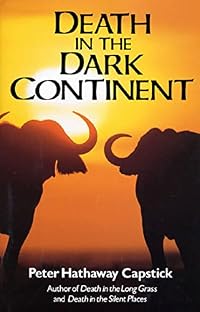
Death in the Dark Continent
by Peter Hathaway Capstick
On This Page
Description
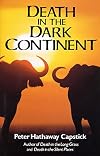
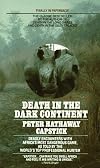
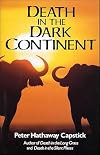
Critically acclaimed as a master of adventure writing for Death in the Long Grass and Death in the Silent Places, former professional hunter Peter Hathaway Capstick takes us back to Africa to encounter the world's most dangerous big-game animals. After consulting African game experts and recalling his own experiences and those of his colleagues, Capstick has written chilling, authoritative accounts of hunting the five most dangerous killers on the African continent--lion, leopard, elephant, show more Cape buffalo and rhinoceros. The classic big-game animals are unmatched as a test of a hunter's skill and courage. With a command of exciting prose, Capstick brings us along on the chase. The warning snarl of a crouching lion, the swish of grass that reveals a leopard, the enraged scream of a wounded elephant, the cloud of dust that marks a herd of Cape buffalo, the earthshaking charge of a rhino are recreated in heart-stopping, nerve-racking detail. In Death in the Dark Continent, Capstick brings to life all the suspense, fear and exhilaration of stalking ferocious killers under primitive, savage conditions, with the ever present threat of death. show lessTags
Recommendations

























Member Reviews
A hunting buddy loaned me this book upon learned that I had planned a camera safari for Kenya and Tanzania. I didn’t get around to reading it until I had returned and I’m glad I did.
Our two week tour included visits to five national park/conservation areas in Kenya and Tanzania. Kenya banned commercial hunting in 1973 (the author has a definite opinion on this), while Tanzania still has limited hunting concessions. While observing the various species of animal at each of the parks, including the Big Five highlighted in this book, I was at a loss how hunting such animals could be considered sport. After reading this account of various hunting safaris and big five encounters, I have a better understanding.
As mentioned above, I am a show more hunter of whitetail deer, turkey and various upland game birds, so I would be the last to denigrate sport hunting. I would not, however, defend the hunting of cows, zebra or any other animal that involved little or no sport. Hunting the Big Five in a national park or conservation area would entail no sport as those animals have lost any fear or even recognition of human presence. The type of hunting practiced and described by the author (largely occurring prior to 1975), is another thing entirely. Stalking a wary, trophy bull elephant for dozens of miles on foot, sometimes in dense foliage to very close proximity, aware that a non-lethal shot may result in gruesome death, can certainly be classified as sport. Likewise, trailing a wounded leopard or Cape buffalo into an impenetrable thicket is not only sport, it is lunacy.
The author has a very folksy, entertaining writing style that includes a healthy dose of humor along with technical and practical information on the means, methods and tools used in such an endeavor. At about 250 pages, this is a very quick, entertaining read. show less
Our two week tour included visits to five national park/conservation areas in Kenya and Tanzania. Kenya banned commercial hunting in 1973 (the author has a definite opinion on this), while Tanzania still has limited hunting concessions. While observing the various species of animal at each of the parks, including the Big Five highlighted in this book, I was at a loss how hunting such animals could be considered sport. After reading this account of various hunting safaris and big five encounters, I have a better understanding.
As mentioned above, I am a show more hunter of whitetail deer, turkey and various upland game birds, so I would be the last to denigrate sport hunting. I would not, however, defend the hunting of cows, zebra or any other animal that involved little or no sport. Hunting the Big Five in a national park or conservation area would entail no sport as those animals have lost any fear or even recognition of human presence. The type of hunting practiced and described by the author (largely occurring prior to 1975), is another thing entirely. Stalking a wary, trophy bull elephant for dozens of miles on foot, sometimes in dense foliage to very close proximity, aware that a non-lethal shot may result in gruesome death, can certainly be classified as sport. Likewise, trailing a wounded leopard or Cape buffalo into an impenetrable thicket is not only sport, it is lunacy.
The author has a very folksy, entertaining writing style that includes a healthy dose of humor along with technical and practical information on the means, methods and tools used in such an endeavor. At about 250 pages, this is a very quick, entertaining read. show less
Ratings
Members
- Recently Added By
Author Information
13+ Works 1,089 Members
Classifications
Statistics
- Members
- 118
- Popularity
- 275,139
- Reviews
- 1
- Rating
- (4.36)
- Languages
- English, Hungarian
- Media
- Paper, Audiobook, Ebook
- ISBNs
- 5
- ASINs
- 2