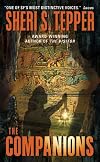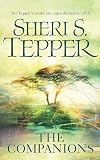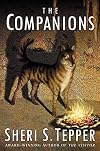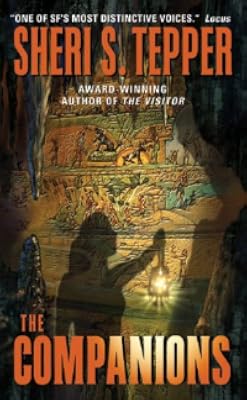
The Companions
by Sheri S. Tepper
On This Page
Description
Three planets have been recently discovered in deep space, and prosaically named to reflect their respective environments. Jungle, lush and foreboding, swallowed up an eleven-member exploratory team more than a decade earlier, while hot, harsh, and dusty Stone turned out to be phenomenally rich in rare ore, the most profitable new world to be found in a century. But it is the third, Moss, that could well prove to be the most enigmatic . . . and dangerous.Enlisted by the Planetary Protection show more Institute — an organization founded to assess new worlds for potential development and profit — famed linguist Paul Delis has come to Moss to determine whether the strange multicolored shapes of dancing light observed on the planet's surface are evidence of intelligent life. With Delis is his half sister, Jewel, the wife of one of the explorers lost on Jungle. Working together, they are to determine the true nature of the "Mossen" and decipher the strange "language" that accompanies the phenomenon.
Yet the great mysteries of this bucolic world — three-quarters covered in wind-sculpted, ever-shifting moss — don't end with the inexplicable illuminations; there is the puzzle of the rusting remains of a lost fleet of Earth ships, moldering on a distant plateau. Perhaps the biggest question mark is Jewel Delis herself and her mission here at the far reaches of the galaxy. Leaving an overpopulated homeworld that is rapidly becoming depleted of the raw materials needed for human survival, Jewel is a member of a radical underground group opposing a recent government edict that will eliminate all of the planet's "nonessential" living inhabitants. And it is here, at the universe's unexplored edge, where the fate of endangered creatures may ultimately be decided — though it will mean defying ruthless and unforgiving ruling powers to repair humankind's disintegrating relationship with the beasts of the Earth.
. show less
Tags
Recommendations

























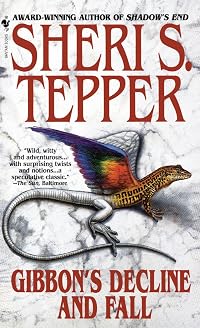





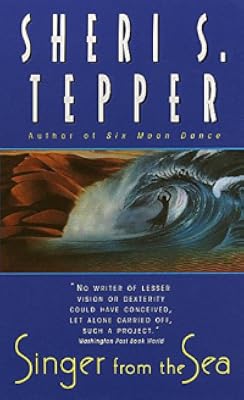
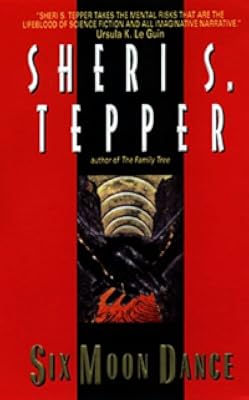







Member Recommendations
Member Reviews
When I first started this book, I did not expect to give it 5 stars, except maybe for Sherri S. Tepper's amazing use of language. The picture it paints of a future Earth is dark, overcrowded, and with buildings taking over the world. Think scenes out of the Star Wars saga that feature buildings reaching to the sky and you have a general idea of what Jewel's world is like.
But there's more. The only places with greenspace and animals are rich, landed families and their estates. And the consolidated Earth governmental powers, the PPI and the ESC (I cannot keep them straight, and maybe that's the point) are looking to eliminate all non-human life. In fact, there is a radical political persona whose influence over the "down dwellers" is such show more that all companion animals are to join their extinct wild kin.
But Jewel is part of the arkists, those humans with a heart who seek to get all animals to safety onto terraformed worlds. And as Jewel becomes an adult, her ingenuity in navigating her obnoxious linguist brother becomes a help in aiding this endeavor. She was taught by her father how to travel through and around the buildings that occupy all land on the US by using chutes meant for packages and trash, not for human travel. And her mother's lasting legacy is a multi-media musical and pictoral work that shows her exploration of a cavern on Mars that contains frescoes of humans and dogs. On Mars.
Planetary travel is normal, colonization is normal, and the chapters are told by Jewel or by several of the other beings that use intergalactic travel: the Orskini and the Derac. They are devious and seek to gain the supremacy that the despised Zhana once held in the galaxy. Jewel's work takes her to the planet Moss with its new look at both flora and language, and she is joined by some of the dogs that are heading to the terraformed moon on this planetary system.
Stick with this book. It is long, Tepper's use of language is masterful, and while the dystopian view of a future Earth can be spirit-numbing, the ways in which Jewel and her compatriots work comes together with goodness and a dog's wet nose. show less
But there's more. The only places with greenspace and animals are rich, landed families and their estates. And the consolidated Earth governmental powers, the PPI and the ESC (I cannot keep them straight, and maybe that's the point) are looking to eliminate all non-human life. In fact, there is a radical political persona whose influence over the "down dwellers" is such show more that all companion animals are to join their extinct wild kin.
But Jewel is part of the arkists, those humans with a heart who seek to get all animals to safety onto terraformed worlds. And as Jewel becomes an adult, her ingenuity in navigating her obnoxious linguist brother becomes a help in aiding this endeavor. She was taught by her father how to travel through and around the buildings that occupy all land on the US by using chutes meant for packages and trash, not for human travel. And her mother's lasting legacy is a multi-media musical and pictoral work that shows her exploration of a cavern on Mars that contains frescoes of humans and dogs. On Mars.
Planetary travel is normal, colonization is normal, and the chapters are told by Jewel or by several of the other beings that use intergalactic travel: the Orskini and the Derac. They are devious and seek to gain the supremacy that the despised Zhana once held in the galaxy. Jewel's work takes her to the planet Moss with its new look at both flora and language, and she is joined by some of the dogs that are heading to the terraformed moon on this planetary system.
Stick with this book. It is long, Tepper's use of language is masterful, and while the dystopian view of a future Earth can be spirit-numbing, the ways in which Jewel and her compatriots work comes together with goodness and a dog's wet nose. show less
A mature and well-crafted work.
I personally find the sci-fi scenario where humans are squished together in huge building complexes that they rarely leave, and all other lifeforms have been forced into extinction due to humanity's lack of caring or active malevolence, to be truly terrifying, as it is all too likely that that is truly the direction that we are heading in.
I thought Tepper's point that a race that cannot co-exist in its natural environment is unlikely to be able to co-exist with itself is also relevant....
I find it incomprehensible that the forces behind environmental destruction are often those also touting Christianity as a prerequisite for civilisation...
If an all-knowing, benificent god created all life on this earth, show more then is not wantonly destroying that life the worst blasphemy imaginable? An insult to god's creation?
But - that's what they're doing, and I liked how she linked the anti-environmentalists to far-right religious groups in her theoretical IGY-HFO group.
HOWEVER
In the Companions, I thought Tepper really ruined the force of her message by, at the end, revealing that the aliens/gods had saved the thought-to-be-extinct animals by zapping them into heaven/alternate universe.
That was like, "don't worry about destroying species, I'm sure god will make sure we don't really do it..." I'm sorry, but gone is gone forever and there's no "feel-good" fix that can mitigate that all-too-real horror.
Also, I think that she didn't really do enough with the discussion of genetic tampering that was brought up with the use of Zhaar technology. Is it ethical to tamper with a creature's natural way of existence to "improve" it? Is it really "saving" the species? This is a complex and relevant issue, and it was mostly avoided.
Making the Simusi so wholeheartedly and irrevocably evil, after linking them with the lovable and benign dogs, also created some oddities in the plot, I thought. It seemed that Tepper couldn't make up her mind whether "pets" are enslaved or not. Sometimes it seemed like she was arguing FOR having domestic animals, with all the old saws about friendship between species, and maybe the dogs think they've domesticated us - then in the scenes with the Simusi and their human slaves, the parallels are drawn (very heavy-handedly) to indicate that we have terribly enslaved domestic animals.... I was like, say what you want, but make up your mind! show less
I personally find the sci-fi scenario where humans are squished together in huge building complexes that they rarely leave, and all other lifeforms have been forced into extinction due to humanity's lack of caring or active malevolence, to be truly terrifying, as it is all too likely that that is truly the direction that we are heading in.
I thought Tepper's point that a race that cannot co-exist in its natural environment is unlikely to be able to co-exist with itself is also relevant....
I find it incomprehensible that the forces behind environmental destruction are often those also touting Christianity as a prerequisite for civilisation...
If an all-knowing, benificent god created all life on this earth, show more then is not wantonly destroying that life the worst blasphemy imaginable? An insult to god's creation?
But - that's what they're doing, and I liked how she linked the anti-environmentalists to far-right religious groups in her theoretical IGY-HFO group.
HOWEVER
In the Companions, I thought Tepper really ruined the force of her message by, at the end, revealing that the aliens/gods had saved the thought-to-be-extinct animals by zapping them into heaven/alternate universe.
That was like, "don't worry about destroying species, I'm sure god will make sure we don't really do it..." I'm sorry, but gone is gone forever and there's no "feel-good" fix that can mitigate that all-too-real horror.
Also, I think that she didn't really do enough with the discussion of genetic tampering that was brought up with the use of Zhaar technology. Is it ethical to tamper with a creature's natural way of existence to "improve" it? Is it really "saving" the species? This is a complex and relevant issue, and it was mostly avoided.
Making the Simusi so wholeheartedly and irrevocably evil, after linking them with the lovable and benign dogs, also created some oddities in the plot, I thought. It seemed that Tepper couldn't make up her mind whether "pets" are enslaved or not. Sometimes it seemed like she was arguing FOR having domestic animals, with all the old saws about friendship between species, and maybe the dogs think they've domesticated us - then in the scenes with the Simusi and their human slaves, the parallels are drawn (very heavy-handedly) to indicate that we have terribly enslaved domestic animals.... I was like, say what you want, but make up your mind! show less
Anyone who is a seasoned reader of Tepper is familiar with her tendency to introduce crazy and/or contrived deus ex machinas near the end of her stories, and some of them were terrible (Family Tree, the Visitor), but this story actually made more sense. Like her other works, this delves into issues like religion, society, gender roles, slavery, and other important topics.
The setting is Earth in the future, where Mars and other planets have been colonized, but Earth itself is dealing with a severe population problem, and people complain about animals taking up food and oxygen (yet no one ever talks about birth control!!!)
Much of the story focuses on relations with alien races, with some scenes set within their worlds (Derac, Orskimi) and show more their actions and their consequences on us. It would take me too long to fully explain the story, but anyone familiat with Tepper should not be too surprised. This is more a novel for seasoned Tepper readers, and an enjoyable one. If you're new to Tepper, I recommend 'Gate to Women's Country' or 'The Fresco'. show less
The setting is Earth in the future, where Mars and other planets have been colonized, but Earth itself is dealing with a severe population problem, and people complain about animals taking up food and oxygen (yet no one ever talks about birth control!!!)
Much of the story focuses on relations with alien races, with some scenes set within their worlds (Derac, Orskimi) and show more their actions and their consequences on us. It would take me too long to fully explain the story, but anyone familiat with Tepper should not be too surprised. This is more a novel for seasoned Tepper readers, and an enjoyable one. If you're new to Tepper, I recommend 'Gate to Women's Country' or 'The Fresco'. show less
The Companions added to my deepening love of Tepper's writing, after starting me off on the wrong foot. My initial worries of either/both a) getting beaten about the head by gloom-n-doom ecopocalypse themes (and that's coming from a bleeding heart liberal!) or b) having my heart ripped to shreds for 300 pages at the prospect of the remaining few canines in that god-forsaken world being exterminated, happily were dispelled all around.
I found the humans-wreck-everything theme and story-lines plausible and thought-provoking without being preachy or beating me about the head. I connected strongly with the protagonist characters and felt substantial active dislike/revulsion of the disreputable characters and races. There was a pleasing show more amount of suspense and some-but-not-too-many bread crumbs that kept me engaged and turning the pages until the end.
I don't know that Tepper is the first to hit upon the notion of scent-based language, but she does a fantastic job of weaving the structure of the story and all of the characters and pieces around and through the scent-language notion.
A great story - I felt like I thoroughly got know the characters and by the end I felt like I'd been there and part of it. Tepper has an ability unlike anyone else that comes to mind to really personally and emotively draw you into her stories, and to the connect with the themes and characters therein. show less
I found the humans-wreck-everything theme and story-lines plausible and thought-provoking without being preachy or beating me about the head. I connected strongly with the protagonist characters and felt substantial active dislike/revulsion of the disreputable characters and races. There was a pleasing show more amount of suspense and some-but-not-too-many bread crumbs that kept me engaged and turning the pages until the end.
I don't know that Tepper is the first to hit upon the notion of scent-based language, but she does a fantastic job of weaving the structure of the story and all of the characters and pieces around and through the scent-language notion.
A great story - I felt like I thoroughly got know the characters and by the end I felt like I'd been there and part of it. Tepper has an ability unlike anyone else that comes to mind to really personally and emotively draw you into her stories, and to the connect with the themes and characters therein. show less
Tepper once again weaves her poignant imagination with superb writing to tell a story brimming with insightful notes for our contemporary era.
Like most of her novels, The Companions is richly and imaginatively told. The story centers on dog-lover Jewel Delis and her experiences growing up on an over-populated Earth in the grip of interstellar alien conflict. Delis travels on assignment to the mysterious planet Moss, where a "world consciousness" is discovered. Tepper deftly explores the themes of "human nature," language, ecology, and ecofeminism. She especially focuses on the issue of the endangerment of animals and what cavalier disregard for "whole systems" can cost humans.
Tepper juxtaposes different types of relationships in the show more story as a means to explore the social and ecological ramifications of the idea of companionship. The characters wrestle with both positive and negative relationships between family members, between genders, between spouses, and between species. She contrasts the mutually supporting companionship between humans and dogs, to the "companionship" between master/slave and owner/concubine.
Tepper is skilled at evoking thoughtful consideration of some of the key issues of today through story. My only wish would be to have a smoother balance between character development and action-packed narrative. show less
Like most of her novels, The Companions is richly and imaginatively told. The story centers on dog-lover Jewel Delis and her experiences growing up on an over-populated Earth in the grip of interstellar alien conflict. Delis travels on assignment to the mysterious planet Moss, where a "world consciousness" is discovered. Tepper deftly explores the themes of "human nature," language, ecology, and ecofeminism. She especially focuses on the issue of the endangerment of animals and what cavalier disregard for "whole systems" can cost humans.
Tepper juxtaposes different types of relationships in the show more story as a means to explore the social and ecological ramifications of the idea of companionship. The characters wrestle with both positive and negative relationships between family members, between genders, between spouses, and between species. She contrasts the mutually supporting companionship between humans and dogs, to the "companionship" between master/slave and owner/concubine.
Tepper is skilled at evoking thoughtful consideration of some of the key issues of today through story. My only wish would be to have a smoother balance between character development and action-packed narrative. show less
Note to self: give up on Sheri Tepper already. Her talent for evocative description is always subsumed, sooner or later, by her misguided preachiness. The protagonist of this one shows up scientists, linguists, and diplomats alike with her powers of Intuition. /eyeroll/ And the last third of the book reads like an outline: show, don't tell, Sheri.
I started this book with high expectations and I'm sorry to say they didn't all come true. Altough I liked the story and the worlds described, sometimes it was just very confusing. Long sentences, a lot of chapters "outside" of the story and a lot of storylines made it sometimes hard to understand the story at all. I did enjoy the writer's ability to make the planets and species come to life before my eyes.
I also liked the message the book seemed to give: be careful of our planet because otherwise there will be no living space left. Also I thought that religion and the dangers of religion played an important part.
This was my first book by this writer and may be I'll try one more, because I did enjoy certain parts of the story.
I also liked the message the book seemed to give: be careful of our planet because otherwise there will be no living space left. Also I thought that religion and the dangers of religion played an important part.
This was my first book by this writer and may be I'll try one more, because I did enjoy certain parts of the story.
Members
- Recently Added By
Lists

Best Science Fiction Novels
816 works; 430 members

Female Protagonist
1,056 works; 57 members

BingoDOG - Animals in Adult Fiction
78 works; 20 members

BingoDOG - Language in Fiction
35 works; 12 members
Author Information

80+ Works 25,736 Members
Sheri S. Tepper was born Shirley Stewart Douglas on July 16, 1929 near Littleton, Colorado. She held numerous jobs before becoming a full-time author including working at Rocky Mountain Planned Parenthood from 1962 to 1986, eventually becoming the executive director. In the early 1960s, she wrote poems and children's stories under the name Sheri show more S. Eberhart. In the 1980s, she became a feminist and science fiction/fantasy writer. Her books include The Revenants, After Long Silence, The Gate to Women's Country, Grass, Shadow's End, Gibbon's Decline and Fall, The Family Tree, Six Moon Dance, Singer from the Sea, The Fresco, The Visitor, The Companions, and The Margarets. She received the Locus Award for Beauty and a World Fantasy life achievement award in 2015. She also wrote horror under the name E. E. Horlak and mysteries under the names A. J. Orde and B. J. Oliphant. She died on October 22, 2016 at the age of 87. (Bowker Author Biography) show less
Awards and Honors
Common Knowledge
- Original publication date
- 2003
- People/Characters
- Jewel Delis; Paul Delis
- Important places
- Moss (fictitious planet)
Classifications
Statistics
- Members
- 655
- Popularity
- 44,145
- Reviews
- 15
- Rating
- (3.67)
- Languages
- English
- Media
- Paper, Ebook
- ISBNs
- 7
- ASINs
- 7