On This Page
Description
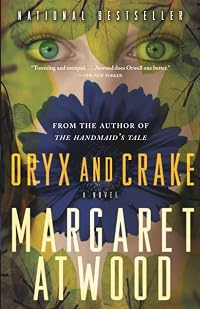
Oryx and Crake is at once an unforgettable love story and a compelling vision of the future. Snowman, known as Jimmy before mankind was overwhelmed by a plague, is struggling to survive in a world where he may be the last human, and mourning the loss of his best friend, Crake, and the beautiful and elusive Oryx whom they both loved. In search of answers, Snowman embarks on a journey--with the help of the green-eyed Children of Crake--through the lush wilderness that was so recently a great show more city, until powerful corporations took mankind on an uncontrolled genetic engineering ride. Margaret Atwood projects us into a near future that is both all too familiar and beyond our imagining. show lessTags
Recommendations
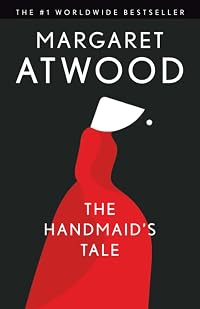
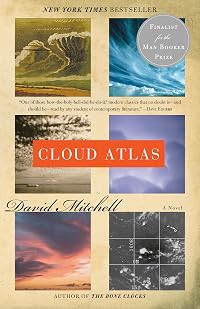

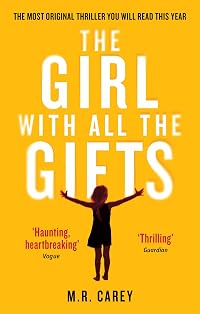
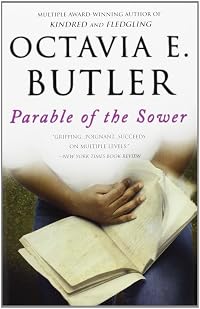
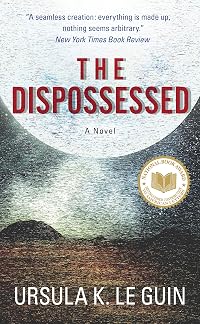
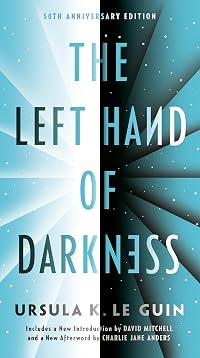
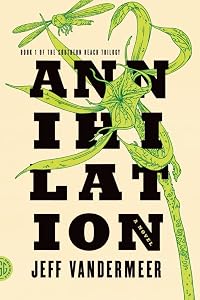
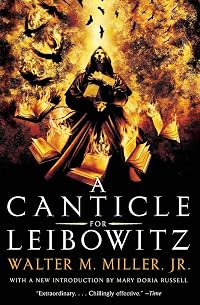
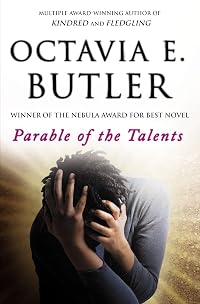
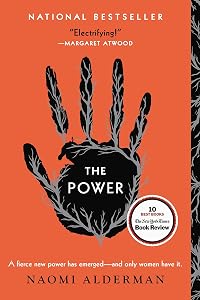
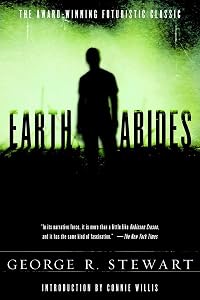

Member Recommendations
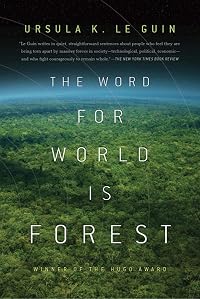
Oct326 Both post-apocalyptic novels, Atwood's one is satyric and sarcastic, and skilfully projects some trends of current society in a not-too-far future, suggesting that they can lead us to catastrophe; while Miller's one is very sad, even tragic, deeply pessimistic about humanity, which it describes as inherently stupid and evil, and inevitably bound to repeat its mistakes and destroy itself.
Also recommended by goodiegoodie
91

PghDragonMan What happens when the experiment is unleashed?
112

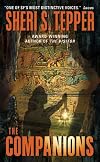


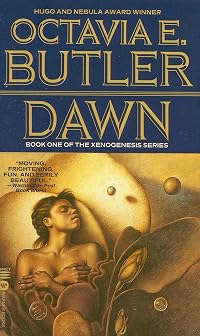
wendelin39 Now this book was fun. It had the super being and the surprises that should come with her. Plus the plot moved quickly. Plenty of suspense and turns..
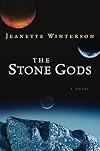
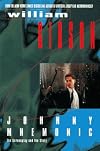
PghDragonMan Add Drug Companies next to The Government of people to run from when they say "I'm from ______ and I'm here to help you"
34
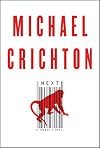
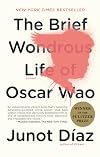
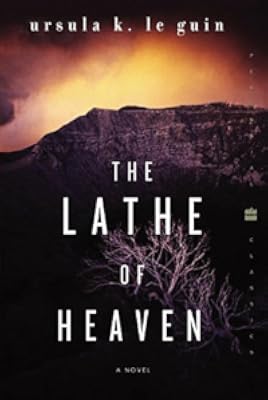
andomck At the core of each book is the story of an adolescent male friendship
03
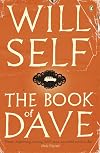
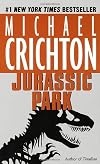
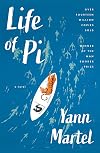
WeeTurtle Different content but a similar vibe. Both books deal in human behavior, biology, and how well we fit into an environment.
Member Reviews
Why have I been intimidated by this trilogy? Oryx and Crake is a masterful post-apocalyptic, dystopian novel. Snowman (aka Jimmy) appears to be the sole survivor of a massive virus that has brought humans to the edge of extinction. Set partly in this devastated future, the novel gradually reveals just how we got there and, most particularly, Snowman's old friend Crake's role in the journey. Oh yes, and there is Oryx, a hauntingly there-but-not-there woman with whom both of them are in love. Complex and subtle, the novel is filled with delightful glimpses of humanity's beauty even as Atwood explores the inevitability of our terrible destiny. In a time when many of us are asking how can we change this self-destructive trajectory and why show more on earth (no pun there, or is it?) we seem incapable of doing so, Atwood lays bare the folly of human need, greed, and short-sightedness. Brilliant. show less
(This review is spoiler-free until my warning near the middle)
That was... oddly compelling. Much better than I had expected it to be, given what I knew of the plot. I'm not a fan of apocalyptic sci fi, and I'm definitely not a fan of apocalyptic sci fi in which nothing happens for long stretches of time. But somehow this one defied expectations and I ended up loving it.
Here's what I liked about this book:
1. The main POV character. Literally the only character in this book who was multidimensional and this actually shows how irredeemably, humanly flawed he is. He's an apathetic, sexist, self-centered manchild made loveable by the grace with which he deals with his new reality.
2. The nature of the apocalypse. Atwood is masterful at show more scaring the shit out of me because her dyatopias are sickeningly plausible. Maybe an exaggerated bit of paranoia here and some regrettable dated technological references there, sure. But brilliant and horrifying in its overall likelihood.
3. HERE BE SPOILERS HERE BE SPOILERS
The stories Snowman makes up for the Crakers. There was just something so creepy and primordial about it. I felt like I glimpsed some very unsettling truths about human nature in the precise stories Snowman tells and the Crakers' reaction to them.
HERE BE MORE SPOILERS
What I didn't like about this book was how awfully sexualy objectified all the women are. Maybe it was deliberate. Maybe that's just Jimmy's/Snowman's way. But regardless it was painful to read. Oryx especially. Augh. Was there even a single stereotype about sex workers NOT crammed into her story? Even in death she is denied the dignity of humanity granted to Crake: her corpse lies demurely face-down, swathed in pretty silks, forever the sexy pixie dream doll. Couldn't have allowed a single fart to escape her perfectly sexy buttocks as she died, could we? It's places like this where I think the line is crossed between character building of Snowman and straight up objectification by the authorial voice.
Those are my thoughts. For now. Can't wait to read the next book.
------------------------------------------------------------
I listened to this as an audiobook read by Campbell Scott. Scott is one of the good ones. His reading style is bland and unadorned, but despite this he is compelling rather than boring, and honestly, the style just added to the book's atmosphere. show less
That was... oddly compelling. Much better than I had expected it to be, given what I knew of the plot. I'm not a fan of apocalyptic sci fi, and I'm definitely not a fan of apocalyptic sci fi in which nothing happens for long stretches of time. But somehow this one defied expectations and I ended up loving it.
Here's what I liked about this book:
1. The main POV character. Literally the only character in this book who was multidimensional and this actually shows how irredeemably, humanly flawed he is. He's an apathetic, sexist, self-centered manchild made loveable by the grace with which he deals with his new reality.
2. The nature of the apocalypse. Atwood is masterful at show more scaring the shit out of me because her dyatopias are sickeningly plausible. Maybe an exaggerated bit of paranoia here and some regrettable dated technological references there, sure. But brilliant and horrifying in its overall likelihood.
3. HERE BE SPOILERS HERE BE SPOILERS
The stories Snowman makes up for the Crakers. There was just something so creepy and primordial about it. I felt like I glimpsed some very unsettling truths about human nature in the precise stories Snowman tells and the Crakers' reaction to them.
HERE BE MORE SPOILERS
What I didn't like about this book was how awfully sexualy objectified all the women are. Maybe it was deliberate. Maybe that's just Jimmy's/Snowman's way. But regardless it was painful to read. Oryx especially. Augh. Was there even a single stereotype about sex workers NOT crammed into her story? Even in death she is denied the dignity of humanity granted to Crake: her corpse lies demurely face-down, swathed in pretty silks, forever the sexy pixie dream doll. Couldn't have allowed a single fart to escape her perfectly sexy buttocks as she died, could we? It's places like this where I think the line is crossed between character building of Snowman and straight up objectification by the authorial voice.
Those are my thoughts. For now. Can't wait to read the next book.
------------------------------------------------------------
I listened to this as an audiobook read by Campbell Scott. Scott is one of the good ones. His reading style is bland and unadorned, but despite this he is compelling rather than boring, and honestly, the style just added to the book's atmosphere. show less
The most striking and frightening aspect of reading Atwood's dystopia is that it is so easy to see how we would get there from here. In using science and technology to rule out spirituality and art and bend the world around them to their will and reconstructed image, this future society finds itself numbly going through paces that ultimately end in its destruction at the hands of a man playing God. Of course, in the end, we find that nothing has truly changed, despite his efforts to purge man's dark impulses. The book reminds me of Lewis' statement that, just because we can do something, doesn't mean we should. There is a solemn warning in this book, one that needs to be heeded by our culture at large. This is good science show more fiction...some of the best I've read this year. show less
I wish I had known how brutal and difficult to read this was
I would have skipped this one had I seen a TW because there are some things I just don’t want to imagine. But it’s also good sometimes to get a slap-in-the-face-wake-up-call about the real world and be reminded that this is the way things truly are for some young kids. And THAT is what makes it so hard to imagine. I really feel sick. Don’t know if I will continue the series.
But, the climax and resolution of the plot were fantastic. I love it when everything comes together so well in a story like that.
I just need to be in a book club for this, or keep rambling my thoughts out at 3am. Is Snowman supposed to be a hero? I have Weird feelings towards this naked, feathered, fish-eating, pedophilic, fevered, betrayed caveman.
Many things irritated me about this dismal, leaden, simple-minded satire of biotech and corporatocracy. I'm unkindly disposed to stories told in flashback, for a start, and also to present-tense narration, and this book alternates between the two. My tolerance for evil genius characters is low, and lower still when they sneakily plot the demise of all mankind. And if there's one type of character I like even less than that, it's young male slobs, and these two guys take up 95% of the bloated page-count without ever approaching multidimensionality. There's one other character, an ex-child sex slave cum-exotic Oriental mystery woman-cum new Eve whose dialogue, though minimal, is indescribably exasperating. There are some pointless and show more mildly offensive references to Asperger's and neurotypicality. The corporations, products, websites etc. all have idiotic 50's-style wacky phonetically spelled names like ReJoovenEsence, Noodie News, AnooYoo, and NiteeNite.com (a site where you watch people off themselves, duh). Atwood succumbed to a serious case of sci-fi neologism-itis here. It's a boring book; very little happens and the non-ending would be infuriating if it didn't come as such a relief.
The gene-splicing at the heart of the plot is laughable. Hey, what do you get when you cross a raccoon with a skunk? A "rakunk"! What's that, a spider-goat hybrid called a spoat? A snake-rat (you guessed it, "snat") which is apparently... drumroll... a snake... with the head of a rat... FML.
But what irked me most about Atwood's craptastic connect-the-dots dystopia was the lack of imaginative effort. Other than the Doctor Moreau-style menagerie of mutant freaks, her "near-future" doesn't seem to have moved on at all from 2003. There's internet (used exclusively for snuff porn and live news feeds — strangely e-commerce isn't a thing in this world of all-powerful consumer-facing corporations) but no smartphones; CD-ROMs and DVDs are cutting edge tech; emails go back and forth but she apparently wasn't familiar with instant messaging; résumés are still sent out by mail. There are glaring inconsistencies like New York having been relocated due to sea-level rise but Seattle and Fiji apparently being just fine. All of this isn't bad in itself, but it demonstrates laziness, a lack of interest in the future, and by extension a lack of interest in the present she's trying to criticize. Atwood rejected the tag "science fiction", possibly in an attempt to absolve herself of the responsibility for putting some thought into her future or maybe because she's a snob, but I don't see how her preferred term, the quibbling "speculative fiction", gets her off the hook. When we read a historical novel we expect a basic effort from the author to make the setting convincing; surely novels set in the future should meet the same standard. The whole thing comes off as condescending, arrogant, the product of a laurel-ensconced doyenne who can do no wrong.
And on top of it all she asks us to believe in a North-American high-speed rail network! show less
The gene-splicing at the heart of the plot is laughable. Hey, what do you get when you cross a raccoon with a skunk? A "rakunk"! What's that, a spider-goat hybrid called a spoat? A snake-rat (you guessed it, "snat") which is apparently... drumroll... a snake... with the head of a rat... FML.
But what irked me most about Atwood's craptastic connect-the-dots dystopia was the lack of imaginative effort. Other than the Doctor Moreau-style menagerie of mutant freaks, her "near-future" doesn't seem to have moved on at all from 2003. There's internet (used exclusively for snuff porn and live news feeds — strangely e-commerce isn't a thing in this world of all-powerful consumer-facing corporations) but no smartphones; CD-ROMs and DVDs are cutting edge tech; emails go back and forth but she apparently wasn't familiar with instant messaging; résumés are still sent out by mail. There are glaring inconsistencies like New York having been relocated due to sea-level rise but Seattle and Fiji apparently being just fine. All of this isn't bad in itself, but it demonstrates laziness, a lack of interest in the future, and by extension a lack of interest in the present she's trying to criticize. Atwood rejected the tag "science fiction", possibly in an attempt to absolve herself of the responsibility for putting some thought into her future or maybe because she's a snob, but I don't see how her preferred term, the quibbling "speculative fiction", gets her off the hook. When we read a historical novel we expect a basic effort from the author to make the setting convincing; surely novels set in the future should meet the same standard. The whole thing comes off as condescending, arrogant, the product of a laurel-ensconced doyenne who can do no wrong.
And on top of it all she asks us to believe in a North-American high-speed rail network! show less
The man formerly known as Jimmy tries to survive in a post-apocalyptic world while remembering his adolescent friendship with the man who destroyed everything. They began their life sheltered in a corporate compound, grew up to be the smartest of the smart while the outside world suffered, and then decided they could do better than Mother Nature. Now there is only Jimmy, the last real human, and the results of their hubris.
When I selected this book in November 2019 to be read in November 2020 I had no idea it would become so relevant! This was was at least my 3rd time reading it, if not 4th or 5th. This time I thought constantly about the people in the plebelands, outside the compounds. What was their life really like, aside from show more Jimmy's limited narration? I doubt it was really so bad that destruction would be better. Crake claimed to see through corporate hypocrisy and greed, but he still couldn't see the humanity of the poor, or actually care about anyone.
I always say each read of this book will be my last, but it probably won't be. show less
When I selected this book in November 2019 to be read in November 2020 I had no idea it would become so relevant! This was was at least my 3rd time reading it, if not 4th or 5th. This time I thought constantly about the people in the plebelands, outside the compounds. What was their life really like, aside from show more Jimmy's limited narration? I doubt it was really so bad that destruction would be better. Crake claimed to see through corporate hypocrisy and greed, but he still couldn't see the humanity of the poor, or actually care about anyone.
I always say each read of this book will be my last, but it probably won't be. show less
Very well-written, thought-provoking, and disturbing. Atwood skillfully jumps back and forth between a post-apocalyptic dystopia, and the story of how the dystopia came to be. This world is frighteningly close to what ours could soon be: climate change has had catastrophic effects on ecology and society, genetic engineering (particularly of food) runs rampant, a wealthy scientific elite hide themselves from the poor rabble of the world, and it is perilously easy for a disease to wipe out humanity. Atwood not only describes this world in vivid language, she also skillfully and subtly explores its implications.
[semi-spoiler alert!]
My only complaint about the book is its ending, or lack thereof. The book just sortof stopped, right before show more what could have been a climactic moment. I suppose Atwood was aiming for an unfulfilled feeling: the dystopia is a new world, so in a way it is appropriate for the book to feel unfinished. But after such a long and emotionally-charged journey, I was really hoping for something bigger and more meaningful in the ending.
I listened to the audiobook, and thought it was very well-read. show less
[semi-spoiler alert!]
My only complaint about the book is its ending, or lack thereof. The book just sortof stopped, right before show more what could have been a climactic moment. I suppose Atwood was aiming for an unfulfilled feeling: the dystopia is a new world, so in a way it is appropriate for the book to feel unfinished. But after such a long and emotionally-charged journey, I was really hoping for something bigger and more meaningful in the ending.
I listened to the audiobook, and thought it was very well-read. show less
Members
- Recently Added By
Published Reviews
ThingScore 64
Oryx and Crake is a piece of dystopian fiction written from the point of Snowman (known as Jimmy in his former life) – the last human left on Earth. At least, he believes he’s the last human left on Earth until the end of the book.
I found the parts of the book describing Snowman’s journey to Paradice (the dome in the compound where Crake did his work) to be a lot less interesting than show more his recollections of his previous life as Jimmy. I loved reading about how Jimmy and Crake met, the little signs that Crake gave off as to what he might be planning and the direction his thoughts might take in the future (though Jimmy didn’t recognize these until it was too late), etc.
Crake is really the star of the show in this book in my mind – Jimmy simply acts as a vessel for us to learn about a character who is dead and who therefore cannot teach us about himself.
Snowman’s adventures in real time seem almost pointless to me. Why not dedicate the whole book to Jimmy’s friendship with Crake, with just a bit of general explanation as to what’s going on now? I think the present would have been much more interesting if the Crakers were explored more than Jimmy’s struggle to survive and come to grips with what Crake had done.
On the whole, however, I thought it was a great book. show less
I found the parts of the book describing Snowman’s journey to Paradice (the dome in the compound where Crake did his work) to be a lot less interesting than show more his recollections of his previous life as Jimmy. I loved reading about how Jimmy and Crake met, the little signs that Crake gave off as to what he might be planning and the direction his thoughts might take in the future (though Jimmy didn’t recognize these until it was too late), etc.
Crake is really the star of the show in this book in my mind – Jimmy simply acts as a vessel for us to learn about a character who is dead and who therefore cannot teach us about himself.
Snowman’s adventures in real time seem almost pointless to me. Why not dedicate the whole book to Jimmy’s friendship with Crake, with just a bit of general explanation as to what’s going on now? I think the present would have been much more interesting if the Crakers were explored more than Jimmy’s struggle to survive and come to grips with what Crake had done.
On the whole, however, I thought it was a great book. show less
added by spectralbat
Set sometime in the future, this post-apocalyptic novel takes scientific research in the hands of madmen to its logical and frightening conclusion. Inspiring readers to pay more attention to the world around them, Atwood offers cautionary notes about the environment, bioengineering, the sacrifice of civil liberties, and the possible loss of those human values which make life more than just a show more physical experience. As the novel opens, some catastrophe has occurred, effectively wiping out human life. Only one lonely survivor and a handful of genetically altered humanoids remain, and they are slowly starving as they try to adjust to their changed circumstances. show less
added by stephmo
In Margaret Atwood's first attempt at writing a novel, the main character was an ant swept downriver on a raft. She abandoned that book after the opening scene and became caught up in other activities, which she has described as ''sissy stuff like knitting and dresses and stuffed bunnies.'' That certainly does not sound like Ms. Atwood, who is known for the boldness of her fiction. Of course show more she was only 7 at the time. show less
added by stephmo
Lists

Best Science Fiction Novels
816 works; 430 members

Best Dystopias
280 works; 277 members

Favorite Science Fiction by Women Authors
741 works; 203 members

Best Post-Apocalyptic Stories
143 works; 88 members

Favourite Women's Prize for Fiction, Orange & Bailey's Prize contenders
132 works; 52 members

Top Five Books of 2013
1,562 works; 721 members

Best Contemporary Literary Fiction (Around the Last 30 Years)
400 works; 124 members

Recommended Apocalyptic Novels
53 works; 24 members

Best 21st Century Books (So Far)
679 works; 86 members
The Best of Canadian Literature
235 works; 33 members

Recommend the 20 best books you've read in the last five years
2,168 works; 608 members

Female Author
1,234 works; 66 members

Favourite Books
1,820 works; 310 members
Booker Prize
491 works; 62 members
CBC Books - Canada's 100 (+ bonus 10): Which have you read?
110 works; 23 members

Best Books About Plagues and Epidemics
99 works; 17 members

The Guardian's 100 best books of the 21st century
100 works; 21 members

Unread books
1,063 works; 83 members

Books Set in Canada
80 works; 16 members

Dystopian and Apocalyptic Literature
350 works; 74 members

Sense of place
156 works; 13 members

Best Satire
188 works; 27 members

Magic Realism
371 works; 52 members

Unreliable Narrators
170 works; 43 members
BBC's 100 Novels That Shaped Our World
100 works; 22 members

Best Friendship Stories
205 works; 16 members

Slipstream or Interstitial Fiction
160 works; 19 members

Survey of Science Fiction and Fantasy
101 works; 13 members
Booker Prize Shortlist: Titles Read
103 works; 10 members

Love and Marriage
93 works; 10 members

Canada Reads Winners and Nominees
129 works; 9 members
Books Set in New York State
65 works; 11 members
One Book, Many Authors
441 works; 40 members

It's the end of the world as we know it!
90 works; 23 members

Top Five Books of 2020
982 works; 350 members

Speculative Fiction: Slipstream Literature
166 works; 16 members

Vulture's 100 Best Books of the 21st Century (So Far)
98 works; 9 members

Books Featured on Gilmore Girls
307 works; 21 members

S.F. Masterworks (Complete)
229 works; 15 members
Books tagged favorites
390 works; 30 members

Top Five Books of 2021
604 works; 181 members

Top Five Books of 2014
1,064 works; 398 members

2000s (the decade, not the century)
184 works; 11 members

A Novel Cure
742 works; 23 members
Five star books
1,767 works; 110 members

Top Five Books of 2017
757 works; 231 members
Recommended Speculative Fiction by Women and People of Color
298 works; 45 members

Man Booker Prize Longlist 2003
23 works; 3 members
LibraryThingers' 1001 Books You Must Read Before You Die
442 works; 29 members
Phi Beta Kappa reading list
260 works; 8 members
Science Fiction Pretending not to be Science Fiction
7 works; 1 member

2000s decade
85 works; 7 members

Favorite Series
238 works; 94 members
Unbound Worlds 100 Best SF Books
100 works; 8 members

An End of the World Reading List
63 works; 4 members
Shannon's Read-Alikes List
71 works; 8 members
Love Triangles in Literature
108 works; 15 members

Books Read in 2023
5,638 works; 147 members

Dystopian Novels you should read
25 works; 2 members

Rory Gilmore Book Club
193 works; 5 members

Otherland Book Club
36 works; 2 members

Read in 2015
6 works; 1 member

Speculative Fiction to Read
706 works; 32 members
SantaThing 2014 Gifts
299 works; 17 members

SHOULD Read Books!
354 works; 9 members

Best Survival Stories
97 works; 15 members

Books Read in 2017
4,249 works; 130 members
Most Popular Books Tagged Canada
34 works; 1 member

Bustle: 10 Addictive Book Trilogies To Read This Year
10 works; 1 member

Strange Cities
30 works; 7 members

Books I read in 2014
13 works; 1 member

Books Read in 2008
336 works; 8 members

Books Tagged Clones
14 works; 6 members

Robinsonade Novels
55 works; 4 members

Books Read in 2013
1,630 works; 51 members

Books Read in 2024
4,727 works; 128 members

living room bookshelf
150 works; 1 member

Books recommended by Calgary Public Library staff
1,588 works; 4 members

Llibres que he llegit el 2024
77 works; 1 member

Mind-Benders: Fiction that Hurts Your Head
34 works; 8 members
Books We Love to Reread
695 works; 298 members

Top Book of the Year - 2000s
10 works; 1 member

Retrospective of 20th- and 21st-century literature
154 works; 1 member
The Complete Rory Gilmore Reading List
506 works; 5 members

.
184 works; 1 member

Books We Discovered On LibraryThing
530 works; 130 members
Favorite Science Fiction
457 works; 223 members

Florida
366 works; 3 members
Adult Stories Involving Animals
76 works; 6 members

High Priority
29 works; 1 member
Viral Outbreaks and Pandemics
82 works; 8 members
Post-Apocalyptic Fiction
57 works; 3 members
Speculative Fiction
40 works; 2 members
Fiction For Men
142 works; 11 members

BingoDOG - Scientists in Fiction
111 works; 17 members
KayStJ's to-read list
1,616 works; 11 members

Climate Change
39 works; 2 members
BingoDOG - Genre Benders
74 works; 13 members

Fiction Books Worthy of Reading Again
37 works; 1 member
To Read
6 works; 1 member
io9 Book Club
70 works; 4 members

Phoebe Bridgers
29 works; 1 member
Read These Too
458 works; 9 members
Dystopia Must-Reads
18 works; 2 members
Recommended Science-Fiction Books
40 works; 3 members

AP Lit
363 works; 6 members

Take Four Books
130 works; 1 member
Talk Discussions
Past Discussions
Oryx and Crake spoiler thread in The 12 in 12 Category Challenge (February 2012)
GROUP READ: Oryx and Crake in The 12 in 12 Category Challenge (January 2012)
Author Information

291+ Works 199,845 Members
Margaret Atwood was born on November 18, 1939 in Ottawa, Canada. She received a B.A. from Victoria College, University of Toronto in 1961 and an M.A. from Radcliff College in 1962. Her first book of verse, Double Persephone, was published in 1961 and was awarded the E. J. Pratt Medal. She has published numerous books of poetry, novels, story show more collections, critical work, juvenile work, and radio and teleplays. Her works include The Journals of Susanna Moodie, Power Politics, Cat's Eye, The Robber Bride, Morning in the Buried House, the MaddAdam trilogy, and The Heart Goes Last. She has won numerous awards including the Prince of Asturias Award for Literature, the Booker Prize in 2000 for The Blind Assassin, the Giller Prize and the Premio Mondello for Alias Grace, and the Governor General's Award in 1966 for The Circle Game and in 1986 for The Handmaid's Tale, which also won the very first Arthur C. Clarke Award in 1987. She won the PEN Pinter prize in 2016 for her political activism. She was awarded the 2016 PEN Pinter Prize for the outstanding literary merit of her body of work. (Bowker Author Biography) show less
Some Editions
Awards and Honors
Series

Belongs to Publisher Series
Work Relationships
Is contained in
Has as a reference guide/companion
Has as a study
Common Knowledge
- Canonical title*
- Oryx en Crake
- Original title
- Oryx and Crake
- Alternate titles*
- L'ultimo degli uomini
- Original publication date
- 2003
- People/Characters
- Jimmy 'Snowman'; Crake 'Glenn'; Oryx 'SuSu'; Sharon; Ramona; Uncle Pete (show all 29); Uncle En; Jack; MaddAddam; Abraham Lincoln (Craker); Benjamin Franklin (Craker); Eleanor Roosevelt (Craker); Empress Josephine (Craker); Leonardo da Vinci (Craker); Madame Curie (Craker); Napoleon (Craker); Sacajawea (Craker); Simone de Beauvoir (Craker); Sojourner Truth (Craker); Killer (rakunk); Alex (parrot); Amanda Payne / Barb Jones; Bernice; Dolores; Melons Riley; Wakulla Price; LyndaLee; Morgana; Brenda
- Important places
- New York, New York, USA; New New York; OrganInc Compound; OrganInc Farms; HealthWyzer Compound; NooSkins (show all 13); HealthWyzer High; Watson-Crick Institute; Martha Graham Academy; AnooYoo Compound; RejoovenEsense Compound; Paradice; pleeblands
- Epigraph
- I could perhaps like others have astonished you
with strange improbable tales; but I rather chose
to relate plain matters of fact in the simplest
manner and style; because my principal design
was to inform yo... (show all)u, and not to amuse you.
— Jonathan Swift,
Gulliver’s Travels
Was there no safety? No learning by heart of
the ways of the world? No guide, no shelter,
but all was miracle and leaping from the
pinnacle of a tower into the air?
— Virginia Woolf,
To the Lightho... (show all)use - Dedication
- For my family
- First words
- Snowman wakes before dawn.
- Quotations
- “I am not my childhood,” Snowman says out loud. — 4: Hammer ~ 68
“Your friend is intellectually honorable,” Jimmy’s mother would say. “He doesn’t lie to himself.”
— 4: Crake ~ 69
“Jimmy, Jimmy,” said Crake. “Not everything has a point.” — 4: Crake ~ 70
If he wants to be an asshole it’s a free country. Millions before him have made the same life choice.
— 4: Crake ~ 72
When did the body first set out on its own adventures? Snowman thinks; after having ditched its old travelling companions, the mind and the soul, for whom it had once been considered a mere corrupt vessel or else a puppet act... (show all)ing out their dramas for them, or else bad company, leading the other two astray. — 4: Brainfrizz ~ 85
It’s comforting to remember that Homo sapiens sapiens was once so ingenious with language, and not only with language. Ingenious in every direction at once. — 5: Fish ~ 99
Also there were many who had neither love nor a money value, and having one of these things was better than having nothing. — 6: Birdcall ~ 126
“Why do you want to talk about ugly things?” she said. … “We should think only beautiful things, as much as we can. There is so much beautiful in the world if you look around. You are looking only at the dirt under yo... (show all)ur feet, Jimmy. It’s not good for you.” — 6: Pixieland Jazz ~ 144
He doesn’t know which is worse, a past he can’t regain or a present that will destroy him if he looks at it too clearly. Then there’s the future. Sheer vertigo. — 7: Sveltana ~ 147
Crake had worked for years on the purring. Once he’d discovered that the cat family purred at the same frequency as the ultrasound used on bone fractures and skin lesions and were thus equipped with their own self-healing m... (show all)echanism, he’d turned himself inside out in the attempt to install the feature.
— 7: Purring ~ 156
Crake thought he'd done away with all that, eliminated what he called the G-spot in the brain. God is a cluster of neurons, he'd maintained. — 7: Purring ~ 157
He too would like to be invisible and adored. He too would like to be elsewhere. No hope for that: he’s up to his neck in the here and now. — 7: Purring ~ 162
But irony is lost on the trees. — 7: Purring ~ 162
“When any civilization is dust and ashes,” he said, “art is all that’s left over. Images, words, music. Imaginative structures. Meaning—human meaning, that is—is defined by them.” — 7: Blue ~ 167
He didn’t want to have a father anyway, or be a father, or have a son or be one. He wanted to be himself, alone, unique, self-created and self-sufficient. From now on he was going to be fancy-free, doing whatever he liked, ... (show all)picking globes of ripe life off the life trees, taking a bite or two, sucking out the juice, throwing away the rinds. — 8: SoYummie ~ 176
Nature is to zoos as God is to churches. — 8: Wolvogs ~ 206
Take Your Time, Leave Mine Alone. — 8: Hypothetical ~ 209
So Crake never remembered his dreams. It’s Snowman that remembers them instead. Worse than remembers: he’s immersed in them, he’s wading through them, he’s stuck in them. Every moment he’s lived in the past few mont... (show all)hs was dreamed first by Crake. No wonder Crake screamed so much.
— 8: Extinctathon ~ 218
How did this happen? their descendants will ask, stumbling upon the evidence, the ruins. The ruinous evidence. Who made these things? Who lived in them? Who destroyed them? The Taj Mahal, the Louvre, the Pyramid... (show all)s, the Empire State Building—stuff he’s seen on TV, in old books, on postcards, on Blood and Roses. … Perhaps they’ll say, These things are not real. They are phantasmagoria. They were made by dreams, and now that no one is dreaming them any longer they are crumbling away. — 9: Hike ~ 222
The whole world is now one vast uncontrolled experiment—the way it always was, Crake would have said—and the doctrine of unintended consequences is in full spate. — 9: RejoovenEsense ~ 228
They claimed a clarity of vision that could only have come from being honed on the grindstone of reality. — 10: Vulturizing ~ 242
The artists, who were not sensitized to irony, said that correct analysis was one thing but correct solutions were another, and the lack of the latter did not invalidate the former. — 10: Vulturizing ~ 243
So this was the rest of his life. It felt like a party to which he’d been invited, but at an address he couldn’t actually locate. — 10: Garage ~ 252
Goodbye. Remember Killer. I love you. Don’t let me down. — 10: Gripless ~ 258
One big shark’s mouth, the universe. Row after row of razor-sharp teeth. — 10: Gripless ~ 260 - Last words
- (Click to show. Warning: May contain spoilers.)Zero hour, Snowman thinks. Time to go.
- Blurbers
- Appignanesi, Lisa; Smith, Joan; Kemp, Peter; Showalter, Elaine; Updike, John; Moore, Lorrie
- Original language
- English
- Canonical DDC/MDS
- 813.54; 813.6
- Canonical LCC
- PR9199.3.A8
*Some information comes from Common Knowledge in other languages. Click "Edit" for more information.
Classifications
Statistics
- Members
- 18,889
- Popularity
- 322
- Reviews
- 577
- Rating
- (3.93)
- Languages
- 23 — Czech, Danish, Dutch, English, Estonian, Finnish, French, German, Greek, Hungarian, Italian, Lithuanian, Norwegian (Bokmål), Norwegian, Polish, Romanian, Serbian, Croatian, Slovenian, Spanish, Swedish, Turkish, Portuguese (Portugal)
- Media
- Paper, Audiobook, Ebook
- ISBNs
- 104
- ASINs
- 30