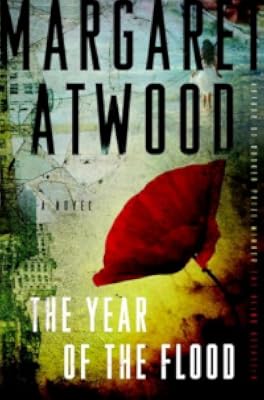
On This Page
Description
When a natural disaster predicted by God's Gardeners leader Adam One obliterates most human life, two survivors trapped inside respective establishments that metaphorically represent paradise and hell wonder if any of their loved ones have survived.Tags
Recommendations


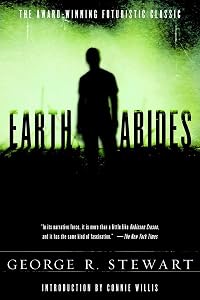
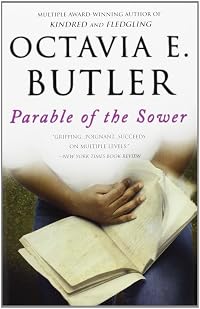
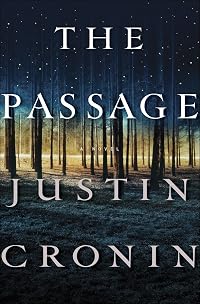
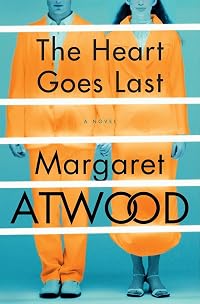




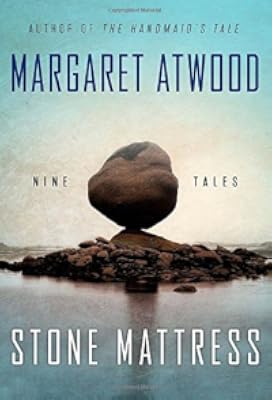
Member Recommendations
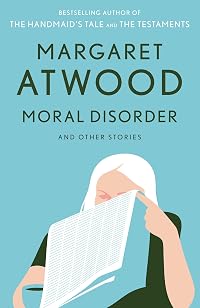
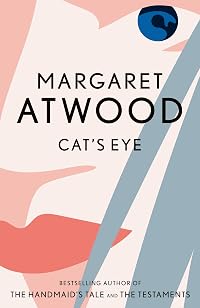
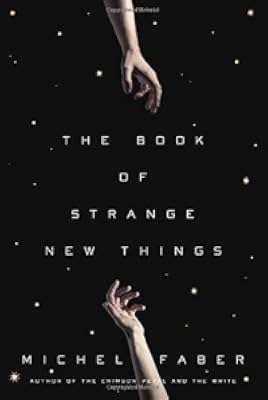
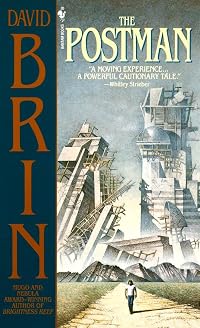
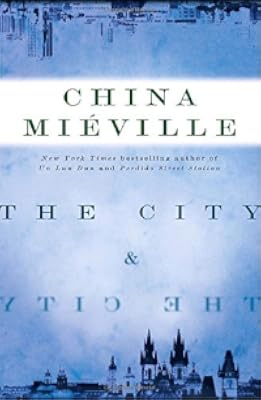
souloftherose Another novel about a dystopian future with strong environmental themes.
52
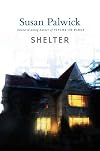
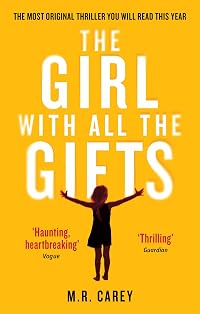
wifilibrarian Covers these similar themes near future, ecological collapse, eco-christian religion, female main characters, families and friendships.
11
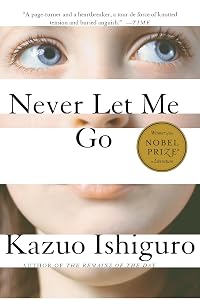
JuliaMaria Dystopien bzgl. kommender Umweltkatastrophen

Member Reviews
A companion piece, not properly a sequel, to Oryx and Crake. It covers the same period of time, seen from other characters’ perspectives. We see the same dystopic future and subsequent apocalypse from the point of view of God’s Gardeners, the religious sect that Jimmy’s mother ran away and purportedly joined in Oryx and Crake. The point of view alternates between that of Toby and Ren, whose stories intertwine and overlap with those of other characters from Oryx and Crake. Toby and Ren are far more sympathetic characters than Jimmy/Snowman, making this version of the story a touch more sentimental and a touch less sardonic. While Oryx and Crake focused more on the breakdown of human society, The Year of the Flood offers more in the show more way of the breakdown of the natural world.
Atwood is, as ever, a sharp observer of human nature, both our better angels and our worse demons. And as ever, she offers us a dim view of the future tempered by small grains of hope.
Should this be a 5-star read? I think it might be, except that Oryx and Crake has lived so long in my heart that it would be difficult for me to rate anything similar quite as high. show less
Atwood is, as ever, a sharp observer of human nature, both our better angels and our worse demons. And as ever, she offers us a dim view of the future tempered by small grains of hope.
Should this be a 5-star read? I think it might be, except that Oryx and Crake has lived so long in my heart that it would be difficult for me to rate anything similar quite as high. show less
I enjoyed The Year of the Flood even better than Oryx and Crake. The story was exciting, and Atwood clearly had fun delving into the world of God's Gardeners, a loopy but likable band of eco-Christians whose theology seems to have been lifted from a Dr. Bronner's soap label (though with better lyrics).
(The God's Gardeners surprise us, too—they begin as loving satire, but their earnest sermons and hymns become increasingly pointed and moving. This novel is one very good answer to the question of how to write fiction in the age of climate change.)
Atwood did a clever job nesting the plot of this book around Oryx & Crake. I loved the idea that while Jimmy is spiraling into his existential haze, quite different stories are happening. Yet I show more wasn't crazy about Ren's character development being dependent on the scaffolding of the previous novel—her obsession with Jimmy felt a little too neat, a literary flourish rather than an integral part of the story. show less
(The God's Gardeners surprise us, too—they begin as loving satire, but their earnest sermons and hymns become increasingly pointed and moving. This novel is one very good answer to the question of how to write fiction in the age of climate change.)
Atwood did a clever job nesting the plot of this book around Oryx & Crake. I loved the idea that while Jimmy is spiraling into his existential haze, quite different stories are happening. Yet I show more wasn't crazy about Ren's character development being dependent on the scaffolding of the previous novel—her obsession with Jimmy felt a little too neat, a literary flourish rather than an integral part of the story. show less
A book that was even better than the fabulous Oryx and Crake that preceeded it. The Year of the Flood is a much different book, but it is still amazing. This one focuses more on religion than science, but it still casts back a mirror for us and our society to examine ourselves.
Atwood seems to be writing with absences in this series. In the broken world full of broken people, she does not construct a vision of virtues or what a beautiful life look like. Instead, she uses what is broken about people and society to construct an artwork that is beautiful in and of itself, but also reveals the ideal in its absences, negative space, and between the lines.
I don't know if I'm up to the task of critiquing the craft she employs, so I'll limit show more this review to just appreciating it. Damn, but that woman can write a novel. Respect. show less
Atwood seems to be writing with absences in this series. In the broken world full of broken people, she does not construct a vision of virtues or what a beautiful life look like. Instead, she uses what is broken about people and society to construct an artwork that is beautiful in and of itself, but also reveals the ideal in its absences, negative space, and between the lines.
I don't know if I'm up to the task of critiquing the craft she employs, so I'll limit show more this review to just appreciating it. Damn, but that woman can write a novel. Respect. show less
I read the previous book, 'Oryx and Crake', in 2006, and my memory of it was pretty fuzzy. I recalled not liking it all that well, so I didn't feel very motivated to re-read it to prepare for this sequel. I generally love Atwood, which is why I bought the sequel anyway. I liked this one a lot! Damn, she's dark and funny. The books are set in a dystopian future, where corporations are much stronger than the government. If you are a professional working for a big corporation, you live in a gated community. If you aren't, you struggle to survive in the pleeblands.
'Oryx and Crake' is told from the point of view of privileged young men -- the children of scientists working for corporations. One of them is a genius, and ends up with his own show more well-funded research project. He claims to be on human aging, but he's actually doing something quite different. He creates the next stage of the human race, one that is nonviolent and easy on the environment, and creates a plague that attacks only homo sapiens.
'The Year of the Flood' is told from the point of view of people in the Gardeners, a religious and ecological cult that renounced consumerism and the corporations, and which looks forward to the 'second flood' that will cleanse the world the way that Noah's flood did. The Gardeners are much more entertaining than the boy scientist. The narration flips back and forth between Toby and Ren. Toby is wise and cynical. Ren is naive and sweet. You see the Gardeners before the plague, and after it. They are a amusing bunch, pious, head-in-the-clouds and then shatteringly pragmatic. They keep a religious calendar of saints' days, and the (brief) sermons that appear periodically always open with some thoughts on that day's saint (and a description of the crafts that the children have done to honor the saint). Some of the saints you'll recognize from the Catholic list, others not so much:
Saint E. O. Wilson of Hymenoptera
Saint Farley Mowat of Wolves
Saint Robert Burns of Mice
One of the things that the Gardeners do is find a safe new identity for people who want to get out of the corporate world. An example of Atwood's snark: 'The ratio of women to men fleeing the Corporations was roughly three to one. Nuala said it was because women were more ethical, Zeb said it was because they were more squeamish, and Philo said that it amounted to the same thing.' show less
'Oryx and Crake' is told from the point of view of privileged young men -- the children of scientists working for corporations. One of them is a genius, and ends up with his own show more well-funded research project. He claims to be on human aging, but he's actually doing something quite different. He creates the next stage of the human race, one that is nonviolent and easy on the environment, and creates a plague that attacks only homo sapiens.
'The Year of the Flood' is told from the point of view of people in the Gardeners, a religious and ecological cult that renounced consumerism and the corporations, and which looks forward to the 'second flood' that will cleanse the world the way that Noah's flood did. The Gardeners are much more entertaining than the boy scientist. The narration flips back and forth between Toby and Ren. Toby is wise and cynical. Ren is naive and sweet. You see the Gardeners before the plague, and after it. They are a amusing bunch, pious, head-in-the-clouds and then shatteringly pragmatic. They keep a religious calendar of saints' days, and the (brief) sermons that appear periodically always open with some thoughts on that day's saint (and a description of the crafts that the children have done to honor the saint). Some of the saints you'll recognize from the Catholic list, others not so much:
Saint E. O. Wilson of Hymenoptera
Saint Farley Mowat of Wolves
Saint Robert Burns of Mice
One of the things that the Gardeners do is find a safe new identity for people who want to get out of the corporate world. An example of Atwood's snark: 'The ratio of women to men fleeing the Corporations was roughly three to one. Nuala said it was because women were more ethical, Zeb said it was because they were more squeamish, and Philo said that it amounted to the same thing.' show less
Margaret Atwood's new novel is set in the same imaginary space as Oryx and Crake but told from the point of view of a minor character in the first book and of a senior member of the religious group "Gods Gardeners," mentioned only in passing in the first book. The Year of the Flood gives a rounder, fuller view of the imaginary but plausible future that Atwood has created for us. Having read Oryx and Crake first, it was easier for me to follow, although I think it would be a less confusing read, even without knowing the basic premise from the start.
Atwood has extrapolated on climate change, genetic engineering, privatization of government functions and corporate irresponsibility and immunity, all trends we can see today, to create the show more distopian future of The Year of the Flood. Her two narrators are Ren, the former girlfriend of Jimmy, aka Snowman from Oryx and Crake and Toby, a senior member of God's Gardeners.
Gods Gardeners are an eco-religious communal group, growing there own food in a rooftop garden on top of one of the buildings they occupy in the middle of the urban chaos of a "plebe," the word Atwood uses to describe a city outside of the walled and gated communities where the wealthy corporate executives live, under the protection of CorpSeCorps, the Corporate Security Corps, which has become the privatized police, army, courts and prison administration of Atwood's unnamed future nation.
In the future world Atwood has created, large corporations, many of them in the business of bio-engineering, run everything. These corporations are answerable to no one. They create and spread new diseases in order to sell the cures they have made for them. They build new creatures, combining the genetic materials of different species. Many technologies of energy efficiency are used, but were unsuccessful in reversing the trend of global warming. Solar provides the electricity for many building which are off the grid, biomass is rendered to make a petroleum substitute. Organized crime is rampant in the plebelands and regularly uses these rendering devices to dispose of bodies, or just takes their saleable organs and leaves them in a vacant lot.
Atwood goes to some length fleshing out God's Gardeners, their theology and rituals, including the words to hymns, which end each chapter. There is a CD of these songs available through Atwood's website. One amusing aspect is their saints days. Like Roman Catholicism, Gods Gardeners structure their calendar around a list of saints. Francis of Assisi is one, but most are people like Rachel Carson, Al Gore and Jacques Cousteau. Euell Gibbons gets a whole week.
Through the stories told by Ren and Toby, Atwood fills in the missing parts of Oryx and Crake. We learn that there is a connection between God's Gardeners and MaddAdam, the online game/eco-terrorist group and that Glenn/Crake, who formed MaddAdam and created the plague, known to the Gardeners as the Waterless Flood, was inspired by the Gardener's doomsday prophecy to create the plague and the genetically altered post-humans that he believes should inherit the Earth from us.
The end of The Year of the Flood coincides with the end of Oryx and Crake, leaving Toby, Ren, Ren's friend Amanda a couple of sociopathic criminals and a colony of blue bellied post-humans to fend for themselves. How will society evolve from here? Is Atwood so enamored of this particular distopia that she would write a trilogy? Perhaps she means to leave it up to the reader's imagination. It would be nice to know what happens next in the lives of the well crafted characters left stranded on the beach at the end, but I think that the speculative propositions presented in the two books have been played out. Going further, to see whether traditional humans or the new blue-bellies will inherit the Earth, or perhaps the pigoons, would be a venture too far into science fiction for Margaret Atwood's taste. show less
Atwood has extrapolated on climate change, genetic engineering, privatization of government functions and corporate irresponsibility and immunity, all trends we can see today, to create the show more distopian future of The Year of the Flood. Her two narrators are Ren, the former girlfriend of Jimmy, aka Snowman from Oryx and Crake and Toby, a senior member of God's Gardeners.
Gods Gardeners are an eco-religious communal group, growing there own food in a rooftop garden on top of one of the buildings they occupy in the middle of the urban chaos of a "plebe," the word Atwood uses to describe a city outside of the walled and gated communities where the wealthy corporate executives live, under the protection of CorpSeCorps, the Corporate Security Corps, which has become the privatized police, army, courts and prison administration of Atwood's unnamed future nation.
In the future world Atwood has created, large corporations, many of them in the business of bio-engineering, run everything. These corporations are answerable to no one. They create and spread new diseases in order to sell the cures they have made for them. They build new creatures, combining the genetic materials of different species. Many technologies of energy efficiency are used, but were unsuccessful in reversing the trend of global warming. Solar provides the electricity for many building which are off the grid, biomass is rendered to make a petroleum substitute. Organized crime is rampant in the plebelands and regularly uses these rendering devices to dispose of bodies, or just takes their saleable organs and leaves them in a vacant lot.
Atwood goes to some length fleshing out God's Gardeners, their theology and rituals, including the words to hymns, which end each chapter. There is a CD of these songs available through Atwood's website. One amusing aspect is their saints days. Like Roman Catholicism, Gods Gardeners structure their calendar around a list of saints. Francis of Assisi is one, but most are people like Rachel Carson, Al Gore and Jacques Cousteau. Euell Gibbons gets a whole week.
Through the stories told by Ren and Toby, Atwood fills in the missing parts of Oryx and Crake. We learn that there is a connection between God's Gardeners and MaddAdam, the online game/eco-terrorist group and that Glenn/Crake, who formed MaddAdam and created the plague, known to the Gardeners as the Waterless Flood, was inspired by the Gardener's doomsday prophecy to create the plague and the genetically altered post-humans that he believes should inherit the Earth from us.
The end of The Year of the Flood coincides with the end of Oryx and Crake, leaving Toby, Ren, Ren's friend Amanda a couple of sociopathic criminals and a colony of blue bellied post-humans to fend for themselves. How will society evolve from here? Is Atwood so enamored of this particular distopia that she would write a trilogy? Perhaps she means to leave it up to the reader's imagination. It would be nice to know what happens next in the lives of the well crafted characters left stranded on the beach at the end, but I think that the speculative propositions presented in the two books have been played out. Going further, to see whether traditional humans or the new blue-bellies will inherit the Earth, or perhaps the pigoons, would be a venture too far into science fiction for Margaret Atwood's taste. show less
Adam One, the leader of the quasi-religious eco-cult caller God's Gardeners, had long predicted the coming of a plague, a Waterless Flood that would destroy all human life and as the story begins, it seems that he has been proven right.
We meet our two heroines, the older, tougher Toby and Ren, a worker in an upscale sex club. Both find themselves, through peculiar circumstances, still alive after what turns out to be a bio-engineered virus sweeps through. In the midst of the horror of the dead, each wonders if they are only person alive and yet also fearing who else, what else, might be out there.
As the story progresses, the chapters move back and forth in time and we learn how these two women came to be where they are. Society, in this show more future that Atwood speculates about, is bizarre and disturbing, maybe most of all because it is not totally unbelievable. There appears to be no government. The Corporations and their brutal security force, the CorpSEcorps, control the more upscale compounds where science and technology and 'progress' have become the new gods, resulting in all sorts of lovely bio-engineered creatures. Like the cross between a lion and lamb..you know the whole lion lays down with the lamb idea...that looks so cute and fuzzy...until they rips your throat out. Or the pig with a human brain. Ok, there have been some problems with some of the experiments.
Outside the compounds you have the pleeblands, violent and lawless, where the cultish God's Gardeners reside yet attempt to rise above it all. Both figuratively and literary, since they live on rooftops, easier to defend, raising their gardens and preaching and planning how to survive the flood that will soon come. We learn the backstories of Toby and Ren, both at times dreadful, sad stories, both tied to the God's Gardeners, and both, in their own ways, showing us how they became survivors. Because that is what they both are, survivors. And in the later part of the book we explore, if not totally resolve, what being a survivor in this new world, this world after the Flood, may mean.
Without question, Atwood writes from a certain ideological point of view and if you have read my reviews before, you might have noticed that I hate a heavy handed, preachy novel. Especially if the views it is preaching differs from my own...lol. But happily, Atwood is a much better writer than that. Everyone, every view, to some degree, is subjected to Atwood's witty and often very amusing treatment. Because yes, this book, while often violent and even gross, is also often very funny and witty. And ultimately, she wraps it all into what I found to be a quite entertaining and compelling story. Also a story with some great characters. A well written, engaging plot, some well defined, affecting characters and the exploration of some interesting questions, all makes for a book that I totally enjoyed. She creates a disturbing and thought provoking image of a future, an image that may well remain with out after you have finished enjoying this entertaining book. show less
We meet our two heroines, the older, tougher Toby and Ren, a worker in an upscale sex club. Both find themselves, through peculiar circumstances, still alive after what turns out to be a bio-engineered virus sweeps through. In the midst of the horror of the dead, each wonders if they are only person alive and yet also fearing who else, what else, might be out there.
As the story progresses, the chapters move back and forth in time and we learn how these two women came to be where they are. Society, in this show more future that Atwood speculates about, is bizarre and disturbing, maybe most of all because it is not totally unbelievable. There appears to be no government. The Corporations and their brutal security force, the CorpSEcorps, control the more upscale compounds where science and technology and 'progress' have become the new gods, resulting in all sorts of lovely bio-engineered creatures. Like the cross between a lion and lamb..you know the whole lion lays down with the lamb idea...that looks so cute and fuzzy...until they rips your throat out. Or the pig with a human brain. Ok, there have been some problems with some of the experiments.
Outside the compounds you have the pleeblands, violent and lawless, where the cultish God's Gardeners reside yet attempt to rise above it all. Both figuratively and literary, since they live on rooftops, easier to defend, raising their gardens and preaching and planning how to survive the flood that will soon come. We learn the backstories of Toby and Ren, both at times dreadful, sad stories, both tied to the God's Gardeners, and both, in their own ways, showing us how they became survivors. Because that is what they both are, survivors. And in the later part of the book we explore, if not totally resolve, what being a survivor in this new world, this world after the Flood, may mean.
Without question, Atwood writes from a certain ideological point of view and if you have read my reviews before, you might have noticed that I hate a heavy handed, preachy novel. Especially if the views it is preaching differs from my own...lol. But happily, Atwood is a much better writer than that. Everyone, every view, to some degree, is subjected to Atwood's witty and often very amusing treatment. Because yes, this book, while often violent and even gross, is also often very funny and witty. And ultimately, she wraps it all into what I found to be a quite entertaining and compelling story. Also a story with some great characters. A well written, engaging plot, some well defined, affecting characters and the exploration of some interesting questions, all makes for a book that I totally enjoyed. She creates a disturbing and thought provoking image of a future, an image that may well remain with out after you have finished enjoying this entertaining book. show less
The Short of It:
This is the second book in a trilogy. Much easier to consume than book one due to its difficult content.
The Rest of It:
Atwood is such a force. She’s created this world where everything has gone to hell and man, it’s so fitting for our times.
In this installment, we learn more about the different communities that resulted after the pandemic that took the world by storm. There are Gardeners, extreme Vegans who grow their food on rooftops and the worst of the worst, the folks that have been imprisoned and escaped only to cause havoc in a land without protection.
In this installment, we learn more about the Crakers, who were introduced in Oryx and Crake. These people are a mild people who live their lives happily, often show more singing, and procreating. Yep. They are bio-engineered and when the women are ripe, they turn blue which signals the Crakers to gather with their swinging blue appendages (take a guess here) and then a foursome is chosen to continue the human race. This is a bizarre practice and wild to read about.
While the Crakers are running around singing and carrying on, the Gardeners find themselves a target because of their resiliency and food supply that others so desperately want. Plus, it’s a lawless society. Women are taken and abused repeatedly and often left for dead. The Gardeners are forced to move in order to save their own.
In this installment, we begin to see the origins of Oryx and Crake. How Oryx created all the animals, including the violent Pigoons, but are they really violent, flesh eating creatures or are they too, just trying to survive? Crake’s power is explored but the idolatry that folks had for him begins to crack as people come together and share their own stories of the land before.
The Year of the Flood really solidified my love for Atwood. As soon as I finished, I immediately picked up book three, MaddAddam. I should have that review up soon.
Highly recommend if you can get through book one, Oryx and Crake. You must read these books in order or you will be lost.
For more reviews, visit my blog: Book Chatter. show less
This is the second book in a trilogy. Much easier to consume than book one due to its difficult content.
The Rest of It:
Atwood is such a force. She’s created this world where everything has gone to hell and man, it’s so fitting for our times.
In this installment, we learn more about the different communities that resulted after the pandemic that took the world by storm. There are Gardeners, extreme Vegans who grow their food on rooftops and the worst of the worst, the folks that have been imprisoned and escaped only to cause havoc in a land without protection.
In this installment, we learn more about the Crakers, who were introduced in Oryx and Crake. These people are a mild people who live their lives happily, often show more singing, and procreating. Yep. They are bio-engineered and when the women are ripe, they turn blue which signals the Crakers to gather with their swinging blue appendages (take a guess here) and then a foursome is chosen to continue the human race. This is a bizarre practice and wild to read about.
While the Crakers are running around singing and carrying on, the Gardeners find themselves a target because of their resiliency and food supply that others so desperately want. Plus, it’s a lawless society. Women are taken and abused repeatedly and often left for dead. The Gardeners are forced to move in order to save their own.
In this installment, we begin to see the origins of Oryx and Crake. How Oryx created all the animals, including the violent Pigoons, but are they really violent, flesh eating creatures or are they too, just trying to survive? Crake’s power is explored but the idolatry that folks had for him begins to crack as people come together and share their own stories of the land before.
The Year of the Flood really solidified my love for Atwood. As soon as I finished, I immediately picked up book three, MaddAddam. I should have that review up soon.
Highly recommend if you can get through book one, Oryx and Crake. You must read these books in order or you will be lost.
For more reviews, visit my blog: Book Chatter. show less
Members
- Recently Added By
Published Reviews
ThingScore 78
Om Margaret Atwoods ”Syndaflodens år” kommer att räknas till de stora framtidsskildringarna går inte att säga ännu, men potentialen finns.
added by Jannes
In Hieronymus Bosch–like detail, Atwood renders this civilization and these two lives within it with tenderness and insight, a healthy dread, and a guarded humor.
added by Shortride
"The Year of the Flood" is a slap-happy romp through the end times. Stuffed with cornball hymns, genetic mutations worthy of Thomas Pynchon (such as the rakuunk, a combined skunk and raccoon) and a pharmaceutical company run amok, it reads like dystopia verging on satire. She may be imagining a world in flames, but she's doing it with a dark cackle.
added by Shortride
Lists

Best Dystopias
280 works; 277 members

Favorite Science Fiction by Women Authors
737 works; 202 members

Best Science Fiction Novels
816 works; 430 members

The Best of Canadian Literature
235 works; 33 members

Top Five Books of 2013
1,562 works; 721 members

Best Post-Apocalyptic Stories
143 works; 88 members
Best Contemporary Literary Fiction (Around the Last 30 Years)
388 works; 124 members
Science fiction novels with a female protagonist
105 works; 30 members

Female Author
1,234 works; 67 members

Recommend the 20 best books you've read in the last five years
2,168 works; 606 members

Best Books About Plagues and Epidemics
99 works; 17 members

Best 21st Century Books (So Far)
670 works; 85 members

Recommended Apocalyptic Novels
53 works; 24 members

Dystopian and Apocalyptic Literature
350 works; 74 members
Female Protagonist
1,056 works; 57 members

Favourite Books
1,819 works; 316 members
Literature About Women and Girls
394 works; 39 members

It's the end of the world as we know it!
90 works; 23 members

Canada Reads Winners and Nominees
129 works; 9 members

Speculative Fiction: Slipstream Literature
166 works; 16 members

2008-2012 Notable Books for Adults
127 works; 10 members

Five star books
1,767 works; 110 members
Recommended Speculative Fiction by Women and People of Color
298 works; 45 members

A Novel Cure
742 works; 23 members

2000s decade
85 works; 7 members

An End of the World Reading List
63 works; 4 members

Read in 2015
6 works; 1 member

Books Read in 2017
4,249 works; 130 members

SHOULD Read Books!
354 works; 9 members

Books I read in 2014
13 works; 1 member

Books Read in 2009
464 works; 11 members
SantaThing 2014 Gifts
299 works; 17 members

Speculative Fiction to Read
706 works; 32 members

Fiction to Read for Earth Day
50 works; 8 members

Top Book of the Year - 2000s
10 works; 1 member

Llibres que he llegit el 2024
77 works; 1 member

Books recommended by Calgary Public Library staff
1,588 works; 4 members

Fiction Books Worthy of Reading Again
37 works; 1 member

Phoebe Bridgers
29 works; 1 member

2000s (the decade, not the century)
184 works; 11 members
Viral Outbreaks and Pandemics
82 works; 8 members

Books With Water Words in the Title
186 works; 12 members

Books With Time Words in the Title
160 works; 4 members

Books Read in 2013
1,630 works; 51 members

Post-Apocalyptic Fiction
57 works; 3 members

Floods
4 works; 2 members

infjsarah's wishlist
408 works; 2 members
BingoDOG - Genre Benders
74 works; 14 members

Top Five Books of 2025
954 works; 303 members
Author Information

284+ Works 199,124 Members
Margaret Atwood was born on November 18, 1939 in Ottawa, Canada. She received a B.A. from Victoria College, University of Toronto in 1961 and an M.A. from Radcliff College in 1962. Her first book of verse, Double Persephone, was published in 1961 and was awarded the E. J. Pratt Medal. She has published numerous books of poetry, novels, story show more collections, critical work, juvenile work, and radio and teleplays. Her works include The Journals of Susanna Moodie, Power Politics, Cat's Eye, The Robber Bride, Morning in the Buried House, the MaddAdam trilogy, and The Heart Goes Last. She has won numerous awards including the Prince of Asturias Award for Literature, the Booker Prize in 2000 for The Blind Assassin, the Giller Prize and the Premio Mondello for Alias Grace, and the Governor General's Award in 1966 for The Circle Game and in 1986 for The Handmaid's Tale, which also won the very first Arthur C. Clarke Award in 1987. She won the PEN Pinter prize in 2016 for her political activism. She was awarded the 2016 PEN Pinter Prize for the outstanding literary merit of her body of work. (Bowker Author Biography) show less
Some Editions
Awards and Honors
Awards
Distinctions
Series

Belongs to Publisher Series
L'eclèctica (183)
Otavan kirjasto (216)
Work Relationships
Common Knowledge
- Canonical title*
- Herran tarhurit
- Original title
- The Year of the Flood
- Original publication date
- 2009
- People/Characters
- Toby; Brenda 'Ren'; Adam One; Amanda; Zeb; Lucinda (show all 16); Jimmy; Glenn; Shack; Croz; Pilar; Oates; Nualla; Blanco; Bernice; Rebecca
- Important places
- Scales 'n' Tails; Cobb House; AnooYoo Spa; HealthWyzer Compound; Rooftop Garden
- Epigraph
- THE GARDEN
Who is it tends the Garden,
The Garden oh so green?
’Twas once the finest Garden
That ever has been seen.
And in it God’s dear Creatures
Did swim and fly and play;
But then ... (show all)came greedy Spoilers,
And killed them all away.
And all the Trees that flourished
And gave us wholesome fruit,
By waves of sand are buried,
Both leaf and branch and root.
And all the shining Water
Is turned to slime and mire,
And all the feathered Birds so bright
Have ceased their joyful choir.
Oh Garden, oh my Garden
I’ll mourn forevermore
Until the Gardeners arise,
And you to Life restore.
From The God’s Gardeners Oral Hymnbook - Dedication
- For Graeme and Jess
- First words
- In the early morning Toby climbs up to the rooftop to watch the sunrise.
- Quotations
- Maybe sadness was a kind of hunger, she thought. Maybe the two went together.
“Who lives here?” she says out loud. Not me, she thinks. This thing I’m doing can hardly be called living. Instead I’m lying dormant, like a bacterium in a glacier. Getting time over with. That’s all. - Last words
- (Click to show. Warning: May contain spoilers.)Now we can see the flickering of their torches, winding towards us through the darkness of the trees.
- Blurbers
- Lee, Hermione; Showalter, Elaine; Updike, John; Gussow, Mel; Brownworth, Victoria; Moore, Lorrie
- Original language
- English
*Some information comes from Common Knowledge in other languages. Click "Edit" for more information.
Classifications
- Genres
- Science Fiction, Fiction and Literature, General Fiction
- DDC/MDS
- 813.54 — Literature & rhetoric American literature in English American fiction in English 1900-1999 1945-1999
- LCC
- PR9199.3 .A8 .Y43 — Language and Literature English English Literature English literature: Provincial, local, etc.
- BISAC
Statistics
- Members
- 8,193
- Popularity
- 1,352
- Reviews
- 380
- Rating
- (3.92)
- Languages
- 20 — Catalan, Chinese, Danish, Dutch, English, Finnish, French, German, Hebrew, Hungarian, Italian, Norwegian (Bokmål), Polish, Portuguese, Serbian, Slovenian, Spanish, Swedish, Turkish, Ukrainian
- Media
- Paper, Audiobook, Ebook
- ISBNs
- 81
- ASINs
- 20
