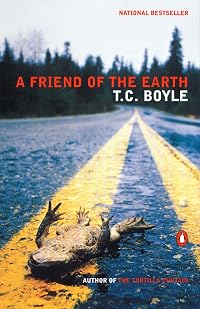
A Friend of the Earth
by T. Coraghessan Boyle
On This Page
Description
One of LitHub’s "365 Books to Start Your Climate Change Library"“Fiction about ecological disaster tends to be written in a tragic key. Boyle, by contrast, favors the darkly comic.” –Elizabeth Kolbert, author of The Sixth Extinction
Originally published in 2000, T. C. Boyle’s prescient novel about global warming and ecological collapse
It is the year 2025. Global warming is a reality. The biosphere has collapsed and most mammals—not to mention fish, birds, and frogs—are show more extinct. Tyrone Tierwater is eking out a bleak living in southern California, managing a pop star's private menagerie that "only a mother could love"—scruffy hyenas, jackals, warthogs, and three down-at-the-mouth lions.
It wasn't always like this for Ty. Once he was a passionate environmentalist, so committed to saving the earth that he became an eco-terrorist and, ultimately, a convicted felon. as a member of the radical group Earth Forever!, he unwittingly endangered both his daughter Sierra and his wife Andrea. Now, just when he's trying to survive in a world torn by obdurate storms and winnowing drought, Andrea comes back into his life.
T. C. Boyle's eighth novel blends idealism and satire in a story that addresses the ultimate questions of human love and the survival of the species. show less
Tags
Recommendations


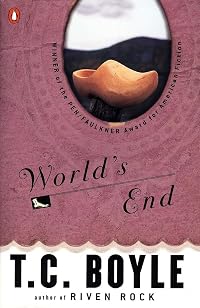






Member Recommendations
by anonymous user
JuliaMaria Umweltschützer
JuliaMaria In beiden Romanen von Boyle steht Umweltschutz bzw. stehen Umweltschützer im Mittelpunkt.
JuliaMaria Dystopien bzgl. kommender Umweltkatastrophen

Member Reviews
It's late 2025, Southern California is facing the brunt of the climate catastrophe, and veteran environmental activist Ty Tierwater is holed up at a ranch belonging to a mega-rich pop star, caring for his menagerie of endangered animals. His ex-wife Andrea turns up with a hack journalist in tow, and Ty, like the protagonists of so many novels before him, is forced to face up to the ghosts of the past, in particular the death of his daughter in an anti-logging protest back in the nineties.
Boyle digs into the mixed motives that push people into protesting, the difficult relationship between "respectable" lobbying and direct action, and the futility of most protest in a world where the dice are loaded in favour of the big corporations show more whose services we consume even as we protest against their methods. It's a pessimistic book: in the narrator's view we've messed the planet up and it's too late to do anything to stop that. But at least some of us have the slight consolation of knowing that we tried. And maybe other species will be able to save something from the wreckage once we've wiped ourselves out. To be a friend of the earth, Ty reasons, you have to be an enemy of the people.
But of course the real fun here twenty-five years on is checking the accuracy of Boyle's dystopian projection of what's now our present (well, almost: I read the book in early 2025, and the story opens in November of that year). His version of southern California seems to have rather more floods and fewer wildfires than the real one, and he was a little too pessimistic about the pace of extinction of vulnerable plant and animal species in the world at large. He also has nothing to say about how the US government will look, and he has pop stars rather than tech bros as the only people still rich enough to live as they choose. But he does peg 2025 as the aftermath of a pandemic, with nervous people still wearing masks, which is a clever — or lucky — call! show less
Boyle digs into the mixed motives that push people into protesting, the difficult relationship between "respectable" lobbying and direct action, and the futility of most protest in a world where the dice are loaded in favour of the big corporations show more whose services we consume even as we protest against their methods. It's a pessimistic book: in the narrator's view we've messed the planet up and it's too late to do anything to stop that. But at least some of us have the slight consolation of knowing that we tried. And maybe other species will be able to save something from the wreckage once we've wiped ourselves out. To be a friend of the earth, Ty reasons, you have to be an enemy of the people.
But of course the real fun here twenty-five years on is checking the accuracy of Boyle's dystopian projection of what's now our present (well, almost: I read the book in early 2025, and the story opens in November of that year). His version of southern California seems to have rather more floods and fewer wildfires than the real one, and he was a little too pessimistic about the pace of extinction of vulnerable plant and animal species in the world at large. He also has nothing to say about how the US government will look, and he has pop stars rather than tech bros as the only people still rich enough to live as they choose. But he does peg 2025 as the aftermath of a pandemic, with nervous people still wearing masks, which is a clever — or lucky — call! show less
https://fromtheheartofeurope.eu/a-friend-of-the-earth-by-t-c-boyle/
A novel from 2000, this is another environmental crisis dystopia, set in two timelines; 1989 through to the mid 1990s, when it all goes wrong, and 2025-26, when our protagonist starts to pick up the emotional pieces again (though the world is still catastrophically damaged). I found it very well done – the protagonist’s ex-wife comes back to him in the first 2025 section, and the history of their relationship, and the fate of his daughter from a previous marriage, all play out against the damage being done to the natural world by humanity, both directly through logging and indirectly through climate change. A lot of my 2025 novels have been very depressing, and this show more is too, but I Iike it the most of any of them.
The dead frog on the cover was rather disturbing to see every time I opened the book on Kindle though. show less
A novel from 2000, this is another environmental crisis dystopia, set in two timelines; 1989 through to the mid 1990s, when it all goes wrong, and 2025-26, when our protagonist starts to pick up the emotional pieces again (though the world is still catastrophically damaged). I found it very well done – the protagonist’s ex-wife comes back to him in the first 2025 section, and the history of their relationship, and the fate of his daughter from a previous marriage, all play out against the damage being done to the natural world by humanity, both directly through logging and indirectly through climate change. A lot of my 2025 novels have been very depressing, and this show more is too, but I Iike it the most of any of them.
The dead frog on the cover was rather disturbing to see every time I opened the book on Kindle though. show less
from James:
Most dystopia fiction seems so far removed from our common, everyday world that it’s scary only in the abstract. A Friend of the Earth by T.C. Boyle, however, seems too real…and thusly, depressing. The book was published in 2000, but the story alternates between 1989 and 2025. It tells the story of Ty Tierwater and his escapades as a father, husband, and eco-crusader.
I first read the book when it was published and remember thinking: wow, climate change will never be that bad. I liked the book so much that I suggested it for this month’s March Madness Tournament of Books. Now, 14 years later, I re-read it and Boyle really seems to have captured the state of endangered species and our current unpredictable weather: from show more super storms to droughts. For me, that’s what makes A Friend of the Earth a frightening read. It sometimes sounds like nonfiction and it’s hard to remove yourself from the story. Fortunately, the downer side is redeemed through Boyle’s excellent writing.
By moving through time, we meet the characters and places that propel Tierwater’s story. From his (ex)wife to aging pop-star (a la Michael Jackson) Mac to his tree-hugger daughter Sierra, Ty discovers and confronts his idealism, his cynicism, and his mortality. While not a happy-go-lucky book, if you read novels for unique characters and stories, you might enjoy this book. show less
Most dystopia fiction seems so far removed from our common, everyday world that it’s scary only in the abstract. A Friend of the Earth by T.C. Boyle, however, seems too real…and thusly, depressing. The book was published in 2000, but the story alternates between 1989 and 2025. It tells the story of Ty Tierwater and his escapades as a father, husband, and eco-crusader.
I first read the book when it was published and remember thinking: wow, climate change will never be that bad. I liked the book so much that I suggested it for this month’s March Madness Tournament of Books. Now, 14 years later, I re-read it and Boyle really seems to have captured the state of endangered species and our current unpredictable weather: from show more super storms to droughts. For me, that’s what makes A Friend of the Earth a frightening read. It sometimes sounds like nonfiction and it’s hard to remove yourself from the story. Fortunately, the downer side is redeemed through Boyle’s excellent writing.
By moving through time, we meet the characters and places that propel Tierwater’s story. From his (ex)wife to aging pop-star (a la Michael Jackson) Mac to his tree-hugger daughter Sierra, Ty discovers and confronts his idealism, his cynicism, and his mortality. While not a happy-go-lucky book, if you read novels for unique characters and stories, you might enjoy this book. show less
Bleak and strange. Boyle hammers his message a lot more than usual in this book. Probably because environmental disaster is one of his hobby horses. I didn't understand what the payoff was supposed to be for this one since from the start things have a foregone conclusion. The story takes place in a near future "present" where global warming as killed off pretty much everything and most areas of the world are uninhabitable. That's the given. Then it flashes back to the 80s and 90s, but there really isn't a moment when everything changes. We aren't privy to the disaster just its lead up and aftermath. All the characters are hapless, doomed or both and it wasn't a good time.
Well written, but not exactly enjoyable, because of its deeply cynical and pessimistic view of the eco-consciousness and eco-activism. Whether you gleefully drive a smog-belching gas-guzzler everywhere, take public transit and recycle carefully, or sneak out at night to monkey-wrench strip mines and clear-cutting timber operations, this book will make you feel miserable about your choices. Sigh.
Here's the truth: I HATE the cover of this book. As in, HATE, to the point where it was tempting to tear it off and throw it away, and I rather wish I had, but for the fact that that would have made the book difficult to give away. And I don't always pay attention to covers. I've never hated one, certainly. But this one? Yeah--I hate it. Maybe that shouldn't matter--it probably shouldn't, I suppose--but it does. This book literally sat on my shelf, traveling with me for five or six moves over the course of about a decade because, as much as it sounded like something that I would love... I kept on putting it back on the shelf when I thought about the prospect of seeing its cover, day in and day out, for however long I'd be reading it. show more And while reading it, over the past week and a half, I did my best to keep it facing down so that I could do my best to ignore the cover One way or another, it influences me, and seeing it in the corner of the page as I write this review makes it impossible to ignore.
So, does that edge down my review? It might. Did that make me skeptical or set my sights higher as I entered the book? Maybe so. Probably so. But the book was a gift, and the person who gave it to me was right in thinking I'd enjoy the story. If it were up to me, the cover would have kept me from buying it.
Why am I harping on this? Well, because it colors how I feel about the book, unavoidably.
I did enjoy Boyle's writing here, and I enjoyed the story, once I got into it (which took quite a while, I have to admit). The jumping from past to present, and back again, is effective, even if it doesn't necessarily add suspense. I'm anxious to read more of his work, truth be told. But at the same time, there's a really certain cynicism here that turned me off, and the cover is just a sign of it. The main character's voice is so cynical, in fact, that I found it almost impossible to engage with him--I was interested, on some level, but more out of curiosity than sympathy. And this was a character that, truly, I should have loved and been heartbroken by. But I wasn't. And the pessimism compelling the book forward, soaking the paragraphs, made it a less than enjoyable read. As a result, I'm not actually sure who I'd recommend this to, short of English students or academics looking for a particular type of read. Even now, I'm not really sure how I feel about it. And I probably could have walked away from it for weeks on end... if I hadn't been desperate to finish it so that I could never look at the cover again.
All told, I'm anxious to read more of Boyle's work. I'm not sure that reading this one, though, was worth dealing with the cover. show less
So, does that edge down my review? It might. Did that make me skeptical or set my sights higher as I entered the book? Maybe so. Probably so. But the book was a gift, and the person who gave it to me was right in thinking I'd enjoy the story. If it were up to me, the cover would have kept me from buying it.
Why am I harping on this? Well, because it colors how I feel about the book, unavoidably.
I did enjoy Boyle's writing here, and I enjoyed the story, once I got into it (which took quite a while, I have to admit). The jumping from past to present, and back again, is effective, even if it doesn't necessarily add suspense. I'm anxious to read more of his work, truth be told. But at the same time, there's a really certain cynicism here that turned me off, and the cover is just a sign of it. The main character's voice is so cynical, in fact, that I found it almost impossible to engage with him--I was interested, on some level, but more out of curiosity than sympathy. And this was a character that, truly, I should have loved and been heartbroken by. But I wasn't. And the pessimism compelling the book forward, soaking the paragraphs, made it a less than enjoyable read. As a result, I'm not actually sure who I'd recommend this to, short of English students or academics looking for a particular type of read. Even now, I'm not really sure how I feel about it. And I probably could have walked away from it for weeks on end... if I hadn't been desperate to finish it so that I could never look at the cover again.
All told, I'm anxious to read more of Boyle's work. I'm not sure that reading this one, though, was worth dealing with the cover. show less
In this tragic comedy off errors, T.C. Boyle confronts us with an anti hero of sorts. Ty Tierwater an alcoholic, angry environmentalist tends to take his protest actions too far, which has huge consequences for him, but even more for his family. Boyle manages to create the reader sympathy for his less than perfect protagonist by having Tierwater narrate some chapters of the book. Other chapters are written of a omniscient narrator's point. Then there are chapters set in the future (2025/26), when climate change is taking its toll on humans, animals and plants alike, and in the past(late 1980's/ 1990', when activist try to stem the tide of global warming. Boyle uses this device to build the tension. The "future" scenes allow him to show more allude to thing that happened in the past, for example that Tierwater has had several stints in jail. In the flashbacks we find out gradually how all this cam about.
Every page is action packed and full of humorously absurd situations in which Ty Tierwater finds himself.
I am wondering what Boyle's goal was in writing this book. Did he want to show how hard it is to be an environmental activist. Is is a spoof on the environmental movement? Or did he just want to write an entertaining book about a big issue?
No matter what, I enjoyed reading "Friend of the Earth." show less
Every page is action packed and full of humorously absurd situations in which Ty Tierwater finds himself.
I am wondering what Boyle's goal was in writing this book. Did he want to show how hard it is to be an environmental activist. Is is a spoof on the environmental movement? Or did he just want to write an entertaining book about a big issue?
No matter what, I enjoyed reading "Friend of the Earth." show less
Members
- Recently Added By
Published Reviews
ThingScore 75
Boyles Roman ist wieder hochtourig erzählt, mit manchmal bis zum Abwinken grellen Bildern und Vergleichen. Doch dass sich beim Rezensenten allmählich ein gewisser Überdruss gegen diese Erzählmasche bemerkbar macht, muss nicht gegen die Qualität des Romans sprechen. "Ein Freund der Erde" ist wieder vorzüglich übersetzt von Werner Richter, dem Entdecker T. C. Boyles für den deutschen show more Sprachraum: "Der Wald - dieser Wald, unser Wald - kehrt zurück, die Schößlinge neuer Bäume erheben sich aus dem Friedhof der alten, Espen schütteln ihre Blätter mit einem Geräusch, das wie Applaus klingt". show less
added by Indy133
The comedy and color are muted, though still unmistakably present, in a daring story that blends the contrasting extremes of Boyle's energetic sensibility in a way that bodes well for his always interesting and highly readable fiction.
added by Richardrobert
Lists

Books Read in 2017
4,249 works; 130 members

Post-Apocalyptic Fiction
57 works; 3 members

Books Read in 2018
4,360 works; 110 members

Fiction to Read for Earth Day
50 works; 8 members

To Read (Prospector)
86 works; 1 member
Author Information

103+ Works 28,102 Members
T. C. Boyle was born Thomas John Boyle in Peekskill, New York on December 2, 1948. He received a B.A. in English and history from SUNY Potsdam in 1968, a MFA from the University of Iowa Writers' Workshop in 1974, and a Ph.D. degree in nineteenth century British literature from the University of Iowa in 1977. He has been a member of the English show more department at the University of Southern California since 1978. He has written over 20 books including After the Plague, Drop City, The Inner Circle, Tooth and Claw, The Human Fly, Talk Talk, The Women, Wild Child, and When the Killing's Done. He has received numerous awards including the PEN/Faulkner Award for best novel of the year for World's End; the PEN/Malamud Prize in the short story for T. C. Boyle Stories; and the Prix Médicis Étranger for best foreign novel in France for The Tortilla Curtain. His title's Sam Miguel and The Harder They Caome made The New York Times Best Seller List. (Bowker Author Biography) T. Coraghessan Boyle is the best-selling author of "T.C. Boyle Stories," "Riven Rock," "The Tortilla Curtain," "Without a Hero," "The Road to Wellville," "East Is East," "If the River Was Whiskey," "World's End" (winner of the PEN/Faulkner Award), "Greasy Lake," "Budding Prospects," "Water Music," & "Descent of Man" (all available from Penguin). His fiction regularly appears in major American magazines, including "The New Yorker," "GQ," "The Paris Review," "Playboy," & "Esquire." He lives in Santa Barbara, California. (Publisher Provided) show less
Awards and Honors
Awards
Distinctions
Common Knowledge
- Canonical title*
- Ein Freund der Erde
- Original title
- A Friend of the Earth
- Original publication date
- 2000
- Important places*
- Kalifornien, USA
- Epigraph*
- Ein jeder Geist baut sich ein Haus und hinter seinem Haus eine Welt und hinter seiner Welt einen Himmel. Wisse also, daß die Welt für dich existiert. (Ralph Waldo Emerson "Natur")
The earth died screaming
While I lay dreaming
(Tom Waits "The Earth Died Screaming") - Dedication*
- Für Alan Arkawy
- First words*
- Ich verfüttere gerade Kraftkekse und Hühnerrücken an die Hyäne und tue mein Bestes, um nach dem letzten Unwetter einigermaßen aufzuräumen, als das Telefon klingelt.
- Last words*
- (Click to show. Warning: May contain spoilers.)Und dann, aus keinem Grund, den ich benennen könnte, sage ich noch, ohne es zu wollen: "Und ich, ich bin ein Mensch."
- Original language*
- Englisch
*Some information comes from Common Knowledge in other languages. Click "Edit" for more information.
Classifications
Statistics
- Members
- 1,029
- Popularity
- 25,304
- Reviews
- 19
- Rating
- (3.68)
- Languages
- 5 — English, French, German, Italian, Spanish
- Media
- Paper, Audiobook, Ebook
- ISBNs
- 23
- ASINs
- 12