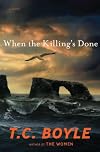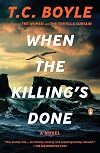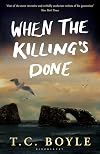
When the Killing's Done
by T. Coraghessan Boyle
On This Page
Description
From the bestselling author of The Women comes an action- packed adventure about endangered animals and those who protect them.Principally set on the wild and sparsely inhabited Channel Islands off the coast of Santa Barbara, T.C. Boyle's powerful new novel combines pulse-pounding adventure with a socially conscious, richly humane tale regarding the dominion we attempt to exert, for better or worse, over the natural world. Alma Boyd Takesue is a National Park Service biologist who is show more spearheading the efforts to save the island's endangered native creatures from invasive species like rats and feral pigs, which, in her view, must be eliminated. Her antagonist, Dave LaJoy, is a dreadlocked local businessman who, along with his lover, the folksinger Anise Reed, is fiercely opposed to the killing of any species whatsoever and will go to any lengths to subvert the plans of Alma and her colleagues.
Their confrontation plays out in a series of escalating scenes in which these characters violently confront one another, and tempt the awesome destructive power of nature itself. Boyle deepens his story by going back in time to relate the harrowing tale of Alma's grandmother Beverly, who was the sole survivor of a 1946 shipwreck in the channel, as well as the tragic story of Anise's mother, Rita, who in the late 1970s lived and worked on a sheep ranch on Santa Cruz Island. In dramatizing this collision between protectors of the environment and animal rights' activists, Boyle is, in his characteristic fashion, examining one of the essential questions of our time: Who has the right of possession of the land, the waters, the very lives of all the creatures who share this planet with us? When the Killing's Done will offer no transparent answers, but like The Tortilla Curtain, Boyle's classic take on illegal immigration, it will touch you deeply and put you in a position to decide. show less
Tags
Recommendations

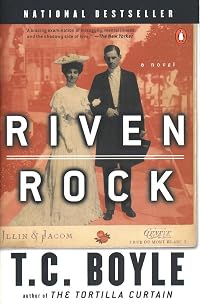
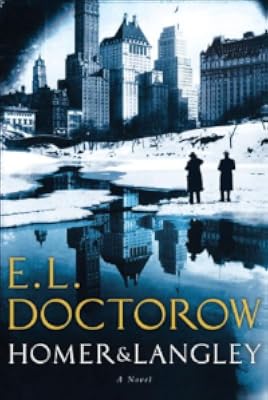
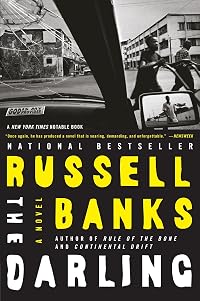




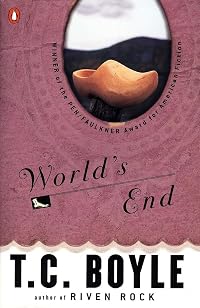

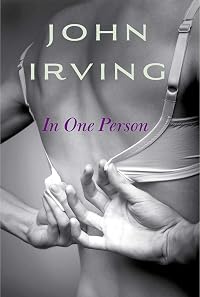
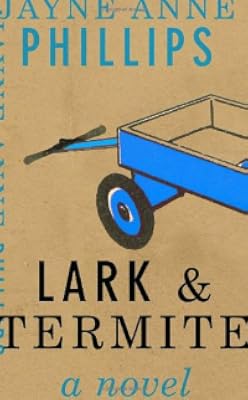
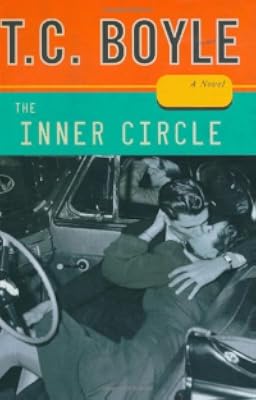

Member Recommendations
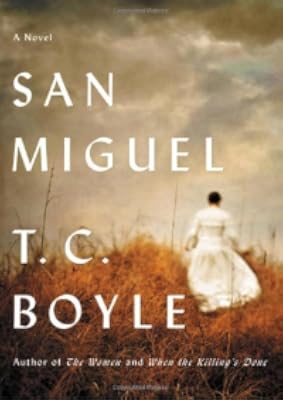
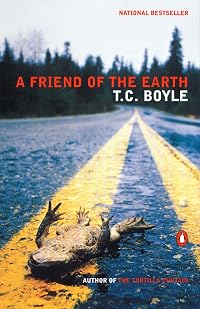
JuliaMaria In beiden Romanen von Boyle steht Umweltschutz bzw. stehen Umweltschützer im Mittelpunkt.
Member Reviews
What was most interesting about this book was the fact that the main characters were fierce enemies, yet could both be classified as "environmentalists." The differences in their views encouraged a lot of nuanced thought about issues of conservation.
Boyle is masterful at putting the reader inside of the characters' minds. However, one soon discovers that it's not a pleasant place to be. The primary characters are so full of anger that the book really weighs on the mind.
Boyle is masterful at putting the reader inside of the characters' minds. However, one soon discovers that it's not a pleasant place to be. The primary characters are so full of anger that the book really weighs on the mind.
The Channel Islands, off the coast of California, miraculously saved Alma Boyd Takesue's pregnant grandmother in a shipwreck, and is also the focus of Alma's life as a conservationist with the National Park Service to protect the rare species that live on the islands. In order to save some animals, she has to destroy the invasive species and not everyone is happy with that. Alternating chapters between Alma and Dave LaJoy, the animal rights activist at the fore-front trying to save any animal from being killed, throughout the first decade of this century, it becomes quite an eventful battle. It seems like many of Boyle's books contain characters fighting on opposite sides of an issue. He hints at the positives and negatives on each show more side, therefore there is never a chance to be preachy. He never chooses either side, he simply wants the reader to think.
I can see a lot of readers not liking this book because of the characters. Some readers need to really love and feel sympathetic to a character, in order to stick with a book. Many of Boyle's characters are usually naive, cynical, hypocritical, not very likable, but that is what I love about Boyle's writing. You wouldn't really have an interesting book with perfect characters anyway. Boyle doesn't need to be another writer with perfect characters, because his writing has everything else. I get the feeling that Boyle rarely even likes any of his characters. Not all of the events that occur seem to tie together. Some things seem to happen simply to torture the characters. But maybe that is the point. Dave is so busy with his vindictive mission to make Alma's life miserable (and there wasn't much of a back story for Dave to say why, though Alma's story goes back generations, and Dave's point of view does occupy half of the book, after all) that maybe it was never even about the animals at all. Maybe in the war of human vs. human, animals and everything else in the world get lost in the shuffle. But then again, animals don't play nice either, with an especially traumatic episode involving sheep that Dave's girlfriend Anise witnesses, while she is living on the islands as a teen.
The characters may have their flaws, but Boyle's writing does not. Boyle has an amazing, unique style. He uses a few words that require the use of a dictionary, words I've never seen before, but sometimes I just want to read a smart book. The prose is so alive, memorable and vivid, at times the book felt less like literature and more like life. Important things were said here. I'm convinced with Boyle's range of subjects, there is at least one book for everyone. This book contains elements of Boyle's other books. I was often reminded of A Friend of the Earth, East is East, Drop City, and The Tortilla Curtain while reading this one. Incidentally, these are all four of Boyle's books I've read, and all VERY recommendable. Especially The Tortilla Curtain (if any book should be required reading, it's this one). Boyle writes a mean short story as well. Visiting islands in the ocean, this was the perfect book to get away from all this New York snow. Keep those books coming, Mr. Boyle! show less
I can see a lot of readers not liking this book because of the characters. Some readers need to really love and feel sympathetic to a character, in order to stick with a book. Many of Boyle's characters are usually naive, cynical, hypocritical, not very likable, but that is what I love about Boyle's writing. You wouldn't really have an interesting book with perfect characters anyway. Boyle doesn't need to be another writer with perfect characters, because his writing has everything else. I get the feeling that Boyle rarely even likes any of his characters. Not all of the events that occur seem to tie together. Some things seem to happen simply to torture the characters. But maybe that is the point. Dave is so busy with his vindictive mission to make Alma's life miserable (and there wasn't much of a back story for Dave to say why, though Alma's story goes back generations, and Dave's point of view does occupy half of the book, after all) that maybe it was never even about the animals at all. Maybe in the war of human vs. human, animals and everything else in the world get lost in the shuffle. But then again, animals don't play nice either, with an especially traumatic episode involving sheep that Dave's girlfriend Anise witnesses, while she is living on the islands as a teen.
The characters may have their flaws, but Boyle's writing does not. Boyle has an amazing, unique style. He uses a few words that require the use of a dictionary, words I've never seen before, but sometimes I just want to read a smart book. The prose is so alive, memorable and vivid, at times the book felt less like literature and more like life. Important things were said here. I'm convinced with Boyle's range of subjects, there is at least one book for everyone. This book contains elements of Boyle's other books. I was often reminded of A Friend of the Earth, East is East, Drop City, and The Tortilla Curtain while reading this one. Incidentally, these are all four of Boyle's books I've read, and all VERY recommendable. Especially The Tortilla Curtain (if any book should be required reading, it's this one). Boyle writes a mean short story as well. Visiting islands in the ocean, this was the perfect book to get away from all this New York snow. Keep those books coming, Mr. Boyle! show less
For forty years I’ve driven past California’s Channel Islands, seeing them on a clear day is like glimpsing paradise, but I’ve never stepped foot on them. When I read in Sunset Magazine about T.C. Boyles new book—When the Killings Done—I had to buy it, just to travel to the islands through his words, and he didn’t disappoint. The story centers on Alma Takesuke, a woman who is trying to restore the balance of the islands by eliminating non-native species—rats on Anacapa and pigs on Santa Cruz—who are decimating the native wildlife and plants. On the other side of this issue is Dave La Joy, a wealthy entrepreneur who doesn’t want the rats and pigs killed, and whose organization FPA (For the Protection of Animals) sets up show more protests, disruptions, media intrusions, lawsuits and anything he can throw at her to stop the slaughter.
Be prepared for the roller coaster of Boyle’s writing style. It’s a never-take-a-breath adventure that starts with a shipwreck or two or three and puts you on the edge waiting for the next disaster to hit. There is some crude language, a little sex, and a lot of historical content that he presents in non-boring way. All the characters seemed like people I know, and there are stories within stories that he pulls together like pieces of a puzzle. He also presents all sides of this debate in a way that’s not black or white. I read this on Kindle. show less
Be prepared for the roller coaster of Boyle’s writing style. It’s a never-take-a-breath adventure that starts with a shipwreck or two or three and puts you on the edge waiting for the next disaster to hit. There is some crude language, a little sex, and a lot of historical content that he presents in non-boring way. All the characters seemed like people I know, and there are stories within stories that he pulls together like pieces of a puzzle. He also presents all sides of this debate in a way that’s not black or white. I read this on Kindle. show less
This novel is all strengths. Set in and around the Channel Islands off Santa Barbara, California, WHEN THE KILLING’S DONE exposes our very human hubris in the face of Nature’s unrelenting persistence and power. The antagonists, Alma Boyd Takesue and Dave LaJoy, each have a personal investment in the fauna of Anacapa and Santa Cruz islands. Takesue is the spokesperson and figure head of the National Park Service and responsible for restoring the native habitat for the islands to head off the extinction of some of the most fragile and uniques species in the world. Dave LaJoy, an extremely hotheaded entrepreneur and recently “born again” animal rights advocate, will go to any extremes to prevent the suffering and killing of show more animals. The tension of their conflict builds to a very T.C. Boyle climax. The book jacket says the book offers no transparent answers, which is essentially true; but given the final outcome for one of the main characters, a certain bias hovers around the denouement. It is, nonetheless, very subtle and difficult to clarify solidly, and the power of Boyle’s writing prevails. As with TORTILLA CURTAIN, WHEN THE KILLING’S DONE deftly draws the reader first onboard one side of the issue, then the other; and always through the characters, neither of whom is completely sympathetic. If fact, LaJoy is thoroughly dislikable, but one cannot help seeing his point and even hoping for his success; until Boyle then introduces Takesue and we progress through her efforts, dreams and hopes and find ourselves on her side, rooting for her success and LaJoy’s downfall. The upshot is a revelation of the complexities of human stewardship of God’s creation, although Boyle overtly leaves God out of the story. Still, the verse from Genesis (1:28 “And God blessed them, and God said unto them, Be fruitful, and multiply, and replenish the earth, and subdue it: and have dominion over the fish of the sea, and over the fowl of the air, and over every living thing that moveth upon the earth.”) that appears before the opening acknowledgments is carefully and powerfully predominant. The underlying message is, Life will have its way, whether through human intervention or some other way, and who is using whom? Our shipwrecks, our mishaps and our manipulations still amount to forward movement with losses and gains beyond our control, so it would appear that God’s blessing is given and is upon us, no matter what we do, and is not a directive so much as a given. show less
Who - or conversely, what - deserves to live and die? More importantly, who gets to make this decision? Again and again society asks this question. This story affords the reader a glimpse into the lives of those making the decisions and those subject to the decision. It is an interesting and thought-provoking story that proves to be timeless.
Both Dr. Alma Takesue, who works for the National Park Service and David Lajoy, a strong-minded animal activist, want to save the wildlife on Santa Cruz island which lies off the coast of California. But they can't agree on how it should be done. Takesue favors exterminating the invasive species (rats and wild boars) that are destroying the native inhabitants whereas Lajoy feels that all life, even those of rats, should be completely protected. And when their opposing ideas on the topic come into conflict, their emotions escalate until, finally, violence erupts.
T.C. Boyle, as always, expertly weaves several narratives together, creating a richly woven story in which two people who should be working for the same cause end up as bitter show more enemies. Boyle's depiction of the island is so vivid that the reader will want to hop the first ferry to Santa Cruz, but for all the description, the story is a page-turner.
When the Killing's Done is not only a gripping read, but a fascinating look into two characters who, despite their dedication to preserving life, don't really have much to live for. Both Takesue and Lajoy are miserable characters. Takesue, a humorless workaholic, is so gripped by worries over her carbon footprint that even brewing a cup of tea fills her with guilt. Lajoy, on the other hand, is so ego-centric and misanthropic that it's nearly impossible for the reader, or anyone else, to connect with him.
T.C. Boyle has written many wonderful novels, and When the Killing's Done does not disappoint. I highly recommend this book. show less
T.C. Boyle, as always, expertly weaves several narratives together, creating a richly woven story in which two people who should be working for the same cause end up as bitter show more enemies. Boyle's depiction of the island is so vivid that the reader will want to hop the first ferry to Santa Cruz, but for all the description, the story is a page-turner.
When the Killing's Done is not only a gripping read, but a fascinating look into two characters who, despite their dedication to preserving life, don't really have much to live for. Both Takesue and Lajoy are miserable characters. Takesue, a humorless workaholic, is so gripped by worries over her carbon footprint that even brewing a cup of tea fills her with guilt. Lajoy, on the other hand, is so ego-centric and misanthropic that it's nearly impossible for the reader, or anyone else, to connect with him.
T.C. Boyle has written many wonderful novels, and When the Killing's Done does not disappoint. I highly recommend this book. show less
Entertaining read about a nearly believable rivalry between factions on the left fringe of the California environmental wars. I most enjoyed Boyle's style. The story-lines interweave like the waves in the sea that serve as the setting for much of the story. What I am left with most of all is how much I miss Santa Barbara.
Members
- Recently Added By
Published Reviews
ThingScore 88
If Boyle intended to suggest any ambiguity on whose path is wisest, he failed, but When The Killing’s Done nonetheless feels true to its characters and startlingly clear-eyed in its assessment of a tough environmental issue. The book’s strongest passages reveal a Werner Herzog-esque view of the natural and unnatural world, from predatory ravens dive-bombing flocks of sheep to the blood show more sport of courtroom showdowns and organized sabotage. Ideals don’t survive in those arenas; it’s kill or be killed. show less
added by sduff222
In one of his richest and most engaging novels, Boyle characteristically combines a dark sense of humor and a subversive streak as he illuminates the dark underbelly of all-American idealism. Narrative propulsion is laced with delicious irony in this winning novel.
added by Richardrobert
Lists

Books Set on Islands
190 works; 24 members
Author Information

103+ Works 28,102 Members
T. C. Boyle was born Thomas John Boyle in Peekskill, New York on December 2, 1948. He received a B.A. in English and history from SUNY Potsdam in 1968, a MFA from the University of Iowa Writers' Workshop in 1974, and a Ph.D. degree in nineteenth century British literature from the University of Iowa in 1977. He has been a member of the English show more department at the University of Southern California since 1978. He has written over 20 books including After the Plague, Drop City, The Inner Circle, Tooth and Claw, The Human Fly, Talk Talk, The Women, Wild Child, and When the Killing's Done. He has received numerous awards including the PEN/Faulkner Award for best novel of the year for World's End; the PEN/Malamud Prize in the short story for T. C. Boyle Stories; and the Prix Médicis Étranger for best foreign novel in France for The Tortilla Curtain. His title's Sam Miguel and The Harder They Caome made The New York Times Best Seller List. (Bowker Author Biography) T. Coraghessan Boyle is the best-selling author of "T.C. Boyle Stories," "Riven Rock," "The Tortilla Curtain," "Without a Hero," "The Road to Wellville," "East Is East," "If the River Was Whiskey," "World's End" (winner of the PEN/Faulkner Award), "Greasy Lake," "Budding Prospects," "Water Music," & "Descent of Man" (all available from Penguin). His fiction regularly appears in major American magazines, including "The New Yorker," "GQ," "The Paris Review," "Playboy," & "Esquire." He lives in Santa Barbara, California. (Publisher Provided) show less
Awards and Honors
Awards
Common Knowledge
- Canonical title
- When the Killing's Done
- Original title
- When the Killing's Done
- Original publication date
- 2011-02-22
- People/Characters
- Alma Boyd Takesue; Dave LaJoy; Anise Reed
- Important places
- Santa Barbara, California, USA; Anacapa Island, California, USA; Santa Cruz Island, California, USA
- Epigraph
- And God blessed them, and God said unto them, Be fruitful, and multiply, and replenish the earth, and subdue it: and have dominion over the fish of the sea, and over the fowl of the air, and over every living thing that movet... (show all)h upon the earth.
--Genesis 1:28 - Dedication
- For Kerrie, who tramped the ridges and braved the ghosts
- First words
- Picture her there in the pinched little galley where you could barely stand up without cracking your head, her right hand raw and stinging still from the scald of the coffee she'd dutifully--and foolishly--tried to make so th... (show all)ey could have something to keep them going, a good sport always a good sport, though she'd woken up vomiting in her berth not half an hour ago.
- Last words
- (Click to show. Warning: May contain spoilers.)Night on Santa Cruz Island, night immemorial.
Classifications
Statistics
- Members
- 821
- Popularity
- 33,742
- Reviews
- 30
- Rating
- (3.67)
- Languages
- Dutch, English, French, German
- Media
- Paper, Audiobook, Ebook
- ISBNs
- 34
- ASINs
- 7