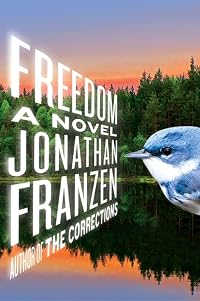
Freedom
by Jonathan Franzen
On This Page
Description
The idyllic lives of civic-minded environmentalists Patty and Walter Berglund come into question when their son moves in with aggressive Republican neighbors, green lawyer Walter takes a job in the coal industry, and go-getter Patty becomes increasingly unstable and enraged.Tags
Recommendations
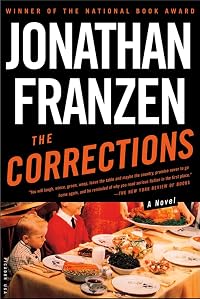
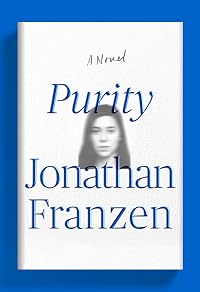
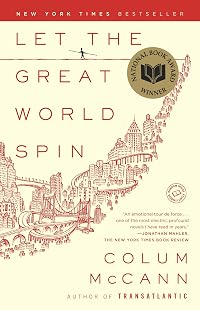
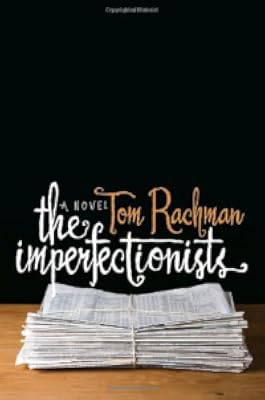
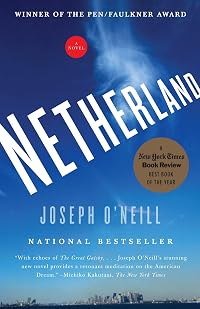
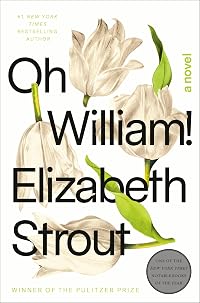
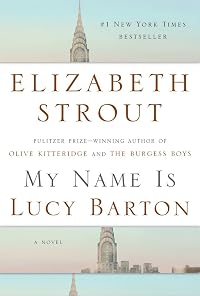
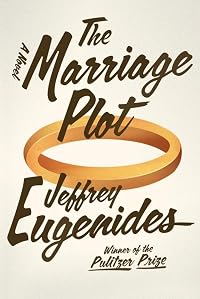
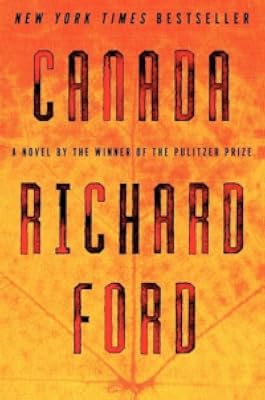
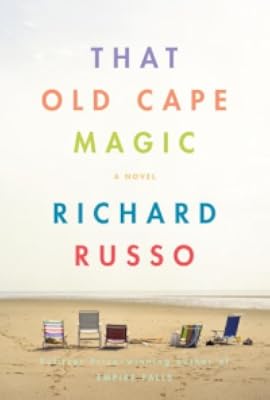
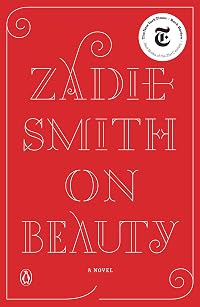



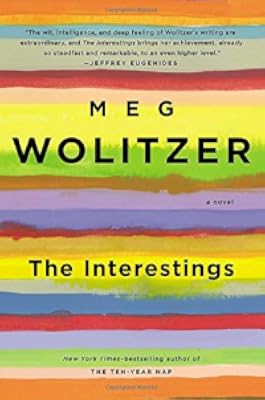
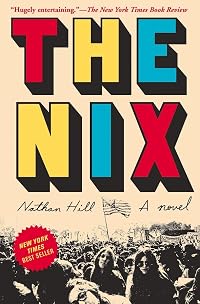
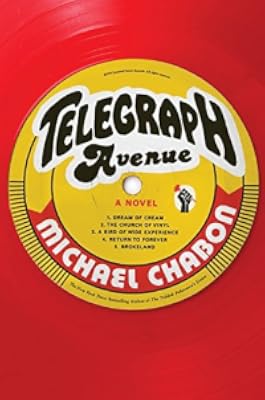
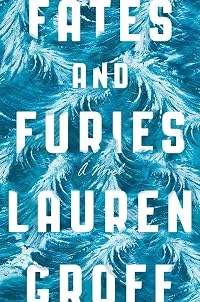

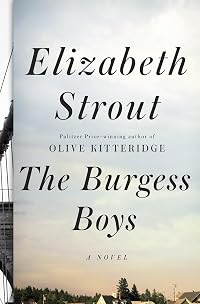
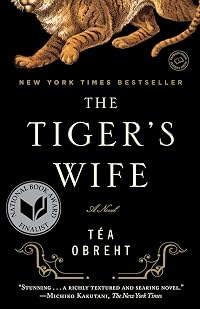
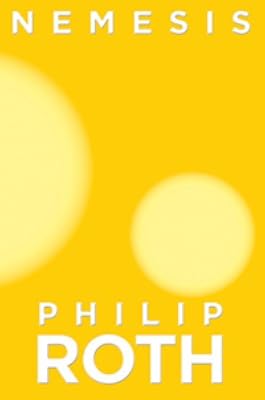
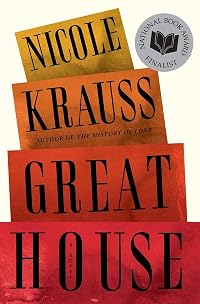
Member Recommendations

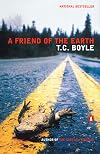
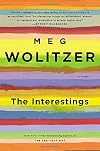
anonymous user Both are 500+ page modern epics whose stories originate in the Midwest but this one moves far beyond the territory and scope of Freedom. Represented and sold by same agent as Franzen's book and same UK publisher.
41
susiesharp They are both about the lives of people you learn to care about yet don't always like
21
JuliaMaria Umweltschützer
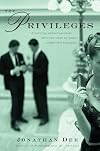
BillPilgrim Another modern family story. Jonathan Franzen recommended The Privileges to the New Yorker book club.
22
Member Reviews
Wow, what an awful, tedious book. Good writers can use boring, unlikable scenes and dialogue to make interesting portraits of realistic human beings, who are after all frequently boring and unlikeable. But this book has so many absolutely interminable stretches that it has to be some kind of self-therapy or roman à clef, it's just baffling to me that anyone would spend years and years writing a book like this if they didn't really identify with the determinedly unlovable people in it. Case in point: the endless and painful "diary" sections written by Patty, the main female lead. John Dolan (whose scathing review of The Corrections I honestly tried to not let prejudice me) accused Franzen of having serious female issues and really, the show more amount of effort Franzen put into making Patty and essentially every other woman in the book as insufferable as he could was pretty weird. Maybe it wouldn't have jumped out at me so much if Dolan hadn't put it in my head, but when the only likeable female character died offscreen in a car crash I was not surprised at all. Then again nobody's likeable, the whole book is just dull epigones being assholes to each other for page after page in wearying detail, and though there were a few good parts where I thought Franzen was going turn it around and make all of this pain worthwhile, no dice. Notably poorly-written scenes: Richard the musician's "edgy" interview with a high school student, Walter the husband's econazi stage rant, the bit when Patty thinks about cheating on Walter while reading a parallel part in War and Peace and actually points it out to the reader, and above all the hilariously nonsensical ending. After finishing it I tried to find some positive reviews to see what I missed, but all I saw were awed raves about how zeitgeisty it was, as if no one else in the country is capable of writing about how fucked up we are with such up-to-the-minute references. If you want to read a good book about flaws and failures you should read A Confederacy of Dunces, where it seems like the author actually had fun writing his book, or was actually able to feel anything other than lifeless, desiccated contempt for the world and everyone in it. I almost hope I never get old enough to find this book's world even remotely realistic or meaningful, it would depress the shit out of me. show less
In this ultimate US saga about families and relationships, Franzen plays with the concept of how, despite the freedom and choices available to us in a western democracy, human frailty still comes to the fore. We don't always use that freedom wisely; spoilt by it, we often choose those most selfish paths which ultimately lead to the demise of our own happiness.
Although a fairly long read (a few pages off 600), I loved this novel from the first page to the last, probably even more than I loved The Corrections which was a favourite read from last year. It worked because of its length, not in spite of it; Franzen was able to develop the relationships over periods of years, such that we could see the gradual fraying taking hold, and show more understand the complexities which led to certain decisions being made.
There is a lot of dialogue in this novel, which can be difficult to get right, yet Franzen totally nails it. He allows the reader to see his characters from all sides, intermingling their virtues with their flaws and capturing the essence of what it is to be human.
A large part of the novel is relayed to us in the form of a main character's manuscript written at her therapists instigation, and whilst some of the musings and memories couldn't have logically worked if you really thought about it, I loved the story too much to care.
5 stars - I have a serious book hangover this morning. show less
Although a fairly long read (a few pages off 600), I loved this novel from the first page to the last, probably even more than I loved The Corrections which was a favourite read from last year. It worked because of its length, not in spite of it; Franzen was able to develop the relationships over periods of years, such that we could see the gradual fraying taking hold, and show more understand the complexities which led to certain decisions being made.
There is a lot of dialogue in this novel, which can be difficult to get right, yet Franzen totally nails it. He allows the reader to see his characters from all sides, intermingling their virtues with their flaws and capturing the essence of what it is to be human.
A large part of the novel is relayed to us in the form of a main character's manuscript written at her therapists instigation, and whilst some of the musings and memories couldn't have logically worked if you really thought about it, I loved the story too much to care.
5 stars - I have a serious book hangover this morning. show less
(Reprinted from the Chicago Center for Literature and Photography [cclapcenter.com]. I am the original author of this essay, as well as the owner of CCLaP; it is not being reprinted illegally.)
If it's rare for me to give out a perfect 10 here at CCLaP (only two to three books per year rate as such), then it's unheard of for me to give two perfect 10s within just a week or two of each other; yet that's exactly what I find myself doing today, as I recently followed up Jonathan Evison's remarkable West of Here in my reading list with Jonathan Franzen's equally remarkable Freedom, undoubtedly the most hotly anticipated book of the last six months, and whose release last fall triggered a simultaneous wave of orgasms from ten thousand NPR show more reporters and Brooklyn cupcake-store owners that could be felt all the way to Portland itself. And that's because, in many people's eyes (including my own -- let me make my biases clear right away), Franzen is a good bet for being one of the handful of contemporary novelists to eventually define our times for future eyes; he has the academic credibility, after all, plus the mainstream success that lets him be a part of the larger popular culture (why, just his saga with Oprah alone will probably merit him at least a footnote in literary history), plus is known for writing massive, complicated, yet touching and bizarrely funny family sagas, the exact kind of thing that makes for easy bestsellers but that academic committees feel okay giving awards to as well.
And indeed, as I started making my way through this latest book of his last week, I couldn't help but think how similar it is to Leo Tolstoy's Anna Karenina, now that I've finally read that too; and in fact, Freedom comes curiously close to the hypothetical modern remake of Karenina that I mentioned in my write-up, only with his upper-class, eco-conscious, dysfunctional liberals living in the tony suburbs of Minnesota instead of Wisconsin, and with their occasional urban sojourns being to New York instead of Chicago. Because that's really the most important thing about Franzen to know; that much like Sinclair Lewis in the 1920s, Franzen is mostly known for these scathing indictments against the blandly left middle-class and nouveau-riche, almost blasphemous looks at how the hypocrisies and neuroses of such people directly lead to their own downfall -- and like Lewis in the '20s, Franzen's success is due mostly to the fawning love shown him by the exact bumbling middle-class lefties that he so excoriates in his stories.
So that becomes a fascinating question just on its own, of why there are these points in history when the banally evil get great delight out of stories that viciously attack them; and as we can see in Franzen's work when we look closely at it (and Lewis, and John Cheever, and Gustave Flaubert, and all the other writers in history who fit into this pattern), perhaps this is due to certain points in history being complicated ones, where the million small, forgivable sins of a million otherwise decent people is all it takes to create one giant uncontrollable mess, a catastrof-ck that affects us all but that can be blamed on no one specific group, thus necessitating the guilt-fueled self-punishment that has made Franzen such a hit in his time, just like Lewis and Cheever and Flaubert were in their own. I mean, it's hard to deny that this is what Freedom is mostly about, is the various ways that well-meaning dupes end up causing havoc and destruction to everything they touch, through a series of moral compromises that are justified as an inevitable part of the modern world -- from the environmental lawyer who gets in bed with the clear-cut mining industry in order to save an endangered bird, to his neocon son who decides to take on a government contract to procure used truck parts to send to Iraq, just to have the whole thing turn into a third-world nightmare of corruption and violence, to the failed middle-aged musician who has an affair with the lawyer's trainwreck wife, then writes an alt-country album about the experience that becomes the biggest hit of his career.
But at the same time, though, it's the uniqueness of Franzen's voice that really set his novels apart, away from other writers who might happen to be juggling the same general issues; because I have to confess, Franzen is one of the only writers working today where I literally cannot guess from even one page to the next where the story is heading, with his plots taking so many random, unexpected spins and jumps that it's simply a delight just to see what happens next. But like all the greatest writers in history, even though his storylines are impeccably weird and complex, they're mere window dressing to the character exploration he does in his books, the main reason to be reading them; because in this menagerie of angry family members and bizarre liberals, we're sure to see at least a bit of ourselves, with Freedom being a fine examination of how exactly American society could've gone so wrong during the Bush years of the early 2000s, even more fascinating for it being told form the perspective of the people who don't think they're the guilty ones, but are perhaps just as much to blame as the actual bible-thumpers, teabaggers and torturing soldiers.
And yes, Franzen fans, I know, this is starting to sound an awful lot like his last novel, the equally brilliant The Corrections, which is perhaps the main criticism you can make of this book, that the author simply repeats himself a little too much for some people's tastes; but I instead prefer to look back again at the authors I've already mentioned, to see the relationship between The Corrections and Freedom to be the same as the one between Tolstoy's Karenina and War and Peace, or Lewis' Babbitt, Main Street and Arrowsmith, not repeats or ripoffs but companion pieces set in the same shared universe, part of a more massive "meta-tale" that Franzen is weaving together out of his entire oeuvre, which again can be directly compared to, say, how all the characters in Cheever's hundreds of short stories all seem to be vaguely related to each other. This doesn't really bother me, when similar novels from a single author feel more like interlocking pieces of a giant jigsaw puzzle; all I ask is that the quality remain excellent from one title to the next, which is something no one can deny when it comes to Freedom versus The Corrections.
It basically boils down to this, that I can't imagine how Franzen could've made this any better than it currently is; and that's a strong motivation for giving a book a 10, when it feels like it literally wouldn't be possible for an editor to go in there and make changes that are legitimately needed. It's one of those books that completely sucked me in while I was reading it, to the point of manytimes no longer even noticing my public surroundings; and this is what the pleasure-reading experience should always be at its absolute best, which is why I consider Freedom among the absolute best that's out there. Needless to say, it comes highly recommended today.
Out of 10: 10 show less
If it's rare for me to give out a perfect 10 here at CCLaP (only two to three books per year rate as such), then it's unheard of for me to give two perfect 10s within just a week or two of each other; yet that's exactly what I find myself doing today, as I recently followed up Jonathan Evison's remarkable West of Here in my reading list with Jonathan Franzen's equally remarkable Freedom, undoubtedly the most hotly anticipated book of the last six months, and whose release last fall triggered a simultaneous wave of orgasms from ten thousand NPR show more reporters and Brooklyn cupcake-store owners that could be felt all the way to Portland itself. And that's because, in many people's eyes (including my own -- let me make my biases clear right away), Franzen is a good bet for being one of the handful of contemporary novelists to eventually define our times for future eyes; he has the academic credibility, after all, plus the mainstream success that lets him be a part of the larger popular culture (why, just his saga with Oprah alone will probably merit him at least a footnote in literary history), plus is known for writing massive, complicated, yet touching and bizarrely funny family sagas, the exact kind of thing that makes for easy bestsellers but that academic committees feel okay giving awards to as well.
And indeed, as I started making my way through this latest book of his last week, I couldn't help but think how similar it is to Leo Tolstoy's Anna Karenina, now that I've finally read that too; and in fact, Freedom comes curiously close to the hypothetical modern remake of Karenina that I mentioned in my write-up, only with his upper-class, eco-conscious, dysfunctional liberals living in the tony suburbs of Minnesota instead of Wisconsin, and with their occasional urban sojourns being to New York instead of Chicago. Because that's really the most important thing about Franzen to know; that much like Sinclair Lewis in the 1920s, Franzen is mostly known for these scathing indictments against the blandly left middle-class and nouveau-riche, almost blasphemous looks at how the hypocrisies and neuroses of such people directly lead to their own downfall -- and like Lewis in the '20s, Franzen's success is due mostly to the fawning love shown him by the exact bumbling middle-class lefties that he so excoriates in his stories.
So that becomes a fascinating question just on its own, of why there are these points in history when the banally evil get great delight out of stories that viciously attack them; and as we can see in Franzen's work when we look closely at it (and Lewis, and John Cheever, and Gustave Flaubert, and all the other writers in history who fit into this pattern), perhaps this is due to certain points in history being complicated ones, where the million small, forgivable sins of a million otherwise decent people is all it takes to create one giant uncontrollable mess, a catastrof-ck that affects us all but that can be blamed on no one specific group, thus necessitating the guilt-fueled self-punishment that has made Franzen such a hit in his time, just like Lewis and Cheever and Flaubert were in their own. I mean, it's hard to deny that this is what Freedom is mostly about, is the various ways that well-meaning dupes end up causing havoc and destruction to everything they touch, through a series of moral compromises that are justified as an inevitable part of the modern world -- from the environmental lawyer who gets in bed with the clear-cut mining industry in order to save an endangered bird, to his neocon son who decides to take on a government contract to procure used truck parts to send to Iraq, just to have the whole thing turn into a third-world nightmare of corruption and violence, to the failed middle-aged musician who has an affair with the lawyer's trainwreck wife, then writes an alt-country album about the experience that becomes the biggest hit of his career.
But at the same time, though, it's the uniqueness of Franzen's voice that really set his novels apart, away from other writers who might happen to be juggling the same general issues; because I have to confess, Franzen is one of the only writers working today where I literally cannot guess from even one page to the next where the story is heading, with his plots taking so many random, unexpected spins and jumps that it's simply a delight just to see what happens next. But like all the greatest writers in history, even though his storylines are impeccably weird and complex, they're mere window dressing to the character exploration he does in his books, the main reason to be reading them; because in this menagerie of angry family members and bizarre liberals, we're sure to see at least a bit of ourselves, with Freedom being a fine examination of how exactly American society could've gone so wrong during the Bush years of the early 2000s, even more fascinating for it being told form the perspective of the people who don't think they're the guilty ones, but are perhaps just as much to blame as the actual bible-thumpers, teabaggers and torturing soldiers.
And yes, Franzen fans, I know, this is starting to sound an awful lot like his last novel, the equally brilliant The Corrections, which is perhaps the main criticism you can make of this book, that the author simply repeats himself a little too much for some people's tastes; but I instead prefer to look back again at the authors I've already mentioned, to see the relationship between The Corrections and Freedom to be the same as the one between Tolstoy's Karenina and War and Peace, or Lewis' Babbitt, Main Street and Arrowsmith, not repeats or ripoffs but companion pieces set in the same shared universe, part of a more massive "meta-tale" that Franzen is weaving together out of his entire oeuvre, which again can be directly compared to, say, how all the characters in Cheever's hundreds of short stories all seem to be vaguely related to each other. This doesn't really bother me, when similar novels from a single author feel more like interlocking pieces of a giant jigsaw puzzle; all I ask is that the quality remain excellent from one title to the next, which is something no one can deny when it comes to Freedom versus The Corrections.
It basically boils down to this, that I can't imagine how Franzen could've made this any better than it currently is; and that's a strong motivation for giving a book a 10, when it feels like it literally wouldn't be possible for an editor to go in there and make changes that are legitimately needed. It's one of those books that completely sucked me in while I was reading it, to the point of manytimes no longer even noticing my public surroundings; and this is what the pleasure-reading experience should always be at its absolute best, which is why I consider Freedom among the absolute best that's out there. Needless to say, it comes highly recommended today.
Out of 10: 10 show less
A pitch-perfect rendering of the bittersweet lives of modern suburban families, Jonathan Franzen fills his book with characters that I have known; and lived with; and worked beside; and loved; and pitied; and, occasionally, yelled at in traffic from my bicycle. ‘Freedom: A Novel’ is Tolstoy, packing full the trunk of his Volvo with groceries from Whole Foods, and recording every nuanced emotion.
Freedom's just another word for nothing left to lose, at least in song. In Jonathan Franzen's novel of the same name, it is a garrulous, possibly incoherent, concept that applies without restraint to everything from existential self-absorption to sexual monomania to political profiteering to small acts of defiance and large acts of indiscretion. In fact, just about anywhere there is a gaping hole in the internal coherence of character or plot, motivation or understanding, Franzen drops in the F-word to backfill the landscape.
If you can ignore the conceptual grandstanding, then the novel consists in following the lives of three people who meet in college and whose life trajectories repeatly bring them into contact with each other over show more many years. They have disparate backgrounds. They have disparate motivations. They have disparate talents. But they share an indefatigable power for love and self harm. Indeed, and rather unfortunately, when you strip away the contingent superficialities they seem to share one voice. Which could mean that Franzen has latched on to the universal but more likely means he doesn't really have different characters here at all.
Amongst the many dissatisfying aspects of this novel, two deserve mention here: the inexplicable moral vacuum found in Joey, the son of two of the main characters, and the level of anger and despair found in each of the main characters. The reader is bludgeoned by rants and hectoring but dubious moralising couched in the form of one-sided conversations. At some point it all seems a bit one note and you can't help losing interest or even caring what happens.
Perhaps this was intended to be one of those weighty novels that capture the Zeitgeist or come to define America. If so, I think it does not succeed. Or perhaps it really is a novel with nothing left to lose. Not recommended. show less
If you can ignore the conceptual grandstanding, then the novel consists in following the lives of three people who meet in college and whose life trajectories repeatly bring them into contact with each other over show more many years. They have disparate backgrounds. They have disparate motivations. They have disparate talents. But they share an indefatigable power for love and self harm. Indeed, and rather unfortunately, when you strip away the contingent superficialities they seem to share one voice. Which could mean that Franzen has latched on to the universal but more likely means he doesn't really have different characters here at all.
Amongst the many dissatisfying aspects of this novel, two deserve mention here: the inexplicable moral vacuum found in Joey, the son of two of the main characters, and the level of anger and despair found in each of the main characters. The reader is bludgeoned by rants and hectoring but dubious moralising couched in the form of one-sided conversations. At some point it all seems a bit one note and you can't help losing interest or even caring what happens.
Perhaps this was intended to be one of those weighty novels that capture the Zeitgeist or come to define America. If so, I think it does not succeed. Or perhaps it really is a novel with nothing left to lose. Not recommended. show less
I actively loathed these characters. Actually rooted against them. Rolled my eyes hard, and often. Also, I'm grossed out way too many times. And, as you say, even though I hated the book, which implies some passion, I also was thoroughly bored by it.
The thing that's frustrating about it is that there is no one quality that makes it bad. The characters are unlikeable, but not in a devil-may-care, what-will-they-do-next kind of way. The characters are odious because they are self-absorbed and petty… but more than that, they're insufferably boring. It's not that they don't wander around hurting each other; it's that their sins are largely those of inaction or inertia. Also that they sit around and complain to themselves and moan on about show more their disappointments, and you find yourself relieved when they actually take action of some kind, no matter what it is. simply because it means something is happening in the book, that you are reading a novel wherein events happen that have significance. And you quickly find that you not only start to wish the characters thorough unhappiness, but further, you actually long for some kind horrible nuclear disaster to clear the slate so that Franzen can just start over with an entirely new cast midway through the novel.
Every single person in this book is an asshole, a narcissist, or both, and after being around them for 500 slow-going pages, I now hate humankind. It's no big secret that Franzen isn't particularly fond of humanity, but if he doesn't care about his characters, why should I?
The whole thing felt directionless. Books don't need to end tied up in a pretty bow, but I would still like to believe that authors sit down to write a book because they have a story to tell.
The whole thing reeked of American Beauty-esque disenfranchised yuppie-ism. Your problems are not that interesting, important or unique.
I can't finish this. Patty is now getting raped in college, and is at first blaming herself, of course. She doesn't even get angry & indignant until the next morning, and then starts comparing her rape to other injustices in other areas of the world to the poor, etc. Then, she wants to just let it be swept under the rug, and so she can carry on with her sports....? Sports just isn't that important.
And Patty's mother keeps suggesting that Patty might not be certain who raped her...? And all the mother can think about is her friendship with the rapist's parents, and their political affiliations...? And then the mother would rather the daughter just get a SINCERE APOLOGY, instead of going to the police.....? The father begins questioning whether the daughter Patty even knew what rape was, and if it was an actual rape...? And then the father tells Patty that the coach is wrong, that they cannot go to the police, because it's bad for the posts-politics. And, Patty would feel WORSE, after the trial. And that her reputation would be RUINED. And that there wouldn't be a trial. She thinks that the rape didn't hurt that badly anyway; she'd had wind-sprints that hurt worse, and she had been used to having other people's hands on her since she was an athlete. The family doctor was more comforting and understanding than her own parents...! She made herself feel better by eating an entire carton of ice cream and watching rerun-comedies on TV.
The boy denies it, of course, and all his friends would stand behind him, & make it sound like it was consensual, and "playful". That it being rape was a lie. And the boy's father was furious for the allegations. The father tells her that because of this, they cannot call the police. Patty should "sweep it under the rug, be more careful next time, and just move on with her life." She would spend her entire senior year being humiliated. "Life's not fair," and that the "coach should spend more time dribbling." Wtf?!?
Another reviewer says that the author intimates that everyone secretly enjoys the smell of their own flatulence. Wow.....seriously?
And don’t even get me started on the fucked up chronology. It wasn’t done in eloquent, mysterious way, it was done in a blabbermouth with ADHD way. It is like my hubby Keith, who tells me a story and in the middle of it he remembers some other story that might or might not be related to the story he is telling me so he tells me that other story, and then some other story that somehow came from the second story, and then maybe he will return to the main story and you end up wondering if the second story actually happened in the middle of the first story or it was just his way of telling a story.
The final moral from this book is that we are all fucked up in our own special way but it will all be alright unless, of course, we become Republicans, in which case there will be no redemption....?
And if this book was written by a woman, it would be deemed chick lit and stuck in a pastel color cover with birds and flowers. No one would even look at it twice because there is so much better chick lit out there. But as Jonathan Franzen is lucky enough to be a man, this, all of a sudden, is the Great American Novel.
If anyone else claims there is no sexism in literary/publishing world, this here is my best demonstrative evidence that there is. Honest to God, who would take this book seriously if it was written by a woman and had something pink on the cover?
I have to bail, not even a quarter of the way through this novel. I'm beyond bored; if I have to go through every single character's back-life story, I'm gonna do some self-harm. Time for some yard work.
One star; sorry Frazen. show less
The thing that's frustrating about it is that there is no one quality that makes it bad. The characters are unlikeable, but not in a devil-may-care, what-will-they-do-next kind of way. The characters are odious because they are self-absorbed and petty… but more than that, they're insufferably boring. It's not that they don't wander around hurting each other; it's that their sins are largely those of inaction or inertia. Also that they sit around and complain to themselves and moan on about show more their disappointments, and you find yourself relieved when they actually take action of some kind, no matter what it is. simply because it means something is happening in the book, that you are reading a novel wherein events happen that have significance. And you quickly find that you not only start to wish the characters thorough unhappiness, but further, you actually long for some kind horrible nuclear disaster to clear the slate so that Franzen can just start over with an entirely new cast midway through the novel.
Every single person in this book is an asshole, a narcissist, or both, and after being around them for 500 slow-going pages, I now hate humankind. It's no big secret that Franzen isn't particularly fond of humanity, but if he doesn't care about his characters, why should I?
The whole thing felt directionless. Books don't need to end tied up in a pretty bow, but I would still like to believe that authors sit down to write a book because they have a story to tell.
The whole thing reeked of American Beauty-esque disenfranchised yuppie-ism. Your problems are not that interesting, important or unique.
I can't finish this. Patty is now getting raped in college, and is at first blaming herself, of course. She doesn't even get angry & indignant until the next morning, and then starts comparing her rape to other injustices in other areas of the world to the poor, etc. Then, she wants to just let it be swept under the rug, and so she can carry on with her sports....? Sports just isn't that important.
And Patty's mother keeps suggesting that Patty might not be certain who raped her...? And all the mother can think about is her friendship with the rapist's parents, and their political affiliations...? And then the mother would rather the daughter just get a SINCERE APOLOGY, instead of going to the police.....? The father begins questioning whether the daughter Patty even knew what rape was, and if it was an actual rape...? And then the father tells Patty that the coach is wrong, that they cannot go to the police, because it's bad for the posts-politics. And, Patty would feel WORSE, after the trial. And that her reputation would be RUINED. And that there wouldn't be a trial. She thinks that the rape didn't hurt that badly anyway; she'd had wind-sprints that hurt worse, and she had been used to having other people's hands on her since she was an athlete. The family doctor was more comforting and understanding than her own parents...! She made herself feel better by eating an entire carton of ice cream and watching rerun-comedies on TV.
The boy denies it, of course, and all his friends would stand behind him, & make it sound like it was consensual, and "playful". That it being rape was a lie. And the boy's father was furious for the allegations. The father tells her that because of this, they cannot call the police. Patty should "sweep it under the rug, be more careful next time, and just move on with her life." She would spend her entire senior year being humiliated. "Life's not fair," and that the "coach should spend more time dribbling." Wtf?!?
Another reviewer says that the author intimates that everyone secretly enjoys the smell of their own flatulence. Wow.....seriously?
And don’t even get me started on the fucked up chronology. It wasn’t done in eloquent, mysterious way, it was done in a blabbermouth with ADHD way. It is like my hubby Keith, who tells me a story and in the middle of it he remembers some other story that might or might not be related to the story he is telling me so he tells me that other story, and then some other story that somehow came from the second story, and then maybe he will return to the main story and you end up wondering if the second story actually happened in the middle of the first story or it was just his way of telling a story.
The final moral from this book is that we are all fucked up in our own special way but it will all be alright unless, of course, we become Republicans, in which case there will be no redemption....?
And if this book was written by a woman, it would be deemed chick lit and stuck in a pastel color cover with birds and flowers. No one would even look at it twice because there is so much better chick lit out there. But as Jonathan Franzen is lucky enough to be a man, this, all of a sudden, is the Great American Novel.
If anyone else claims there is no sexism in literary/publishing world, this here is my best demonstrative evidence that there is. Honest to God, who would take this book seriously if it was written by a woman and had something pink on the cover?
I have to bail, not even a quarter of the way through this novel. I'm beyond bored; if I have to go through every single character's back-life story, I'm gonna do some self-harm. Time for some yard work.
One star; sorry Frazen. show less
Jonathan Franzen is one of those writers that people know about by word of mouth. His breakthrough novel, The Corrections, is a book that you are likely to discover in the process of unwrapping a birthday present from your uncle and aunt in Connecticut, the kind of work that an overexcited friend from your graduate school days presses into your hand and says: "You have to read this. It blew my mind."
I don't mind admitting that I, too, caught the fever. I started reading The Corrections on a plane to Los Angeles at the beginning of 2011, and by the time I finished it I had already started formulating plans to get my own family together for Christmas for the first time in more than a decade. While I found Franzen's style unattractive and show more pretentious, there was something real and identifiable about his characters that won me over. The author's apparent cruelty I saw as a necessary detachment on Franzen's part, important to shading the moral grays that turned each of the Lamberts into well-rounded, believable characters. As a consequence, I also went back and read his first two novels, which were solid enough.
It was with a sense of anticipation, then, that I began reading Freedom a few days ago. I was patient. I was hopeful. As I got deeper into the novel, however, there was no getting around the looming conclusion: Freedom was downright awful. By the time I reached the three-hundred page mark, just over halfway, finishing the book really did feel like a prison sentence. Dutifully, I served my time.
So what can account for this spectacular failure? How can Franzen strike such a chord with The Corrections and then come across as so utterly tone-deaf in Freedom?
Before recounting its shortcomings, I should first say what it is that I liked about Freedom. After all, I did not expect it to be an unmitigated disaster from the very beginning, and it certainly did not feel that it was going to be while reading the initial stages of the story. Other reviewers have complained that the central characters of Patty and Walter were too dull to carry the story, a view with which I heartily disagree. Although Patty's stilted "autobiography" (which Franzen, for no good reason, writes in a third-person voice that is indistinguishable from the rest of the narrative) is an incredibly clumsy approach for an established novelist, I found Franzen's depiction of their tepid romance and marriage, especially the little details of the ways in which they repeatedly hurt and betray each other, to be painfully real. This element of insight in Franzen's writing is what made The Corrections so successful, this feeling that while reading his novel you are also undergoing a painful but necessary session of emotional therapy.
Apart from the Berglund's disintegrating marriage, however, there was little to admire about Freedom. What made the early pages of the novel interesting was Franzen's critique of the ways in which human beings delude themselves. Thus, for instance, we witness Patty being led astray by her drug-addicted, emotionally manipulative college friend Eliza, who preys on Patty's guilt and lack of esteem in order control the latter's life. Similar spirals of reactive (should I say "corrective"?) behavior are set up throughout, from Joey's reaction to his parents to Patty's desire for Richard.
The novel thus provides the reader with a litany of self-destructive, guilt-ridden, passive characters - a lot like The Corrections, you might say, but here is the strange thing. Whereas Franzen, in the early stages of the novel, highlights the negative effects that flow from the weakness and endless self-pity that motivate his characters, by the second half of the novel he attempts to transform these same horrible qualities into virtues. Walter, in particular, is supposedly redeemed by the contention that his inherited negativity gives his life "meaning." Despite the utter betrayal of his own ethical standards and his staggeringly grandiose sense of self-righteousness, Walter is excused, in the narrator's eyes, because he is a "nice man." Even Walter's loser brother, Mitch, a worthless drunk who shirks all responsibility for his five children, is transformed into a Thoreau-like hero by the end, living peacefully by a lake and only working when he has to. It's a bizarre and bewildering moral u-turn that Franzen takes, down a path where I simply cannot follow him.
My increasing disillusionment with the novel as I was reading it only served to highlight other technical flaws that I might otherwise have been willing to overlook. I have already mentioned my dislike for Franzen's style in his earlier works, but in Freedom this pretentiousness reaches a level that is simply unbearable. Franzen's frantic need to provide in-depth descriptions of inane, unnecessary details and endless name-dropping was too much. Consider, for instance, this ridiculous sentence from the novel's epilogue (by which point I was at the end of my patience) in which Franzen makes a horrible contrast between the artificiality of the social networking site Twitter to the authenticity of birds in nature:
"There was plenty of tweeting on Twitter, but the chirping and fluttering world of nature, which Walter had invoked as if people were still supposed to care about it, was one anxiety too many." (p.546)
To make matters worse, there are numerous other occasions where Franzen not only constructs hopelessly unwieldy metaphors, but also proceeds to insult the reader's intelligence by explaining the symbolism: he makes a lazy parallel, for instance, between Jenna's manipulation of Joey and the dubious loyalty shown to him by his right-wing political connections (p.401); the comparison of Patty's split from Richard to America's withdrawal from Vietnam (p.510); and, worst of all, the analogy between Joey's grotesque search through his own feces for his wedding ring to his arms deal in South America, the difference being that "there was no gold ring hidden in this particular pile of s***" (p.441). No, indeed, there was not.
When I started reading Freedom, I thought I had some idea, based on my reading of his earlier novels, of what Franzen was setting out to achieve. What is most disappointing about Freedom is not that it is a failure, but that it is a betrayal of the kind of unrelenting emotional honesty that I once thought I detected in Franzen's work. A great writer is one who invites you to resist them and wins you over anyway, which is what happened to me with The Corrections. Freedom, by contrast, seems like a miscalculated attempt to preach to a particular section of the choir, and surely Franzen, who early on in the novel takes Walter to task for being unattractive precisely because he is so passively agreeable, should have understood this same dynamic in his readers. show less
I don't mind admitting that I, too, caught the fever. I started reading The Corrections on a plane to Los Angeles at the beginning of 2011, and by the time I finished it I had already started formulating plans to get my own family together for Christmas for the first time in more than a decade. While I found Franzen's style unattractive and show more pretentious, there was something real and identifiable about his characters that won me over. The author's apparent cruelty I saw as a necessary detachment on Franzen's part, important to shading the moral grays that turned each of the Lamberts into well-rounded, believable characters. As a consequence, I also went back and read his first two novels, which were solid enough.
It was with a sense of anticipation, then, that I began reading Freedom a few days ago. I was patient. I was hopeful. As I got deeper into the novel, however, there was no getting around the looming conclusion: Freedom was downright awful. By the time I reached the three-hundred page mark, just over halfway, finishing the book really did feel like a prison sentence. Dutifully, I served my time.
So what can account for this spectacular failure? How can Franzen strike such a chord with The Corrections and then come across as so utterly tone-deaf in Freedom?
Before recounting its shortcomings, I should first say what it is that I liked about Freedom. After all, I did not expect it to be an unmitigated disaster from the very beginning, and it certainly did not feel that it was going to be while reading the initial stages of the story. Other reviewers have complained that the central characters of Patty and Walter were too dull to carry the story, a view with which I heartily disagree. Although Patty's stilted "autobiography" (which Franzen, for no good reason, writes in a third-person voice that is indistinguishable from the rest of the narrative) is an incredibly clumsy approach for an established novelist, I found Franzen's depiction of their tepid romance and marriage, especially the little details of the ways in which they repeatedly hurt and betray each other, to be painfully real. This element of insight in Franzen's writing is what made The Corrections so successful, this feeling that while reading his novel you are also undergoing a painful but necessary session of emotional therapy.
Apart from the Berglund's disintegrating marriage, however, there was little to admire about Freedom. What made the early pages of the novel interesting was Franzen's critique of the ways in which human beings delude themselves. Thus, for instance, we witness Patty being led astray by her drug-addicted, emotionally manipulative college friend Eliza, who preys on Patty's guilt and lack of esteem in order control the latter's life. Similar spirals of reactive (should I say "corrective"?) behavior are set up throughout, from Joey's reaction to his parents to Patty's desire for Richard.
The novel thus provides the reader with a litany of self-destructive, guilt-ridden, passive characters - a lot like The Corrections, you might say, but here is the strange thing. Whereas Franzen, in the early stages of the novel, highlights the negative effects that flow from the weakness and endless self-pity that motivate his characters, by the second half of the novel he attempts to transform these same horrible qualities into virtues. Walter, in particular, is supposedly redeemed by the contention that his inherited negativity gives his life "meaning." Despite the utter betrayal of his own ethical standards and his staggeringly grandiose sense of self-righteousness, Walter is excused, in the narrator's eyes, because he is a "nice man." Even Walter's loser brother, Mitch, a worthless drunk who shirks all responsibility for his five children, is transformed into a Thoreau-like hero by the end, living peacefully by a lake and only working when he has to. It's a bizarre and bewildering moral u-turn that Franzen takes, down a path where I simply cannot follow him.
My increasing disillusionment with the novel as I was reading it only served to highlight other technical flaws that I might otherwise have been willing to overlook. I have already mentioned my dislike for Franzen's style in his earlier works, but in Freedom this pretentiousness reaches a level that is simply unbearable. Franzen's frantic need to provide in-depth descriptions of inane, unnecessary details and endless name-dropping was too much. Consider, for instance, this ridiculous sentence from the novel's epilogue (by which point I was at the end of my patience) in which Franzen makes a horrible contrast between the artificiality of the social networking site Twitter to the authenticity of birds in nature:
"There was plenty of tweeting on Twitter, but the chirping and fluttering world of nature, which Walter had invoked as if people were still supposed to care about it, was one anxiety too many." (p.546)
To make matters worse, there are numerous other occasions where Franzen not only constructs hopelessly unwieldy metaphors, but also proceeds to insult the reader's intelligence by explaining the symbolism: he makes a lazy parallel, for instance, between Jenna's manipulation of Joey and the dubious loyalty shown to him by his right-wing political connections (p.401); the comparison of Patty's split from Richard to America's withdrawal from Vietnam (p.510); and, worst of all, the analogy between Joey's grotesque search through his own feces for his wedding ring to his arms deal in South America, the difference being that "there was no gold ring hidden in this particular pile of s***" (p.441). No, indeed, there was not.
When I started reading Freedom, I thought I had some idea, based on my reading of his earlier novels, of what Franzen was setting out to achieve. What is most disappointing about Freedom is not that it is a failure, but that it is a betrayal of the kind of unrelenting emotional honesty that I once thought I detected in Franzen's work. A great writer is one who invites you to resist them and wins you over anyway, which is what happened to me with The Corrections. Freedom, by contrast, seems like a miscalculated attempt to preach to a particular section of the choir, and surely Franzen, who early on in the novel takes Walter to task for being unattractive precisely because he is so passively agreeable, should have understood this same dynamic in his readers. show less
Members
- Recently Added By
Published Reviews
ThingScore 61
One keeps waiting for something that will make these flat characters develop in some way, and finally the Nice Man is struck by a great blow of fate. But rather than write his way through it, Franzen suspends things just before the moment of impact, then resumes Walter’s story six years later—updating us with the glib aside that the event in question “had effectively ended his life.” A show more writer’s got to know his limitations, but this stratagem is clumsy enough to make one want to laugh for the first time in the book. It certainly beats the part where a wedding ring is retrieved from a bowl of feces. show less
added by danielx
added by private library
Franzen is an amateur ethnographer impersonating a fiction writer. His novel is overstuffed with finger-puppet characters and the clutter of contemporary life: there's no reason to know that someone is wearing "Chinese-made sneakers" or that someone else watches Pirates of the Caribbean during a transatlantic flight. Freedom is crammed as well with rants passed off as dialogue and dialogue show more that either serves no narrative purpose or reeks of research done in the lifestyle pages of the New York Times. show less
added by lorax
Lists

1001 Books You Must Read Before You Die
1,448 works; 1,134 members

Recommend the 20 best books you've read in the last five years
2,168 works; 606 members

Oprah's Book Club (original and 2.0)
91 works; 21 members

Worst books read in 2011
36 works; 20 members

The American Experience
173 works; 18 members

2008-2012 Notable Books for Adults
127 works; 10 members

Powell's Indiespensable
79 works; 6 members

Dysfunctional Families
133 works; 7 members

A Novel Cure
742 works; 23 members

Best Domestic Fiction
77 works; 6 members
Llibres que he llegit el 2012
28 works; 1 member
Literature About Adultery
69 works; 10 members

My TBR
371 works; 3 members

BBC World Book Club
265 works; 5 members
Test
1 work; 1 member

Books Read in 2024
4,623 works; 126 members

Retrospective of 20th- and 21st-century literature
154 works; 1 member

Favourite Books
1,819 works; 316 members

.
184 works; 1 member

World Book Club (BBC World Service)
212 works; 1 member
Author Information

34+ Works 41,241 Members
Jonathan Franzen was born in Western Springs, Illinois on August 17, 1959. He graduated from Swarthmore College in 1981, and went on to study at the Freie University in Berlin as a Fulbright scholar. He worked in a seismology lab at Harvard University's Department of Earth and Planetary Sciences after graduation. His works include The show more Twenty-Seventh City (1988), Strong Motion (1992), How to Be Alone (2002), and The Discomfort Zone (2006). The Corrections (2001) won a National Book Award and the 2002 James Tait Black Memorial Prize for fiction. Freedom (2010) is an Oprah Book Club selection. He also won a Whiting Writers' Award in 1988 and the American Academy's Berlin Prize in 2000. He is also a frequent contributor to Harper's and The New Yorker. In 2015 his title Purity made The New Yort Times and New Zealand Best Seller List. (Bowker Author Biography) show less
Some Editions
Awards and Honors
Awards
Distinctions
Notable Lists
Work Relationships
Contains
Common Knowledge
- Canonical title
- Freedom
- Original title
- Freedom
- Original publication date
- 2010
- People/Characters
- Walter Berglund; Patty Berglund; Joey Berglund; Richard Katz; Jessica Berglund; Connie Mohagan (show all 7); Lalitha
- Important places
- St. Paul, Minnesota, USA; New York, New York, USA; Minnesota, USA; New York, USA; Washington, D.C., USA; West Virginia, USA
- Important events
- September 11 Attacks; Iraqi war
- Epigraph
- Go together, you precious winners all; your exultation partake to everyone. I, an old turtle, will wing me to some withered bough, and there, my mate, that's never to be found again, lament till I am lost.
... (show all) The Winter's Tale ---- - Dedication
- To Susan Golomb & Jonathan Galassi
- First words
- The news about Walter Berglund wasn't picked up locally -- he and Patty had moved away to Washington two years earlier and meant nothing to St. Paul now -- but the urban gentry of Ramsey Hill were not so loyal to their city a... (show all)s not to read the New York Times.
- Last words
- (Click to show. Warning: May contain spoilers.)To this day, free access to the preserve is granted only to birds and to residents of Canterbridge Estates, through a gate whose lock combination is known to them, beneath a small ceramic sign with a picture of the pretty young dark-skinned girl after whom the preserve is named.
- Blurbers
- Ferris, Joshua; Morrison, Blake; Leonard, John; Burnside, John; Wallace, David Foster; Rakoff, Joanna (show all 11); Kipen, David; Prose, Francine; Heller, Karen; Miller, Laura; Gates, David
- Original language
- English
Classifications
Statistics
- Members
- 10,711
- Popularity
- 888
- Reviews
- 425
- Rating
- (3.78)
- Languages
- 23 — Bosnian, Catalan, Chinese, Czech, Danish, Dutch, English, Finnish, French, German, Greek, Hebrew, Hungarian, Italian, Japanese, Norwegian (Bokmål), Norwegian, Polish, Portuguese, Russian, Spanish, Swedish, Turkish
- Media
- Paper, Audiobook, Ebook
- ISBNs
- 104
- ASINs
- 61