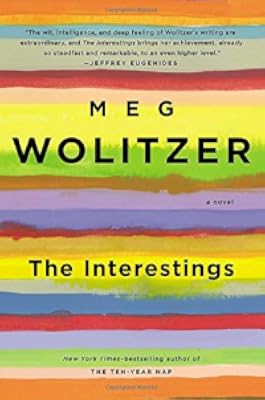
The Interestings
by Meg Wolitzer
On This Page
Description
The summer that Nixon resigns, six teenagers at a summer camp for the arts become inseparable. Decades later the bond remains powerful, but so much else has changed. In The Interestings, Wolitzer follows these characters from the height of youth through middle age, as their talents, fortunes, and degrees of satisfaction diverge. The kind of creativity that is rewarded at age fifteen is not always enough to propel someone through life at age thirty; not everyone can sustain, in adulthood, show more what seemed so special in adolescence. Jules Jacobson, an aspiring comic actress, eventually resigns herself to a more practical occupation and lifestyle. Her friend Jonah, a gifted musician, stops playing the guitar and becomes an engineer. But Ethan and Ash, Jules's now-married best friends, become shockingly successful—true to their initial artistic dreams, with the wealth and access that allow those dreams to keep expanding. The friendships endure and even prosper, but also underscore the differences in their fates, in what their talents have become and the shapes their lives have taken.Wide in scope, ambitious, and populated by complex characters who come together and apart in a changing New York City, The Interestings explores the meaning of talent; the nature of envy; the roles of class, art, money, and power; and how all of it can shift and tilt precipitously over the course of a friendship and a life.
. show less
Tags
Recommendations





Member Recommendations


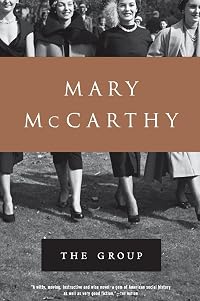
vwinsloe Another group of lifelong friends followed over the decades.
20

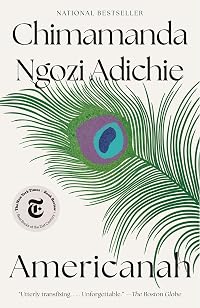
tangledthread A very similar theme and story line for the generation immediately preceding The Interestings.
21
Member Reviews
The most remarkable thing about this book, to me, is the author Meg Wolitzer's clearly amazing ability to observe human behavior. I've read lots of book reviews over the years that say something along the lines of the author having a "keen eye" for observation, but I can't recall having ever been personally struck by that in a novel, until I read this book.
Here are just a few examples:
"'Yeah, they're diametrically opposed', said Jonah, for this was another phrase he liked to use. Although, Julie thought, if someone said 'diametrically,' could 'opposed' be far behind?"
"Parent love glassblowing children, right? But good luck to the glassblowing adult. If those same kids ended up blowing glass at thirty, their parents would feel they'd show more failed."
"This place is like something in a dream, when you find out there's an extra room in your apartment."
"The leisureliness of a girlhood friendship -- or even of a friendship between two women, in which they'd talked about sex and marriage and art and children and the election and what would happen next -- was enviable, but not what either of them wanted right now. They hadn't known in advance that leisureliness would be something they would lose, and would mourn."
"Even as Jules answered the phone . . . she wasn't afraid, because it was daytime, and a cell phone pulsing in daylight was benign."
Wolitzer weaves her novel from the things that are common to all people, as we grow from children into adolescents with that intense self-absorbed focus and belief that no one has ever experienced anything in the way we are experiencing it, and then from adolescents into young adults where dreams are still hopeful but often start to diminish in size or are at least tempered by reality, and then into full-on adults with all the responsibilities entailed in jobs and relationships and changing friendships and aging parents and often children of our own, and finally into the later stages of life where if we are lucky we perhaps we begin to make peace with ourselves and with our own childhoods. (Apologies for that run-on sentence.) But this isn't a sugary sweet tale. Instead, it is a deeply honest story, told through the lives of six teenagers who become fast friends at a summer art camp, that doesn't flinch from exploring all of their human nature -- the good, bad, different, same, proud, and embarrassing parts.
I'm headed to the book store to find Wolitzer's other books. show less
Here are just a few examples:
"'Yeah, they're diametrically opposed', said Jonah, for this was another phrase he liked to use. Although, Julie thought, if someone said 'diametrically,' could 'opposed' be far behind?"
"Parent love glassblowing children, right? But good luck to the glassblowing adult. If those same kids ended up blowing glass at thirty, their parents would feel they'd show more failed."
"This place is like something in a dream, when you find out there's an extra room in your apartment."
"The leisureliness of a girlhood friendship -- or even of a friendship between two women, in which they'd talked about sex and marriage and art and children and the election and what would happen next -- was enviable, but not what either of them wanted right now. They hadn't known in advance that leisureliness would be something they would lose, and would mourn."
"Even as Jules answered the phone . . . she wasn't afraid, because it was daytime, and a cell phone pulsing in daylight was benign."
Wolitzer weaves her novel from the things that are common to all people, as we grow from children into adolescents with that intense self-absorbed focus and belief that no one has ever experienced anything in the way we are experiencing it, and then from adolescents into young adults where dreams are still hopeful but often start to diminish in size or are at least tempered by reality, and then into full-on adults with all the responsibilities entailed in jobs and relationships and changing friendships and aging parents and often children of our own, and finally into the later stages of life where if we are lucky we perhaps we begin to make peace with ourselves and with our own childhoods. (Apologies for that run-on sentence.) But this isn't a sugary sweet tale. Instead, it is a deeply honest story, told through the lives of six teenagers who become fast friends at a summer art camp, that doesn't flinch from exploring all of their human nature -- the good, bad, different, same, proud, and embarrassing parts.
I'm headed to the book store to find Wolitzer's other books. show less
Jules Jacobson is a fifteen-year-old who just lost her father. Her mother sends Jules to a performing arts camp, hoping to get her away from the sadness. There Jules meets and falls in with a group of wealthy, artistic teens- siblings handsome Goodman and beautiful Ash, sad, introverted guitar player Josh, dancer Cathy and witty, geeky Ethan. They become a tight knit group and their lives become entwined until an incident occurs that threatens to tear them all apart and forces them to take sides. Ethan and Ash end up together and Ethan becomes wealthy and famous, while Jules struggles financially and artistically.
As someone who came of age at the same time as Jules in the 1970s, I felt very connected to these characters. Wolitzer show more perfectly captures how it feels to be the outsider in a group, as well as the longing for success and what happens when the reality of your life doesn't meet the fantasy you have created. Wolitzer confronts what happens to young people when people expect too much- or not enough- from them. We all have roles that we end up playing, but what happens when they don't match up to who we really are inside?
The books covers much of the characters' adult lives, so we see them fall in love, start families, have career successes and failures. There is so much here, and Wolitzer's characters feel like people we could know in our own lives. The writing is so gorgeous, and the setting of New York City is the perfect place for this group of golden ones to explore life as young adults. My favorite character is Dennis, the only one who seems to be truly authentic and honest about himself.
The Interestings has been placed on many Best of 2013 lists, including Amazon's best literature and fiction, and is sure to be on many more before the end of the year. show less
As someone who came of age at the same time as Jules in the 1970s, I felt very connected to these characters. Wolitzer show more perfectly captures how it feels to be the outsider in a group, as well as the longing for success and what happens when the reality of your life doesn't meet the fantasy you have created. Wolitzer confronts what happens to young people when people expect too much- or not enough- from them. We all have roles that we end up playing, but what happens when they don't match up to who we really are inside?
The books covers much of the characters' adult lives, so we see them fall in love, start families, have career successes and failures. There is so much here, and Wolitzer's characters feel like people we could know in our own lives. The writing is so gorgeous, and the setting of New York City is the perfect place for this group of golden ones to explore life as young adults. My favorite character is Dennis, the only one who seems to be truly authentic and honest about himself.
The Interestings has been placed on many Best of 2013 lists, including Amazon's best literature and fiction, and is sure to be on many more before the end of the year. show less
In the Interestings six New York teenagers meet and bond at summer camp in 1964. This subtle novel shadows them like a city stalker, into middle age.
There's a poignant sting here, for the lost idealism of youth and the inability to recapture fleeting "specialness." Wolitzer's characters trap themselves in the Chinese finger-trap of nostalgia, and like Alvy Singer in Annie Hall, eventually realize you can't cook the same lobster twice.
The characters are fully-fleshed and feel like people you know (or resemble). A favorite line: "He smelled of lemon Dawn and she probably smelled of whatever chemical was released when you became bitter."
In spite of all that I loved about the Interestings, the novel has an odd remoteness that left me a bit show more chilled. But all in all, a great read. show less
There's a poignant sting here, for the lost idealism of youth and the inability to recapture fleeting "specialness." Wolitzer's characters trap themselves in the Chinese finger-trap of nostalgia, and like Alvy Singer in Annie Hall, eventually realize you can't cook the same lobster twice.
The characters are fully-fleshed and feel like people you know (or resemble). A favorite line: "He smelled of lemon Dawn and she probably smelled of whatever chemical was released when you became bitter."
In spite of all that I loved about the Interestings, the novel has an odd remoteness that left me a bit show more chilled. But all in all, a great read. show less
 This review was written for LibraryThing Early Reviewers.
The self-named “Interestings” had their genesis as a group of teenagers who came together at a summer arts camp. From the beginning there were inequities in the distribution of talent, looks, money and opportunity. As we follow their lives for the next few decades, amidst relationships, fledgling careers, family secrets, and health crises, we see these differences play out in the opportunities available to them, and in the choices they make. For some of them, it meant the realization that their talent was not enough to sustain them as a vocation and that they would have to come to terms with their personal and professional envy of those whose talent or outcomes were greater.
Wolitzer developes each character so well that you care show more about each equally and you don’t tire of any of them. I enjoyed the pacing of the book, I could have read more about these people’s lives. In fact my only complaint about this book is that the jacket cover synopsis gives away too much information, and I was glad that I didn’t read it until after I finished the book. show less
Wolitzer developes each character so well that you care show more about each equally and you don’t tire of any of them. I enjoyed the pacing of the book, I could have read more about these people’s lives. In fact my only complaint about this book is that the jacket cover synopsis gives away too much information, and I was glad that I didn’t read it until after I finished the book. show less
I enjoyed this book, at first. Poignant teenage awakenings always hold a soft spot for me, and Jules's set of eclectic friends was a perfect mix of caring, small jealousies, tormenting crushes and strong promises. Even as the group grew up and came into its own, I could overlook the bizarre twist of fate for Goodman and the gross disparities between friends. Jonah's bizarre experiences added to the fresco, and although some parts seriously challenged my suspended disbelief, I chose to play long.
I stopped caring for characters, however, when Jules, in her 30-40s, still clung to her jealousies. At this point, she became thoroughly disagreeable to me: petty, unpleasant, even hypocritical. Her retirement choice, to go back to her hey-day, show more was ludicrous... and at that point, I stopped believing in the story, counting the pages to the end, finding it way too long.
It's too bad the author didn't know when to stop. I would have liked to keep in mind the gawky teen who came into her own, surrounded by people whose different characters she came to appreciate. show less
I stopped caring for characters, however, when Jules, in her 30-40s, still clung to her jealousies. At this point, she became thoroughly disagreeable to me: petty, unpleasant, even hypocritical. Her retirement choice, to go back to her hey-day, show more was ludicrous... and at that point, I stopped believing in the story, counting the pages to the end, finding it way too long.
It's too bad the author didn't know when to stop. I would have liked to keep in mind the gawky teen who came into her own, surrounded by people whose different characters she came to appreciate. show less
I've been too depressed to really do anything these last couple months, reading included. But at the confluence of train delays and burgeoning alcoholism, progress was made.
This book could make a humanist out of a misanthrope. Not through soppy positivity, romance, or vacant platitudes, but something altogether more subtle and a mysterious. Like watching a sunrise over the inner city, or looking out an aeroplane window at night, the weight of humanity in all of its bland splendour happening everywhere you look can feel almost overwhelming.
We are all interesting. Both considered as a whole, and individually. In the way that only very good literature can, this book is a reminder of the fact. It illustrates very particularly, though, just show more how fucking beautiful an idea that is.
I couldn't give it a perfect score, because there's some slow-going throughout. But given the nature of the story and how it's framed, there has to be.
It's real good, in summary, and might make you smile at a stranger or two. show less
This book could make a humanist out of a misanthrope. Not through soppy positivity, romance, or vacant platitudes, but something altogether more subtle and a mysterious. Like watching a sunrise over the inner city, or looking out an aeroplane window at night, the weight of humanity in all of its bland splendour happening everywhere you look can feel almost overwhelming.
We are all interesting. Both considered as a whole, and individually. In the way that only very good literature can, this book is a reminder of the fact. It illustrates very particularly, though, just show more how fucking beautiful an idea that is.
I couldn't give it a perfect score, because there's some slow-going throughout. But given the nature of the story and how it's framed, there has to be.
It's real good, in summary, and might make you smile at a stranger or two. show less
I deeply wanted to like this, especially because Jeffrey Eugenides is a big fan, and I am a diehard Eugenides acolyte. For the first 30 pages, I was rapturous about the book. And, to be fair, I felt something at the end. But, in between.
SO MUCH PLOT.
Six young people spend a summer at camp together, and go on to live interconnected but wildly different lives. Some end in tragedy, some in muted success, others somewhere in between. Wollitzer's prose swirls in a chronologically confused but always comprehensible manner from the 1970s to the end of the 2000s. Her characters all inhabit comfortably bourgeois lives (theatre director, psychologist, and so on) and face bourgeois problems with their parents, marriages, and children. It's all show more reasonable. But...
SO MUCH PLOT.
To be fair, there are lots of people who love plot. They gag for it. The kind of people who devour daytime soap operas or read fantasy novels. There's nothing wrong with that. But I'm realising as I age that it's not for me. Plot is wonderful. It can be very engaging in, for instance, a classic mystery novel. But I have my threshold, and Wollitzer reached it before chapter 5. The novel rarely breaks for a moment of atmosphere, colour, or nuance. It's all meetings, conversations, and swift life changes.
Look, it is not a reviewer's job to disagree with what an author chose to do. It's to assess whether they did it successfully. And my problem with the torrential cascades of plot is simply that it deprives us of the most basic of literary adages: "show, don't tell". That's not always good advice, but here it may have been. A fortysomething man who was a stud in his teens has lost his charisma, but doesn't realise it. How do we know? Because the narrative voice tells us. And fair enough, too; there's no time for us to realise it from character or situation, because any given scene only takes one or two pages. There's too much plot, and not enough time. Characters fall in love, fall apart, have depressive episodes, deal with children with disabilities or other crises, soar to the height of their career unexpectedly, change jobs, lament their past life, unintentionally cause divorces, commit alleged rape, are weirdly groomed by older musicians, discover themselves, doubt themselves. Veering between timelines is a clever technique, but it just contributes to Wollitzer's need to keep updating us with chronologies and details that leave us panting with exhaustion. In other words:
SO MUCH PLOT.
Conversely, despite this being a chunky book with lots of plot, dialogue rarely packs a punch. Conversations are functional, people speak just like the rest of us do, and concerns are rarely elevated to literary levels. War and Peace it ain't. Moreso, there's an argument to be made that aside from Jules, the central character, no-one really changes that much. They remain types, and we never dig down.
While I felt an indescribable angst while reading the final chapter, in which unsurprisingly Jules meditates on life, loss, age, and change, I'm not even sure it was because of the author. It was just that inevitable yearning that we all feel when confronted with thoughts of our own past and that endless question of what we have gained with age, but what we have lost. It was empathy by default that I was feeling.
I continue to wish that I could have appreciated this more. show less
SO MUCH PLOT.
Six young people spend a summer at camp together, and go on to live interconnected but wildly different lives. Some end in tragedy, some in muted success, others somewhere in between. Wollitzer's prose swirls in a chronologically confused but always comprehensible manner from the 1970s to the end of the 2000s. Her characters all inhabit comfortably bourgeois lives (theatre director, psychologist, and so on) and face bourgeois problems with their parents, marriages, and children. It's all show more reasonable. But...
SO MUCH PLOT.
To be fair, there are lots of people who love plot. They gag for it. The kind of people who devour daytime soap operas or read fantasy novels. There's nothing wrong with that. But I'm realising as I age that it's not for me. Plot is wonderful. It can be very engaging in, for instance, a classic mystery novel. But I have my threshold, and Wollitzer reached it before chapter 5. The novel rarely breaks for a moment of atmosphere, colour, or nuance. It's all meetings, conversations, and swift life changes.
Look, it is not a reviewer's job to disagree with what an author chose to do. It's to assess whether they did it successfully. And my problem with the torrential cascades of plot is simply that it deprives us of the most basic of literary adages: "show, don't tell". That's not always good advice, but here it may have been. A fortysomething man who was a stud in his teens has lost his charisma, but doesn't realise it. How do we know? Because the narrative voice tells us. And fair enough, too; there's no time for us to realise it from character or situation, because any given scene only takes one or two pages. There's too much plot, and not enough time. Characters fall in love, fall apart, have depressive episodes, deal with children with disabilities or other crises, soar to the height of their career unexpectedly, change jobs, lament their past life, unintentionally cause divorces, commit alleged rape, are weirdly groomed by older musicians, discover themselves, doubt themselves. Veering between timelines is a clever technique, but it just contributes to Wollitzer's need to keep updating us with chronologies and details that leave us panting with exhaustion. In other words:
SO MUCH PLOT.
Conversely, despite this being a chunky book with lots of plot, dialogue rarely packs a punch. Conversations are functional, people speak just like the rest of us do, and concerns are rarely elevated to literary levels. War and Peace it ain't. Moreso, there's an argument to be made that aside from Jules, the central character, no-one really changes that much. They remain types, and we never dig down.
While I felt an indescribable angst while reading the final chapter, in which unsurprisingly Jules meditates on life, loss, age, and change, I'm not even sure it was because of the author. It was just that inevitable yearning that we all feel when confronted with thoughts of our own past and that endless question of what we have gained with age, but what we have lost. It was empathy by default that I was feeling.
I continue to wish that I could have appreciated this more. show less
Members
- Recently Added By
Lists

Recommend the 20 best books you've read in the last five years
2,168 works; 601 members

Top Five Books of 2013
1,562 works; 715 members

Dishonourable Mentions of 2013
189 works; 63 members

Books Set in New York City
127 works; 21 members

Top Five Books of 2017
757 works; 231 members

40 Books to Read Before You’re 40
40 works; 4 members

Books Read in 2014
2,343 works; 89 members
Books Set in New York State
65 works; 11 members

Top Five Books of 2016
795 works; 229 members

Top Five Books of 2015
811 works; 241 members

2022 Christmas Gifts
60 works; 13 members

Contemporary Fiction
109 works; 7 members

BBC Radio 4 Bookclub
340 works; 13 members

Secrets Books
94 works; 3 members

Books Read in 2021
5,361 works; 114 members

Penguin Random House
458 works; 4 members

Actors
65 works; 5 members

Favorite Childhood Books
1,646 works; 518 members

Books Read in 2024
4,623 works; 126 members
Author Information

34+ Works 11,205 Members
Meg Wolitzer was born on Long Island, New York on May 28, 1959. She is the daughter of novelist Hilma Wolitzer. She studied creative writing at Smith College and graduated from Brown University in 1981. Her first novel, Sleepwalking, was published in 1982. Her other books include Hidden Pictures, This Is Your Life, Friends for Life, The Wife, The show more Position, The Ten-Year Nap, and The Uncoupling. Her short story Tea at the House was featured in 1998's Best American Short Stories collection. Her books This Is My Life and Surrender, Dorothy were adapted into films. She has taught creative writing at the University of Iowa's Writers' Workshop and Skidmore College and has written several Hollywood screenplays. She currently teaches writing at Columbia University. Her title, The Female Persuasion, made the bestseller list in 2018. (Bowker Author Biography) show less
Awards and Honors
Awards
Distinctions
Series
Belongs to Publisher Series
Contemporánea [Alba] (21)
Common Knowledge
- Canonical title
- The Interestings
- Original title
- The Interestings
- Original publication date
- 2013-04-09
- People/Characters
- Jules Jacobson; Ash Wolf; Goodman Wolf; Ethan Figman; Cathy Kiplinger; Jonah Bay (show all 13); Dennis Boyd; Robert Takahashi; Gudrun Sigurdsdottir; Susannah Bay; Barry Claimes; Edie Wunderlich; Manny Wunderlich
- Important places
- New York, New York, USA; Spirit-in-the-Woods
- Epigraph
- While riding on a train goin' west
I fell asleep for to take my rest
I dreamed a dream that made me sad
Concerning myself and the first few friends I had
~Bob Dylan, "Bob Dylan's Dream"
... to own a little ... (show all)talent ... was an awful, plaguing thing ... being only a little special meant you expected too much, most of the time.
~Mary Robison, "Yours" - Dedication
- For my parents, who sent me there
And for Martha Parker, whom I met there - First words
- On a warm night in early July of that long-evaporated year, the Interestings gathered for the very first time. They were only fifteen, sixteen, and they began to call themselves the name with tentative irony.
- Quotations
- Irony was new to her and tasted oddly good, like previously unavailable summer fruit.
- Last words
- (Click to show. Warning: May contain spoilers.)And didn't it always go like that - body parts not quite lining up the way you wanted them to, all of it a little bit off, as if the world itself were an animated sequence of longing and envy and self-hatred and grandiosity and failure and success, a strange and endless cartoon loop that you couldn't stop watching, because, despite all you knew by now, it was still so interesting.
- Blurbers
- Eugenides, Jeffrey
- Original language*
- Anglais (Etats-Unis) (Etats-Unis)
- Canonical DDC/MDS
- 813.54
- Canonical LCC
- PS3573.O564
*Some information comes from Common Knowledge in other languages. Click "Edit" for more information.
Classifications
Statistics
- Members
- 3,420
- Popularity
- 4,897
- Reviews
- 214
- Rating
- (3.60)
- Languages
- 8 — Dutch, English, French, German, Greek, Italian, Portuguese, Spanish
- Media
- Paper, Audiobook, Ebook
- ISBNs
- 33
- ASINs
- 12
