
Jonathan Dee (2) (1962–)
Author of The Privileges
For other authors named Jonathan Dee, see the disambiguation page.
About the Author
Image credit: Merk h
Works by Jonathan Dee
Associated Works
Money Changes Everything: Twenty-Two Writers Tackle the Last Taboo with Tales of Sudden Windfalls, Staggering Debts, and (2007) — Contributor — 51 copies, 1 review
Tagged
Common Knowledge
- Canonical name
- Dee, Jonathan
- Birthdate
- 1962
- Gender
- male
- Education
- Yale University
- Organizations
- Paris Review
- Nationality
- USA
- Associated Place (for map)
- USA
Members
Reviews
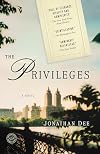
The best thing about the Privileges, far and away, is the opening scene (which lasts for about the first 20% of the book, so not trivial) Dee opens on the wedding between two relatively normal people with big ambitions and focuses on their interactions with each other, their friends, their parents and their siblings. In this microcosm of their relationship, each character is nuanced and each interaction is deftly painted: the overbearing mother, the chronically late spoiled rich kid, the show more "alternative" step-sister who is SO over this. It's funny and relatable. (This scene deserves all the stars, so I'm going to keep this a three star review, instead of two, which is what the rest of the book deserves.)
And then...it's like when you meet someone and you have this great conversation with them and you have so much in common and you imagine this entire friendship spreading out before you, but then the next time you get together they spout vaguely offensive views and only want to talk about football and you realize you don't actually have anything in common? The first amazing scene is what makes the rest of the lackluster book hurt so much. Because everything else is lackluster. It's not bad, certainly, but it's just boring. Flat as paper characters wander around their super rich life, with their super perfect marriage to each other. And as much as there's no characterization, there's not really plot either. Yes, things happen, but they aren't related to each other and they result in no change upon the flimsy characters. Dee is trying to make a point about wealth and all of his characters and plot are servants to his point.
This book is basically a fable about wealth, but it's not even clear to me what point about wealth Dee is trying to make. There's the disaffected rich girl and the boy who's rich but want's to be a Trustafarian and then the rich woman who devotes her time to charities, but apparently earnestly so, and the rich man who maybe cheated the system to get rich, but then the book implies later that he continued to get rich even after he stopped insider-trading. And there's a very short bit about the hypocrisy of supporting charities while getting rich off of factories in China, which was interesting, but only lasted about two paragraphs.
Finally, the last 20% made me want to tear my hair out. For no good reason that I can understand, Dee decides to intercut three different threads, for over 50 pages. Intercutting is a literary technique that can drive me crazy at the best of times, but intercutting that many scenes, which were totally unrelated for that long was a special sort of obnoxious. The intercuts came quickly enough that it was hard to get into any scene, and since there were three other stories to cut into, you lost all emotional resonance with the first one by the time you got back to it. (For the record, just to help emphasize the bizarreness, the threads were:
-the son becomes takes an art class, becomes involved with his TA, who is into outsider art; he becomes fascinated by outsider art; he eventually tries to meet an artist; he gets kidnapped; he escapes)
-the daughter goes to a nightclub and gets drunk. She gets picked up by some "EuroTrash" guys. They crash her parents beach house. They party and wreck the house. They drive home and get into a car crash. Her parents punish her by making her dad take her with him on his business trip to China. They go to China. They visit a factory and she thinks it's hypocritical that her dad invests in a factory in China (even though none of the real problems with Chinese labor are actually on view here -- it seems to be a factory staffed exclusively by adults and teenagers, without any apparent bad labor conditions.)
-The mother's father is dying in a hospice. She's called by the father's girlfriend, whom she didn't know existed. She flies to Florida, where he is. She sits at his bedside. She pays the father's girlfriend to go away. The father eventually dies.
Now imagine reading those plots 3 to 4 pages at a time, separated by 10 pages of other stuff. show less
And then...it's like when you meet someone and you have this great conversation with them and you have so much in common and you imagine this entire friendship spreading out before you, but then the next time you get together they spout vaguely offensive views and only want to talk about football and you realize you don't actually have anything in common? The first amazing scene is what makes the rest of the lackluster book hurt so much. Because everything else is lackluster. It's not bad, certainly, but it's just boring. Flat as paper characters wander around their super rich life, with their super perfect marriage to each other. And as much as there's no characterization, there's not really plot either. Yes, things happen, but they aren't related to each other and they result in no change upon the flimsy characters. Dee is trying to make a point about wealth and all of his characters and plot are servants to his point.
This book is basically a fable about wealth, but it's not even clear to me what point about wealth Dee is trying to make. There's the disaffected rich girl and the boy who's rich but want's to be a Trustafarian and then the rich woman who devotes her time to charities, but apparently earnestly so, and the rich man who maybe cheated the system to get rich, but then the book implies later that he continued to get rich even after he stopped insider-trading. And there's a very short bit about the hypocrisy of supporting charities while getting rich off of factories in China, which was interesting, but only lasted about two paragraphs.
Finally, the last 20% made me want to tear my hair out. For no good reason that I can understand, Dee decides to intercut three different threads, for over 50 pages. Intercutting is a literary technique that can drive me crazy at the best of times, but intercutting that many scenes, which were totally unrelated for that long was a special sort of obnoxious. The intercuts came quickly enough that it was hard to get into any scene, and since there were three other stories to cut into, you lost all emotional resonance with the first one by the time you got back to it. (For the record, just to help emphasize the bizarreness, the threads were:
-the son becomes takes an art class, becomes involved with his TA, who is into outsider art; he becomes fascinated by outsider art; he eventually tries to meet an artist; he gets kidnapped; he escapes)
-the daughter goes to a nightclub and gets drunk. She gets picked up by some "EuroTrash" guys. They crash her parents beach house. They party and wreck the house. They drive home and get into a car crash. Her parents punish her by making her dad take her with him on his business trip to China. They go to China. They visit a factory and she thinks it's hypocritical that her dad invests in a factory in China (even though none of the real problems with Chinese labor are actually on view here -- it seems to be a factory staffed exclusively by adults and teenagers, without any apparent bad labor conditions.)
-The mother's father is dying in a hospice. She's called by the father's girlfriend, whom she didn't know existed. She flies to Florida, where he is. She sits at his bedside. She pays the father's girlfriend to go away. The father eventually dies.
Now imagine reading those plots 3 to 4 pages at a time, separated by 10 pages of other stuff. show less
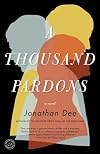
There are two ways to look at this book. On the one hand, it’s set in a world where all men are either charmless, borderline alcoholics or criminals (and in some cases all three), and most of the women are pretty nasty too. There does however exist one woman – the central character Helen – who is pretty nice, and despite being out of the workforce for many years, she manages to slot into a PR firm and single handedly discover that contrary to all the accepted practices of public show more relations, the answer to every crisis is to apologise, apologise, apologise. Wear a hair shirt, beat your chest, the whole shooting match. Not only this, the world at large beats a path to her door, desperate to pay over the odds for her to tell them to apologise. I can’t help wondering why nobody ever hit on this amazing panacea before.
On the other hand, it is a beautifully written book which allows itself time to pause and reflect, and is generous with the personality time allotted to its characters. What initially seems to be a fairly standard tale of a wife finding inner reserves of strength after being spectacularly dumped on by her husband takes unexpected turns. There are humorous moments, thought provoking moments, and moments of high tension. It was interesting, too, to learn about the business of PR and crisis management.
In the end, the view that wins out for me is the second. In spite of all my cynicism I loved this book. I could scarcely put it down and was sorry when it ended. I had never heard of this author before but will definitely be seeking his work out in future. show less
On the other hand, it is a beautifully written book which allows itself time to pause and reflect, and is generous with the personality time allotted to its characters. What initially seems to be a fairly standard tale of a wife finding inner reserves of strength after being spectacularly dumped on by her husband takes unexpected turns. There are humorous moments, thought provoking moments, and moments of high tension. It was interesting, too, to learn about the business of PR and crisis management.
In the end, the view that wins out for me is the second. In spite of all my cynicism I loved this book. I could scarcely put it down and was sorry when it ended. I had never heard of this author before but will definitely be seeking his work out in future. show less

Don’t be like the idiots who couldn’t get past the first narrator. Instead, do what I did and flip ahead to see if he stays. He doesn’t. And personally, I don’t understand why he was needed anyway.
Ok, with that out of the way let me tell you my first impression of this book was one of comfort - that I was in the hands of a writer with skill. The prose just lit up my brain somehow. Once I got past the initial narrator that is. What a creepy, misogynist piece of work he was. I was show more dreading meeting him again, but luckily we don’t and as I said above, I’m not sure why he was necessary. Perhaps as a way to show how undone Mark was and how trusting. 9/11 made us all crazy, but I do agree with the sentiment on page 41 that the people who died weren’t heroes, they were victims. Sad, but just that. This doesn't include fire, police or rescue...those deaths were the deaths of heroes.
Mark is pretty trusting. I mean, how dumb do you have to be to fall for a scam like that. I was investing in the mid-90s and found trustworthy, reputable firms to give my money to. It’s not that hard. Oy.
The small town vibe felt reminiscent of Richard Russo’s books. The relationships are all plausible, intimate and well-drawn, especially the power structure, what there is of it. I found the transitions focusing on one person to another to be smooth and natural. Gerry is a sociopath. Hadi’s civic funding reminded me of Clark Rockefeller’s doings in real-life Cornish NH. I imagined the set up would culminate in the economic implosion of 2008, but it didn’t. All in all it was a good book, but I do have some complaints -
First, the elder Firth situation goes unresolved. Much is made of mom’s worsening alzheimer’s and dad’s anger, but it just slides off the page into nothing. Second, I don’t remember people doing the hyper-local thing in 2003 or so. You know...buying local food and products because they’re local. Third, a restaurant wants to use local ingredients and has a May menu listing tomatoes, eggplant, beets, peppers etc. Stuff you will NEVER get in New England at that time unless you have a huge greenhouse operation.
The characterization of Candace’s unsatisfactory boyfriend on pages 210-11 is so great though. We all have known guys like this -
“Andrew, second-generation owner of the sporting goods store in Howland where Candace bought running shoes and the like, was a classic local type. He thought he knew everything; he was overconfident and condescending and maybe two-thirds as good looking as he thought he was and he had always gotten what he wanted because he was too dumb to understand how much else there was to want, outside of the life he was living, the life he had always lived. The less he knew about something, or someone, the more superior he felt. She longed to undo him.” show less
Ok, with that out of the way let me tell you my first impression of this book was one of comfort - that I was in the hands of a writer with skill. The prose just lit up my brain somehow. Once I got past the initial narrator that is. What a creepy, misogynist piece of work he was. I was show more dreading meeting him again, but luckily we don’t and as I said above, I’m not sure why he was necessary. Perhaps as a way to show how undone Mark was and how trusting. 9/11 made us all crazy, but I do agree with the sentiment on page 41 that the people who died weren’t heroes, they were victims. Sad, but just that. This doesn't include fire, police or rescue...those deaths were the deaths of heroes.
Mark is pretty trusting. I mean, how dumb do you have to be to fall for a scam like that. I was investing in the mid-90s and found trustworthy, reputable firms to give my money to. It’s not that hard. Oy.
The small town vibe felt reminiscent of Richard Russo’s books. The relationships are all plausible, intimate and well-drawn, especially the power structure, what there is of it. I found the transitions focusing on one person to another to be smooth and natural. Gerry is a sociopath. Hadi’s civic funding reminded me of Clark Rockefeller’s doings in real-life Cornish NH. I imagined the set up would culminate in the economic implosion of 2008, but it didn’t. All in all it was a good book, but I do have some complaints -
First, the elder Firth situation goes unresolved. Much is made of mom’s worsening alzheimer’s and dad’s anger, but it just slides off the page into nothing. Second, I don’t remember people doing the hyper-local thing in 2003 or so. You know...buying local food and products because they’re local. Third, a restaurant wants to use local ingredients and has a May menu listing tomatoes, eggplant, beets, peppers etc. Stuff you will NEVER get in New England at that time unless you have a huge greenhouse operation.
The characterization of Candace’s unsatisfactory boyfriend on pages 210-11 is so great though. We all have known guys like this -
“Andrew, second-generation owner of the sporting goods store in Howland where Candace bought running shoes and the like, was a classic local type. He thought he knew everything; he was overconfident and condescending and maybe two-thirds as good looking as he thought he was and he had always gotten what he wanted because he was too dumb to understand how much else there was to want, outside of the life he was living, the life he had always lived. The less he knew about something, or someone, the more superior he felt. She longed to undo him.” show less
I really liked this book. It was written with a subtle humor and although the telling of the tale began to slow about 2/3rd of the way through, it was only a brief segment and it quickly picked up and gained momentum as it raced toward its conclusion.
This story began with a young, upwardly mobile couple as they prepare for their marriage. Their wedding day is scrutinized. You can feel their youthful exuberance. They are a charmed couple and believe they can make the rules, defying authority, show more laughing at the system. Whether or not they grow and mature, break the rules and succeed, is immaterial, in the end. The only thing that is important is their abiding affection for each other. For the reader, it will bring back the memories of one's own planning of any event, complete with the anxieties and joyfulness. It will take the reader through the memories of their lives with familiar scenes bringing knowing smiles of recognition to their faces. The family dynamics are really amusing and true to form. In this case there are blended families involved and their interrelationships are often hilarious. As the story moves through the years, we see the couple change. The book is one in which several generations may identify. It is hard to come up with a reason that someone might not enjoy this book, unless the stereotyping of the generations feels overwhelming. It is best to just keep turning the pages with the Moreys. You will not be disappointed. Cynthia is a stay at home mom. Adam is climbing the ladder of success in the investment world. He lives his life to make Cynthia happy. The children, April and Jonas, are living in the lap of luxury. They are not in touch with reality or with true emotions. Neither the children nor the parents, can do wrong, even when they most decidedly, do wrong. No matter what happens, Adam and Cynthia "fix" it. There is always a way to handle whatever happens for money is power and control and it has bought them privileges not afforded to the ordinary person. Even as a perfect couple, they grew somewhat dissatisfied as the years passed. They felt they were missing something and wanted more. Having attained one dream they turned their attention to another. They pushed every envelope to its limit as they climbed higher and higher into the world of the rich. They had to keep on buying, doing and going. What started out as a simple adventure into marriage and family turned into an experiment in greed. They lived to attain things. Their children loved them but they also pushed the envelope and disobeyed the rules knowing their cool parents would bail them out and provide them with whatever they wished. I thought the Moreys were hypocrites. They felt they were above the laws and rules for mere mortals. Their mistakes were never rectified, they were justified and covered up. Though I found the characters to be unpleasant people, I couldn't dislike them. The author made them believable. People were drawn to them as I was. Their charisma moved them forward. For every negative aspect portrayed, another favorable one was ready in the wings to stand beside it. It is a timeless novel for readers of all ages. I identified with many of the scenes and saw my own children in others. The lack of privileges or their abundance, matters not; the book made one think about the meaning of privilege and the access it offers. Does responsibility toward others come with the assumption of privilege? What legacy do we leave behind when we "shuffle off this mortal coil?" What are acceptable means to achieve it? show less
This story began with a young, upwardly mobile couple as they prepare for their marriage. Their wedding day is scrutinized. You can feel their youthful exuberance. They are a charmed couple and believe they can make the rules, defying authority, show more laughing at the system. Whether or not they grow and mature, break the rules and succeed, is immaterial, in the end. The only thing that is important is their abiding affection for each other. For the reader, it will bring back the memories of one's own planning of any event, complete with the anxieties and joyfulness. It will take the reader through the memories of their lives with familiar scenes bringing knowing smiles of recognition to their faces. The family dynamics are really amusing and true to form. In this case there are blended families involved and their interrelationships are often hilarious. As the story moves through the years, we see the couple change. The book is one in which several generations may identify. It is hard to come up with a reason that someone might not enjoy this book, unless the stereotyping of the generations feels overwhelming. It is best to just keep turning the pages with the Moreys. You will not be disappointed. Cynthia is a stay at home mom. Adam is climbing the ladder of success in the investment world. He lives his life to make Cynthia happy. The children, April and Jonas, are living in the lap of luxury. They are not in touch with reality or with true emotions. Neither the children nor the parents, can do wrong, even when they most decidedly, do wrong. No matter what happens, Adam and Cynthia "fix" it. There is always a way to handle whatever happens for money is power and control and it has bought them privileges not afforded to the ordinary person. Even as a perfect couple, they grew somewhat dissatisfied as the years passed. They felt they were missing something and wanted more. Having attained one dream they turned their attention to another. They pushed every envelope to its limit as they climbed higher and higher into the world of the rich. They had to keep on buying, doing and going. What started out as a simple adventure into marriage and family turned into an experiment in greed. They lived to attain things. Their children loved them but they also pushed the envelope and disobeyed the rules knowing their cool parents would bail them out and provide them with whatever they wished. I thought the Moreys were hypocrites. They felt they were above the laws and rules for mere mortals. Their mistakes were never rectified, they were justified and covered up. Though I found the characters to be unpleasant people, I couldn't dislike them. The author made them believable. People were drawn to them as I was. Their charisma moved them forward. For every negative aspect portrayed, another favorable one was ready in the wings to stand beside it. It is a timeless novel for readers of all ages. I identified with many of the scenes and saw my own children in others. The lack of privileges or their abundance, matters not; the book made one think about the meaning of privilege and the access it offers. Does responsibility toward others come with the assumption of privilege? What legacy do we leave behind when we "shuffle off this mortal coil?" What are acceptable means to achieve it? show less
Lists
Awards


You May Also Like


Associated Authors
Statistics
- Works
- 8
- Also by
- 3
- Members
- 1,623
- Popularity
- #15,854
- Rating
- 3.4
- Reviews
- 115
- ISBNs
- 155
- Languages
- 9
- Favorited
- 4
