
Dana Spiotta
Author of Eat the Document
About the Author
Works by Dana Spiotta
Jelly and Jack 3 copies
Associated Works
Tagged
Common Knowledge
- Birthdate
- 1966
- Gender
- female
- Occupations
- author
- Organizations
- Syracuse University
- Awards and honors
- Rome Fellowship in Literature (2008)
Guggenheim Fellowship - Nationality
- USA
- Places of residence
- New York, New York, USA
- Associated Place (for map)
- New York, USA
Members
Reviews
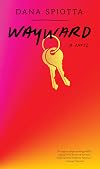
Samantha Raymond cannot say what it was exactly that lead her to buy a house and to move out of the suburban comfort zone with her husband Matt and their teenage daughter Ally. Maybe Trump’s election, maybe the feeling of menopause hitting her or just the fact that she spends her nights awake pondering about her life and all that is connected to it: motherhood, mortality and the country she lives in. Via the Internet, she connects with some radical women whose notions are new to her. But show more sorting out her new life also means getting more and more away from her old life and her daughter. Has she ever been a good mom? Didn’t she do all that was necessary to bring Ally up? And what did she use her one life for actually?
In her novel “Wayward”, Dana Spiotta portrays a woman at a crucial point of her life. She made some decisions that now come under scrutiny. It is not only the outer, visible elements of her life but much more her inner convictions that have to stand the test. Her first move sets in motion a chain of events that bring her further away from all she has known for so many years and it remains to be seen where this will lead her.
What I liked most was the combination of metaphors the author uses. The old house that Sam finds and is attracted to immediately mirrors her body. Just like the cosy new home, life also has left traces on her body. Just like she renovates the house, she starts to train to get stronger. However, all the renovation cannot hide that the years have left their marks on it and some things simply cannot be redone.
Just as she analyses her complicated relationship with her own mother and also with her daughter, she analyses the state the country is in. The opposing parts become obvious through the segregation between the white and better-off parts of town and her new place which is quite the opposite. Coming from a protected life, she is now confronted with crime which has always been a reality for other parts of society, but not the suburban housewives she has known for so long.
The novel has a clear feminist perspective. Sam volunteers at a small museum that was the home of a 19th century feminist who ignored societal constraints and followed her ideals, also Sam’s mother is an independent woman, whereas she herself had given in to a life that she now is running from. Her daughter also tries to rebel against Sam’s life choices and wants to free herself - in her very own way. All women make choices that have consequences, all woman have to decide between conformity and rebellion, they want their life to be meaningful – but what does that mean and what is the price for it?
An interesting read from a point of view that is slowly expanded to show the bigger picture. show less
In her novel “Wayward”, Dana Spiotta portrays a woman at a crucial point of her life. She made some decisions that now come under scrutiny. It is not only the outer, visible elements of her life but much more her inner convictions that have to stand the test. Her first move sets in motion a chain of events that bring her further away from all she has known for so many years and it remains to be seen where this will lead her.
What I liked most was the combination of metaphors the author uses. The old house that Sam finds and is attracted to immediately mirrors her body. Just like the cosy new home, life also has left traces on her body. Just like she renovates the house, she starts to train to get stronger. However, all the renovation cannot hide that the years have left their marks on it and some things simply cannot be redone.
Just as she analyses her complicated relationship with her own mother and also with her daughter, she analyses the state the country is in. The opposing parts become obvious through the segregation between the white and better-off parts of town and her new place which is quite the opposite. Coming from a protected life, she is now confronted with crime which has always been a reality for other parts of society, but not the suburban housewives she has known for so long.
The novel has a clear feminist perspective. Sam volunteers at a small museum that was the home of a 19th century feminist who ignored societal constraints and followed her ideals, also Sam’s mother is an independent woman, whereas she herself had given in to a life that she now is running from. Her daughter also tries to rebel against Sam’s life choices and wants to free herself - in her very own way. All women make choices that have consequences, all woman have to decide between conformity and rebellion, they want their life to be meaningful – but what does that mean and what is the price for it?
An interesting read from a point of view that is slowly expanded to show the bigger picture. show less

I began reading this book armed only with the knowledge that a person whose taste in books is similar to mine made an off-hand comment about it being very good. The title gave me the expectation of the book being a collection of short stories, which was only the first surprising thing about this novel. I didn't even read the dust jacket until the book turned abruptly from being one story into being a very different one, and I think I was lucky in approaching Innocents and Others in complete show more ignorance about it.
Innocents and Others centers on Meadow, a driven young filmmaker, who has a strong friendship with Carrie, another filmmaker. As their lives progress from high school to adulthood, their friendship shifts in the way of adult friends whose lives have moved in different directions. But more than friendship, this book is about filmmaking and a passion for films and how they are made, with both women pursuing different visions in that art form. There's a lot of the detail of how films are made, the history of film and detailed accounts of each of Meadow's documentary films. It was fascinating, and I ended up looking up some of her topics to learn more.
I suspect that Innocents and Others would not appeal to everyone. It's an emotionally raw novel that is nonetheless written in a distancing way and the details of film-making may not prove fascinating for all readers. I loved this book, with its unapologetic focus on female friendship and the complexities of relationships. show less
Innocents and Others centers on Meadow, a driven young filmmaker, who has a strong friendship with Carrie, another filmmaker. As their lives progress from high school to adulthood, their friendship shifts in the way of adult friends whose lives have moved in different directions. But more than friendship, this book is about filmmaking and a passion for films and how they are made, with both women pursuing different visions in that art form. There's a lot of the detail of how films are made, the history of film and detailed accounts of each of Meadow's documentary films. It was fascinating, and I ended up looking up some of her topics to learn more.
I suspect that Innocents and Others would not appeal to everyone. It's an emotionally raw novel that is nonetheless written in a distancing way and the details of film-making may not prove fascinating for all readers. I loved this book, with its unapologetic focus on female friendship and the complexities of relationships. show less
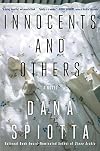
Is it reductionist to say Spiotta’s work is a response to so much media being readily available to creative types for the first time in history? Think of the role of internet in Eat the Document. Yeah, that’s reductionist. Innocents and Others is a book about friendships, and how we build ourselves with images we’ve consumed. There is a lot here about female beauty standards that we’ve read before but not with such delicacy. I’m a cis hetero male so I’ll let others comment more show more about that. What I’m not hearing people say is that this is a novel about haves and have-nots. There is a spectrum of desire and fulfillment in this book. It was wonderful. I didn’t get it at first. Another caveat is that this book is so packed with film buff minutiae that it might lack context to readers that are not film buffs. Luckily, we live in an age when so much media readily at our... If you’re lucky enough to be one of the haves. Or perhaps, like Dylan, you threw it all away. show less
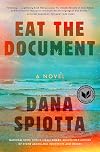
This National Book Award finalist from 2006 largely lives up to its praise. Every paragraph is a small wonder of astute observation expressed in seemingly effortless perfect prose, and the characters are fascinating and well drawn. Much of it is set in Seattle in the late 1990s, and as a resident of Seattle at that time, I can attest that it’s spot on, and it wasn’t hard to identify the named and unnamed Capital Hill landmarks, some of whose names were changed in amusing ways. (The show more book’s “Shrink Wrap” music store is obviously Cellophane Square, while the 15th Avenue Mall’s Urban Outfitters store becomes “Suburban Guerilla.”) As I read on, though, the book’s underlying tone of sadness became stronger and stronger, and I’m sorry to say it never abated. If you’re made of strong stuff, this uncompromising quality may strike you as the only honest way of developing the book’s plot and themes, and I’ll admit that my wish for a happier resolution is decidedly naïve and uncool. Still, I can’t help feeling that at the end, the book’s incredible character-building--the quality that was its greatest strength in the early chapters--took a back seat to its message about what’s happened to society in general. And at this point, in 2022, I think we’ve all seen enough to have absorbed that message.
Speaking of the SF writer Robert Heinlein’s penchant for upfront preachiness in his later works, Heinlein’s contemporary Theodore Sturgeon accused him of having “sold his birthright for a pot of message.” (See note.) Maybe it’s never a good thing when a book shunts its characters aside to make a Statement. And while here it’s done both subtilely and, I think, accurately, I was left with the feeling that I had been duped into thinking that the book was going to be about what happened to the sad, damaged characters I had grown to care about so much. Instead, their story fizzled, and the book ends not with a bang, but with a whimper, taking the same path, as the writer may be trying to say, as did the promise of the idealistic 1960s.
(Note) The wordplay is on the story of Jacob and Esau in the King James Bible; it’s a long story, but the KJB tells us that Esau “sold his birthright for a mess of pottage.” show less
Speaking of the SF writer Robert Heinlein’s penchant for upfront preachiness in his later works, Heinlein’s contemporary Theodore Sturgeon accused him of having “sold his birthright for a pot of message.” (See note.) Maybe it’s never a good thing when a book shunts its characters aside to make a Statement. And while here it’s done both subtilely and, I think, accurately, I was left with the feeling that I had been duped into thinking that the book was going to be about what happened to the sad, damaged characters I had grown to care about so much. Instead, their story fizzled, and the book ends not with a bang, but with a whimper, taking the same path, as the writer may be trying to say, as did the promise of the idealistic 1960s.
(Note) The wordplay is on the story of Jacob and Esau in the King James Bible; it’s a long story, but the KJB tells us that Esau “sold his birthright for a mess of pottage.” show less
Lists
Awards


You May Also Like


Associated Authors
Statistics
- Works
- 6
- Also by
- 2
- Members
- 1,728
- Popularity
- #14,879
- Rating
- 3.6
- Reviews
- 65
- ISBNs
- 65
- Languages
- 6
- Favorited
- 4
