
Lydia Millet
Author of A Children's Bible
About the Author
Lydia Millet is the author of Omnivores and George Bush, Dark Prince of Love. She lives in Tucson, Arizona and New York City. (Bowker Author Biography)
Image credit: Photo by Kieran Suckling
Series
Works by Lydia Millet
Hiroyuki Hamada 1 copy
Associated Works
My Mother She Killed Me, My Father He Ate Me: Forty New Fairy Tales (2010) — Contributor — 1,110 copies, 27 reviews
Mirror, Mirror on the Wall: Women Writers Explore Their Favorite Fairy Tales (1998) — Contributor — 313 copies, 4 reviews
The Friend Who Got Away: Twenty Women's True Life Tales of Friendships that Blew Up, Burned Out or Faded Away (2005) — Contributor — 213 copies, 9 reviews
I'm With the Bears: Short Stories from a Damaged Planet (2011) — Contributor — 107 copies, 4 reviews
Significant Objects: 100 Extraordinary Stories about Ordinary Things (2012) — Contributor — 65 copies, 1 review
Fantastic Women: 18 Tales of the Surreal and the Sublime from Tin House (2011) — Contributor — 61 copies, 2 reviews
Money Changes Everything: Twenty-Two Writers Tackle the Last Taboo with Tales of Sudden Windfalls, Staggering Debts, and (2007) — Contributor — 51 copies, 1 review
Better Than Fiction 2: True Adventures from 30 Great Fiction Writers (2015) — Contributor — 34 copies
Tagged
Common Knowledge
- Canonical name
- Millet, Lydia
- Birthdate
- 1968
- Gender
- female
- Education
- University of Arizona
- Occupations
- editor
- Nationality
- USA
- Birthplace
- Boston, Massachusetts, USA
- Places of residence
- Los Angeles, California, USA
Tucson, Arizona, USA
Montréal, Québec, Canada - Associated Place (for map)
- USA
Members
Reviews
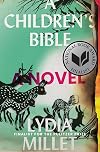
I can't think of how a book could be more 2020 than this. Just finished last night and I am absolutely gutted by this book.
I got it from the library because I've enjoyed two of her other books but didn't know anything about it going in. That might have been a good thing, but it was also a little disorienting because the book involves climate change disaster, a mini-pandemic, and armed militia groups...like Millet was tapped into many people's exact fears at this exact moment.
I can't really show more explain why this affected me so much. The writing is simple and almost dreamlike, and the whole story has the quality of a fable, with many layers of allusion. It is a perfectly crafted horror story for our time. show less
I got it from the library because I've enjoyed two of her other books but didn't know anything about it going in. That might have been a good thing, but it was also a little disorienting because the book involves climate change disaster, a mini-pandemic, and armed militia groups...like Millet was tapped into many people's exact fears at this exact moment.
I can't really show more explain why this affected me so much. The writing is simple and almost dreamlike, and the whole story has the quality of a fable, with many layers of allusion. It is a perfectly crafted horror story for our time. show less
In the past few months I have often half-kidded about the glut of signs of the biblical apocalypse (we laugh so we do not cry.) Lydia Millet has stopped kidding and has created a proper narrative around this. There is likely no better person to do this than the brilliant Millet who is a gifted writer, a working climate scientist, and a woman with a knowledge of scripture, a sense of humor, and a core of decency.
This is a short book that took me longer to read than most twice its length. It show more is a hard read - most of the time when I say that I am referring to emotional toll, but in this case I am using it in the intellectual sense (though I suppose it could be read as just a cool story and someone could ignore that it - like all bible stories - is a parable.) This is a book that sent me skittering back to check biblical passages and to read swaths of Plato's The Last Days of Socrates (mostly the Crito) and a bit of Arne Naess.
I have been reeling lately what with the world in tatters and our country being run by the Monkey King. Add to that the fact that for the first time in my life I have what appears to be a serious back issue so I have been in really serious though lessening pain and you come up with a me doing a lot of feather-light reading. It was great, and it was fun, but I was really ready for something more meaty but not dry and textbook-like, something challenging because it takes brain-power and not just because it obscure and needlessly complicated, and this was perfect. Smart, accessible and important. Seriously people, we are headed for the iceberg - its unavoidable but maybe if we get it together and start behaving like we are not waiting for the rapture it won't take us all down. show less
This is a short book that took me longer to read than most twice its length. It show more is a hard read - most of the time when I say that I am referring to emotional toll, but in this case I am using it in the intellectual sense (though I suppose it could be read as just a cool story and someone could ignore that it - like all bible stories - is a parable.) This is a book that sent me skittering back to check biblical passages and to read swaths of Plato's The Last Days of Socrates (mostly the Crito) and a bit of Arne Naess.
I have been reeling lately what with the world in tatters and our country being run by the Monkey King. Add to that the fact that for the first time in my life I have what appears to be a serious back issue so I have been in really serious though lessening pain and you come up with a me doing a lot of feather-light reading. It was great, and it was fun, but I was really ready for something more meaty but not dry and textbook-like, something challenging because it takes brain-power and not just because it obscure and needlessly complicated, and this was perfect. Smart, accessible and important. Seriously people, we are headed for the iceberg - its unavoidable but maybe if we get it together and start behaving like we are not waiting for the rapture it won't take us all down. show less
New Generation Steps Up
While the adults of the world party on, many youth look on aghast a what these players—industrialists and financial manipulators and hedonists—are ignoring, until what they ignore overwhelm them, and the children step up put things as right as possible, hopefully. In other words, our willful degrading of our environment will catch up with us and render pretty much all we satiate ourselves with useless and worthless. But even in Millet’s sympathetic allegorical show more tale about the environment and the next generation, most of these youth aren’t sufficiently meek enough to offer sustainable hope, those that are being like the little Jacks and Shels of the world. This last, though, gets ahead of the tale.
A group of well-off families pitch in and rent a historical house on the coast for the summer. The parents spend their days drinking and laying about, leaving their children to fend for themselves. As Evie, our young adolescent narrator, tells us, the children, young teens like herself and younger like her brother Jack, are not only content to fend for themselves, but are thoroughly embarrassed by their parents to the point where they don’t wish their friends to know to whom they belong. In the first part of this short novel, Evie observes and comments on the often outrageous behavior of the adults and how the children amuse themselves in the nature that surrounds them.
In the second part, Millet injects a huge dose of energy in the form of a category 4 hurricane that alone would cripple any countryside, but this is only one of a continuing onslaught of rain and flooding. The parents react by stepping up their drinking and generally beating their chests in woe. The children retreat to a treehouse to care for themselves. Skillful hikers and an estate caretaker show up to help them. Then with society beyond the mansion in disarray, a local armed, ragtag militia invade, intent on stealing their food and anything else of value. It’s the children who seek a solution through peaceful negotiation to save themselves and their parents. In the end, though, something of a divine intervention occurs directly from the sky above, allowing children and parents to leave and find refuge in the palatial home of one set of parents.
In this third part, the parents revert to their old ways, until the children finally assert themselves. They set up schedules to accomplish lifesaving tasks and generally assume control and management of day to day affairs. With this, the parents become unless and literally fade away, with the children inheriting the world. But will it be a better one. A reader can hope so, but the final scene between Evie and her small, gentle, pint-sized naturalist brother leaves us wondering.
As for the connection to the Bible, little Jack, a blank slate regarding religion, finds a Bible picture book. He works at deciphering the meaning of God, nature, and belief, while he, the other children, and the adults in one form or another act out certain parts of the book, some as obvious as Noah’s Ark, and others more obscure.
Often darkly humorous, particularly in the exchanges between the children, cautionary about the environment without being bombastic, and well paced, it’s a small novel with big ideas that more readers should discover. show less
While the adults of the world party on, many youth look on aghast a what these players—industrialists and financial manipulators and hedonists—are ignoring, until what they ignore overwhelm them, and the children step up put things as right as possible, hopefully. In other words, our willful degrading of our environment will catch up with us and render pretty much all we satiate ourselves with useless and worthless. But even in Millet’s sympathetic allegorical show more tale about the environment and the next generation, most of these youth aren’t sufficiently meek enough to offer sustainable hope, those that are being like the little Jacks and Shels of the world. This last, though, gets ahead of the tale.
A group of well-off families pitch in and rent a historical house on the coast for the summer. The parents spend their days drinking and laying about, leaving their children to fend for themselves. As Evie, our young adolescent narrator, tells us, the children, young teens like herself and younger like her brother Jack, are not only content to fend for themselves, but are thoroughly embarrassed by their parents to the point where they don’t wish their friends to know to whom they belong. In the first part of this short novel, Evie observes and comments on the often outrageous behavior of the adults and how the children amuse themselves in the nature that surrounds them.
In the second part, Millet injects a huge dose of energy in the form of a category 4 hurricane that alone would cripple any countryside, but this is only one of a continuing onslaught of rain and flooding. The parents react by stepping up their drinking and generally beating their chests in woe. The children retreat to a treehouse to care for themselves. Skillful hikers and an estate caretaker show up to help them. Then with society beyond the mansion in disarray, a local armed, ragtag militia invade, intent on stealing their food and anything else of value. It’s the children who seek a solution through peaceful negotiation to save themselves and their parents. In the end, though, something of a divine intervention occurs directly from the sky above, allowing children and parents to leave and find refuge in the palatial home of one set of parents.
In this third part, the parents revert to their old ways, until the children finally assert themselves. They set up schedules to accomplish lifesaving tasks and generally assume control and management of day to day affairs. With this, the parents become unless and literally fade away, with the children inheriting the world. But will it be a better one. A reader can hope so, but the final scene between Evie and her small, gentle, pint-sized naturalist brother leaves us wondering.
As for the connection to the Bible, little Jack, a blank slate regarding religion, finds a Bible picture book. He works at deciphering the meaning of God, nature, and belief, while he, the other children, and the adults in one form or another act out certain parts of the book, some as obvious as Noah’s Ark, and others more obscure.
Often darkly humorous, particularly in the exchanges between the children, cautionary about the environment without being bombastic, and well paced, it’s a small novel with big ideas that more readers should discover. show less

what an excellent screed against the way the adults of this world are relying on the children to save everyone, to make the decisions, to do the hard work of making the world livable and survivable. how we turn a blind eye, but they can't and so they don't. how we love our kids - the ones specifically ours - but how that doesn't manifest in actually taking care of them, or in loving others or the world they need to be able to continue on.
the writing is great, the voice is tough, the biblical show more allusions powerful. so so good.
(and it's read by one of my favorite narrators.) show less
the writing is great, the voice is tough, the biblical show more allusions powerful. so so good.
(and it's read by one of my favorite narrators.) show less
Lists
Awards


You May Also Like


Associated Authors
Statistics
- Works
- 27
- Also by
- 15
- Members
- 4,436
- Popularity
- #5,647
- Rating
- 3.6
- Reviews
- 270
- ISBNs
- 164
- Languages
- 8
- Favorited
- 10

