
Chris Adrian
Author of The Children's Hospital
About the Author
Works by Chris Adrian
Associated Works
My Mother She Killed Me, My Father He Ate Me: Forty New Fairy Tales (2010) — Contributor — 1,111 copies, 27 reviews
McSweeney's 14: McSweeney's at War for the Foreseeable Future and He's Never Been So Scared (2004) — Contributor — 412 copies, 5 reviews
The Worst Years of Your Life: Stories for the Geeked-Out, Angst-Ridden, Lust-Addled, and Deeply Misunderstood Adolescent in All of Us (2007) — Contributor — 94 copies, 1 review
Significant Objects: 100 Extraordinary Stories about Ordinary Things (2012) — Contributor — 64 copies, 1 review
Tagged
Common Knowledge
- Canonical name
- Adrian, Chris
- Birthdate
- 1970-11-07
- Gender
- male
- Education
- Harvard Divinity School
University of Florida ( [1993])
Eastern Virginia Medical School ( [2001])
Iowa Writers' Workshop - Occupations
- pediatrician
novelist
short story writer - Awards and honors
- Guggenheim Fellowship
- Nationality
- USA
- Birthplace
- Washington, D.C., USA
- Places of residence
- Boston, Massachusetts, USA
San Francisco, California, USA - Associated Place (for map)
- USA
Members
Reviews
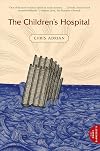
I hardly know where to begin.
Armageddon, Hell, Utopia, Hell and all at much too great a length. This book could have been 300 pages shorter and that would have improved it in my opinion. Perhaps saved it.
Flashbacks to a hellish childhood, are found throughout. ( Are you finding a theme?) A family that was so much more than dysfunctional. Then before you have managed to digest the pretentious language used in the flashback, back to the post apocalyptic floating wretchedness again. Oops! show more Unless you happened to be trapped in the two hundred or so pages of utopia/purgatory.
Perhaps it is meant to convey a lofty and philosophical view of a post apocalyptic world. The frailties of humanity, showcasing the best and the worst of us. To me it became redundant and arrogant in the extreme.
I was intrigued in the beginning. The concept was fascinating. I grew to loathe most of the victims, because victims they all were, make no mistake.
Victims of life and of death. I was left feeling that the tone of the book was arrogant, and hateful. The author felt misogynist, at best or held an intense animosity to humanity itself at worst.
Why did I keep reading? After the first one hundred and fifty pages or so, I kept hoping for redemption of some sort. I was disappointed. show less
Armageddon, Hell, Utopia, Hell and all at much too great a length. This book could have been 300 pages shorter and that would have improved it in my opinion. Perhaps saved it.
Flashbacks to a hellish childhood, are found throughout. ( Are you finding a theme?) A family that was so much more than dysfunctional. Then before you have managed to digest the pretentious language used in the flashback, back to the post apocalyptic floating wretchedness again. Oops! show more Unless you happened to be trapped in the two hundred or so pages of utopia/purgatory.
Perhaps it is meant to convey a lofty and philosophical view of a post apocalyptic world. The frailties of humanity, showcasing the best and the worst of us. To me it became redundant and arrogant in the extreme.
I was intrigued in the beginning. The concept was fascinating. I grew to loathe most of the victims, because victims they all were, make no mistake.
Victims of life and of death. I was left feeling that the tone of the book was arrogant, and hateful. The author felt misogynist, at best or held an intense animosity to humanity itself at worst.
Why did I keep reading? After the first one hundred and fifty pages or so, I kept hoping for redemption of some sort. I was disappointed. show less
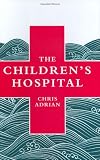
The novel begins with third-year medical student Jemma Claflin attending a birth in the hospital where she works, and ends with her giving birth herself on the rooftop of the same hospital. In between, the world is submerged under seven miles of water and the hospital becomes an ark, the thousand or so sick children, hospital staff and visiting parents the only humans left on earth. That the hospital can float and support the remaining population for the months to come is due to the planning show more of the preserving angel, one of four angels that are required to oversee an apocalypse. The book itself is the work of the recording angel, who is witnessing all of Jemma's life to serve as scripture for the generations to follow.
That's an awful lot to swallow, but this amazing book stays true to the world it builds. The story of Jemma's life is so captivating (both before and after the end of the world as we know it), the reader is easily able to suspend disbelief. The Children's Hospital is just a terrific work of the imagination, full of sadness, grief and beauty. show less
That's an awful lot to swallow, but this amazing book stays true to the world it builds. The story of Jemma's life is so captivating (both before and after the end of the world as we know it), the reader is easily able to suspend disbelief. The Children's Hospital is just a terrific work of the imagination, full of sadness, grief and beauty. show less
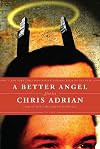
Chris Adrian’s stories, collected in A Better Angel, play out in an abnormal and frightening territory. Ghosts and psychopaths and demons haunt every page, interacting with twisted and desperate characters. With each new tale, Adrian focuses on a special brand of suffering or sadness, like a pathologist fleshing out wounds in a corpse.
“High Speeds,” the first story in the collection, couples a sarcastic and bitter adolescent malcontent with a deranged substitute teacher. Drawn to the show more darkness in one another, they dare into increasingly dangerous high speed car rides. The second story, “The Sum of Our Parts,” is told by the disembodied spirit of a suicidal woman awaiting a liver transplant. As she eavesdrops and spies on the hospital staff, she longs for them to let her body surrender to death. In a final ghostly embrace with an unhappy lab technician, she glimpses the human connection previously missing in her life. “Stab” chronicles the high jinks of a young girl, budding into a psychopath, who befriends the mute, surviving twin from a conjoined pair. She eventually turns her knife on her new found friend, bored with killing neighborhood animals.
Adrian’s shockingly brutal stories are not for the faint of heart. On the other hand, there is a strange hope that pervades the collection. Not every character finds relief from their suffering, but Adrian infuses each lost soul with a rugged and gripping beauty in the way they face it.
In addition to a sharp and creepy imagination, Adrian is blessed with a singular gift for language. Whether writing in first person narrative, as in “High Speeds,” or in omniscient point of view, like “The Sum of Our Parts,” he maintains a solid narrative and always uses vivid and colorful prose.
Not all of the stories reach the same height as the first three, and some are unusual enough to inspire serious head scratching. But even the weakest story is thought provoking.
Bottom Line: Frightening and sad stories worth the reading if you have the stomach for them. You won’t put the book down thinking that this author is recycling already over-used ideas. show less
“High Speeds,” the first story in the collection, couples a sarcastic and bitter adolescent malcontent with a deranged substitute teacher. Drawn to the show more darkness in one another, they dare into increasingly dangerous high speed car rides. The second story, “The Sum of Our Parts,” is told by the disembodied spirit of a suicidal woman awaiting a liver transplant. As she eavesdrops and spies on the hospital staff, she longs for them to let her body surrender to death. In a final ghostly embrace with an unhappy lab technician, she glimpses the human connection previously missing in her life. “Stab” chronicles the high jinks of a young girl, budding into a psychopath, who befriends the mute, surviving twin from a conjoined pair. She eventually turns her knife on her new found friend, bored with killing neighborhood animals.
Adrian’s shockingly brutal stories are not for the faint of heart. On the other hand, there is a strange hope that pervades the collection. Not every character finds relief from their suffering, but Adrian infuses each lost soul with a rugged and gripping beauty in the way they face it.
In addition to a sharp and creepy imagination, Adrian is blessed with a singular gift for language. Whether writing in first person narrative, as in “High Speeds,” or in omniscient point of view, like “The Sum of Our Parts,” he maintains a solid narrative and always uses vivid and colorful prose.
Not all of the stories reach the same height as the first three, and some are unusual enough to inspire serious head scratching. But even the weakest story is thought provoking.
Bottom Line: Frightening and sad stories worth the reading if you have the stomach for them. You won’t put the book down thinking that this author is recycling already over-used ideas. show less
 This review was written for LibraryThing Early Reviewers.
This book is a perfect example for why I don't care for short stories: I read the first story, was overwhelmed with excitement at its dark, disturbing sadness, got extremely excited, and read the entire bunch in one sitting. One of two things usually happens to me when I read so many short stories in one go: either I become annoyed because they were good and I wanted more or I am annoyed because they were bad and would have been better if they were novels. Whichever the reaction, I'm also show more usually glutted & grumpy from consuming so many plots in a short period of time. Basically, any low short story score is probably my inability to read properly rather than the fault of the book.
I can't remember which reaction tempered my score of this book. In retrospect, I have thought of it often, and not with negativity. Adrian is extremely dark, and I remember being unable to decide if it was gratuitous or not. He's an author to admire rather than love--I was curious about reading more of him even before he made the infamous "20 under 40" New Yorker list. He's certainly brave, and unconventional, and disturbing. All of this makes it hard to tell if he's actually good or not. show less
I can't remember which reaction tempered my score of this book. In retrospect, I have thought of it often, and not with negativity. Adrian is extremely dark, and I remember being unable to decide if it was gratuitous or not. He's an author to admire rather than love--I was curious about reading more of him even before he made the infamous "20 under 40" New Yorker list. He's certainly brave, and unconventional, and disturbing. All of this makes it hard to tell if he's actually good or not. show less
Lists
Faerie Mythology (1)
Allie's Wishlist (1)
Awards


You May Also Like


Associated Authors
Statistics
- Works
- 14
- Also by
- 16
- Members
- 1,865
- Popularity
- #13,797
- Rating
- 3.6
- Reviews
- 92
- ISBNs
- 43
- Languages
- 4
- Favorited
- 7
