
Kevin Brockmeier
Author of The Brief History of the Dead
About the Author
Kevin Brockmeier won an O. Henry Award in 2001 for "These Hands". He has published stories in the Georgia Review. The Carolina Quarterly, The Chicago Tribune (as a Nelson Algren award recipient) & Writing on the Edge (as an Italo Calvino Short Fiction Award Winner). He is a 1999-2000 recipient of a show more James Michener-Paul Engle Fellowship. Kevin lives in Little Rock, Arkansas where he teaches Creative Writing. (Bowker Author Biography) show less
Image credit: © Benjamin Krain
Works by Kevin Brockmeier
Unstuck #3: New Literature of the Futuristic, the Fantastic, the Surreal, and the Strange (2014) 5 copies
The Year of Silence 2 copies
Apples [short story] 1 copy
These Hands 1 copy
Andrea is Changing Her Name 1 copy
ההיסטוריה הקצרה של המתים 1 copy
Associated Works
My Mother She Killed Me, My Father He Ate Me: Forty New Fairy Tales (2010) — Contributor — 1,110 copies, 27 reviews
The Year's Best Fantasy and Horror: Seventeenth Annual Collection (2004) — Contributor — 241 copies, 9 reviews
The Year's Best Fantasy and Horror: Sixteenth Annual Collection (2003) — Contributor — 240 copies, 2 reviews
Significant Objects: 100 Extraordinary Stories about Ordinary Things (2012) — Contributor — 65 copies, 1 review
Selected Shorts: A Touch of Magic (Selected Shorts: A Celebration of the Short Story) (2009) — Contributor — 25 copies, 4 reviews
Astoria to Zion: Twenty-Six Stories of Risk and Abandon from Ecotone's First Decade (2014) — Contributor — 15 copies, 1 review
Tagged
Common Knowledge
- Birthdate
- 1972-12-06
- Gender
- male
- Education
- Parkview Arts and Science Magnet High School (1991)
Southwest Missouri State University (1995)
Iowa's Writers Workshop - Occupations
- novelist
writer
author - Awards and honors
- Granta's Best Of Young American Novelists (2007)
- Agent
- Jennifer Carlson
- Nationality
- USA
- Birthplace
- Little Rock, Arkansas, USA
- Places of residence
- Little Rock, Arkansas, USA
- Associated Place (for map)
- Little Rock, Arkansas, USA
Members
Discussions
The Brief History of the Dead (SPOILER ALERT) in Someone explain it to me... (January 2008)
Reviews
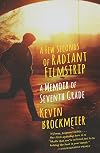
I've been curious about this book for a while -- a memoir written in third person! -- and I finally had the space to read it this past week. I found it very sad, often beautiful, and evocative in its precise details of the 1980s and being in 7th grade, which is such a transition year for a lot of people. I especially love this fantastical middle section, which is written with a great amount of creativity and compassion. The end of the book left me feeling hopeful, and appreciative of the show more strength and honesty of Brockmeier's writing, and also awestruck that any of us survived 7th grade.
I listened to the audiobook, which is excellent.
I think this book would be good for someone openminded to the memoir form, and especially great for anyone who grew up in the 1980s. show less
I listened to the audiobook, which is excellent.
I think this book would be good for someone openminded to the memoir form, and especially great for anyone who grew up in the 1980s. show less
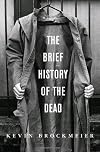
Rating: 3.9* of five
The Publisher Says: From Kevin Brockmeier, one of this generation's most inventive young writers, comes a striking new novel about death, life, and the mysterious place in between. The City is inhabited by those who have departed Earth but are still remembered by the living. They will reside in this afterlife until they are completely forgotten.
But the City is shrinking, and the residents clearing out. Some of the holdouts, like Luka Sims, who produces the City’s only show more newspaper, are wondering what exactly is going on. Others, like Coleman Kinzler, believe it is the beginning of the end. Meanwhile, Laura Byrd is trapped in an Antarctic research station, her supplies are running low, her radio finds only static, and the power is failing. With little choice, Laura sets out across the ice to look for help, but time is running out.
Kevin Brockmeier alternates these two storylines to create a lyrical and haunting story about love, loss and the power of memory.
My Review: I am simply appalled that my cynical shell has been breached by a man who has an MFA from the Iowa Writer's Workshop, and who has been published in McSweeney's, Crazyhorse, and suchlike Writerly Venues.
Appalled.
But then there's this:
That, laddies and gentlewomen, needed saying and needed Brockmeier to say it. It's just that true, and just that beautifully crafted.
I hate that.
I make merciless fun of, and throw lots of rotten eggs at, the Writerly Writers like Eggers and Franzen and Foster Wallace for their pretty sentences going nowhere new or even all that interesting. Their self-congratulatory cadres, nay myrmidons, attack anyone who dares say, "yeah, so?" of the myrmidons' ikons. Why can't Brockmeier have inspired such a slavish, culty following, so that I may point and say, "but him! He's a good one! He's a Writerly Writer with something *interesting* to say!"
Life is unfair.
But anyway. The story is a good one, of dislocation in time and space with all that implies for identity...how do we survive as ourselves even knowing that we aren't in any space ever known to us?...so we're already of to a pleasing start. The Writerly Writing is an enhancement of the basic story, because the sentences being self-consciously pretty and profound make a point about the afterlife. It's a well-used technique in this instance, and doesn't feel show-offy as normally it could or even would.
The ending. Well, now, all things have flaws. The important question is, is it a raku pottery crazing-type flaw, or an inclusion-in-the-diamond-type flaw? This will greatly depend on one's point of view of the afterlife. I'm on the fence with this book's ending...and I come down on the raku-pottery side only because I like the rest of the book so much. A different mood, and this would be a three-star review with a sad, impatient growl about the sentimentality of the ending.
Lucky Brockmeier. I had Thin Mints before I wrote this review. show less
The Publisher Says: From Kevin Brockmeier, one of this generation's most inventive young writers, comes a striking new novel about death, life, and the mysterious place in between. The City is inhabited by those who have departed Earth but are still remembered by the living. They will reside in this afterlife until they are completely forgotten.
But the City is shrinking, and the residents clearing out. Some of the holdouts, like Luka Sims, who produces the City’s only show more newspaper, are wondering what exactly is going on. Others, like Coleman Kinzler, believe it is the beginning of the end. Meanwhile, Laura Byrd is trapped in an Antarctic research station, her supplies are running low, her radio finds only static, and the power is failing. With little choice, Laura sets out across the ice to look for help, but time is running out.
Kevin Brockmeier alternates these two storylines to create a lyrical and haunting story about love, loss and the power of memory.
My Review: I am simply appalled that my cynical shell has been breached by a man who has an MFA from the Iowa Writer's Workshop, and who has been published in McSweeney's, Crazyhorse, and suchlike Writerly Venues.
Appalled.
But then there's this:
Anyone who has ever experienced love knows that you can have too much or too little. You can have love that parches, love that defeats. You can have love measured out in the wrong proportions. It's like your sunlight and water - the wrong kind of love is just as likely to stifle hope as it is to nourish it.
That, laddies and gentlewomen, needed saying and needed Brockmeier to say it. It's just that true, and just that beautifully crafted.
I hate that.
I make merciless fun of, and throw lots of rotten eggs at, the Writerly Writers like Eggers and Franzen and Foster Wallace for their pretty sentences going nowhere new or even all that interesting. Their self-congratulatory cadres, nay myrmidons, attack anyone who dares say, "yeah, so?" of the myrmidons' ikons. Why can't Brockmeier have inspired such a slavish, culty following, so that I may point and say, "but him! He's a good one! He's a Writerly Writer with something *interesting* to say!"
Life is unfair.
But anyway. The story is a good one, of dislocation in time and space with all that implies for identity...how do we survive as ourselves even knowing that we aren't in any space ever known to us?...so we're already of to a pleasing start. The Writerly Writing is an enhancement of the basic story, because the sentences being self-consciously pretty and profound make a point about the afterlife. It's a well-used technique in this instance, and doesn't feel show-offy as normally it could or even would.
The ending. Well, now, all things have flaws. The important question is, is it a raku pottery crazing-type flaw, or an inclusion-in-the-diamond-type flaw? This will greatly depend on one's point of view of the afterlife. I'm on the fence with this book's ending...and I come down on the raku-pottery side only because I like the rest of the book so much. A different mood, and this would be a three-star review with a sad, impatient growl about the sentimentality of the ending.
Lucky Brockmeier. I had Thin Mints before I wrote this review. show less
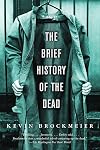
Fascinating tale interwoven between people living in a city of the afterlife and what increasingly becomes clear is the last living human, struggling to survive in the Antarctic.
Really skillfully woven together. Suspenseful. And even though you can sort of guess what happens next in one story, there's no answer to the other.
What happens to the dead in the afterlife?
Also a delightful skewer of marketing and big corporations. Laura knows nothing about the Antarctic, had no desire to go, but show more Coca Cola wants to explore it as a new source of water for their products. show less
Really skillfully woven together. Suspenseful. And even though you can sort of guess what happens next in one story, there's no answer to the other.
What happens to the dead in the afterlife?
Also a delightful skewer of marketing and big corporations. Laura knows nothing about the Antarctic, had no desire to go, but show more Coca Cola wants to explore it as a new source of water for their products. show less
A beautifully written, beautifully conceived little fairy tale. I almost wish it could have gone on forever, especially as I feel that the ending is the weakest part of the book.[return][return]Half of the novel is based on a gorgeous, appealing little wheeze. The afterlife (at least, the immediate afterlife) is neither Heaven nor Hell, but an ordinary City of day jobs and coffeeshops, minor inconveniences and random encounters, in which the Dead live as comfortably as they choose, as long show more as someone in the living world remembers them. Once the last living person who remembers them dies (and makes the transition to the City), they vanish, "softly and suddenly away" as Lewis Carroll would have said (and, indeed, "never be met with again.") No one knows where they go. [return][return]So, the City is a waiting room. It's a Purgatory, of sorts, but a very gentle and self-directed one. It's a place of choices, and --perhaps -- second chances: you can choose to be exactly the same obnoxious, work- and status-driven jerk you were in life. Or, you can choose to live the life you wished you'd been able to live when you were alive -- say, open up an greasy spoon diner, where you greet all of your customers by name, and serve up wonderful all-day breakfasts. If you enjoyed your life, you can carry on doing exactly what you used to do -- perhaps with the benefit of new friends, new lovers, or a new, revitalized relationship with someone you'd become stale with. All up to you. [return][return]As you have probably guessed, I unreservedly loved the half of the book set in the City. I loved the (seemingly) random focus on a different residents of the City in each chapter, stories that hinted at their connections to the world of the Living, hinted at the familiar yet slightly dystopian future of its backstory, and made some nicely timed revelations about the drama unfolding for the Living and the Dead. I loved the fact that Brockmeier kept the mechanics vague, and even a little illogical: there is money (there are a couple of beggars, and a crazy street preacher has some coins thrown at him by a woman who just wants him to leave her alone), but no sense that it's needed to get food at the diner, or paper for Luca Sims' homemade news sheet. And where does the food that's cooked and eaten, and the coffee that drunk in great quantities, and the paper come from? Dunno, don't really care. The City, for me, is a metaphor, in the very best sense, about love and the persistence of memory. Things that, you could argue, are pretty illogical themselves ... [return][return]My recollection, from my first reading of the novel about 10 years ago, was that I wasn't as blown away by the other half of the book -- the steadily unfolding drama of Laura Byrd, who is struggling to survive in Antarctica just as a particularly virulent virus is ripping across the globe. As I recalled, I understood Laura's story was necessary -- trying for no spoilers here (although I think you can guess what's what), but the deaths of so many people in the wider world, and Laura's dogged survival, has a great impact on the City -- provides what is, otherwise, just a nice wheeze with drama, mystery, something at stake.[return][return]So here's what's really interesting for me, on this rereading: reading it NOW (November 2020 -- hello from the Apocalypse, and Lockdown Hell, everyone ... :-), the chapters with Laura were, for the most part, brilliant. I don't know where Mr. Brockmeier got his crystal ball, but can I order one, please? Some of the offhand remarks about "the Blinks" (the terrible, highly contagious and almost instantly fatal disease) are painfully, well, funny, in a dark, black, bleak sort of way. From a diary entry, by one of Laura's companions ...[return][return]There's every single indication that the virus has taken a global toll. What's the word I'm looking for? Not an epidemic, but a --? Can't remember ...[return][return]Hmm, I think I can help you there (Later, down the page, he remembers. Pandemic. Yeah, I don't think we're going to forget that one for a while ...) And another one, from a teenager's blog the survivors discover, on an internet that it quietly folding in on itself, and vanishing (kind of like the City ...)[return][return]A few of us are still asymptomatic. We're holed up in the high school gym, away from everybody else. If it wasn't for the stupid quarantine, we'd be long gone by now ...[return][return]What breaks my heart -- and is SO DARN TRUE -- about that is how the high school jock throws around words like "asymptomatic" and "quarantine" as if they're the most natural things in the world. Brockmeier, in one line, captures how the virus even changes our vocabulary ... [return][return]Sadly, I am still not blown away by the final couple of chapter which IMHO, become too poetical, too airy-fairy. The real strengths of this fairy tale is how grounded it is, both in the ordinary, everyday world of the City, and in the snow and terrible loneliness of the Antarctic. BUT .. this is still a keeper, and highly recommended ... show less
Lists
Awards


You May Also Like


Associated Authors
Statistics
- Works
- 29
- Also by
- 20
- Members
- 4,512
- Popularity
- #5,559
- Rating
- 3.7
- Reviews
- 252
- ISBNs
- 71
- Languages
- 7
- Favorited
- 14