
Yannick Murphy
Author of The Call
About the Author
Works by Yannick Murphy
Associated Works
The New Gothic: A Collection of Contemporary Gothic Fiction (1991) — Contributor — 274 copies, 2 reviews
Tagged
Common Knowledge
- Birthdate
- 1962
- Gender
- female
- Education
- New York University
- Occupations
- novelist
short story writer - Awards and honors
- Whiting Writers' Award (1990)
- Agent
- Judy Heiblum (Sterling Lord Literistic, Inc.)
- Nationality
- USA
- Birthplace
- New York, New York, USA
- Places of residence
- Vermont, USA
New York, New York, USA
California, USA - Map Location
- USA
Members
Reviews
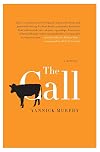
Do you love epistolary novels - stories written in letters, emails? I do and if you do, you will embrace this clever and remarkable book written in the form of a veterinarian's call log. A rambunctiously loving family - the vet, his willful and hilarious writer wife, and their three beautifully drawn children, are the source of the extreme gentle pleasure that The Call arouses for the reader. Cows and horses, goats and sheep are born, get ill or injured, and seem to randomly die or survive, show more only partially due to the skill of the doctor. When the same situation arises in his own family, the writer keeps the story taut as the family falls apart and mends, along with their small farming community. An unexpected arrival brings even more medical dilemmas and a most satisfactory closing. Most highly recommended. show less
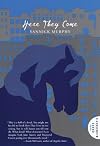
I almost put this down after the first 20 pages; it read like a spoof of an mfa fiction thesis. But I'm very very happy I didn't. So ably written -- we never learn the name of the young girl protagonist but she appears almost in negative as the space around her is filled in: an apartment filled with sacks of garbage, lecherous hot-dog sellers, a majestic police horse whose connection with our narrator highlights the distance between her and horse-loving literary girls before her.
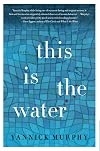
I’ve never read a book written in the second person before. In fact, I had to consult Google to make sure I was right about what I was experiencing! For those of you who don’t know, second person is like third person except the protagonist is referred to as “you” (or another second person pronoun, but in this book, it was “you”). I was amazed at how the author referring to one character as “you” made me empathize with them more. I still felt a disconnect I associate with show more third person narratives, but to a lesser degree. I loved what the author did with the second person perspective. It allowed her to give us a more complete picture of the story, occasionally zooming out from the main character to share other characters’ perspectives or far away events. She sometimes moved to unrelated events, animals in the main character’s yard for instance, in a way that made the story more poignant. Don’t ask me why! That’s one of those tricks that only the best authors know and if I knew, I’d be writing a book right now instead of writing a review.
One trick the author used which I do recognize is to choose metaphors and similes which are completely new but which resonated with me perfectly. I also enjoyed her use of repetition, with a repeated “This is…” sentence structure used throughout the book. Despite the second person perspective, parts of the book seemed very stream-of-consciousness. This isn’t a device which always works for me, but in this case, I felt the author shared the right mix of important and mundane details to express who each character was. The plot felt a bit contrived, relying on too many coincidences and tying up a little too neatly. It also raised some interesting ethical questions though and that, plus the beauty of the author’s writing, will keep me thinking about this delightful, unique story for days to come.
This is the review first published at Doing Dewey. show less
One trick the author used which I do recognize is to choose metaphors and similes which are completely new but which resonated with me perfectly. I also enjoyed her use of repetition, with a repeated “This is…” sentence structure used throughout the book. Despite the second person perspective, parts of the book seemed very stream-of-consciousness. This isn’t a device which always works for me, but in this case, I felt the author shared the right mix of important and mundane details to express who each character was. The plot felt a bit contrived, relying on too many coincidences and tying up a little too neatly. It also raised some interesting ethical questions though and that, plus the beauty of the author’s writing, will keep me thinking about this delightful, unique story for days to come.
This is the review first published at Doing Dewey. show less
I LOVED [The Call] but when I went to the book site and peeked at other reviews I could see as I suspected would be the case, that either you like the peculiar format or you loathe it and find it repetitive, boring, grating etcetera. A large animal vet with a wife and three kids, living somewhere quite rural in Vermont, time unspecified, but around now. First time he takes his 12 yr. old boy hunting another hunter, out for grouse, hits the boy who falls off the deer platform and hits his show more head, falls into a coma. This happens right away. The person who did it does not come forward. The doctors are very optimistic. And, as is usual, when the bad thing happens immediately, things can only get better. So don't let that stop you. What may put you off, is the format. Traveling vets keep a book in which they normally write three items: The Call, the Action they take and the Result - what becomes of the animal - that is the basic format of the book except, it includes many other categories such as:
What the Wife Said. What We Had For Dinner. What I Wished. What I Thought On the Drive Home. What the Wife was Reading. And so on. The effect at first is distancing, but once I fell into the rhythm of it, it was as if I had fallen into this man's head, going with him on his rounds. There is something guileless about him, and a bit immature, but also very tough and oh so so familiar to me, as I live in rural Vermont with a not entirely dissimilar man who would always rather be doing something outside than almost anything else, except maybe reading a good book before falling asleep and hanging about with his family and pets. The man senses the mysteries, that there are connections and intertwinings between man and animal, man and nature, not to be interfered with, and the slight distance that the format puts between the reader and the protagonist, I felt, allowed for more of that strangeness to permeate and fill the silences in the book.
Here are David's thoughts after he has been lost when out hunting:
What I did: I walked downhill, through woods I swore I had never walked through before. My feet on thick, carpeting needles of pine I could not remember having felt before beneath my boots. I listened for the sounds on the road, for the cars that might be driving up or down to steer my way. there were no sounds, just the sound of the wind in the trees, creaking tops..... I walked on..... Finally I saw the bright lights.... It turned out to be my house. I felt stupid to see it. It was so large, the light in the kitchen window so bright. Inside I went to the bathroom. I looked at myself in the mirror. I should have known I was never lost at all but just letting myself enjoy the thrill of fear, a thing that seemed to be alive.
This is very clearly a book that either you love or hate, so be advised. show less
What the Wife Said. What We Had For Dinner. What I Wished. What I Thought On the Drive Home. What the Wife was Reading. And so on. The effect at first is distancing, but once I fell into the rhythm of it, it was as if I had fallen into this man's head, going with him on his rounds. There is something guileless about him, and a bit immature, but also very tough and oh so so familiar to me, as I live in rural Vermont with a not entirely dissimilar man who would always rather be doing something outside than almost anything else, except maybe reading a good book before falling asleep and hanging about with his family and pets. The man senses the mysteries, that there are connections and intertwinings between man and animal, man and nature, not to be interfered with, and the slight distance that the format puts between the reader and the protagonist, I felt, allowed for more of that strangeness to permeate and fill the silences in the book.
Here are David's thoughts after he has been lost when out hunting:
What I did: I walked downhill, through woods I swore I had never walked through before. My feet on thick, carpeting needles of pine I could not remember having felt before beneath my boots. I listened for the sounds on the road, for the cars that might be driving up or down to steer my way. there were no sounds, just the sound of the wind in the trees, creaking tops..... I walked on..... Finally I saw the bright lights.... It turned out to be my house. I felt stupid to see it. It was so large, the light in the kitchen window so bright. Inside I went to the bathroom. I looked at myself in the mirror. I should have known I was never lost at all but just letting myself enjoy the thrill of fear, a thing that seemed to be alive.
This is very clearly a book that either you love or hate, so be advised. show less
Lists
Awards


You May Also Like


Associated Authors
Statistics
- Works
- 17
- Also by
- 8
- Members
- 981
- Popularity
- #26,256
- Rating
- 3.6
- Reviews
- 56
- ISBNs
- 55
- Languages
- 7