

Susanna Moore
Author of In the Cut
About the Author
Disambiguation Notice:
# Susanna Moore is an award winning novelist from Hawaii.
Image credit: Credit: David Shankbone, Sept. 2007
Works by Susanna Moore
Matvey Levenstein 1 copy
Associated Works
Tagged
Common Knowledge
- Canonical name
- Moore, Susanna
- Birthdate
- 1945-12-09
- Gender
- female
- Occupations
- writer
actor
costume designer
production designer - Awards and honors
- American Academy of Arts and Letters Academy Award (Literature, 1999)
- Nationality
- USA
- Birthplace
- Bryn Mawr, Pennsylvania, USA
- Places of residence
- Hawaii, USA
- Disambiguation notice
- # Susanna Moore is an award winning novelist from Hawaii.
- Associated Place (for map)
- USA
Members
Reviews
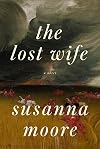
In 1764, my sixth great-grandfather and his wife were murdered and scalped at their homestead in the Shenandoah Valley. Several of their children were murdered and the fifteen-year-old boy was kidnapped and taken to Ohio where he lived with the natives for three years until returned in a trade. His sister, my fifth great-grandmother, survived by running away. Their murderers wanted to drive the settlers from the valley.
The son who lived with the natives left no oral history of his show more experience. I don’t know if he found a family there, if he eased into the life of the natives, if he longed to be returned or left his new community unwillingly, what he suffered.
And so, I love to read stories of those who were taken by the natives.
The Lost Wife is inspired by a real person, Sarah F. Wakefield, and her account Six Weeks in the Sioux Tepees: A Narrative of Indian Captivity.
Sarah Brinton has escaped an abusive marriage that followed an abused childhood. She runs away, leaving behind a daughter, planning to join a dear friend who has settled in Minnesota. She takes the train to Albany, then travels five days by mule-drawn barge down the Erie Canal to Buffalo where she boards a steamer ship that takes her through the Great Lakes to Chicago, then another steamer to the prairie.
Sarah learns her friend has died. With little choice, she decides to marry Dr. Brinton. He is an educated idealist, and becomes the resident doctor at an Indian Reservation. Sarah forges relationships among the Sioux women who are her teachers and friends.
The Civil War leads to a default on paying the Sioux their annual annuity. They are starving and denied access to the storehouse of food. In desperation, they storm the storehouse and attack the settlers, leaving death and destruction. Hundreds are taken captive, including Sarah and her children.
Sarah is a strong character who adapts to her changing situation, from a childhood with an unloving mother to abused wife to life on the prairie to surviving captivity. She narrates her story with a journalistic distance, describing gruesome details without floral language.
Sarah is sympathetic to the natives, even as she observes the cruelty and destruction they inflict. “It matters little what crimes have been committed against the Dakota,” she knows; “this uprising will always be thought more horrific than anything the white have done to them.”
She is ostracized for adapting to her circumstances, shunned for being the wife of the native who protected her and her children. In the end, Sarah is a lost wife three times over. But she has also discovered a strength that allows her to take command of her past and future.
Thanks to A. A. Knopf for a free book. show less
The son who lived with the natives left no oral history of his show more experience. I don’t know if he found a family there, if he eased into the life of the natives, if he longed to be returned or left his new community unwillingly, what he suffered.
And so, I love to read stories of those who were taken by the natives.
The Lost Wife is inspired by a real person, Sarah F. Wakefield, and her account Six Weeks in the Sioux Tepees: A Narrative of Indian Captivity.
Sarah Brinton has escaped an abusive marriage that followed an abused childhood. She runs away, leaving behind a daughter, planning to join a dear friend who has settled in Minnesota. She takes the train to Albany, then travels five days by mule-drawn barge down the Erie Canal to Buffalo where she boards a steamer ship that takes her through the Great Lakes to Chicago, then another steamer to the prairie.
Sarah learns her friend has died. With little choice, she decides to marry Dr. Brinton. He is an educated idealist, and becomes the resident doctor at an Indian Reservation. Sarah forges relationships among the Sioux women who are her teachers and friends.
The Civil War leads to a default on paying the Sioux their annual annuity. They are starving and denied access to the storehouse of food. In desperation, they storm the storehouse and attack the settlers, leaving death and destruction. Hundreds are taken captive, including Sarah and her children.
Sarah is a strong character who adapts to her changing situation, from a childhood with an unloving mother to abused wife to life on the prairie to surviving captivity. She narrates her story with a journalistic distance, describing gruesome details without floral language.
Sarah is sympathetic to the natives, even as she observes the cruelty and destruction they inflict. “It matters little what crimes have been committed against the Dakota,” she knows; “this uprising will always be thought more horrific than anything the white have done to them.”
She is ostracized for adapting to her circumstances, shunned for being the wife of the native who protected her and her children. In the end, Sarah is a lost wife three times over. But she has also discovered a strength that allows her to take command of her past and future.
Thanks to A. A. Knopf for a free book. show less
An interesting take on the erotic murder thriller genre told from the point of view of an English professor, and I really liked the abrupt ending, and thought beyond that it might not have been directly in my wheelhouse

This is an interesting, dark chapter in American history when the fictional Sarah Browne leaves her abusive husband and her daughter in Providence to reunite with a childhood friend she knew when they were orphans in a cruel institution for the indigent. When she finally reaches her destination in the West, she discovers her friend has died, leaving her without any resources. She eventually marries a doctor, who has his own demons, and they have two children. Her husband is appointed after show more seven years to an Indian Agency as the resident physician. The Indians for whom he cares, in addition to the White population, are mainly Sioux.
Tensions arise when the Sioux are without the money and food they've been promised under the treaty. The local Indian agent is particularly unsympathetic to their needs as the Sioux families die from starvation. The Sioux warriors react by killing Whites in local settlements. Sarah and her children are taken into custody by the Sioux and treated more fairly than most given the relationships she had developed. Predictably, the military responds and a chaos of killing begins. Sarah and her children are taken into custody by the military, and she has no idea if her husband is alive or dead.
There are no winners in these bloody battles, and it is especially poignant to reflect on the injustices done to the Indians as Indigenous People Day approaches. show less
Tensions arise when the Sioux are without the money and food they've been promised under the treaty. The local Indian agent is particularly unsympathetic to their needs as the Sioux families die from starvation. The Sioux warriors react by killing Whites in local settlements. Sarah and her children are taken into custody by the Sioux and treated more fairly than most given the relationships she had developed. Predictably, the military responds and a chaos of killing begins. Sarah and her children are taken into custody by the military, and she has no idea if her husband is alive or dead.
There are no winners in these bloody battles, and it is especially poignant to reflect on the injustices done to the Indians as Indigenous People Day approaches. show less
The book begins with an anonymous woman, who later takes the name Sarah, fleeing an abusive husband and abandoning her child to go west. She was supposed to meet a friend but the friend has died since her last letter and she is left with no money and no job in a strange town. She marries Dr. Brinton and they move to the Indian Agency where he is the resident physician. She has two children and soon becomes freinds with women among the Sioux. The story is set during the Sioux Uprising of 1862 show more and is historical fiction. During the uprising, Sarah and her children are abducted by the Sioux for protection, but because of her friendship whe becomes outcast among the white settlers. And so becomes a woman without any real place to belong. The book deals with abuse and racial conflict, addiction and mental health issues and is a poignant tale of a woman's struggle and suffering set amongst the suffering of the Native Americans during a tragic time in our history. The plot is outstanding and the characters are well developed and engaging. But I struggled with her writing style which seemed to me to move the story painfully slow at times. This is a thoughtful and thought-provoking book but it was hard for me to engage because it moved so slowly. show less
Lists
Awards


You May Also Like


Associated Authors
Statistics
- Works
- 16
- Also by
- 3
- Members
- 2,098
- Popularity
- #12,269
- Rating
- 3.6
- Reviews
- 51
- ISBNs
- 123
- Languages
- 9
- Favorited
- 4

