
Kira Salak
Author of The White Mary: A Novel
About the Author
Kira Salak has received a Writers at Work Fellowship in nonfiction, and the AWP/Prague Fellowship award in nonfiction. Her short story "Beheadings" is featured in Best New American Voices 2001. On break from her travels, she is currently in the graduate program in creative writing at the University show more of Missouri show less
Image credit: Tara For Travel
Works by Kira Salak
Associated Works
Adrenaline 2000: The Year's Best Stories of Adventure and Survival 2000 (2000) — Contributor — 55 copies
Tagged
Common Knowledge
- Birthdate
- 1971-09-04
- Gender
- female
- Occupations
- journalist
- Organizations
- National Geographic
- Nationality
- USA
- Associated Place (for map)
- USA
Members
Reviews
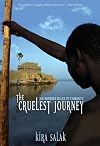
Quite the adventure story of a kayaking trip on the Niger River in West Africa. It's hard to appreciate there are so many places with so little, that so much could stay the same as it was in the early 1800's. The writing is vivid, strong on detail & empathy. My favorite part is the description of the various tribal villages where she stops and how these villages change the closer she gets to "civilization". There are several asides that I didn't find quite worked, but overall an enjoyable show more read. As to the people that ask "why do this?", might as well ask why she is a writer. Neither is something I would choose to do, but still a wonderful read. show less
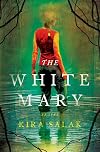
I recently received an advanced reader's copy of The White Mary by Kira Salak to review from the publisher, Henry Holt. I was excited to learn of the novel, as I was an avid fan of Salak's wonderful non-fictional narrative of her kayaking tour to Timbuktu, "The Cruelest Journey".
Salak is a unique phenomenon and a wild spirit - traveling alone as a woman to places most men would be afraid to go in a group. Her non-fiction travel works capture the fear, wonder, and strangeness of traveling show more alone, a sort of female incarnation of Paul Theroux. I was looking forward to her first fictional work (although one wonders just how fictional it is, exactly). I was not disappointed.
The White Mary tells the tale of Marika Vecera, a journalist/war correspondent. The early parts of novel intertwine her experiences in Zaire reporting on genocide with a somewhat mysterious journey through the jungles of Papua New Guinea. We eventually learn that Marika is chasing the ghost of Robert Lewis, a journalist she worships and who inspired her career. She's also chasing some ghosts of her own; her time in Zaire has scarred her deeply. The White Mary is in fact an extraordinarily powerful portrait of a person who has "seen too much". Marika's near-death experience in the Congo has left her emotionally numb, and walled off from the care of those closest to her. Salak's rendering of Marika's psychological problems is done in pitch-perfect detail. The novel is sometimes adult, brutal and violent, and not for early teens or the faint of heart.
Just as folk musicians perform songs in pairs, it's sometimes interesting to read & review books in pairs. At the same time as I was reading The White Mary, I was also consuming "The Painter of Battles" by the renowned author Arturo Perez-Reverte (one of my favorite authors). The Painter of Battles covers very similar territory in some respects -
the protagonist there has "seen too much" as a war photographer and has given way to despair, retiring to paint a battle that spans all historical battles, and to avoid all human interaction (interestingly one of the key characters in The White Mary is a war photographer). Where the Painter of Battles is deeply philosophical and contemplative, the White Mary is visceral; the Painter of Battles is carefully drawn, exquisitely written and intriguing to read. And yet, three weeks later, the Painter of Battles is not finished, and The White Mary yielded in two sittings. It's that compelling; I had to finish it. Perez-Reverte's prose is smoother and more ornate, even in translation (or perhaps because of it), whereas Salak's prose is more muscular and direct. The writing in The White Mary is occasionally awkward but still compares favorably with that of such a distinguished author as Perez-Reverte.
Salak's Marika is an extraordinarily well-drawn character; I never doubted her reality for a moment. And Salak regularly captures one of the key aspects of travel - the shock of experiencing fundamentally different cultural assumptions. Marika for example, is sent to the "women's hut" when she is menstruating, where she rages at the artificial and (to her, of course) ludicrous belief system that requires it. Marika's progress through something like post-traumatic stress disorder is carefully and believably painted, and you root for her to come back even as she spirals downward in self-destructive behavior.
In short, the White Mary is a powerful and gripping first novel, a cautionary tale full of danger, travel, and adventure, and at the same time gives deep insight into the human condition.
(If you'd like to explore the geography of The White Mary, I've plotted many of the locations mentioned in my Books/Google Maps mashup, CodexMap. show less
Salak is a unique phenomenon and a wild spirit - traveling alone as a woman to places most men would be afraid to go in a group. Her non-fiction travel works capture the fear, wonder, and strangeness of traveling show more alone, a sort of female incarnation of Paul Theroux. I was looking forward to her first fictional work (although one wonders just how fictional it is, exactly). I was not disappointed.
The White Mary tells the tale of Marika Vecera, a journalist/war correspondent. The early parts of novel intertwine her experiences in Zaire reporting on genocide with a somewhat mysterious journey through the jungles of Papua New Guinea. We eventually learn that Marika is chasing the ghost of Robert Lewis, a journalist she worships and who inspired her career. She's also chasing some ghosts of her own; her time in Zaire has scarred her deeply. The White Mary is in fact an extraordinarily powerful portrait of a person who has "seen too much". Marika's near-death experience in the Congo has left her emotionally numb, and walled off from the care of those closest to her. Salak's rendering of Marika's psychological problems is done in pitch-perfect detail. The novel is sometimes adult, brutal and violent, and not for early teens or the faint of heart.
Just as folk musicians perform songs in pairs, it's sometimes interesting to read & review books in pairs. At the same time as I was reading The White Mary, I was also consuming "The Painter of Battles" by the renowned author Arturo Perez-Reverte (one of my favorite authors). The Painter of Battles covers very similar territory in some respects -
the protagonist there has "seen too much" as a war photographer and has given way to despair, retiring to paint a battle that spans all historical battles, and to avoid all human interaction (interestingly one of the key characters in The White Mary is a war photographer). Where the Painter of Battles is deeply philosophical and contemplative, the White Mary is visceral; the Painter of Battles is carefully drawn, exquisitely written and intriguing to read. And yet, three weeks later, the Painter of Battles is not finished, and The White Mary yielded in two sittings. It's that compelling; I had to finish it. Perez-Reverte's prose is smoother and more ornate, even in translation (or perhaps because of it), whereas Salak's prose is more muscular and direct. The writing in The White Mary is occasionally awkward but still compares favorably with that of such a distinguished author as Perez-Reverte.
Salak's Marika is an extraordinarily well-drawn character; I never doubted her reality for a moment. And Salak regularly captures one of the key aspects of travel - the shock of experiencing fundamentally different cultural assumptions. Marika for example, is sent to the "women's hut" when she is menstruating, where she rages at the artificial and (to her, of course) ludicrous belief system that requires it. Marika's progress through something like post-traumatic stress disorder is carefully and believably painted, and you root for her to come back even as she spirals downward in self-destructive behavior.
In short, the White Mary is a powerful and gripping first novel, a cautionary tale full of danger, travel, and adventure, and at the same time gives deep insight into the human condition.
(If you'd like to explore the geography of The White Mary, I've plotted many of the locations mentioned in my Books/Google Maps mashup, CodexMap. show less
Why do we, as humans, do hard things? Why do we run one hundred miles in a desert? Why does Kira Salak want to travel the length of the Niger River from Old Segou to Timbuktu? Six hundred miles of enlightenment? Courage? Money? Recognition? Mungo Park, a Scottish explorer from the 1770s is an obvious inspiration for Salak. She draws upon the experiences gleaned from Park's letters about his journey down the Niger River in 1795 Not only does Salak provide readers with a mini biography of the show more man, she also includes a great deal of historical context when thinking about Mungo Park.
What sets The Cruelest Journey apart from other travel memoirs is that Salak lets the reader into her private thoughts and fears in a transparent manner. In addition to worrying about her safety and getting to Timbuktu in one piece, she is equally concerned about her future. Will she get married and settled down? She goes to great lengths to get answers.
I have to admit the buying of the slave girls was an odd twist at the end of the journey. Even though freeing a couple of Mali slave girls was an objective Salak claimed to have had from the very beginning, she did not mention it throughout her journey until the end. Wouldn't this be on her mind as she travels the six hundred miles? It's not like looking out for hippos or dealing with dysentery. Buying people just isn't common practice for a young white girl. show less
What sets The Cruelest Journey apart from other travel memoirs is that Salak lets the reader into her private thoughts and fears in a transparent manner. In addition to worrying about her safety and getting to Timbuktu in one piece, she is equally concerned about her future. Will she get married and settled down? She goes to great lengths to get answers.
I have to admit the buying of the slave girls was an odd twist at the end of the journey. Even though freeing a couple of Mali slave girls was an objective Salak claimed to have had from the very beginning, she did not mention it throughout her journey until the end. Wouldn't this be on her mind as she travels the six hundred miles? It's not like looking out for hippos or dealing with dysentery. Buying people just isn't common practice for a young white girl. show less
Salak is a good writer and a very determined person. Overall, this was an interesting travel/adventure book. But the book's weakness is that Salak wants this to be more than what it really is, a physical challenge with some unpleasant cross-cultural encounters. She seems to want to convince both the reader and herself that this was some great experience of enlightenment, even if she can't offer any evidence that this is the case. Also, she over-emphasizes her lack of preparation or research. show more She claims to be without contact with the outside world for most of the trip, without any access to medical or physical assistance. Excuse me, but wouldn't that fancy photographer's boat have had access to a satellite phone? And was there any reason you needed to tear off down the river vomiting and with a fever, rather than resting up a couple of days in a friendly village, as the villagers suggested? This was a good read, but it could have been great if Salak had been more forthright. show less
Lists
You May Also Like


Associated Authors
Statistics
- Works
- 4
- Also by
- 6
- Members
- 578
- Popularity
- #43,350
- Rating
- 3.7
- Reviews
- 60
- ISBNs
- 26
- Languages
- 2
- Favorited
- 3
