
Christina Schwarz (1) (1962–)
Author of Drowning Ruth
For other authors named Christina Schwarz, see the disambiguation page.
About the Author
Christina Schwarz grew up in Wisconsin and currently lives in Los Angeles. She contributes regularly to The Atlantic Monthly and writes an audiobook column for the San Francisco Chronicle Book Review. She is at work on her second novel. (Bowker Author Biography)
Image credit: Mostly Fiction
Works by Christina Schwarz
Tagged
Common Knowledge
- Birthdate
- 1962-08-19
- Gender
- female
- Education
- Yale University (BA | 1984 | MA | 1986)
- Occupations
- teacher
author - Awards and honors
- Claudia Ballard
- Relationships
- Schwarz, Benjamin (husband)
- Nationality
- USA
- Birthplace
- Waukesha County, Wisconsin, USA
- Places of residence
- Los Angeles, California, USA
- Associated Place (for map)
- USA
Members
Reviews

The book jacket synopsis hints at danger in a remote location, not just from the elements but an unexpected presence hiding in the wilderness. But this is so much more than a thriller based on isolation and the fear of the unknown.
Trudy is a highly educated woman, able to argue philosophy (Kant, anyone?) or play a Mozart sonata. Everyone expects she’ll marry her childhood friend, Ernst, and settle down to an upper-middle class life in Milwaukee. But then she meets Ernst’s cousin, Oskar, show more and everything changes. Oskar is a dreamer with training as an engineer. He’s intent on inventing the next BIG thing and Trudy is caught up in his dreams. He takes a position as an assistant lighthouse keeper on a remote promontory on the California coast, thinking he’ll have plenty of time to work on his invention. So, in fall of 1898 the newlyweds set out to make their own future. Things don’t go as they expected.
Trudy is a wonderful character. She’s intelligent, but also observant and not afraid of some hard work. When the lighthouse keeper’s wife suggests (demands?) that Trudy serve as a schoolteacher for the keeper’s children, she takes on the challenge. But the children have much to teach her as well.
Oskar, on the other hand, is a real piece of work. I guess I can understand how his enthusiasm and apparent drive to make a real impact on the world could have seduced her, but how could Trudy keep forgiving him and supporting him when his true colors became evident. I saw the climactic scene coming a mile off, though I still enjoyed reading it and seeing how Schwarz would craft this denouement.
The character that most surprised me was Euphemia (Mrs. Crawley). She was a rock, a pillar of strength, and when push came to shove, she supported and helped Trudy, her children, and Helen. She loved her brother, yes, but she recognized his failings and ultimately would not make excuses for him. Brava. show less
Trudy is a highly educated woman, able to argue philosophy (Kant, anyone?) or play a Mozart sonata. Everyone expects she’ll marry her childhood friend, Ernst, and settle down to an upper-middle class life in Milwaukee. But then she meets Ernst’s cousin, Oskar, show more and everything changes. Oskar is a dreamer with training as an engineer. He’s intent on inventing the next BIG thing and Trudy is caught up in his dreams. He takes a position as an assistant lighthouse keeper on a remote promontory on the California coast, thinking he’ll have plenty of time to work on his invention. So, in fall of 1898 the newlyweds set out to make their own future. Things don’t go as they expected.
Trudy is a wonderful character. She’s intelligent, but also observant and not afraid of some hard work. When the lighthouse keeper’s wife suggests (demands?) that Trudy serve as a schoolteacher for the keeper’s children, she takes on the challenge. But the children have much to teach her as well.
Oskar, on the other hand, is a real piece of work. I guess I can understand how his enthusiasm and apparent drive to make a real impact on the world could have seduced her, but how could Trudy keep forgiving him and supporting him when his true colors became evident. I saw the climactic scene coming a mile off, though I still enjoyed reading it and seeing how Schwarz would craft this denouement.
The character that most surprised me was Euphemia (Mrs. Crawley). She was a rock, a pillar of strength, and when push came to shove, she supported and helped Trudy, her children, and Helen. She loved her brother, yes, but she recognized his failings and ultimately would not make excuses for him. Brava. show less
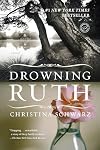
This story about tragic events in the life of a small family is engrossing and well written. Christina Schwartz immediately snags the reader with the character of Amanda, a very complex woman, shrouded in sorrow and mystery. I wasn’t sure whether I ever ended up liking her, but I certainly was interested in her life and her feelings.
For a woman whose very life is so tied up in her sister and her parents, whose feelings completely overtake her at times, she has a unique ability to shut down show more all emotion, and close off the truth even to herself.
After one of the most horrible (yet mysterious) events of her life, she very methodically examines her wounds. “My hand wasn’t as bad as I’d feared. Most of the blood had dried and the punctures were small in circumference. Many of them were deep, however. There would be scars, a ring in the meat at the base of my thumb. Who could have imagined such a little thing would have such strength? Who would have thought she would struggle so fiercely? I found my father’s whiskey and dabbed a little on my wounds. Then I drank a glass. People said it made you forget.”
That’s all the reader gets – that’s all Amanda allows herself to think. We don’t yet know who “she” is – or what the fierce struggle was about. While I wouldn’t say that mystery was the only reason I kept reading, the bits of information that are gradually revealed by the author are rationed very well.
Schwartz slips artfully from one character to another, and from first person to third person. She creates believable voices for tragic young women, shell shocked men, and young children.
“Arthur, six, came to full wakefulness as the water splashed into the washstand that stood against one wall of the room he shared with his brother. He stayed still with his eyes closed, listening to the hangers scraping along the rod and the dresser drawers sliding open and not being banged shut. When Maynard left the room, Arthur got out of bed and went in his pajamas to squat beside his city of blocks. He did his best work in the morning, while the bolt on the bathroom door slide open and shut, the water rushed through the pipes, feet galloped down and up and down the stairs, china clinked in the kitchen, and finally the front door slammed and slammed and slammed.”
And as with the last book I read, “The Falls” by Joyce Carol Oates, a body of water plays a major roll in the book and is in fact, one of the main characters.
“Released from their ice prison, the waves tossed themselves against the hull with ecstatic abandon, pitching up a fine spray that shimmered in the fledgling spring sunlight. I dipped my fingers in, and instantly my hand ached with cold. That must have been what it felt like, the night I drowned.”
In summary, I guess I would say that “Drowning Ruth” is a great mix of a book you don’t want to put down, and moments of very insightful character development. I would certainly pick up another of Schwartz’s books. show less
For a woman whose very life is so tied up in her sister and her parents, whose feelings completely overtake her at times, she has a unique ability to shut down show more all emotion, and close off the truth even to herself.
After one of the most horrible (yet mysterious) events of her life, she very methodically examines her wounds. “My hand wasn’t as bad as I’d feared. Most of the blood had dried and the punctures were small in circumference. Many of them were deep, however. There would be scars, a ring in the meat at the base of my thumb. Who could have imagined such a little thing would have such strength? Who would have thought she would struggle so fiercely? I found my father’s whiskey and dabbed a little on my wounds. Then I drank a glass. People said it made you forget.”
That’s all the reader gets – that’s all Amanda allows herself to think. We don’t yet know who “she” is – or what the fierce struggle was about. While I wouldn’t say that mystery was the only reason I kept reading, the bits of information that are gradually revealed by the author are rationed very well.
Schwartz slips artfully from one character to another, and from first person to third person. She creates believable voices for tragic young women, shell shocked men, and young children.
“Arthur, six, came to full wakefulness as the water splashed into the washstand that stood against one wall of the room he shared with his brother. He stayed still with his eyes closed, listening to the hangers scraping along the rod and the dresser drawers sliding open and not being banged shut. When Maynard left the room, Arthur got out of bed and went in his pajamas to squat beside his city of blocks. He did his best work in the morning, while the bolt on the bathroom door slide open and shut, the water rushed through the pipes, feet galloped down and up and down the stairs, china clinked in the kitchen, and finally the front door slammed and slammed and slammed.”
And as with the last book I read, “The Falls” by Joyce Carol Oates, a body of water plays a major roll in the book and is in fact, one of the main characters.
“Released from their ice prison, the waves tossed themselves against the hull with ecstatic abandon, pitching up a fine spray that shimmered in the fledgling spring sunlight. I dipped my fingers in, and instantly my hand ached with cold. That must have been what it felt like, the night I drowned.”
In summary, I guess I would say that “Drowning Ruth” is a great mix of a book you don’t want to put down, and moments of very insightful character development. I would certainly pick up another of Schwartz’s books. show less

this was kind of delicious. it moved maybe a little slowly, but it was like a train wreck that you can't tear your eyes away from. seeing margaret completely sabotage her relationship with her best friend letty, and completely misunderstand how the publishing world works, was awfully compelling. even when slow, i didn't want to stop listening.
her writing is excellent. i'm not sure all of the characters are perfectly drawn (both ted and michael aren't full) but both margaret and letty (the show more only ones who really matter) are. it's not a perfect book but i really enjoyed this. show less
her writing is excellent. i'm not sure all of the characters are perfectly drawn (both ted and michael aren't full) but both margaret and letty (the show more only ones who really matter) are. it's not a perfect book but i really enjoyed this. show less

‘Enjoyed’ may be the wrong word for this almost dark tale. But the story drew me in and fixed me so firmly among these vivid characters on their lake in Wisconsin that I could not leave until the author released me by providing no further words.
Dispensing with the book description, since it’s on the works page; let me just give you my impression. And I AM impressed. As the story unfolds through the memories of a woman and her niece, it is exquisitely paced. It tantalizes you, knowing, show more with each revelation, that there is more unremembered or yet unmet, and wondering if she will remember enough, or have courage enough, to share it with you the next time you meet her in the story.
The setting, a lakeside small town, a farming and fishing community; the story takes place from about 1910 through the 1930s. The characters, setting, situations and dialog felt true to its time period. One turn of the story left me thinking, ‘nah, that couldn’t have happened in that way’. But, the characterization, the sense of place in its Wisconsin setting, an interesting mystery and its method and timing of revelation, details which enrich rather than bog – QUITE well done.
***SPOILER ALERT*** The mystery turns on something that in former times would have been considered taboo. Part of the story, then, was about trying to keep that secret, and still live a ‘normal’ life, and watching the after-effects and not knowing what to do about it. Strong women, relying only on their own strength and wits to solve their own problems, with no remorse admitted, but living with consequences.
Recommended. Highly. show less
Dispensing with the book description, since it’s on the works page; let me just give you my impression. And I AM impressed. As the story unfolds through the memories of a woman and her niece, it is exquisitely paced. It tantalizes you, knowing, show more with each revelation, that there is more unremembered or yet unmet, and wondering if she will remember enough, or have courage enough, to share it with you the next time you meet her in the story.
The setting, a lakeside small town, a farming and fishing community; the story takes place from about 1910 through the 1930s. The characters, setting, situations and dialog felt true to its time period. One turn of the story left me thinking, ‘nah, that couldn’t have happened in that way’. But, the characterization, the sense of place in its Wisconsin setting, an interesting mystery and its method and timing of revelation, details which enrich rather than bog – QUITE well done.
***SPOILER ALERT*** The mystery turns on something that in former times would have been considered taboo. Part of the story, then, was about trying to keep that secret, and still live a ‘normal’ life, and watching the after-effects and not knowing what to do about it. Strong women, relying only on their own strength and wits to solve their own problems, with no remorse admitted, but living with consequences.
Recommended. Highly. show less
Lists
Awards


You May Also Like


Statistics
- Works
- 7
- Members
- 5,291
- Popularity
- #4,705
- Rating
- 3.5
- Reviews
- 128
- ISBNs
- 90
- Languages
- 7