
Sigrid Nunez
Author of The Friend
About the Author
Image credit: Sigrid Nunez gives a presentation in the Fiction Stage at the National Book Festival, August 31, 2019. Photo by Ralph Small/Library of Congress. By Library of Congress Life - 20190831RS0155.jpg, CC0, https://commons.wikimedia.org/w/index.php?curid=82899232
Works by Sigrid Nunez
Dla Rouenny 1 copy
Associated Works
Charlie Chan Is Dead: An Anthology of Contemporary Asian American Fiction (1993) — Contributor — 169 copies, 3 reviews
A Fork in the Road: Tales of Food, Pleasure, and Discovery on the Road (2013) — Contributor — 116 copies, 2 reviews
Mentors, Muses & Monsters: 30 Writers on the People Who Changed Their Lives (2009) — Contributor — 71 copies, 2 reviews
Intersecting Circles: The Voices of Hapa Women in Poetry and Prose (Bamboo Ridge, No. 76) (1999) — Contributor — 18 copies
Tagged
Common Knowledge
- Legal name
- Nunez, Sigrid
- Birthdate
- 1951-03-12
- Gender
- female
- Education
- Barnard College (BA)
Columbia University (MFA) - Occupations
- writer
- Awards and honors
- Whiting Writers' Award (1993)
American Academy of Arts and Letters: The Richard and Hinda Rosenthal Foundation Award (1999)
American Academy of Arts and Sciences (Fellow)
Berlin Prize Fellowship - Nationality
- USA
- Birthplace
- New York, New York, USA
- Places of residence
- Manhattan, New York, USA
- Associated Place (for map)
- New York, USA
Members
Reviews
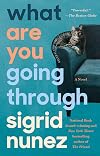
I found What You Are Going Through to be a moving and oddly comforting revery of a novel about life and its travails, longing, loneliness, and dignity in the face of death. Nunez writes from what I found to be a place of empathy and wonder about the things life throws at people and the ways in which we cope with those things, or don't, as the case may be. For the first half or so of the book, Nunez takes us through a several encounters she has (to quote the description on the back of my show more paperback edition) during the course of a day, or sometimes retrieves from her memory, and provides brief windows into their lives. For example, we have an older woman growing more and more reclusive, and her adult son, who is trying his best to care for her and keep her interested in life. The narrator knows them only because she's been neighbors with the woman for years, though they have barely spoken, and because she begins to have conversations with the son. The way that Nunez makes all of these encounters come to life is through realistic and believable detail. No one in the novel has a name. They are "the woman," "the man," "my friend," "my ex-." It would seem that this tactic would make the people and their circumstances distant and be somewhat off-putting in the reading. I found instead that it helped make their situations universal, at the same time Nunez's specificity otherwise brought her people alive on the page, even when they make but the briefest appearances.
Even the title's lack of a concluding question mark is, somehow, a leveler, though Nunez includes the mark when explaining the phrase's origin:
In the book's second half, Nunez expands her theme by focusing in, for the most part, on her narrator's experiences with a friend from college who asks for her help. Our narrator agrees, and as the two women, now late in life, explore all of these elements of life, but very close up, and with daily discoveries, both depressing and uplifting.
At any rate, I haven't done the novel justice but I highly recommend the book to anyone who enjoys fiction that doesn't necessarily rely on plot. There are also some brief, terrific side roads taken. Or, anyway, what at first seem like side roads but in fact fold seamlessly into the themes of the novel as a whole. In talking about sexism in publishing and in reading, for example, the narrator describes Ingeborg Bachmann, who wrote a wonderful collection of five longish short stories called (in English) [Three Paths to the Lake]. (Coincidentally, I read this collection many years ago.)
I'll just end with one more quote:
Nunez, of course, has written many novels, including [The Friend], which won the National Book Award. This is the first of her novels I've read, but I'll certainly be catching up on her works soon. Also, What Are You Going Through was made into the movie The Room Next Door, Pedro Almodovar's first English language film, in 2024. show less
Even the title's lack of a concluding question mark is, somehow, a leveler, though Nunez includes the mark when explaining the phrase's origin:
What are you going through? When Simone Weil said that being able to ask this question was what love of one's neighbor truly meant, she was writing in her native French. And in French the great question sounds quite different: Quel set ton torment?
In the book's second half, Nunez expands her theme by focusing in, for the most part, on her narrator's experiences with a friend from college who asks for her help. Our narrator agrees, and as the two women, now late in life, explore all of these elements of life, but very close up, and with daily discoveries, both depressing and uplifting.
At any rate, I haven't done the novel justice but I highly recommend the book to anyone who enjoys fiction that doesn't necessarily rely on plot. There are also some brief, terrific side roads taken. Or, anyway, what at first seem like side roads but in fact fold seamlessly into the themes of the novel as a whole. In talking about sexism in publishing and in reading, for example, the narrator describes Ingeborg Bachmann, who wrote a wonderful collection of five longish short stories called (in English) [Three Paths to the Lake]. (Coincidentally, I read this collection many years ago.)
You write ladies' novels, correct? said the novelist to his female colleague.
Oh what dark neck of the woods have we entered here.
The Bachmann story, "Three Paths to the Lake," appears in her collection Three Paths to the Lake, which was published in 1972, a year before she died of burns suffered in a fire. Five stories. Five women, each one suffering from some form of emotional turmoil, each one feeling trapped, isolated, anxious, and confused about her place in patriarchal society, and struggling for a language to express what she's going through.
George Balanchine said, If you put a group of men on the stage, you have a group of men, but if you put a group of women on the stage you have the whole world.
If you put a group of women in a book, you have "women's fiction." To be shunned by almost all male readers and no few female ones as well.
I'll just end with one more quote:
Jesus, you know, it wasn't supposed to happen like this. Even if it strikes me now has having been inevitable. But doesn't love always feel just so: destined, no matter how unexpected, no matter how improbable.
Nunez, of course, has written many novels, including [The Friend], which won the National Book Award. This is the first of her novels I've read, but I'll certainly be catching up on her works soon. Also, What Are You Going Through was made into the movie The Room Next Door, Pedro Almodovar's first English language film, in 2024. show less
'The Friend' was a remarkable listening experience. It's an intimate six-hour long monologue, spoken to a dead friend. That probably sounds a little dull, perhaps even a bit of chore to listen to but that wasn't my experience at all. To me it felt like one of those rare occaisions when you meet someone new and fascinating so you spend the whole day and long into the night listening to them talk, building a picture of them. lost in who they are becoming in your mind.
'The Friend' is such a show more wonderful, effortless flow of remembrance and reflection that, at first, it hardly felt like grief, except that it was being spoken into a void, a presence lost and now, at best, imagined. I loved the narrator's taken-for-granted erudition, her seamlessly integrated wit, and her self-awareness which refused to let self-deception hold sway but insisted on trying to say only what was true.
The premise of the story seems simple enough. A man dies and bequeaths his harlequin great dane not to his wife but to the narrator, a woman he has known for far longer than his (third) wife. A woman he knows to be a cat person. A woman he knows is not allowed to have a dog in her Manhattan apartment. A woman he knows loves him enough to take the dog anyway. The bequest transforms the woman's life both by changing her here-and-now experience and by causing her to re-examine the truths embedded in her long-term relationship with the dead man.
In other hands, this could be the set-up for a Hallmark movie about a life redeemed by the love of a large dog. In Sigrid Nunez's hands, it becomes an excavation of a life, of choices made and lived with, of people living complex, sometimes over-examined lives, of the effects of time and age on passion and friendship and on how our identity is shaped by our memory of the past and our expectations of the future.
I was immersed in the story mostly because it didn't feel like a story. This wasn't a linear narrative designed to lead the reader to a climax through a three-act plot. This was about being in the narrator's head as she worked out what the man's death meant to her. In the process, I learned as much, maybe more, about her than about him. I learned how she came to be who she is and how she sees herself. She is an academic, prone to analysis and used to using literary references to frame her understanding of situations. She has a dry wit that often keeps her at a distance from others. She is mired so deeply in grief that it taints every thought and every memory. She can't forgive the dead man for being dead. She can't imagine the path of her life, free from the gravitational pull of his personality.
Sigrid Nunez's prose is wonderful. Not a word is wasted. Phrases that at first seem casual become charge with meaning as they are repeated or their context is revealed. I've already re-listened to the start of the book and I can see that the experience of the text, when you already know what the narrator knows, is different: richer, deeper but the truth of the narrative remains the same.
There was one section of the story that didn't work for me. It was an extended discussion between the narrator and the dead man about literature an publishing, about cultural appropriation and self-censorship and so on. It was a good discussion but I found it jarring. It took me out of the flow. It also seemed like lecture notes reconfigured into dialogue. Fortunately, it was a short section.
I haven't mentioned the dog. He is, of course, adorable. If you've lived with a dog as a family member you'll recognise the emerging relationship and the emotional attachment.
At the end of the book, I found myself thinking about the title. It has the same complex simplicity as the story. It's up to the reader to work out who the friend is and what being a friend means.
I recommend listening to the audiobook version of 'The Friend'. Hilary Huber's narration perfectly captures the tone of the monologue. Click on the SoundCloud link below to hear a sample.
https://soundcloud.com/hachetteaudiouk/the-friend-by-sigrid-nunez-read-by-hillar... show less
'The Friend' is such a show more wonderful, effortless flow of remembrance and reflection that, at first, it hardly felt like grief, except that it was being spoken into a void, a presence lost and now, at best, imagined. I loved the narrator's taken-for-granted erudition, her seamlessly integrated wit, and her self-awareness which refused to let self-deception hold sway but insisted on trying to say only what was true.
The premise of the story seems simple enough. A man dies and bequeaths his harlequin great dane not to his wife but to the narrator, a woman he has known for far longer than his (third) wife. A woman he knows to be a cat person. A woman he knows is not allowed to have a dog in her Manhattan apartment. A woman he knows loves him enough to take the dog anyway. The bequest transforms the woman's life both by changing her here-and-now experience and by causing her to re-examine the truths embedded in her long-term relationship with the dead man.
In other hands, this could be the set-up for a Hallmark movie about a life redeemed by the love of a large dog. In Sigrid Nunez's hands, it becomes an excavation of a life, of choices made and lived with, of people living complex, sometimes over-examined lives, of the effects of time and age on passion and friendship and on how our identity is shaped by our memory of the past and our expectations of the future.
I was immersed in the story mostly because it didn't feel like a story. This wasn't a linear narrative designed to lead the reader to a climax through a three-act plot. This was about being in the narrator's head as she worked out what the man's death meant to her. In the process, I learned as much, maybe more, about her than about him. I learned how she came to be who she is and how she sees herself. She is an academic, prone to analysis and used to using literary references to frame her understanding of situations. She has a dry wit that often keeps her at a distance from others. She is mired so deeply in grief that it taints every thought and every memory. She can't forgive the dead man for being dead. She can't imagine the path of her life, free from the gravitational pull of his personality.
Sigrid Nunez's prose is wonderful. Not a word is wasted. Phrases that at first seem casual become charge with meaning as they are repeated or their context is revealed. I've already re-listened to the start of the book and I can see that the experience of the text, when you already know what the narrator knows, is different: richer, deeper but the truth of the narrative remains the same.
There was one section of the story that didn't work for me. It was an extended discussion between the narrator and the dead man about literature an publishing, about cultural appropriation and self-censorship and so on. It was a good discussion but I found it jarring. It took me out of the flow. It also seemed like lecture notes reconfigured into dialogue. Fortunately, it was a short section.
I haven't mentioned the dog. He is, of course, adorable. If you've lived with a dog as a family member you'll recognise the emerging relationship and the emotional attachment.
At the end of the book, I found myself thinking about the title. It has the same complex simplicity as the story. It's up to the reader to work out who the friend is and what being a friend means.
I recommend listening to the audiobook version of 'The Friend'. Hilary Huber's narration perfectly captures the tone of the monologue. Click on the SoundCloud link below to hear a sample.
https://soundcloud.com/hachetteaudiouk/the-friend-by-sigrid-nunez-read-by-hillar... show less
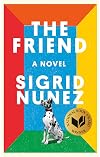
This was so awful that I actually googled the National Book Awards to see what the ever-loving-blue-eyed-heck the criteria for winning were. I seriously wondered if this were an award that "sounded" like a legit one, but was actually something Ms. Nunez created and then awarded to herself.
What I found was this criticism of the NBA: "...the fiction award has become a Newbery Medal for adults: Good for you whether you like it or not. ...the impression has arisen that already-successful titles show more are automatically sidelined in favor of books that the judges feel deserve an extra boost of attention. the nominated books [often] exhibit qualities – a poetic prose style, elliptical or fragmented storytelling – that either don't matter much to nonprofessional readers, or even put them off....the NBA has become irrelevant to average readers and of more interest to professional writers..."the National Book Awards [are] known for this sort of thing. They're awards for insiders."
YES! "The Friend" is a perfect example of "Awards For Insiders". A chance for them to form a circle and--um--pat each other on the back.
The book is self-absorbed navel-gazing from beginning to --- whatever you would call the final page. So unbearably pretentious!
I'm smacking myself on the forehead repeatedly, and mumbling, "Why? Why? WHY didn't I listen to my instincts and ditch this thing earlier?" I combined (1) the hope that maybe it would have something to do with the dog (and not just her egocentric musings about how the dog's presence affects HER), with (2) the book award winner stamp on the cover--surely eventually this would become worth reading, wouldn't it?? Spoiler Alert: No. Thank goodness for the public library! show less
What I found was this criticism of the NBA: "...the fiction award has become a Newbery Medal for adults: Good for you whether you like it or not. ...the impression has arisen that already-successful titles show more are automatically sidelined in favor of books that the judges feel deserve an extra boost of attention. the nominated books [often] exhibit qualities – a poetic prose style, elliptical or fragmented storytelling – that either don't matter much to nonprofessional readers, or even put them off....the NBA has become irrelevant to average readers and of more interest to professional writers..."the National Book Awards [are] known for this sort of thing. They're awards for insiders."
YES! "The Friend" is a perfect example of "Awards For Insiders". A chance for them to form a circle and--um--pat each other on the back.
The book is self-absorbed navel-gazing from beginning to --- whatever you would call the final page. So unbearably pretentious!
I'm smacking myself on the forehead repeatedly, and mumbling, "Why? Why? WHY didn't I listen to my instincts and ditch this thing earlier?" I combined (1) the hope that maybe it would have something to do with the dog (and not just her egocentric musings about how the dog's presence affects HER), with (2) the book award winner stamp on the cover--surely eventually this would become worth reading, wouldn't it?? Spoiler Alert: No. Thank goodness for the public library! show less
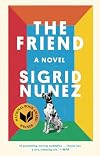
The Friend by Sigrid Nunez is a subtly remarkable novel that tells a stark, unsentimental tale of grief and healing. The narrator, an unnamed middle-aged woman, teaches writing at a New York university. She has lost a very close friend to suicide and is suffering a profound, almost debilitating, sense of loss. The woman’s dead friend was a writer, a successful novelist and teacher of creative writing. The long-standing connection between this man and woman was intellectual and platonic, show more and their conversations provided a stimulus that fed and nurtured their own writing. The complication that changes the narrator’s life and propels the story arises when the friend’s wife at the time of his death (“Wife Three”) asks her to take the dog. The dog, Apollo—a Dane mastiff, not young, stately and serene by nature—is a rescue dog, discovered by the friend unaccompanied in a park and, following a cursory search for the owner, impulsively adopted, against Wife Three’s wishes. The narrator resists—arguing that 1) she is a “cat person,” (though catless at the moment), that 2) Apollo is a very large animal who will suffer confined to a very small apartment, and that 3) her apartment building does not allow dogs. But the next thing we know, she is defying the building’s policy by taking Apollo in, and they are developing a routine of long companionable walks and respectful co-habitation. The tale that follows—rooted in the narrator’s friendship with the dead man and her growing affection for Apollo—is in fact a meditation on a variety of subjects which meanders gracefully and poignantly but always circles back to themes linked to creativity, dying and death. Along the way the narrator refers liberally to works by other writers, notably Rilke, Virginia Woolf, J.M. Coetzee, Milan Kundera, and J.R. Ackerley (author of the memoir My Dog Tulip), from which she gains insight into the situation in which she finds herself. The brilliance of The Friend is difficult to pinpoint as due to any single aspect of the narrative because the story is comprised of many loosely woven threads that only gradually come together. But it is, in the end, a masterful and unforgettable work of fiction that packs a powerful emotional punch. show less
Lists
Awards


You May Also Like


Associated Authors
Statistics
- Works
- 14
- Also by
- 12
- Members
- 4,688
- Popularity
- #5,381
- Rating
- 3.8
- Reviews
- 259
- ISBNs
- 139
- Languages
- 15
- Favorited
- 8
