
Jay McInerney
Author of Bright Lights, Big City
About the Author
Jay McInerney was born in 1955 in Hartford, Conn. and earned his B.A from Williams College in 1976. He did postgraduate study at Syracuse University, and was a Princeton in Asia fellow in 1977. McInerney's career includes stints as a newspaper reporter, a textbook editor, and a fact checker for the show more New Yorker magazine. His writing has appeared in a variety of periodicals including Paris Review, Vogue, and Atlantic Monthly. His books include "Model Behavior," "The Last of the Savages," and "Bright Lights, Big City." (Bowker Author Biography) Jay McInerney is the author of "Bright Lights, Big City," "Ransom," "Story of My Life," "Brightness Falls," "The Last of the Savages," & "Model Behavior." He is a contributing writer for "House & Garden" & "The New Yorker," & lives near Nashville, Tennessee. (Publisher Provided) show less
Series
Works by Jay McInerney
The Madonna of Turkey Season 5 copies
Chloë’s Scene 4 copies
Con Doctor 2 copies
Um hedonista na adega 1 copy
Come te non c'è nessuno 1 copy
Raya my life 1 copy
Third Party 1 copy
Philomena 1 copy
Het goede leven 1 copy
Associated Works
A Truth Universally Acknowledged: 33 Great Writers on Why We Read Jane Austen (2009) — Contributor — 414 copies, 18 reviews
Tagged
Common Knowledge
- Canonical name
- McInerney, Jay
- Legal name
- McInerney, John Barrett, Jr.
- Birthdate
- 1955-01-13
- Gender
- male
- Education
- Williams College (BA|1976)
Syracuse University (MA) - Occupations
- food critic
writer
novelist
wine writer - Organizations
- The New Yorker
Wall Street Journal - Awards and honors
- MFK Fisher Distinguished Writing Award (2006)
- Nationality
- USA
- Birthplace
- Hartford, Connecticut, USA
- Associated Place (for map)
- Connecticut, USA
Members
Reviews

Is it the book's fault that the characters are so annoying? Of course not, it's a sign of the author's skill in making them so real that we keep thinking about them anyway. For those of us who are not wealthy New Yorkers, the lives of the Calloways are a fantasy, with the forces of good and evil at play in their rarified lives. What I appreciated about this novel was the reminder of the early days of Covid when there were so many unknowns and fears, a landmark time that has been easy to forget.

Read this first as a high schooler. Reread it again now that I live in NYC. Forgot how sharp and witty the writing is. At the time, in high school, I preferred Bret Easton Ellis's Less Than Zero. Now I think this shines brighter, with its more humane view of the characters while keeping the 80's sleaze and sense of alienation.
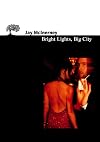
While reading Bright Nights, Big City you want to call its protagonist a sucker. He buys fake Rolex watches, falls for fake schemes, follows around false friends, and believes a model could love him enough to stay married until death do them part. You want to call him a loser because you know there isn't a happy ending for this guy. Drugs constantly addle his mind to the point where he loses his fact checking job, loses his freak friends, and nearly loses his mind. What he doesn't realize is show more that he has a lot to mourn. He is literally drowning his deep seeded grief over losing his mother to cancer in an avalanche of cocaine and bright lights. The end comes when rock bottom is met and he has an awakening of sorts. show less
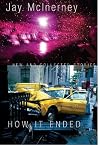
In the 80's Jay McInerney and Brett Easton Ellis were being touted as the Hemingway and Fitzgerald of a new generation. I don't know if anybody had in mind which was supposed to be Hemingway and which Fitzgerald, but in, How It Ended, McInerney's book of new and collected short stories, I think McInerney makes a bid for Fitzgerald's mantle.
The most obvious similarity is he treads the same ground stories with husbands and wives talking. True, Hemingway also used husbands and wives as subject show more matter (as well as couples that aren't officially united,) but McInerney stories seem to have been influenced by Fitzgerald, you can feel that influence in stories such as "Putting Daisy Down," "Sleeping With Pigs," "Summary Judgment."
McInerney's stories aren't all what they seem to be, for example in "I Love You, Honey" there's a lot of subtext going on, and what the characters are telling each other isn't as important as what they aren`t telling each other. The subtext in the stories may be redemption, even when the characters aren't aware of it or even asking for it. I noticed this while reading "Con Dr." about a doctor with a drug problem who does redeem his career and his life but with unexpected consequences.
Other sources for the stories are writers and the writers life. McInerney shows all aspects of writers from gilded college boys wanting to be writers in "The Waiter," or to the drugged out rock band lyricist, now more a drug dealer than a word purveyor in "The Queen and I."
McInerney isn't a pyrotechnical writer, he doesn't use gimmicks to pull you into his stories with flashy wordplay or bizarre scenarios, most of his starting points are a world we know well, or aren't unfamiliar with. McInerney is a mature writer who has the confidence of his craft and talent and lets his stories unfold in front of the reader. He has the ability to take what at first seems a random comment or observation and make it deftly reflect the unspoken truths behind the situation the characters find themselves in. A lot of the stories are from a male point of view but a standout story that I found amazing was "The Story of My Life" which is told from the point of view of a girl in her 20's and her concerns. At first she seems a vague and vapid person but as the McInerney unravels the story through her phone calls to lovers, friends, and family, you see there is so much more, so much so that you think of her as a person and not a character in a story.
I don't keep bringing up Hemingway or Fitzgerald as a direct story to story comparison of the legendary authors to McInerney, but to illustrate that the quality of work demonstrated in How It Ended is on the level of those legendary authors. If he is the new Fitzgerald or Hemingway or just Jay McInerney, it makes me wish I'd paid a little more attention to McInerney's writing in the past few years. show less
The most obvious similarity is he treads the same ground stories with husbands and wives talking. True, Hemingway also used husbands and wives as subject show more matter (as well as couples that aren't officially united,) but McInerney stories seem to have been influenced by Fitzgerald, you can feel that influence in stories such as "Putting Daisy Down," "Sleeping With Pigs," "Summary Judgment."
McInerney's stories aren't all what they seem to be, for example in "I Love You, Honey" there's a lot of subtext going on, and what the characters are telling each other isn't as important as what they aren`t telling each other. The subtext in the stories may be redemption, even when the characters aren't aware of it or even asking for it. I noticed this while reading "Con Dr." about a doctor with a drug problem who does redeem his career and his life but with unexpected consequences.
Other sources for the stories are writers and the writers life. McInerney shows all aspects of writers from gilded college boys wanting to be writers in "The Waiter," or to the drugged out rock band lyricist, now more a drug dealer than a word purveyor in "The Queen and I."
McInerney isn't a pyrotechnical writer, he doesn't use gimmicks to pull you into his stories with flashy wordplay or bizarre scenarios, most of his starting points are a world we know well, or aren't unfamiliar with. McInerney is a mature writer who has the confidence of his craft and talent and lets his stories unfold in front of the reader. He has the ability to take what at first seems a random comment or observation and make it deftly reflect the unspoken truths behind the situation the characters find themselves in. A lot of the stories are from a male point of view but a standout story that I found amazing was "The Story of My Life" which is told from the point of view of a girl in her 20's and her concerns. At first she seems a vague and vapid person but as the McInerney unravels the story through her phone calls to lovers, friends, and family, you see there is so much more, so much so that you think of her as a person and not a character in a story.
I don't keep bringing up Hemingway or Fitzgerald as a direct story to story comparison of the legendary authors to McInerney, but to illustrate that the quality of work demonstrated in How It Ended is on the level of those legendary authors. If he is the new Fitzgerald or Hemingway or just Jay McInerney, it makes me wish I'd paid a little more attention to McInerney's writing in the past few years. show less
Lists
100 New Classics (1)
A Novel Cure (1)
First Novels (1)
Books with Twins (1)
Favourite Books (1)
1980s (3)
Awards


You May Also Like


Associated Authors
Statistics
- Works
- 41
- Also by
- 21
- Members
- 8,328
- Popularity
- #2,898
- Rating
- 3.7
- Reviews
- 141
- ISBNs
- 301
- Languages
- 16
- Favorited
- 19
