
George Saunders (1) (1958–)
Author of Lincoln in the Bardo
For other authors named George Saunders, see the disambiguation page.
About the Author
George Saunders is the author of CivilWarLand in Bad Decline and Pastoralia. (Publisher Provided) George Saunders was born in Amarillo, Texas on December 2, 1958. He received a bachelor's degree in geophysical engineering and a master's degree in creative writing from Syracuse University. He is a show more professor at Syracuse University and a writer of short stories, essays, novellas, and children's books. He won the National Magazine Award for fiction in 1994, 1996, 2000, and 2004 His books include CivilWarLand in Bad Decline, Pastoralia, The Very Persistent Gappers of Frip, The Brief and Frightening Reign of Phil, In Persuasion Nation, and Tenth of December: Stories, which won the inaugural Folio Prize in 2014. His debut novel, Lincoln in the Bardo, received the Man Booker Prize in 2017. (Bowker Author Biography) show less
Works by George Saunders
A Swim in a Pond in the Rain: In Which Four Russians Give a Master Class on Writing, Reading, and Life (2021) 1,959 copies, 55 reviews
A Bee Stung Me, So I Killed All the Fish (Notes from the Homeland, 2003-2006) (2006) 22 copies, 2 reviews
Escape from Spiderhead {story} 9 copies
Sea Oak {story} 4 copies
Jon {story} 3 copies
Love Letter {story} 2 copies
Adams {story} 2 copies
Winky (in Pastoralia) 2 copies
Mother's Day {story} 2 copies
My Chivalric Fiasco {story} 2 copies
Puppy [short story] 2 copies
Common {story} 2 copies
George Saunders Collection 3 Books Set (A Swim in a Pond in the Rain, Tenth of December, Lincoln in the Bardo) (2020) 1 copy
The Falls {story} 1 copy
Le cascate (in Pastoralia) 1 copy
93990 {short story} 1 copy
Croci (in Dieci dicembre) 1 copy
Bohemians [short story] 1 copy
Associated Works
The Collected Stories of Grace Paley (1994) — Introduction, some editions — 1,055 copies, 15 reviews
Noisy Outlaws, Unfriendly Blobs, and Some Other Things . . .: That Aren't as Scary, Maybe, Depending on How You Feel Abo (2005) — Contributor — 693 copies, 13 reviews
American Fantastic Tales : Terror and the Uncanny from the 1940's to Now (2009) — Contributor — 296 copies, 5 reviews
The 50 Funniest American Writers: An Anthology of Humor from Mark Twain to The Onion (2011) — Contributor — 283 copies, 3 reviews
Fight of the Century: Writers Reflect on 100 Years of Landmark ACLU Cases (2020) — Contributor — 259 copies, 5 reviews
The Year's Best Fantasy and Horror: Seventeenth Annual Collection (2004) — Contributor — 243 copies, 9 reviews
Eat, Memory: Great Writers at the Table: A Collection of Essays from the New York Times (2008) — Contributor — 179 copies, 6 reviews
An American Album: One Hundred and Fifty Years of Harper's Magazine (2000) — Contributor — 145 copies, 1 review
The Ecco Anthology of Contemporary American Short Fiction (2008) — Contributor — 140 copies, 2 reviews
The Worst Years of Your Life: Stories for the Geeked-Out, Angst-Ridden, Lust-Addled, and Deeply Misunderstood Adolescent in All of Us (2007) — Contributor — 93 copies, 1 review
Fakes: An Anthology of Pseudo-Interviews, Faux-Lectures, Quasi-Letters, "Found" Texts, and Other Fraudulent Artifacts (2012) — Contributor — 84 copies, 4 reviews
Take My Advice: Letters to the Next Generation from People Who Know a Thing or Two (2002) — Contributor — 50 copies
Tagged
Common Knowledge
- Birthdate
- 1958-12-02
- Gender
- male
- Education
- Colorado School of Mines (B.S.|Geophysical Engineering)
Syracuse University (M.A.|Creative Writing) - Occupations
- geophysical engineer
technical writer
professor
author
magazine columnist - Organizations
- Harvard Lampoon, Honorary Membership
Syracuse University - Awards and honors
- MacArthur Fellowship (2006)
Guggenheim Fellowship (2006)
Harvard Lampoon Good American Satirist Award (2002)
Lannen Foundation Fellowship (2002)
Syracuse University Fellow (1986-1988)
O. Henry Award, Third Prize (1999) (for "Sea Oak", The New Yorker, December 28, 1998 & January 4, 1999) (show all 11)
O. Henry Award, Third Prize (1998) (for "Winky", The New Yorker, July 28, 1997)
O. Henry Award, Second Prize (1997) (for "The Falls", The New Yorker, January 22, 1996)
Syracuse University Graduate Teaching Award (2000)
Lannan Literary Fellowship (2001)
American Academy of Arts and Letters Academy Award (Literature, 2009) - Relationships
- Wolff, Tobias (university teacher)
Redick, Paula (spouse) - Nationality
- USA
- Birthplace
- Amarillo, Texas, USA
- Places of residence
- Amarillo, Texas, USA
Golden, Colorado, USA
Syracuse, New York, USA
Chicago, Illinois, USA
Rochester, New York, USA
Oak Forest, Illinois, USA (show all 7)
Santa Monica, California, USA - Map Location
- USA
- Associated Place (for map)
- USA
Members
Discussions
Happy sea creatures cling to fence singing at goats in Name that Book (September 2014)
Reviews
A swim in a pond in the rain : in which four Russians give a master class on writing, reading, and life by George Saunders
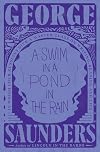
I think one might describe this as a book about writing, and I suppose it is. But for me it’s primarily a book about careful, mindful reading. Which makes a better writer, of course, but even for someone like myself who isn’t interested in writing, it makes reading itself much deeper and more rewarding. We often approach fiction in a passive kind of way—looking for relaxation, escape, fun. But Saunders wants to call our awareness to the richer experience that’s available just below show more the surface, if we’re willing to engage a bit more and with a bit of intentionality.
Honestly, the biggest shift might be just slowing the reading process down to notice more. Even just changing pace and stepping back from the work does tend to open it up and reveal what’s really going on. But Saunders also has some specific, valuable ideas—not least, that (especially in a short story) everything on the page is there because the author chose to put it there. I’ve read quite a bit, but I hadn’t ever really developed the habit of close reading that Saunders implicitly promotes here. To be honest, when I had done this kind of reading, it felt a bit artificial, overly analytical. But there’s something very different going on in Saunders’ approach—he reads with soft eyes, finding the wonder that lies in the author’s work. And his sense of wonder is catching. show less
Honestly, the biggest shift might be just slowing the reading process down to notice more. Even just changing pace and stepping back from the work does tend to open it up and reveal what’s really going on. But Saunders also has some specific, valuable ideas—not least, that (especially in a short story) everything on the page is there because the author chose to put it there. I’ve read quite a bit, but I hadn’t ever really developed the habit of close reading that Saunders implicitly promotes here. To be honest, when I had done this kind of reading, it felt a bit artificial, overly analytical. But there’s something very different going on in Saunders’ approach—he reads with soft eyes, finding the wonder that lies in the author’s work. And his sense of wonder is catching. show less
''His childhood dreams had been so bright, he had hoped for so much, it couldn't be true that he was a nobody.''
“Her hair looked like her hair in the dream and her eyes looked like her eyes in the dream, and as for her body, he couldn't tell, she was wearing a mumu.”
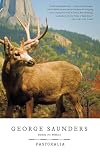
Wow! This dude is out there. This story collection is firmly in Kurt Vonnegut country. In the long opening story, we are in a historical theme park, set in a fuzzy American future and we follow a couple who live like show more cavemen, butchering goats, grunting and eating bugs for the tourists. They are closely monitored by the park's management, for efficiency and authenticity. The rest of the collection, is as equally wacky, but Saunders style of satire, is sharp and inventive and explosively funny.
Obviously, he is not for all tastes, but if he clicks for you, you are in for a deliriously, delicious ride. show less
“Her hair looked like her hair in the dream and her eyes looked like her eyes in the dream, and as for her body, he couldn't tell, she was wearing a mumu.”
Wow! This dude is out there. This story collection is firmly in Kurt Vonnegut country. In the long opening story, we are in a historical theme park, set in a fuzzy American future and we follow a couple who live like show more cavemen, butchering goats, grunting and eating bugs for the tourists. They are closely monitored by the park's management, for efficiency and authenticity. The rest of the collection, is as equally wacky, but Saunders style of satire, is sharp and inventive and explosively funny.
Obviously, he is not for all tastes, but if he clicks for you, you are in for a deliriously, delicious ride. show less
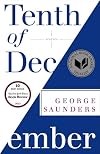
A brilliant collection of ten short stories from George Saunders – funny, poignant, and touching on things like class, aging, and the dehumanizing aspects of modern science. There is creativity and breadth here, an easy flow to the writing, and great pace. I also liked the excerpt of the conversation Saunders had with David Sedaris about the writing process itself that was present in this volume, which also talked about the semi-sacred, near-holy aspect of reading.
Favorites:
Tenth of show more December – the title story is actually last in the collection, but is so brilliant and memorable that I put at the top of the list. In it, an elderly man with a terminal illness elects to end his (and his family’s) suffering by hiking out into the snow of a deserted area. A boy with an active imagination is also out there, however, and they’re destined to meet. The imaginations of these two people, at such opposite ends of life, their struggles, and the great humanism in how the story plays out were masterful. Considering my own father at the end of his days while reading this was devastating.
Victory Lap – a story of a kidnapping attempt cleverly told through the eyes of three people – a teenage girl (the intended victim), the criminal, and the teenage boy across the street. The boy’s parents are very strict, making the description of his life pretty funny, and we hear their voices in his mind, just as we hear the criminal’s parents’ voices in his. Parenting styles are thus reflected in these people – e.g. probably loving and supporting (resulting in a fanciful imagination and maybe naively opening the door to a stranger), cruel (resulting in cruelty), and ridiculously structured (resulting in rebelling in imagined obscenities but still feeling the heaviness of their instructions within his mind). A very well-executed story.
Puppy – also very well done, and another window into parenting, this time with mom who is fully invested and supportive of her kids (tellingly a reaction to how poor her own mother had been), travelling to look at a puppy that’s up for adoption. Even in how the woman thinks of the playfulness of her husband, and the strength of her faith and optimism, we sense that the kids are in a wonderful family. Once they get to the place with the puppy, however, they get a disturbing glimpse into a family living in filth with a ‘problem child’ chained up in the back, which is quite a contrast. Saunders wisely humanizes the mother in that environment and gives her a lovely thought: “Love was liking someone how he was and doing things to help him get even better,” but still paints a pretty horrifying picture.
Escape from Spiderhead – really enjoyed this one, a tale of near-futuristic experimentation on prisoners, where scientists inject them with advanced drugs to cause specific reactions. We see a broad spectrum of drugs, including one that induce the person to see another as their deepest possible soulmate, and one that causes horrible feelings of pain and depression. I loved it because it hints at how delicate our brain chemistries are, just a little tweak here and there and suddenly our entire outlooks are changed, which rings true, and because it touches on how cruel people can be, thinking they’re acting for the greater good. Well written, and could see this one expanded and made into a film.
The Semplica Girl Diaries – a story that parodies a man through his diary entries, recounting his attempts to be a good parent and to have the better things in life like his daughter’s rich friends. It’s got some of those same elements of humor, but then the horror of what the rich friends have gradually unfolds, giving the story a very dark edge. The only thing that wore on me a bit was the semi-literate narration from the diary entries, which pushed the boundaries of enjoyability given this story’s length, 60 pages.
My Chivalric Fiasco – A janitor at a medieval theme park stumbles across his boss raping a co-worker, and in the effort to insuring his silence, finds himself promoted to playing one of the costumed roles. As part of that role he’s given a designer drug meant to make him speak as a knight would, but it has the side effect that it also makes him more honorable – thus making it hard for him to hold his tongue about the crime. It’s a creative, funny story, and the narration that’s modulated to the drug’s onset and gradual withdrawal is clever.
Others:
Sticks – literally two pages long, detailing a family ritual of decorating a metal pole in the yard, and how it reflects the psyche of the father in increasingly blunt ways as he gets older. An interesting little vignette that speaks to regret and loss, but it would have been nice if it had been further developed.
Exhortation – An email sent to the employees of a company asking them to work harder, where the humor comes from just how non-self-aware the manager is, and how he contradicts himself in his lame attempt to improve morale. Lots of fun probably for anyone who has been in a corporate environment.
Al Roosten – A middle-aged man who runs a failing business volunteers himself for a fundraising auction where people bid on having lunch with him and others, including a more successful and attractive man that he alternately envies, hates, and befriends in his imagination. It’s funny how he consistently sees himself as better than he is, e.g. during the auction or thinking he can become mayor, and so when Saunders shows him thinking he’s better than the homeless, who he refers to as “hobos” and thinks of in an old-fashioned way of stealing pies off windowsills, we see even more how out of touch he is (and how he may become homeless someday).
Home – Probably the least successful story for me; a veteran who was dishonorably discharged returns to his hometown to see his mother, who is living with a deadbeat, and his sister and her husband. While Saunders is talking about class in this story and several others, here it just felt rather dull, and I wish he had delved a little more into the vet’s psyche after what he had seen and taken part in while in the military. show less
Favorites:
Tenth of show more December – the title story is actually last in the collection, but is so brilliant and memorable that I put at the top of the list. In it, an elderly man with a terminal illness elects to end his (and his family’s) suffering by hiking out into the snow of a deserted area. A boy with an active imagination is also out there, however, and they’re destined to meet. The imaginations of these two people, at such opposite ends of life, their struggles, and the great humanism in how the story plays out were masterful. Considering my own father at the end of his days while reading this was devastating.
Victory Lap – a story of a kidnapping attempt cleverly told through the eyes of three people – a teenage girl (the intended victim), the criminal, and the teenage boy across the street. The boy’s parents are very strict, making the description of his life pretty funny, and we hear their voices in his mind, just as we hear the criminal’s parents’ voices in his. Parenting styles are thus reflected in these people – e.g. probably loving and supporting (resulting in a fanciful imagination and maybe naively opening the door to a stranger), cruel (resulting in cruelty), and ridiculously structured (resulting in rebelling in imagined obscenities but still feeling the heaviness of their instructions within his mind). A very well-executed story.
Puppy – also very well done, and another window into parenting, this time with mom who is fully invested and supportive of her kids (tellingly a reaction to how poor her own mother had been), travelling to look at a puppy that’s up for adoption. Even in how the woman thinks of the playfulness of her husband, and the strength of her faith and optimism, we sense that the kids are in a wonderful family. Once they get to the place with the puppy, however, they get a disturbing glimpse into a family living in filth with a ‘problem child’ chained up in the back, which is quite a contrast. Saunders wisely humanizes the mother in that environment and gives her a lovely thought: “Love was liking someone how he was and doing things to help him get even better,” but still paints a pretty horrifying picture.
Escape from Spiderhead – really enjoyed this one, a tale of near-futuristic experimentation on prisoners, where scientists inject them with advanced drugs to cause specific reactions. We see a broad spectrum of drugs, including one that induce the person to see another as their deepest possible soulmate, and one that causes horrible feelings of pain and depression. I loved it because it hints at how delicate our brain chemistries are, just a little tweak here and there and suddenly our entire outlooks are changed, which rings true, and because it touches on how cruel people can be, thinking they’re acting for the greater good. Well written, and could see this one expanded and made into a film.
The Semplica Girl Diaries – a story that parodies a man through his diary entries, recounting his attempts to be a good parent and to have the better things in life like his daughter’s rich friends. It’s got some of those same elements of humor, but then the horror of what the rich friends have gradually unfolds, giving the story a very dark edge. The only thing that wore on me a bit was the semi-literate narration from the diary entries, which pushed the boundaries of enjoyability given this story’s length, 60 pages.
My Chivalric Fiasco – A janitor at a medieval theme park stumbles across his boss raping a co-worker, and in the effort to insuring his silence, finds himself promoted to playing one of the costumed roles. As part of that role he’s given a designer drug meant to make him speak as a knight would, but it has the side effect that it also makes him more honorable – thus making it hard for him to hold his tongue about the crime. It’s a creative, funny story, and the narration that’s modulated to the drug’s onset and gradual withdrawal is clever.
Others:
Sticks – literally two pages long, detailing a family ritual of decorating a metal pole in the yard, and how it reflects the psyche of the father in increasingly blunt ways as he gets older. An interesting little vignette that speaks to regret and loss, but it would have been nice if it had been further developed.
Exhortation – An email sent to the employees of a company asking them to work harder, where the humor comes from just how non-self-aware the manager is, and how he contradicts himself in his lame attempt to improve morale. Lots of fun probably for anyone who has been in a corporate environment.
Al Roosten – A middle-aged man who runs a failing business volunteers himself for a fundraising auction where people bid on having lunch with him and others, including a more successful and attractive man that he alternately envies, hates, and befriends in his imagination. It’s funny how he consistently sees himself as better than he is, e.g. during the auction or thinking he can become mayor, and so when Saunders shows him thinking he’s better than the homeless, who he refers to as “hobos” and thinks of in an old-fashioned way of stealing pies off windowsills, we see even more how out of touch he is (and how he may become homeless someday).
Home – Probably the least successful story for me; a veteran who was dishonorably discharged returns to his hometown to see his mother, who is living with a deadbeat, and his sister and her husband. While Saunders is talking about class in this story and several others, here it just felt rather dull, and I wish he had delved a little more into the vet’s psyche after what he had seen and taken part in while in the military. show less
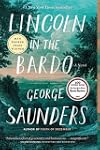
Saunders' debut novel defies conventions, offering a powerful work of supernatural historical fiction built of grief, character study, denial, hope, and humor. I admit Saunder's style hasn't always been my cup of tea--one of the main reasons that it took me so long to get around to reading this novel--but I'm shocked to report that I read it in a single day, devouring it in just two long sittings. The collection of voices and and research here makes for a fast and compelling ride, and show more although it took me some time to get completely sucked in, Saunders won me over in the end.
If you read fiction, you should read this. I suspect there's something here for nearly everyone. show less
If you read fiction, you should read this. I suspect there's something here for nearly everyone. show less
Lists
First Novels (1)
Best Audiobooks (1)
Review 4 (1)
Favourite Books (1)
To Read (1)
Booker Prize (1)
Obama Reads (1)
el (1)
Writing (1)
Ghosts (1)
to get (1)
At the Library (1)
2021 (1)
Magic Realism (1)
Five star books (1)
Best Dystopias (1)
Phoebe Bridgers (2)
. (2)
Dead narrators (1)
2000s decade (1)
Read This Next (1)
Backlisted (1)
100 New Classics (1)
Take Four Books (1)
Reiny (1)
Awards


You May Also Like


Associated Authors
Statistics
- Works
- 51
- Also by
- 58
- Members
- 25,640
- Popularity
- #814
- Rating
- 3.9
- Reviews
- 1,050
- ISBNs
- 317
- Languages
- 20
- Favorited
- 97


