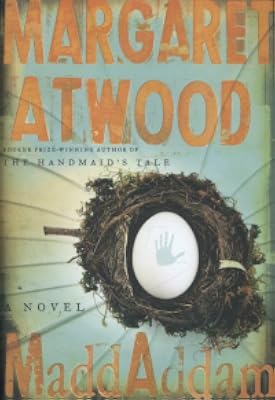
On This Page
Description
Months after the Waterless Flood pandemic has wiped out most of humanity, Toby and Ren have rescued their friend Amanda from the vicious Painballers. They return to the MaddAddamite cob house, which is being fortified against man and giant Pigoon alike. Accompanying them are the Crakers, the gentle, quasihuman species engineered by the brilliant but deceased Crake. While their reluctant prophet, Jimmy--Crake's one-time friend--recovers from a debilitating fever, it's left to Toby to narrate show more the Craker theology, with Crake as Creator. She must also deal with cultural misunderstandings, terrible coffee, and her jealousy over her lover, Zeb. Meanwhile, Zeb searches for Adam One, founder of the God's Gardeners, the pacifist green religion from which Zeb broke years ago to lead the MaddAddamites in active resistance against the destructive CorpSeCorps. Now, under threat of an imminent Painballer attack, the MaddAddamites must fight back with the aid of their newfound allies, some of whom have four trotters. At the center is the extraordinary story of Zeb's past, which involves a lost brother, a hidden murder, a bear, and a bizarre act of revenge. show lessTags
Recommendations


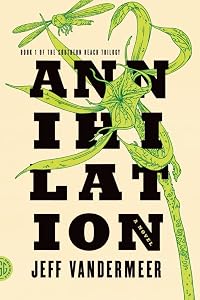
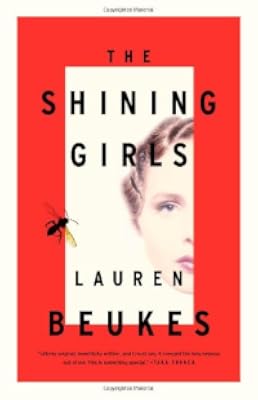
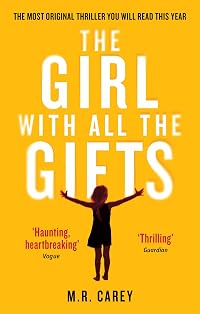
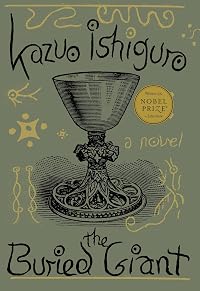

Member Recommendations
Member Reviews
I bought this with me in my carry-on luggage and I started it on the plane. To be honest, I’m not sure why I bothered reading it. It’s the third book of a trilogy and I didn’t much like the preceding two books, Oryx and Crake and The Year of the Flood. Which is not to say that I don’t like Atwood’s fiction – Alias Grace is an excellent novel, and I’ve thought other books by her were very good indeed. But not the MaddAddam trilogy, which reads like really badly-done sf that’s striving for satire but misses every time. The surviving Gardeners from The Year of the Flood have more or less settled down, with the Crakers (a race of genetically-engineered pacifist and dimwitted herbivorous humans created by Crake) and Snowman, show more who was also part of the project with Oryx and Crake. The two Painballers from the previous book are still at large, and the Gardeners have no desire to fall into their clutches. But MaddAddam is mostly about Toby – and her lover, Zeb, half-brother of Adam, founder of the Gardeners, and his various adventures in the US prior to the release of the virus which killed off most of humanity. And it’s all so very, well, obvious – a dystopian neoliberal US that has been a mainstay of science fiction since cyberpunk. Atwood enlivens it with some jokey branding, but half the time the brands are embarrassingly bad, as if any marketing department on the planet would come up with such crass brands as AnooYoo, and so on. On the other hand, the sections where Toby tells the Crakers slightly mythologised stories about Zeb are quite funny. Which is another reason why I’m not especially keen humorous science fiction for a start, and yet the MaddAddam trilogy doesn’t seem to know whether it’s humorous or serious. It’s impossible to take seriously, which suggests the latter intent; but it’s not comic enough to qualify as the former. Ah well. show less
It took me a while to finish this one. I had a few books I "had" to read in the meantime, but truthfully it did not grab me and compel me to read as Year of the Flood did (my favourite book of the triology). This book felt more mainstream fiction than Atwood caliber of literature. Yes, there's still lots of subtle commentary on religion, Christianity, environmental matters, capitalism, etc, but it's cloaked in a romance and the escapades of a renegade hacker. I didn't really care about Zeb's background to the detailed extent that it's given. I wanted to know more about how the Crakers and Gardeners and cohorts were surviving and adapting to the post-Flood world.
What puzzled me about this book is how traditional the gender roles are. show more Yes, Toby is the one who knows how to use a rifle, but any reconnaissance or "mission" is primarily led by the males. Gender roles are still very male=hunter/gatherer versus female=caregiver. Is Atwood saying that's the norm and our current drive for equality is a luxury on par with art? (meaning, that only a flourishing society spends time on art once food & shelter are easily obtained) Or is she just writing from a traditional perspective?
Regardless, this book underwhelmed me. show less
What puzzled me about this book is how traditional the gender roles are. show more Yes, Toby is the one who knows how to use a rifle, but any reconnaissance or "mission" is primarily led by the males. Gender roles are still very male=hunter/gatherer versus female=caregiver. Is Atwood saying that's the norm and our current drive for equality is a luxury on par with art? (meaning, that only a flourishing society spends time on art once food & shelter are easily obtained) Or is she just writing from a traditional perspective?
Regardless, this book underwhelmed me. show less
I have never been this unimpressed with a Margaret Atwood novel. MaddAddam is a tedious slog through the events of Oryx and Crake - again. While this technique worked incredibly well in The Year of the Flood, providing context for much of the events and letting the female characters flip Jimmy's story on its head, MaddAddam totally fails to provide anything new or interesting in its backstory. (My 'reading' was done via audiobook, and the actor's voices, nuances, and inflections did nothing to keep me interested.)
You might think that, now that all of the characters have met up after the end of the world, there would be some forward momentum in the present-day. You would be wrong. If you're interested in what happens to Jimmy, the show more erstwhile protagonist of the first novel, or any of the characters from the second novel - Toby, Ren, or Amanda - then you are going to be sorely disappointed. Toby's arc during this book is particularly terrible, but Ren and Amanda only escape this fate because they spend most of their time offscreen. Jimmy spends most of the novel in a coma. In fact, the entire plot of the present-day revolves around the Crakers and the Maddaddamites defending themselves from two rogue Painballers. It's just as boring as it sounds.
Even if you're reading MaddAddam to be further immersed in the dystopian world that Margaret Atwood created in Oryx and Crake, you'll probably still be disappointed. 75% of this novel takes place in the past, rehashing Zeb's life in the pleeblands and his relationship with Adam One. There are a few interesting new additions to the world, but the vast majority of Zeb's activities are tied to the other books' plot lines; his story just retells what you already know.
Finally, the writing in this book is just plain bad. There are a couple moments where the prose recalls the first two books, but they are few and far between. The metaphors have all been done before. The characters are flat and static. The Craker story sections are beyond painful. The pacing is puzzling. It's just one big mess.
I don't recommend it, unless you absolutely need to read it, and cannot go without the closure.... I was plain bored of Zeb's 1940's-style of speaking, endless jobs that have nothing to do with furthering his character, and Toby's endless jealousy, and worrying about losing Zeb. show less
You might think that, now that all of the characters have met up after the end of the world, there would be some forward momentum in the present-day. You would be wrong. If you're interested in what happens to Jimmy, the show more erstwhile protagonist of the first novel, or any of the characters from the second novel - Toby, Ren, or Amanda - then you are going to be sorely disappointed. Toby's arc during this book is particularly terrible, but Ren and Amanda only escape this fate because they spend most of their time offscreen. Jimmy spends most of the novel in a coma. In fact, the entire plot of the present-day revolves around the Crakers and the Maddaddamites defending themselves from two rogue Painballers. It's just as boring as it sounds.
Even if you're reading MaddAddam to be further immersed in the dystopian world that Margaret Atwood created in Oryx and Crake, you'll probably still be disappointed. 75% of this novel takes place in the past, rehashing Zeb's life in the pleeblands and his relationship with Adam One. There are a few interesting new additions to the world, but the vast majority of Zeb's activities are tied to the other books' plot lines; his story just retells what you already know.
Finally, the writing in this book is just plain bad. There are a couple moments where the prose recalls the first two books, but they are few and far between. The metaphors have all been done before. The characters are flat and static. The Craker story sections are beyond painful. The pacing is puzzling. It's just one big mess.
I don't recommend it, unless you absolutely need to read it, and cannot go without the closure.... I was plain bored of Zeb's 1940's-style of speaking, endless jobs that have nothing to do with furthering his character, and Toby's endless jealousy, and worrying about losing Zeb. show less
I just finished MaddAddam. And I am absolutely reeling. There are definitely different layers to this book; you could read it just at the story level, and it'd be interesting and intense, as the plot moves forward. You could read it at the symbolic level, thinking about the ways the world could shatter and come back together, and the mistakes we make socially, economically, environmentally, scientifically. And finally, at the metaphor level, the way reality is re-tuned for the Crakers, so that they carry on in what they consider to be their paradise, with fully religious parable on board, having been carefully constructed for them by Toby, Jimmy, and the others, so as not to destroy that idealism.
One read is definitely not enough. I'm show more going to be musing on this trilogy for quite some time. And eternal thanks to Olivia, who encouraged me to take a second run at "Year of the Flood" when I gave up on it. You were so, so right. show less
One read is definitely not enough. I'm show more going to be musing on this trilogy for quite some time. And eternal thanks to Olivia, who encouraged me to take a second run at "Year of the Flood" when I gave up on it. You were so, so right. show less
I loved MaddAddam.
This volume of the MaddAddam trilogy is delicate. The tale unwinds through several voices, and always Atwood seems to nail the perspective that tells just the right sort of story. My favorite passages were Toby's, when she is telling goodnight stories to the Crakers. Telling just one side of the conversation was completely amusing, often causing me to laugh out loud.
I don't do that often.
I also really enjoyed Bluebeard. Bluebeard was not just endearing. He also caused me to think, to wonder, to ponder potential.
This is a trilogy worth digging into. Yes, I'm in an Atwood phase right now, but that's because she's such a delicious writer.
I was sad for this one to end. I even shed a tear, it ended so well.
Hope. It lives.
This volume of the MaddAddam trilogy is delicate. The tale unwinds through several voices, and always Atwood seems to nail the perspective that tells just the right sort of story. My favorite passages were Toby's, when she is telling goodnight stories to the Crakers. Telling just one side of the conversation was completely amusing, often causing me to laugh out loud.
I don't do that often.
I also really enjoyed Bluebeard. Bluebeard was not just endearing. He also caused me to think, to wonder, to ponder potential.
This is a trilogy worth digging into. Yes, I'm in an Atwood phase right now, but that's because she's such a delicious writer.
I was sad for this one to end. I even shed a tear, it ended so well.
Hope. It lives.
MaddAddam is the final book in Margaret Atwood's post-apocalyptic trilogy, following Oryx and Crake and The Year of the Flood.
In many ways, MaddAddam is a quiet denouement to the frenzied dystopia depicted in the previous two books in the series. MaddAddam takes up right where both the previous books left off, joining Snowman-Jimmy and the bioengineered post-humans called the Crakers with the remnants of the God's Gardeners cult who survived the plague that wiped out most of the human race. The remaining humans decide to live with the Crakers and protect them from the last threat: other surviving humans, particularly the vicious Painballers who they know are lurking nearby.
A lot of the story is taken up by flashback, relating the back show more stories of brothers Zeb and Adam, founder of the God's Gardeners, and answering many of the questions left hanging in the previous two books. This storytelling technique leaves the reader feeling removed from much of the action and not fully invested in the outcome. For instance, when Zeb and the others decide to go take out the Painballers, those events take place "off-camera," related only as a story to the Crakers, which steals a lot of suspense from the climax.
I suspect this is purposeful on Atwood's part, who seems to be painting the picture of a near-perfect utopia in her post-apocalyptic world. A utopia which, I might add, doesn't really need men -- at least, not non-Craker men. Other than Zeb, the most fully realized characters are the surviving women, with Toby (a major character from The Year of the Flood) providing their voice. Most of the women eventually become pregnant by the Crakers, giving the reader the assumption that human and post-human will eventually merge, eliminating the traditional male qualities like aggressiveness, jealousy and ego.
That's all well and good if we're fantasizing, but it doesn't make for a particularly exciting read. Also, I found it a bit problematic that even though the post-apocalyptic society seemed to be forming itself along matriarchal lines, the bulk of the story still focused on male characters. It was a jarring contrast. Oryx is the character who has gotten short shrift in all three of these novels, as she has now literally been turned into an unknowable goddess.
Atwood is a terrific writer, and her books are always enjoyable. But I can't help feeling that she ran out of steam with this idea. In my opinion, Oryx and Crake remains the best book of the trilogy, a significant contribution to the post-apocalyptic genre. MaddAddam can't quite measure up to that. show less
In many ways, MaddAddam is a quiet denouement to the frenzied dystopia depicted in the previous two books in the series. MaddAddam takes up right where both the previous books left off, joining Snowman-Jimmy and the bioengineered post-humans called the Crakers with the remnants of the God's Gardeners cult who survived the plague that wiped out most of the human race. The remaining humans decide to live with the Crakers and protect them from the last threat: other surviving humans, particularly the vicious Painballers who they know are lurking nearby.
A lot of the story is taken up by flashback, relating the back show more stories of brothers Zeb and Adam, founder of the God's Gardeners, and answering many of the questions left hanging in the previous two books. This storytelling technique leaves the reader feeling removed from much of the action and not fully invested in the outcome. For instance, when Zeb and the others decide to go take out the Painballers, those events take place "off-camera," related only as a story to the Crakers, which steals a lot of suspense from the climax.
I suspect this is purposeful on Atwood's part, who seems to be painting the picture of a near-perfect utopia in her post-apocalyptic world. A utopia which, I might add, doesn't really need men -- at least, not non-Craker men. Other than Zeb, the most fully realized characters are the surviving women, with Toby (a major character from The Year of the Flood) providing their voice. Most of the women eventually become pregnant by the Crakers, giving the reader the assumption that human and post-human will eventually merge, eliminating the traditional male qualities like aggressiveness, jealousy and ego.
That's all well and good if we're fantasizing, but it doesn't make for a particularly exciting read. Also, I found it a bit problematic that even though the post-apocalyptic society seemed to be forming itself along matriarchal lines, the bulk of the story still focused on male characters. It was a jarring contrast. Oryx is the character who has gotten short shrift in all three of these novels, as she has now literally been turned into an unknowable goddess.
Atwood is a terrific writer, and her books are always enjoyable. But I can't help feeling that she ran out of steam with this idea. In my opinion, Oryx and Crake remains the best book of the trilogy, a significant contribution to the post-apocalyptic genre. MaddAddam can't quite measure up to that. show less
I can't believe that 20 years after Snow Crash a major author could present a cackling corporate dystopia full of bad puns with a straight face, but here we are.
Atwood's books are impossible to separate out from their politics. The problem with MaddAddam is that the politics are so resolutely delugist as to be indefensible. (Delugist is a term that I'm working on, particularly in regards to climate change, with the idea that mankind is being punished for its industrial sins but that a righteous society will arise from the ashes. ) This is a dangerous fantasy, because you and the people who you love won't be among the righteous. In fact, there won't be any pure and moral survivors, just the traumatized victims who managed to be the show more last people standing when everything fell apart. Particularly so in this case, with the survivors being the MaddAddam crew that Crake put together--who by the way never discuss their key role in releasing the plague that destroyed humanity, the Crakers as an idealized race of God's children, and surviving Painballers, neurologically traumatized gladiators lifted from Mad Max.
The plot, such as it is, wanders around the various problems of survival for our small band, although without much urgency, flashbacks to tough guy Zeb's early career, and "strong female narrator" Toby's lovelorn moping over Zeb. The only parts that are particularly interesting are the half-recorded stories to the Crakers, and seeing how they compare with more factual accounts elsewhere in the book.
I started this review by mentioning Snow Crash, because I'm ashamed to admit that it took me far too long to realize that the settings were basically identical. The difference is that Snow Crash is a delightfully gonzo parody of cyberpunk and late-Reagan America. MaddAddam is the same hacker conspiracies and joke names, but with the earnest hairshirt eco-moralizing of a Greenpeace activist. The joke just doesn't fly.
There's an interesting book here about the Next Nature that grows from the wreckage. The Crakers and Pigoons are obvious dominant species, able to out-compete any natural species and with no existing predators. Do they find a balance, or strip the Earth bare again? Did the modifications to make the Crakers perfect pacifists work, or does hierarchy, myth, and violence arise again? There might be an interesting fourth book, but I doubt that's happening, and have little faith that Atwood would deconstruct her universe in such a way.
Reread The Windup Girl instead. show less
Atwood's books are impossible to separate out from their politics. The problem with MaddAddam is that the politics are so resolutely delugist as to be indefensible. (Delugist is a term that I'm working on, particularly in regards to climate change, with the idea that mankind is being punished for its industrial sins but that a righteous society will arise from the ashes. ) This is a dangerous fantasy, because you and the people who you love won't be among the righteous. In fact, there won't be any pure and moral survivors, just the traumatized victims who managed to be the show more last people standing when everything fell apart. Particularly so in this case, with the survivors being the MaddAddam crew that Crake put together--who by the way never discuss their key role in releasing the plague that destroyed humanity, the Crakers as an idealized race of God's children, and surviving Painballers, neurologically traumatized gladiators lifted from Mad Max.
The plot, such as it is, wanders around the various problems of survival for our small band, although without much urgency, flashbacks to tough guy Zeb's early career, and "strong female narrator" Toby's lovelorn moping over Zeb. The only parts that are particularly interesting are the half-recorded stories to the Crakers, and seeing how they compare with more factual accounts elsewhere in the book.
I started this review by mentioning Snow Crash, because I'm ashamed to admit that it took me far too long to realize that the settings were basically identical. The difference is that Snow Crash is a delightfully gonzo parody of cyberpunk and late-Reagan America. MaddAddam is the same hacker conspiracies and joke names, but with the earnest hairshirt eco-moralizing of a Greenpeace activist. The joke just doesn't fly.
There's an interesting book here about the Next Nature that grows from the wreckage. The Crakers and Pigoons are obvious dominant species, able to out-compete any natural species and with no existing predators. Do they find a balance, or strip the Earth bare again? Did the modifications to make the Crakers perfect pacifists work, or does hierarchy, myth, and violence arise again? There might be an interesting fourth book, but I doubt that's happening, and have little faith that Atwood would deconstruct her universe in such a way.
Reread The Windup Girl instead. show less
Members
- Recently Added By
Published Reviews
ThingScore 88
Atwood's prose miraculously balances humor, outrage and beauty. ... It's a pleasure to read a futuristic novel whose celebration of beauty extends to the words themselves. And words are very important here; by the moving end of "MaddAddam," we understand how language and writing produced the beautiful fiction that described our beginnings.
added by lquilter
MaddAddam is slightly crazed, usually intriguing and often great fun. I would have enjoyed it even more, however, were it not for the nagging voice that said: instead of this, we might have had another Alias Grace, or another The Blind Assassin.
added by zhejw
Lists

Best Dystopias
280 works; 276 members

Best Science Fiction Novels
816 works; 430 members

Top Five Books of 2013
1,562 works; 721 members

Favorite Science Fiction by Women Authors
737 works; 196 members

Recommend the 20 best books you've read in the last five years
2,168 works; 606 members

Your favorite books from the 2014 Baileys Women's Prize for Fiction
20 works; 23 members

Best Contemporary Literary Fiction (Around the Last 30 Years)
388 works; 124 members

Female Author
1,234 works; 67 members
The Best of Canadian Literature
235 works; 33 members

Top Five Books of 2014
1,064 works; 398 members
Science fiction novels with a female protagonist
105 works; 30 members

Dystopian and Apocalyptic Literature
350 works; 74 members

Best Post-Apocalyptic Stories
143 works; 88 members

Recommended Apocalyptic Novels
53 works; 24 members

Favourite Books
1,819 works; 316 members

Novels featuring siblings
133 works; 8 members

Speculative Fiction: Slipstream Literature
166 works; 16 members

Books Read in 2014
2,343 works; 89 members

It's the end of the world as we know it!
90 works; 23 members

Top Five Books of 2015
811 works; 240 members
Literature About Women and Girls
394 works; 39 members
Recommended Speculative Fiction by Women and People of Color
298 works; 45 members

An End of the World Reading List
63 works; 4 members

Read in 2015
6 works; 1 member

Books Read in 2017
4,249 works; 130 members
Reading Group 2015 Winter
6 works; 1 member

Books I read in 2014
13 works; 1 member

Speculative Fiction to Read
706 works; 32 members
To Read
617 works; 7 members

Books reviewed in Nature
11 works; 1 member

Books Read in 2013
1,630 works; 51 members

Phoebe Bridgers
29 works; 1 member

Fiction Books Worthy of Reading Again
37 works; 1 member

Llibres que he llegit el 2024
77 works; 1 member
BingoDOG - Genre Benders
74 works; 14 members
Talk Discussions
Past Discussions
"Maddaddam": What's your verdict? SPOILERS ALLOWED in Girlybooks (November 2014)
Author Information

284+ Works 199,048 Members
Margaret Atwood was born on November 18, 1939 in Ottawa, Canada. She received a B.A. from Victoria College, University of Toronto in 1961 and an M.A. from Radcliff College in 1962. Her first book of verse, Double Persephone, was published in 1961 and was awarded the E. J. Pratt Medal. She has published numerous books of poetry, novels, story show more collections, critical work, juvenile work, and radio and teleplays. Her works include The Journals of Susanna Moodie, Power Politics, Cat's Eye, The Robber Bride, Morning in the Buried House, the MaddAdam trilogy, and The Heart Goes Last. She has won numerous awards including the Prince of Asturias Award for Literature, the Booker Prize in 2000 for The Blind Assassin, the Giller Prize and the Premio Mondello for Alias Grace, and the Governor General's Award in 1966 for The Circle Game and in 1986 for The Handmaid's Tale, which also won the very first Arthur C. Clarke Award in 1987. She won the PEN Pinter prize in 2016 for her political activism. She was awarded the 2016 PEN Pinter Prize for the outstanding literary merit of her body of work. (Bowker Author Biography) show less
Some Editions
Awards and Honors
Awards
Distinctions
Notable Lists
Series

Belongs to Publisher Series
Otavan kirjasto (253)
Work Relationships
Common Knowledge
- Canonical title
- MaddAddam
- Original title
- MaddAddam
- Original publication date
- 2013-08-27
- People/Characters
- Toby; Zeb; Ren; Amanda; Jimmy-the-Snowman; Blackbeard (show all 20); Adam; Crake; Swift Fox; Pilar; Oryx; Crozier; Jelack Rebecca; Glenn; Chuck; Lotis Blue; Black Rhino; Ivory Bill; Manatee; Katrina WooWoo
- Dedication
- For my family
and for Larry Gaynor (1939–2010) - First words
- The MaddAddam Trilogy: The Story So Far
The first two books in the MaddAddam trilogy are Oryx and Crake and The Year of the Flood. MaddAddam is the third book.
--Preface
The Story of the Egg, and of Oryx and Crake, and how they made People and Animals; and of the Chaos; and of Snowman-the-Jimmy; and of the Smelly Bone and the coming of the Two Bad Men - Quotations
- But hatred and viciousness are addictive. You can get high on them. Once you've had a little, you start shaking if you don't get more.
They're preternaturally beautiful, thinks Toby. Unlike us. We must seem subhuman to them, with our flapping extra skins, our aging faces, our warped bodies, too thin, too fat, too hairy, too knobbly. Perfection exacts a price... (show all), but it's the imperfect who pay it.
There's the story, then there's the real story, then there's the story of how the story came to be told. Then there's what you leave out of the story. Which is part of the story too.
People need such stories, Pilar said once, because however dark, a darkness with voices in it is better than a silent void.
Why is it always such a surprise? thinks Toby. The moon. Even though we know it's coming. Every time we see it, it makes us pause, and hush.
What comes next? Rules, dogmas, laws? The Testament of Crake? How soon before there are ancient texts they feel they have to obey but have forgotten how to interpret? Have I ruined them?
...what is 'belief' but a willingness to suspend the negatives?
"He said that if you acted according to a belief, that was the same thing. As having the belief."
Is that what writing amounts to? The voice your ghost would have, if it had a voice?
The people in the chaos cannot learn. They cannot understand what they are doing to the sea and the sky and the plants and the animals. They cannot understand that they are killing them, and that they will end by killing them... (show all)selves. And there are so many of them, and each one of them is doing part of the killing, whether they know it or not. And when you tell them to stop, they don't hear you. - Last words
- (Click to show. Warning: May contain spoilers.)Now we will sing.
- Original language
- English UK
Classifications
- Genres
- Science Fiction, Fiction and Literature, General Fiction
- DDC/MDS
- 813.54 — Literature & rhetoric American literature in English American fiction in English 1900-1999 1945-1999
- LCC
- PR9199.3 .A8 .M34 — Language and Literature English English Literature English literature: Provincial, local, etc.
- BISAC
Statistics
- Members
- 4,138
- Popularity
- 3,723
- Reviews
- 169
- Rating
- (3.94)
- Languages
- 15 — Chinese, Danish, Dutch, English, Finnish, French, German, Hungarian, Italian, Polish, Romanian, Spanish, Swedish, Turkish, Portuguese (Portugal)
- Media
- Paper, Audiobook, Ebook
- ISBNs
- 57
- UPCs
- 1
- ASINs
- 21