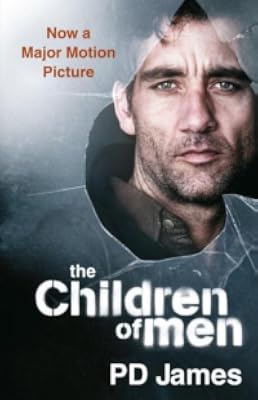
The Children of Men
by P. D. James
On This Page
Description
Told with P. D. James's trademark suspense, insightful characterization, and riveting storytelling, The Children of Men is a story of a world with no children and no future. The human race has become infertile, and the last generation to be born is now adult. Civilization itself is crumbling as suicide and despair become commonplace. Oxford historian Theodore Faron, apathetic toward a future without a future, spends most of his time reminiscing. Then he is approached by Julian, a bright, show more attractive woman who wants him to help get her an audience with his cousin, the powerful Warden of England. She and her band of unlikely revolutionaries may just awaken his desire to live . . . and they may also hold the key to survival for the human race.From the Trade Paperback edition.
. show less
Tags
Recommendations


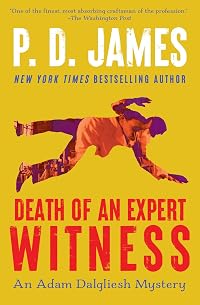
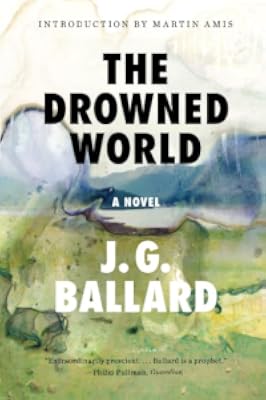
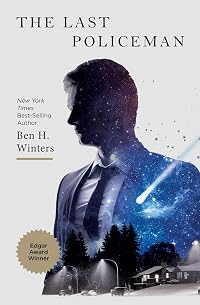


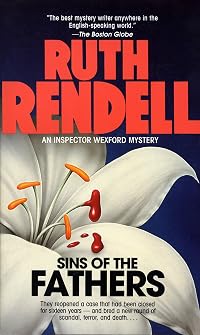


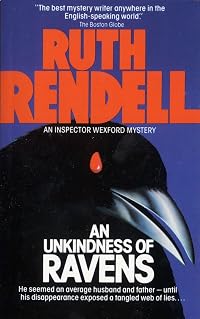
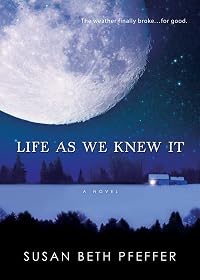
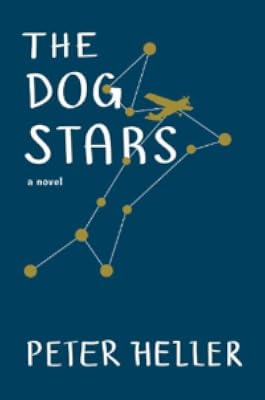
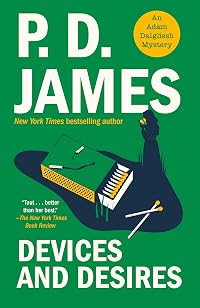
Member Recommendations
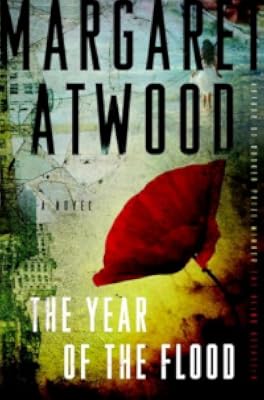
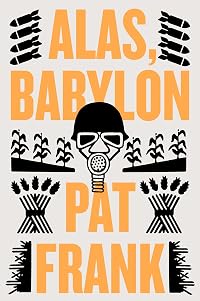
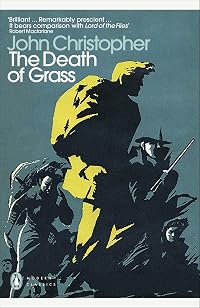
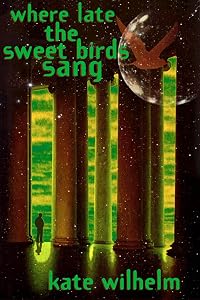
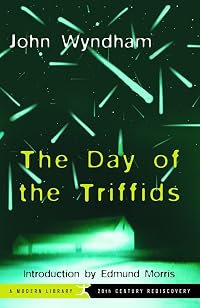
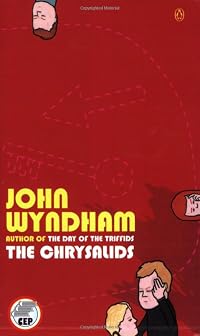
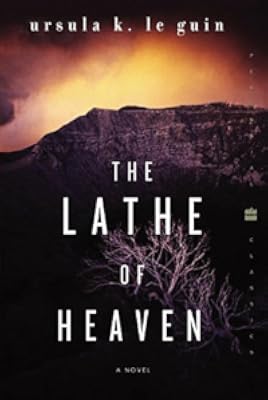
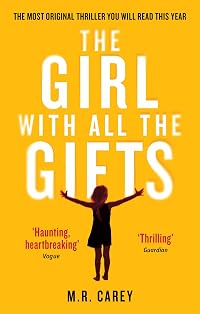
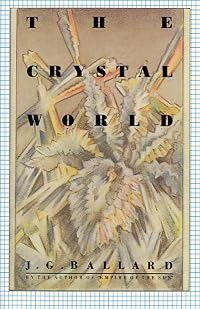
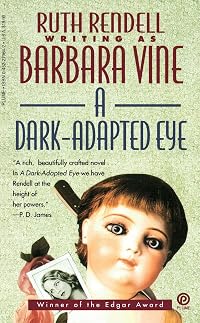
VictoriaPL Another dystopian tale of a future world dealing with infertility.
90


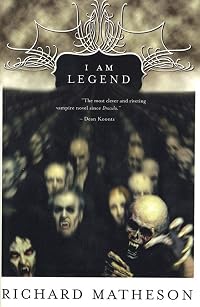
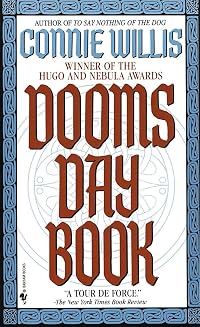
bibliobibuli Another dystopian read about a world where the human race is under threat - here from the inability to sleep anymore.
10

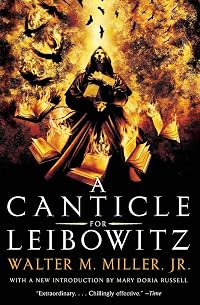
isabelx No more babies.

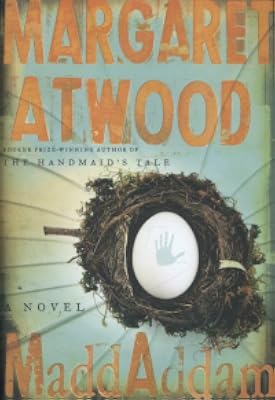
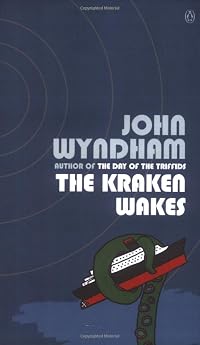
inge87 Speculative fiction about a future where men can be permanently cured of having daughters.
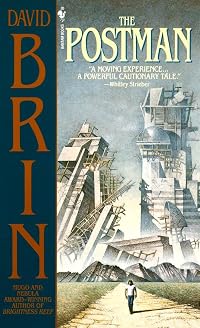
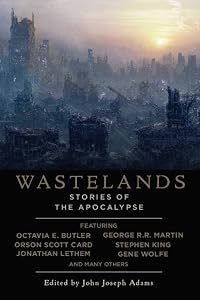
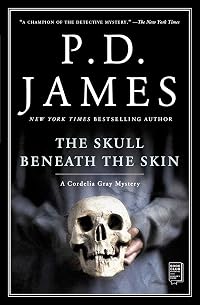
bibliobibuli Would it actually be such a bad thing if the human race disappeared? Here's a portrait of a world being reclaimed by nature and gradually erasing all human traces.
11

Member Reviews
Interesting - this belongs to that tiny category of books whose movie version I liked more. Which didn't mean the book didn't hold me. The premise is great, and unique, and PD James can write. It was as if Graham Greene had decided to write a work of speculative fiction. But James' ladling on the Christianity put me off - Greene, one of the great religious writers of fiction, would never have been so maudlin, nor so nostalgic about fading middle class mores. Meanwhile the film has several things going for it: it wisely shifts the focus to phenomena much more reflective of British reality in 2006 (and today) - like terrorism, state repression, and immigration. Clive Owen is much more engaging than James' dislikeable hero, there is no show more silly love story, and the victory, if there is one, is not his - or England's, for that matter. It's a complete rethinking of the premise, bringing a large and quite different looking world into focus. Three cheers for the movie, two and a half for the book. show less
A disquieting and original vision of the future that raises some intriguing philosophical issues. James imagines a world in which the human race has gone sterile and has resigned itself into slowly aging into extinction. "Children of Men" is, as might be expected, a relentlessly sad and mournful book. Much of it takes place in a particularly chilly, rain-swept England, and the appearance of a pregnant female character who promises a possible rebirth for the human race a hundred or so pages into the narrative barely alleviates the gloom. There's a certain toughness here too, though: imagined both as an ongoing diary of a historian and as a third-person narrative, "The Children of Men" is free of either sentimentality or self-pity. It's a show more stark account of people determined to make the best of grim circumstances. and James's prose, which is often uncompromisingly direct and rather chilly, is well-suited to her narrative. Indeed, the often makes the slow decline she describes seem both poignant and perversely beautiful. The novel's depictions of the world slowly going back to nature as an increasingly geriatric population struggles to maintain a crumbling infrastructure and abandons the mouldering relics of its past stayed with me for a long, long time.
James is also very thoughtful about the various emotional reactions that might be expected of the people inhabiting her childless future. Rather than descend into an orgy of short-sighted self-gratification, the world has instead become overcome by lassitude and hopelessness. Human endeavor more or less grinds to a halt and suicide becomes commonplace. I've spent a lot of time with existentialist writers whose characters motivated themselves to live full, meaningful lives by contemplating their mortality. Still, even if they didn't spend any time speculating about an afterlife or what future generations might think of them, they shared an unspoken assumption that some human society would follow them. Robbed of this certainty, James's characters slide into torpor, and their grief perverts the social institutions that once safeguarded society's good order. It's far from a "novel of ideas," but in its way, "Children of Men" questions – and sometimes flatly contradicts – optimistic existentialist notions of the relationship between mortality and human initiative. There is, James seems to argue, a vast difference psychological difference between a single human's death and the death of an entire society. The novel also seems to shed light on the rather fragile foundations of even our most enlightened democracies. Faced with the possibility of extinction, most of the inhabitants of James's future quickly and guilelessly opt to support an autocratic regime that offers to do its best to make humanity's final days as comfortable and stable as possible. Xan Lippyat, the self-proclaimed Warden of England, is perhaps a bit too straightforward when he expounds his pragmatic, pessimistic view of human society, but sometimes, when one considers the widespread decay that characterizes this novel's setting, he's difficult to argue with. Again, James seems to posit that the imminent decline of the human race would change our assumptions about ourselves in drastic and perhaps humiliating ways. I can't remember the last time I felt so relieved to remind myself that the book I was reading was only, after all, fiction.
This isn't to say that "Children of Men" is flawless. I don't usually look for plot holes in books, assuming readers have to work with what the author gives them. Still, much of the plot of "Children of Men" revolves around the assumption that the surprise pregnancy that is the book's major plot development must be carried to term outside the purview of the dictatorial Warden of England. I wasn't convinced that this would have made much difference to the inhabitants of James's world, particularly since James doesn't seem to be advocating a back-to-nature or anti-statist agenda. Also, I found the novel's final scene, which resembles nothing so much as an overdramatic Hollywood showdown, a little too pulpy and out of tune with the quiet desperation that fills most of the novel's preceding chapters. Still, I'm glad I read this one. I have the feeling "The Children of Men" illuminates something true, if rather depressing, about the way relate to our future, and to ourselves. show less
James is also very thoughtful about the various emotional reactions that might be expected of the people inhabiting her childless future. Rather than descend into an orgy of short-sighted self-gratification, the world has instead become overcome by lassitude and hopelessness. Human endeavor more or less grinds to a halt and suicide becomes commonplace. I've spent a lot of time with existentialist writers whose characters motivated themselves to live full, meaningful lives by contemplating their mortality. Still, even if they didn't spend any time speculating about an afterlife or what future generations might think of them, they shared an unspoken assumption that some human society would follow them. Robbed of this certainty, James's characters slide into torpor, and their grief perverts the social institutions that once safeguarded society's good order. It's far from a "novel of ideas," but in its way, "Children of Men" questions – and sometimes flatly contradicts – optimistic existentialist notions of the relationship between mortality and human initiative. There is, James seems to argue, a vast difference psychological difference between a single human's death and the death of an entire society. The novel also seems to shed light on the rather fragile foundations of even our most enlightened democracies. Faced with the possibility of extinction, most of the inhabitants of James's future quickly and guilelessly opt to support an autocratic regime that offers to do its best to make humanity's final days as comfortable and stable as possible. Xan Lippyat, the self-proclaimed Warden of England, is perhaps a bit too straightforward when he expounds his pragmatic, pessimistic view of human society, but sometimes, when one considers the widespread decay that characterizes this novel's setting, he's difficult to argue with. Again, James seems to posit that the imminent decline of the human race would change our assumptions about ourselves in drastic and perhaps humiliating ways. I can't remember the last time I felt so relieved to remind myself that the book I was reading was only, after all, fiction.
This isn't to say that "Children of Men" is flawless. I don't usually look for plot holes in books, assuming readers have to work with what the author gives them. Still, much of the plot of "Children of Men" revolves around the assumption that the surprise pregnancy that is the book's major plot development must be carried to term outside the purview of the dictatorial Warden of England. I wasn't convinced that this would have made much difference to the inhabitants of James's world, particularly since James doesn't seem to be advocating a back-to-nature or anti-statist agenda. Also, I found the novel's final scene, which resembles nothing so much as an overdramatic Hollywood showdown, a little too pulpy and out of tune with the quiet desperation that fills most of the novel's preceding chapters. Still, I'm glad I read this one. I have the feeling "The Children of Men" illuminates something true, if rather depressing, about the way relate to our future, and to ourselves. show less
There's a quiet sort of desperation to this book, and it moves from being slow and rather innocuous into something which is not just suspenseful, but tight and damning, piling moral question upon moral question in a sort of natural domino effect that a reader can't help but watch. When I began the book, I was reading perhaps ten pages at a time, and then putting it down easily. In my final two sittings, I read sixty pages until my eyes gave out over its small print, and then the final fifty.
Out of a future that is infertile and hopeless, tightly controlled and mannered, James has asked the simplest question regarding what happens when a small beginning can be glimpsed in what appears to be a landscape of endings, and the result is show more impressive and smart.
Recommended. show less
Out of a future that is infertile and hopeless, tightly controlled and mannered, James has asked the simplest question regarding what happens when a small beginning can be glimpsed in what appears to be a landscape of endings, and the result is show more impressive and smart.
Recommended. show less
This novel seriously freaked me out when I read it. I actually sat in stunned and depressed contemplation at my own lack of children and the decisions I believed I held dear at the time.
I didn't care to bring children into this world, and at the time, I hated the world pretty much entirely, so I got struck against the back of my head after reading this and I haven't really been the same, since.
The novel took me on a very disturbing ride with the ultimate death of humanity by way of sterility. The most powerful aspect of the novel was the people's reactions, how their worldviews veered off in strange ways.
Suicides were all very well and obvious, but I think I enjoyed the other paths the mind took in reaction.
I still can't believe that show more the novel had the effect of changing my mind about my life. I like to consider myself pretty well-read and aware, but sometimes a huge kick in the head can come out of nowhere. I changed my mind. I wanted to live. I wanted children. I hadn't wanted children before.
Very big life choice, no? Maybe it says more about me than the novel. I don't really know. It did surprise the hell out of me. show less
I didn't care to bring children into this world, and at the time, I hated the world pretty much entirely, so I got struck against the back of my head after reading this and I haven't really been the same, since.
The novel took me on a very disturbing ride with the ultimate death of humanity by way of sterility. The most powerful aspect of the novel was the people's reactions, how their worldviews veered off in strange ways.
Suicides were all very well and obvious, but I think I enjoyed the other paths the mind took in reaction.
I still can't believe that show more the novel had the effect of changing my mind about my life. I like to consider myself pretty well-read and aware, but sometimes a huge kick in the head can come out of nowhere. I changed my mind. I wanted to live. I wanted children. I hadn't wanted children before.
Very big life choice, no? Maybe it says more about me than the novel. I don't really know. It did surprise the hell out of me. show less
In a world deplete of children and threatened by its slow descent into depopulation, the unthinkable happens. I found this novel interesting, but maybe a wee bit sexist? Perhaps?
Re-read, September 2017: this is a biting commentary on male anxiety surrounding female bodily agency. I was too wrapped up in the differences from the movie last time, but having fresh eyes and a new project in mind has renewed my appreciation for this book.
Re-read, September 2017: this is a biting commentary on male anxiety surrounding female bodily agency. I was too wrapped up in the differences from the movie last time, but having fresh eyes and a new project in mind has renewed my appreciation for this book.
The Children of Men was even better than I expected, and I had expected a lot because I loved the 2006 film. The book tells a related, but different story from the film with several important characters having been changed for the film adaptation. It is unabashedly a story rooted in Christianity, but in a way that is neither bitter towards the religion nor cloying and preachy. P.D. James has great empathy for her characters and a wonderful sense of pacing throughout the book. The twists and turns the story takes keep the reader deeply engaged. The final scene of the book will make you question everything you just read. Absolutely brilliant.
This was better than expected.
There should be a word for Sci-fi plots that have been undone by contemporary science. I think 1992 is about as late as this could have been published without feeling a little silly. Artificial insemination was a think at publication, even if it wasn't terribly widespread (Wikipedia says we've been doing it since the 1700s). I think frozen sperm and eggs in significant quantities is the thing that blows this plot apart. If a disease cause widespread infertility today, we'd probably be able to weather it using frozen stocks and then isolating the resulting children to prevent infection until their reproductive cells were available to harvest.
The aging society James envisions is the really interesting part. show more Is there a Japanese Sci-fi author picking this up? Or, is it not science fiction there? It's the world's oldest country, it doesn't make it easy to immigrate but does have guest workers, and is an island. I generally like the elderly, but I think a country where they dominate is going to be amess. show less
There should be a word for Sci-fi plots that have been undone by contemporary science. I think 1992 is about as late as this could have been published without feeling a little silly. Artificial insemination was a think at publication, even if it wasn't terribly widespread (Wikipedia says we've been doing it since the 1700s). I think frozen sperm and eggs in significant quantities is the thing that blows this plot apart. If a disease cause widespread infertility today, we'd probably be able to weather it using frozen stocks and then isolating the resulting children to prevent infection until their reproductive cells were available to harvest.
The aging society James envisions is the really interesting part. show more Is there a Japanese Sci-fi author picking this up? Or, is it not science fiction there? It's the world's oldest country, it doesn't make it easy to immigrate but does have guest workers, and is an island. I generally like the elderly, but I think a country where they dominate is going to be amess. show less
Members
- Recently Added By
Lists

Best Dystopias
280 works; 277 members

The Guardian's 1000 Novels Everyone Must Read
1,005 works; 552 members

Best Science Fiction Novels
816 works; 426 members

Read the book and saw the movie
1,170 works; 193 members

Favorite Science Fiction by Women Authors
741 works; 203 members

Best Post-Apocalyptic Stories
143 works; 88 members

Best Books About Plagues and Epidemics
99 works; 17 members

Recommended Apocalyptic Novels
53 works; 24 members
Best Political Fiction
92 works; 12 members

Dystopian and Apocalyptic Literature
350 works; 74 members

NPRs your picks: top 100 Killer Thrillers
100 works; 17 members

BBC's 100 Novels That Shaped Our World
100 works; 22 members

Slipstream or Interstitial Fiction
160 works; 19 members

Best Contemporary Literary Fiction (Around the Last 30 Years)
400 works; 124 members

It's the end of the world as we know it!
90 works; 23 members
20th Century Literature
1,161 works; 54 members
Best of British Literature
226 works; 40 members
Recommended Speculative Fiction by Women and People of Color
298 works; 45 members
Alternate Englands
34 works; 7 members

Nineties
43 works; 10 members

An End of the World Reading List
63 works; 4 members
Unbound Worlds 100 Best SF Books
100 works; 8 members
Top 100 to Read before you Die
109 works; 7 members

Books Set in Great Britain
191 works; 13 members

Dystopian Novels you should read
25 works; 2 members

Female Author
1,234 works; 65 members
Shannon's Read-Alikes List
71 works; 8 members

Speculative Fiction to Read
706 works; 31 members

Thrillers
20 works; 3 members
Best Books of the 20th Century
193 works; 5 members

Lesser known books of well known authors
39 works; 17 members

1990s
309 works; 17 members

Gen X Library
245 works; 4 members

2025 Reading List
51 works; 2 members

Books Read in 2024
4,727 works; 125 members

Books Read in 2006
424 works; 8 members

Singleton Science Fiction
10 works; 3 members

Books Read in 2022
5,226 works; 112 members

Books Read in 2007
326 works; 8 members
Read the Book, Hated the Movie
30 works; 25 members

Unread books
1,063 works; 83 members
GWFKegel's Dystopia Suggestions
12 works; 1 member

Post-Apocalyptic Fiction
57 works; 3 members

Protagonists - Men
32 works; 2 members
Best School Stories
219 works; 22 members

Most Depressing Books
69 works; 16 members
Speculative Fiction
40 works; 2 members
Books Read in 2018
4,360 works; 110 members

Books Read in 2009
464 works; 11 members

Fiction For Men
142 works; 11 members
Read These Too
458 works; 9 members
Favourite Books
1,820 works; 311 members

KayStJ's to-read list
1,616 works; 11 members

Read in 2006
140 works; 1 member
Author Information

149+ Works 69,698 Members
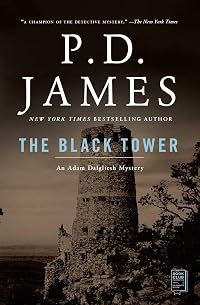
P. D. James, pseudonym of Phyllis Dorothy James White, was born on August 3, 1920 in Oxford, England. During World War II, she served as a Red Cross nurse. She worked in administration for 19 years with the National Health Service. After the death of her husband in 1964, she took a Civil Service examination and became an administrator in the show more forensic science and criminal law divisions of the Department of Home Affairs. She spent 30 years in British Civil Service. She became Baroness James of Holland Park in 1991. Her first novel, Cover Her Face, was published in 1962. She wrote approximately 20 books during her lifetime including the Adam Dalgliesh Mystery series, the Cordelia Gray Mystery series, and Death Comes to Pemberley. She became a full-time writer in 1979. Three titles in the Adam Dalgliesh Mystery series received the Silver Dagger award--Shroud for a Nightingale, The Black Tower, and A Taste for Death. In 2000, she published her autobiography, Time to Be in Earnest. Her dystopian novel, The Children of Men, was adapted into a movie in 2006. She received the Diamond Dagger award for lifetime achievement. She died on November 27, 2014 at the age of 94. (Bowker Author Biography) P. D. James served in the forensic & criminal justice departments of Great Britain's Home Office until her retirement in 1979. She was made a Life Peer in 1991. Her detective novels include "Cover Her Face", "An Unsuitable Job for a Woman", "Death of an Expert Witness", "A Taste for Death", "Original Sin", & "A Certain Justice", many of which have been adapted for television. Her autobiography, "Time to be in Earnest", was published in 2000. (Publisher Provided) show less
Some Editions
Awards and Honors
Awards
Distinctions
Series
Belongs to Publisher Series
Work Relationships
Has the adaptation
Inspired
Has as a student's study guide
Common Knowledge
- Original title
- The Children of Men
- Original publication date
- 1992
- People/Characters
- Theo Faron; Xan Lyppiatt
- Important places
- England, UK; Oxford, Oxfordshire, England, UK
- Related movies
- Children of Men (2006 | IMDb)
- Dedication
- Again, to my daughters
Clare and Jane
who helped - First words
- Friday 1 January 2021
Early this morning, 1 January 2021, three minutes after midnight, the last human being to be born on earth was killed in a pub brawl in a suburb of Buenos Aires, aged twenty-five years, two... (show all) months and twelve days. - Last words
- (Click to show. Warning: May contain spoilers.)It was with a thumb wet with his own tears and stained with her blood that he made on the child's forhead the sign of the cross.
- Blurbers
- Christ, Judith; Parker, Robert B.
- Original language
- English
Classifications
Statistics
- Members
- 6,484
- Popularity
- 1,889
- Reviews
- 216
- Rating
- (3.56)
- Languages
- 15 — Czech, Danish, Dutch, English, French, German, Hungarian, Italian, Norwegian (Bokmål), Norwegian, Polish, Portuguese, Spanish, Swedish, Turkish
- Media
- Paper, Audiobook, Ebook
- ISBNs
- 77
- ASINs
- 22