
Greybeard
by Brian W. Aldiss
On This Page
Description
Human reproduction has ceased and society slowly spirals in this "adult Lord of the Flies" by a Grand Master of Science Fiction (San Francisco Chronicle). After the "Accident," all males on Earth become sterile. Society ages and falls apart bit by bit. First, toy companies go under. Then record companies. Then cities cease to function. Now Earth's population lives in spread‑out, isolated villages, with its youngest members in their fifties. When the people of Sparcot begin to make claims show more of gnomes and man‑eating rodents lurking around their village, Greybeard and his wife set out for the coast with the hope of finding something better. show lessTags
Recommendations












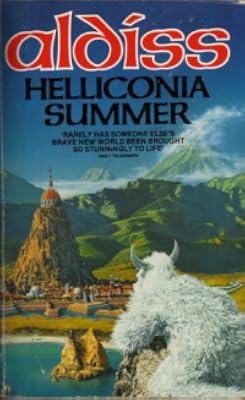

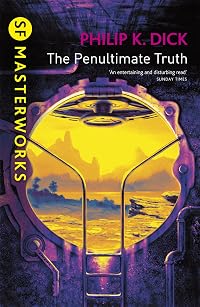

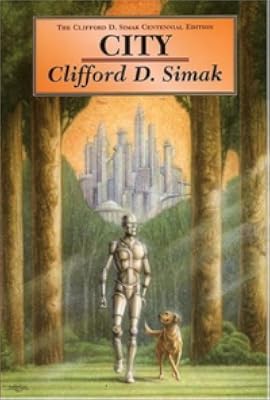
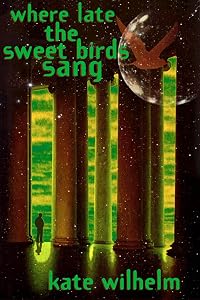











Member Recommendations

Member Reviews
This was the next book in the SF Masterwork series published in 1964. Brian Aldiss was a prolific author of mainly science fiction novels as well as a critic and editor of science fiction stories. He was an English author and particularly with Greybeard follows in the tradition of other English authors of the genre: H G Wells and John Wyndham in that his books are generally well written and avoid super-hero characters. Greybeard is a dystopian novel and is set in the English home counties which lends itself to a more parochial environment.
Greybeard is 56 years old and is carrying out sentry duty around the lands of Sparscot a small community somewhere near Oxford in England. He and his wife are the youngest people in a community show more struggling for survival after the Accident. In the late 1960's huge atomic bombs had been tested in the earths upper atmosphere which had resulted in a shower of radiation material which caused sickness and death on all parts of the globe and affected the reproductive organs of all human beings and larger animals. There had been no children born for over 50 years. Sparscot is run as a fiefdom by a local strongman and Greybeard has lived there for 15 years, but the warlord is losing his grip and Greybeard has been preparing a boat to take him and his wife down the river Thames to the communities that are said to be surviving along the coast. The dwindling population and gradual sinking of the land has left much of the countryside battling against rising water levels. Massive lakes have formed and the natural world has quickly started to seize back control. Rodents and small mammals who have been largely unaffected have become predators of an ageing human population. There are rumours of goblins living in the woods.................
Aldiss takes the theme of an ageing population with no hope for future generations. People who have survived the aftermath of the accident and who have not succumbed to melancholia continue to fight for their lives. Religious communities have sprung up and folklore and magic is increasingly playing a role in the lives of the survivors, rumours of children being born persist.
A world of wrinkly old people slowly losing their grip on day to day life maybe a nightmare for some people and I look around at some of my friends and I can appreciate that. Aldiss takes these fears and weaves them into a story where petty squabbles and reluctance to work for the good of the community take precedence. The strength of this novel is the creation of a world, where human beings are slowly sinking into a quagmire that they have created. In many ways it seems all too believable and the gloom and melancholic atmosphere was felt particularly keenly by this older reader. It does not work so well as a road movie novel, because Greybeard hardly gets going in his bid to reach the coast. 4 stars for readers over the age of sixty. show less
Greybeard is 56 years old and is carrying out sentry duty around the lands of Sparscot a small community somewhere near Oxford in England. He and his wife are the youngest people in a community show more struggling for survival after the Accident. In the late 1960's huge atomic bombs had been tested in the earths upper atmosphere which had resulted in a shower of radiation material which caused sickness and death on all parts of the globe and affected the reproductive organs of all human beings and larger animals. There had been no children born for over 50 years. Sparscot is run as a fiefdom by a local strongman and Greybeard has lived there for 15 years, but the warlord is losing his grip and Greybeard has been preparing a boat to take him and his wife down the river Thames to the communities that are said to be surviving along the coast. The dwindling population and gradual sinking of the land has left much of the countryside battling against rising water levels. Massive lakes have formed and the natural world has quickly started to seize back control. Rodents and small mammals who have been largely unaffected have become predators of an ageing human population. There are rumours of goblins living in the woods.................
Aldiss takes the theme of an ageing population with no hope for future generations. People who have survived the aftermath of the accident and who have not succumbed to melancholia continue to fight for their lives. Religious communities have sprung up and folklore and magic is increasingly playing a role in the lives of the survivors, rumours of children being born persist.
A world of wrinkly old people slowly losing their grip on day to day life maybe a nightmare for some people and I look around at some of my friends and I can appreciate that. Aldiss takes these fears and weaves them into a story where petty squabbles and reluctance to work for the good of the community take precedence. The strength of this novel is the creation of a world, where human beings are slowly sinking into a quagmire that they have created. In many ways it seems all too believable and the gloom and melancholic atmosphere was felt particularly keenly by this older reader. It does not work so well as a road movie novel, because Greybeard hardly gets going in his bid to reach the coast. 4 stars for readers over the age of sixty. show less
Greybeard reads like a sad but gentle, almost pastoral, requiem for humanity. It is a simple but effective post-apocalyptic tale, one in which Armageddon has come not with fire and brimstone but with the slow expiration of humanity made sterile by incautious scientific experimentation. The story is told in two alternating storylines: Greybeard and a small group of aging companions make a journey down the Thames from a dieing neo-feudal village towards the sea; between stops we are given flashbacks to a series of episodes much earlier in the post-fertility era.
This is science fiction not about blowing things up and dazzling readers with the author’s fecund imagination, but about what happens to ordinary people, both as individuals and show more in society, in extraordinary circumstance. Our protagonist Algernon Timberlane (aka “Greybeard”) is one of the youngest of the last generation of man. Algy is a complicated character, one who makes mistakes and is shaken by doubts, yet aspires to something more than the mindless plodding towards extinction that surrounds him. His relationship with his strong and supporting wife Margaret is surprisingly nuanced. There is less violence than you might expect (even in a lawless world, people eventually get too old to be very effective at raping and pillaging). We are constantly shown that nature has hardly blinked at the impending death of man (and the other high mammals we’re taking with us).
Greybeard has the feeling of a quest book, and while the characters may not exactly know what they are seeking, the reader eventually gets the sense that it is some slight ray of optimism about the future of mankind. I might quibble with the ending a bit, but overall I liked this book a lot. show less
This is science fiction not about blowing things up and dazzling readers with the author’s fecund imagination, but about what happens to ordinary people, both as individuals and show more in society, in extraordinary circumstance. Our protagonist Algernon Timberlane (aka “Greybeard”) is one of the youngest of the last generation of man. Algy is a complicated character, one who makes mistakes and is shaken by doubts, yet aspires to something more than the mindless plodding towards extinction that surrounds him. His relationship with his strong and supporting wife Margaret is surprisingly nuanced. There is less violence than you might expect (even in a lawless world, people eventually get too old to be very effective at raping and pillaging). We are constantly shown that nature has hardly blinked at the impending death of man (and the other high mammals we’re taking with us).
Greybeard has the feeling of a quest book, and while the characters may not exactly know what they are seeking, the reader eventually gets the sense that it is some slight ray of optimism about the future of mankind. I might quibble with the ending a bit, but overall I liked this book a lot. show less
2/5
Greybeard follows the geriatric remains of the human species after a radiation-based 'accident' has made them infertile. Greybeard and wife journey through the English countryside, from dilapidated village to flooded farmland, while reflecting on the series of events that brought them to this moment. It's a short read, but not necessarily a quick one. Aldiss writes in a formal/traditional manner which makes most of his prose elongated and circuitous. In Greybeard, Aldiss struggles to maintain consistency in writing quality. Some passages were glimpses into his power and eloquence, but these were few and far between.
Perhaps part of of this was due to consistently having what were essential flashback chapters in which the events show more leading up to the present are examined. This had the effect of stopping any flow or pace that Aldiss tried to create in the main plot line. These flashbacks were also where Aldiss struggled to write the most. One chapter in particular, the flashback to Greybeard's time in Washington where he was being recruited by the unfortunately named "DOUCH", was especially terrible. It felt like it was written by someone completely different. The prose was pulp level, there is glaring objectification and diminishment of women, and a tone that felt more in line with a 30's crime novel. Yes, this was only one chapter, but it colored my opinion of the rest of the work so much because of how bad it was.
I did enjoy the melancholic and introspective tone of the novel, as the characters struggle to find meaning and purpose as they watch society and structure crumble around them. What is the purpose of life if not to pass our genetics on to the next generation? There's a certain level of cultural psychosis that Greybeard see around him as people become delusional about their circumstances as a coping mechanism. I don't think that Aldiss dove as deeply as he could and perhaps should have on these themes. Too much time is spent on characters and plot threads that feel more like sketches than fully formed elements. It's also undermined by an ending that not only feels rushed/sudden, but has an entirely different (hopeful) perspective on the potential future of humanity.
Ultimately, Greybeard just didn't come together for me. It was an entirely forgettable, boring and unremarkable book. Which is a shame, because I'm sure that the skeleton itself could be the framework for something much better. show less
Greybeard follows the geriatric remains of the human species after a radiation-based 'accident' has made them infertile. Greybeard and wife journey through the English countryside, from dilapidated village to flooded farmland, while reflecting on the series of events that brought them to this moment. It's a short read, but not necessarily a quick one. Aldiss writes in a formal/traditional manner which makes most of his prose elongated and circuitous. In Greybeard, Aldiss struggles to maintain consistency in writing quality. Some passages were glimpses into his power and eloquence, but these were few and far between.
Perhaps part of of this was due to consistently having what were essential flashback chapters in which the events show more leading up to the present are examined. This had the effect of stopping any flow or pace that Aldiss tried to create in the main plot line. These flashbacks were also where Aldiss struggled to write the most. One chapter in particular, the flashback to Greybeard's time in Washington where he was being recruited by the unfortunately named "DOUCH", was especially terrible. It felt like it was written by someone completely different. The prose was pulp level, there is glaring objectification and diminishment of women, and a tone that felt more in line with a 30's crime novel. Yes, this was only one chapter, but it colored my opinion of the rest of the work so much because of how bad it was.
I did enjoy the melancholic and introspective tone of the novel, as the characters struggle to find meaning and purpose as they watch society and structure crumble around them. What is the purpose of life if not to pass our genetics on to the next generation? There's a certain level of cultural psychosis that Greybeard see around him as people become delusional about their circumstances as a coping mechanism. I don't think that Aldiss dove as deeply as he could and perhaps should have on these themes. Too much time is spent on characters and plot threads that feel more like sketches than fully formed elements. It's also undermined by an ending that not only feels rushed/sudden, but has an entirely different (hopeful) perspective on the potential future of humanity.
Ultimately, Greybeard just didn't come together for me. It was an entirely forgettable, boring and unremarkable book. Which is a shame, because I'm sure that the skeleton itself could be the framework for something much better. show less
The Publisher Says: The sombre story of a group of people in their fifties who face the fact that there is no younger generation coming to replace them; instead nature is rushing back to obliterate the disaster they have brought on themselves. Was slighty revised by the author in 2012.
My Review: First published in 1964, at the tail end of one of the scariest passages during the Cold War, this post-apocalyptic look at the resilience and the lack of same in the human spirit was involving and affecting. It was also a disorganized mess.
Chapters 1-3 take place in 2025 and on, or the mid-point of the story. Chapter 4 takes place as the world finds its way through the crisis. Chapter 5 has us back in about 2030...Chapter 6 is early days of the show more Accident, as the sterilization of Earth's humans is called...and then back to 2030 in Chapter 7. It's kind of a confused way to tell a story. Not that it's a complicated story, but it's always nice to have things move along in sequence when there's no reason, stylistic or otherwise, for them not to.
Aldiss' Introduction to the 2012 edition tells of the genesis of the story...a divorce, a general reduction of his life to solitude, and a desperate yearning for his lost kids...and I must say that this Introduction is what kept me going for the whole short 237ish pages. I could relate to his sense of loss and his almost desperate longing. I looked for those things in his text and really didn't find them too terribly often. Many things occur in the book, but few of them happen, if you see what I mean; Greybeard, the main character, and Martha, Greybeard's wife, aren't prone to overstatement. Jeff, a character whose slippery presence is highly emotionally charged, makes little impact in the end. Charley, the dopey religious nut, isn't much of a shakes for shakin' stuff up either. Dr. Jingadangelow (!) the snake oil salesman is fun...I picture Eddie Izzard playing the role in a movie...but rattles on and rockets off ballistically.
I didn't love the book, but it's got at its heart a futureless bleakness that resonate with. After 50 years, the Accident's specifics don't quite line up with reality, but I have no smallest problem imagining specifics that end us up in the same place. One day soon, y'all should go read Sir Roy Calne's book Too Many People. I can see that causing the Accident with all too great a clarity of inner vision.
On the low end of the recommend-to-others scale, and then only to those who like post-apocalyptic stories. show less
My Review: First published in 1964, at the tail end of one of the scariest passages during the Cold War, this post-apocalyptic look at the resilience and the lack of same in the human spirit was involving and affecting. It was also a disorganized mess.
Aldiss' Introduction to the 2012 edition tells of the genesis of the story...a divorce, a general reduction of his life to solitude, and a desperate yearning for his lost kids...and I must say that this Introduction is what kept me going for the whole short 237ish pages. I could relate to his sense of loss and his almost desperate longing. I looked for those things in his text and really didn't find them too terribly often. Many things occur in the book, but few of them happen, if you see what I mean; Greybeard, the main character, and Martha, Greybeard's wife, aren't prone to overstatement. Jeff, a character whose slippery presence is highly emotionally charged, makes little impact in the end. Charley, the dopey religious nut, isn't much of a shakes for shakin' stuff up either. Dr. Jingadangelow (!) the snake oil salesman is fun...I picture Eddie Izzard playing the role in a movie...but rattles on and rockets off ballistically.
I didn't love the book, but it's got at its heart a futureless bleakness that resonate with. After 50 years, the Accident's specifics don't quite line up with reality, but I have no smallest problem imagining specifics that end us up in the same place. One day soon, y'all should go read Sir Roy Calne's book Too Many People. I can see that causing the Accident with all too great a clarity of inner vision.
On the low end of the recommend-to-others scale, and then only to those who like post-apocalyptic stories. show less
https://nwhyte.livejournal.com/3610657.html
I wish I'd read it before P.D. James' The Children of Men, which took the same core concept in a slightly different direction. Indeed, The Children of Men has such strong similarities - humanity stopped reproducing 25 years ago, our protagonists undergo a weary odyssey to Oxford - that it's impossible to accept that she hadn't read this first.
It's a quiet, understated, very pessimistic book, written in 1964 when Aldiss was only in his thirties (but had just gone through a divorce and the Cuban Missile Crisis). Stoats are apparently a big problem in the late 2020s. The human race ends with a whimper rather than a bang. There is a lot of Aldissian stuff here, and you certainly couldn't mistake show more the writing style for anyone else's. But I didn't in the end feel that it was one of his more memorable books; I guess for its time, it caught the Zeitgeist well, but it has now been overtaken by events, and by P.D. James. show less
I wish I'd read it before P.D. James' The Children of Men, which took the same core concept in a slightly different direction. Indeed, The Children of Men has such strong similarities - humanity stopped reproducing 25 years ago, our protagonists undergo a weary odyssey to Oxford - that it's impossible to accept that she hadn't read this first.
It's a quiet, understated, very pessimistic book, written in 1964 when Aldiss was only in his thirties (but had just gone through a divorce and the Cuban Missile Crisis). Stoats are apparently a big problem in the late 2020s. The human race ends with a whimper rather than a bang. There is a lot of Aldissian stuff here, and you certainly couldn't mistake show more the writing style for anyone else's. But I didn't in the end feel that it was one of his more memorable books; I guess for its time, it caught the Zeitgeist well, but it has now been overtaken by events, and by P.D. James. show less
The time is the early twenty-first century, and humankind is dying, the entire race rendered sterile by an atomic 'accident' in 1981. Greybeard, barely yet sixty, is one of the youngest men alive. The story opens in the village of Sparcot on the Thames, where Big Jim Mole governs a ramshackle community of oldsters, eking out a living by farming, poaching (though who there is to poach from is not clear) and occasionally exacting a toll from travelers who attempt to take a boat under the Sparcot bridge.
Although Man is dying out other lifeforms are prospering: rabbits and foxes are plentiful. Stoats have increased to the point where they have become a menace, hunting in massive packs. One or two of the larger mammals have also survived, show more including the reindeer, introduced to Britain in the latter years of the twentieth century. Far from being a gloomy scenario, the theme of humankind’s sterile end provides a rich canvas for Aldiss's narrative: villages, forest, river, lakes and cities, swarming with life, human and animal.
Greybeard decides that the time has come to leave Sparcot and Jim Mole's tyrannical regime, and takes advantage of a threatened stoat attack and the ensuing confusion to slip away down the river with his wife Martha and a few companions. Away from the enforced isolation of Sparcot they find that the human race is returning to a semblance of normality. At Swifford Fair they encounter the bizarre Bunny Jingedangelow, seller of rejuvenating potions and eternal life. Here and there are reminders of the old world they have left behind: crossing a lake dotted with islands, a railway station and signal box jut out of the flood, home to a mad hermit.
With alternating chapters the narrative moves between present and past, showing how the world has come to this pass. The flashback sequences are less enjoyable: the breakdown of civilization, martial law, famine and disease, hag-ridden army officers philosophizing over gin and tonics in fly ridden bars. While not exactly dull, these scenes are inevitably gloomy, and it's a relief when the flashback is over. We've been there too many times before.
It's a brave book which has no dashing, youthful hero or young female beauty to hold the lead roles. There is love: the love of Greybeard for his Martha. The book evokes a pastoral vision of England; an England reverting to a wild Pleistocene state. The ending...the ending is marvelous. show less
Although Man is dying out other lifeforms are prospering: rabbits and foxes are plentiful. Stoats have increased to the point where they have become a menace, hunting in massive packs. One or two of the larger mammals have also survived, show more including the reindeer, introduced to Britain in the latter years of the twentieth century. Far from being a gloomy scenario, the theme of humankind’s sterile end provides a rich canvas for Aldiss's narrative: villages, forest, river, lakes and cities, swarming with life, human and animal.
Greybeard decides that the time has come to leave Sparcot and Jim Mole's tyrannical regime, and takes advantage of a threatened stoat attack and the ensuing confusion to slip away down the river with his wife Martha and a few companions. Away from the enforced isolation of Sparcot they find that the human race is returning to a semblance of normality. At Swifford Fair they encounter the bizarre Bunny Jingedangelow, seller of rejuvenating potions and eternal life. Here and there are reminders of the old world they have left behind: crossing a lake dotted with islands, a railway station and signal box jut out of the flood, home to a mad hermit.
With alternating chapters the narrative moves between present and past, showing how the world has come to this pass. The flashback sequences are less enjoyable: the breakdown of civilization, martial law, famine and disease, hag-ridden army officers philosophizing over gin and tonics in fly ridden bars. While not exactly dull, these scenes are inevitably gloomy, and it's a relief when the flashback is over. We've been there too many times before.
It's a brave book which has no dashing, youthful hero or young female beauty to hold the lead roles. There is love: the love of Greybeard for his Martha. The book evokes a pastoral vision of England; an England reverting to a wild Pleistocene state. The ending...the ending is marvelous. show less
A poignant, post-apocalyptic novel where humanity faces extinction after nuclear tests render adults sterile, following the ageing Algy Timberlane and his wife Martha as they journey through a decaying England reclaimed by nature, seeking hope and children in a world where society has crumbled and the youngest survivors are in their fifties, exploring themes of mortality, entropy, and the end of the human era.
Members
- Recently Added By
Lists

Best Science Fiction Novels
816 works; 430 members

S.F. Masterworks (Complete)
229 works; 15 members

David Pringle's Science Fiction: The 100 Best Novels
101 works; 9 members

SF Masterworks
193 works; 8 members

BBC World Book Club
265 works; 5 members
Author Information

563+ Works 27,416 Members
Brian W. Aldiss was born in Dereham, United Kingdom on August 18, 1925. In 1943, he joined the Royal Signals regiment, and saw action in Burma. After World War II, he worked as a bookseller at Oxford University. His first book, The Brightfount Diaries, was published in 1955. His first science fiction novel, Non-Stop (Starship in the United show more States), was published in 1958. He wrote more than 80 books including Hothouse, Greybeard, The Helliconia Trilogy, The Squire Quartet, Frankenstein Unbound, The Malacia Tapestry, Walcot, and Mortal Morning. His short story Super-Toys Last All Summer Long was the basis for the film A.I. Artificial Intelligence. He has received numerous awards for his work including two Hugo Awards, the Nebula Award, the John W. Campbell Memorial Award, and an OBE for services to literature. He was also an anthologist and an artist. He was the editor of 40 anthologies including Introducing SF, The Penguin Science Fiction Omnibus, Space Opera, Space Odysseys, Galactic Empires, Evil Earths, and Perilous Planets. He was an abstract artist and his first solo exhibition, The Other Hemisphere, was held in Oxford in August-September 2010. He died on August 19, 2017 at the age of 92. (Bowker Author Biography) show less
Some Editions
Awards and Honors
Series
Belongs to Publisher Series
Work Relationships
Is contained in
Common Knowledge
- Canonical title*
- Barbe-Grise
- Original title
- Greybeard
- Alternate titles*
- Cittadino del tramonto
- Original publication date
- 1964
- People/Characters
- Algy Timberlane; Martha Timberlane; Jeff Pitt; Charley Samuels; Bunny Jingdangelaw
- Important places
- Norfolk, England, UK; London, England, UK
- Dedication
- with my love to Clive and Wendy hoping that one day they will understand the story behind this story
- First words
- A rifle was slung or his left shoulder by a leather strap.
- Last words
- (Click to show. Warning: May contain spoilers.)Then he turned his head, resting one hand on his rifle as with the other he shaded his brow and pretended to gaze ahead at horizon where the hills were.
- Blurbers
- Amis, Kingsley
- Original language*
- English
- Disambiguation notice*
- Nicht mit "Raum, Zeit und Nathaniel" kombinieren
*Some information comes from Common Knowledge in other languages. Click "Edit" for more information.
Classifications
Statistics
- Members
- 1,015
- Popularity
- 25,641
- Reviews
- 24
- Rating
- (3.44)
- Languages
- 12 — Czech, Danish, Dutch, English, French, German, Hungarian, Italian, Japanese, Portuguese, Spanish, Swedish
- Media
- Paper, Audiobook, Ebook
- ISBNs
- 30
- ASINs
- 31