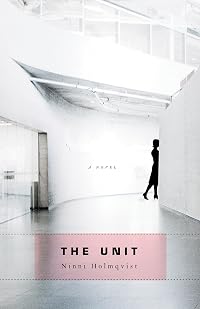
The Unit
by Ninni Holmqvist
On This Page
Description
In the Society, men and women past middle age who are single, childless, and without jobs in progressive industries are considered outsiders and are sequestered. They are kept healthy and are expected to gradually donate their organs to the "necessary" ones. But suppose two people who live in the Unit should fall in love?Tags
Recommendations



















Member Recommendations
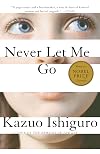

trav It's a totally different tone and voice, but the theme and subject matter seem to do well within the same discussions.

by susanbooks
Member Reviews
In a world that worships youth, children and productivity, this book is on target. The subject is different from Never Let Me Go — The only similarity is that humans are used for parts. As an over-fifty woman with no children and great love for my pets, I identified heavily with Dorrit. She expressed many things that I've felt about society and my role in it. We women over 50 become invisible unless we yell and scream. But when we yell and scream, we're told that it is inappropriate and desperate. Our lack of youth and lack of children invalidates us and breaks our will.
It's unsurprising that I found myself sobbing many times during the story. Heck, I'm crying now.
It's unsurprising that I found myself sobbing many times during the story. Heck, I'm crying now.
Shortly after her 50th birthday, Dorrit Wenger packs a suitcase of her most prized possessions, gets into a van, and checks into the Second Reserve Bank Unit. There, she and many other single childless women over 50 and single childless men over 60 are given comfortable apartments, free food at lovely restaurants, access to recreational facilities at no cost, and the opportunity to be a family to one another. The catch? Dorrit and the other “dispensables” at the unit must participate in medical experiments and donate their organs to people who have children or who have jobs that make a contribution to the betterment of society. Within a few years, each resident will make a final, fatal donation.
One of my favorite aspects of The Unit show more was how well Holmqvist expresses the pleasures and pain involved in living alone. For example, when Dorrit explained how she felt about leaving her dog behind, she expressed perfectly how one comes to rely on a pet for regular doses of affection when that pet is your only day-to-day companion. The creators of the Unit would probably say that this affection doesn’t count and that Dorrit will be happier once she starts spending more time with other people. And the truth is, that Dorrit is happy to be surrounded by friends and to find a lover, but that doesn’t mean her previous life was miserable. Any sort of life is a mix of pleasure and pain.
Holmqvist also raises significant questions about what it means to make a contribution to society—to be needed. Is parenthood or a service job the only proper contribution? Many of the people in the Unit are artists and writers. When residents make donations, they are often told about the recipients (”a nurse with four children” or “a carpenter with three children and six grandchildren”). The implication is that the dispensible are giving their lives for people who matter, but who decides what does matter? Don’t all lives matter? Today, we may not take the organs of people we deem unimportant, but do we devalue the lives of certain people in less obvious ways?
The Unit has everything that I look for in a dystopian novel. It asks tough questions and causes me to reflect on the values I see expressed in the society around me. It’s a story that will stick with me.
See my complete review at my blog. show less
One of my favorite aspects of The Unit show more was how well Holmqvist expresses the pleasures and pain involved in living alone. For example, when Dorrit explained how she felt about leaving her dog behind, she expressed perfectly how one comes to rely on a pet for regular doses of affection when that pet is your only day-to-day companion. The creators of the Unit would probably say that this affection doesn’t count and that Dorrit will be happier once she starts spending more time with other people. And the truth is, that Dorrit is happy to be surrounded by friends and to find a lover, but that doesn’t mean her previous life was miserable. Any sort of life is a mix of pleasure and pain.
Holmqvist also raises significant questions about what it means to make a contribution to society—to be needed. Is parenthood or a service job the only proper contribution? Many of the people in the Unit are artists and writers. When residents make donations, they are often told about the recipients (”a nurse with four children” or “a carpenter with three children and six grandchildren”). The implication is that the dispensible are giving their lives for people who matter, but who decides what does matter? Don’t all lives matter? Today, we may not take the organs of people we deem unimportant, but do we devalue the lives of certain people in less obvious ways?
The Unit has everything that I look for in a dystopian novel. It asks tough questions and causes me to reflect on the values I see expressed in the society around me. It’s a story that will stick with me.
See my complete review at my blog. show less
 This review was written for LibraryThing Early Reviewers.
(Swedish)
Enhet is set in a dystopian present-day Sweden. In order to fulfill one's usefulness to the State, childless adults are brought to the Unit (Enhet) - at age 50 for women and 60 for men. It is a decision that was reached democratically, though creepingly enough for Dorrit Weger never to have had children herself. Raised to be independent, she suddenly finds herself at 50, without dependents to make her useful, and being brought to the Unit. Life there is comparatively comfortable, with everything at their beck and call - food, theater, gym facilities, spa, monthly welcome parties, and more - not to mention deep friendships that form amongst the residents. But there's a dark side to their presence there - their purpose is to be show more guinea pigs and organ donors (leading to the inevitable slutdonation - final donation -) for those who really need it.
This book examines issues such as just how far is one's duty to the greater good? Is individual choice selfish? If a decision - right or wrong - is arrived at democratically, should it still be carried out? Which is preferable - a life alone with choice or a life with close, though by design relatively short-lived, friendships?
This book creeps up on you. It took a bit to get drawn into it, to see the first part for what it was and not just lots of naive, sometimes exhaustively so, listing of great things about the Unit (though with a constant underlying pall). By the end it has raised interesting ethical questions living uncomfortably in a very, very grey zone. show less
Enhet is set in a dystopian present-day Sweden. In order to fulfill one's usefulness to the State, childless adults are brought to the Unit (Enhet) - at age 50 for women and 60 for men. It is a decision that was reached democratically, though creepingly enough for Dorrit Weger never to have had children herself. Raised to be independent, she suddenly finds herself at 50, without dependents to make her useful, and being brought to the Unit. Life there is comparatively comfortable, with everything at their beck and call - food, theater, gym facilities, spa, monthly welcome parties, and more - not to mention deep friendships that form amongst the residents. But there's a dark side to their presence there - their purpose is to be show more guinea pigs and organ donors (leading to the inevitable slutdonation - final donation -) for those who really need it.
This book examines issues such as just how far is one's duty to the greater good? Is individual choice selfish? If a decision - right or wrong - is arrived at democratically, should it still be carried out? Which is preferable - a life alone with choice or a life with close, though by design relatively short-lived, friendships?
This book creeps up on you. It took a bit to get drawn into it, to see the first part for what it was and not just lots of naive, sometimes exhaustively so, listing of great things about the Unit (though with a constant underlying pall). By the end it has raised interesting ethical questions living uncomfortably in a very, very grey zone. show less
A breathtaking peek at a near-future dystopia in which those who are single and childless are considered unnecessary. This book really struck a cord with me as we live in a very procreation-centered society.
We follow the protagonist as she enters "the unit," where she is placed under constant observation and endures testing (she is a human guinea pig). Holmqvist's prose is stark and striking. I especially loved the protagonist's flashbacks to her dog and how much she missed him.
I've read other comments that discuss the ending. While I certainly think the ending gives the reader a feeling of hopelessness, I also think it parallels the society depicted in the story. If Dorrit had escaped, then what? She is still, either directly or show more indirectly, subject to the merciless machinations of the capitalist (socialist?) dystopia in which she lives. There are many echoes of the inevitable in this story--the inevitability of death, the inevitability to effect change. We are all cogs on the train, and some of us are more necessary than others. It IS quite a hopeless and depressing thought, yes, but also very realistic. show less
We follow the protagonist as she enters "the unit," where she is placed under constant observation and endures testing (she is a human guinea pig). Holmqvist's prose is stark and striking. I especially loved the protagonist's flashbacks to her dog and how much she missed him.
I've read other comments that discuss the ending. While I certainly think the ending gives the reader a feeling of hopelessness, I also think it parallels the society depicted in the story. If Dorrit had escaped, then what? She is still, either directly or show more indirectly, subject to the merciless machinations of the capitalist (socialist?) dystopia in which she lives. There are many echoes of the inevitable in this story--the inevitability of death, the inevitability to effect change. We are all cogs on the train, and some of us are more necessary than others. It IS quite a hopeless and depressing thought, yes, but also very realistic. show less
This book was lovely - spare and inviting and well translated. Holmqvist reminds me a little of Atwood in that she's not afraid to explore the conflicts and repercussions of third wave feminism. She's not afraid to give her characters voices that reflect a range of difficulties in living out an imperfect ideology. And like Atwood, Holmqvist refuses to settle her characters into any safe place for long. The Unit is lovely and heartbreaking.
Dystopian literature is not my usual thing. In fact, I generally put any and all dystopian novels gingerly back on the shelf at the bookstore no matter how appealing the cover or title is or how many recommendations I hear. Perhaps I am just practicing head in the sand avoidance, not wanting to think about how our current society could easily devolve into a society like the ones portrayed by imaginative authors in these often very disturbing worlds. So you'll know just how much I was looking forward to reading this particular book. And I wouldn't have read it had I not been given it to read for a committee on which I served.
But the committee obigated me to give it a fair shake (even if I waited almost to the end of my reading list for show more them to pick it up, choosing to read books I thought I'd enjoy more first). And I won't make you wait until the end of the review to tell you that I am incredibly grateful that this came across my desk as it did, obligating me to read this powerful, amazing, and completely worthwhile novel. It stretched my assumptions and gripped my attention. It was indeed a "Wow!" reading experience that left me thinking about it for a good long time afterwards.
Dorrit Weger is turning fifty. What this means for a childless unmarried writer is that she will have no option but to move into the Second Reserve Bank Unit for biological material. In short, the state will now feed, clothe, and entertain her. They will keep her healthy. The price for this? She must be willing to donate body parts and participate in scientific studies that benefit the "productive" members of society. There will come a time when she is asked to make a "final donation," one that costs her her life. And she has no choice but to comply with this directive no matter how horrifying it seems to her.
Once the initial disgust has worn off though, Dorrit settles into the Unit, making friends, volunteering for non-invasive studies, and even falling in love. The subtle horror of her fellow inmates being farmed for organs never quite leaves though, running through even the mundanity of daily life. People disappear with or without warning to make their final donations. Scientific studies go wrong and the subjects are left permanently damaged (but only for a brief time as they almost immediately then make their final donation).
But if the manufactured idyllic life in the Unit is a facade, the human relationships and connections between the characters are strong and real. And it is in creating these characters who struggle and philosophize and love and challenge despite their certain fate that Holmqvist has excelled. The society these characters must exist within does force the reader to examine some of the questions in our own society. Who is a productive member of society? Who makes that determination? Should we acquiese without question for the greater good of the whole? What kind of society are we creating? And what do we value above all?
The twist of fate whereby Dorrit has the means to save herself is masterful. And the path that she ultimately chooses doesn't really answer the questions that the story raises. But I don't think we're meant to find answers. We are meant to reflect on the questions. And I certainly did that. It was hard to start another book after this one because it went on percolating in my brain for so long. Not one I would ever have read on my own, I can't really explain why I think everyone should read it. But everyone should. Riveting, troubling, exquisite, and addictive, this is a book that challenges and rewards. It is simply put, a must read.
Thanks to the Other Press for sending me a copy to review even if I initially wrinkled my nose. Teach me to prejudge a book! show less
But the committee obigated me to give it a fair shake (even if I waited almost to the end of my reading list for show more them to pick it up, choosing to read books I thought I'd enjoy more first). And I won't make you wait until the end of the review to tell you that I am incredibly grateful that this came across my desk as it did, obligating me to read this powerful, amazing, and completely worthwhile novel. It stretched my assumptions and gripped my attention. It was indeed a "Wow!" reading experience that left me thinking about it for a good long time afterwards.
Dorrit Weger is turning fifty. What this means for a childless unmarried writer is that she will have no option but to move into the Second Reserve Bank Unit for biological material. In short, the state will now feed, clothe, and entertain her. They will keep her healthy. The price for this? She must be willing to donate body parts and participate in scientific studies that benefit the "productive" members of society. There will come a time when she is asked to make a "final donation," one that costs her her life. And she has no choice but to comply with this directive no matter how horrifying it seems to her.
Once the initial disgust has worn off though, Dorrit settles into the Unit, making friends, volunteering for non-invasive studies, and even falling in love. The subtle horror of her fellow inmates being farmed for organs never quite leaves though, running through even the mundanity of daily life. People disappear with or without warning to make their final donations. Scientific studies go wrong and the subjects are left permanently damaged (but only for a brief time as they almost immediately then make their final donation).
But if the manufactured idyllic life in the Unit is a facade, the human relationships and connections between the characters are strong and real. And it is in creating these characters who struggle and philosophize and love and challenge despite their certain fate that Holmqvist has excelled. The society these characters must exist within does force the reader to examine some of the questions in our own society. Who is a productive member of society? Who makes that determination? Should we acquiese without question for the greater good of the whole? What kind of society are we creating? And what do we value above all?
The twist of fate whereby Dorrit has the means to save herself is masterful. And the path that she ultimately chooses doesn't really answer the questions that the story raises. But I don't think we're meant to find answers. We are meant to reflect on the questions. And I certainly did that. It was hard to start another book after this one because it went on percolating in my brain for so long. Not one I would ever have read on my own, I can't really explain why I think everyone should read it. But everyone should. Riveting, troubling, exquisite, and addictive, this is a book that challenges and rewards. It is simply put, a must read.
Thanks to the Other Press for sending me a copy to review even if I initially wrinkled my nose. Teach me to prejudge a book! show less
Review originally published on my blog, Musings of a Bookish Kitty:
http://www.literaryfeline.com/2016/12/bookish-thoughts-unit-by-ninni-holmqvist.h...
The Unit by Ninni Holmqvist, translated by Marlaine Delargy
Other Press, 2009
Fiction; 268 pgs
Source: Postal Mail Group (Borrowed)
As Holmqvist describes it in her novel, The Unit, it started as a debate by a new political party that wasn't taken too seriously. Overtime, however, the idea grew, taking on new forms and growing in popularity. Soon, it became a way of life. Men over sixty and women over fifty who were single, childless, and without jobs valued by society as contributing to the greater good are now considered dispensable and forced to give their bodies up for science. Sequestered show more in one location, they seemingly live out their final years in comfort--their every need met. There is a beautiful garden right out of a Monet painting, walkways, and shops, restaurants, and a theater. It's an indoor heaven, of sorts. Or so they want you to believe. Their every move and word is monitored. The dispensable people's purpose now is to take part in various psychological and scientific studies--and donate organs as needed.
Set in a Dystopian Sweden, The Unit asks the question what, if any, is the value of life? Who decides? Dorrit Weger has just turned 50, and reluctantly settles into life on the unit. As the novel progresses, she reflects on her life and what has led her to her this place. Growing up, she was taught to be self-reliant and to go after her dreams. She chose to write, and lived sparsely but comfortably with her beloved dog Jock. It was easy to identify with Dorrit and understand why she made the life choices she did. How was she to know the political winds would change so drastically over the course of her lifetime, earning her the label of a dispensable person? It is not something she agrees with, but has little choice other than to accept it.
Holmqvist does a great job of capturing the range of emotions and thoughts Dorrit goes through over the course of the novel. She is angry and sad, resigned, and scared. There are also moments of happiness and hope. We see the connections Dorrit makes with her friends who are in the same situations, and we go through the grief process as we have to say goodbye when they make their "final donations." The people who run the unit try to make the process as humane as possible, and yet, there is nothing humane about it. It's disturbing how easily accepted all of this is. And yet, is it all that surprising? I thought it was very telling when Dorrit is told she can know the person who is receiving organs, but the person receiving them is not told anything about the donor. Do this to save an important person's life! But obviously the donor isn't important enough to be recognized. It's a form of manipulation, to make it easier for those dispensables who have to give up their lives. There's something terribly wrong with that, as if the situation wasn't terrible enough as it was.
The Unit is more of a quiet book without any big plot twists or major climatic moments. However, it is very thought provoking. Dorrit's story is a compelling one that was hard to put down. I wanted so much for life to be different for the people deemed dispensable. I had never heard of this book before it arrived in the mail as one of my postal mail book group reads. I am glad it came my way. show less
http://www.literaryfeline.com/2016/12/bookish-thoughts-unit-by-ninni-holmqvist.h...
The Unit by Ninni Holmqvist, translated by Marlaine Delargy
Other Press, 2009
Fiction; 268 pgs
Source: Postal Mail Group (Borrowed)
As Holmqvist describes it in her novel, The Unit, it started as a debate by a new political party that wasn't taken too seriously. Overtime, however, the idea grew, taking on new forms and growing in popularity. Soon, it became a way of life. Men over sixty and women over fifty who were single, childless, and without jobs valued by society as contributing to the greater good are now considered dispensable and forced to give their bodies up for science. Sequestered show more in one location, they seemingly live out their final years in comfort--their every need met. There is a beautiful garden right out of a Monet painting, walkways, and shops, restaurants, and a theater. It's an indoor heaven, of sorts. Or so they want you to believe. Their every move and word is monitored. The dispensable people's purpose now is to take part in various psychological and scientific studies--and donate organs as needed.
Set in a Dystopian Sweden, The Unit asks the question what, if any, is the value of life? Who decides? Dorrit Weger has just turned 50, and reluctantly settles into life on the unit. As the novel progresses, she reflects on her life and what has led her to her this place. Growing up, she was taught to be self-reliant and to go after her dreams. She chose to write, and lived sparsely but comfortably with her beloved dog Jock. It was easy to identify with Dorrit and understand why she made the life choices she did. How was she to know the political winds would change so drastically over the course of her lifetime, earning her the label of a dispensable person? It is not something she agrees with, but has little choice other than to accept it.
Holmqvist does a great job of capturing the range of emotions and thoughts Dorrit goes through over the course of the novel. She is angry and sad, resigned, and scared. There are also moments of happiness and hope. We see the connections Dorrit makes with her friends who are in the same situations, and we go through the grief process as we have to say goodbye when they make their "final donations." The people who run the unit try to make the process as humane as possible, and yet, there is nothing humane about it. It's disturbing how easily accepted all of this is. And yet, is it all that surprising? I thought it was very telling when Dorrit is told she can know the person who is receiving organs, but the person receiving them is not told anything about the donor. Do this to save an important person's life! But obviously the donor isn't important enough to be recognized. It's a form of manipulation, to make it easier for those dispensables who have to give up their lives. There's something terribly wrong with that, as if the situation wasn't terrible enough as it was.
The Unit is more of a quiet book without any big plot twists or major climatic moments. However, it is very thought provoking. Dorrit's story is a compelling one that was hard to put down. I wanted so much for life to be different for the people deemed dispensable. I had never heard of this book before it arrived in the mail as one of my postal mail book group reads. I am glad it came my way. show less
Members
- Recently Added By
Published Reviews
Holmqvist's spare prose interweaves the Unit's pleasures and cruelties with exquisite matter-of-factness, so that readers actually begin to wonder: On balance, is life better as a pampered lab bunny or as a lonely indigent? But then she turns the screw, presenting a set of events so miraculous and abominable that they literally made me gasp.
added by lkernagh
Lists

Best Dystopias
280 works; 276 members

Favorite Science Fiction by Women Authors
737 works; 202 members

Best Feminist Science Fiction
188 works; 35 members

Best Science Fiction Novels
816 works; 430 members
Best Contemporary Literary Fiction (Around the Last 30 Years)
388 works; 124 members

EU Fiction: 1950-2022
223 works; 68 members

Best 21st Century Books (So Far)
670 works; 86 members

Recommend the 20 best books you've read in the last five years
2,168 works; 601 members

Best Science Fiction Originally Published in a Language Other Than English
449 works; 34 members

Female Protagonist
1,056 works; 57 members

Dystopian and Apocalyptic Literature
350 works; 74 members

Top Five Books of 2014
1,064 works; 397 members
SF & Fantasy in Translation
95 works; 18 members
Recommended Speculative Fiction by Women and People of Color
298 works; 45 members

Books Read in 2014
2,343 works; 86 members

Books Read in 2023
5,547 works; 145 members

Speculative Fiction from around the World
610 works; 18 members

Favorite Books from the 2000s
35 works; 3 members

Reading Group 2009 Fall
3 works; 1 member

Books Read in 2009
464 works; 11 members
Penguin Random House
458 works; 4 members

BingoDOG 2015 Challenge
49 works; 3 members

Books Read in 2021
5,361 works; 113 members

Books Read in 2010
631 works; 11 members

2000s (the decade, not the century)
184 works; 11 members

Post-Apocalyptic Fiction
57 works; 3 members

Slipstream or Interstitial Fiction
160 works; 19 members
Talk Discussions
Past Discussions
"The Unit": SPOILERS ALLOWED in Girlybooks (October 2014)
Author Information

5+ Works 1,149 Members
Some Editions
Awards and Honors
Awards
Distinctions
Notable Lists
Common Knowledge
- Canonical title
- The Unit
- Original title
- Enhet
- Original publication date
- 2006
- People/Characters
- Dorritt Weger; Elsa Antonsson; Majken; Alice; Johannes Alby
- Important places
- The Unit; Sweden
- First words
- It was more comfortable than I could have imagined. A room of my own with a bathroom, or rather an apartment of my own, because there were two rooms: a bedroo and a living room with a kitchenette. It was light and spacious, f... (show all)urnished in a modern style and tastefully decorated in muted colors. True, the tiniest nook or cranny was monitored by cameras, and I would soon realize there were hidden microphones there too. But the cameras weren't hidden. Part 1, Chapter 1
- Quotations
- People who read books tend to be dispensable. Extremely.
- Last words
- (Click to show. Warning: May contain spoilers.)I wrote that he found it on the beach between Abbekas and Mossbystrand the day we met each other in the November twilight, when he was out collecting stones and I was walking my dog.
- Blurbers
- Derby, Matthew
- Original language
- Swedish
- Canonical DDC/MDS
- 839.738
- Canonical LCC
- PT9876.O3324 E5413
Classifications
- Genres
- Science Fiction, Fiction and Literature, General Fiction
- DDC/MDS
- 839.738 — Literature & rhetoric German & related literatures Other Germanic literatures Swedish literature Swedish fiction 2000-
- LCC
- PT9876 .O3324 .E5413 — Language and Literature German, Dutch and Scandinavian literatures Swedish literature Individual authors or works 1961-2000
- BISAC
Statistics
- Members
- 1,113
- Popularity
- 22,751
- Reviews
- 113
- Rating
- (3.74)
- Languages
- 9 — Dutch, English, French, German, Italian, Norwegian (Bokmål), Norwegian, Polish, Swedish
- Media
- Paper, Audiobook, Ebook
- ISBNs
- 22
- ASINs
- 10
