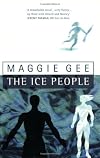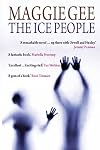
The Ice People
by Maggie Gee
On This Page
Description
It is far on in the 21st century and the world is freezing. Civilization has collapsed in the face of a new Ice Age. Sixty-year-old Saul lives in a disused airport with a gang of wild boys. His tale of adventure, love and loss returns us to his youth, days of fierce heat and dwindling fertility.Tags
Recommendations


























Member Recommendations
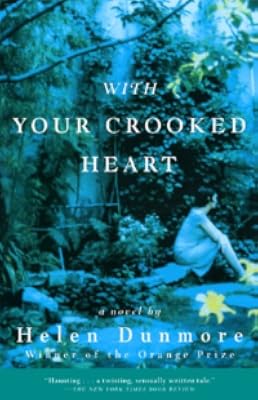
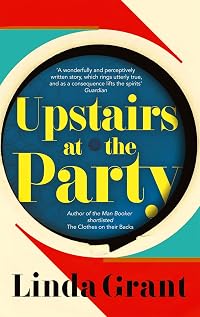
imyril Both novels depict an apocalyptic near-future Britain as a backdrop to tales about extreme feminism and the breakdown of traditional relationships. Compare and contrast with The Handmaid's Tale!
20


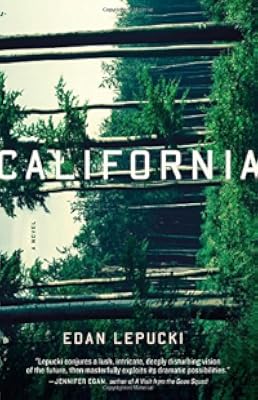
imyril Although very different, each novel envisions a near future in which civilisation has broken down following rapid climate change. The Ice People focuses on the breakdown of traditional relationships; Far North rejects traditional gender roles with its androgynous protagonist. Far North is more rounded apocalyptic fiction; Ice People is perhaps best tagged as gender apocalypse.

Member Reviews
Set in the future, our story is narrated by Saul, a older man around 60 or so, living in UK in the middle of an "ice age". Society where he is has deteriorated into primitive conditions with ragged bands of youngish people living certainly without literature, and written language. Saul is valuable to him because he can tell them stories. (Saul here reminds me a little of Margaret Atwood's "Snowman" in Oryx and Crake). Something is about to happen and Saul is desperate to tell his story, to write it down.
He takes us back to his days as a young man, when the UK was suffering from relentless hot days, and the idea of an ice age descending upon them quickly was laughable. Fertility is low and diseases (rampant HIV) still prevalent. Men and show more women prefer to be with their own kind, and fashion is mostly androgynous. In the absence of children, robots were developed, first for domestic uses (feathered robots, no less!), eventually they were adapted for other uses. Saul is in love with Sarah, who he met at age 25. At first they are everything to each other. They decide to go through an arduous process to have a child and eventually they succeed. Everything becomes increasingly more complicated. This is his—no, their—story.
Maggie Gee is a great storyteller. She captures your attention almost immediately and carries you through the book effortlessly. I expected a book called "The Ice People" and featuring a world first overly hot, then overly cold, to be about climate change, and although that is there as backdrop, this book is really about gender relations. Not just about this one couple but about how we define ourselves as "men" or "women" and what our society assigns to our gender roles. Take the the biology, the sex, away and do we really need each other? And how do these things affect children? In the book, what first starts as the sexes preferring the company of their own sex ("segged", it's called. For 'segregation'), becomes more militant.
This is a thoughtful, thought-provoking book, an exploration of ideas around gender, gender roles, and gender relations without a definitive verdict (maybe not the word I want here), which is to say that the story continues and ends, but we have not been told what exactly to think about these things. However, as Saul tells the story, it is his fierce love for Sarah and their son Luke that is the real story. He's finished now, the wild boys are coming for him... show less
He takes us back to his days as a young man, when the UK was suffering from relentless hot days, and the idea of an ice age descending upon them quickly was laughable. Fertility is low and diseases (rampant HIV) still prevalent. Men and show more women prefer to be with their own kind, and fashion is mostly androgynous. In the absence of children, robots were developed, first for domestic uses (feathered robots, no less!), eventually they were adapted for other uses. Saul is in love with Sarah, who he met at age 25. At first they are everything to each other. They decide to go through an arduous process to have a child and eventually they succeed. Everything becomes increasingly more complicated. This is his—no, their—story.
Maggie Gee is a great storyteller. She captures your attention almost immediately and carries you through the book effortlessly. I expected a book called "The Ice People" and featuring a world first overly hot, then overly cold, to be about climate change, and although that is there as backdrop, this book is really about gender relations. Not just about this one couple but about how we define ourselves as "men" or "women" and what our society assigns to our gender roles. Take the the biology, the sex, away and do we really need each other? And how do these things affect children? In the book, what first starts as the sexes preferring the company of their own sex ("segged", it's called. For 'segregation'), becomes more militant.
This is a thoughtful, thought-provoking book, an exploration of ideas around gender, gender roles, and gender relations without a definitive verdict (maybe not the word I want here), which is to say that the story continues and ends, but we have not been told what exactly to think about these things. However, as Saul tells the story, it is his fierce love for Sarah and their son Luke that is the real story. He's finished now, the wild boys are coming for him... show less
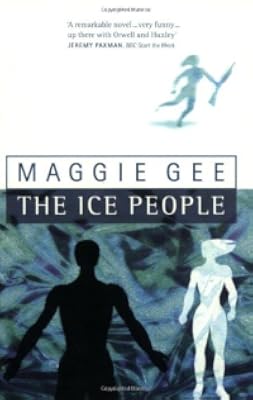
The Ice People is a bleak vision of a near-future in which civilisation breaks down in the face of rapid climate change, its focus strictly on gender politics and disaffected youth. Although the cover hints tantalisingly at a broad canvas of environmental politics and African supremacy, The Ice People is the story of one man (Saul), depicting the dissolution of his family as a microcosm of the disintegration of British society.
Every attempt I have made to write a brief review of this novel has turned into an essay - it is dense, compelling, packed with throwaway references and visions of its time and technologies, thought-provoking and likely to induce arguments. It is worth a read for all these reasons and a top pick for a book club - show more but not exactly enjoyable (as someone else has commented, the most sympathetic character is a feathered menial robot with strictly limited programming (no AI here!) who may or may not have eaten her owner's cat). show less
Every attempt I have made to write a brief review of this novel has turned into an essay - it is dense, compelling, packed with throwaway references and visions of its time and technologies, thought-provoking and likely to induce arguments. It is worth a read for all these reasons and a top pick for a book club - show more but not exactly enjoyable (as someone else has commented, the most sympathetic character is a feathered menial robot with strictly limited programming (no AI here!) who may or may not have eaten her owner's cat). show less
This sounded like an interesting concept when I spotted it in the bookstore. While the current preoccupation is with global warming and the melting of the ice caps etc, what if the earth actually got colder, and the Northern lands became uninhabitable? Suddenly Africa would come into its own. This is the main theme of this novel, but there are others along the way.
First of all, the novel takes us a few years into the future, where society has been split - acrimoniously - along gender lines. Fertility has decreased massively. Explanations were given for this state of affairs, but not really enough for my liking. It's a big jump from where we are now - ie record numbers of teenage pregnancies in the UK. Assuming belief can be suitably show more suspended, we are introduced to the central female character, initially likeable, who first opposes the status quo, gender-wise, but after a series of bizarre personality mutations ends up a harridan, leaving her former partner to, erm, bonk the family's robotic housekeeper.
Oddly, I thought the robot stole the show. She got all the best lines. I didn't get the feather thing, though. Why did she have feathers?
What struck me most about the book was the way men dealt with the breakdown of traditional male-female relations by turning to robots who fulfilled all the traditional female roles (housekeeping, comfort, sex, reproduction) without the more modern ones (career, intelligence). It was a sort of consequences-of-extreme-women's-lib message that came out of this story, more than any tale of African world dominance. I would have liked to hear more about that, but still a good read, with reservations. show less
First of all, the novel takes us a few years into the future, where society has been split - acrimoniously - along gender lines. Fertility has decreased massively. Explanations were given for this state of affairs, but not really enough for my liking. It's a big jump from where we are now - ie record numbers of teenage pregnancies in the UK. Assuming belief can be suitably show more suspended, we are introduced to the central female character, initially likeable, who first opposes the status quo, gender-wise, but after a series of bizarre personality mutations ends up a harridan, leaving her former partner to, erm, bonk the family's robotic housekeeper.
Oddly, I thought the robot stole the show. She got all the best lines. I didn't get the feather thing, though. Why did she have feathers?
What struck me most about the book was the way men dealt with the breakdown of traditional male-female relations by turning to robots who fulfilled all the traditional female roles (housekeeping, comfort, sex, reproduction) without the more modern ones (career, intelligence). It was a sort of consequences-of-extreme-women's-lib message that came out of this story, more than any tale of African world dominance. I would have liked to hear more about that, but still a good read, with reservations. show less
I believe I originally put this book on my TBR list when I was looking for books dealing with climate change in some ways. While climate change (sliding into a new ice age) plays a role in the novel's plot, it is mostly in the background, and the focus is on social changes and results of gender politics that have led to large-scale segregation of men from women. Now I realise this book was published in the late 1990s, with the protagonist supposedly born in 2005, and things have changed since then, but I just couldn't see how things would have gone into that direction with gender politics for the generation that my children (if I had any) would belong--I hesitate to call it naive, but certainly unlikely and poorly thought out. Of course show more things, don't always develop in well-thought-out ways, but still. And the same applies for the little we saw about politics of race and ethnicity.
I found the protagonist insufferably whingey so he annoyed me half the time.
This was my choice for book group, so I'm looking forward to interesting discussion. show less
I found the protagonist insufferably whingey so he annoyed me half the time.
This was my choice for book group, so I'm looking forward to interesting discussion. show less
Utterly compelling story with unusual scope. Stretches itself through time & landscape like a nimble feline.
the book was wonderful according to its adds in the book. however to was quite stupid.
Ratings
Members
- Recently Added By
Lists

Dystopian and Apocalyptic Literature
350 works; 74 members

Climate Change
39 works; 2 members
Author Information

19+ Works 916 Members
Awards and Honors
Awards
Common Knowledge
- Canonical title
- The Ice People
- Original publication date
- 1998
- People/Characters
- Saul; Sarah; Briony; Luke
- Important places
- London, England, UK
- Epigraph
- About five million years ago, our ancestors were arboreal, apelike creatures contentedly going about their business in the forests of East Africa. Then, for reasons that are still only partly understood, the Earth entered a s... (show all)eries of recurring Ice Ages...typically a little over 100,000 years long...separated by interglacials about 15,000 years ago...Even during a full Ice Age the forests of East Africa do not freeze... (John & Mary Gribbin, Watching the weather).
...during most of the last half million years the climate was...considerably colder than now...The term 'interglacial' is used to describe major warm phases, each of which...lasted 10,000 to 15,000 years...We are now living w... (show all)ithin a major warm phase, which has so far lasted about 10,000 years (the warm-up began as early as 13,000 years ago.) It compares closely with previous interglacial periods...and...it seems likely that colder conditions will return...(Anthony J. Stuart, 'Life in the Ice Age).
The great glaciers of the Ice Age will return...the four previous interglacials lasted between 8,000 and 12,000 years, and the present one, called the Holocene, has already endured a little longer than 10,000 years. (Windsor ... (show all)Chorlton, The Ice Ages). - First words
- I, Saul, Teller of Tales, Keeper of Doves, Slayer of Wolves, shall tell the story of my times.
- Last words
- (Click to show. Warning: May contain spoilers.)Yes, I am ready.
- Blurbers
- Paxman, Jeremy; Frostrup, Mariella; Weldon, Fay; Tremain, Rose; Jones, Nicolette; Buchan, Elizabeth (show all 9); Cook, Judith; Taylor, Tanis; Melly, George
Classifications
Statistics
- Members
- 131
- Popularity
- 249,997
- Reviews
- 6
- Rating
- (3.17)
- Languages
- English, Italian
- Media
- Paper, Ebook
- ISBNs
- 5
- ASINs
- 3