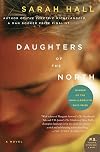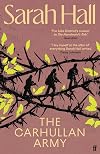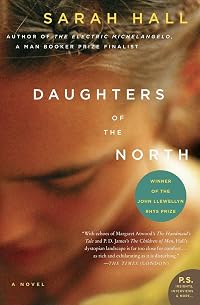
The Carhullan Army
by Sarah Hall
On This Page
Description
In this stunning novel, Sarah Hall imagines a new dystopia set in the not-too-distant future. England is in a state of environmental crisis and economic collapse. There has been a census, and all citizens have been herded into urban centers. Reproduction has become a lottery, with contraceptive coils fitted to every female of childbearing age. A girl who will become known only as "Sister" escapes the confines of her repressive marriage to find an isolated group of women living as show more "un-officials" in Carhullan, a remote northern farm, where she must find out whether she has it in herself to become a rebel fighter. Provocative and timely, Daughters of the North poses questions about the lengths women will go to resist their oppressors, and under what circumstances might an ordinary person become a terrorist.Includes an excerpt from Sarah Hall's new book The Beautiful Indifference. show lessTags
Recommendations



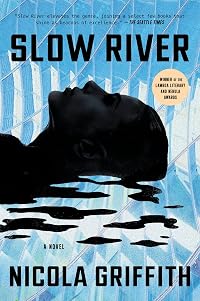
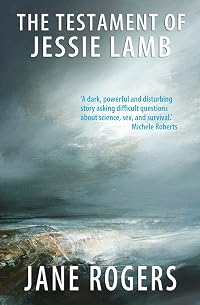
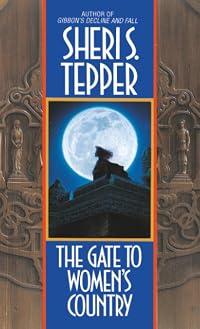
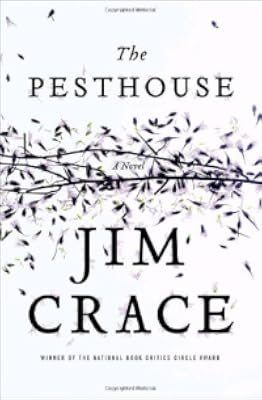



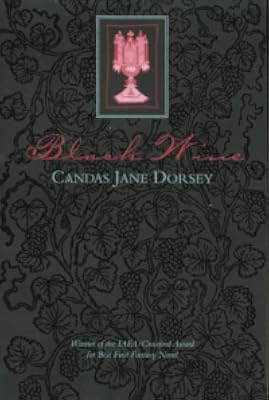
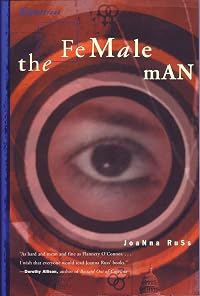
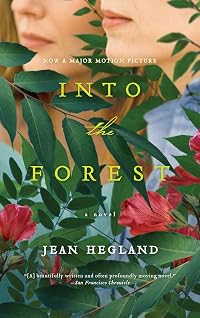
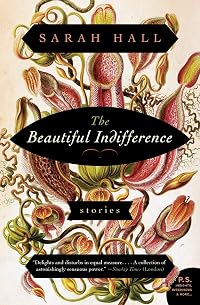

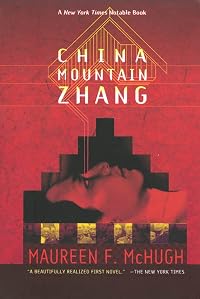
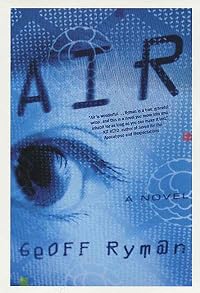
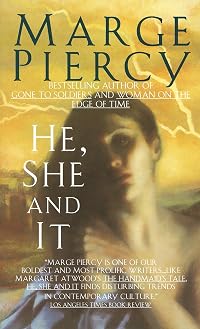


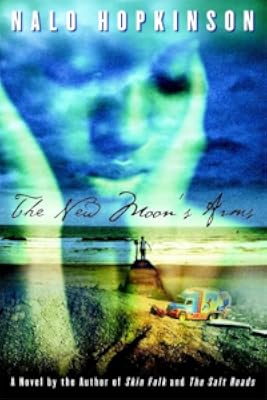







Member Recommendations
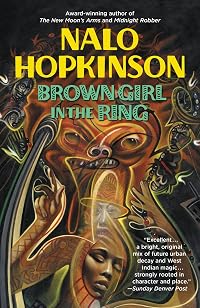
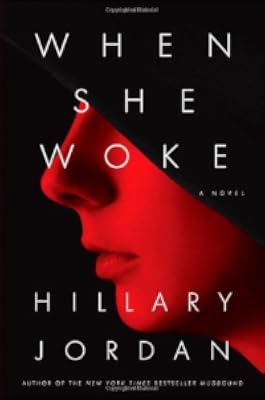
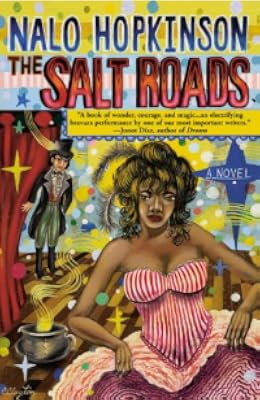
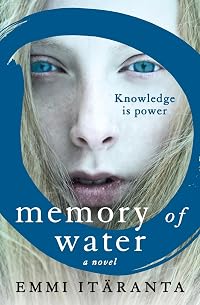
hairball Collapse on the other side of the pond.

hairball Definitely a more male-centric book, but I'm fond of Will Self.
Aquila Carhullan Army is the bleaker of the two.

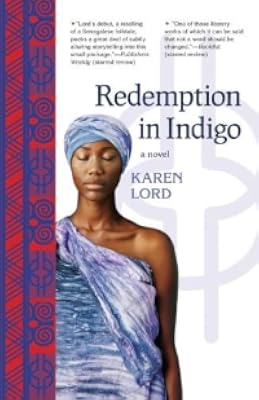
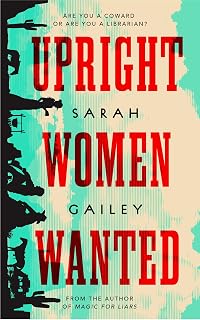
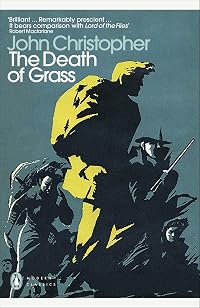
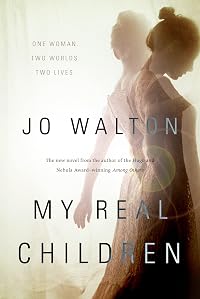
imyril Both novels depict an apocalyptic near-future Britain as a backdrop to tales about extreme feminism and the breakdown of traditional relationships. Compare and contrast with The Handmaid's Tale!
01
Member Reviews
This novel can be summed up more or less accurately as a portrayal of what second wave feminism would look like if it were not a movement of theory, but a paramilitary insurgency. The plot revolves around an unnamed protagonist in a dystopian England who finds herself confined by the rules and regulations and dreary life under the hand of the Authority. Humiliated and ashamed of a contraceptive coil she is forced to have implanted within her, she finds her resentment growing, until she flees to a commune of sorts in the northern area. Here she finds a group of women who subsist in a libertarian system, though led by the founder, a charismatic woman named Jackie Nixon.
And here is where many reviewers seem to be torn. The first show more two-thirds of the book clearly revolve more around feminist theory: the women are portrayed as being more comfortable with themselves, eager to work and speak up and be heard; Hall specifically condemns those who think "cattiness" is somehow innate to feminine nature and that women have to have a masculine influence around or somehow we'll wither and die. The book also dips more into second wave feminism at this point, as it celebrates lesbian relationships and criticizes the handful of men who live on a neighboring farm.
The final third, however, becomes much more bloody and real.
Hall writes Jackie Nixon convincingly. Too often, leaders are portrayed as being perfect, which feels fake, but Nixon is clearly a flawed character. She is stubborn, willful, and not a little bloodthirsty; as is so often the case, however, these eccentricities do not detract from her charisma, but give it a sense of realism. Often the most beloved leaders, the ones most celebrated, are just a little off.
Nixon hears news that the Authority is planning on invading the farm and rousting its inhabitants, forcing them to live under the same oppressive rule they fled from, and here Hall forces the reader to make a choice: do we believe Nixon? The reader's opinion influences how they feel about the rest of the book. Other women back Nixon's story up, but they are all part of her elite group, and it is continually shown that she is somewhat revered, a leader of women, someone who makes them feel like more than they are, that they are part of something. The unnamed protagonist, who has idolized Nixon since she was a little girl, feels the same way. Nixon proposes striking first, in a moving speech about the responsibilities of liberty. Others feel that they should continue as they have been and hope they are left alone. Again, who you agree with hinges more than a little on whether you believe Nixon is telling the truth, and for every clue that she is (concurring reports), there is also evidence that she may not (several times her bloodthirsty and restless nature is mentioned, as well as implications she may not be entirely stable).
The protagonist, known only as Sister, joins in Nixon's cause, and we see that these are the true Daughters of the North, not the commune itself. These daughters seem wild, unearthly, sprung up from the ground itself instead of born from fathers and mothers. They are hard, ruthless, and single-minded.
The central question is whether or not the cause is just, not the leader. Nixon is changeable and often cruel: she conducts midnight raids on the women, tortures them in a tiny chamber, and even kills two who try to escape. One woman protests that Sister has been groomed since she arrived for this purpose and Nixon is manipulating them - which may very well be true. Early on in the book, and quite tellingly, Sister relays a conversation she had with her father where he says, "It doesn't do to rely on those in charge completely." Just because Jackie's system is not as overtly oppressive as the Authority does not mean that she is not in charge. Nixon is portrayed as the perfect rebellion leader: she gives moving speeches about liberty, she reads profusely and has experience, she exudes a charisma which bespells those who follow her quite willingly. But whether or not she is on the right side of it is quite a different matter.
The book is compelling, not shying away from complexities or ambiguities - no one is completely in the right. The Authority is abusing human rights, Nixon is clearly spoiling for a war. Are they both meant to be wrong? Is there a point when we have to accept that nonviolent resistance is not feasible in every conflict?
Whether or not you agree with the methods used, or even some of the more radical aspects of the feminist theory lying underneath, Hall has beautiful prose that somehow ties beautiful descriptions with thematic intensity. One of the most gorgeous examples of this is when Sister is training. She comments: "My whole life I had loved the upland terrain, deriving simple pleasure from it as a child - the views, the changing colours of the slopes, the brackish rivers - and though for years I had seen it at only a distance, I had often thought of the landscape as I stood beside the conveyor at the factory; it was a place of beauty and escape. Now I stumbled across its gills and over its marshland, bending to meet the wind when it roared against me, and dragging myself up by the scars by handfuls of heather and thorn bushes, by any firm hold. And still, I could not say it wasn't beautiful. Despite its austerity, its vast and cowing expanse, and the agony of its traverse, it seemed more beautiful than ever."
Here, again, we see that these women are from the Earth itself, from the North that gave them birth.
If you are at all interested in feminism, dystopian worlds, complex and subtle stories of power, this is a wonderful book to read. show less
And here is where many reviewers seem to be torn. The first show more two-thirds of the book clearly revolve more around feminist theory: the women are portrayed as being more comfortable with themselves, eager to work and speak up and be heard; Hall specifically condemns those who think "cattiness" is somehow innate to feminine nature and that women have to have a masculine influence around or somehow we'll wither and die. The book also dips more into second wave feminism at this point, as it celebrates lesbian relationships and criticizes the handful of men who live on a neighboring farm.
The final third, however, becomes much more bloody and real.
Hall writes Jackie Nixon convincingly. Too often, leaders are portrayed as being perfect, which feels fake, but Nixon is clearly a flawed character. She is stubborn, willful, and not a little bloodthirsty; as is so often the case, however, these eccentricities do not detract from her charisma, but give it a sense of realism. Often the most beloved leaders, the ones most celebrated, are just a little off.
Nixon hears news that the Authority is planning on invading the farm and rousting its inhabitants, forcing them to live under the same oppressive rule they fled from, and here Hall forces the reader to make a choice: do we believe Nixon? The reader's opinion influences how they feel about the rest of the book. Other women back Nixon's story up, but they are all part of her elite group, and it is continually shown that she is somewhat revered, a leader of women, someone who makes them feel like more than they are, that they are part of something. The unnamed protagonist, who has idolized Nixon since she was a little girl, feels the same way. Nixon proposes striking first, in a moving speech about the responsibilities of liberty. Others feel that they should continue as they have been and hope they are left alone. Again, who you agree with hinges more than a little on whether you believe Nixon is telling the truth, and for every clue that she is (concurring reports), there is also evidence that she may not (several times her bloodthirsty and restless nature is mentioned, as well as implications she may not be entirely stable).
The protagonist, known only as Sister, joins in Nixon's cause, and we see that these are the true Daughters of the North, not the commune itself. These daughters seem wild, unearthly, sprung up from the ground itself instead of born from fathers and mothers. They are hard, ruthless, and single-minded.
The central question is whether or not the cause is just, not the leader. Nixon is changeable and often cruel: she conducts midnight raids on the women, tortures them in a tiny chamber, and even kills two who try to escape. One woman protests that Sister has been groomed since she arrived for this purpose and Nixon is manipulating them - which may very well be true. Early on in the book, and quite tellingly, Sister relays a conversation she had with her father where he says, "It doesn't do to rely on those in charge completely." Just because Jackie's system is not as overtly oppressive as the Authority does not mean that she is not in charge. Nixon is portrayed as the perfect rebellion leader: she gives moving speeches about liberty, she reads profusely and has experience, she exudes a charisma which bespells those who follow her quite willingly. But whether or not she is on the right side of it is quite a different matter.
The book is compelling, not shying away from complexities or ambiguities - no one is completely in the right. The Authority is abusing human rights, Nixon is clearly spoiling for a war. Are they both meant to be wrong? Is there a point when we have to accept that nonviolent resistance is not feasible in every conflict?
Whether or not you agree with the methods used, or even some of the more radical aspects of the feminist theory lying underneath, Hall has beautiful prose that somehow ties beautiful descriptions with thematic intensity. One of the most gorgeous examples of this is when Sister is training. She comments: "My whole life I had loved the upland terrain, deriving simple pleasure from it as a child - the views, the changing colours of the slopes, the brackish rivers - and though for years I had seen it at only a distance, I had often thought of the landscape as I stood beside the conveyor at the factory; it was a place of beauty and escape. Now I stumbled across its gills and over its marshland, bending to meet the wind when it roared against me, and dragging myself up by the scars by handfuls of heather and thorn bushes, by any firm hold. And still, I could not say it wasn't beautiful. Despite its austerity, its vast and cowing expanse, and the agony of its traverse, it seemed more beautiful than ever."
Here, again, we see that these women are from the Earth itself, from the North that gave them birth.
If you are at all interested in feminism, dystopian worlds, complex and subtle stories of power, this is a wonderful book to read. show less
A series of disasters has deteriorated society to the point where the UK is under a repressive regime. People have moved into the cities where resources are and work is sometimes available, and the countryside is now derelict and overgrown. In a compelling first person narrative, we are given the story of a young woman, known only to the reader as “Sister,” who dangerously seeks freedom by leaving the city traveling to look for Carhullan, an enclave of rebel women tucked away in the Northern countryside.
The story is a penal system record, a transcript of a statement from a female prisoner, that we can assume is Sister. She will find Carhullan and join the group. Unlike some dystopias which serve as mirrors to our current society, show more The Carhullan Army, in a mere 200 pages, is perhaps both a meditation on freedom and what one might be willing to do to achieve it, but it is equally an intriguing and compelling portrait of a subculture of women militants, and their charismatic and fanatical leader. show less
The story is a penal system record, a transcript of a statement from a female prisoner, that we can assume is Sister. She will find Carhullan and join the group. Unlike some dystopias which serve as mirrors to our current society, show more The Carhullan Army, in a mere 200 pages, is perhaps both a meditation on freedom and what one might be willing to do to achieve it, but it is equally an intriguing and compelling portrait of a subculture of women militants, and their charismatic and fanatical leader. show less
I love the women of Sarah Hall's Carhullan Army (a.k.a. The Daughters of the North) the"North" being the Northern Highlands of England. These rawboned, muscles honed (but not quite Amazon-like) ladies live off the land like modern day Pocahontases, assuming Pocahontas had a diesel-fueled Jeep, automatic rifle, and was on the lam from the villainous (but not very well defined) "Authority" of Hall's brief and bleak and too abrupt-ending novel.
These hardy (mostly British) women, bedecked in utilitarian handmade hemp attire, sweaty and presumably stinky from the hard work of either tending to their small farm or training in their leader's (Jackie's -- a now celibate lesbian and a ruthless megalomaniac) amateur "army," enjoy their time off show more work by occasionally "secreting" to the few local remnants of men for their lascivious, sexual gratification. Woohoo! These women actually use these men as sex objects! (can you believe that a woman would do that to a man?!) Oh the heinous role reversal of revenge! Do I embellish somewhat? Yes, since some of these men are the actual husbands of the Carhullan lasses, "allowed" by Jackie to remain nearby, but not allowed on Carhulla's grounds.
The Daughters of the North is not just about sex (though there's plenty of it) but about a commune of wounded women, the majority of which arrived at the compound having just escaped their abusive captors, be they brothers or fathers or boyfriends or husbands. England becomes the symbol then, of the abusive, domineering male, as the nation transforms in less than a decade into what the women must ultimately escape: A democracy turned tyrannical patriarch, North Korea kind of nation. England loses its liberties when...well, maybe that's giving away too much of the story. But I will say it involves the Thames River, in what amounts to about the only plausible (and original) potentiality of the novel.
We learn about the demise of free society (and the ruin of London) through the fed-up eyes of a young woman known only as "The Sister,'" who sneaks out of the relocation tenements in order to locate (and hopefully live and be accepted) into what she's come to believe since being a teen could be her destiny, her Shangri-La, the mythic, legendary enclave of Carhulla.
When she gets there, she receives abuse at the hands of her fellow women far worse physically and emotionally than any abuses she's ever suffered previously at the hands of Big Brother (I mean the "Authority"). Her confinement to what amounts to a sensory deprivation tank filled with excrement, is rationalized by Carhulla's leadership as protecting the greater good of Carhulla, and a way to verify (if not initiate) if "the Sister" is who she says she is and that she's not a spy sent by the Authority. The Sister is ultimately treated well but, sorry, what a bunch of unlovely and heartless wenches most of these ladies are.
Frank Herbert wrote about ultra-unconscionably cramped living conditions and harsh treatment of initiates three decades previously in The Dosadi Experiment, as have an even more famous host of other mid-century, brave new writers long since dead. In other words, this particular "futuristic" concept of Halls is tired; it's unoriginal, as are just about every futuristic concept she tries to sneak by her readership, like how the Authority controls women's reproductive rights. No way! I've never read about that in a dystopia or science fiction novel before! And if governments like China right now are controlling women's reproductive rights, what's so science-fictiony and shocking and making-for-a-good-yarn about the topic any more, anyway?
The power of well executed dystopias like Zamyatin's We, for instance, lies in both their believability -- this could really happen here in Britain! -- and hyper-parody of present politics gone off the dictatorial deep end, as well as satirizing a culture's fear-climate of compliance, like what Alexander Zinoviev accomplished so successfully in his late '70s masterful and comprehensive skewering of the former-Soviet Union's government (and citizenry) in The Yawning Heights.
Frankly, there's little power or believability in Sarah Hall's novel. Sarah Hall expects us to believe that thirty-two women could sack a city controlled by an Authority (and c'mon, Sarah, couldn't you be a bit more clever and creative than calling your Evil Antagonist the...'Authority'?) and hold that city in their power for fifty-three days, 24/7! Are you kidding? Thirty-two British Commando's couldn't sack a city and hold it for two-and-a-half months morning noon and night. Did you see what happened when about thirty-two American Airborne Rangers tried to extract one individual of importance in Somalia, Sarah? They barely survived a week against that city.
I don't think Sarah Hall believes her Carhullan Army could have pulled off such a coup either. Otherwise, wouldn't she have shown us in the text how they did it exactly, rather than tell us that they did do it in a hastily tacked on page-and-a-half epilogue? Weak.
I've been hard on Sarah Hall. Hard on her because she's obviously a gifted writer (2.5 stars for the stellar prose) who's written an acclaimed historical debut (Haweswater) and been shortlisted for a Booker (The Electric Michelangelo) but who made what has to be considered a moderate misstep here with The Daughters of the North.
Ultimately, I don't recommend this novel because it's a bad novel per se (it isn't) or a novel with an implausible plot (though it definitely is), but because the average informed reader has probably already read the book before in some form -- read much better and believable books before -- assuming they've read Atwood's dystopic stuff, or Huxley or Orwell's finest hours. Daughters of the North should stay far to the south in any reader's tbr pile. show less
These hardy (mostly British) women, bedecked in utilitarian handmade hemp attire, sweaty and presumably stinky from the hard work of either tending to their small farm or training in their leader's (Jackie's -- a now celibate lesbian and a ruthless megalomaniac) amateur "army," enjoy their time off show more work by occasionally "secreting" to the few local remnants of men for their lascivious, sexual gratification. Woohoo! These women actually use these men as sex objects! (can you believe that a woman would do that to a man?!) Oh the heinous role reversal of revenge! Do I embellish somewhat? Yes, since some of these men are the actual husbands of the Carhullan lasses, "allowed" by Jackie to remain nearby, but not allowed on Carhulla's grounds.
The Daughters of the North is not just about sex (though there's plenty of it) but about a commune of wounded women, the majority of which arrived at the compound having just escaped their abusive captors, be they brothers or fathers or boyfriends or husbands. England becomes the symbol then, of the abusive, domineering male, as the nation transforms in less than a decade into what the women must ultimately escape: A democracy turned tyrannical patriarch, North Korea kind of nation. England loses its liberties when...well, maybe that's giving away too much of the story. But I will say it involves the Thames River, in what amounts to about the only plausible (and original) potentiality of the novel.
We learn about the demise of free society (and the ruin of London) through the fed-up eyes of a young woman known only as "The Sister,'" who sneaks out of the relocation tenements in order to locate (and hopefully live and be accepted) into what she's come to believe since being a teen could be her destiny, her Shangri-La, the mythic, legendary enclave of Carhulla.
When she gets there, she receives abuse at the hands of her fellow women far worse physically and emotionally than any abuses she's ever suffered previously at the hands of Big Brother (I mean the "Authority"). Her confinement to what amounts to a sensory deprivation tank filled with excrement, is rationalized by Carhulla's leadership as protecting the greater good of Carhulla, and a way to verify (if not initiate) if "the Sister" is who she says she is and that she's not a spy sent by the Authority. The Sister is ultimately treated well but, sorry, what a bunch of unlovely and heartless wenches most of these ladies are.
Frank Herbert wrote about ultra-unconscionably cramped living conditions and harsh treatment of initiates three decades previously in The Dosadi Experiment, as have an even more famous host of other mid-century, brave new writers long since dead. In other words, this particular "futuristic" concept of Halls is tired; it's unoriginal, as are just about every futuristic concept she tries to sneak by her readership, like how the Authority controls women's reproductive rights. No way! I've never read about that in a dystopia or science fiction novel before! And if governments like China right now are controlling women's reproductive rights, what's so science-fictiony and shocking and making-for-a-good-yarn about the topic any more, anyway?
The power of well executed dystopias like Zamyatin's We, for instance, lies in both their believability -- this could really happen here in Britain! -- and hyper-parody of present politics gone off the dictatorial deep end, as well as satirizing a culture's fear-climate of compliance, like what Alexander Zinoviev accomplished so successfully in his late '70s masterful and comprehensive skewering of the former-Soviet Union's government (and citizenry) in The Yawning Heights.
Frankly, there's little power or believability in Sarah Hall's novel. Sarah Hall expects us to believe that thirty-two women could sack a city controlled by an Authority (and c'mon, Sarah, couldn't you be a bit more clever and creative than calling your Evil Antagonist the...'Authority'?) and hold that city in their power for fifty-three days, 24/7! Are you kidding? Thirty-two British Commando's couldn't sack a city and hold it for two-and-a-half months morning noon and night. Did you see what happened when about thirty-two American Airborne Rangers tried to extract one individual of importance in Somalia, Sarah? They barely survived a week against that city.
I don't think Sarah Hall believes her Carhullan Army could have pulled off such a coup either. Otherwise, wouldn't she have shown us in the text how they did it exactly, rather than tell us that they did do it in a hastily tacked on page-and-a-half epilogue? Weak.
I've been hard on Sarah Hall. Hard on her because she's obviously a gifted writer (2.5 stars for the stellar prose) who's written an acclaimed historical debut (Haweswater) and been shortlisted for a Booker (The Electric Michelangelo) but who made what has to be considered a moderate misstep here with The Daughters of the North.
Ultimately, I don't recommend this novel because it's a bad novel per se (it isn't) or a novel with an implausible plot (though it definitely is), but because the average informed reader has probably already read the book before in some form -- read much better and believable books before -- assuming they've read Atwood's dystopic stuff, or Huxley or Orwell's finest hours. Daughters of the North should stay far to the south in any reader's tbr pile. show less
Not the greatest book on the subject, but also not the worst. Hall gets points for not having her main character raped at the beginning of the book. However, points off, so to speak, for leaving the circumstances of the "crisis" Britain seems to be in so vague--floods, lack of fuel, etc.--sure, we can extrapolate somewhat, but I like my end-of-the-world dystopias a bit more fleshed out. For example, why fit all the women with birth control? To save resources, presumably. But is the abuse of women via checking that the birth control is still "installed" something that's mandated by the government, or is it just the usual abuse of power by people who have none? In other words, has a decision been made at some point that women are show more "officially" second-class citizens?
What I guess I'm saying is, the book lacks context. A similar work, World Made by Hand, lacks information but doesn't seem as enclosed as this one; within its covers, its lack of knowledge about the rest of the world makes sense. In Daughters of the North, while there is an information blackout, there also seems to be a lack of curiosity about what's going on in the larger world. The book is very self-contained, and I'm not sure if that's a good thing. Perhaps that sense of enclosure is meant to contribute to the confessional format of the book, which didn't work well for me.
One might say I'm hard to please, but with collapse-of-civilization novels running a dime a dozen these days, I can afford to be picky. show less
What I guess I'm saying is, the book lacks context. A similar work, World Made by Hand, lacks information but doesn't seem as enclosed as this one; within its covers, its lack of knowledge about the rest of the world makes sense. In Daughters of the North, while there is an information blackout, there also seems to be a lack of curiosity about what's going on in the larger world. The book is very self-contained, and I'm not sure if that's a good thing. Perhaps that sense of enclosure is meant to contribute to the confessional format of the book, which didn't work well for me.
One might say I'm hard to please, but with collapse-of-civilization novels running a dime a dozen these days, I can afford to be picky. show less
When I was last at Jessa's I reclaimed a few of my own books from her collection before her move to Germany, and at the same time she pressed this one on me, saying I'd really like it. A few days ago, I was searching for a book to read while I'd misplaced Fear and Trembling, so I grabbed this one.
She was right! I was drawn in right from the beginning, to the point that some of Sister's anger and frustration spilled over into my (male-filled) life when I was forced to put the book down for a while. Sunday I plowed through the rest of the book despite Andrew being gone and my needing to watch Jefferson all day.
In this near-future dystopian vision, global warming has raised coastlines and temperatures, the economy has crashed, people have show more been herded into urban centers, and England is engaged in some unnamed war with far flung enemies. All women are fitted with contraceptive "regulators," subject to surprise inspection, and reproduction is by lottery. One woman finally has enough, so she flees her "official" existence in search of a women's community high in the mountains that she's been fascinated with since childhood, but has little idea if it still exists....
In many ways this book is the opposite of Door Into Ocean's Sharer world -- with incidents of torture, military training, and the final violent uprising, but in both books the women are wiry, strong, self-sufficient, living at harmony with their ecosystem, and in control. Could the women of Carhullan have staged a successful non-violent campaign of resistance? It's hard to say.
Both worlds have strong representations of women, and also people of color (perhaps Daughters more pointedly in the case of the latter.) Daughters also speaks strongly to the kind of power and self-control so alluring in glossy ads for the military. Of course, the Sharers also had that strength, though they went about completely different means to achieve it.
In the end, it is perhaps startling how much the two groups of women have in common.
Highly recommended. show less
She was right! I was drawn in right from the beginning, to the point that some of Sister's anger and frustration spilled over into my (male-filled) life when I was forced to put the book down for a while. Sunday I plowed through the rest of the book despite Andrew being gone and my needing to watch Jefferson all day.
In this near-future dystopian vision, global warming has raised coastlines and temperatures, the economy has crashed, people have show more been herded into urban centers, and England is engaged in some unnamed war with far flung enemies. All women are fitted with contraceptive "regulators," subject to surprise inspection, and reproduction is by lottery. One woman finally has enough, so she flees her "official" existence in search of a women's community high in the mountains that she's been fascinated with since childhood, but has little idea if it still exists....
In many ways this book is the opposite of Door Into Ocean's Sharer world -- with incidents of torture, military training, and the final violent uprising, but in both books the women are wiry, strong, self-sufficient, living at harmony with their ecosystem, and in control. Could the women of Carhullan have staged a successful non-violent campaign of resistance? It's hard to say.
Both worlds have strong representations of women, and also people of color (perhaps Daughters more pointedly in the case of the latter.) Daughters also speaks strongly to the kind of power and self-control so alluring in glossy ads for the military. Of course, the Sharers also had that strength, though they went about completely different means to achieve it.
In the end, it is perhaps startling how much the two groups of women have in common.
Highly recommended. show less
I’d been after a copy of this for a while, so I was pretty chuffed when I found this one in a charity shop. I had high hopes too of the novel, as it had been repeatedly recommended to me, but initially I wondered if it had been over-praised. It’s structured as segments of found testimony by Sister, who leaves her husband to join a women’s militia based at a remote farm. In the near-future UK of the book, the economy has crashed, the US sends aid, and an oppressive political regime is tightening its grip on an already downtrodden and poor population. Once Sister reaches Carhullan, the militia’s farm, the story picks up, and when she is recruited to the women’s army which is planning a coup on a local town, then it really moves show more into gear. By the end of the novel, I was much more impressed than I had been after the first dozen or so pages. On balance, definitely worth its position on the Clarke Award shortlist (and arguably better than the eventual winner). show less
I enjoyed this book and found it well-written. The characters are alternately sympathetic and detestable. It is a fine addition to the lexicon of feminist dystopias.
If you're just wanting a taste of this kind of dystopia, I would point you to Octavia Butler's "Parable of the Sower" and "Parable of the Talents". If you really want to sink your teeth in the subject, you should probably read this one at some point, because it does provide some unique food for thought on the matter.
If you're just wanting a taste of this kind of dystopia, I would point you to Octavia Butler's "Parable of the Sower" and "Parable of the Talents". If you really want to sink your teeth in the subject, you should probably read this one at some point, because it does provide some unique food for thought on the matter.
Members
- Recently Added By
Published Reviews
ThingScore 75
The Carhullan Army/Daughters of the North is worth reading for its gorgeous prose and layered depictions of the relationships among the women in a commune. But as a future dystopian narrative, it presents a few really terrifying ideas — the Coil chief among them — and then falls a bit flat.
added by PhoenixTerran
Lists

Best Feminist Science Fiction
188 works; 34 members

Favorite Science Fiction by Women Authors
737 works; 196 members

Best Feminist Literature
188 works; 26 members

Books Set in Great Britain
191 works; 13 members

Female Protagonist
1,056 works; 57 members

Dystopian and Apocalyptic Literature
350 works; 74 members

BBC Radio 4 Bookclub
340 works; 13 members
Arthur C. Clarke Award Winners and Shortlisted Books
219 works; 14 members

Biggest Disappointments
606 works; 168 members

Books Read in 2011
684 works; 20 members

Books With Family Relationships in the Title
44 works; 4 members
Author Information

19+ Works 3,765 Members
Some Editions
Awards and Honors
Common Knowledge
- Canonical title
- The Carhullan Army
- Alternate titles
- Daughters of the North
- Original publication date
- 2007-08
- People/Characters
- Sister
- Important places
- England, UK
- Dedication
- For Jane and Mae
- First words
- My name is Sister.
This is the name that was given to me three years ago. - Blurbers
- Gatti, Tom; Hansson, Mia
- Disambiguation notice
- 'Carhullan Army' is also published as 'Daughters of the North'
Classifications
Statistics
- Members
- 720
- Popularity
- 39,369
- Reviews
- 50
- Rating
- (3.40)
- Languages
- 5 — Dutch, English, German, Italian, Spanish
- Media
- Paper, Audiobook, Ebook
- ISBNs
- 16
- ASINs
- 6