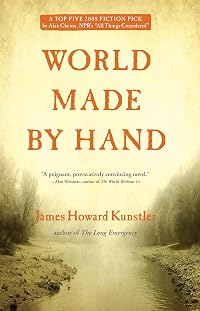
On This Page
Description
In The Long Emergency, celebrated social commentator James Howard Kunstler explored how the terminal decline of oil production combined with climate change had the potential to put industrial civilization out of business. In World Made by Hand, an astonishing work of speculative fiction, Kunstler brings to life what America might be, a few decades hence, after these catastrophes converge.The electricity has flickered out. The automobile age is over. In Union Grove, a little town in upstate show more New York, the future is nothing like people thought it would be. Life is hard and close to the bone. Transportation is slow and dangerous, so food is grown locally at great expense of time and energy, and the outside world is largely unknown. There may be a president, and he may be in Minneapolis now, but people aren't sure. The townspeople's challenges play out in a dazzling, fully realized world of abandoned highways and empty houses, horses working the fields and rivers, no longer polluted, and replenished with fish.
This is the story of Robert Earle and his fellow townspeople and what happens to them one summer in a country that has changed profoundly. A powerful tale of love, loss, violence, and desperation, World Made by Hand is also lyrical and tender, a surprising story of a new America struggling to be born—a story more relevant now than ever.
. show less
Tags
Recommendations


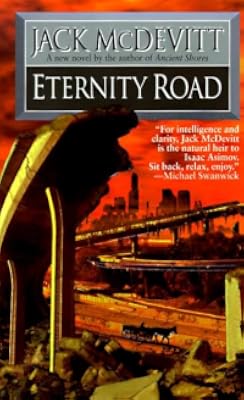
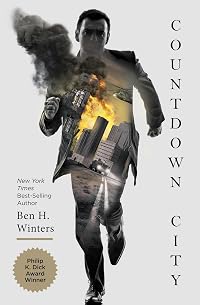
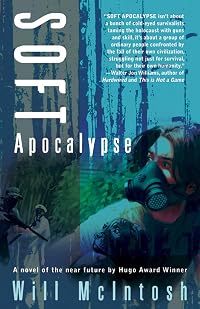
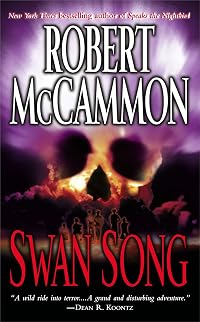
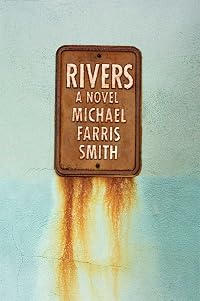
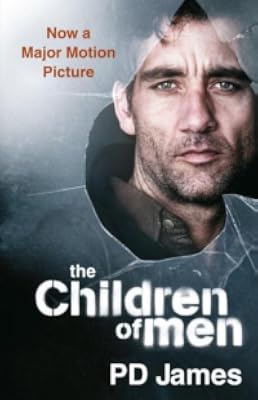
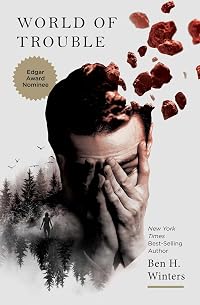
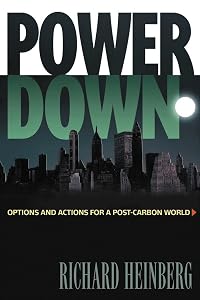

Member Recommendations
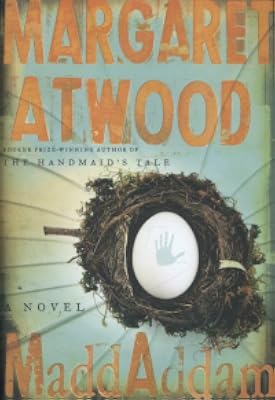
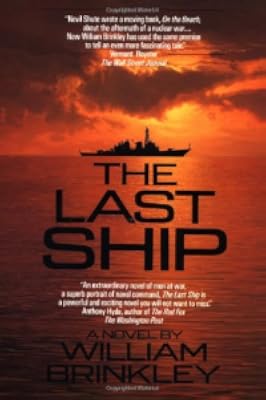
hairball Collapse on the other side of the pond.
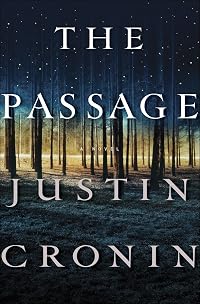
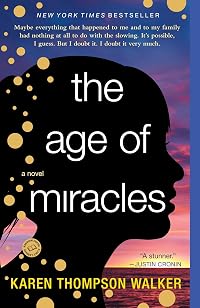
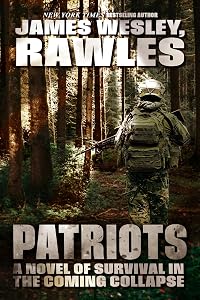
sturlington Similar environmental apocalyptic stories.
Member Reviews
Are you a locavore? Do you think people who grow their own food are better/happier/healthier/superior? Do you hate big business, major corporations, and all that industrialized nonsense? Does "made in China" make you squirm? This book is for you! A utopian paradise beset by human suffering, mass death, and general apocalyptic despair! Hey, you asked for it, not me.
World Made by Hand is a dystopian novel set years after the United States government collapsed due to oil shortages and general economic failure. With no lights, no radio, no television, and all that, everything falls into disarray. Prolonged exposure to this miserable form of existence has apparently resulted in strong inclination for drug use, lots of sex with people you show more probably shouldn't (like the minster's wife and that lady who just lost her husband) and lots of alcohol. I mean LOTS alcohol. Like "What will you have with your eggs? Alcohol, alcohol, or alcohol?" We can let the water system go to hell and bathe in water saturated with decaying animal putrescence but heaven forbid there isn't enough alcohol to go around.
It was hard for me to take this book seriously. It really was a relatively well-written novel, very atmospheric and with an addicting plot to boot. There are many positive things I could say about the novel, but it just kept feeling like the author handed the manuscript to a 13-year-old and asked what he thought, and the boy said "more drugs and boobies!" I'm far from a prude, in fact I'm probably on the opposite end of the spectrum, but the absurdity of it detracted from the realism I the author was aiming at. Plus, the weird evangelical cult still has me a little confused.
I liked the book though, really I did. Well, sort of. It was enjoyable and I'll probably read The Witch of Hebron eventually, but I'll be putting it aside from now and come back to it some other time for now. Diehard dystopian fans should definitely look into it though, there are enough interesting ideas here to make to intrigue regulars of the genre, I suspect. For everyone else, well, you could do worse... 3 stars! show less
World Made by Hand is a dystopian novel set years after the United States government collapsed due to oil shortages and general economic failure. With no lights, no radio, no television, and all that, everything falls into disarray. Prolonged exposure to this miserable form of existence has apparently resulted in strong inclination for drug use, lots of sex with people you show more probably shouldn't (like the minster's wife and that lady who just lost her husband) and lots of alcohol. I mean LOTS alcohol. Like "What will you have with your eggs? Alcohol, alcohol, or alcohol?" We can let the water system go to hell and bathe in water saturated with decaying animal putrescence but heaven forbid there isn't enough alcohol to go around.
It was hard for me to take this book seriously. It really was a relatively well-written novel, very atmospheric and with an addicting plot to boot. There are many positive things I could say about the novel, but it just kept feeling like the author handed the manuscript to a 13-year-old and asked what he thought, and the boy said "more drugs and boobies!" I'm far from a prude, in fact I'm probably on the opposite end of the spectrum, but the absurdity of it detracted from the realism I the author was aiming at. Plus, the weird evangelical cult still has me a little confused.
I liked the book though, really I did. Well, sort of. It was enjoyable and I'll probably read The Witch of Hebron eventually, but I'll be putting it aside from now and come back to it some other time for now. Diehard dystopian fans should definitely look into it though, there are enough interesting ideas here to make to intrigue regulars of the genre, I suspect. For everyone else, well, you could do worse... 3 stars! show less
World Made By Hand by James Kunstler was such a strange read. I found myself thinking I was reading a five star book at one point, then lowering the rating to a 3 at others. I finally settled on 4 stars as the writing is very good, and the story was intriguing. This is an interesting post-apocalyptic story set over the course of one summer in rural upstate New York. Through a series of disasters, nuclear bombs and epidemics there is not much left of the world as we know it. The remaining population live in small communities and have reverted to raising crops and animals, fishing and earning their living by plying their simple trades. A deceptively calm and peaceful life.
It is soon made clear that this is not a utopia, as this small show more community must deal with both a religious cult that moves into their town and a gang of thugs that have taken over control of the local land fill and sell their scavenging at highly inflated prices. When one of the local trading boats and crew appears to have gone missing it becomes time to act. Law and order needs to be instilled and eventually the main characters are forced to take on more than they can handle.
Although this is a more appealing version of a post-apocalyptic world than that of say, The Road, I felt the book suffered from the author’s narrow view of gender and race. There are only white people in this story which I found quite off-putting and his archaic view of women-as-chattels was completely unbelievable. And why is it that so many post-apocalyptic stories have the people reverting to a 19th century manner of speaking. All these points pulled me out of the story, lowered my rating and make me believe that ultimately, World Made by Hand is simply another male fantasy driven story. show less
It is soon made clear that this is not a utopia, as this small show more community must deal with both a religious cult that moves into their town and a gang of thugs that have taken over control of the local land fill and sell their scavenging at highly inflated prices. When one of the local trading boats and crew appears to have gone missing it becomes time to act. Law and order needs to be instilled and eventually the main characters are forced to take on more than they can handle.
Although this is a more appealing version of a post-apocalyptic world than that of say, The Road, I felt the book suffered from the author’s narrow view of gender and race. There are only white people in this story which I found quite off-putting and his archaic view of women-as-chattels was completely unbelievable. And why is it that so many post-apocalyptic stories have the people reverting to a 19th century manner of speaking. All these points pulled me out of the story, lowered my rating and make me believe that ultimately, World Made by Hand is simply another male fantasy driven story. show less
A moving, violent but also elegiac account of a small town, Union Grove, in post-apocalyptic upstate New York. With no electricity, all work must be done by hand.
This doesn't only refer to the labor that people undertake to feed, shelter, and clothe themselves, but also to the work of justice, of remaking a system in which people feel safe. Kunstler's hero examines the temptation to settle matters with extralegal violence instead of the more civilized rules of law, and the results are troubling.
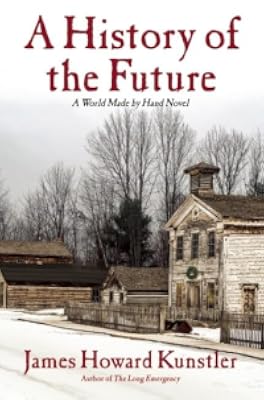
This is a wholly believable world, and the book is the first of a series (followed by The Witch of Hebron in 2010 and A History of the Future in 2014).
This doesn't only refer to the labor that people undertake to feed, shelter, and clothe themselves, but also to the work of justice, of remaking a system in which people feel safe. Kunstler's hero examines the temptation to settle matters with extralegal violence instead of the more civilized rules of law, and the results are troubling.
This is a wholly believable world, and the book is the first of a series (followed by The Witch of Hebron in 2010 and A History of the Future in 2014).
It is the foreseeable future. American civilization has failed. The small town of Union Grove, New York, has returned to a pre-Industrial Age existence. And it is one of the hottest summers in memory.
This is the setting for Kunstler’s moving novel, World Made by Hand. It is a slow-paced, quiet book, paralleling the slowed pace of life as people used to cars, planes and shopping at Target have been forced to return to horses, foot travel and subsistence farming. Set in jarring juxtaposition are frequent reminders of what has been lost: derelict strip malls lining crumbling highways; empty suburban houses stripped of everything usable; a constant bitter sense of the irretrievable.
The people of Union Grove have done all right, but seem show more to be in denial, ignoring their failing infrastructure, refusing to confront obvious threats. Around them other types of societies have formed, offering alternatives. A Christian sect led by a charismatic young man named Brother Jobe has moved into the old high school. A lawyer, Bullock, has set himself up as plantation owner and feudal lord outside of town. A former motorcycle gang controls salvage and trade operations and presents a constant threat.
The townspeople mostly concern themselves with raising food and furnishing the bare necessities. Life lived on foot is slow. When violence comes into this quiet world, it comes suddenly, shockingly, in full daylight. The people of Union Grove have no idea how to deal with it. They are in shock, the walking dead.
Until Robert Earle, the story’s narrator and town carpenter, realizes, after he saves a woman and her daughter from their burning house, that they have to adapt if they are going to survive. He gets himself elected mayor and starts making the needed changes. Things don’t go smoothly for him, but any movement forward is necessary, even if it brings confrontation and violence.
The people in this story are, as Brother Jobe puts it, making their world by hand. They don’t always know what they are doing. Every part of daily life seems hard. And we can’t help but believe that their lives will be short. But there is something beautiful about this way of life. Without the constant noise of modern technology, the magical has reawakened. Kunstler never fully explains this, just as he never explains the full causes of society’s collapse, but he doesn’t need to. It is enough for us to know it is there. And we realize that, with everything these people have lost, they have gained something in return — something that we, living comfortably in the modern age, don’t have.
James Howard Kunstler is a social critic most well known for his criticism of suburban and urban development trends and for his warnings about peak oil. He has published 9 novels and 4 nonfiction books. show less
This is the setting for Kunstler’s moving novel, World Made by Hand. It is a slow-paced, quiet book, paralleling the slowed pace of life as people used to cars, planes and shopping at Target have been forced to return to horses, foot travel and subsistence farming. Set in jarring juxtaposition are frequent reminders of what has been lost: derelict strip malls lining crumbling highways; empty suburban houses stripped of everything usable; a constant bitter sense of the irretrievable.
The people of Union Grove have done all right, but seem show more to be in denial, ignoring their failing infrastructure, refusing to confront obvious threats. Around them other types of societies have formed, offering alternatives. A Christian sect led by a charismatic young man named Brother Jobe has moved into the old high school. A lawyer, Bullock, has set himself up as plantation owner and feudal lord outside of town. A former motorcycle gang controls salvage and trade operations and presents a constant threat.
The townspeople mostly concern themselves with raising food and furnishing the bare necessities. Life lived on foot is slow. When violence comes into this quiet world, it comes suddenly, shockingly, in full daylight. The people of Union Grove have no idea how to deal with it. They are in shock, the walking dead.
Until Robert Earle, the story’s narrator and town carpenter, realizes, after he saves a woman and her daughter from their burning house, that they have to adapt if they are going to survive. He gets himself elected mayor and starts making the needed changes. Things don’t go smoothly for him, but any movement forward is necessary, even if it brings confrontation and violence.
The people in this story are, as Brother Jobe puts it, making their world by hand. They don’t always know what they are doing. Every part of daily life seems hard. And we can’t help but believe that their lives will be short. But there is something beautiful about this way of life. Without the constant noise of modern technology, the magical has reawakened. Kunstler never fully explains this, just as he never explains the full causes of society’s collapse, but he doesn’t need to. It is enough for us to know it is there. And we realize that, with everything these people have lost, they have gained something in return — something that we, living comfortably in the modern age, don’t have.
James Howard Kunstler is a social critic most well known for his criticism of suburban and urban development trends and for his warnings about peak oil. He has published 9 novels and 4 nonfiction books. show less
This is an intriguing take on America after the collapse of society as we know it. Due to terrorist attacks on major American cities, a war in the Middle East, the isolation of the U.S. from the rest of the world, and the lack of oil, the American economy completely breaks down and reverts to something resembling the mid-19th century. Focused on a small town in upstate New York, this book examines how a community copes with a return to dependence on one's immediate neighbors and on one's own manual labor for daily subsistence. For me, this was one of those books I just couldn't put down, and I thoroughly enjoyed reading it. There are a couple of weird plot twists that either should have been omitted or more fully developed, but all in show more all, this is a good book. If you enjoy post-apocalyptic fiction, you will enjoy this book; if you don't like this genre, you still might enjoy the book. show less
The World Made by Hand by James Howard Kunstler, published by Atlantic Monthly Press in 2008 is a work of post-apocalyptic fiction, that doesn't quite feel apocalyptic.
In some of the post-apocalyptic fiction I've read, humans become cannibalistic, preying upon others, reverting to an animal-like state. Or perhaps, more appropriately, worse than animal state, considering the ability to reason the choices they make to harm or not to harm others. In The Road by Cormac McCarthy, we read about humans at their worst, disabling and hording fellow humans in basements and chopping off pieces of their bodies as needed.
You won't find that kind of grisly reality in World Made by Hand. In fact, it feels more like a romanticized version of show more pre-industrial America, in which women needed the strong arms of their male counterparts to get anything done. They cooked and cleaned and avoided politics at all costs. No, you won't find women on the city council of Union Grove.
Industrial civilization has come to an end, the government has shut down, bombs have been dropped across the United States and a flu epidemic has wiped out a good portion of the population. But in small pockets throughout the country, communities survive.
The story is told by Robert Earle, the town carpenter. Through the lens of this middle-aged male, who has no shortage of wanton females requesting his company, we read a hero-adventure story, with Earle becoming the town hero (and the mayor).
The story is well-written. Great pacing, with plot points in places they should be; just in time to keep the reader from getting bored. Character dialogue is well-done. But the swaggering clichéd bad guy, ex-biker, the religiosity and male-centric view appears more as a male fantasy made post-apocalyptic.
Like a bunch of guy friends roughing it for the weekend. Given, Robert Earle is made into a sensitive type who dislikes using his firearm and killing a man who was shooting at him, but near the end Kunstler gives into temptation and Earle does a swaggering hero scene in which he threatens to kill the bad guy, but in a sensitive way.
“I'm going to see if the Reverend Holder survives what you did to him.”
“And if he don't, you going to kill me?”
“Pretty much, I'm thinking.”
“And then I s'pose you'd say I was trying to break out or some shit, right?”
“Something like that...”
Throw in a several religious christian hymns, a 'Mother' of a local religious cult who can see the future and the unexplained death of a bad guy with the same markings of death as one of his victims and though the mystery is never followed up, it's something for the population of Union Grove to ponder for years.
I would recommend the book, because it is a good read. An example of good writing, but not for those who don't feel like visiting a male-centric jaunty romp through the fall of civilization. show less
In some of the post-apocalyptic fiction I've read, humans become cannibalistic, preying upon others, reverting to an animal-like state. Or perhaps, more appropriately, worse than animal state, considering the ability to reason the choices they make to harm or not to harm others. In The Road by Cormac McCarthy, we read about humans at their worst, disabling and hording fellow humans in basements and chopping off pieces of their bodies as needed.
You won't find that kind of grisly reality in World Made by Hand. In fact, it feels more like a romanticized version of show more pre-industrial America, in which women needed the strong arms of their male counterparts to get anything done. They cooked and cleaned and avoided politics at all costs. No, you won't find women on the city council of Union Grove.
Industrial civilization has come to an end, the government has shut down, bombs have been dropped across the United States and a flu epidemic has wiped out a good portion of the population. But in small pockets throughout the country, communities survive.
The story is told by Robert Earle, the town carpenter. Through the lens of this middle-aged male, who has no shortage of wanton females requesting his company, we read a hero-adventure story, with Earle becoming the town hero (and the mayor).
The story is well-written. Great pacing, with plot points in places they should be; just in time to keep the reader from getting bored. Character dialogue is well-done. But the swaggering clichéd bad guy, ex-biker, the religiosity and male-centric view appears more as a male fantasy made post-apocalyptic.
Like a bunch of guy friends roughing it for the weekend. Given, Robert Earle is made into a sensitive type who dislikes using his firearm and killing a man who was shooting at him, but near the end Kunstler gives into temptation and Earle does a swaggering hero scene in which he threatens to kill the bad guy, but in a sensitive way.
“I'm going to see if the Reverend Holder survives what you did to him.”
“And if he don't, you going to kill me?”
“Pretty much, I'm thinking.”
“And then I s'pose you'd say I was trying to break out or some shit, right?”
“Something like that...”
Throw in a several religious christian hymns, a 'Mother' of a local religious cult who can see the future and the unexplained death of a bad guy with the same markings of death as one of his victims and though the mystery is never followed up, it's something for the population of Union Grove to ponder for years.
I would recommend the book, because it is a good read. An example of good writing, but not for those who don't feel like visiting a male-centric jaunty romp through the fall of civilization. show less
It was hard for me to put this down. I can't imagine a better story about our likely future as a society. Granted, it may not paint a world as strangely distant and larger than life as [b:A Canticle for Leibowitz|164154|A Canticle for Leibowitz|Walter M. Miller Jr.|http://photo.goodreads.com/books/1172331601s/164154.jpg|250975], and it is most definitely not all artsy-fartsy-pomo like [b:The Road|6288|The Road|Cormac McCarthy|http://photo.goodreads.com/books/1266449195s/6288.jpg|3355573]. That kind of thing is what does it for some, I suppose. Kunstler just tells a real story, and he does that as well as anyone.
This is not the first book of its kind either, but it is most definitely in another class than [b:Earth Abides|93269|Earth show more Abides|George R. Stewart|http://photo.goodreads.com/books/1171253295s/93269.jpg|1650913] and [b:Ecotopia|550165|Ecotopia The Notebooks and Reports of William Weston|Ernest Callenbach|http://photo.goodreads.com/books/1175718707s/550165.jpg|3209155], two earlier failed attempts at post-apocalyptic and desired possible futures, respectively. It falls somewhere in between those extremes and has a comparatively clear range of plausible scenarios to work with, which is why it comes to life so easily. Kunstler is a natural writer who can combine wit with insight in a way I find irresistible, even when I disagree with some of his assumptions. show less
This is not the first book of its kind either, but it is most definitely in another class than [b:Earth Abides|93269|Earth show more Abides|George R. Stewart|http://photo.goodreads.com/books/1171253295s/93269.jpg|1650913] and [b:Ecotopia|550165|Ecotopia The Notebooks and Reports of William Weston|Ernest Callenbach|http://photo.goodreads.com/books/1175718707s/550165.jpg|3209155], two earlier failed attempts at post-apocalyptic and desired possible futures, respectively. It falls somewhere in between those extremes and has a comparatively clear range of plausible scenarios to work with, which is why it comes to life so easily. Kunstler is a natural writer who can combine wit with insight in a way I find irresistible, even when I disagree with some of his assumptions. show less
Members
- Recently Added By
Published Reviews
ThingScore 75
No one can predict the future, and I doubt our future will be much like the one depicted here, but I think its possible that Kunstler has come closer to showing us what's in store than anyone else.
added by lampbane
Lists

Best Science Fiction Novels
816 works; 426 members

Best Post-Apocalyptic Stories
143 works; 88 members

Slipstream or Interstitial Fiction
160 works; 19 members

Dystopian and Apocalyptic Literature
350 works; 74 members

Books Set in New York State
65 works; 11 members

Best Survival Stories
97 works; 15 members

Books Set in Small Towns and Villages
278 works; 16 members

Fiction For Men
142 works; 11 members

Post-Apocalyptic Fiction
57 works; 3 members

Books Read in 2012
816 works; 34 members

Books Read in 2010
631 works; 11 members

Best 21st Century Books (So Far)
670 works; 85 members
Author Information

38+ Works 5,263 Members
James Howard Kunstler is the author of four nonfiction books and eleven novels. He has participated in TED conferences and lectured at Harvard, Yale, Columbia, Cornell, MIT, and many other colleges, and has appeared before professional organizations that include the American Institute of Architects, the American Psychological Association, and the show more National Trust for Historic Preservation. He lives in upstate New York. show less
Awards and Honors
Awards
Series

Common Knowledge
- Canonical title
- World Made By Hand
- Original publication date
- 2008
- People/Characters
- Robert Earle; Brother Jobe; Reverend Loren Holder; Jane Ann Holder; Dr. Jerry Copeland
- Important places
- Albany, New York, USA; Union Grove, New York, USA; New York, USA
- Important events
- Peak Oil
- Epigraph
- Whom will you cry, to heart? More and more lonely,
your path struggles on through incomprehensible
mankind. All the more futile perhaps
for keeping its own direction,
keeping on toward the future,
toward wha... (show all)t has been lost.
-- Rilke
I am a pilgrim and a stranger
Traveling through this wearisome land
I've got a home in that yonder city
And it's not (good Lord it's not) not made by hand.
-- American gospel song - Dedication
- To Sally Eckhoff
Fabulous transcender of the mundane
With love - First words
- Loren and I walked the railroad tracks along the river coming back from fishing the big pool under the old iron bridge, and I couldn't remember a lovelier evening before or after our world had changed.
- Quotations
- "We're building our own New Jerusalem up the river. It's a world made by hand, now, one stone at a time, one board at a time, one soul at a time." (Brother Jobe)
- Last words
- (Click to show. Warning: May contain spoilers.)And that is the end of the story of that particular summer when we had so much trouble and so much good fortune in the world we were making by hand.
- Blurbers
- Cheuse, Alan; Weisman, Alan ; McKibben, Bill
Classifications
Statistics
- Members
- 1,053
- Popularity
- 24,456
- Reviews
- 56
- Rating
- (3.48)
- Languages
- English
- Media
- Paper, Audiobook, Ebook
- ISBNs
- 10
- ASINs
- 6