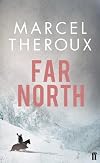
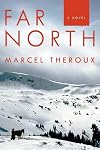
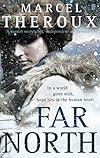
Far North
by Marcel Theroux
On This Page
Description
Far North is a 2009 National Book Award Finalist for Fiction. My father had an expression for a thing that turned out bad. He'd say it had gone west. But going west always sounded pretty good to me. After all, westwards is the path of the sun. And through as much history as I know of, people have moved west to settle and find freedom. But our world had gone north, truly gone north, and just how far north I was beginning to learn. Out on the frontier of a failed state, Makepeace--sheriff and show more perhaps last citizen--patrols a city's ruins, salvaging books but keeping the guns in good repair. Into this cold land comes shocking evidence that life might be flourishing elsewhere: a refugee emerges from the vast emptiness of forest, whose existence inspires Makepeace to reconnect with human society and take to the road, armed with rough humor and an unlikely ration of optimism. What Makepeace finds is a world unraveling: stockaded villages enforcing an uncertain justice and hidden work camps laboring to harness the little-understood technologies of a vanished civilization. But Makepeace's journey--rife with danger--also leads to an unexpected redemption. Far North takes the reader on a quest through an unforgettable arctic landscape, from humanity's origins to its possible end. Haunting, spare, yet stubbornly hopeful, the novel is suffused with an ecstatic awareness of the world's fragility and beauty, and its ability to recover from our worst trespasses. show lessTags
Recommendations
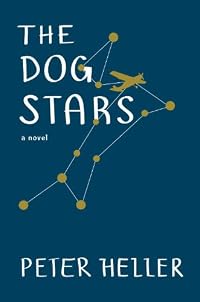
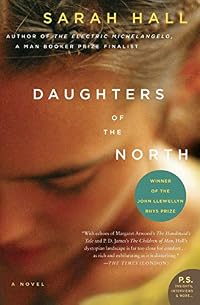
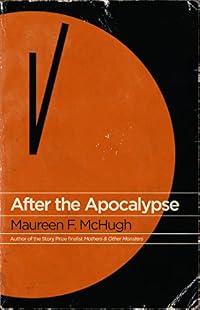
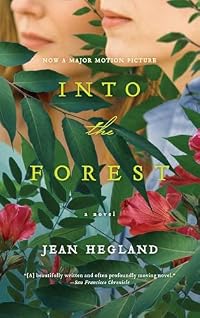
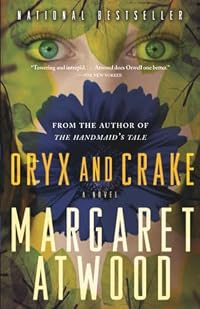
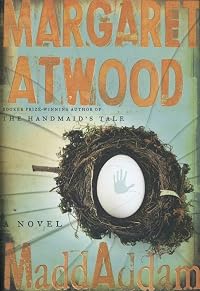
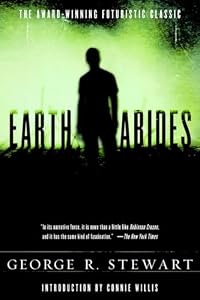
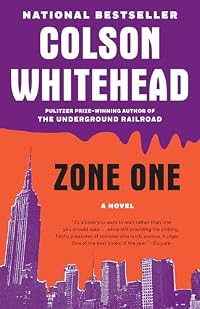

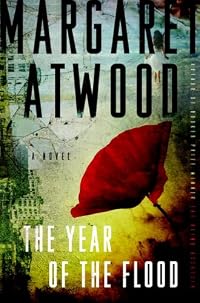
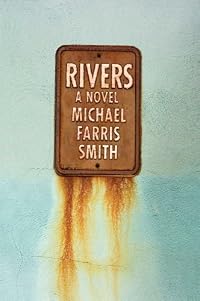
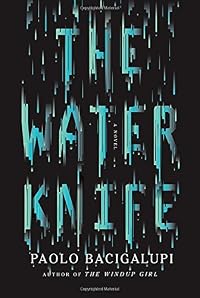
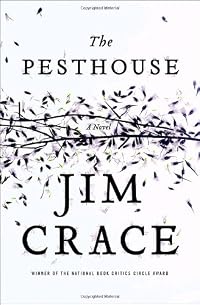
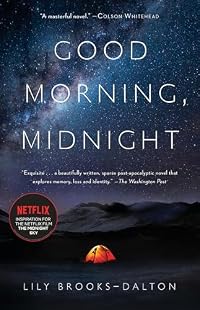
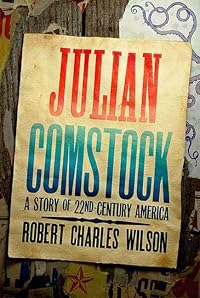
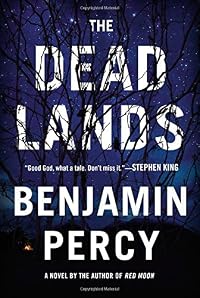

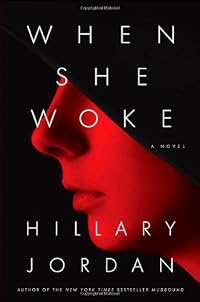


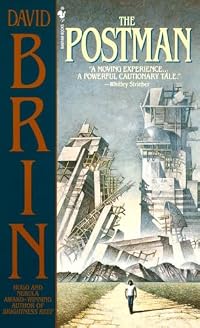

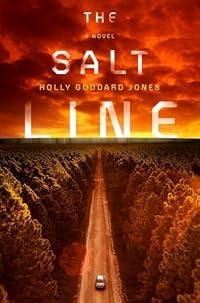
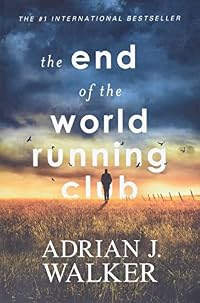
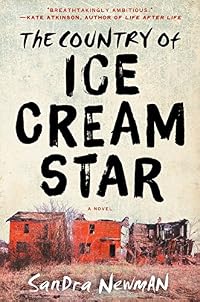
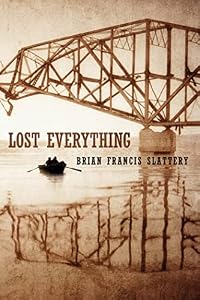

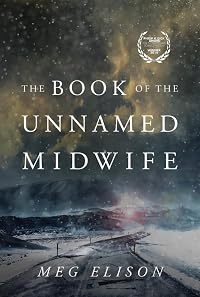
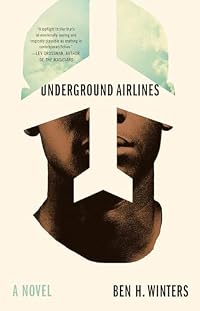
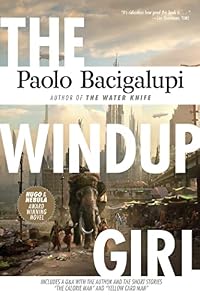
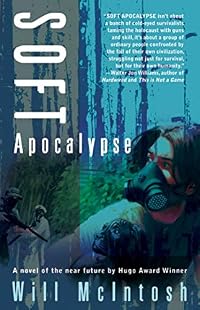
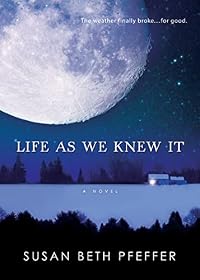
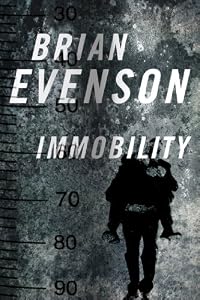

Member Recommendations
klarusu Far North is less harrowing than The Road but equally thought provoking
50

by kehs
booklove2 Cecil Harder and Pamela from Drop City are similar characters to Makepeace.
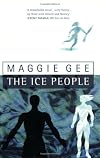
imyril Although very different, each novel envisions a near future in which civilisation has broken down following rapid climate change. The Ice People focuses on the breakdown of traditional relationships; Far North rejects traditional gender roles with its androgynous protagonist. Far North is more rounded apocalyptic fiction; Ice People is perhaps best tagged as gender apocalypse.
Member Reviews
This was an extremely thought provoking read. It made me wonder just what lengths I would go to in order to survive in a world that was self-destructing, or would I choose to end my life after losing all my loved ones. I found myself questioning how charitable we would all be to each other and whether we really would resort to savagery as depicted in this book. The chilling prospect that the events in Far North could maybe become reality for us all one day filled me with horror, as Theroux’s excellent writing skills made it sound all too possible. This is a story that is unremitting in its telling, with twists, surprises and horrors on every page. Theroux’s book is a bleak tale, but compelling nonetheless. He has written in a show more captivating style and drew me in from the opening pages. Highly recommended for lovers of dystopian novels. show less
 This review was written for LibraryThing Early Reviewers.
Makepeace's family originally moved to a settlement in Siberia to remove themselves from the modern world. But now, due to climate change, modern civilization has collapsed, and Makepeace patrols the frontier alone, where the greatest danger is from other people.
This was a simply written book, but the narrator has such a unique voice that I found it very compelling. Essentially, this story is a Western. Even though the setting is unusual, it is still the wild frontier, and Makepeace's guns are her most important possession. Makepeace herself is a self-appointed sheriff who patrols her deserted town and tries to deny her loneliness and her longing for some sign that civilization has not broken down completely. When she gets that sign--a show more plane crashing in the woods nearby as she is on the verge of committing suicide--she leaves her home and embarks on a journey, but where she ends up is entirely unexpected. Makepeace is a subtle and fascinating character, marked by lye burns on her face, androgynous, self-reliant, so closed that even in her own narrative she doesn't reveal everything about herself, at least not directly. This book is a musing on the world that humankind is making, whether such a world is inevitable, and how it might be salvaged. Despite its bleakness, I found it quite beautiful. show less
This was a simply written book, but the narrator has such a unique voice that I found it very compelling. Essentially, this story is a Western. Even though the setting is unusual, it is still the wild frontier, and Makepeace's guns are her most important possession. Makepeace herself is a self-appointed sheriff who patrols her deserted town and tries to deny her loneliness and her longing for some sign that civilization has not broken down completely. When she gets that sign--a show more plane crashing in the woods nearby as she is on the verge of committing suicide--she leaves her home and embarks on a journey, but where she ends up is entirely unexpected. Makepeace is a subtle and fascinating character, marked by lye burns on her face, androgynous, self-reliant, so closed that even in her own narrative she doesn't reveal everything about herself, at least not directly. This book is a musing on the world that humankind is making, whether such a world is inevitable, and how it might be salvaged. Despite its bleakness, I found it quite beautiful. show less
A solid postapocalyptic novel, very readable, but with enough of its own spirit to stand out among many similar works. It has a memorable and likable protagonist: Makepeace, a strong-willed woman whose pragmatism is easy to envy. And it's a harsh book, often as bleak and violent as The Road; without too much romance, but made bearable by its heroine's spirit.
Dark but relentlessly interesting post-apocalyptic fiction set in Siberia. Makepeace, a town's lone resident and a constable, rides the town's perimeter each day. One day a small plane crashes in the forest nearby, and buoyed by the possibility of civilization returning somewhere, Makepeace heads out on horseback to see whether there is any hope for the future, or if this solitary existence is truly a life lived at the end of everything. Makepeace is a character with enormous courage and spirit; the story is thoughtful and realistic, and disturbing in its portrait of humanity in extreme circumstances. Not for the faint of heart, but very rewarding.
Put glibly, it's Jeremiah Johnson meets The Road, but that's not fair: Makepeace is such a great character, and the book defies genre expectations in several places. I wanted it to go on longer, but fully understood the reasons why it couldn't. Elegantly written throughout.
A sparse, raw tale of survival in a dying world. Makepeace Hatfield, sheriff and last resident of a remote northern settlement, decides to set out in search of civilisation after seeing a plane crash in the woods. Driven by the desire for better circumstances and haunted by fears of savage inadequacy, Hatfield is blunt, brash and determined in the face of overwhelming odds: aggressive tribesmen, religious mania, slave camps, the irradiated Zone and the harsh environment. The physical and emotional odyssey is gripping and often unexpected. Cleverly told from the start, Theroux reveals extra details gradually to uncover the full scope of his tale. Intriguing stuff, well-written, and ultimately leaving it entirely to the reader to decide show more whether you still have faith in humanity. show less
Powerful book. Powerful, magnificent, but brutal and bleak. Makepeace is one of the most resilient of characters that I have ever come across while reading fiction.
I have noticed that many reviews here give away too much of the plot. I would advice against reading them as the magnificence of this book comes out through Marcel Theroux's ingenious writing. He tells you the story by Makepeace's point of view but everytime Theroux holds something back and reveals it finally in a single sentence as if it was of no consequence whatsoever to start with and we (the reader) would have already guessed that fact by ourselves. Marcel kept surprising me right till the end. And I liked the ending too.
The post-apocalyptic scenario is also very well show more realized as there are no sword-wielding weirdos which is a major cliché of so many post-apocalyptic novels.
But the thing is, it's bloody brutal, right up there with Cormac McCarthy's "The Road" but with one major difference. Here, punctuation marks have survived the apocalypse. show less
I have noticed that many reviews here give away too much of the plot. I would advice against reading them as the magnificence of this book comes out through Marcel Theroux's ingenious writing. He tells you the story by Makepeace's point of view but everytime Theroux holds something back and reveals it finally in a single sentence as if it was of no consequence whatsoever to start with and we (the reader) would have already guessed that fact by ourselves. Marcel kept surprising me right till the end. And I liked the ending too.
The post-apocalyptic scenario is also very well show more realized as there are no sword-wielding weirdos which is a major cliché of so many post-apocalyptic novels.
But the thing is, it's bloody brutal, right up there with Cormac McCarthy's "The Road" but with one major difference. Here, punctuation marks have survived the apocalypse. show less
Members
- Recently Added By
Published Reviews
ThingScore 75
Deep into this unbearably sad yet often sublime novel, Makepeace says: “Everyone expects to be at the end of something. What no one expects is to be at the end of everything.” There’s nothing left to say after that — yet Makepeace keeps going, and the reader follows her, if not hopefully then in the hope that she will win out and that her life will have meaning to someone, somewhere.
added by Shortride
Lists

Recommend the 20 best books you've read in the last five years
2,167 works; 601 members

Dystopian and Apocalyptic Literature
350 works; 74 members

Books Set in the Polar Regions
16 works; 6 members

Beginner's Guide to Climate Fiction
24 works; 7 members

Arthur C. Clarke Award Winners and Shortlisted Books
219 works; 14 members

SFFKit 2016
13 works; 1 member

GeoCAT 2016
15 works; 1 member

Books Read in 2016
4,666 works; 199 members

Post-Apocalyptic Fiction
57 works; 3 members

2000s (the decade, not the century)
184 works; 11 members

Asia
178 works; 7 members

National Book Award Finalists - Fiction
377 works; 11 members

Books Read in 2018
4,360 works; 110 members

Post Apocalyptic Novels
41 works; 1 member
Author Information

9+ Works 1,372 Members
Awards and Honors
Awards
Common Knowledge
- Canonical title
- Far North
- Original title
- Far North
- Original publication date
- 2009
- People/Characters
- Makepeace
- Important places
- Siberia, Russia
- First words
- Every day I buckle on my guns and go out to patrol this dingy city.
- Quotations
- "The world is a scaly old snake. She is a cunning old woman ... and the last human being that draws a breath on this planet will be a cunning old woman, who raises chickens and cabbages, has no illusions, and has outlived all... (show all) her children."
It's habits that keep you straight when everything around you is falling apart.
By now I saw that I'd made myself as unwelcome as a juggler at a funeral.
There's plenty of things I'd like to unknow, but you can't fake innocence. - Last words
- (Click to show. Warning: May contain spoilers.)And until the wind fills them, I'll be able to look down from the tower on the firehouse at the tracks you leave across the snowfields north, and say to myself: Ping's on her way home.
- Blurbers
- Pam Houston; Brandon Robshaw; Russell Hoban; Kate Saunders; Sebastian Shakespeare
- Canonical DDC/MDS
- 813.54; 823.914
- Canonical LCC
- 823.914
Classifications
Statistics
- Members
- 665
- Popularity
- 43,038
- Reviews
- 53
- Rating
- (3.79)
- Languages
- Dutch, English, French, German
- Media
- Paper, Audiobook, Ebook
- ISBNs
- 17
- ASINs
- 10