Drop City
by T. Coraghessan Boyle
On This Page
Description
T.C. Boyle has proven himself to be a master storyteller who can do just about anything. But even his most ardent admirers may be caught off guard by his ninth novel, for Boyle has delivered something completely unexpected: a serious and richly rewarding character study that is his most accomplished and deeply satisfying work to date. It is 1970, and a down-at-the-heels California commune has decided to relocate to the last frontier-the unforgiving landscape of interior Alaska-in the show more ultimate expression of going back to the land. The novel opposes two groups of characters: Sess Harder, his wife Pamela, and other young Alaskans who are already homesteading in the wilderness and the brothers and sisters of Drop City, who, despite their devotion to peace, free love, and the simple life, find their commune riven by tensions. As these two communities collide, their alliances shift and unexpected friendships and dangerous enmities are born as everyone struggles with the bare essentials of life: love, nourishment, and a roof over one's head. Drop City is not a satire or a nostalgic look at the sixties, though its evocation of the period is presented with a truth and clarity that no book on that era has achieved. This is a surprising book, a rich, allusive, and nonsentimental look at the ideals of a generation and their impact on today's radically transformed world. Above all, it is a novel infused with the lyricism and take-no-prisoners storytelling for which T.C. Boyle is justly famous. show lessTags
Recommendations





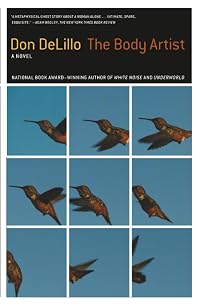



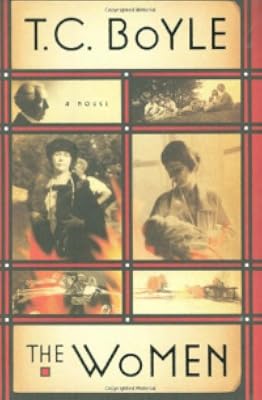
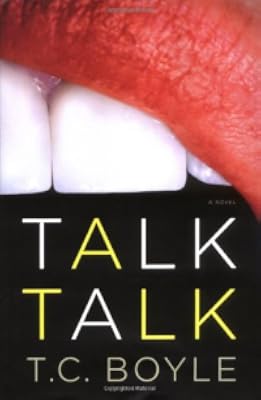
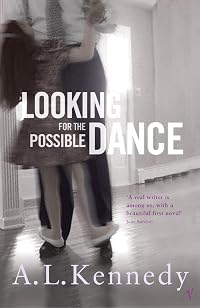



Member Recommendations
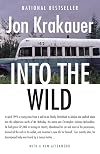

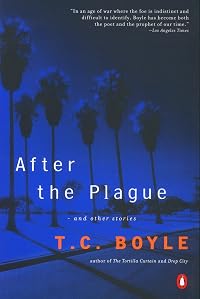
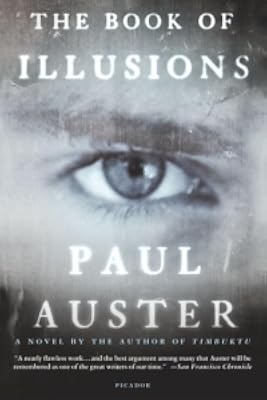
usuallee Another great novel dealing with a youthful, naive quest for utopia by retreating from society.
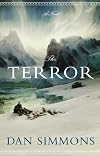
MyriadBooks For characters failing to adapt to their environment.
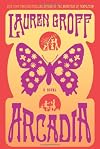
booklove2 Another amazing novel on hippie communes trying to find their place. Also, a similar writing style.
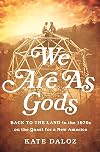
MyriadBooks For the general atmosphere of social upheaval.

JuliaMaria In beiden Romanen geht es um Gegenbewegungen, wobei Drogen ein wichtiges Element der Zusammengehörigkeit ist.
JuliaMaria Ungefähr zur selben Zeit geschrieben über die Hippiebewegung
Member Reviews
T.C. Boyle is an example of the writer whom one avoids because he's too productive. He's always placing stories in The Atlantic and Harper's and crowding out lesser known young writers. The ultimate overly profuse writer is, of course, Joyce Carol Oates. Enough said.
It turns out, though, for me at least, that Boyle is a damned fine writer. Drop City, a tale about a hippie farm "family" that transplants to Alaska and comes to a dark end, hits the spot as a gripping story, a bit of social history, and a portrait of a different, far-flung place and climate where the ordinary rules definitely don't apply. Entertaining and rewarding on multiple levels and in multiple ways. And damned fine writing.
It turns out, though, for me at least, that Boyle is a damned fine writer. Drop City, a tale about a hippie farm "family" that transplants to Alaska and comes to a dark end, hits the spot as a gripping story, a bit of social history, and a portrait of a different, far-flung place and climate where the ordinary rules definitely don't apply. Entertaining and rewarding on multiple levels and in multiple ways. And damned fine writing.
Hippies meet frontier Alaska. Sounds like a setting for some seriously funny jokes, and I did find it funny watching a bunch of naive California folks, hooked on mind-altering substances and caught up in a group fantasy of self-importance, wandering off to a place where reality can and will re-assert itself.
I liked how this novel shows some of how conventional ideas like gender roles creep into even the most earnest bohemian groups, so that women are still treated as subservient, expected to cook and clean and allow men to use their bodies at will in the spirit of 'free love'. Traditional power structures still turn up in Drop City, and persist because the men who hold the greater power enjoy their positions and have no reason to show more freely give up their power. Since Boyle focuses on the POV of a woman, Star, we get to see the rather conventional ways women are treated within the nudist, supposedly egalitarian society the people of Drop City are creating. show less
I liked how this novel shows some of how conventional ideas like gender roles creep into even the most earnest bohemian groups, so that women are still treated as subservient, expected to cook and clean and allow men to use their bodies at will in the spirit of 'free love'. Traditional power structures still turn up in Drop City, and persist because the men who hold the greater power enjoy their positions and have no reason to show more freely give up their power. Since Boyle focuses on the POV of a woman, Star, we get to see the rather conventional ways women are treated within the nudist, supposedly egalitarian society the people of Drop City are creating. show less
After hearing so much about this book and repeatedly picking it up and putting it down in bookstores, I finally read it and I’m glad I did. T.C. Boyle is fast becoming one of my favorite writers and I’m sad that I didn’t start reading him earlier in my life. His ability to sharply define characters with dialogue, description and action is a finely-honed talent. He pulls no punches and doesn’t solely create people that everyone will identify with or even like. One thing I do like about Boyle, that others find irritating, is the fact that he doesn’t beat you over the head with an idea. He gives it shape and power and then lets the reader draw the conclusion. Some say this is lack of depth, but I don’t think it is because he show more has no depth, just chooses not to drag the reader down into it.
I really enjoyed the parts that told about life in such a remote and extreme place. It was a bit like little house on the prairie because of the lack of mod cons. Ces and his wife made almost everything they had including the cabin. But they loved it. The garden was a joy. The trapping a job. The dogs weren’t pets, they were necessary equipment. No power or running water either (unless you count the river). Their dependence and independence were balanced and the fact that they opted out was compelling. I was kind of jealous of their ability to confidently eschew most of the modern world. As much as I’d like to strip away all of my dependence on society and all of its mod cons, I cannot. They are too firmly part of how I view the world and how I live. But these folks don’t need that and can leave it behind with a sigh of relief.
The communal hippie lifestyle on the other hand, I have no wistful longing for. A person would really need to be selfless to live this way. To make it work, each person would have to care more about the whole than himself. Because only as a whole can it survive. If each member didn’t suppress her innate selfishness, it would collapse. I don’t have that kind of giving nature. As it turns out, very few did in this story. Sure, when times were good, they were all happy and loving and all was right with the world. But whenever some kind of hardship arose, those other core attributes of humanity came out with a vengeance. People started hording food, acting out violently from jealousy, abusing positions of leadership. All part of being human, but not helpful for a communal society.
And all the drugs were off-putting. How can people even function with that amount of chemical interference? Perhaps that’s part of the glue that holds them together though. Maybe it allows them enough illusion to keep functioning. Maybe it keeps the darker nature at a bay longer. At any rate, keeping a constant supply of pot and other drugs was paramount for the members of Drop City. I thought it would be more of a hindrance in Alaska than it was, but they still survived while stoned, although not as thoroughly stoned as they were in California.
Unlike The Inner Circle, this novel does have a plot, a goal, something that needs to get done. Sure, we get a lot of extraneous detail, but it is a joy to read and Boyle wrings emotion from the reader in many forms; anger, hope, joy and world-weary frustration. That’s what the hippies engendered in me anyway. They made me laugh with their dopey view of the world, but that also made me frustrated. Couldn’t they see what their problem was? They cherry-picked qualities of human nature, taking the ones they liked and leaving the ones they didn’t. Just because they didn’t like deceit, violence or selfishness, doesn’t mean they could escape them.
And they are not the only ones who long for escape. The other half of the tale starts with the small town of Boynton, Alaska. Situated at the end of the state highway, Boynton is about as remote as you can get and still have a road. People who chose to live here are pretty unique. They’re self-sufficient, yet know their reliance on others in the community is the key to survival out there. They want to be free and live off the land, but unlike the hippies who will soon descend, they don’t have any sunshine and bunnies illusions about nature. It is indeed red in tooth and claw.
When the hippies arrive, life soon separates the wheat from the chaff. Slackers take up with other slackers. Soon, light dawns on pot heads that they need to work to survive and work together and that means rules. It means following the rules and they finally get that they have to obey or die. They get their shelters built, some supplies laid and hunker down for the winter. But close-quarters living like this is new to them. It’s 50 below zero and there is no release from the constant chaffing of others’ bad habits. Things boil over, there is a separation into tribes and things get tense.
The natives do their best to help them, specifically from Cecil Harden and his very new wife and another local Joe, a fairly wealthy bush pilot, the sworn enemy of Ces. It is this conflict that escalates throughout and eventually culminates in extreme violence and tragedy, taking one of the hippies with it. In the end, the Hardens stay in Boynton, living an idyllic life for them and have as neighbors and friends, those of the hippie commune who are tough enough in body and mind to stay. show less
I really enjoyed the parts that told about life in such a remote and extreme place. It was a bit like little house on the prairie because of the lack of mod cons. Ces and his wife made almost everything they had including the cabin. But they loved it. The garden was a joy. The trapping a job. The dogs weren’t pets, they were necessary equipment. No power or running water either (unless you count the river). Their dependence and independence were balanced and the fact that they opted out was compelling. I was kind of jealous of their ability to confidently eschew most of the modern world. As much as I’d like to strip away all of my dependence on society and all of its mod cons, I cannot. They are too firmly part of how I view the world and how I live. But these folks don’t need that and can leave it behind with a sigh of relief.
The communal hippie lifestyle on the other hand, I have no wistful longing for. A person would really need to be selfless to live this way. To make it work, each person would have to care more about the whole than himself. Because only as a whole can it survive. If each member didn’t suppress her innate selfishness, it would collapse. I don’t have that kind of giving nature. As it turns out, very few did in this story. Sure, when times were good, they were all happy and loving and all was right with the world. But whenever some kind of hardship arose, those other core attributes of humanity came out with a vengeance. People started hording food, acting out violently from jealousy, abusing positions of leadership. All part of being human, but not helpful for a communal society.
And all the drugs were off-putting. How can people even function with that amount of chemical interference? Perhaps that’s part of the glue that holds them together though. Maybe it allows them enough illusion to keep functioning. Maybe it keeps the darker nature at a bay longer. At any rate, keeping a constant supply of pot and other drugs was paramount for the members of Drop City. I thought it would be more of a hindrance in Alaska than it was, but they still survived while stoned, although not as thoroughly stoned as they were in California.
Unlike The Inner Circle, this novel does have a plot, a goal, something that needs to get done. Sure, we get a lot of extraneous detail, but it is a joy to read and Boyle wrings emotion from the reader in many forms; anger, hope, joy and world-weary frustration. That’s what the hippies engendered in me anyway. They made me laugh with their dopey view of the world, but that also made me frustrated. Couldn’t they see what their problem was? They cherry-picked qualities of human nature, taking the ones they liked and leaving the ones they didn’t. Just because they didn’t like deceit, violence or selfishness, doesn’t mean they could escape them.
And they are not the only ones who long for escape. The other half of the tale starts with the small town of Boynton, Alaska. Situated at the end of the state highway, Boynton is about as remote as you can get and still have a road. People who chose to live here are pretty unique. They’re self-sufficient, yet know their reliance on others in the community is the key to survival out there. They want to be free and live off the land, but unlike the hippies who will soon descend, they don’t have any sunshine and bunnies illusions about nature. It is indeed red in tooth and claw.
When the hippies arrive, life soon separates the wheat from the chaff. Slackers take up with other slackers. Soon, light dawns on pot heads that they need to work to survive and work together and that means rules. It means following the rules and they finally get that they have to obey or die. They get their shelters built, some supplies laid and hunker down for the winter. But close-quarters living like this is new to them. It’s 50 below zero and there is no release from the constant chaffing of others’ bad habits. Things boil over, there is a separation into tribes and things get tense.
The natives do their best to help them, specifically from Cecil Harden and his very new wife and another local Joe, a fairly wealthy bush pilot, the sworn enemy of Ces. It is this conflict that escalates throughout and eventually culminates in extreme violence and tragedy, taking one of the hippies with it. In the end, the Hardens stay in Boynton, living an idyllic life for them and have as neighbors and friends, those of the hippie commune who are tough enough in body and mind to stay. show less
Star and Marco are a beautifully drawn couple, proving that Boyle can write a romance as well as anyone, and this book is a hilarious send-up of hippie culture with all of its flaws and excesses.
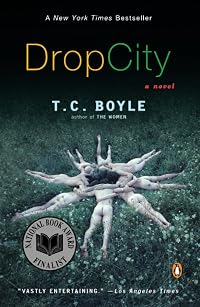
Many readers whose ideology is very compatible with this novel are probably put off by its cover in which nude people, lying face-down, make a crater in a lush-looking undergrowth. As the novel is the story of a failed commune, however, the cover is perfect.
"Free love" doesn't work out so well in practice, especially for the very young, very pretty women (both of 'em), who get real choosy real fast. (When a virulent strain of crabs breaks out in the commune, it doesn't work out too well for the men either). Equally impracticable: staying high show more on drugs 24/7 and the actual labor required 24/7 for communal self-sufficiency. In spite of the high ideals of the brotherhood and much guitar strumming, some in the commune are more locust than brother: vicious sociopaths determined not to pull their own weight and to devour every human and natural resource. As for the leader of the commune--you'll have to read the novel. Suffice it to say he is never celibate, or hungry, or lacking in cash or abuseable substances.
Boyle shows, in his inimitable ironic style, how the "establishment" gets "established", as our tree-house-dwelling young lovers are drawn inexorably toward parent-figures Sess and Pamela--and toward monogamy, sobriety (more or less), and the comfortable middle-class existence required to raise their babies and keep the locusts at bay. show less
Many readers whose ideology is very compatible with this novel are probably put off by its cover in which nude people, lying face-down, make a crater in a lush-looking undergrowth. As the novel is the story of a failed commune, however, the cover is perfect.
"Free love" doesn't work out so well in practice, especially for the very young, very pretty women (both of 'em), who get real choosy real fast. (When a virulent strain of crabs breaks out in the commune, it doesn't work out too well for the men either). Equally impracticable: staying high show more on drugs 24/7 and the actual labor required 24/7 for communal self-sufficiency. In spite of the high ideals of the brotherhood and much guitar strumming, some in the commune are more locust than brother: vicious sociopaths determined not to pull their own weight and to devour every human and natural resource. As for the leader of the commune--you'll have to read the novel. Suffice it to say he is never celibate, or hungry, or lacking in cash or abuseable substances.
Boyle shows, in his inimitable ironic style, how the "establishment" gets "established", as our tree-house-dwelling young lovers are drawn inexorably toward parent-figures Sess and Pamela--and toward monogamy, sobriety (more or less), and the comfortable middle-class existence required to raise their babies and keep the locusts at bay. show less
Boyle is always entertaining - what I found most interesting about this story was the juxtaposition between the wrongheaded hippie idealism that was already fading in the 70s and the hardened survivalists eking out an existence in the Alaskan bush. The drugged-out free-lovers and commune denizens are pretty easy targets, but in the end Boyle's point is that there are good and bad folks in every community, and that hard work and respect for others are the main things that divide them.
Set in 1970, this novel focuses on two seemingly very different communities, which in reality share common traits. The eponymous , Drop City, is a hippy commune set on forty-seven acres in sunny California; the other, Boynton, is in the remote Alaskan hinterland.
Initially the two societies appear to be decidedly distinct. Drop City, made up of hippies and draft dodgers, is a place to be free of societies' moral constraints, where free love and drug-taking is endemic, where 'chilled' generally means lazy. In contrast the inhabitants of Boynton, face an almost daily uphill struggle just to stay alive, a place where self-discipline means survival but when the police threaten to close down the original Drop City, its inhabitants, led by show more there guru-like leader Norm, decamp to the outskirts of Boynton with the intention of establishing a new settlement, out of reach of the authorities and living off the land.
Living cheek by jowl and faced with months of cold and darkness stretching ahead it soon becomes apparent that the two communities actually share a number of similarities. In particular, both are riven by internal discord. For the hippies petty jealousies gets in the way of the much vaunted sexual freedom and challenges their 'peace and love' ideals. Meanwhile a jealous, murderous feud is taking place between two of Boynton's inhabitants Sess Harder and Joe Bosky. The commune's open-doors policy results in a sudden influx of new arrivals which causes tensions in the commune and the town. Both communities appear permanently poised on the precipice of catastrophe, man-made or natural.
Personally I found the Californian section of this novel somewhat aimless, lacking a real sense of direction, and the book wasn't really working until the two communities were merged. Only by bringing them together do we see what the author is really trying to say. That if you strip away the hippies' free love philosophy then there is little to separate them and the backwoodsmen, both are retreating from the conventions of society. This, I found it amusing, also seemed somewhat simplistic, because whilst the hippies had a choice the locals didn't.
I found this an interesting insight into the drop-out culture of the 60's and early 70's but as Star, the main female hippy character, and her lover Marco eventually comes to realise their 'freedom' isn't without costs and not as radical as they supposed. I found it hard to like any of the hippy characters who were shallow and fickle, they purported to want nothing to do with society yet were happy to take hand-outs from it. In contrast I came to admire, Sess Harder and his wife Pamela, in their attempts to carve out a life for themselves.
However, for me the main weakness in this novel is that it lacked any real sense of struggle. I never really felt that any of the characters were ever in real jeopardy, there were differences but they weren't fully explored and as a result, the climax, when it comes, was rather disappointing. On the whole I enjoyed the author's writing style and the book contains some amusing episodes, the genital crabs spring to mind, but I never really believed that he had any real idea what he was trying to achieve. Therefore, an OK read with some interesting ideas but one that could have been better. show less
Initially the two societies appear to be decidedly distinct. Drop City, made up of hippies and draft dodgers, is a place to be free of societies' moral constraints, where free love and drug-taking is endemic, where 'chilled' generally means lazy. In contrast the inhabitants of Boynton, face an almost daily uphill struggle just to stay alive, a place where self-discipline means survival but when the police threaten to close down the original Drop City, its inhabitants, led by show more there guru-like leader Norm, decamp to the outskirts of Boynton with the intention of establishing a new settlement, out of reach of the authorities and living off the land.
Living cheek by jowl and faced with months of cold and darkness stretching ahead it soon becomes apparent that the two communities actually share a number of similarities. In particular, both are riven by internal discord. For the hippies petty jealousies gets in the way of the much vaunted sexual freedom and challenges their 'peace and love' ideals. Meanwhile a jealous, murderous feud is taking place between two of Boynton's inhabitants Sess Harder and Joe Bosky. The commune's open-doors policy results in a sudden influx of new arrivals which causes tensions in the commune and the town. Both communities appear permanently poised on the precipice of catastrophe, man-made or natural.
Personally I found the Californian section of this novel somewhat aimless, lacking a real sense of direction, and the book wasn't really working until the two communities were merged. Only by bringing them together do we see what the author is really trying to say. That if you strip away the hippies' free love philosophy then there is little to separate them and the backwoodsmen, both are retreating from the conventions of society. This, I found it amusing, also seemed somewhat simplistic, because whilst the hippies had a choice the locals didn't.
I found this an interesting insight into the drop-out culture of the 60's and early 70's but as Star, the main female hippy character, and her lover Marco eventually comes to realise their 'freedom' isn't without costs and not as radical as they supposed. I found it hard to like any of the hippy characters who were shallow and fickle, they purported to want nothing to do with society yet were happy to take hand-outs from it. In contrast I came to admire, Sess Harder and his wife Pamela, in their attempts to carve out a life for themselves.
However, for me the main weakness in this novel is that it lacked any real sense of struggle. I never really felt that any of the characters were ever in real jeopardy, there were differences but they weren't fully explored and as a result, the climax, when it comes, was rather disappointing. On the whole I enjoyed the author's writing style and the book contains some amusing episodes, the genital crabs spring to mind, but I never really believed that he had any real idea what he was trying to achieve. Therefore, an OK read with some interesting ideas but one that could have been better. show less
This was a random, experimental book choice - it was on the 1001 Books list and I hadn't read any T.C. Boyle before so I mooched it as a trial balloon. It was certainly a satisfying read and I'm going to search out more of his novels after this.
This book centres around two drastically different communities in the late 60s/early 70s hippy era: a commune in California and a bush community in Alaska living off trap lines and hunting trips. Boyle carefully sets up both of these communities as opposing ends of the same phenomenon - both, in their individual ways, are trying to drop out of a mainstream American society that they feel no fraternity with. However, that's where the similarity ends as these two are mirror images of each other. show more The commune may attract tourists and converts but its commitment to living off the land is laughable in comparison to the Alaskans, whose continued existence depends on it. It soon becomes clear that these communities are heading for a spectacular collision.
There is an underlying irony; that the eponomous Drop City community, formed as a means of dropping out of society and living in harmony with the land, finds it impossible to do so despite the visible evidence that it is possible, provided by the Alaskans they live alongside. The longer Drop City remains in the Alaskan bush, the more this becomes a study of the decay and breakdown of a society under pressure created by the reality of living wild in Alaska. It is a symbolic representation of the disintegration of the dream the commune members have, the artificial, romanticised version of Alaskan life they have constructed in their minds. I have seen this book described in other reviews as a comment on the American Dream. If that is the case, then Boyle seems to have penned a fairly damning indictment of those who seek it, implying naivety and unrealistic expectations.
It is a well-characterised and complex novel, certainly not just 'one of the crowd' of hippy novels this period continues to spawn. The question remains, is it a great book? For me, it was a very good book, competently executed, enjoyable and easy to read but it never really crossed the line to greatness. Possibly it suffered from the fact that I didn't really like any of the characters. There was certainly little that really stuck with me from this but it was enjoyable enough that, as I said earlier, I will read more from T.C. Boyle. An enjoyable read but not necessarily a 'must-read'. show less
This book centres around two drastically different communities in the late 60s/early 70s hippy era: a commune in California and a bush community in Alaska living off trap lines and hunting trips. Boyle carefully sets up both of these communities as opposing ends of the same phenomenon - both, in their individual ways, are trying to drop out of a mainstream American society that they feel no fraternity with. However, that's where the similarity ends as these two are mirror images of each other. show more The commune may attract tourists and converts but its commitment to living off the land is laughable in comparison to the Alaskans, whose continued existence depends on it. It soon becomes clear that these communities are heading for a spectacular collision.
There is an underlying irony; that the eponomous Drop City community, formed as a means of dropping out of society and living in harmony with the land, finds it impossible to do so despite the visible evidence that it is possible, provided by the Alaskans they live alongside. The longer Drop City remains in the Alaskan bush, the more this becomes a study of the decay and breakdown of a society under pressure created by the reality of living wild in Alaska. It is a symbolic representation of the disintegration of the dream the commune members have, the artificial, romanticised version of Alaskan life they have constructed in their minds. I have seen this book described in other reviews as a comment on the American Dream. If that is the case, then Boyle seems to have penned a fairly damning indictment of those who seek it, implying naivety and unrealistic expectations.
It is a well-characterised and complex novel, certainly not just 'one of the crowd' of hippy novels this period continues to spawn. The question remains, is it a great book? For me, it was a very good book, competently executed, enjoyable and easy to read but it never really crossed the line to greatness. Possibly it suffered from the fact that I didn't really like any of the characters. There was certainly little that really stuck with me from this but it was enjoyable enough that, as I said earlier, I will read more from T.C. Boyle. An enjoyable read but not necessarily a 'must-read'. show less
Members
- Recently Added By
Published Reviews
ThingScore 88
Mr. Boyle's sheer brio as a storyteller and his delight in recounting his characters' adventures quickly win the reader over. He has written a novel that is not only an entertaining romp through the madness of the counterculture 70's, but a stirring parable about the American dream as well.
added by SqueakyChu
Boyle’s protean imagination works overtime in his thickly plotted ninth novel, a big, racy tale of the conflict between a radical utopian commune’s idealistic visions and the simpler imperatives of survival in the Alaskan wilderness. Probably the fullest picture of the hippie culture of the late ’60s since Marge Piercy’s early fiction, and one of Boyle’s best.
added by Richardrobert
Lists

1001 Books You Must Read Before You Die
1,448 works; 1,136 members

Recommend the 20 best books you've read in the last five years
2,168 works; 608 members

100 New Classics
101 works; 13 members

Best books read in 2011
200 works; 50 members

Books Read in 2016
4,666 works; 199 members

Llibres que he llegit el 2019
42 works; 1 member

aborted books in 2020
36 works; 1 member

Books Read in 2010
631 works; 10 members

Literary Travelogue of the United States Challenge
133 works; 6 members

National Book Award Finalists - Fiction
377 works; 12 members

Books With the Most Memorable Titles
478 works; 158 members

04
34 works; 1 member
Talk Discussions
Past Discussions
Group Read, April 2015: Drop City in 1001 Books to read before you die (April 2015)
Author Information

104+ Works 28,132 Members
T. C. Boyle was born Thomas John Boyle in Peekskill, New York on December 2, 1948. He received a B.A. in English and history from SUNY Potsdam in 1968, a MFA from the University of Iowa Writers' Workshop in 1974, and a Ph.D. degree in nineteenth century British literature from the University of Iowa in 1977. He has been a member of the English show more department at the University of Southern California since 1978. He has written over 20 books including After the Plague, Drop City, The Inner Circle, Tooth and Claw, The Human Fly, Talk Talk, The Women, Wild Child, and When the Killing's Done. He has received numerous awards including the PEN/Faulkner Award for best novel of the year for World's End; the PEN/Malamud Prize in the short story for T. C. Boyle Stories; and the Prix Médicis Étranger for best foreign novel in France for The Tortilla Curtain. His title's Sam Miguel and The Harder They Caome made The New York Times Best Seller List. (Bowker Author Biography) T. Coraghessan Boyle is the best-selling author of "T.C. Boyle Stories," "Riven Rock," "The Tortilla Curtain," "Without a Hero," "The Road to Wellville," "East Is East," "If the River Was Whiskey," "World's End" (winner of the PEN/Faulkner Award), "Greasy Lake," "Budding Prospects," "Water Music," & "Descent of Man" (all available from Penguin). His fiction regularly appears in major American magazines, including "The New Yorker," "GQ," "The Paris Review," "Playboy," & "Esquire." He lives in Santa Barbara, California. (Publisher Provided) show less
Awards and Honors
Awards
Distinctions
Notable Lists
Series
Belongs to Publisher Series
dtv (13364)
Common Knowledge
- Canonical title*
- Drop City
- Original title
- Drop City
- Original publication date
- 2003
- People/Characters
- Star (Paulette Regina Starr); Pan (Ronnie); Norm Sender; Marco; Joe Bosky; Sess Harder (show all 7); Pamela Harder
- Important places
- California, USA; USA; Alaska, USA
- Epigraph
- Think of our life in nature, - daily to be shown matter, to come in contact with it, - rocks, trees, wind on our cheeks! the solid earth! the actual world! the common sense! Contact! Contact! Who are ... (show all)we? where are we?
- Henry David Thoreau, "Ktaadn"
Let me tell you about heartache and the loss of god,
Wandering, wandering in hopeless night.
Out here in the perimeter there are no stars,
Out here we is stoned
Immaculate
- Jim Morrison, "The WASP (Texas Radio... (show all) and the Big Beat)" - Dedication
- For the sisters
Kathy, Linda, Janice and Christine - First words
- The morning was a fish in a net, glistening and wriggling at the dead black border of her consciousness, but she'd never caught a fish in a net or on a hook either, so she couldn't really say if or how or why.
- Last words
- (Click to show. Warning: May contain spoilers.)He was heading home, riding the runners, breathing easy, a man clothed in fur at the head of a team of dogs in a hard wild place, going home to his wife.
- Original language
- English
- Canonical DDC/MDS
- 813.54
- Canonical LCC
- PS3552.O932
*Some information comes from Common Knowledge in other languages. Click "Edit" for more information.
Classifications
Statistics
- Members
- 2,539
- Popularity
- 7,583
- Reviews
- 55
- Rating
- (3.73)
- Languages
- 7 — Dutch, English, Finnish, French, German, Polish, Spanish
- Media
- Paper, Audiobook, Ebook
- ISBNs
- 35
- ASINs
- 9