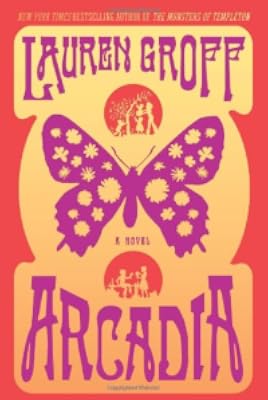
Arcadia
by Lauren Groff
On This Page
Description
NEW YORK TIMES BESTSELLER "Timeless and vast... The raw beauty of Ms. Groff's prose is one of the best things about Arcadia. But it is by no means this book's only kind of splendor."---Janet Maslin, The New York Times "Even the most incidental details vibrate with life Arcadia wends a harrowing path back to a fragile, lovely place you can believe in."---Ron Charles, The Washington Post In the fields of western New York State in the 1970s, a few dozen idealists set out to live off the land, show more founding a commune centered on the grounds of a decaying mansion called Arcadia House. Arcadia follows this romantic utopian dream from its hopeful start through its heyday. Arcadia's inhabitants include Handy, the charismatic leader; his wife, Astrid, a midwife; Abe, a master carpenter; Hannah, a baker and historian; and Abe and Hannah's only child, Bit. While Arcadia rises and falls, Bit, too, ages and changes. He falls in love with Helle, Handy's lovely, troubled daughter. And eventually he must face the world beyond Arcadia. In Arcadia, Groff displays her literary gifts to stunning effect. "Fascinating."---People (****) "It's not possible to write any better without showing off."---Richard Russo, author of the Pulitzer Prize-winning novel Empire Falls "Dazzling."---Vogue show lessTags
Recommendations


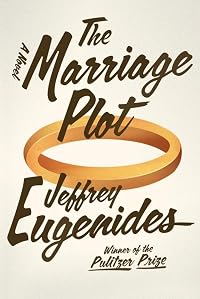

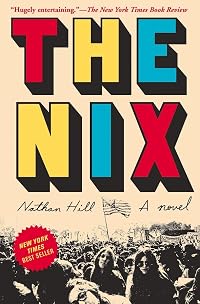


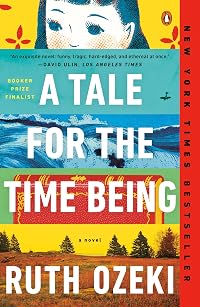
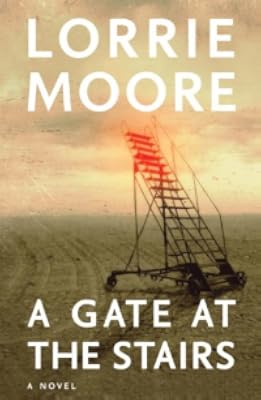
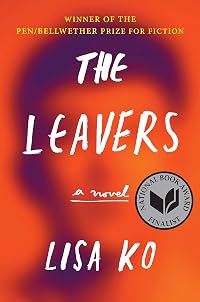

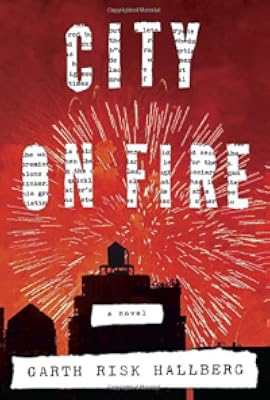
Member Recommendations
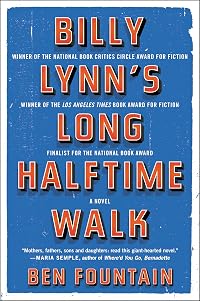
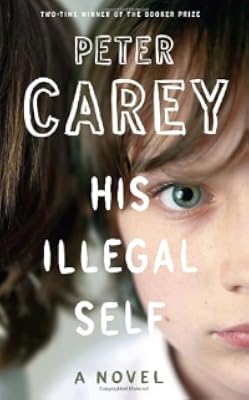
booklove2 Another amazing novel on hippie communes trying to find their place. Also, a similar writing style.
10
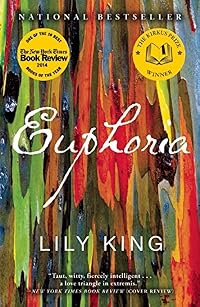
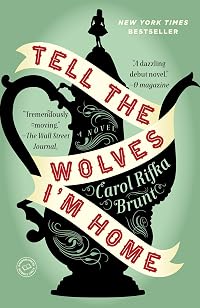
anonymous user Both are excellently written; both stories are about raising a baby boy in a completely non-traditional setting and include strong depictions of being a mother in extreme circumstances.

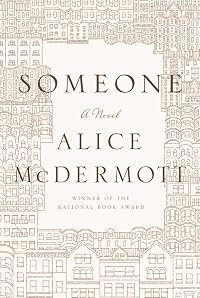
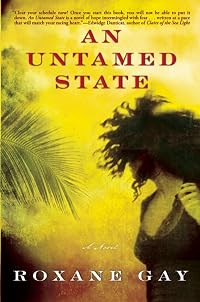
booklove2 The unending search for utopia that falls apart
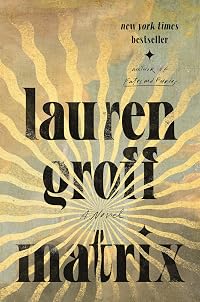
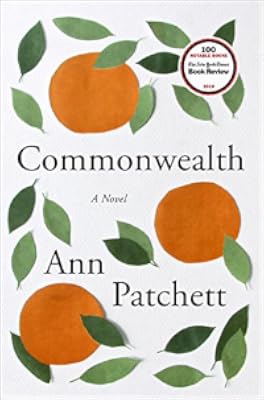
sanddancer One is fiction, the other is non-fiction, but both are about childhoods in hippie communes
Member Reviews
I loved this book. I can't stop thinking about it. The writing was absolutely lyrical. My surprise is that the author did not actually live this life. It felt so authentic to me, brought back so many memories - the ideals, the love of the natural world, life in a chosen community, when it is at its best. For me, the novel captured the magic of that time, the grand experiment, whatever its eventual failings. I especially appreciated the contrast with the nearby Amish Community.
We follow Bit (so named because at birth, he was just a little bit of a hippie) from his childhood in the commune of Arcadia during the early 1970s to his adulthood in the near distant future. Bit is a special boy, sensitive and caring, loved by everyone in the close-knit community of Arcadia. Despite the fact that Arcadia is the only way of life that Bit has ever known, he is a keen observer of both the benefits and the challenges. As the community changes, Bit must adapt as well, but despite the changes, Bit carries what he has learned in Arcadia with him throughout his life. Groff makes this observation in the following passage:
"He thinks of the rotten parachute they played with as kids in Arcadia: they hurtle through life aging show more unimaginably fast, but each grasps a silken edge of memory that billows between them and softens the long fall."
This story is beautifully written. I found myself reflecting on aspects of my own life and community as I compared them with Bit's community. Groff captures both the joys and the challenges of living in a highly interdependent community and also reflects the ways in which early experiences shape our adulthoods in different ways. But her real triumph is Bit. Not since Owen Meany have a met a character who is as unique and as easy to relate to as Bit. I was fascinated by the story because I was seeing things through his eyes. show less
"He thinks of the rotten parachute they played with as kids in Arcadia: they hurtle through life aging show more unimaginably fast, but each grasps a silken edge of memory that billows between them and softens the long fall."
This story is beautifully written. I found myself reflecting on aspects of my own life and community as I compared them with Bit's community. Groff captures both the joys and the challenges of living in a highly interdependent community and also reflects the ways in which early experiences shape our adulthoods in different ways. But her real triumph is Bit. Not since Owen Meany have a met a character who is as unique and as easy to relate to as Bit. I was fascinated by the story because I was seeing things through his eyes. show less
Okay, anyone considering writing a book on the hippie communes of the 1960s - 1970s: put down your pen and start pondering a different novel. This is the be-all, end-all, final word on all that.
The Free People are a large collective founded by a charismatic musical leader. They live together in assorted temporary homes on a large landholding with a decayed mansion. They are well organized, with a bakery, gardens, a midwife service. But they are also hungry and cold much of the time, not a great atmosphere for raising children "without ownership", as the idealists dream on.
Bit is a premature baby, son of Abe and Hannah. We see Arcadia through his observant and older-than-his-years eyes. He sees his mother's seasonal depression and his show more father's clashes with Handy, the founder. He sees the pain of Handy's children, neglected by him and Astrid, who leaves to start a midwife school in Tennessee. He soaks in all the beauty of his physical surroundings and the bumbling incompetence of the collective as they allow visitors to overwhelm their limited resources.
Bit grows to be one of the Ados (adolescents) and although he does everything dumb teenagers do in any environment, his small stature, empathy and loving nature make him a beloved figure in Arcadia. Tragedy befalls as it would even in the suburbs, and the communards struggle on until their notoriety leads to the destruction of Arcadia and the scattering of the one-big-not-always-happy family.
Bit moves into adulthood, missing everyone. As surprising reunions and splits occur, the plot deepens as everything changes and comes to a head when he loses his parents but regains his lost family.
This is a classic, a never-to-be-forgotten magical tale. Thank you, Lauren Groff, for creating this difficult utopia and for understanding fully how those of us what participated were forever shaped by those unique times. show less
The Free People are a large collective founded by a charismatic musical leader. They live together in assorted temporary homes on a large landholding with a decayed mansion. They are well organized, with a bakery, gardens, a midwife service. But they are also hungry and cold much of the time, not a great atmosphere for raising children "without ownership", as the idealists dream on.
Bit is a premature baby, son of Abe and Hannah. We see Arcadia through his observant and older-than-his-years eyes. He sees his mother's seasonal depression and his show more father's clashes with Handy, the founder. He sees the pain of Handy's children, neglected by him and Astrid, who leaves to start a midwife school in Tennessee. He soaks in all the beauty of his physical surroundings and the bumbling incompetence of the collective as they allow visitors to overwhelm their limited resources.
Bit grows to be one of the Ados (adolescents) and although he does everything dumb teenagers do in any environment, his small stature, empathy and loving nature make him a beloved figure in Arcadia. Tragedy befalls as it would even in the suburbs, and the communards struggle on until their notoriety leads to the destruction of Arcadia and the scattering of the one-big-not-always-happy family.
Bit moves into adulthood, missing everyone. As surprising reunions and splits occur, the plot deepens as everything changes and comes to a head when he loses his parents but regains his lost family.
This is a classic, a never-to-be-forgotten magical tale. Thank you, Lauren Groff, for creating this difficult utopia and for understanding fully how those of us what participated were forever shaped by those unique times. show less
I'm inclined to agree with the back-of-book blurb from Richard Russo: "It's not possible to write any better without showing off." I have enjoyed Lauren Groff's previous work (The Monsters of Templeton, Delicate Edible Birds) and she just seems to be getting better. Arcadia is the story of Bit, who was born to hippie parents on a commune - Arcadia - in rural New York. The first sections of the book are his childhood and teenagerhood in Arcadia, as it evolves and eventually dissolves. Then there is a skip forward in time, and Bit is an adult living in New York City, with a small daughter and a disappeared wife. The final section, which takes place in the near future (2018), is full of hope and fear: a pandemic, SARI, is sweeping the show more globe. At the same time, Bit's mother Hannah is dying of ALS. Hannah, Bit, and Bit's daughter Grete return to the house Bit's father Abe built in Arcadia to wait out the pandemic and take care of Hannah.
The imagination required to create the atmosphere of Arcadia and the character of Bit is similar to that of Room, Emma Donoghue's novel about a boy who has spent his whole life in one room, and is overwhelmed by the world when he escapes. As the 1970s end and the commune crumbles, Bit's entire way of life, everything he has known and that has been normal to him, disappears, and he has to learn to live in the world "outside." This transition doesn't get its own section, though that would have been interesting. One of the things that does remain is Bit's relationships with others from Arcadia; most of them reconnect later in life. Many also end up in New York City, which would seem to be the opposite of a commune, but in fact has similarities.
Overall, this is a work of tremendous imagination and empathy. I would suggest it to anyone, particularly those who enjoyed Groff's earlier work, Emma Donghue's Room, or Jennifer Egan's A Visit From the Goon Squad.
Quotes:
He keeps his deepest belief tight to him: that people are good and want to be good, if only you give them a chance. That's the most magnificent thing about Arcadia, he knows. It is the shell that protects them. (98)
He knows that a longing for perfection is the hole in the dam that can let everything pour out. (115)
Childhood is such a delicate tissue; what they had done this morning could snag somewhere in the little ones, make a dull, small pain that will circle back again and again, and hurt them in small ways for the rest of their lives. (120)
He doesn't think he saw what he saw. There is no way. It was, like everything else tonight, an alchemical reaction: desire poured from a great height into a beaker of fear. (145)
Even when you think you can't bear it, you can bear it....Sometimes you have to let time carry you past your troubles, she says. Believe me. I have been where you are. This is something I do know. (154)
There is a puncture in the world, and everything Bit knew about himself is escaping. (163)
Bit reaches out his hands to grasp his sorrow, and it slides through, becomes water, a snake, a mouse, a knife, a dumbbell so heavy he has to drop it. (171-72)
You're more beautiful to me now that when you were perfect, he'd said once, kissing her shoulder when she cried at her reflection in the mirror. She'd turned away, disbelieving, but he'd meant it. Her life was written in her face. There, at least, she could be read. (173)
Amenable Bit, good-hearted Bit, gentle and generous Bit. He hates that man. Wishes he'd had any kind of backbone, the guts to say No. If he had, she would still be here. If he were more commanding, he would not be a person people would leave. (201)
It was Helle, though, who took over, and he knew the love she had for Grete for what it was: a seamless accord between souls. He tried not to be jealous that neither of the souls was his.(206)
It isn't important if the story was ever true. Bit manipulates images: he knows stories don't need to be factual to be vital. He understands, with a feeling inside him like the wind whipping through a room, that when we lose the stories we have believed about ourselves, we are losing more than stories, we are losing ourselves. (208)
He thinks of the rotten parachute they played with as kids in Arcadia: they hurtle through life aging unimaginably fast, but each grasps a silken edge of memory that billows between them and softens the long fall. (222)
Where he was so happy as a child. (Or was he? Best to distrust this retrospective radiance: gold dust settles over memory and makes it shine.) (236)
He wants to sing. How perverse, the possibility of beauty, unearthed when he least expected it. That there could be such surprises left in the world. He goes out into the sunlight, something softening and settling within him. (242)
The track is recycled tires, and when the wind rises and blows across it, Bit smells the highway, the American longing to go. All he wants to do is stay. (261)
It seems like a give-and-take, you know? Freedom or community, community or freedom. One must decide the way one wants to live. (268)
So strange, however: with her body leaving, her soul is rising to the surface. (280)
The stories themselves aren't what moves him now. They are sturdy wooden boxes, their worth less in what they are than in what they can be made to hold. (287) show less
The imagination required to create the atmosphere of Arcadia and the character of Bit is similar to that of Room, Emma Donoghue's novel about a boy who has spent his whole life in one room, and is overwhelmed by the world when he escapes. As the 1970s end and the commune crumbles, Bit's entire way of life, everything he has known and that has been normal to him, disappears, and he has to learn to live in the world "outside." This transition doesn't get its own section, though that would have been interesting. One of the things that does remain is Bit's relationships with others from Arcadia; most of them reconnect later in life. Many also end up in New York City, which would seem to be the opposite of a commune, but in fact has similarities.
Overall, this is a work of tremendous imagination and empathy. I would suggest it to anyone, particularly those who enjoyed Groff's earlier work, Emma Donghue's Room, or Jennifer Egan's A Visit From the Goon Squad.
Quotes:
He keeps his deepest belief tight to him: that people are good and want to be good, if only you give them a chance. That's the most magnificent thing about Arcadia, he knows. It is the shell that protects them. (98)
He knows that a longing for perfection is the hole in the dam that can let everything pour out. (115)
Childhood is such a delicate tissue; what they had done this morning could snag somewhere in the little ones, make a dull, small pain that will circle back again and again, and hurt them in small ways for the rest of their lives. (120)
He doesn't think he saw what he saw. There is no way. It was, like everything else tonight, an alchemical reaction: desire poured from a great height into a beaker of fear. (145)
Even when you think you can't bear it, you can bear it....Sometimes you have to let time carry you past your troubles, she says. Believe me. I have been where you are. This is something I do know. (154)
There is a puncture in the world, and everything Bit knew about himself is escaping. (163)
Bit reaches out his hands to grasp his sorrow, and it slides through, becomes water, a snake, a mouse, a knife, a dumbbell so heavy he has to drop it. (171-72)
You're more beautiful to me now that when you were perfect, he'd said once, kissing her shoulder when she cried at her reflection in the mirror. She'd turned away, disbelieving, but he'd meant it. Her life was written in her face. There, at least, she could be read. (173)
Amenable Bit, good-hearted Bit, gentle and generous Bit. He hates that man. Wishes he'd had any kind of backbone, the guts to say No. If he had, she would still be here. If he were more commanding, he would not be a person people would leave. (201)
It was Helle, though, who took over, and he knew the love she had for Grete for what it was: a seamless accord between souls. He tried not to be jealous that neither of the souls was his.(206)
It isn't important if the story was ever true. Bit manipulates images: he knows stories don't need to be factual to be vital. He understands, with a feeling inside him like the wind whipping through a room, that when we lose the stories we have believed about ourselves, we are losing more than stories, we are losing ourselves. (208)
He thinks of the rotten parachute they played with as kids in Arcadia: they hurtle through life aging unimaginably fast, but each grasps a silken edge of memory that billows between them and softens the long fall. (222)
Where he was so happy as a child. (Or was he? Best to distrust this retrospective radiance: gold dust settles over memory and makes it shine.) (236)
He wants to sing. How perverse, the possibility of beauty, unearthed when he least expected it. That there could be such surprises left in the world. He goes out into the sunlight, something softening and settling within him. (242)
The track is recycled tires, and when the wind rises and blows across it, Bit smells the highway, the American longing to go. All he wants to do is stay. (261)
It seems like a give-and-take, you know? Freedom or community, community or freedom. One must decide the way one wants to live. (268)
So strange, however: with her body leaving, her soul is rising to the surface. (280)
The stories themselves aren't what moves him now. They are sturdy wooden boxes, their worth less in what they are than in what they can be made to hold. (287) show less
I loved Arcadia. The book covers fifty years in the life of Bit Stone, born into a hippie commune in 1968 and following him to a new beginning in 2018. As a woman only a little older than Bit's mother, I found Groff's recreation of the time spot on - the idealism, the courage, the obtuseness, the cutesy humor all rang true. Groff's writing is beautifully transparent, and I know that I will reread this book for the language if nothing else. My only quibble is the lack of quotation marks, an affectation that I wish young writers would lose.
Bit is the heart of the story. As a tiny boy he struggles to help his mother win her way through long, dark winters as she succumbs each year to SAD. When, as an adolescent, the community falters and he show more is often hungry, Bit still loves the people and fights beside his parents to hold them together. His story works because of his great love for the people in his life His care for them makes him the hero of his story.
I recommend Arcadia to anyone who wants to feel close to an indomitable human spirit, and I thank ER for giving me the opportunity to meet him. show less
Bit is the heart of the story. As a tiny boy he struggles to help his mother win her way through long, dark winters as she succumbs each year to SAD. When, as an adolescent, the community falters and he show more is often hungry, Bit still loves the people and fights beside his parents to hold them together. His story works because of his great love for the people in his life His care for them makes him the hero of his story.
I recommend Arcadia to anyone who wants to feel close to an indomitable human spirit, and I thank ER for giving me the opportunity to meet him. show less
 This review was written for LibraryThing Early Reviewers.
Bit Stone is the first child born into a commune, Arcadia, in process of being founded in upstate New York. We follow Bit from the early days of the Arcadia through its heyday and its eventual demise. And onward to life beyond Arcadia and what that might mean, for good or ill. Ever Bit is connected, first and foremost to family — his mother, Hannah, and his father, Abe — and second to the other members of Arcadia. And especially to Helle, daughter of Arcadia’s founder, Handy, and as troubled a soul as one might find in heaven or without. Bit grows but never loses his pure love for Arcadia, even if it exists primarily in his mind in the end. What starts out as an apparent social historical novel develops a grander sweep carrying us show more with Bit into a future that is filled with loss. And yet Bit finds new hope, eventually, through a return, temporarily, to the land that nurtured him in his youth.
The writing here is gorgeous. Lyrical and gothic in turns, it captures both the idyllic nature of Bit’s childhood and the dark aspects of that which he cannot entirely keep at bay. That it turns surprisingly grim is just part of what makes this such an interesting read.
Recommended. show less
The writing here is gorgeous. Lyrical and gothic in turns, it captures both the idyllic nature of Bit’s childhood and the dark aspects of that which he cannot entirely keep at bay. That it turns surprisingly grim is just part of what makes this such an interesting read.
Recommended. show less
Lauren Groff's second novel (after 2008's The Monsters of Templeton), Arcadia (Voice, 2012) is once again set in upstate New York, where both Groff and I grew up (I don't know quite why, but this is an important part of how I react to her writing, so I mention it). I'm pleased to say that I enjoyed it almost as much as its predecessor.
This new novel tracks the life of Ridley Sorrel "Bit" Stone, child of hippies. We meet him first as a five-year-old, being raised at Arcadia, a commune in the woods of western New York where his parents are among the leaders (all being equal, but some being more equal than others, as tends to be the case). We witness Bit's rather precocious childhood, and view from his perspective the everyday triumphs and show more tragedies of life at Arcadia.
In the novel's later sections, we see Bit as an adolescent, a new parent, and, in the end, a caregiver. I don't want to say too much, because I think the way the book unfolds is part of the beauty of Groff's writing, but it's not giving too much away to say that even as the dream of Arcadia-as-commune proves less than perfect, the place itself, and the bonds formed there, continue to play an important role in Bit's life for decades to come.
Groff's writing is beautifully descriptive: as I read I found myself stopping to savor the texture, the liveliness of her prose. It's a human story, with all the sadness, joy, love, and hurt that implies. There are characters who will stick with you long after you've turned the last page, and isn't that one of the marks of a good book?
Et en arcadia ego, indeed. show less
This new novel tracks the life of Ridley Sorrel "Bit" Stone, child of hippies. We meet him first as a five-year-old, being raised at Arcadia, a commune in the woods of western New York where his parents are among the leaders (all being equal, but some being more equal than others, as tends to be the case). We witness Bit's rather precocious childhood, and view from his perspective the everyday triumphs and show more tragedies of life at Arcadia.
In the novel's later sections, we see Bit as an adolescent, a new parent, and, in the end, a caregiver. I don't want to say too much, because I think the way the book unfolds is part of the beauty of Groff's writing, but it's not giving too much away to say that even as the dream of Arcadia-as-commune proves less than perfect, the place itself, and the bonds formed there, continue to play an important role in Bit's life for decades to come.
Groff's writing is beautifully descriptive: as I read I found myself stopping to savor the texture, the liveliness of her prose. It's a human story, with all the sadness, joy, love, and hurt that implies. There are characters who will stick with you long after you've turned the last page, and isn't that one of the marks of a good book?
Et en arcadia ego, indeed. show less
Members
- Recently Added By
Published Reviews
ThingScore 100
Lauren Groff’s “Arcadia” is so immersed in the life of a hippie commune that patchouli ought to waft off its pages. It’s a novel of the 1960s and ’70s in which acid is dropped, groats are served, “Froggie Went A Courtin’ ” is sung, a cult leader is worshiped and somebody literally hugs a tree. An outhouse at Arcadia smells like wet muskrat. Children are reared in a Kid Herd. show more This does not sound like everyone’s cup of rose-hip tea. show less
added by bergs47
Lists

Recommend the 20 best books you've read in the last five years
2,168 works; 607 members

Top Five Books of 2015
811 works; 241 members

Top Five Books of 2016
795 works; 229 members

Books Read in 2016
4,666 works; 199 members

IMPAC Dublin Literary Award 2014 longlist
150 works; 3 members

Same Title
115 works; 3 members

Books Read in 2018
4,360 works; 110 members

Books We Want To Read Again For The First Time
384 works; 160 members

Books We Discovered On LibraryThing
530 works; 130 members
Author Information

33+ Works 15,107 Members
Lauren Groff graduated from Amherst College and received an MFA in fiction from the University of Wisconsin at Madison. Her books include The Monsters of Templeton, Delicate Edible Birds, and Fates and Furies. Arcadia won of the Medici Book Club Prize. Her fiction has also won the Paul Bowles Prize for Fiction, the PEN/O. Henry Award, and the show more Pushcart Prize. Her work has appeared in numerous magazines including the New Yorker, the Atlantic Monthly, Harper's, Tin House, One Story, McSweeney's, and Ploughshares, and in the anthologies 100 Years of the Best American Short Stories, The Pushcart Prize: Best of the Small Presses, PEN/O. Henry Prize Stories, and three editions of the Best American Short Stories. (Bowker Author Biography) show less
Some Editions
Awards and Honors
Awards
Distinctions
Notable Lists
Common Knowledge
- Original publication date
- 2012
- Dedication
- For Beckett
- First words
- The women in the river, singing.
- Last words
- (Click to show. Warning: May contain spoilers.)In this moment that blooms and fades as it passes, he is enough, and all is well in the world.
- Blurbers
- Russo, Richard; Walbert, Kate; Tinti, Hannah
Classifications
Statistics
- Members
- 1,611
- Popularity
- 14,122
- Reviews
- 123
- Rating
- (3.83)
- Languages
- English, French, German, Italian
- Media
- Paper, Audiobook, Ebook
- ISBNs
- 21
- ASINs
- 11
