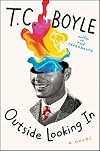
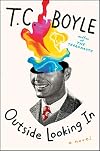
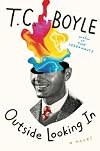
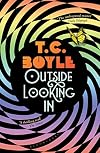
Outside Looking In
by T. Coraghessan Boyle
On This Page
Description
A provocative new novel from bestselling author T.C. Boyle exploring the first scientific and recreational forays into LSD and its mind-altering possibilitiesIn this stirring and insightful novel, T.C. Boyle takes us back to the 1960s and to the early days of a drug whose effects have reverberated widely throughout our culture: LSD.
In 1943, LSD is synthesized in Basel. Two decades later, a coterie of grad students at Harvard are gradually drawn into the inner circle of renowned show more psychologist and psychedelic drug enthusiast Timothy Leary. Fitzhugh Loney, a psychology Ph.D. student and his wife, Joanie, become entranced by the drug's possibilities such that their "research" becomes less a matter of clinical trials and academic papers and instead turns into a free-wheeling exploration of mind expansion, group dynamics, and communal living. With his trademark humor and pathos, Boyle moves us through the Loneys' initiation at one of Leary's parties to his notorious summer seminars in Zihuatanejo until the Loneys' eventual expulsion from Harvard and their introduction to a communal arrangement of thirty devotees—students, wives, and children—living together in a sixty-four room mansion and devoting themselves to all kinds of experimentation and questioning.
Is LSD a belief system? Does it allow you to see God? Can the Loneys' marriage—or any marriage, for that matter—survive the chaotic and sometimes orgiastic use of psychedelic drugs? Wry, witty, and wise, Outside Looking In is an ideal subject for this American master, and highlights Boyle's acrobatic prose, detailed plots, and big ideas. It's an utterly engaging and occasionally trippy look at the nature of reality, identity, and consciousness, as well as our seemingly infinite capacities for creativity, re-invention, and self-discovery.
. show less
Tags
Recommendations









Member Recommendations
JuliaMaria In beiden Romanen geht es um Gegenbewegungen, wobei Drogen ein wichtiges Element der Zusammengehörigkeit ist.
Member Reviews
Outside Looking In by T. C. Boyle is a very highly recommended look at early psychedelic experimentation in the 1960's.
LSD was first synthesized in BaselIn, Switzerland in 1943, as covered in the prelude. The novel then advances to 1962-1964 and introduces Fitzhugh (Fitz) Loney, a psychology Ph.D. student at Harvard. When his advisor, Tim, invites Fitz and his wife, Joanie, to attend a Saturday night research session at his home, they are nervous, but accept. Tim and his inner circle are taking psilocybin mushrooms to see if they could be used in a therapeutic treatment program. Soon, Tim and the group begin to take LSD for research purposes. Fitz and Joanie are not completely entrenched in the group at first, but that changes when Tim show more rents a resort in Zihuatanejo, Mexico, invites the whole research group to join him, starting the idea of communal living, and begins to offer summer seminars. Fitz and Joanie go to Mexico, taking Corey, their teenage son along.
As the research becomes less scientific, Tim loses his position at Harvard, but rents a sixty-four room mansion in Millbrook, NY, for the group. There they will practice communal living and offer seminars to other interested parties. As experimentation and rampant drug usage ensues, all ideas of academic papers and scientific trials are set aside. Fitz, who was going to work on his PhD thesis at Millbrook, instead loses focus, and his family begins to disintegrate.
Outside Looking In is thoroughly engrossing and I was totally entrenched in the narrative. Even if you know where it is heading, Boyle has presented a fascinating insight into Leary's perspective through the viewpoint of Fitz and Joanie as they enter his inner circle. The writing is excellent in the detailed plot, capturing the times and the flawed personalities involved without resorting to stereotypical descriptions. The narrative follows the actions of the characters and their experiences, while allowing the reader to make deductions about the ethics or any overarching morality themes.
The character of Fitz is well developed and the reader can clearly follow the change in him as he moves further into Tim's inner circle and increases his experimentation. That is not to imply that he is predictable. He does slowly go through a transition, as does Joanie. No judgement is made on their integrity or transitions. The narrative follows the action and the judgements and conclusions are left to the reader. It is a small slice of a small group of people during an interesting time in history. This novel captures a time, a juncture in history, and the implication of the cultural impact to come.
Disclosure: My review copy was courtesy of HarperCollins.
http://www.shetreadssoftly.com/2019/04/outside-looking-in.html show less
LSD was first synthesized in BaselIn, Switzerland in 1943, as covered in the prelude. The novel then advances to 1962-1964 and introduces Fitzhugh (Fitz) Loney, a psychology Ph.D. student at Harvard. When his advisor, Tim, invites Fitz and his wife, Joanie, to attend a Saturday night research session at his home, they are nervous, but accept. Tim and his inner circle are taking psilocybin mushrooms to see if they could be used in a therapeutic treatment program. Soon, Tim and the group begin to take LSD for research purposes. Fitz and Joanie are not completely entrenched in the group at first, but that changes when Tim show more rents a resort in Zihuatanejo, Mexico, invites the whole research group to join him, starting the idea of communal living, and begins to offer summer seminars. Fitz and Joanie go to Mexico, taking Corey, their teenage son along.
As the research becomes less scientific, Tim loses his position at Harvard, but rents a sixty-four room mansion in Millbrook, NY, for the group. There they will practice communal living and offer seminars to other interested parties. As experimentation and rampant drug usage ensues, all ideas of academic papers and scientific trials are set aside. Fitz, who was going to work on his PhD thesis at Millbrook, instead loses focus, and his family begins to disintegrate.
Outside Looking In is thoroughly engrossing and I was totally entrenched in the narrative. Even if you know where it is heading, Boyle has presented a fascinating insight into Leary's perspective through the viewpoint of Fitz and Joanie as they enter his inner circle. The writing is excellent in the detailed plot, capturing the times and the flawed personalities involved without resorting to stereotypical descriptions. The narrative follows the actions of the characters and their experiences, while allowing the reader to make deductions about the ethics or any overarching morality themes.
The character of Fitz is well developed and the reader can clearly follow the change in him as he moves further into Tim's inner circle and increases his experimentation. That is not to imply that he is predictable. He does slowly go through a transition, as does Joanie. No judgement is made on their integrity or transitions. The narrative follows the action and the judgements and conclusions are left to the reader. It is a small slice of a small group of people during an interesting time in history. This novel captures a time, a juncture in history, and the implication of the cultural impact to come.
Disclosure: My review copy was courtesy of HarperCollins.
http://www.shetreadssoftly.com/2019/04/outside-looking-in.html show less
I found this to be brilliant and Quintessential T.C. Boyle. The problem? Once again, T.C. Boyle interrupts the positive changes that came out of the 60's Counter-Culture with his disturbing and horrible visions of what had happened to one of the experimenters who collaborated with Timothy Leary. While I do respect his wisdom on the matter and what the 60's gradually led to (the 1970s), his books that focus on this era usually end dystopically without taking into account the many positive changes that the era brought. And there were, in fact, many. Psychedelics, for instance, are now being considered once again as a medication by psychiatrists here and now. They are currently being tested, and these researchers and doctors all realize show more that they have to be tightly controlled. Boyle has a disturbing view of this that permeates an otherwise a perfect idyll. While the book itself is amazing, a reader may find his end result too disturbing to be worthy of the read. show less
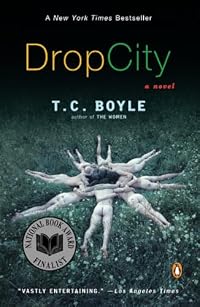
The portrayal of the slow descent of parents into drug addiction, one compromise at a time, is genius and very of the moment. Also, the author is incapable of writing badly, let’s face it. I just felt that Boyle has covered all of this ground before while writing much more engaging stories. No dark humor, no romance, just straight up tragedy. As a longtime reader of Boyle I could not get over my disappointment. Put this down and read his book “Drop City” instead, which is also about a commune and a much better book.
I seem to have picked up a few of T.C. Boyle's books recently, after not having read anything by him for a number of years. Not really on purpose either, just because they looked interesting.
This one is set at Harvard in the 1960s. Fitz is a graduate student, married with a child and a little older than most of the other grad students in his psych class. Yet still young enough to be as much in the thrall of of his charismatic professor as any of the other students.
Tim is experimenting on the cutting edge of psychology, using LSD, a drug first synthesised in Germany during WWII, to explore the possibilities of the human mind. It is a course requirement that all the students partake and Tim hosts regular Saturday night gatherings for his show more acolytes. Fitz is initially wary, but wants to remain in the course and does not want to be isolated from Tim.
When he and Joanie join their first gathering, the drug blows both their minds. Everything is better, heightened by LSD.
Before long, what began as clinical trials starts spinning out of control. Tim's core group spends a summer away from the university, living and tripping as a new community in Mexico. Lines and loyalties blur as this enlightened community searches for God and the meaning of existence while on increasingly large doses of hallucinogens.
When their lifestyle experiments lead to expulsion from Harvard, they move into an empty rural mansion to continue their search for enlightenment. But as time goes on, financial considerations, loyalties and the shifting group dynamics make what once seemed like paradise into a living hell.
I kind of enjoyed this book, even though all the characters - and there were a lot of them - really irritated me. It felt very real and exactly what I imagine commune living to be like. There is a reason why I don't live on a commune...
Weirdly, it never occurred to me that the Tim in the book was supposed to be Timothy Leary! Guess I should have read the blurb before I started reading. I might have read him differently if I had figured that out. Although I doubt he would have been any less irritating.
If you're interested in the '60s counterculture, this is a good introduction that doesn't gloss over the downsides of living a perpetually high life. I'd recommend it, but with the caveat that the characters are kind of losers and difficult to like. show less
This one is set at Harvard in the 1960s. Fitz is a graduate student, married with a child and a little older than most of the other grad students in his psych class. Yet still young enough to be as much in the thrall of of his charismatic professor as any of the other students.
Tim is experimenting on the cutting edge of psychology, using LSD, a drug first synthesised in Germany during WWII, to explore the possibilities of the human mind. It is a course requirement that all the students partake and Tim hosts regular Saturday night gatherings for his show more acolytes. Fitz is initially wary, but wants to remain in the course and does not want to be isolated from Tim.
When he and Joanie join their first gathering, the drug blows both their minds. Everything is better, heightened by LSD.
Before long, what began as clinical trials starts spinning out of control. Tim's core group spends a summer away from the university, living and tripping as a new community in Mexico. Lines and loyalties blur as this enlightened community searches for God and the meaning of existence while on increasingly large doses of hallucinogens.
When their lifestyle experiments lead to expulsion from Harvard, they move into an empty rural mansion to continue their search for enlightenment. But as time goes on, financial considerations, loyalties and the shifting group dynamics make what once seemed like paradise into a living hell.
I kind of enjoyed this book, even though all the characters - and there were a lot of them - really irritated me. It felt very real and exactly what I imagine commune living to be like. There is a reason why I don't live on a commune...
Weirdly, it never occurred to me that the Tim in the book was supposed to be Timothy Leary! Guess I should have read the blurb before I started reading. I might have read him differently if I had figured that out. Although I doubt he would have been any less irritating.
If you're interested in the '60s counterculture, this is a good introduction that doesn't gloss over the downsides of living a perpetually high life. I'd recommend it, but with the caveat that the characters are kind of losers and difficult to like. show less
I've read a number of nonfiction books that covered the same basic time period of Timothy Leary's study and experimentation with LSD as this book, so it was only natural that I was curious to see how an interesting writer like Boyle would handle this material. After closing the book and reflecting on it, I must say that overall it was kind of a bummer.
Sure, there is so much rich material when Richard Alpert (later becoming Ram Dass) teams up with Tim to hand out doses of acid to students and friends, simply asking them to write up their experience, so that they can “compare note," so to speak. Boyle does a fine job laying out a history of the discovery of LSD, and the takes the reader through Tim and Richard's ability to find show more benefactors that underwrite their fascinating group adventures at Harvard, then Mexico, and lastly at a huge estate at Millbrook.
The problem for this reader, was that Boyle tediously describes the emotional toll on our central family (Fitzhugh Loney, a psychology grad student, his librarian wife Joanie, and their young son Corey) and gives short shrift to the excitement, thrill, self-discovery, and the humor that was obviously present.
He's not the first author to clearly show the cost of doubts and jealousy that came about from years of freedom and experimentation, with drugs and various sexual partners, but when I pull myself back from the reality of the story, I realize that Boyle's fictional side of the book is a pretty bleak story. All of this core family's relationships may have been completely destroyed. It didn’t seem that Boyle explained enough about why Fritz and Joanie kept craving the drug and sexual experimentation, when their love for each other was bitterly fraying in clear sight. Maybe that one word—craving—says it all.
Part of the problem is that describing an acid trip with mere words in a novel is tough sledding, but I think Boyle is up to that task, he just didn't seem to want that to be as much of the story, as jealousy, dirty dishes, and another possible utopia gone bad.
I guess when I get to the core of the issue for me, I was simply saddened with where he chose to take this story. I was craving a more fulfilling story of sex and drugs. Crave on. show less
Sure, there is so much rich material when Richard Alpert (later becoming Ram Dass) teams up with Tim to hand out doses of acid to students and friends, simply asking them to write up their experience, so that they can “compare note," so to speak. Boyle does a fine job laying out a history of the discovery of LSD, and the takes the reader through Tim and Richard's ability to find show more benefactors that underwrite their fascinating group adventures at Harvard, then Mexico, and lastly at a huge estate at Millbrook.
The problem for this reader, was that Boyle tediously describes the emotional toll on our central family (Fitzhugh Loney, a psychology grad student, his librarian wife Joanie, and their young son Corey) and gives short shrift to the excitement, thrill, self-discovery, and the humor that was obviously present.
He's not the first author to clearly show the cost of doubts and jealousy that came about from years of freedom and experimentation, with drugs and various sexual partners, but when I pull myself back from the reality of the story, I realize that Boyle's fictional side of the book is a pretty bleak story. All of this core family's relationships may have been completely destroyed. It didn’t seem that Boyle explained enough about why Fritz and Joanie kept craving the drug and sexual experimentation, when their love for each other was bitterly fraying in clear sight. Maybe that one word—craving—says it all.
Part of the problem is that describing an acid trip with mere words in a novel is tough sledding, but I think Boyle is up to that task, he just didn't seem to want that to be as much of the story, as jealousy, dirty dishes, and another possible utopia gone bad.
I guess when I get to the core of the issue for me, I was simply saddened with where he chose to take this story. I was craving a more fulfilling story of sex and drugs. Crave on. show less
I think T. C. Boyle is a good writer so picked this up without really knowing what it was about. Timothy Leary, the LSD guru of the 1960's is the subject of the book and the naive and willing followers that came under his spell. The book reminded me a great deal of "The Inner Circle" about Kinsey. In fact, the term "inner circle" is used to describe those around Leary.
The story is told from the perspective of Fitz Loney, a psychology student at Harvard. Fitz and his wife Joanie along with their son, Corey find themselves in the inner circle of Leary. The first third of the book is probably the best as it describes the beginnings of the relationship while Fitz is a student at Harvard. The last third of the book is set in Leary's show more experimental commune in Millbrook and is basically a descent into drugs and utter chaos.
The book was interesting is that there are many historical incidents that are verifiable and which I did look up to read more such as the Good Friday experiment testing whether religious experience can be caused by drugs. An interesting read but it is in form very much like "The Inner Circle) show less
The story is told from the perspective of Fitz Loney, a psychology student at Harvard. Fitz and his wife Joanie along with their son, Corey find themselves in the inner circle of Leary. The first third of the book is probably the best as it describes the beginnings of the relationship while Fitz is a student at Harvard. The last third of the book is set in Leary's show more experimental commune in Millbrook and is basically a descent into drugs and utter chaos.
The book was interesting is that there are many historical incidents that are verifiable and which I did look up to read more such as the Good Friday experiment testing whether religious experience can be caused by drugs. An interesting read but it is in form very much like "The Inner Circle) show less
I enjoyed this book a lot. Boyle writes fascinating characters around well-known ones. In this case, you get a look at Timothy Leary through a couple of different folks in his orbit around his time at and just after Harvard.
Members
- Recently Added By
Lists

Books Read in 2020
4,379 works; 123 members

Kirkus Starred Fiction Reviews of Books Published in 2019
411 works; 12 members

Books Read in 2019
4,052 works; 108 members
Author Information

102+ Works 27,987 Members
T. C. Boyle was born Thomas John Boyle in Peekskill, New York on December 2, 1948. He received a B.A. in English and history from SUNY Potsdam in 1968, a MFA from the University of Iowa Writers' Workshop in 1974, and a Ph.D. degree in nineteenth century British literature from the University of Iowa in 1977. He has been a member of the English show more department at the University of Southern California since 1978. He has written over 20 books including After the Plague, Drop City, The Inner Circle, Tooth and Claw, The Human Fly, Talk Talk, The Women, Wild Child, and When the Killing's Done. He has received numerous awards including the PEN/Faulkner Award for best novel of the year for World's End; the PEN/Malamud Prize in the short story for T. C. Boyle Stories; and the Prix Médicis Étranger for best foreign novel in France for The Tortilla Curtain. His title's Sam Miguel and The Harder They Caome made The New York Times Best Seller List. (Bowker Author Biography) T. Coraghessan Boyle is the best-selling author of "T.C. Boyle Stories," "Riven Rock," "The Tortilla Curtain," "Without a Hero," "The Road to Wellville," "East Is East," "If the River Was Whiskey," "World's End" (winner of the PEN/Faulkner Award), "Greasy Lake," "Budding Prospects," "Water Music," & "Descent of Man" (all available from Penguin). His fiction regularly appears in major American magazines, including "The New Yorker," "GQ," "The Paris Review," "Playboy," & "Esquire." He lives in Santa Barbara, California. (Publisher Provided) show less
Some Editions
Series
Belongs to Publisher Series
Impedimenta (232)
Common Knowledge
- Canonical title
- Outside Looking In
- Original title
- Outside Looking In
- Original publication date
- 2019
- People/Characters
- Timothy Leary
- Important places*
- Cambridge, Massachusetts, USA; Zihuatnejo, Mexiko; Basel, Basel-Stadt, Schweiz; Millbrook, New York, USA
- Important events*
- Kennedy's assassination
- Original language
- English
*Some information comes from Common Knowledge in other languages. Click "Edit" for more information.
Classifications
Statistics
- Members
- 285
- Popularity
- 112,636
- Reviews
- 14
- Rating
- (3.90)
- Languages
- English, French, German, Spanish
- Media
- Paper, Audiobook, Ebook
- ISBNs
- 22
- ASINs
- 7