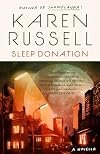
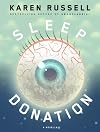
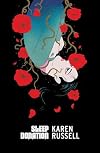
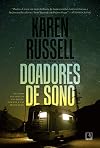
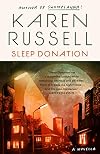
Sleep Donation
by Karen Russell
On This Page
Description
"For the first time in paperback, a haunting novella from the uncannily imaginative author of the national bestsellers Swamplandia! and Orange World: the story of a deadly insomnia epidemic and the lengths one woman will go to to fight it. Trish Edgewater is the Slumber Corps' top recruiter. On the phone, at a specially organized Sleep Drive, even in a supermarket parking lot: Trish can get even the most reluctant healthy dreamer to donate sleep to an insomniac in crisis--one of hundreds of show more thousands of people who have totally lost the ability to sleep. Trish cries, she shakes, she shows potential donors a picture of her deceased sister, Dori: one of the first victims of the lethal insomnia plague that has swept the globe. Run by the wealthy and enigmatic Storch brothers, the Slumber Corps is at the forefront of the fight against this deadly new disease. But when Trish is confronted by "Baby A," the first universal sleep donor, and the mysterious "Donor Y," whose horrific infectious nightmares are threatening to sweep through the precious sleep supply, her faith in the organization and in her own motives begins to falter. Fully illustrated with dreamy evocations of Russell's singular imagination and featuring a brand-new "Nightmare Appendix," Sleep Donation will keep readers up long into the night and long after haunt their dreams"-- show lessTags
Recommendations









Member Recommendations
Member Reviews
Ok, so I finally finished this one. It was only about a hundred pages or so, but for some reason, it took me several days to get through. The writing was very good, so it wasn't that, just a pretty deep material to consider as I read through it.
There's a lot of pragmatism and the whole "do the ends justify the means" going on in this story. Do we really have the right to force people to donate in order to help others stay alive? That's the heart of this story, with pure sleep as the necessary item for survival. There's a insomnia epidemic, and those that can sleep are asked, at first, to donate hours of sleep, at the risk of losing sleep themselves, as well as potentially shortening their life. The recruiters are increasingly becoming show more more and more forceful as the epidemic continues, and one recruiter, a "star recruiter" starts to question the means at which they are obtaining the sleep hours.
As I said, this was a well-written story, just had to stop to think about the courses of action we all take as we strive towards our goals. Impacting, highly recommended. show less
There's a lot of pragmatism and the whole "do the ends justify the means" going on in this story. Do we really have the right to force people to donate in order to help others stay alive? That's the heart of this story, with pure sleep as the necessary item for survival. There's a insomnia epidemic, and those that can sleep are asked, at first, to donate hours of sleep, at the risk of losing sleep themselves, as well as potentially shortening their life. The recruiters are increasingly becoming show more more and more forceful as the epidemic continues, and one recruiter, a "star recruiter" starts to question the means at which they are obtaining the sleep hours.
As I said, this was a well-written story, just had to stop to think about the courses of action we all take as we strive towards our goals. Impacting, highly recommended. show less
In this very short novel (or perhaps it's a novella?), a plague of insomnia has been sweeping the world, one that can only be treated by donations of sleep from others, and we watch a woman whose job it is to recruit these donations struggling with the ethics of her job and her approach to it.
Which makes this sound like an interesting but fairly straightforward sort of science fiction story. It's not. It's odd, hard to get a handle on, and, perhaps fittingly, rather dreamlike. Aspects of it feel deeply realistic, and others fantastic or almost mystical. The writing is a bit strange, too, giving the impression that the writer was happy to just throw all kinds of weird descriptions and metaphors at everything to see what stuck, with some show more results that are breathtakingly perfect and others that are borderline nonsensical. In a different sort of work, I might criticize that. In this one... maybe it works.
Thematically, it feels like it could, perhaps even should, be saying something simple and clear, but the more I try to draw one-to-one comparisons with obviously relevant real-life scenarios, the more I find my brain slipping around and getting lost in complexity and metaphor. Whatever I might make of it, I will say that it resonates strongly with issues about disease and treatment, capitalism and exploitation, generosity and greed, privacy and intimacy. show less
Which makes this sound like an interesting but fairly straightforward sort of science fiction story. It's not. It's odd, hard to get a handle on, and, perhaps fittingly, rather dreamlike. Aspects of it feel deeply realistic, and others fantastic or almost mystical. The writing is a bit strange, too, giving the impression that the writer was happy to just throw all kinds of weird descriptions and metaphors at everything to see what stuck, with some show more results that are breathtakingly perfect and others that are borderline nonsensical. In a different sort of work, I might criticize that. In this one... maybe it works.
Thematically, it feels like it could, perhaps even should, be saying something simple and clear, but the more I try to draw one-to-one comparisons with obviously relevant real-life scenarios, the more I find my brain slipping around and getting lost in complexity and metaphor. Whatever I might make of it, I will say that it resonates strongly with issues about disease and treatment, capitalism and exploitation, generosity and greed, privacy and intimacy. show less
As other reviewers have noted, "Sleep Donation" isn't really a complete story: the author cuts it off rather awkwardly just as the story takes another turn. Even so, it's absolutely amazing how much stuff Karen Russell can pack into one hundred and ten short pages. The basic plot concerns the sister of a modern plague that resembles a terminal sort of insomnia but might easily be compared with AIDS or SARS as she works desperately to help others afflicted with the disease. In the middle of it all is a baby who appears to be some sort of universal "sleep donor" and another donor who seems to have infected the nation's "sleep supply" with a nightmare so awful that those who suffer from it can't even describe it.
There's a lot to sort show more through here: though it seems to be set in Russell's sunny, verdant Florida, most of this novel's characters seem to be pushed right to their limits, if not beyond: "Sleep Donation" is, in part, a story of how humans manage to operate at the limits of their capacity, a novel for a disaster-prone century. Our narrator is also the sister of one of the first and best-known victims of the insomniac plague and has discovered that incorporating her sister's death into her "sleep donation" sales pitch works wonders. She's understandably conflicted about this use of her sister's memory, despite its morally admirable motivation and her spectacular, often-life saving results. "Sleep Donation" at times, seems to be a very American meditation on what parts ourselves we can cheerfully sell and which should remain strictly private, though. And sometimes, as the sleepless epidemic mutates and a number of weird homegrown subcultures form in reaction to it, "Sleep Donation" seems to be a study in human reactions and resourcefulness: I expect that the author had a lot of fun thinking up the whole range of products that the insomniacs use to try to bring on sleep. In this little book, the sleepless inhabit a separate world from others, much as, say, night-shift workers do.
It's the theme of donation -- or rather, of personal exchange in all of its forms, which is to say emotional, monetary, physical, sexual, and other, less tangible sorts -- that's really at the heart of the book. The main character has clearly given a huge part of herself to try to save others from the malady that killed her sister. The question she constantly poses, however, is how much she can ask others to give, particularly since the donor in question is maybe about a year old. The scenes that feature our protagonist, the baby, and her parents are unbelievably tender and well-drawn: all the book's character's seem fully aware of how much hope and life rides on her continued donations. The effect can be devastating, or, when Russell holds back a bit, genuinely touching.
But, as always, the prose is the real reason to read "Sleep Donation." Russell's prose seems at once extremely precise and remarkably straightforward. Despite being freighted with enormous themes her writing has an easy, loose feel that likely makes entire creative writing classes burst into tears of frustration. I can't quite figure out how she does it: she seldom uses what Hemingway might call a "big word," but her perfectly composed sentences flow so naturally you can almost feel them breathing. Reading Russell is like watching Rembrandt knock off an Old Masters gem using a 64-pack of Crayolas. And while she never seems like she's showing off, but it must take a lot of work to make it look this easy. One gets the sense that she handles a word processor with the sort of uncanny grace that Michael Jordan handled a basketball. The effect is simply stunning: some people are just born to do it, I guess. The author could, I suppose, treat this Kindle Single as a part of larger work, or could leave it where it lies. But it's worth reading if for no other reason than to see its author do her thing, again. show less
There's a lot to sort show more through here: though it seems to be set in Russell's sunny, verdant Florida, most of this novel's characters seem to be pushed right to their limits, if not beyond: "Sleep Donation" is, in part, a story of how humans manage to operate at the limits of their capacity, a novel for a disaster-prone century. Our narrator is also the sister of one of the first and best-known victims of the insomniac plague and has discovered that incorporating her sister's death into her "sleep donation" sales pitch works wonders. She's understandably conflicted about this use of her sister's memory, despite its morally admirable motivation and her spectacular, often-life saving results. "Sleep Donation" at times, seems to be a very American meditation on what parts ourselves we can cheerfully sell and which should remain strictly private, though. And sometimes, as the sleepless epidemic mutates and a number of weird homegrown subcultures form in reaction to it, "Sleep Donation" seems to be a study in human reactions and resourcefulness: I expect that the author had a lot of fun thinking up the whole range of products that the insomniacs use to try to bring on sleep. In this little book, the sleepless inhabit a separate world from others, much as, say, night-shift workers do.
It's the theme of donation -- or rather, of personal exchange in all of its forms, which is to say emotional, monetary, physical, sexual, and other, less tangible sorts -- that's really at the heart of the book. The main character has clearly given a huge part of herself to try to save others from the malady that killed her sister. The question she constantly poses, however, is how much she can ask others to give, particularly since the donor in question is maybe about a year old. The scenes that feature our protagonist, the baby, and her parents are unbelievably tender and well-drawn: all the book's character's seem fully aware of how much hope and life rides on her continued donations. The effect can be devastating, or, when Russell holds back a bit, genuinely touching.
But, as always, the prose is the real reason to read "Sleep Donation." Russell's prose seems at once extremely precise and remarkably straightforward. Despite being freighted with enormous themes her writing has an easy, loose feel that likely makes entire creative writing classes burst into tears of frustration. I can't quite figure out how she does it: she seldom uses what Hemingway might call a "big word," but her perfectly composed sentences flow so naturally you can almost feel them breathing. Reading Russell is like watching Rembrandt knock off an Old Masters gem using a 64-pack of Crayolas. And while she never seems like she's showing off, but it must take a lot of work to make it look this easy. One gets the sense that she handles a word processor with the sort of uncanny grace that Michael Jordan handled a basketball. The effect is simply stunning: some people are just born to do it, I guess. The author could, I suppose, treat this Kindle Single as a part of larger work, or could leave it where it lies. But it's worth reading if for no other reason than to see its author do her thing, again. show less
This is a fast, fascinating read, and the Viking paperback I have has the most gorgeous illustrations which are themselves well worth sinking into. The concepts, ideas, and images here sucked me in almost immediately, and in the end, I read the book in only a few sittings. And... yet. And yet, I have to admit that I ended up wanting more. More from the characters, more from the plot, and more especially from the ending. In some ways, it felt like 90% of the book's energy went to world-building and imagery, leaving only 10% or so of the energy to go toward plot and character. In some ways, it may be that the world-building and concept were so vibrant that they were more than enough to hold up the experience of the book, so all else was show more deemed secondary, but especially by the time the book ended, I found myself simply wanting more.
So, would I recommend the book? Well, yes, but with some reservations, and with the caveat that this is a book to be read for the concepts and the world and the images playing it forward, vs for the primary story or any sort of conflict. I'm not sure if I'll read more of Russell's work, truly--if the sound of a story fascinates me, I probably will. If not... I probably won't. show less
So, would I recommend the book? Well, yes, but with some reservations, and with the caveat that this is a book to be read for the concepts and the world and the images playing it forward, vs for the primary story or any sort of conflict. I'm not sure if I'll read more of Russell's work, truly--if the sound of a story fascinates me, I probably will. If not... I probably won't. show less
What better reading material during a global pandemic, than to read Karen Russell’s timely and haunting new novella about a deadly worldwide illness? Now in paperback, this tale that began online, tells the inside story of the Insomnia Crisis. We all know that without sleep, there’s a simple diagnosis … death. And readers of Karen Russell all know that she can spin a wonderfully weird-ass story about anything.
With Sleep Donation, we are taken inside the Slumber Corps, a nonprofit company that recruits people to donate their healthy sleep to the hundreds of thousands of people who have completely lost the ability to sleep. Trish Edgewater is one of their very best recruiters, and her success stems greatly from her emotional show more telling of the story about one of the very first victims of the new disease, her sister.
The mechanics of donating sleep are vague, but it must be quite simple, as it’s done in the Slumber Corps van. Then like a blood transfusion, the insomniac receives that sleep right there in that same van.
Trish sees the crisis from within the Slumber Corps, and she’s starts to see problems with this company started by a couple of millionaire brothers, and how some donors are so much more important than others. Following the simple logic that most babies are good sleepers (No, I’ve never done an all nighter with a crying baby) and “Baby A” is one of their best donators. There are limits to how much sleep donors can give, but “Baby A” (soundest sleeper in the country) is revealed as a gold mind of sleep. Trish is torn when she becomes close to Mr. and Mrs. Harkonnen, the baby’s parents, and then also learns about the troubling money side of using this very productive sleep donor. On the flip side, another sleep donator, “Donor Y,” has made sleep donations that have infected the company’s precious sleep banks with horrible nightmares. There is a long questionnaire and screening system, but it obviously doesn’t catch all problems, and nightmares are the worst.
The worlds of our pandemic and Russell’s Insomnia Crisis swirled and circled each other in my mind, as I read this dystopian story, and heard the latest dismal headlines on television. Sleep isn’t overabundant in my life, so this slim book could have been much longer and still have fit into a single night of uncomfortable reading. There are some suitably moody sketches throughout the book, and an appropriately odd appendix about nightmares in the back of the book.
“Sleep Donation has a dreamlike beauty while remaining ominous and off-kilter” says an apt Stephen King blurb on the front cover. When you combine our present pandemic with our actual wide-spread insomnia, this book seems born for these times. Yet, there’s a distance, a difference, so you ‘might’ still be able to sleep after reading this book. Enjoy and good luck. show less
With Sleep Donation, we are taken inside the Slumber Corps, a nonprofit company that recruits people to donate their healthy sleep to the hundreds of thousands of people who have completely lost the ability to sleep. Trish Edgewater is one of their very best recruiters, and her success stems greatly from her emotional show more telling of the story about one of the very first victims of the new disease, her sister.
The mechanics of donating sleep are vague, but it must be quite simple, as it’s done in the Slumber Corps van. Then like a blood transfusion, the insomniac receives that sleep right there in that same van.
Trish sees the crisis from within the Slumber Corps, and she’s starts to see problems with this company started by a couple of millionaire brothers, and how some donors are so much more important than others. Following the simple logic that most babies are good sleepers (No, I’ve never done an all nighter with a crying baby) and “Baby A” is one of their best donators. There are limits to how much sleep donors can give, but “Baby A” (soundest sleeper in the country) is revealed as a gold mind of sleep. Trish is torn when she becomes close to Mr. and Mrs. Harkonnen, the baby’s parents, and then also learns about the troubling money side of using this very productive sleep donor. On the flip side, another sleep donator, “Donor Y,” has made sleep donations that have infected the company’s precious sleep banks with horrible nightmares. There is a long questionnaire and screening system, but it obviously doesn’t catch all problems, and nightmares are the worst.
The worlds of our pandemic and Russell’s Insomnia Crisis swirled and circled each other in my mind, as I read this dystopian story, and heard the latest dismal headlines on television. Sleep isn’t overabundant in my life, so this slim book could have been much longer and still have fit into a single night of uncomfortable reading. There are some suitably moody sketches throughout the book, and an appropriately odd appendix about nightmares in the back of the book.
“Sleep Donation has a dreamlike beauty while remaining ominous and off-kilter” says an apt Stephen King blurb on the front cover. When you combine our present pandemic with our actual wide-spread insomnia, this book seems born for these times. Yet, there’s a distance, a difference, so you ‘might’ still be able to sleep after reading this book. Enjoy and good luck. show less
This is advertised as a novella. Amazon suggested a reading time is just over an hour. I am a fast reader and it took me two hours. The wonderfully complex vocabulary and sentence structures were a delight to be appreciated and not rushed. I found myself using a dictionary because I wanted to get a more precise appeal for what the author wanted me to understand. I like to review books and I give a lot of three and four-star ratings but few five-star ratings. This is a five. I haven’t seen such masterful and creative use of language since William F. Buckley (sorry if any political sensibilities got trampled here).
In the United States, there is a new illness that is attacking more and more people each day. People cannot sleep, but this show more is not simple insomnia. The new sufferers cannot sleep at all, anytime; they stay awake until they die of exhaustion. This is the premise of Sleep Donation, a short novel by Karen Russell. The novel tells us the new disease is only present in America although only the US is discussed. Three-quarters of the way through the book the disease finally attacks Asian and European countries. How did it get there? That is one of the mysteries in the story.
Two very rich and successful businessmen brothers (think Warren Buffet rich) altruistically abandon their businesses and form an organization that will help the afflicted. Their technology borrows sleep from those who can sleep and gives it to the needy. If the borrowed sleep is pure, the sufferers regenerate their own ability to sleep. The disease is cured for them. The problem is to find donors who can donate pure sleep. There is only one donor, in the US and the world, who has the purity necessary, Baby A. She is not even a year old when she becomes the sole donor of sleep pure enough to cure the ill. She can donate up to six hours sleep per day. Baby A’s mom is pleased to help; the baby’s father less so. A conflict throughout the story is the father’s unwillingness to allow the continued participation of his daughter in saving the world. Trish Edgewater, our hero, will waffle back and forth on the ethics of using the infant hero Baby A. She will be responsible for convincing the parents of the need for continuing donations by the sole pure donor until such time a clone serum can be developed from Baby A’s donations.
The only problem is that this novel made such a profound effect on me that I am going to have to take a break before starting something new. Anything after this book will be less fun. show less
In the United States, there is a new illness that is attacking more and more people each day. People cannot sleep, but this show more is not simple insomnia. The new sufferers cannot sleep at all, anytime; they stay awake until they die of exhaustion. This is the premise of Sleep Donation, a short novel by Karen Russell. The novel tells us the new disease is only present in America although only the US is discussed. Three-quarters of the way through the book the disease finally attacks Asian and European countries. How did it get there? That is one of the mysteries in the story.
Two very rich and successful businessmen brothers (think Warren Buffet rich) altruistically abandon their businesses and form an organization that will help the afflicted. Their technology borrows sleep from those who can sleep and gives it to the needy. If the borrowed sleep is pure, the sufferers regenerate their own ability to sleep. The disease is cured for them. The problem is to find donors who can donate pure sleep. There is only one donor, in the US and the world, who has the purity necessary, Baby A. She is not even a year old when she becomes the sole donor of sleep pure enough to cure the ill. She can donate up to six hours sleep per day. Baby A’s mom is pleased to help; the baby’s father less so. A conflict throughout the story is the father’s unwillingness to allow the continued participation of his daughter in saving the world. Trish Edgewater, our hero, will waffle back and forth on the ethics of using the infant hero Baby A. She will be responsible for convincing the parents of the need for continuing donations by the sole pure donor until such time a clone serum can be developed from Baby A’s donations.
The only problem is that this novel made such a profound effect on me that I am going to have to take a break before starting something new. Anything after this book will be less fun. show less
It is a special kind of homelessness, says our mayor, to be evicted from your dreams.
According to these professional Cassandras, sleep has been chased off the globe by our twenty-four hour news cycle, our polluted skies and crops and waterways, the bald eyeballs of our glowing devices. We Americans are sitting in an electric chair that we engineered.
-From the book
Sleep Donation is a novella that theorizes what our world might look like if faced with a disease of terminal insomnia. The CDC is searching for answers but no one knows exactly what causes it or why some people are affected and others aren't. A company called Slumber Corps collects sleep donations from the unaffected and distributes them to the sleep deprived. Instead of show more Red Cross vans collecting blood, there are Sleep Vans collecting hours of sleep.
Trish Edgewater works for the Slumber Corps. She is their best recruiter. Her sister died of insomnia before the sleep donation procedure was developed and Trish resurrects her ghost to persuade people to save others by donating their sleep. But Trish gradually becomes uncomfortable with the absolutes her company claims. And when Trish recruits (through her parents) Baby A, the first ever universal donor, she begins to question her beliefs even more. She starts to question the ethics of her bosses & their company.
This book was ok. I admit, I find novellas less appealing than full length novels. I prefer to get deeper into the story and world building. But, the story was interesting and it kept my attention. It was a creative and new idea. And the disease sort of made sense, with all the electronics and distractions, people do have trouble sleeping. What if there was a disease where you couldn't sleep at all. What lengths would people go to in an effort to find a cure? And what or who would they be willing to sacrifice?
I really wanted to see what would happen next. It felt like the whole story was building to something that you didn't get to see. So the end was a bit disappointing.
Recommended to:
If you like the quick pace of open ended novellas, then this would be a good book for you.
show less
According to these professional Cassandras, sleep has been chased off the globe by our twenty-four hour news cycle, our polluted skies and crops and waterways, the bald eyeballs of our glowing devices. We Americans are sitting in an electric chair that we engineered.
-From the book
Sleep Donation is a novella that theorizes what our world might look like if faced with a disease of terminal insomnia. The CDC is searching for answers but no one knows exactly what causes it or why some people are affected and others aren't. A company called Slumber Corps collects sleep donations from the unaffected and distributes them to the sleep deprived. Instead of show more Red Cross vans collecting blood, there are Sleep Vans collecting hours of sleep.
Trish Edgewater works for the Slumber Corps. She is their best recruiter. Her sister died of insomnia before the sleep donation procedure was developed and Trish resurrects her ghost to persuade people to save others by donating their sleep. But Trish gradually becomes uncomfortable with the absolutes her company claims. And when Trish recruits (through her parents) Baby A, the first ever universal donor, she begins to question her beliefs even more. She starts to question the ethics of her bosses & their company.
This book was ok. I admit, I find novellas less appealing than full length novels. I prefer to get deeper into the story and world building. But, the story was interesting and it kept my attention. It was a creative and new idea. And the disease sort of made sense, with all the electronics and distractions, people do have trouble sleeping. What if there was a disease where you couldn't sleep at all. What lengths would people go to in an effort to find a cure? And what or who would they be willing to sacrifice?
I really wanted to see what would happen next. It felt like the whole story was building to something that you didn't get to see. So the end was a bit disappointing.
Recommended to:
If you like the quick pace of open ended novellas, then this would be a good book for you.
show less
Members
- Recently Added By
Lists

Dystopian and Apocalyptic Literature
350 works; 74 members

Sleeplessness
16 works; 3 members

Books Read in 2021
5,361 works; 114 members

Viral Outbreaks and Pandemics
82 works; 8 members

2022 To Read List
11 works; 2 members
Author Information

21+ Works 9,039 Members
Karen Russell was born in Miami, Florida in 1981. Karen is the author of Swamplandia!, which was long-listed for the Orange Prize and was also included in the New York Times' "10 Best Books of 2011." She was named a National Book Foundation "5 Under 35" young writer honoree and received the Bard Fiction Prize in 2011 for her first book of short show more stories, St. Lucy's Home for Girls Raised by Wolves. Russell received a B.A. from Northwestern University and MFA program from Columbia University. (Bowker Author Biography) show less
Some Editions
Awards and Honors
Distinctions
Notable Lists
Common Knowledge
- Original publication date
- 2014
- Dedication
- For Ada Starling Perez, the best sleeper in our family
- First words
- The siren goes, and we code for dispatch.
- Blurbers
- King, Stephen; Kakutani, Michiko
- Original language
- English
Classifications
Statistics
- Members
- 429
- Popularity
- 71,652
- Reviews
- 24
- Rating
- (3.35)
- Languages
- English, Italian, Portuguese, Spanish
- Media
- Paper, Audiobook, Ebook
- ISBNs
- 10
- ASINs
- 5