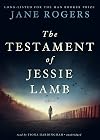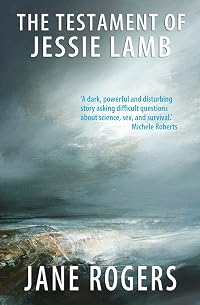
The Testament of Jessie Lamb
by Jane Rogers 
On This Page
Description
In a chilling future, one 16-year-old girl is driven to the ultimate act of heroism. The Testament of Jessie Lamb, longlisted for the Man Booker Prize, is the breakout novel from award-winning author Jane Rogers. Its cunningly drawn characters and riveting vision of a dystopic future fraught with difficult moral choices will make The Testament of Jessie Lamb an instant favorite for fans of Kazuo Ishiguro's Never Let Me Go, Margaret Atwood's The Handmaid's Tale, Suzanne Collins's The Hunger show more Games, and Brian K. Vaughan's Y: The Last Man. "The novel does not set up an elaborate apocalypse, but astringently strips away the smears hiding the apocalypses we really face. Like Jessie's, it is a small, calm voice of reason in a nonsensical world." -The Independent show lessTags
Recommendations




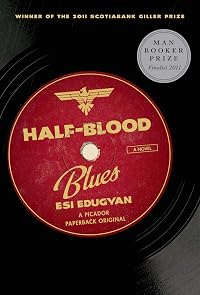


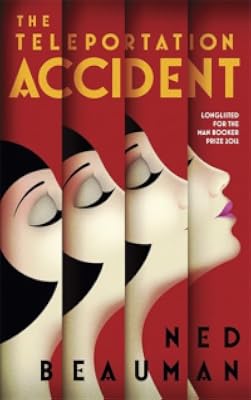
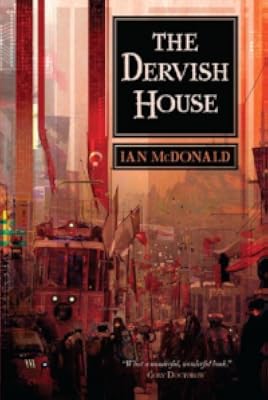
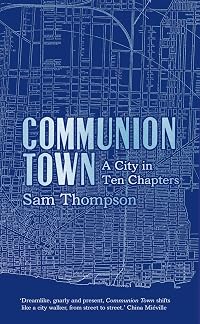
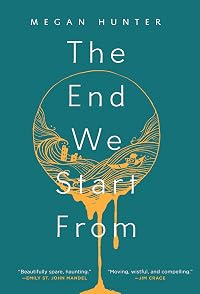
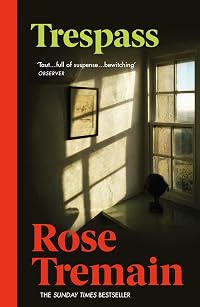
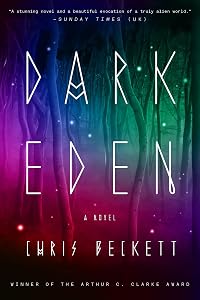
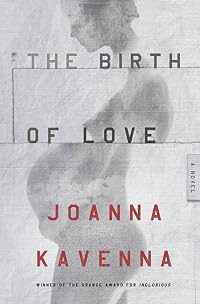












Member Recommendations
wonderlake teenage girls coming of age in a day after tomorrow scenario
10
Member Reviews
Excellent book. For one thing, just the sort of thing I go for - post-apocalypse or apocalypse-in-the-making, with plenty of questions about how humans can/should/would adapt and react. (For comparison: a frequent re-read of mine is George Stewart's [b:Earth Abides|93269|Earth Abides|George R. Stewart|http://photo.goodreads.com/books/1320505234s/93269.jpg|1650913].) I though the teenage protagonist was very well drawn, and the direct conflict between her and her parents made it into something quite out of the usual way of teenage protagonists, which would more normally have written the parents out of the story and had the conflict with friends or with society in general.
What I also really loved was the fact that as I put the book down show more for a breather, or in response to the outside world, I could still see a lingering image of the scene I had just finished. Rogers is not someone who deals in overblown description and her world is very much our own world with the one key difference, which all makes it easier to imagine, but regardless, that is a really good indicator of how deeply I was immersed in the reality of the story right from the beginning. show less
What I also really loved was the fact that as I put the book down show more for a breather, or in response to the outside world, I could still see a lingering image of the scene I had just finished. Rogers is not someone who deals in overblown description and her world is very much our own world with the one key difference, which all makes it easier to imagine, but regardless, that is a really good indicator of how deeply I was immersed in the reality of the story right from the beginning. show less
This is unquestionably the worst Booker longlisted book I've ever read. It's a dystopic novel supposedly set a few months in the future, in which millions of women are dying from Maternal Death Syndrome, a mysterious infection that turns women's brains to cottage cheese after they become pregnant. The narrator is a 16 year old girl who is appalled by what is taking place, and by the relative indifference of those in power toward the plight of the women. She becomes active in several futile youth movements whose goals were unclear to me (or to them, I suspect), and then makes a brave (or incredibly foolish) personal decision, in order to make a statement in support of her beliefs. The characters were wooden, the dialogue sunk to the show more level of poorly written YA lit, and the story as a whole was implausible and thoroughly unenjoyable. Fortunately it was a quick read, in keeping with several of the other "Booker Lite" novels on this year's longlist. It gets a well earned 1 star from me; however, other LT reviewers liked it far better than I did, so I would encourage you to take my comments with a grain of salt. show less
This is the 'what if' school of science fiction populated by John Wyndham and PD James - what happens if childbirth kills the mother? What happens to society and, in particular, what happens to young women? This first person testimonial aims to tell us through Jessie Lamb (spoiler alert!). The book is a first person narrative, but Rogers aims to create narrative tension through mixing letters and diaries set at different points, so that a slow reveal takes place, requiring the reader to retrofit part of the narrative. The book deals with meaty topics from religious cults to scientific rationalism, feminism to eco-terrorism. Its focus is, however, on love and parenthood - how both being loved and being deprived of love can lead to the show more same place; how commitment to an abstract kind of love can lead to a bewildering level of self sacrifice. Ultimately I don't think the book is quite well written or characterised enough to deal with all of this, but much of the narrative read convincingly like an adolescent and generally it's an interesting call.. show less
A biologically engineered virus has infected the women of the world that brings death to any who become pregnant. The future of humanity is at stake. Will there even be a future? That is what the people of the world have to wrestle with in The Testament of Jessie Lamb.
Yet as the title implies, this is a personal story, the account of one 16-year-old. The book is speculative fiction the way I like, about the people who must react to their extraordinary circumstances, rather than filled with techno-babble as to the specifics that brought them there.
Jessie is like many 16-year-olds I've known, her idealism untouched by cynicism, motivated by a drive to have an impact on the world, with a hope that just by dint of goodwill and determination show more she will be able to transform all. Hers is a great portrayal of adolescent psychology. The really complex characters in the book, however, are her parents, who clearly love their daughter but resort to some frankly horrifying tactics to deter Jessie from following through on a major decision she makes to incarnate her ideals.
Naturally, since the story is told from Jessie's point-of-view, all sympathy is with her. She is very persuasive in making the case for her decision. But given the major consequences her decision will have, I have to question exactly how I myself would react if she were my 16-year-old daughter. show less
Yet as the title implies, this is a personal story, the account of one 16-year-old. The book is speculative fiction the way I like, about the people who must react to their extraordinary circumstances, rather than filled with techno-babble as to the specifics that brought them there.
Jessie is like many 16-year-olds I've known, her idealism untouched by cynicism, motivated by a drive to have an impact on the world, with a hope that just by dint of goodwill and determination show more she will be able to transform all. Hers is a great portrayal of adolescent psychology. The really complex characters in the book, however, are her parents, who clearly love their daughter but resort to some frankly horrifying tactics to deter Jessie from following through on a major decision she makes to incarnate her ideals.
Naturally, since the story is told from Jessie's point-of-view, all sympathy is with her. She is very persuasive in making the case for her decision. But given the major consequences her decision will have, I have to question exactly how I myself would react if she were my 16-year-old daughter. show less
My main reaction to this book is a case of "I wish": I wish that I had liked this more. I wish that the characterization had been stronger, more developed so I cared about Jessie's final decision. I wish more had been provided about the initial act of biological terrorism that sets the book into motion and leaves humanity 80-odd years from extinction. As it is, even with my dismay over some of the core elements (main character's unlikeability, the secondary, wholly superfluous plotline revolving around the parentals marriage) to be found in this quick-moving and quick-reading novel, this is a fresh approach to a world-ending apocalypse -- it just isn't carried through the full potential. Jane Rogers certainly succeeds at creating a show more truly freaky end of the world scenario, and in getting her readers to think about what they would do in just such a dire situation - I just wasn't all that invested in what her invented characters did here.
The Testament of Jessie Lamb certainly starts out well - and with a bang at that. With a concept that sounds like a vague mashup of The Handmaid's Tale (emphasis on feminine importance for their wombs) and Never Let Me Go (organ donation and the outcome from it), I was good to go. With the benefit of one of the more intriguing cold opens I've read so far this year, my interest was piqued from even before chapter one officially started. The idea of MDS ("Maternal Death Syndrome") and its dramatic, mortal effects is a nice, very creative spin on already-popular apocalypse genre, and Rogers' plot allows for intricate and divisive morality maneuvering between people and parties. Unfortunately, this is more of a character-driven novel and I found Jessie's first-person narration to be off-putting so my interest slowly waned as it became more and more concerned with solely her evolutionary arc. (Also, Lamb? Obvious name is obvious. First name is totally cool, though.) The novel is Jessie's epistolary to the unknown future and as a narrative structure, it works well for her voice, story and reveals, if it's not an entirely unique approach.
Probably 65% of my dislike can be laid solely at the feet of our main character, Jessie. From the outset, she's a remote and somewhat cold narrator, a fact that is only reinforced by her nature towards her parents. She's obviously a complicated girl - that one so isolated would be so incredibly giving? naive? suicidal? speaks volumes of her development. I just couldn't identify with her personality-free narrative. Instead of allying with the closer-in-age main character, it's Jessie's poor, hapless parents that evoke the most sympathy. Jessie's stubborn and seemingly-willful naivety comes off as completely uncaring and apathetic to her understandably distressed parents. I don't expect Jessie to capitulate (hell, that would kill any plot in the book), but she could be infinitely more compassionate to her parents concerns and much more obligatory and explicit about her reasons for why she wants to be a Sleeping Beauty.
I felt like a lot of the struggle between factions (the scientists vs the environmentals vs the 'Noahs') to be way too heavy-handed. Each side of the tripod is too extreme in their approach so none are really believable, even in this setting. The Testament of Jessie Lamb is a book that can be alternatively thoughtful or frustrating as interesting aspects of the book can be shortchanged for less original and compelling ideas, like the parents. I did like the open-ended nature of the finale as regards to Jessie's personal storyline but felt slightly shortchanged elsewhere. There's not a lot of payoff to finishing this novel - as a reader you're supposed to reflect and make your own decisions about the life and decisions made, but blehhh. In the end, instead of inspiring me to question the M.O. behind all the opposing parties, I just felt that the ideas behind The Testament of Jessie Lamb weren't as fully explored as they could have been.
The Testament of Jessie Lamb is an introspective thinker of a novel and I think reactions will be divided across the board. Some readers will love Rogers's slow and female-targeted approach to the end of humanity and strong if distant main character and others will pick it apart for the misused, cookie-cutter cast, the unnecessary subplots and the lack of answers. To each their own. I can't say that I was entirely happy with this when I finished it, but nor was I filled with rage. I'll more than likely keep an eye out for what else this author will put out in the future without committing myself. show less
The Testament of Jessie Lamb certainly starts out well - and with a bang at that. With a concept that sounds like a vague mashup of The Handmaid's Tale (emphasis on feminine importance for their wombs) and Never Let Me Go (organ donation and the outcome from it), I was good to go. With the benefit of one of the more intriguing cold opens I've read so far this year, my interest was piqued from even before chapter one officially started. The idea of MDS ("Maternal Death Syndrome") and its dramatic, mortal effects is a nice, very creative spin on already-popular apocalypse genre, and Rogers' plot allows for intricate and divisive morality maneuvering between people and parties. Unfortunately, this is more of a character-driven novel and I found Jessie's first-person narration to be off-putting so my interest slowly waned as it became more and more concerned with solely her evolutionary arc. (Also, Lamb? Obvious name is obvious. First name is totally cool, though.) The novel is Jessie's epistolary to the unknown future and as a narrative structure, it works well for her voice, story and reveals, if it's not an entirely unique approach.
Probably 65% of my dislike can be laid solely at the feet of our main character, Jessie. From the outset, she's a remote and somewhat cold narrator, a fact that is only reinforced by her nature towards her parents. She's obviously a complicated girl - that one so isolated would be so incredibly giving? naive? suicidal? speaks volumes of her development. I just couldn't identify with her personality-free narrative. Instead of allying with the closer-in-age main character, it's Jessie's poor, hapless parents that evoke the most sympathy. Jessie's stubborn and seemingly-willful naivety comes off as completely uncaring and apathetic to her understandably distressed parents. I don't expect Jessie to capitulate (hell, that would kill any plot in the book), but she could be infinitely more compassionate to her parents concerns and much more obligatory and explicit about her reasons for why she wants to be a Sleeping Beauty.
I felt like a lot of the struggle between factions (the scientists vs the environmentals vs the 'Noahs') to be way too heavy-handed. Each side of the tripod is too extreme in their approach so none are really believable, even in this setting. The Testament of Jessie Lamb is a book that can be alternatively thoughtful or frustrating as interesting aspects of the book can be shortchanged for less original and compelling ideas, like the parents. I did like the open-ended nature of the finale as regards to Jessie's personal storyline but felt slightly shortchanged elsewhere. There's not a lot of payoff to finishing this novel - as a reader you're supposed to reflect and make your own decisions about the life and decisions made, but blehhh. In the end, instead of inspiring me to question the M.O. behind all the opposing parties, I just felt that the ideas behind The Testament of Jessie Lamb weren't as fully explored as they could have been.
The Testament of Jessie Lamb is an introspective thinker of a novel and I think reactions will be divided across the board. Some readers will love Rogers's slow and female-targeted approach to the end of humanity and strong if distant main character and others will pick it apart for the misused, cookie-cutter cast, the unnecessary subplots and the lack of answers. To each their own. I can't say that I was entirely happy with this when I finished it, but nor was I filled with rage. I'll more than likely keep an eye out for what else this author will put out in the future without committing myself. show less
In this near future novel, the world is suffering from the sins of its previous generations. Additionally, a new disease (MDS or "Maternal Death Syndrome") which affects the brain, has infected everyone, though it is only activated in women when they become pregnant. It's fatal for the women and the unborn babies.
When we begin this novel, 16 year old Jessie Lamb is being held captive, her ankles bound, by someone we will soon learn is her father. The captivity is to prevent Jessie from doing something.
Before the reader can digest the horror of that situation, Rogers begins the backstory. Jessie and a somewhat loose knit group of friends are upset with what is going on in the world around them. There is more than a little animosity show more towards parents and their generation, whom the teens hold responsible for almost everything. The kids are looking to do something—make a difference in the world—and they begin to explore various groups organized around different causes, all with acronyms for names (I mention this because I had a tough time keeping the groups straight). Jessie is interested, though still somewhat directionless. She very much wants to do something, she just doesn't have a focus yet.
Jessica's father is a scientist working in the field that is trying to find a cure for MDS. As he explains to her (over the course of the novel), there are many avenues being explored, some controversial. She loves her parents, despite the fact that she blames them, generally-speaking, for all the ills of the world (so not so unlike most generations of teens, eh?). As the story progresses, Jessie's yearning grows into a desire and she, without telling her parents, volunteers to be a "Sleeping Beauty". She will be implanted with a pre-MDS embryo (frozen from past IVF treatments, and which can now can be vaccinated against MDS), put in a coma while the fetus develops to term, and after the birth, she will be cut off from life support & die—a noble sacrifice to the continuation of the human race (it is no accident that Rogers has given her the name "lamb"). Needless to say, her parents are not happy about it, nor are most of her friends.
Rogers does an excellent job creating the adolescent mindset, and I recognized in Jessie that search for identity and meaning, and the idealistic way of thinking, that so pervades adolescence. But I also understood the viewpoint of her parents, even the desperation of her father. The issue and the responses to it are complicated, as is Jessie's intended sacrifice—which makes for a very thought-provoking read. Are 16 year olds old enough to sacrifice their lives for a cause? Should they be expected to do so? Would such experiments be ethical? When does activism become domestic terrorism? (this last question pertains to some of her friends).
This book would offer some great discussion in most any groups, particularly high schools, if one can get the 'sex' past the parental censors (the issue has a connection to sex, of course, and there is one 'first sex' scene between Jessie and a boy). show less
When we begin this novel, 16 year old Jessie Lamb is being held captive, her ankles bound, by someone we will soon learn is her father. The captivity is to prevent Jessie from doing something.
Before the reader can digest the horror of that situation, Rogers begins the backstory. Jessie and a somewhat loose knit group of friends are upset with what is going on in the world around them. There is more than a little animosity show more towards parents and their generation, whom the teens hold responsible for almost everything. The kids are looking to do something—make a difference in the world—and they begin to explore various groups organized around different causes, all with acronyms for names (I mention this because I had a tough time keeping the groups straight). Jessie is interested, though still somewhat directionless. She very much wants to do something, she just doesn't have a focus yet.
Jessica's father is a scientist working in the field that is trying to find a cure for MDS. As he explains to her (over the course of the novel), there are many avenues being explored, some controversial. She loves her parents, despite the fact that she blames them, generally-speaking, for all the ills of the world (so not so unlike most generations of teens, eh?). As the story progresses, Jessie's yearning grows into a desire and she, without telling her parents, volunteers to be a "Sleeping Beauty". She will be implanted with a pre-MDS embryo (frozen from past IVF treatments, and which can now can be vaccinated against MDS), put in a coma while the fetus develops to term, and after the birth, she will be cut off from life support & die—a noble sacrifice to the continuation of the human race (it is no accident that Rogers has given her the name "lamb"). Needless to say, her parents are not happy about it, nor are most of her friends.
Rogers does an excellent job creating the adolescent mindset, and I recognized in Jessie that search for identity and meaning, and the idealistic way of thinking, that so pervades adolescence. But I also understood the viewpoint of her parents, even the desperation of her father. The issue and the responses to it are complicated, as is Jessie's intended sacrifice—which makes for a very thought-provoking read. Are 16 year olds old enough to sacrifice their lives for a cause? Should they be expected to do so? Would such experiments be ethical? When does activism become domestic terrorism? (this last question pertains to some of her friends).
This book would offer some great discussion in most any groups, particularly high schools, if one can get the 'sex' past the parental censors (the issue has a connection to sex, of course, and there is one 'first sex' scene between Jessie and a boy). show less
I turned the last page of The Testament of Jessie Lamb a few days ago, but the book stayed with for quite awhile as I mulled it over. Jane Roger's novel is definitely thought provoking.
It is set in England sometime in the not too distant future and told from the perspective of sixteen year old Jessie. A virus - Maternal Death Syndrome, known as MDS has been unleashed. What does it do? It kills every woman who becomes pregnant, and the child is born infected as well. The virus will eventually kill off the human race. No one know who is responsible.
Jessie is just coming into adulthood, making choices about school, boys and her own beliefs. She joins many activist groups and supports other current causes - fuel consumption, eco-causes, show more animal rights, children's rights, feminist rights and ultimately the right to choose. But not choose as we know it. Instead, the choice is to become pregnant with a embryo frozen before the virus was unleashed. It is thought that these children will be born healthy. The scientists involved have decreed that young women will be the best incubators. They become known as Sleeping Beauties. And Jessie decides that this is the ultimate act for her. Her part - her dying - will help save the human race.
And this is where all the mulling came into play. Does Jessie have the right to choose death? How much of that choice is made for her with propaganda, peer pressure, societal pressure? Is she making the choice for purely selfish reasons? To show her parents she is grown up? Is she able to make such life altering decisions at what we consider to be a young age? What about a society that has accepted these Sleeping Beauties as part of their culture? And accepts these deaths as necessary. How much change can one individual make with their choices? I could go on and on - you can see why the book stayed with me. The Testament of Jessie Lamb would stimulate lots of discussion for book clubs.
.The first half of the book - Jessie's life and coming of age - rang true. The dialogue seemed to belong to a sixteen year old, as did the situations and attitudes. It was in the second half of the book that I felt Rogers lost me a bit. I just didn't buy into Jessie's reasoning for choosing to die. (But this is where all my questioning started!)
Those looking for dystopian fiction a la Hunger Games won't find it here. Rather, you'll find a book that make you think.
The Testament of Jessie Lamb was long listed for the Man Booker Prize. And is the 26th winner of the Arthur C. Clarke Award, the most prestigious award for science fiction in Britain. show less
It is set in England sometime in the not too distant future and told from the perspective of sixteen year old Jessie. A virus - Maternal Death Syndrome, known as MDS has been unleashed. What does it do? It kills every woman who becomes pregnant, and the child is born infected as well. The virus will eventually kill off the human race. No one know who is responsible.
Jessie is just coming into adulthood, making choices about school, boys and her own beliefs. She joins many activist groups and supports other current causes - fuel consumption, eco-causes, show more animal rights, children's rights, feminist rights and ultimately the right to choose. But not choose as we know it. Instead, the choice is to become pregnant with a embryo frozen before the virus was unleashed. It is thought that these children will be born healthy. The scientists involved have decreed that young women will be the best incubators. They become known as Sleeping Beauties. And Jessie decides that this is the ultimate act for her. Her part - her dying - will help save the human race.
And this is where all the mulling came into play. Does Jessie have the right to choose death? How much of that choice is made for her with propaganda, peer pressure, societal pressure? Is she making the choice for purely selfish reasons? To show her parents she is grown up? Is she able to make such life altering decisions at what we consider to be a young age? What about a society that has accepted these Sleeping Beauties as part of their culture? And accepts these deaths as necessary. How much change can one individual make with their choices? I could go on and on - you can see why the book stayed with me. The Testament of Jessie Lamb would stimulate lots of discussion for book clubs.
.The first half of the book - Jessie's life and coming of age - rang true. The dialogue seemed to belong to a sixteen year old, as did the situations and attitudes. It was in the second half of the book that I felt Rogers lost me a bit. I just didn't buy into Jessie's reasoning for choosing to die. (But this is where all my questioning started!)
Those looking for dystopian fiction a la Hunger Games won't find it here. Rather, you'll find a book that make you think.
The Testament of Jessie Lamb was long listed for the Man Booker Prize. And is the 26th winner of the Arthur C. Clarke Award, the most prestigious award for science fiction in Britain. show less
Members
- Recently Added By
Lists

Favorite Science Fiction by Women Authors
737 works; 202 members

Dystopian and Apocalyptic Literature
350 works; 74 members

Booker Prize
491 works; 62 members
Arthur C. Clarke Award Winners and Shortlisted Books
219 works; 14 members

Alternate Englands
34 works; 7 members

Female Protagonist
1,056 works; 57 members

SFFCat 2015
35 works; 1 member
Speculative Fiction: The Award Winners
27 works; 6 members
BingoDOG - Genre Benders
74 works; 14 members

Books Read in 2015
3,299 works; 129 members

Books Set in Great Britain
191 works; 13 members

Man Booker Prize Longlist 2011
13 works; 2 members
Talk Discussions
Past Discussions
The Testament of Jessie Lamb by Jane Rogers in Booker Prize (September 2011)
Author Information

24+ Works 1,063 Members
Jane Rogers has written five novels & the script for the BBC adaptation of "Mr. Wroe's Virgins," directed by Danny Boyle & starring Minnie Driver & Jonathan Pryce. Her "Living Image" won the Somerset Maugham Award, & "Promised Lands" won the Writers Guild Award for best novel. She lives in Lancashire, England. (Bowker Author Biography)
Jane Rogers is a LibraryThing Author, an author who lists their personal library on LibraryThing.
Awards and Honors
Awards
Series
Belongs to Publisher Series
Gallimard, Folio SF (523)
Common Knowledge
- Canonical title*
- Le Testament de Jessie Lamb
- Original title
- The Testament of Jessie Lamb
- Original publication date
- 2011
- People/Characters
- Jessie Lamb
- Important places
- England, UK
- Epigraph
- 'Another kind of light and life
Are to be mine...'
Iphigenia at Aulis, Euripedes - Dedication
- For Wendy
- First words
- The house is very quiet now he's gone.
- Quotations
- You can't ever unknow things one you've heard them. They become part of you, they work inside you like yeast in the dough Sal and I made one weekend. You leave it on a board with a tea-towel over it, and it starts rising and ... (show all)changing its shape. It swells until it's become something else altogether.
To do something straightforward, where there would be no tangled argument and no compromise. Something that would make a difference to the world. Something it was within my power to do without having to rely on anyone else. - Last words
- (Click to show. Warning: May contain spoilers.)Xxx, a thousand kisses, Jessie.
- Blurbers
- Kasischke, Laura; Roberts, Michele
- Canonical DDC/MDS
- 823.914
- Canonical LCC
- PR6068.O346
*Some information comes from Common Knowledge in other languages. Click "Edit" for more information.
Classifications
Statistics
- Members
- 402
- Popularity
- 77,374
- Reviews
- 34
- Rating
- (3.26)
- Languages
- 6 — English, French, German, Hungarian, Swedish, Turkish
- Media
- Paper, Audiobook, Ebook
- ISBNs
- 24
- ASINs
- 9