
Meg Rosoff
Author of How I Live Now
About the Author
Meg Rosoff was born in Boston, Massachusetts on October 16, 1956. She studied at Harvard University, but left for England in 1977 to take classes at Central St. Martin's College of Art and Design. She returned to finish her degree in English and fine arts at Harvard University. She worked in New show more York City for 10 years in publishing and advertising, before moving to England. Her first novel, How I Live Now, was published in 2004 and won the Guardian Children's Fiction Prize. Her other novels include What I Was, The Bride's Farewell, There Is No Dog, Moose Baby, and Picture Me Gone. Just in Case won the 2007 Carnegie Medal. She won the 2016 Astrid Lindgren Memorial Award. She is also the author of a picture book entitled Meet Wild Boars and co-author of a non-fiction book entitled London Guide: Your Passport to Great Travel. (Bowker Author Biography) show less
Series
Works by Meg Rosoff
Amici come questi 1 copy
Associated Works
Tagged
Common Knowledge
- Canonical name
- Rosoff, Meg
- Legal name
- Rosoff, Meg
- Birthdate
- 1956
- Gender
- female
- Education
- Harvard University
St. Martin's College of Art, London, England - Occupations
- copywriter
- Agent
- Catherine Clarke (UK)
Nancy Gallt (USA) - Nationality
- USA
- Birthplace
- Boston, Massachusetts, USA
- Places of residence
- Boston, Massachusetts, USA (Birth)
New York, New York, USA
London, England, UK - Associated Place (for map)
- USA
Members
Reviews
Delightful.
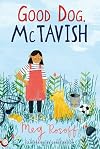
The Peachey family are a mess. Ma Peachey has resigned in order to devote herself to yoga. No more cooking, cleaning, laundry, etc. No more anything. Pa Peachey and the children — Ava, Ollie, and Betty — don’t know what to do. They also don’t know how to do either, meaning cooking, cleaning, laundry, etc. So it doesn’t take long for the Peachey household to start reflecting the state of the Peachey family. It’s a mess. There’s only one thing to be done. Get a dog. show more More specifically, a rescue dog. Enter McTavish.
McTavish agrees to take on the Peachey family largely on the basis of the almost-nine-year-old Betty, who is the only sensible one of the bunch. With her help, he quickly settles in and starts coming up with plans. Plans! Plans to get this family back on track. It’s not going to be an easy task, but if anyone can do it, it’s McTavish.
Meg Rosoff presents a charming tale of reversed expectations and canine cunning. Each of the Peachey family members has their own quirks. But it is Betty, the youngest, who gathers and sustains our affection. No wonder McTavish recognizes her as an equal. Together they bring order to the Peachey family chaos. It is such a delicious treat that you’ll wish the story could have lasted twice as long. And before the end, you’ll gain new respect for canny canines (and possibly equally canny moms).
Recommended. show less
The Peachey family are a mess. Ma Peachey has resigned in order to devote herself to yoga. No more cooking, cleaning, laundry, etc. No more anything. Pa Peachey and the children — Ava, Ollie, and Betty — don’t know what to do. They also don’t know how to do either, meaning cooking, cleaning, laundry, etc. So it doesn’t take long for the Peachey household to start reflecting the state of the Peachey family. It’s a mess. There’s only one thing to be done. Get a dog. show more More specifically, a rescue dog. Enter McTavish.
McTavish agrees to take on the Peachey family largely on the basis of the almost-nine-year-old Betty, who is the only sensible one of the bunch. With her help, he quickly settles in and starts coming up with plans. Plans! Plans to get this family back on track. It’s not going to be an easy task, but if anyone can do it, it’s McTavish.
Meg Rosoff presents a charming tale of reversed expectations and canine cunning. Each of the Peachey family members has their own quirks. But it is Betty, the youngest, who gathers and sustains our affection. No wonder McTavish recognizes her as an equal. Together they bring order to the Peachey family chaos. It is such a delicious treat that you’ll wish the story could have lasted twice as long. And before the end, you’ll gain new respect for canny canines (and possibly equally canny moms).
Recommended. show less
 This review was written for LibraryThing Early Reviewers.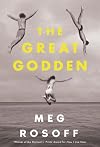
Every summer a family of six - two adults and four children - leaves London and heads for an inherited beach house. The father’s younger cousin, Hope, and her boyfriend of 12 years, Malcolm, stay at the smaller house a hundred meters down the beach. They all get along swimmingly, so to speak, but this year there are some changes.
First, Hope and Malcolm, now in their 30s, announced they will finally get married at the end of the summer. Second, and more importantly, Hope’s godmother, an show more aging and pretentious actress named Florence Godden, will be depositing her sons, Kit (19) and Hugo (17-ish), at Hope’s for the summer.
The narrator, never identified by name or gender, is presumably the oldest of the four kids, with one more year of school to go. We learn much more detail, however, about the others in the group, especially Mattie, who is 16, beautiful, and full of hormones. Mattie, the narrator says, “flirts with all forms of human life,” and while she isn’t stupid, “her brain seems mostly filled with sex and shoes.”
The Godden boys arrive, and everyone is immediately taken with Kit, who resembles “a kind of golden Greek statue of a youth.” Hugo, on the other hand, is “rather plain-looking,” taciturn, and decidedly alienated from Kit. It’s hard to take note of him in any event - all eyes are always on Kit.
Mattie, in fact, is already imagining herself as “Mrs. Kit Godden and their beautiful children: Coco, Miles, and baby Wolf.”
As the narrator observes about both Mattie and Kit:
>“What annoys me most is that it takes no effort to be born beautiful, no hard work, no mental agility, no strength of character. Just dumb luck. And yet it’s a universal currency, often mistaken for moral superiority.”
The narrator is not immune to this currency in spite of a clear-eyed assessment of it.
As the summer passes, interactions among the characters keep evolving into something different, with twists and turns making for dramatic reassessments and rather shocking repercussions. Not all of the actors in the story see what is going on however. The perspicacious narrator, for example, refers to “the sweet, guileless face of my father,” who seems to have no clue about “the Byzantine goings-on in the teen underworld.” The same might be said of the mother. But then again, because we only hear the narrator’s point of view, we don’t know how much of it can be relied upon.
By the end of the summer, however, no one can help but know at least some of what has been going on, because everything has been upended.
Evaluation: This novella has elements of a coming-of-age story, but is also a dark psychological account of innocence versus sociopathy. It would make an excellent choice for book clubs, as there is no dearth of issues and questions to ponder and discuss. show less
First, Hope and Malcolm, now in their 30s, announced they will finally get married at the end of the summer. Second, and more importantly, Hope’s godmother, an show more aging and pretentious actress named Florence Godden, will be depositing her sons, Kit (19) and Hugo (17-ish), at Hope’s for the summer.
The narrator, never identified by name or gender, is presumably the oldest of the four kids, with one more year of school to go. We learn much more detail, however, about the others in the group, especially Mattie, who is 16, beautiful, and full of hormones. Mattie, the narrator says, “flirts with all forms of human life,” and while she isn’t stupid, “her brain seems mostly filled with sex and shoes.”
The Godden boys arrive, and everyone is immediately taken with Kit, who resembles “a kind of golden Greek statue of a youth.” Hugo, on the other hand, is “rather plain-looking,” taciturn, and decidedly alienated from Kit. It’s hard to take note of him in any event - all eyes are always on Kit.
Mattie, in fact, is already imagining herself as “Mrs. Kit Godden and their beautiful children: Coco, Miles, and baby Wolf.”
As the narrator observes about both Mattie and Kit:
>“What annoys me most is that it takes no effort to be born beautiful, no hard work, no mental agility, no strength of character. Just dumb luck. And yet it’s a universal currency, often mistaken for moral superiority.”
The narrator is not immune to this currency in spite of a clear-eyed assessment of it.
As the summer passes, interactions among the characters keep evolving into something different, with twists and turns making for dramatic reassessments and rather shocking repercussions. Not all of the actors in the story see what is going on however. The perspicacious narrator, for example, refers to “the sweet, guileless face of my father,” who seems to have no clue about “the Byzantine goings-on in the teen underworld.” The same might be said of the mother. But then again, because we only hear the narrator’s point of view, we don’t know how much of it can be relied upon.
By the end of the summer, however, no one can help but know at least some of what has been going on, because everything has been upended.
Evaluation: This novella has elements of a coming-of-age story, but is also a dark psychological account of innocence versus sociopathy. It would make an excellent choice for book clubs, as there is no dearth of issues and questions to ponder and discuss. show less

The 17-year-old main character’s family of six, plus an aunt and uncle, have spent every summer in a house at the seaside for as long as they can remember. This summer is different, though, when their godmother drops off her two teenage sons. Moody Hugo mopes and hides, but Kit, the charismatic golden child, blows up their lives. The main character’s childhood ends.
It’s impossible not to compare this book to Rosoff’s most famous, [How I Live Now]. Both protagonists are standing on show more the precipice of adulthood, in fairly normal lives, when something external happens to shove them over the edge. The impetus in this book is not the ravages of war, it’s just sexual awareness, but it’s somehow more unsettling. The lack of name and even gender for the main character (though I didn’t notice the lack of gender while reading, I assumed they were female) makes the point of view feel even closer and more visceral. Definitely worth reading. show less
It’s impossible not to compare this book to Rosoff’s most famous, [How I Live Now]. Both protagonists are standing on show more the precipice of adulthood, in fairly normal lives, when something external happens to shove them over the edge. The impetus in this book is not the ravages of war, it’s just sexual awareness, but it’s somehow more unsettling. The lack of name and even gender for the main character (though I didn’t notice the lack of gender while reading, I assumed they were female) makes the point of view feel even closer and more visceral. Definitely worth reading. show less
This review was written for LibraryThing Early Reviewers.I devoured Rosoff’s brisk and compelling young adult novel in just a little more than one sitting. Narrated in crisp, snappy proseby an unnamed seventeen-year-old girl, it concerns a family’s annual six-week holiday at their English seaside summer house. Along with the narrator’s parents are her well-drawn siblings, the beautiful sixteen-year-old Mattie, fully aware of her sexual allure; the horse-crazy Tamsin, and their younger brother, Alex, a nature detective, who’s particularly show more keen on bats. Just down the beach a little is another summer house, occupied by their dad’s much younger cousin, Hope, and her witty and attractive boyfriend of twelve years, Mal. These two met in drama school, and the big announcement to start the holiday is that they will marry at the end of the summer.
However, this season by the sea will be quite different from past ones for more reasons than the upcoming nuptials. Hope announces that her godmother’s teenage sons, Kit and Hugo, will also be joining them. Within three days of the news, Florence Godden, the boys’ movie star mother, pulls up in a chauffeured black Mercedes to drop them off. She’s off to shoot a Hungarian art-house film, and she’s requested that Hope take charge of the young men. The contrast between the brothers couldn’t be more remarkable: the godlike Kit, the elder of the two, appears to emit light; the dark, sullen Hugo, on the other hand, seems to absorb it.
Kit can (and does) charm the pants off anyone—literally. His first and easiest conquest is, of course, the stunning Mattie, whose every romantic fantasy seems to be fulfilled by him. The narrator is more leery. An aspiring artist and observer, she rightly assesses him as a player and initially resists his attention, but even gut feelings and warnings from Hugo, with whom she forms a friendship, aren’t enough to arm her against Kit’s sociopathic charisma. One reads compulsively to discover just how wide his path of destruction will be. Very wide, it turns out.
I’ve known Meg Rosoff’s name for years, but this is the first of her novels I’ve read. While it is not sexually graphic, the themes of The Great Godden make it a book for mature young adults. I don’t think I’ve ever encountered a novel, certainly not a young adult one, that explores sociopathy so well.
Thank you to Candlewick for providing me with an advance review copy of this book. show less
However, this season by the sea will be quite different from past ones for more reasons than the upcoming nuptials. Hope announces that her godmother’s teenage sons, Kit and Hugo, will also be joining them. Within three days of the news, Florence Godden, the boys’ movie star mother, pulls up in a chauffeured black Mercedes to drop them off. She’s off to shoot a Hungarian art-house film, and she’s requested that Hope take charge of the young men. The contrast between the brothers couldn’t be more remarkable: the godlike Kit, the elder of the two, appears to emit light; the dark, sullen Hugo, on the other hand, seems to absorb it.
Kit can (and does) charm the pants off anyone—literally. His first and easiest conquest is, of course, the stunning Mattie, whose every romantic fantasy seems to be fulfilled by him. The narrator is more leery. An aspiring artist and observer, she rightly assesses him as a player and initially resists his attention, but even gut feelings and warnings from Hugo, with whom she forms a friendship, aren’t enough to arm her against Kit’s sociopathic charisma. One reads compulsively to discover just how wide his path of destruction will be. Very wide, it turns out.
I’ve known Meg Rosoff’s name for years, but this is the first of her novels I’ve read. While it is not sexually graphic, the themes of The Great Godden make it a book for mature young adults. I don’t think I’ve ever encountered a novel, certainly not a young adult one, that explores sociopathy so well.
Thank you to Candlewick for providing me with an advance review copy of this book. show less
This review was written for LibraryThing Early Reviewers.Lists
Awards


You May Also Like


Associated Authors
Statistics
- Works
- 24
- Also by
- 6
- Members
- 8,195
- Popularity
- #2,951
- Rating
- 4.0
- Reviews
- 542
- ISBNs
- 354
- Languages
- 16
- Favorited
- 10
