
Gabrielle Zevin
Author of Tomorrow, and Tomorrow, and Tomorrow
About the Author
Gabrielle Zevin was born in New York City on October 24, 1977. She received a degree in English and American literature from Harvard University in 2000. She has written both adult and young adult novels. Her debut, Margarettown, was a selection of the Barnes and Noble Discover Great New Writers show more program. Her other works include The Hole We're In, Memoirs of a Teenage Amnesiac, and The Storied Life of A. J. Fikry. Her young adult novel Elsewhere was an American Library Association Notable Children's Book. She has also written for the New York Times Book Review and NPR's All Things Considered. She is the screenwriter of Conversations with Other Women starring Helena Bonham Carter and Aaron Eckhart, for which she received an Independent Spirit Award Nomination. In 2009, she and director Hans Canosa adapted her novel Memoirs of a Teenage Amnesiac into the Japanese film, Dareka ga Watashi ni Kiss wo Shita. (Bowker Author Biography) show less
Image credit: Aaron Eckhart
Series
Works by Gabrielle Zevin
Gabrielle Zevin eBook Sampler 4 copies
En algun altre lloc 1 copy
Associated Works
Perigo Imediato; À Beira do Lago; A Advogada do Cão; Era Uma Vez Um Livreiro — Contributor — 1 copy
Tagged
Common Knowledge
- Birthdate
- 1977-10-24
- Gender
- female
- Education
- Harvard University
- Occupations
- screenwriter
novelist
young adult writer - Awards and honors
- Independent Spirit Award (Nomination, Best Original Screenplay, 2007)
Austin Film Festival (Audience Award, 2002) - Nationality
- USA
- Birthplace
- New York, New York, USA
- Places of residence
- Los Angeles, California, USA
- Map Location
- California, USA
Members
Reviews

Suppose you wanted to write a novel based in part on a four-line poem about love by Emily Dickinson, but you wanted to make it relevant to young readers who tend to eschew poetry. You might make the superficial focus about computer gaming, and the love between friends, among friends, between lovers, and among family that characterizes a group of people involved in developing computer games. You might make it about life and death, and the ways in which online gaming gives you an infinite show more number of lives and the ability to stop time, unlike the much crueler reality offline. You might make it about the ability to leave your own body and live through an avatar without the body’s shortcomings, and without its problems that can often seem unsolvable at worse, depressing at best. You might make it about the games and gamers themselves, because “no matter how bad the world gets, there will always be players.” Gabrielle Zevin did all of this, and she did it brilliantly.
The Dickinson poem that precedes the books is this:
“That Love is all there is,
Is all we know of Love;
It is enough, the freight should be
Proportioned to the groove.”
Zevin then proceeds to delve into the many different ways freight can be proportioned to the groove, especially through the ongoing and ever-morphing relationship of two main characters, Sadie Green and Sam Masur.
Sadie and Sam met when they were kids in Los Angeles. Sadie, 11, was at the hospital visiting her older sister Alice, who had leukemia. Sam, 12, was in the same hospital recovering from surgery on his foot following a gruesome automobile accident. When Sadie was directed to the game room to pass the time, she encountered Sam, playing Super Mario Bros. Their first conversation was a wonder, and in some ways predictive of their lives to come:
Sam: “You want to play the rest of this life?”
Sadie: “No. You’re doing really well. I can wait until you’re dead.”
As adults, they formed a wildly successful game-producing partnership, all stemming from that day when they first tested each other’s mettle and became friends.
There are so many clever sub-themes in this book deserving of mention. One is the difficulty of programming, and how it both reflects real life as well as the dreams and wishes of programmers, and how the programmer purposefully constructs a game imagining the person or persons who might play it. That theme sets into relief a more important mirror-image theme, i.e., the programming of the human brain, so much more difficult to adjust than in a game. In one notable passage when Sam was 21 and trying to get through a crowd:
“He found himself uttering a series of ‘excuse mes’ that he did not mean. A truly magnificent thing about the way the brain was coded, Sam thought, was that it could say ‘Excuse me’ while meaning ‘Screw you.’ . . . people - the ordinary, the decent and basically honest - couldn’t get through the day without that one indispensable bit of programming that allowed you to say one thing and mean, feel, even do, another.”
Those little white lies, as well as the stubbornness, tenacity, pride, and prejudice that creates life-altering misunderstandings: they are all bits of human programming explored in this story.
Art and the love of art weaves around the plot and adds visual and auditory elements to it: A recurring motif is the famous picture, “The Great Wave off the Coast of Kanagawa” by Hokusai (1833), and the plays of Shakespeare, particularly “Macbeth,” from which came the famous speech spoken by Macbeth “Tomorrow, and tomorrow, and tomorrow.” In that passage, https://www.poetryfoundation.org/poems/56964/speech-tomorrow-and-tomorrow-and-to... Macbeth reflects upon the fact that “life’s but a walking shadow . . . that struts and frets his hour upon the stage, And then is heard no more.”
How Sam and Sadie wanted “ a lifetime of endless, immaculate tomorrows, free of mistakes and the evidence of having lived,” as well as the possibility of other life outcomes that games could give you. Sadie reflected:
“There was the life that you lived, which consisted of the choices you made. And then, there was the other life, the one that was the things you hadn’t chosen."
Games gave you those doorways, those portals, that allowed for the possibility of a different world, in which you could reinvent yourself as someone new, someone better. The gaming world was perfectible, even though "the actual world is the random garbage fire it always is.”
Furthermore, in a game, one could repair the world’s shortcomings. As Sadie pointed out, “what is the point of having your own world if it can’t right a few injustices of the real one?”
Furthermore, in a game, one could repair the world’s shortcomings. As Sadie pointed out, “what is the point of having your own world if it can’t right a few injustices of the real one?”
I loved the idea that “good fortune,” or at least the perception of it, was defined as a choice. Sam and Sadie formed a company in partnership with Marx Watanabe, Sam’s college roommate. Sam told Sadie that Marx was the most fortunate person he had ever met. But Sadie, as she got to know Marx, had a different take: “Marx was fortunate because he saw everything as if it were a fortuitous bounty. It was impossible to know - were persimmons his favorite fruit, or had they just now become his favorite fruit because there they were, growing in his own backyard?”
It was Marx, the Shakespeare aficionado, who pointed out with his sunny outlook, “What is a game? It’s tomorrow, and tomorrow, and tomorrow. It’s the possibility of infinite rebirth, infinite redemption. . . . No loss is permanent, because nothing is permanent, ever.”
The issue of appropriation also gets coverage in this story: must artists only reference their own cultures? Do individual artists even have a thorough understanding and ability to portray the cultures of which they are actually a part in any event?
The theme of love is of course dominant, and the conundrum of what it actually is: the same question that stymied Emily Dickinson. What was the difference between love and worry, for example, as Sadie wondered: “It was never worth worrying about someone you didn’t love. And it wasn’t love if you didn’t worry.” Does love mean having sex? Or can it be love without sex, but with a creative partnership that moves you more deeply and consistently? Is one better than the other?
Marx, who had many relationships with women in his life, had a typically positive take on what love meant. He always sought to turn the lover into a friend when the relationship was over. His philosophy was “to never stop loving them, to know that when one phase of a relationship ends it can transform into something else. Importantly, Marx believed, “…love is both a constant and a variable at the same time.”
Then there was the take of Sam’s wryly humorous and wise grandmother, who saw love as everlasting. She explained to him about her relationships with the people she loved who had died and were no longer around to be either lover or friend: “‘There are no ghosts, but up here - she gestured toward her head - it’s a haunted house.”
The book ends with an acknowledgment that the game of real life has some pretty good features, too. On a “deep, blue velvet night,” when “the moon hung heavy and supernaturally spherical in the sky,” the characters contemplated:
“I wonder who built this engine…”
“It’s good work. The God rays are nicely done, but the moon is almost too beautiful. The scale seems off.”
…”It should look a little rougher, otherwise it doesn’t seem real.”
“But maybe that’s the look they were going for?”
“Maybe so.”
Evaluation: This book gives the reader a staggering number of ideas to think about, all couched in a clever plot and adept turns of phrase spoken by appealing characters. It is definitely one of the best books I have read in a long time, and in keeping with Zevin’s ability to produce unique affecting books that stay in your heart and mind. show less
The Dickinson poem that precedes the books is this:
“That Love is all there is,
Is all we know of Love;
It is enough, the freight should be
Proportioned to the groove.”
Zevin then proceeds to delve into the many different ways freight can be proportioned to the groove, especially through the ongoing and ever-morphing relationship of two main characters, Sadie Green and Sam Masur.
Sadie and Sam met when they were kids in Los Angeles. Sadie, 11, was at the hospital visiting her older sister Alice, who had leukemia. Sam, 12, was in the same hospital recovering from surgery on his foot following a gruesome automobile accident. When Sadie was directed to the game room to pass the time, she encountered Sam, playing Super Mario Bros. Their first conversation was a wonder, and in some ways predictive of their lives to come:
Sam: “You want to play the rest of this life?”
Sadie: “No. You’re doing really well. I can wait until you’re dead.”
As adults, they formed a wildly successful game-producing partnership, all stemming from that day when they first tested each other’s mettle and became friends.
There are so many clever sub-themes in this book deserving of mention. One is the difficulty of programming, and how it both reflects real life as well as the dreams and wishes of programmers, and how the programmer purposefully constructs a game imagining the person or persons who might play it. That theme sets into relief a more important mirror-image theme, i.e., the programming of the human brain, so much more difficult to adjust than in a game. In one notable passage when Sam was 21 and trying to get through a crowd:
“He found himself uttering a series of ‘excuse mes’ that he did not mean. A truly magnificent thing about the way the brain was coded, Sam thought, was that it could say ‘Excuse me’ while meaning ‘Screw you.’ . . . people - the ordinary, the decent and basically honest - couldn’t get through the day without that one indispensable bit of programming that allowed you to say one thing and mean, feel, even do, another.”
Those little white lies, as well as the stubbornness, tenacity, pride, and prejudice that creates life-altering misunderstandings: they are all bits of human programming explored in this story.
Art and the love of art weaves around the plot and adds visual and auditory elements to it: A recurring motif is the famous picture, “The Great Wave off the Coast of Kanagawa” by Hokusai (1833), and the plays of Shakespeare, particularly “Macbeth,” from which came the famous speech spoken by Macbeth “Tomorrow, and tomorrow, and tomorrow.” In that passage, https://www.poetryfoundation.org/poems/56964/speech-tomorrow-and-tomorrow-and-to... Macbeth reflects upon the fact that “life’s but a walking shadow . . . that struts and frets his hour upon the stage, And then is heard no more.”
How Sam and Sadie wanted “ a lifetime of endless, immaculate tomorrows, free of mistakes and the evidence of having lived,” as well as the possibility of other life outcomes that games could give you. Sadie reflected:
“There was the life that you lived, which consisted of the choices you made. And then, there was the other life, the one that was the things you hadn’t chosen."
Games gave you those doorways, those portals, that allowed for the possibility of a different world, in which you could reinvent yourself as someone new, someone better. The gaming world was perfectible, even though "the actual world is the random garbage fire it always is.”
Furthermore, in a game, one could repair the world’s shortcomings. As Sadie pointed out, “what is the point of having your own world if it can’t right a few injustices of the real one?”
Furthermore, in a game, one could repair the world’s shortcomings. As Sadie pointed out, “what is the point of having your own world if it can’t right a few injustices of the real one?”
I loved the idea that “good fortune,” or at least the perception of it, was defined as a choice. Sam and Sadie formed a company in partnership with Marx Watanabe, Sam’s college roommate. Sam told Sadie that Marx was the most fortunate person he had ever met. But Sadie, as she got to know Marx, had a different take: “Marx was fortunate because he saw everything as if it were a fortuitous bounty. It was impossible to know - were persimmons his favorite fruit, or had they just now become his favorite fruit because there they were, growing in his own backyard?”
It was Marx, the Shakespeare aficionado, who pointed out with his sunny outlook, “What is a game? It’s tomorrow, and tomorrow, and tomorrow. It’s the possibility of infinite rebirth, infinite redemption. . . . No loss is permanent, because nothing is permanent, ever.”
The issue of appropriation also gets coverage in this story: must artists only reference their own cultures? Do individual artists even have a thorough understanding and ability to portray the cultures of which they are actually a part in any event?
The theme of love is of course dominant, and the conundrum of what it actually is: the same question that stymied Emily Dickinson. What was the difference between love and worry, for example, as Sadie wondered: “It was never worth worrying about someone you didn’t love. And it wasn’t love if you didn’t worry.” Does love mean having sex? Or can it be love without sex, but with a creative partnership that moves you more deeply and consistently? Is one better than the other?
Marx, who had many relationships with women in his life, had a typically positive take on what love meant. He always sought to turn the lover into a friend when the relationship was over. His philosophy was “to never stop loving them, to know that when one phase of a relationship ends it can transform into something else. Importantly, Marx believed, “…love is both a constant and a variable at the same time.”
Then there was the take of Sam’s wryly humorous and wise grandmother, who saw love as everlasting. She explained to him about her relationships with the people she loved who had died and were no longer around to be either lover or friend: “‘There are no ghosts, but up here - she gestured toward her head - it’s a haunted house.”
The book ends with an acknowledgment that the game of real life has some pretty good features, too. On a “deep, blue velvet night,” when “the moon hung heavy and supernaturally spherical in the sky,” the characters contemplated:
“I wonder who built this engine…”
“It’s good work. The God rays are nicely done, but the moon is almost too beautiful. The scale seems off.”
…”It should look a little rougher, otherwise it doesn’t seem real.”
“But maybe that’s the look they were going for?”
“Maybe so.”
Evaluation: This book gives the reader a staggering number of ideas to think about, all couched in a clever plot and adept turns of phrase spoken by appealing characters. It is definitely one of the best books I have read in a long time, and in keeping with Zevin’s ability to produce unique affecting books that stay in your heart and mind. show less
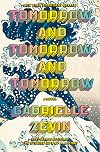
Loved this one! I was not expecting to enjoy this novel as much as I did. For one, it’s about computer games and other related topics: gaming, coding, computer science, RPGs, etc., stuff I don’t have much interest in (sorry gamers), but I still loved it. There’s also romance (which I generally don’t care for either), but it’s not the driving force of the book. I think it’s a book about relationships, and how they evolve over time. It’s funny, engaging, harrowing, and very well show more written. Read it for its brilliant storytelling and language. And if you do enjoy gaming, well, you’re in for a great treat. show less
Tomorrow, and Tomorrow, and Tomorrow is a love story, but in no way a traditional one. In this realistically heartfelt novel, author Gabrielle Zevin relates how the friendship of Sam Mazer and Sadie Green evolves over a period of about three decades into the present day. The story begins with the two characters meeting in a hospital as kids growing up in Los Angeles, through their college years in Boston—Sam at Harvard and Sadie at MIT—to, most significantly, their successful, if often show more fraught, collaboration in a video game production company back in Los Angeles. Despite facing a variety of personal tragedies and not always being on speaking terms, Sam and Sadie remain deeply connected to each other through their shared passion for playing and making video games. Throughout the years, their relationship never becomes an amorous one—they both find other romantic partners to sustain their lives—but is nevertheless tightly bound by the creative synergy they find in one another.
While the undeniable heart of the book is Sam and Sadie’s rollercoaster ride of a friendship, Zevin packs the tale with many other poignant and provocative themes as well. Chief among these is the thorough exploration—tribute, really—of the video gaming industry and player community. To her credit, the author never tries to persuade the reader that video gaming is a worthwhile activity; that is basically assumed from the outset, which allows her to concentrate on the work ethic, vision, and artistry of those responsible for bringing these new worlds to life. Beyond that, Tomorrow, and Tomorrow, and Tomorrow does not shy away from addressing themes involving racial discrimination and heritage identity, gender imbalances in industry, and the myriad forms that love can take in one’s lifetime. Through it all, I found Sam to be the more plausible and relatable character; Sophie was inexplicably strident, judgmental, and unforgiving in ways that were never explained and that were hard to understand.
Overall, this is a very well-written novel and one that I found to be both thought provoking and deeply affecting at times. If I had any complaints about the tale—and I am not sure that I really do—it would be that the whole effort seemed a little longer than it needed to be to tell this particular story (e.g., some of the game-playing passages were quite protracted given their ultimate impact). Also, two of the main characters—Marx Watanabe, Sam and Sadie’s friend and business partner, and Dov Mizrah, Sadie’s professor, mentor, and lover—were a little one-dimensional in how they were drawn, especially given their intended importance to the main plotline. Still, these are minor gripes that do not detract from what was a moving and satisfying reading experience. This is an easy book to recommend on any number of levels. show less
While the undeniable heart of the book is Sam and Sadie’s rollercoaster ride of a friendship, Zevin packs the tale with many other poignant and provocative themes as well. Chief among these is the thorough exploration—tribute, really—of the video gaming industry and player community. To her credit, the author never tries to persuade the reader that video gaming is a worthwhile activity; that is basically assumed from the outset, which allows her to concentrate on the work ethic, vision, and artistry of those responsible for bringing these new worlds to life. Beyond that, Tomorrow, and Tomorrow, and Tomorrow does not shy away from addressing themes involving racial discrimination and heritage identity, gender imbalances in industry, and the myriad forms that love can take in one’s lifetime. Through it all, I found Sam to be the more plausible and relatable character; Sophie was inexplicably strident, judgmental, and unforgiving in ways that were never explained and that were hard to understand.
Overall, this is a very well-written novel and one that I found to be both thought provoking and deeply affecting at times. If I had any complaints about the tale—and I am not sure that I really do—it would be that the whole effort seemed a little longer than it needed to be to tell this particular story (e.g., some of the game-playing passages were quite protracted given their ultimate impact). Also, two of the main characters—Marx Watanabe, Sam and Sadie’s friend and business partner, and Dov Mizrah, Sadie’s professor, mentor, and lover—were a little one-dimensional in how they were drawn, especially given their intended importance to the main plotline. Still, these are minor gripes that do not detract from what was a moving and satisfying reading experience. This is an easy book to recommend on any number of levels. show less
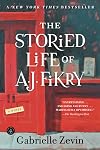
If television networks produced books, this would have HALLMARK CHANNEL emblazoned across the title page. It's sweet, competently written, undemanding, and the end delivers all the happily ever after you could want or need after a hard week at work.
What Hallmark boxes does this check? Count along with me! It's got a grieving, lonely widower desperate for connection, a cute-meet with a book agent who comes to his island bookstore plugging her company's winter line of books, an adorable orphan show more who falls instantly in love with the curmudgeonly gent, a colorful best friend/wing man (the local police chief) who provides both support and comic relief, just the right number of "fish out of water" vignettes as Fikry - with the help of the internet - awkwardly learns how to father a child, a colorful community populated by engaging eccentrics, a witty, bookish flirtation, a misunderstanding, an unexpected upheaval, a reconciliation, a revelation having to do with a theft that occurs at the outset of the tale, and a wholly satisfying if bittersweet ending. Seriously, all this is missing is a dog.
Having said, I don't want to leave the impression that this was formulaic and sloppy. Zevin's deft prose avoids cliche and there's nothing sloppy about her plotting. If you're paying attention, you'll enjoy the extent to which she's interacting with her readers throughout this, as she slyly plays with the same literary devices and tropes that Fikry discusses along the way. (In true Chekov's Gun fashion, you can be sure the copy of Poe's Tamarlane that is stolen at the beginning of the tale will turn up again by the end; and because Fikry despises books with no character development, that Fikry's character will develop over the course of this tale. Also enjoy the ample foreshadowing, symbolism, and situational irony.)
One thing I enjoyed about the book were the insights into bookselling, particularly from the perspective of an independent book store owner. Others, like myself, should enjoy the chance to wander among perilously-leaning stacks of galley proofs, deliberate over inventory selection, and endure the myriad discomforts of planning and hosting an author event. There are also lots of literary references here, but never fear: almost every book mentioned can be found on the life list of a reasonably literate book lover. Zevin's literary allusions are drawn from The Time Traveller's Woman and Moby Dick rather than Everything is Illuminated or Ulysses. Much like the background music track at a restaurant deliberately mixed to incorporate your favorite songs, this creates a comfortable and welcoming ambiance that invites the reader to relax, slow down, and enjoy the story as it unfolds.
In summary, while this may not be an intellectually demanding book, it's an enjoyable story with plenty of heart and a comforting dose of hope for all the lonely people out there. show less
What Hallmark boxes does this check? Count along with me! It's got a grieving, lonely widower desperate for connection, a cute-meet with a book agent who comes to his island bookstore plugging her company's winter line of books, an adorable orphan show more who falls instantly in love with the curmudgeonly gent, a colorful best friend/wing man (the local police chief) who provides both support and comic relief, just the right number of "fish out of water" vignettes as Fikry - with the help of the internet - awkwardly learns how to father a child, a colorful community populated by engaging eccentrics, a witty, bookish flirtation, a misunderstanding, an unexpected upheaval, a reconciliation, a revelation having to do with a theft that occurs at the outset of the tale, and a wholly satisfying if bittersweet ending. Seriously, all this is missing is a dog.
Having said, I don't want to leave the impression that this was formulaic and sloppy. Zevin's deft prose avoids cliche and there's nothing sloppy about her plotting. If you're paying attention, you'll enjoy the extent to which she's interacting with her readers throughout this, as she slyly plays with the same literary devices and tropes that Fikry discusses along the way. (In true Chekov's Gun fashion, you can be sure the copy of Poe's Tamarlane that is stolen at the beginning of the tale will turn up again by the end; and because Fikry despises books with no character development, that Fikry's character will develop over the course of this tale. Also enjoy the ample foreshadowing, symbolism, and situational irony.)
One thing I enjoyed about the book were the insights into bookselling, particularly from the perspective of an independent book store owner. Others, like myself, should enjoy the chance to wander among perilously-leaning stacks of galley proofs, deliberate over inventory selection, and endure the myriad discomforts of planning and hosting an author event. There are also lots of literary references here, but never fear: almost every book mentioned can be found on the life list of a reasonably literate book lover. Zevin's literary allusions are drawn from The Time Traveller's Woman and Moby Dick rather than Everything is Illuminated or Ulysses. Much like the background music track at a restaurant deliberately mixed to incorporate your favorite songs, this creates a comfortable and welcoming ambiance that invites the reader to relax, slow down, and enjoy the story as it unfolds.
In summary, while this may not be an intellectually demanding book, it's an enjoyable story with plenty of heart and a comforting dose of hope for all the lonely people out there. show less
Lists
To Read (1)
NTS Book Channel (1)
READ IN 2021 (1)
Carole's List (1)
Found Family (1)
FAB 2021 (1)
READ in 2023 (1)
deBib 2023 (1)
Dead narrators (1)
Netgalley Reads (1)
Female Author (1)
Books to Read (1)
READ IN 2022 (1)
Staff Picks (1)
Best of 2022 (1)
Best Young Adult (1)
Indie Next Picks (2)
To Read (1)
READ in 2024 (1)
Overdue Podcast (1)
Favourite Books (1)
Five star books (1)
Awards


You May Also Like


Associated Authors
Statistics
- Works
- 15
- Also by
- 3
- Members
- 25,970
- Popularity
- #801
- Rating
- 3.9
- Reviews
- 1,514
- ISBNs
- 289
- Languages
- 20
- Favorited
- 27

