
William Golding (1911–1993)
Author of Lord of the Flies
About the Author
William Golding was born in Cornwall, England on September 19, 1911. Although educated to be a scientist at the request of his father, he developed an interest in literature. At Oxford University, he studied natural science for two years and then transferred to a program for English literature and show more philosophy. He eventually became a schoolmaster at Bishop Wordsworth's School in Salisbury. During World War II, he joined the Royal Navy and was involved in the sinking of the German battleship Bismarck. After the war, he returned to Bishop Wordsworth's School and taught there until 1962. His first novel, Lord of the Flies, was published in 1954 and was made into a film in 1963. His other novels include The Inheritors, Free Fall, The Spire, The Pyramid, The Paper Men, Close Quarters, and Fire down Below. He won the Booker Prize for Rites of Passage in 1980 and the Nobel Prize for Literature in 1983. He also wrote plays, essays, and short stories. He was knighted by Queen Elizabeth II in 1988. He died on June 19, 1993. (Bowker Author Biography) show less
Series
Works by William Golding
Lord of the flies c.25 17 copies
Penguin Study Notes: Lord of the Flies 15 copies
Lord of the Flies / The Pyramid 3 copies
Poems 2 copies
Miss Pulkinhorn 1 copy
Повелитель мух Шпиль; Пирамида : Романы / Уильям Голдинг; [Пер. с англ. Е. Суриц, В. Хинкиса] (1999) 1 copy
Novelas 1 copy
lord of the flies volume 2 1 copy
lord of the flies volume 1 1 copy
WIDEVIEW/PERIGEE BOOKS 1 copy
1983 1 copy
The Art of the Critic: Literary Theory and Criticism from the Greeks to the Present (Vol. 2 Early Renaissance) (1986) 1 copy
Lord of the flies : notes 1 copy
Clonk! Clonk! 1 copy
Associated Works
The Moral Life: An Introductory Reader in Ethics and Literature (1999) — Contributor — 202 copies, 2 reviews
The Graphic Canon, Vol. 3: From Heart of Darkness to Hemingway to Infinite Jest (2013) — Contributor — 162 copies, 1 review
Deep Blue: Stories of Shipwreck, Sunken Treasure, and Survival (Adrenaline) (2001) — Contributor — 32 copies
The Bedside 'Guardian' 30: A Selection from The Guardian, 1980-1981 (1981) — Introduction — 9 copies
Die englische Literatur 10 in Text und Darstellung. 20. Jahrhundert 2. (2001) — Contributor — 6 copies
The Art of the Critic: Literary Theory and Criticism from the Greeks to the Present (10-Volume Set) (1985) 3 copies
Antaeus No. 35, Autumn 1979 — Contributor — 1 copy
Tagged
Common Knowledge
- Canonical name
- Golding, William
- Legal name
- Golding, Sir William Gerald
- Birthdate
- 1911-09-19
- Date of death
- 1993-06-19
- Gender
- male
- Education
- University of Oxford (BA|1934 - Brasenose College)
Marlborough Grammar School - Occupations
- novelist
teacher
sailor - Organizations
- Royal Navy (WWII)
Bishop Wordsworth's School - Awards and honors
- Nobel Prize (1983)
Royal Society of Literature (Fellow, 1955)
Order of the British Empire (Commander, 1965)
Knight Bachelor (1988)
Royal Society of Literature (Companion of Literature, 1983) - Relationships
- Golding, Alec (father)
Golding, Joseph (brother)
Curnoe, Mildred (mother)
Brookfield, Ann (wife)
Golding, Judith (daughter)
Golding, David (son) (show all 7)
Lovelock, James (friend and neighbour) - Cause of death
- heart failure
- Nationality
- UK
- Birthplace
- Newquay, Cornwall, England, UK
- Places of residence
- Newquay, Cornwall, England, UK (birth)
Marlborough, Wiltshire, England, UK
Bowerchalke, Wiltshire, England, UK
Salisbury, Wiltshire, England, UK
Perranarworthal, England, UK (death) - Place of death
- Perranarworthal, England, UK
- Burial location
- Bowerchalke Village Churchyard, Bowerchalke, England, UK
- Map Location
- England, UK
Members
Discussions
Lord of the Flies - high market demand? in Folio Society Devotees (June 2025)
BRITISH AUTHOR CHALLENGE - OCTOBER 2016 - ATKINSON & GOLDING in 75 Books Challenge for 2016 (October 2016)
British children abandoned on a deserted island - Fiction - forty or fifty years ago in Name that Book (February 2014)
Happy 100th to The Lord of the Fly in the Ointment, Sir William Golding in Nobel Laureates in Literature (March 2013)
Reviews
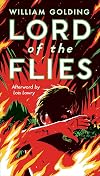
"Kill the beast! Cut his throat! Spill his blood!"
One of my all-time favorites! I read this again, as my daughter will be in a young adult play version of this, starting next week. It's so different to read it now, as a parent of a child who is about the same age as the older boys in here! It seems even more likely to me now, knowing who that age group is, and how some of them might react to being in a situation such as this! I can see Ralph, Piggy, Jack, Samneric, and the littluns in many show more of her friends and classmates today.
And I can see our political crisis in here too! Jack appeals to the same baser instincts that Trump and his cronies do. Fear over logic. Might over right. And, trying to excuse oneself for the actions one has participated in. I think a huge strength of this story lies in the last three pages. The shift of responsibility happens so fast in those paragraphs. From chiefs in a lethal power struggle to boys playing a game, just like that.
"... and Ralph wept for the end of innocence, the darkness of man's heart..."
I do too. show less
One of my all-time favorites! I read this again, as my daughter will be in a young adult play version of this, starting next week. It's so different to read it now, as a parent of a child who is about the same age as the older boys in here! It seems even more likely to me now, knowing who that age group is, and how some of them might react to being in a situation such as this! I can see Ralph, Piggy, Jack, Samneric, and the littluns in many show more of her friends and classmates today.
And I can see our political crisis in here too! Jack appeals to the same baser instincts that Trump and his cronies do. Fear over logic. Might over right. And, trying to excuse oneself for the actions one has participated in. I think a huge strength of this story lies in the last three pages. The shift of responsibility happens so fast in those paragraphs. From chiefs in a lethal power struggle to boys playing a game, just like that.
"... and Ralph wept for the end of innocence, the darkness of man's heart..."
I do too. show less
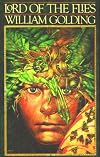
talk about reading a book at THE EXACT RIGHT MOMENT FOR IT TO FUCK UP YOUR LIFE FOREVER. but kinda in a good way. i read this in high school, because that's what you do ... you read this in high school. I also read it after high school. and recently i decided to make my english students read this book, which meant i got to read it again, and i got to prepare a bunch of questions about allegory, symbolism, macho bullshit, and BFF's, but i was struck more by how completely burned in my memory show more so many of the scenes are. i got to live the book and relive the book and teach the book.
i know it's sort of trite to give five stars to a what is considered a stone-cold classic, but i assure you that every time i read this i tremble with the feelings from previous readings, like residual pain, and then I get to experience a slew of new feelings on top of that. i think that's a sign of just a really good book. show less
i know it's sort of trite to give five stars to a what is considered a stone-cold classic, but i assure you that every time i read this i tremble with the feelings from previous readings, like residual pain, and then I get to experience a slew of new feelings on top of that. i think that's a sign of just a really good book. show less

A collection of miscellaneous short non-fiction from the early sixties, roughly divided into “people and places”, “books”, articles about his experiences on a lecture tour of the US, and a couple of pieces about childhood memories.
The title piece describes a visit to the site of the battle of Thermopylae (oddly never using the word “Thermopylae”), then there’s a curious little reflection on petty irritations — it will come as no surprise to anyone who’s ever seen a photo show more of Golding in later life that he was not fond of having his hair cut — a biographical sketch of Copernicus, and an interesting meditation on the English Channel, as seen from an airliner, where he brings in his own experience as a WWII naval officer and a yachtsman and his memories of living in the South West of England. All these make him seem like a very pleasant, reasonable sort of person, someone it would have been fun to chat with if you had been sitting next to him on a train. “Digging for pictures” is an account of his experiences assisting on an archaeological dig, in which we get a sense of where the interest in (pre-)history that led to The inheritors came from.
Probably the main reason for reading this book, though, comes in the “books“ section with Golding’s essay “Fables”, where he talks about the thought process that shaped Lord of the flies. And about the mixed blessings of being the author of a book that is read by millions of schoolchildren every year (“Dear Mr Golding, thank you very much for writing this book. However there are some things in it which we are not able to understand. We shall be glad therefore if you will kindly answer the following forty-one questions. A prompt reply would oblige as exams start next week…”). Other essays in this section seem to be commissioned reviews — the editor who got him to review new editions of Swiss family Robinson and Treasure Island was probably disappointed when Golding took genuine pleasure in rediscovering them and did not bring in a dark, post-LOTF viewpoint. And it’s slightly disappointing to see that his rediscovery of Jules Verne is more about the fundamental childishness of Verne’s adventure stories than about their proto-cyberpunk possibilities, anachronistic though that would have been.
The final two essays, “Billy the kid” and “The ladder and the tree”, are delightful dips back into childhood. Altogether, a charming and quite fascinating collection, although probably far from essential. show less
The title piece describes a visit to the site of the battle of Thermopylae (oddly never using the word “Thermopylae”), then there’s a curious little reflection on petty irritations — it will come as no surprise to anyone who’s ever seen a photo show more of Golding in later life that he was not fond of having his hair cut — a biographical sketch of Copernicus, and an interesting meditation on the English Channel, as seen from an airliner, where he brings in his own experience as a WWII naval officer and a yachtsman and his memories of living in the South West of England. All these make him seem like a very pleasant, reasonable sort of person, someone it would have been fun to chat with if you had been sitting next to him on a train. “Digging for pictures” is an account of his experiences assisting on an archaeological dig, in which we get a sense of where the interest in (pre-)history that led to The inheritors came from.
Probably the main reason for reading this book, though, comes in the “books“ section with Golding’s essay “Fables”, where he talks about the thought process that shaped Lord of the flies. And about the mixed blessings of being the author of a book that is read by millions of schoolchildren every year (“Dear Mr Golding, thank you very much for writing this book. However there are some things in it which we are not able to understand. We shall be glad therefore if you will kindly answer the following forty-one questions. A prompt reply would oblige as exams start next week…”). Other essays in this section seem to be commissioned reviews — the editor who got him to review new editions of Swiss family Robinson and Treasure Island was probably disappointed when Golding took genuine pleasure in rediscovering them and did not bring in a dark, post-LOTF viewpoint. And it’s slightly disappointing to see that his rediscovery of Jules Verne is more about the fundamental childishness of Verne’s adventure stories than about their proto-cyberpunk possibilities, anachronistic though that would have been.
The final two essays, “Billy the kid” and “The ladder and the tree”, are delightful dips back into childhood. Altogether, a charming and quite fascinating collection, although probably far from essential. show less

Above a medieval cathedral, a spire is rising. The spire is the brainchild of the cathedral's Dean Jocelin, who saw it in a vision as representing the pinnacle of prayer. But he wants it built higher than anyone has ever heard of building, and the master builder is worried that the cathedral's foundations won't hold it. Other members of the cathedral chapter oppose the cost, the disruption, and the builders' bad behaviour within the church and in the town. But Jocelin ignores them all and show more orders the master builder to continue. As the spire rises, Jocelin's obsession grows - and when a couple of events make him question his judgement and faith, obsession begins to tip into madness.
Although told in the third person, there is something of the unreliable narrator about this book, as we follow Jocelin throughout - piecing the true story together from the occasional thought that he immediately tries to shut out, or the things that others say to him. The book starts in the joy of realising his vision and becomes increasingly intense and claustrophobic. We see the cathedral building almost as a living creature, as it grows the spire and as the pillars groan under the weight - and we also see glimpses of life outside the cloister, in the town.
There are hints that the building of the cathedral is bringing a sort of modernity to the town, which made me wonder if as well as being about pride and hubris, it was also about other kinds of change - the book is so expressionistic that you can see all sorts of metaphors in it. There are moments of real beauty and real horror, all seen through the darkened glass of Jocelin's mind. In particular, as his madness grows he increasingly finds peace by going to the top of the tower, and the descriptions of him looking down over the countryside around him, never before seen from this angle, are wonderful.
His cheek was hard against the pinnacle and he knew he had not moved. But a sixth counter had appeared, had slid into view with another square of board under it. He knew he had not moved; but he knew that the tower had moved, gently, soundlessly up here, though down there the pillars might have cried - eeee - at the movement. Time after time, he watched the white counter slide into view, then disappear again; and he knew that the tower was swaying under him like a tall tree. Slowly he turned his eyes away and looked at the charcoal and drying puddles. I mustn't scream, or run, he thought. That would be unworthy of the vision. show less
Although told in the third person, there is something of the unreliable narrator about this book, as we follow Jocelin throughout - piecing the true story together from the occasional thought that he immediately tries to shut out, or the things that others say to him. The book starts in the joy of realising his vision and becomes increasingly intense and claustrophobic. We see the cathedral building almost as a living creature, as it grows the spire and as the pillars groan under the weight - and we also see glimpses of life outside the cloister, in the town.
There are hints that the building of the cathedral is bringing a sort of modernity to the town, which made me wonder if as well as being about pride and hubris, it was also about other kinds of change - the book is so expressionistic that you can see all sorts of metaphors in it. There are moments of real beauty and real horror, all seen through the darkened glass of Jocelin's mind. In particular, as his madness grows he increasingly finds peace by going to the top of the tower, and the descriptions of him looking down over the countryside around him, never before seen from this angle, are wonderful.
His cheek was hard against the pinnacle and he knew he had not moved. But a sixth counter had appeared, had slid into view with another square of board under it. He knew he had not moved; but he knew that the tower had moved, gently, soundlessly up here, though down there the pillars might have cried - eeee - at the movement. Time after time, he watched the white counter slide into view, then disappear again; and he knew that the tower was swaying under him like a tall tree. Slowly he turned his eyes away and looked at the charcoal and drying puddles. I mustn't scream, or run, he thought. That would be unworthy of the vision. show less
Lists
Titles to Avoid (1)
Banned Books (1)
Unread books (1)
DELETE (1)
1980 great books (1)
BBC Big Read (1)
Read (1)
Books About Boys (1)
Enfants sans (1)
bound (1)
A Novel Cure (1)
1960s (1)
1970s (1)
Best Sea Stories (1)
Fiction For Men (1)
Sonlight Books (1)
100 knjiga (1)
Booker Prize (1)
Favourite Books (1)
Books I've read (1)
Page Turners (1)
. (1)
Best Satire (1)
AP Lit (1)
Nifty Fifties (2)
1950s (2)
Five star books (2)
scav (1)
Gen X Library (1)
Modernism (1)
Overdue Podcast (1)
BBC Top Books (1)
BBC Big Read (1)
Folio Society (1)
100 (1)
First Novels (1)
BitLife (1)
. (1)
el (1)
Best Dystopias (1)
To Read - Horror (1)
top 100 (1)
Awards


You May Also Like


Associated Authors
Statistics
- Works
- 76
- Also by
- 21
- Members
- 68,707
- Popularity
- #192
- Rating
- 3.7
- Reviews
- 1,038
- ISBNs
- 848
- Languages
- 32
- Favorited
- 62
