
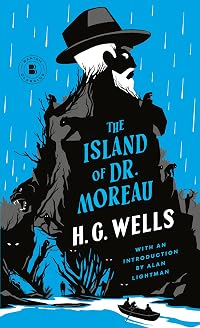
The Island of Doctor Moreau
by H. G. Wells
On This Page
Description
Englishman Edward Prendick finds himself shipwrecked on the open ocean. When a passing ship takes him aboard and revives him, things are starting to look less gloomy for the young scientist. Yet little does he know things about to get much worse. He is taken to an abandoned island occupied only by Dr. Moreau, a disgraced English scientist for his unethical treatment of live creatures. Prendick finds that the Doctor has been up to old habits, using the island's animals to create animal-human show more hybrids. Prendick must learn to survive among these creatures, while uncovering even more deadly mysteries about Doctor and the strange inhabitants of the island in this classic sci-fi tale. show lessTags
Recommendations



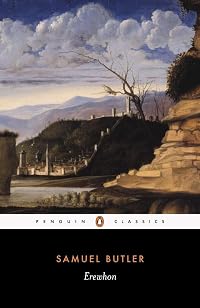
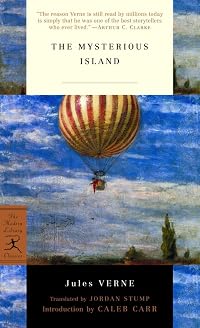
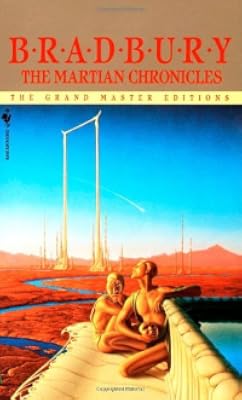
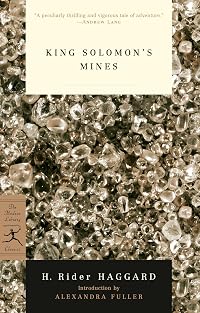

















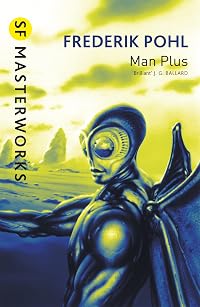
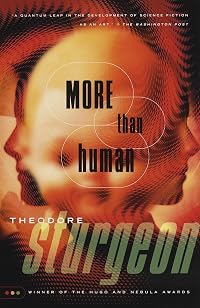
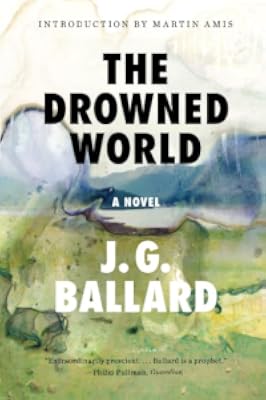
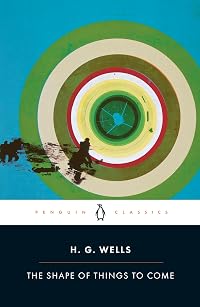



Member Recommendations
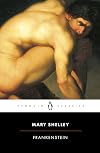
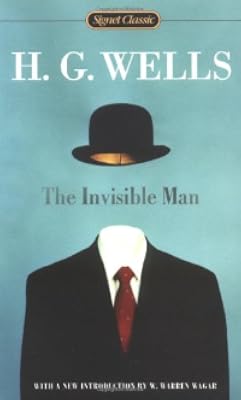
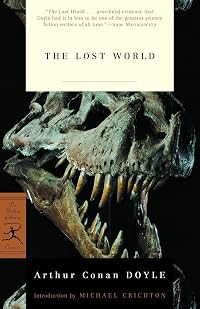
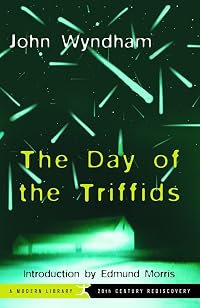
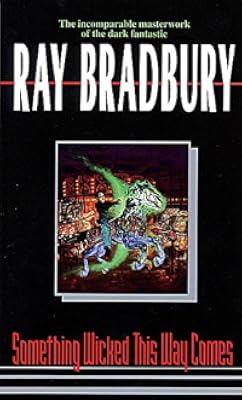
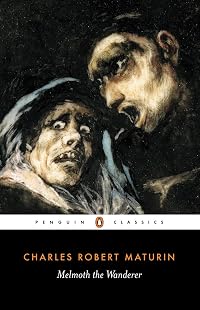
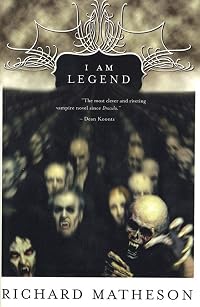
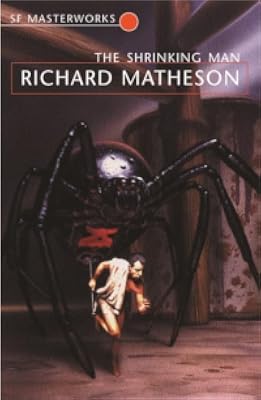
artturnerjr Both books share a similar blend of science fiction and horror.
131
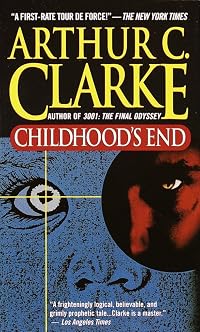
Stbalbach Mad doctor's breeding program on a remote island. What could go wrong?
30
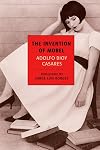
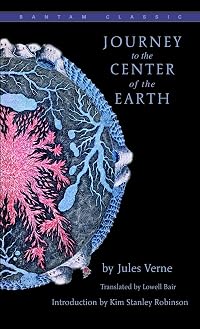
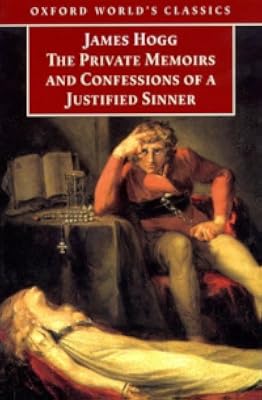
chrisharpe Bioy Casares uses "The Island of Doctor Moreau" as a model for his own "The Invention of Morel", also set on a island, but a much stranger one...
20



Member Reviews
Over the course of a decade, beginning with The Time Machine in 1895, H. G. Wells wrote some of his most popular fiction in the form of scientific romance novels, what I refer to as speculative fiction. These books have captured the imagination of readers ever since and are arguably as popular today as they were more than one hundred years ago. Among these, perhaps the strangest and best is The Island of Dr. Moreau. Undoubtedly influenced by Robinson Crusoe but also by Robert Louis Stevenson's Treasure Island, which was published only thirteen years earlier, this book goes far beyond those deserted island tales and looks forward to the twenty-first century and beyond. In its day, it was considered blasphemous, but in the age of cloning, show more its depiction of vivisection takes on a new meaning while the blasphemy recedes into the background.
The story is an insightful allegory of civilization as only the tip of the evolutionary tree and humans as the only highly evolved animals. By using his cold-blooded scalpel, Moreau is, in a way, quickening the pace of evolution and giving his creatures two features that are exclusive to humans: primitive speech and a terror and wonder combination that is essential to religious belief. Their lowest impulses take over after the death of their god, Moreau, as exemplified by Montgomery's reckless actions, which spearhead the subsequent frenzy of self-indulgence. Observing the beast's plunge into self-destruction, the narrator Prendick is left alone when Moreau and Montgomery are slain.
After the terror passes, Prendick acknowledges that he might have acquired part of the "natural wildness" of the animals he had coexisted with. He senses the "animal [that] was surging up through them" and travels among humans in terror for a long time afterward, even though he knows this is unreasonable because he lives among "perfectly reasonable creatures" who are not bound by their instincts. The Island of Dr. Moreau is another warning about human reasoning put to the wrong use, and it offers more evidence of Wells’s inner debate on the issue. Above all, this is a good story with suspense that holds even after the first breathless reading that it usually inspires. show less
The story is an insightful allegory of civilization as only the tip of the evolutionary tree and humans as the only highly evolved animals. By using his cold-blooded scalpel, Moreau is, in a way, quickening the pace of evolution and giving his creatures two features that are exclusive to humans: primitive speech and a terror and wonder combination that is essential to religious belief. Their lowest impulses take over after the death of their god, Moreau, as exemplified by Montgomery's reckless actions, which spearhead the subsequent frenzy of self-indulgence. Observing the beast's plunge into self-destruction, the narrator Prendick is left alone when Moreau and Montgomery are slain.
After the terror passes, Prendick acknowledges that he might have acquired part of the "natural wildness" of the animals he had coexisted with. He senses the "animal [that] was surging up through them" and travels among humans in terror for a long time afterward, even though he knows this is unreasonable because he lives among "perfectly reasonable creatures" who are not bound by their instincts. The Island of Dr. Moreau is another warning about human reasoning put to the wrong use, and it offers more evidence of Wells’s inner debate on the issue. Above all, this is a good story with suspense that holds even after the first breathless reading that it usually inspires. show less
Wells was a genius who was way ahead of his time in being able to grasp some of the concepts which humanity will continue to struggle with for centuries to come. Island deals with vivisection as Edward Prendick is marooned guest on the isolated island of the crazed Dr Moreau, a scientist whose life work is dedicated to turning animals into humans. Trouble is, they don’t stay that way…
The question that this deals with is what are the moral limitations in human/animal experimentation. In fact, the question might even, in our postmodern times, be reduced to whether such experimentation can be said to be a moral issue at all.
Quite why Dr Moreau needs to create humans out of animals I wasn’t clear about. It’s not like the human race show more is endangered or anything. And while he is concerned with them being physically human (which is equated with walking upright and speech), there is also a moral aspect as they are required to recite laws and abide by them. The great irony here is that the century that unfolded shortly after this book was written demonstrated that perhaps turning humans into animals might in fact be a better solution to our problems than creating more deranged beasts like us.
In its inevitable way as the novel progresses, paranoia reigns with an ever stronger grip and everything descends into chaos and stops just short of a Death-Star-like explosion of the island at the end. As various members of the cast are killed/die off and various members of the humanimal tribe lose their humanity, Wells is asking us to look at what being human/animal is, where the distinctions lie.
For its time, the novel does a great job of this. However, it’s all just a little too simplistic in comparison to novels which ask these same questions nowadays. Not entirely similar but asking questions about what it means to be human, for example, is Ishiguro’s Never Let Me Go. The hundred years which separate the two novels shows how far novelists have come, not necessarily in which questions they ask, but certainly in their skill at asking them. show less
The question that this deals with is what are the moral limitations in human/animal experimentation. In fact, the question might even, in our postmodern times, be reduced to whether such experimentation can be said to be a moral issue at all.
Quite why Dr Moreau needs to create humans out of animals I wasn’t clear about. It’s not like the human race show more is endangered or anything. And while he is concerned with them being physically human (which is equated with walking upright and speech), there is also a moral aspect as they are required to recite laws and abide by them. The great irony here is that the century that unfolded shortly after this book was written demonstrated that perhaps turning humans into animals might in fact be a better solution to our problems than creating more deranged beasts like us.
In its inevitable way as the novel progresses, paranoia reigns with an ever stronger grip and everything descends into chaos and stops just short of a Death-Star-like explosion of the island at the end. As various members of the cast are killed/die off and various members of the humanimal tribe lose their humanity, Wells is asking us to look at what being human/animal is, where the distinctions lie.
For its time, the novel does a great job of this. However, it’s all just a little too simplistic in comparison to novels which ask these same questions nowadays. Not entirely similar but asking questions about what it means to be human, for example, is Ishiguro’s Never Let Me Go. The hundred years which separate the two novels shows how far novelists have come, not necessarily in which questions they ask, but certainly in their skill at asking them. show less
As a novel about a Victorian scientist, of course I had to read this. Moreau is second only to Frankenstein in the mad scientist rankings of the nineteenth century, and second in the rankings of fictional scientists generally. (Because who remembers the sane ones?) Moreau is a "wantonly" cruel vivisectionist, exiled from the scientific community, so there's a different sort of flavor to him to Frankenstein: Frankenstein pursues knowledge into areas man was not meant to know, but his goals are amoral at worst. Moreau, on the other hand, is immoral. Suffering is not an incidental byproduct of his researches, but their goal. (This was a common critique of vivisectors in the Victorian period; I've seen it in Wilkie Collins's Heart and show more Science, Sarah Grand's The Beth Book, and Florence Fenwick Miller's Lynton Abbott's Children.)
Moreau's rationalizations of his own research are probably the most interesting part of this horrific book (early Wells was so good at evoking sensation), as he argues that his lack of sympathy for those in pain makes him superior: "So long as visible or audible pain turns you sick, so long as your own pains drive you, so long as pain underlies your propositions about sin, so long, I tell you, you are an animal, thinking a little less obscurely what an animal feels" (73). The human being, Moreau argues, is distinguished by his ability to choose not to feel, because when you are more intelligent, you can see after your own welfare without the need of the pain stimulus. Moreau argues that he is after knowledge only, that his only passions are intellectual: "You cannot imagine the strange colourless delight of these intellectual desires. The thing before you is no longer an animal, a fellow-creature, but a problem to be solved" (75). I'm interested in the vision of the scientist, but The Island is more about the feelings of the scientist, so there's not as much here for me as I might have imagined-- though the two do cross over occasionally, as in the preceding quote, where Moreau's lack of "sympathetic pain" means he sees animals differently than other humans.
In traditional Wells fashion, The Island also uses its set-up to do some doubling: like how in Frankenstein the creature's plight is also the plight of all humans, so too do some of the narrator's comments about the abandoned animal experiments resonate with the human condition: "they stumbled in the shackles of humanity, lived in a fear that never died, fretted by a law they could not understand; their mock-human existence began in an agony, was one long internal struggle, one long dread of Moreau -- and for what?" (95). Substitute "God" or any other source of law/morality for "Moreau," and I'm not so sure we're much better off. And I know Wells thought we weren't. show less
Moreau's rationalizations of his own research are probably the most interesting part of this horrific book (early Wells was so good at evoking sensation), as he argues that his lack of sympathy for those in pain makes him superior: "So long as visible or audible pain turns you sick, so long as your own pains drive you, so long as pain underlies your propositions about sin, so long, I tell you, you are an animal, thinking a little less obscurely what an animal feels" (73). The human being, Moreau argues, is distinguished by his ability to choose not to feel, because when you are more intelligent, you can see after your own welfare without the need of the pain stimulus. Moreau argues that he is after knowledge only, that his only passions are intellectual: "You cannot imagine the strange colourless delight of these intellectual desires. The thing before you is no longer an animal, a fellow-creature, but a problem to be solved" (75). I'm interested in the vision of the scientist, but The Island is more about the feelings of the scientist, so there's not as much here for me as I might have imagined-- though the two do cross over occasionally, as in the preceding quote, where Moreau's lack of "sympathetic pain" means he sees animals differently than other humans.
In traditional Wells fashion, The Island also uses its set-up to do some doubling: like how in Frankenstein the creature's plight is also the plight of all humans, so too do some of the narrator's comments about the abandoned animal experiments resonate with the human condition: "they stumbled in the shackles of humanity, lived in a fear that never died, fretted by a law they could not understand; their mock-human existence began in an agony, was one long internal struggle, one long dread of Moreau -- and for what?" (95). Substitute "God" or any other source of law/morality for "Moreau," and I'm not so sure we're much better off. And I know Wells thought we weren't. show less
It has lately come to my attention that I am a huge H. G. Wells fan. Not that I have a problem with that, I just somehow managed to not notice until recently. But I do really love his books, and this one is no exception. I found it to be the perfect balance between action and introspection. The subject matter is horrifying (and sometimes gory), but very realistic and similar to what is currently being done with modern medicine and surgery. As usual, Wells shows himself to be almost creepily prophetic. The science in this book would be a little off if it had been written 50 years ago, but it was written in 1896!!! Whereas so many science fiction authors have pictured the future with unisex silver bodysuits and hovercars and show more anthropomorphic robots, H. G. Wells is the only one who ever seems to get close to where the future is actually going, and all from 115 years ago. show less
In a period of just a few years, a young writer named H. G. Wells produced four seismic shocks to speculative fiction which reverberate to this day: The Time Machine, The Island of Doctor Moreau, The Invisible Man and The War of the Worlds. Having now read all four of these, I can say that I found only The Island of Doctor Moreau to induce genuine disappointment. While deserving respect for its creativity and its influence, I was underwhelmed by its mystery and the lack of depth in its concept.
In seeking to mitigate this criticism, I initially sought to draw comparisons to Wells' other novels from that burst of late-Victorian creativity. I found Moreau quite staid, but I also thought the same of The War of the Worlds. But the show more difference, I then told myself, was that The War of the Worlds realised its concept more vividly and with far greater depth. Moreau doesn't really do much to explore the implications of its beast-men, even though the Darwinian fruit is just there waiting to be plucked.
So I said to myself: The Invisible Man didn't mine its concept fully either. That's true, but it did better than Moreau, and furthermore The Invisible Man benefitted from a comic element as its titular character causes havoc in a small English town. The Island of Doctor Moreau has no such thing, and comes across as rather plain even though it is set on a tropical island. Our protagonist does not have much of an adventure, even though all the elements are there: a shipwreck, a mad scientist, a savage tribe of beast-men.
I then found myself measuring Moreau against The Time Machine, and it was found wanting here. The Time Machine was well-realised in both concept and storytelling, and as I made all of these comparisons to Wells' other great titles, I kept reaching a simple conclusion I had been hoping to avoid: namely, that The Island of Doctor Moreau is simply the least of Wells' four most influential novels. As a story, it didn't grab me; its protagonist is non-descript, an Ishmael without a fascinating Ahab to complement him, for Doctor Moreau himself should be far more compelling than he is in this book. The beast-men themselves don't convince, their development shallow as they speak English and live in a rudimentary human-like society, and nor does the Doctor's 'scientific' method of creating them.
And while The Island of Doctor Moreau has a delicious, malevolent undercurrent, a horror element that in many ways is more prominent than the speculative or science-fiction strains, this felt like something else that wasn't fully-realised. "Every shadow became something more than a shadow… Invisible things seemed watching me," our protagonist narrates on page 53, and while we feel this discomfort I wish there more to show for it in the results. As it is, Wells made a sizeable footprint in The Island of Doctor Moreau, but of his four giant strides in that three-year period, this is the one more to be respected than adored. show less
In seeking to mitigate this criticism, I initially sought to draw comparisons to Wells' other novels from that burst of late-Victorian creativity. I found Moreau quite staid, but I also thought the same of The War of the Worlds. But the show more difference, I then told myself, was that The War of the Worlds realised its concept more vividly and with far greater depth. Moreau doesn't really do much to explore the implications of its beast-men, even though the Darwinian fruit is just there waiting to be plucked.
So I said to myself: The Invisible Man didn't mine its concept fully either. That's true, but it did better than Moreau, and furthermore The Invisible Man benefitted from a comic element as its titular character causes havoc in a small English town. The Island of Doctor Moreau has no such thing, and comes across as rather plain even though it is set on a tropical island. Our protagonist does not have much of an adventure, even though all the elements are there: a shipwreck, a mad scientist, a savage tribe of beast-men.
I then found myself measuring Moreau against The Time Machine, and it was found wanting here. The Time Machine was well-realised in both concept and storytelling, and as I made all of these comparisons to Wells' other great titles, I kept reaching a simple conclusion I had been hoping to avoid: namely, that The Island of Doctor Moreau is simply the least of Wells' four most influential novels. As a story, it didn't grab me; its protagonist is non-descript, an Ishmael without a fascinating Ahab to complement him, for Doctor Moreau himself should be far more compelling than he is in this book. The beast-men themselves don't convince, their development shallow as they speak English and live in a rudimentary human-like society, and nor does the Doctor's 'scientific' method of creating them.
And while The Island of Doctor Moreau has a delicious, malevolent undercurrent, a horror element that in many ways is more prominent than the speculative or science-fiction strains, this felt like something else that wasn't fully-realised. "Every shadow became something more than a shadow… Invisible things seemed watching me," our protagonist narrates on page 53, and while we feel this discomfort I wish there more to show for it in the results. As it is, Wells made a sizeable footprint in The Island of Doctor Moreau, but of his four giant strides in that three-year period, this is the one more to be respected than adored. show less
Yeah, anyone who classified The Island of Doctor Moreau as anything but horror wasn't paying very close attention. This book is absolutely terrifying. I'm a horror movie head, so it's not easy to scare me anymore, but I was honest-to-god afraid to walk back home from the subway at night after reading this book. If you can read the scene where Prendick first meets the Beast Folk and hears the Sayer of the Law recite the law, all I can say is that you're made of stronger stuff than I am. Don't even get me started on the stuff with the puma.
All the other stuff you've heard is true (the book is ahead of its time on the subject of what can happen when we start to fool around with genetics, etc.), but mostly what I'll remember is having the show more bejesus scared out of me. show less
All the other stuff you've heard is true (the book is ahead of its time on the subject of what can happen when we start to fool around with genetics, etc.), but mostly what I'll remember is having the show more bejesus scared out of me. show less
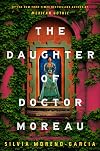
Since a book titled The Daughter of Dr. Moreau is nominated for a Hugo this year, I figured I had better take a look at the H. G. Wells original. The plot is rudimentary: Edward Prendick is rescued from a lifeboat in the Pacific only to be dumped on an island run by a mad scientist using vivisection and resection to uplift animals to sapience. The results are, to say the least, equivocal. Vivisection was a hot-button issue in the scientific community at the time, as was a debate between evolutionists and devolutionists. Clearly, Wells is updating the science of Mary Shelley’s Frankenstein and the psychology of the Marquis de Sade. The novel’s literary roots also extend back to Swift’s Gulliver’s Travels. Moreau wants to create a show more race of Houyhnhnms but only manages rule-driven Yahoos. Like Gulliver, Prendick is no longer at ease in England. He retreats into the hard sciences of chemistry and astronomy, avoiding the ethical dilemmas inherent in biology. show less
Members
- Recently Added By
Lists

The Guardian's 1000 Novels Everyone Must Read
1,005 works; 550 members

1001 Books You Must Read Before You Die
1,448 works; 1,133 members

Best Science Fiction Novels
816 works; 430 members
Survey of Classic Science Fiction
171 works; 48 members

Best Horror Books
281 works; 85 members
501 Must-Read Books
529 works; 72 members

Best Gothic Fiction
110 works; 31 members

Survey of Classic Fantastic Fiction
36 works; 9 members
Best of British Literature
226 works; 41 members

S.F. Masterworks (Complete)
229 works; 15 members

Weird and Weirder Fiction
270 works; 35 members

Best medical fiction
26 works; 17 members

Survey of Science Fiction and Fantasy
101 works; 13 members

SF Masterworks
193 works; 8 members

Jones and Newman's Horror: The 100 Best Books
100 works; 4 members

To Read - Horror
137 works; 14 members

Short and Sweet
245 works; 23 members

Readers Guide to Steampunk
65 works; 1 member

Best Horror Mega-List
342 works; 6 members

Speculative Fiction to Read
706 works; 32 members

Speculative Fiction: The Classics
36 works; 5 members

Books Read in 2014
2,343 works; 89 members

1890s
49 works; 6 members
Horror Then & Now
44 works; 4 members
Kate & Cheyanne's Horror Extravaganza
144 works; 6 members

Overdue Podcast
805 works; 9 members

Books Read in 2023
5,547 works; 145 members

Evan's Reading List 2022
18 works; 1 member

Books Set on Islands
190 works; 24 members

Favorite Animal Fiction
359 works; 156 members

19th Century
190 works; 16 members

Books Read in 2020
4,379 works; 123 members

1,001 BYMRBYD Concensus
723 works; 27 members

Adult Stories Involving Animals
76 works; 6 members

Favourite 19th century fiction
257 works; 62 members

Books Read in 2018
4,360 works; 110 members
Daria Morgendorffer's Bookshelf
70 works; 5 members

BingoDOG 2015 Challenge
49 works; 3 members

Best Books About Animals
143 works; 48 members

A Novel Cure
742 works; 23 members

Robinsonade Novels
55 works; 4 members

CCE 1000 Good Books List
1,033 works; 12 members

Most Disturbing Books
124 works; 27 members
The League of Extraordinary Gentlemen
87 works; 4 members
Works Referenced in The League of Extraordinary Gentlemen
122 works; 6 members

BingoDOG - Scientists in Fiction
111 works; 17 members

Unread books
1,063 works; 87 members

Books Read in 2015
3,299 works; 126 members
BingoDOG - Animals in Adult Fiction
78 works; 20 members

Books I Own But Haven't Read
144 works; 2 members
Books in Riverdale
123 works; 3 members
Talk Discussions
Past Discussions
Reading Group #30 (The Island of Dr. Moreau) in Gothic Literature (March 2021)
***Group Read: The Island of Dr. Moreau in 1001 Books to read before you die (October 2010)
Author Information

H. G. Wells was born in Bromley, England on September 21, 1866. After a limited education, he was apprenticed to a draper, but soon found he wanted something more out of life. He read widely and got a position as a student assistant in a secondary school, eventually winning a scholarship to the Royal College of Science in South Kensington, where show more he studied biology. He graduated from London University in 1888 and became a science teacher. He also wrote for magazines. When his stories began to sell, he left teaching to write full time. He became an author best known for science fiction novels and comic novels. His science fiction novels include The Time Machine, The War of the Worlds, The Wonderful Visit, The Island of Doctor Moreau, The Invisible Man, The First Men in the Moon, and The Food of the Gods. His comic novels include Love and Mr. Lewisham, Kipps: The Story of a Simple Soul, The History of Mr. Polly, and Tono-Bungay. He also wrote several short story collections including The Stolen Bacillus, The Plattner Story, and Tales of Space and Time. He died on August 13, 1946 at the age of 79. (Bowker Author Biography) show less
Some Editions
Awards and Honors
Notable Lists
Series
Belongs to Publisher Series
Penguin Audiobooks (PEN 177)
Club Joven Bruguera (97)
Tus libros (98)
Penguin English Library, 2012 series (2012-10)
SF Masterworks (New design)
Airmont Classics (110)
Bruna Science Fiction (109)
Libro amigo [Bruguera] (672)
Penguin Modern Classics (571)
Gallimard, Folio (2917)
Work Relationships
Is contained in
Seven Famous Novels of H. G. Wells: Time Machine / Island of Dr. Moreau / Invisible Man / War of the Worlds / First Men in the Moon / Food of the Gods / In the Days of the Comet by H. G. Wells
The Time Machine / The Island of Doctor Moreau / The Invisible Man / The War of the Worlds / The First Men in the Moon by H. G. Wells
The Time Machine / The Invisible Man / The Island of Doctor Moreau / The War of the Worlds by H. G. Wells
The Time Machine / The Island of Dr. Moreau / The Invisible Man / The War of the Worlds / The First Men in the Moon / The Food of the Gods by H. G. Wells
H.G. Wells - Gesammelte Werke (Die Zeitmaschine - Die Insel des Dr. Moreau - Der Krieg der Welten - Befreite Welt): Iris-Leinen mit Goldprägung by H. G. Wells
The Ultimate Science Fiction Mega Collection: 24 of the Best Sci-Fi Books of All Time: A Journey to the Center of the Earth, 20,000 Leagues Under the Sea, Around the World in 80 Days, John Carter of Mars Trilogy, The War of the Worlds, The Time Machine, Frankenstein, Dr. Jekyll and Mr. Hyde, 3 Ray Bradbury Stories, Flatland, & More by Jules Verne
Has the (non-series) sequel
Has the adaptation
Inspired
Has as a student's study guide
Common Knowledge
- Canonical title
- The Island of Doctor Moreau
- Original title
- The Island of Dr. Moreau
- Original publication date
- 1896
- People/Characters
- Dr. Moreau; Edward Pendrick; Montgomery; M'ling; Sayer of the Law; Leopard Man (show all 9); Ape Man; Charles Edward Pendrick; Captain Davis
- Important places
- The Island of Dr. Moreau; Pacific Ocean
- Related movies
- The Island of Dr. Moreau (1996 | IMDb); The Island of Dr. Moreau (1977 | IMDb); Island of Lost Souls (1932 | IMDb); Die Insel der Verschollenen (1921 | IMDb); Terror Is a Man (1959 | IMDb); The Island of Doctor Agor (1971 | IMDb) (show all 7); The Twilight People (1973 | IMDb)
- First words
- "I do not propose to add anything to what has already been written concerning the loss of the Lady Vain."
- Quotations
- I could not persuade myself that the men and women I met were not also another, still passably human, Beast people, animals half-wrought into the outward image of human souls; and that they would presently begin to revert, to... (show all) show first this bestial mark and then that.
There is—though I do not know how there is or why there is—a sense of infinite peace and protection in the glittering hosts of heaven. There it must be, I think, in the vast and eternal laws of matter, and not in the dail... (show all)y cares and sins and troubles of men, that whatever is more than animal within us must find its solace and its hope.
"To this day I have never troubled about the ethics of the matter. The study of Nature makes a man at last as remorseless as Nature." - Last words
- (Click to show. Warning: May contain spoilers.)And so, in hope and solitude, my story ends.
- Blurbers
- Atwood, Margaret
- Original language
- English
- Canonical DDC/MDS
- 823.08762; 823.087384
Classifications
- Genres
- Science Fiction, Fiction and Literature, Horror
- DDC/MDS
- 823.08762 — Literature & rhetoric English & Old English literatures English fiction By type Genre fiction Adventure fiction Speculative fiction Science fiction
- LCC
- PR5774 .I8 — Language and Literature English English Literature 19th century , 1770/1800-1890/1900
- BISAC
Statistics
- Members
- 8,395
- Popularity
- 1,315
- Reviews
- 187
- Rating
- (3.64)
- Languages
- 21 — Amharic, Catalan, Czech, Danish, Dutch, English, Finnish, French, German, Galician, Hungarian, Italian, Korean, Malayalam, Polish, Romanian, Russian, Spanish, Swedish, Turkish, Portuguese (Portugal)
- Media
- Paper, Audiobook, Ebook
- ISBNs
- 511
- UPCs
- 1
- ASINs
- 181