On This Page
Description
After the "war with no name" a cat assassin searches for his lost love in Repino's strange, moving sci-fi epic that channels both Homeward Bound and A Canticle for Lebowitz. The "war with no name" has begun, with human extinction as its goal. The instigator of this war is the Colony, a race of intelligent ants who, for thousands of years, have been silently building an army that would forever eradicate the destructive, oppressive humans. Under the Colony's watchful eye, this utopia will be show more free of the humans' penchant for violence, exploitation and religious superstition. As a final step in the war effort, the Colony uses its strange technology to transform the surface animals into high-functioning two-legged beings who rise up to kill their masters. Former housecat turned war hero, Mort(e) is famous for taking on the most dangerous missions and fighting the dreaded human bio-weapon EMSAH. But the true motivation behind his recklessness is his ongoing search for a pre-transformation friend-a dog named Sheba. When he receives a mysterious message from the dwindling human resistance claiming Sheba is alive, he begins a journey that will take him from the remaining human strongholds to the heart of the Colony, where he will discover the source of EMSAH and the ultimate fate of all of earth's creatures. show lessTags
Recommendations
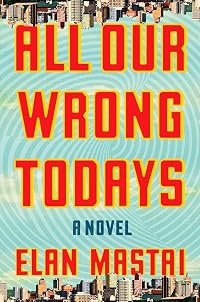
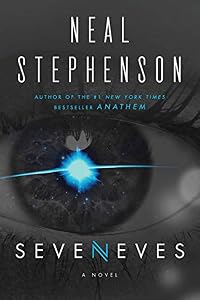
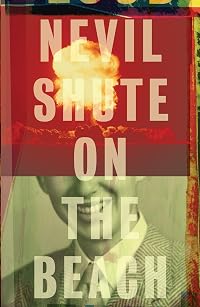
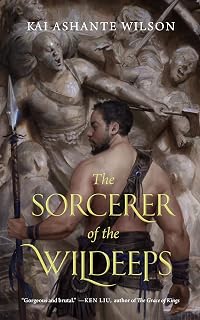


Member Recommendations
Firmin by Sam Savage
by ShelfMonkey

Bête by Adam Roberts
by ShelfMonkey
themulhern Global war of conquest.
Member Reviews
I will keep this review short, for two reasons. First, having read Mort(e), I have earned the right to minimize further time spent on it. Second, having been spared Morte(e), you deserve the opportunity to escape unscathed.
Yes, this is that most dreaded of book blog posts: a negative review. Whatever I may have previously said in regards to negative reviews, to whatever conclusions we may have come, you know that I don't engage in negative reviews lightly. I try to look for good qualities even in books I don't much like. It says something about Mort(e) that I feel like no other option is available to me.
The premise, I thought, was promising: animals are engaged in a war against humans. Mort(e) (pet name “Sebastian”) is an animal show more agent, working to undermine human resistance. In my mind's eye, I imagined a feline padding around the house, pulling pranks on its owners. I was...wrong, to put it mildly. The animals, raised to consciousness and bipedal locomotion via a chemical agent produced by the ant queen bent on humanity's destruction, wage a genocidal war against their former human masters. This has all the subtlety of Teenage Mutant Ninja Turtles. The original 1980s cartoon series.
The tone is unceasingly cheerless. Repino trots the reader from one grim scene to another, without respite. Even when the war is “over,” the ugliness continues, as animal communities succumb to a mysterious disease, EMSAH, and human guerillas (ha!) wage a holy war against the victorious animals. Mort(e) is a caricature of a protagonist from a Hollywood thriller, single minded in his pursuit of his lost friend, Sheba. “Just remember,” Mort(e) says, “Maybe these guys are nice, and the ants are mean. But that doesn’t mean their fairy tales are true.”
Repino’s main concern is the irrationality both of religion and of attempts to overthrow it. Humanity, increasingly desperate as it nears extinction, resorts to ever more grandiose expectations of messianic salvation. Nor are the animals free of faith. Infected by a virus unleashed by vengeful humans, animal communities succumb to religious madness, culminating in suicide. But even the ant queen, who seeks to replace humankind, in the process becoming “a god,” is a victim to faith. “Love is stronger than God,” Mort(e) concludes, a sentiment that, here, rings hollow, coming as it does from someone who admittedly took pleasure in killing people.
Ultimately, Mort(e) is an interesting concept that, laden as it is with limp prose, indifferent characters, and unceasing grimness, falls flat. That said, I encourage readers to seek out more reviews before writing Mort(e) off. I, for one, cannot recommend this book. show less
Yes, this is that most dreaded of book blog posts: a negative review. Whatever I may have previously said in regards to negative reviews, to whatever conclusions we may have come, you know that I don't engage in negative reviews lightly. I try to look for good qualities even in books I don't much like. It says something about Mort(e) that I feel like no other option is available to me.
The premise, I thought, was promising: animals are engaged in a war against humans. Mort(e) (pet name “Sebastian”) is an animal show more agent, working to undermine human resistance. In my mind's eye, I imagined a feline padding around the house, pulling pranks on its owners. I was...wrong, to put it mildly. The animals, raised to consciousness and bipedal locomotion via a chemical agent produced by the ant queen bent on humanity's destruction, wage a genocidal war against their former human masters. This has all the subtlety of Teenage Mutant Ninja Turtles. The original 1980s cartoon series.
The tone is unceasingly cheerless. Repino trots the reader from one grim scene to another, without respite. Even when the war is “over,” the ugliness continues, as animal communities succumb to a mysterious disease, EMSAH, and human guerillas (ha!) wage a holy war against the victorious animals. Mort(e) is a caricature of a protagonist from a Hollywood thriller, single minded in his pursuit of his lost friend, Sheba. “Just remember,” Mort(e) says, “Maybe these guys are nice, and the ants are mean. But that doesn’t mean their fairy tales are true.”
Repino’s main concern is the irrationality both of religion and of attempts to overthrow it. Humanity, increasingly desperate as it nears extinction, resorts to ever more grandiose expectations of messianic salvation. Nor are the animals free of faith. Infected by a virus unleashed by vengeful humans, animal communities succumb to religious madness, culminating in suicide. But even the ant queen, who seeks to replace humankind, in the process becoming “a god,” is a victim to faith. “Love is stronger than God,” Mort(e) concludes, a sentiment that, here, rings hollow, coming as it does from someone who admittedly took pleasure in killing people.
Ultimately, Mort(e) is an interesting concept that, laden as it is with limp prose, indifferent characters, and unceasing grimness, falls flat. That said, I encourage readers to seek out more reviews before writing Mort(e) off. I, for one, cannot recommend this book. show less
I confess a weird place in my heart for unabashedly adult tales of anthopomorphic happenings, so perhaps I’m predisposed to unconditionally adore Mort(e)‘s tale of giant ants wiping out humanity with the help of gun-toting, hyper-intelligent animals. Luckily for me, Repino is a fabulous storyteller in full William Kotzwinkle mode, and his story within the war — that of the warrior cat Mort(e) (formerly Sebastian) seeking to reunite with the golden retriever who was his only friend (pre-evolution) — is by turns touching, funny, sad, and relatable. It’s a brilliant concept, brilliantly told.
Read more at the Redeblog.
Read more at the Redeblog.
Mort(e) was just a housecat named Sebastian before the change. A cat who spent his day protecting the family that rescued him, and observing the "outside world" through the various windows in the house. Then one day he realized he could understand speech, and read words. He didn't know this was all planned by the ants, lead by an intelligent and vindictive queen hell-bent on destroying humanity for being "lesser beings." She releases a chemical worldwide that gives animals human-like minds and bodies, while breeding enormous soldier ants, and uses them both to systematically eradicate the human race.
Mort(e) will become a war hero for the animal kingdom, but wonders what it is they have really inherited. Are they really any better than show more their human predecessors? That is the question that haunts Mort(e), and it is also the common theme throughout the book - what it means to be human, and embracing it for what it is. All the wonderful things about it, and all of the ugly faults, what this book offers is a glimpse into something that is anti-human in both better and worse ways, and whether that alternative is any improvement over what we experience in the real world today.
I loved pretty much everything about this book, except the fanatical religious aspect towards the end. I understand the point, again, it's about analyzing aspects of humanity and then displaying the opposite behavior in the ant society, but though I understand it from a literary standpoint, it felt too extreme and one-dimensional, so it was a bit of a put-off towards the end of the book.
Overall, though, it's a great novel. I'm sure it's a tough sell for a lot of people, an apocalyptic/dystopian novel about giant ant invaders and talking animals isn't likely to be taken seriously by a lot of people, but I found it to be a rewarding read in the end. show less
Mort(e) will become a war hero for the animal kingdom, but wonders what it is they have really inherited. Are they really any better than show more their human predecessors? That is the question that haunts Mort(e), and it is also the common theme throughout the book - what it means to be human, and embracing it for what it is. All the wonderful things about it, and all of the ugly faults, what this book offers is a glimpse into something that is anti-human in both better and worse ways, and whether that alternative is any improvement over what we experience in the real world today.
I loved pretty much everything about this book, except the fanatical religious aspect towards the end. I understand the point, again, it's about analyzing aspects of humanity and then displaying the opposite behavior in the ant society, but though I understand it from a literary standpoint, it felt too extreme and one-dimensional, so it was a bit of a put-off towards the end of the book.
Overall, though, it's a great novel. I'm sure it's a tough sell for a lot of people, an apocalyptic/dystopian novel about giant ant invaders and talking animals isn't likely to be taken seriously by a lot of people, but I found it to be a rewarding read in the end. show less
I really liked this book. I was engaged the whole way through. While I agree with some of the other reviewers that some of the characters, Mort(e) especially, lacked development, I also found that he was easiest for me to identify with. Even if it didn't seem like there was enough there to justify Mort(e) searching for Sheba so single-mindedly, it still made sense to me; I can imagine that being thrust suddenly into sentience and understanding of one's slavery, I'd want to search for that one comforting piece of home. Not to mention that while I understand the bloodthirsty uprising of the animals, having been made to realize their plight, I'm not a fighter. Mort(e), despite his skill at it, just wants a normal life, whatever that is in show more this new world of upright, sentient animals.
This book brought up something I love to think about even if it wasn't really explored here - how justified would the bloodbath be if animals gained sentience suddenly? The characters in this book referred to their previous slavery multiple times, but I'm sure many of us don't believe we are keeping our pets enslaved. There's at least one reviewer on this site even who said they reassured their pets that they're loved members of the family! But look at the way we treat wild animals and especially livestock: no one can argue there's not cruelty there. Even with the pets we treat with love and provide every comfort to, if you replaced them with humans, slavery is the exact word. But many would argue that since our pets are not sentient, we are justified in keeping them neutered and de-clawed. It's for their own good, I guess. Pets evolved side-by-side with us so really, they're exactly suited to the lives they live in our homes. I'm not trying to argue for or against that; it's actually more interesting to assume that we are morally justified in the way we treat our pets (barring abuse, of course). So then say they gain sentience for some reason or another. We are now morally obligated to treat them like people, let them make their own decisions, not keep them in our houses against their wills, etc. I could understand their pain and anger at realizing they've been kept prisoner, been physically mutilated to serve our purpose and not theirs. Can we be blamed for doing something that was reasonable at the time? Are we responsible for the pain and suffering caused for a creature who now understands what it means to be a parent and to want children, but is unable to? Can we mitigate the anger by immediately apologizing and creating social structures to support their new-found sentience and prevent further abuse? Would they understand the way we treated them before sentience and forgive us? I actually think this is more compelling when thinking about AI, because there are very good arguments that the way we treat animals, even pets, is unjustified. It would be much easier for us to create AI that mimics the state of being alive while knowing that it is not "truly" alive. But say your AI gains enough complexity for emergent sentience? At what point do you even realize that your AI is truly sentient instead of just mimicking? What does that even mean? Is Data a person??
ANYWAY. They don't even talk about this stuff in the book. So 3 stars for the book by itself, and an extra star for all that stuff it made me think about. show less
This book brought up something I love to think about even if it wasn't really explored here - how justified would the bloodbath be if animals gained sentience suddenly? The characters in this book referred to their previous slavery multiple times, but I'm sure many of us don't believe we are keeping our pets enslaved. There's at least one reviewer on this site even who said they reassured their pets that they're loved members of the family! But look at the way we treat wild animals and especially livestock: no one can argue there's not cruelty there. Even with the pets we treat with love and provide every comfort to, if you replaced them with humans, slavery is the exact word. But many would argue that since our pets are not sentient, we are justified in keeping them neutered and de-clawed. It's for their own good, I guess. Pets evolved side-by-side with us so really, they're exactly suited to the lives they live in our homes. I'm not trying to argue for or against that; it's actually more interesting to assume that we are morally justified in the way we treat our pets (barring abuse, of course). So then say they gain sentience for some reason or another. We are now morally obligated to treat them like people, let them make their own decisions, not keep them in our houses against their wills, etc. I could understand their pain and anger at realizing they've been kept prisoner, been physically mutilated to serve our purpose and not theirs. Can we be blamed for doing something that was reasonable at the time? Are we responsible for the pain and suffering caused for a creature who now understands what it means to be a parent and to want children, but is unable to? Can we mitigate the anger by immediately apologizing and creating social structures to support their new-found sentience and prevent further abuse? Would they understand the way we treated them before sentience and forgive us? I actually think this is more compelling when thinking about AI, because there are very good arguments that the way we treat animals, even pets, is unjustified. It would be much easier for us to create AI that mimics the state of being alive while knowing that it is not "truly" alive. But say your AI gains enough complexity for emergent sentience? At what point do you even realize that your AI is truly sentient instead of just mimicking? What does that even mean? Is Data a person??
ANYWAY. They don't even talk about this stuff in the book. So 3 stars for the book by itself, and an extra star for all that stuff it made me think about. show less
I am going to give this book a somewhat unfair review. Unfair because the author danced so close to a line that he dared not cross because doing so would've cost him readers (perhaps many) and possibly getting published, at least by a larger publisher. This book deserves more than a three, but not a four.
Before I get into my philosophical dispute about Mort(e), since I listened to an audio version of the book, I'll say a bit about it. The narrator was Bronson Pinchot, who has quite a few audiobooks under his belt, and justly so. He does a stellar job here. He calibrated the pitch and cadence of his voice exactly as it needed to be for the given situation. His voices of the various characters shone too: consistent, appropriate, show more believable.
I was finishing [b:The Conspiracy Against the Human Race|8524528|The Conspiracy Against the Human Race|Thomas Ligotti|https://i.gr-assets.com/images/S/compressed.photo.goodreads.com/books/1400962805l/8524528._SX50_.jpg|2696709] by [a:Thomas Ligotti|128466|Thomas Ligotti|https://images.gr-assets.com/authors/1371462738p2/128466.jpg] as I started Mort(e). Ligotti is best known as a writer of horror short-stories -- not in the blood and gore sense, but in the existential, atmospheric sense. In Ligotti's stories, the world horrifies and terrifies the characters more than anything else. The actions of the antagonists serve to make the characters aware of how little the universe cares about them, how easily anything can shatter their perceived safety, and how few heartbeats stand between anyone and death.
Ligotti's writing comes by these characteristics honestly. He is a philosophical pessimist, and Conspiracy is his nonfiction book about said philosophy and the literature and religions related to it. From what I've said so far, you can probably guess a couple of the horror authors he discusses -- Lovecraft and Poe -- and that Buddhism gets some coverage as well as Schopenhauer. The primary basis for this book is the work of a Norwegian philosopher, [a:Peter Zapffe|8111058|Peter Zapffe|https://s.gr-assets.com/assets/nophoto/user/u_50x66-632230dc9882b4352d753eedf9396530.png]. Most of his work has not been untranslated (and given how depressing it is, one should not be surprised by this), but an essay in which he sums up his views is available in English: "[b:The Last Messiah|22060860|The Last Messiah (Nihilistic Buddhism, Antinatalism, Pessimism)|Peter Wessel Zapffe|https://i.gr-assets.com/images/S/compressed.photo.goodreads.com/books/1399679765l/22060860._SX50_.jpg|41390521]."
Zapffe was one of the harder core pessimists, residing in a camp holding that humans possess an excess of consciousness, for it is this and the awareness it grants that allows us to be horrified. Furthermore, because of this, it is unethical to make more humans. This is necessarily a simplification, and as there is no single, core strain of philosophical pessimism, not all its exponents hold these views. Read Conspiracy and "Messiah" if you want to learn more.
So, back to Mort(e), and skipping a description because you've read the synopsis, and this is already getting long. For the first third and change of this book, I felt as if Mort(e) the character was walking a rather dark, Zapffian path. As he was developing human-level consciousness and then fighting in the war against the humans, and seeing the animals doing terrible things to the humans as well as other animals, he would argue, mostly with his commanding officer, that it was all pointless, that it would end up being just under the control of the Colony as it was under humans. I kept waiting for him to say, or admit to himself, that consciousness was not all it was cracked up to be, that it was the root of the problem.
To a small extent, the book takes this tack, but only to the extent that the animals' intelligence and awareness, run afoul of the plans of the Colony's Queen. (I'm trying to avoid spoilers here, so if you've read this already, forgive the inaccuracies born of vagueness.) Consciousness is a problem for the Queen, not in and of itself.
Most disappointingly, despite being the most aware observer of the horror unleashed on and within the animals (to say nothing of on the world) by elevating them to the level of human consciousness, Mort(e) chooses to uplift (awaken? consciousify?) Sheba, his dear friend from before the war.
Don't get me wrong, it's understandable. Hell, I probably would've done the same thing in his shoes. But it made the story less satisfying in my opinion -- at least steeped as in dark philosophies as my mind is at the moment. But, even absent that mental tea, I think I would've enjoyed it being left unanswered at least. It would give the reader something interesting to chew on. And to be fair, it would have pissed off a lot of readers too, though perhaps fewer in this post-modern age than it would have in earlier times.
I also wonder what Mort(e) would've done if he'd had the option to go back to being a normal cat? It was a far simpler time, lacking awareness of his mortality, living in a safe environment, and able to enjoy simple pleasures like curling up with Sheba in a way he could now only experience in memories.
As I said at the top, this knock is somewhat unfair. Most people don't want to hear that consciousness might be a mistake. Ligotti points this out many times in Conspiracy, and that the question is unanswerable except on a personal level. His sympathies lie on one side of it, of course, but he's wise enough to understand why the people in his camp don't get invited to a lot of parties as well as not to blame those not sending the invites. He wrote Conspiracy as a sort of plea -- a plea that the proposition get a little more airtime, that more people at least consider it even if they don't agree.
And that's where I come down on Mort(e): by delving a bit more into the philosophical realm he was already exploring, Repino would have written much more interesting, discussion-engendering book. Not all books need to be or should be this, but he toed that line so closely (and probably unwittingly, though perhaps he has read Ligotti and Zapffe), that it frustrated me.
show less
Before I get into my philosophical dispute about Mort(e), since I listened to an audio version of the book, I'll say a bit about it. The narrator was Bronson Pinchot, who has quite a few audiobooks under his belt, and justly so. He does a stellar job here. He calibrated the pitch and cadence of his voice exactly as it needed to be for the given situation. His voices of the various characters shone too: consistent, appropriate, show more believable.
I was finishing [b:The Conspiracy Against the Human Race|8524528|The Conspiracy Against the Human Race|Thomas Ligotti|https://i.gr-assets.com/images/S/compressed.photo.goodreads.com/books/1400962805l/8524528._SX50_.jpg|2696709] by [a:Thomas Ligotti|128466|Thomas Ligotti|https://images.gr-assets.com/authors/1371462738p2/128466.jpg] as I started Mort(e). Ligotti is best known as a writer of horror short-stories -- not in the blood and gore sense, but in the existential, atmospheric sense. In Ligotti's stories, the world horrifies and terrifies the characters more than anything else. The actions of the antagonists serve to make the characters aware of how little the universe cares about them, how easily anything can shatter their perceived safety, and how few heartbeats stand between anyone and death.
Ligotti's writing comes by these characteristics honestly. He is a philosophical pessimist, and Conspiracy is his nonfiction book about said philosophy and the literature and religions related to it. From what I've said so far, you can probably guess a couple of the horror authors he discusses -- Lovecraft and Poe -- and that Buddhism gets some coverage as well as Schopenhauer. The primary basis for this book is the work of a Norwegian philosopher, [a:Peter Zapffe|8111058|Peter Zapffe|https://s.gr-assets.com/assets/nophoto/user/u_50x66-632230dc9882b4352d753eedf9396530.png]. Most of his work has not been untranslated (and given how depressing it is, one should not be surprised by this), but an essay in which he sums up his views is available in English: "[b:The Last Messiah|22060860|The Last Messiah (Nihilistic Buddhism, Antinatalism, Pessimism)|Peter Wessel Zapffe|https://i.gr-assets.com/images/S/compressed.photo.goodreads.com/books/1399679765l/22060860._SX50_.jpg|41390521]."
Zapffe was one of the harder core pessimists, residing in a camp holding that humans possess an excess of consciousness, for it is this and the awareness it grants that allows us to be horrified. Furthermore, because of this, it is unethical to make more humans. This is necessarily a simplification, and as there is no single, core strain of philosophical pessimism, not all its exponents hold these views. Read Conspiracy and "Messiah" if you want to learn more.
So, back to Mort(e), and skipping a description because you've read the synopsis, and this is already getting long. For the first third and change of this book, I felt as if Mort(e) the character was walking a rather dark, Zapffian path. As he was developing human-level consciousness and then fighting in the war against the humans, and seeing the animals doing terrible things to the humans as well as other animals, he would argue, mostly with his commanding officer, that it was all pointless, that it would end up being just under the control of the Colony as it was under humans. I kept waiting for him to say, or admit to himself, that consciousness was not all it was cracked up to be, that it was the root of the problem.
To a small extent, the book takes this tack, but only to the extent that the animals' intelligence and awareness, run afoul of the plans of the Colony's Queen. (I'm trying to avoid spoilers here, so if you've read this already, forgive the inaccuracies born of vagueness.) Consciousness is a problem for the Queen, not in and of itself.
Most disappointingly, despite being the most aware observer of the horror unleashed on and within the animals (to say nothing of on the world) by elevating them to the level of human consciousness, Mort(e) chooses to uplift (awaken? consciousify?) Sheba, his dear friend from before the war.
Don't get me wrong, it's understandable. Hell, I probably would've done the same thing in his shoes. But it made the story less satisfying in my opinion -- at least steeped as in dark philosophies as my mind is at the moment. But, even absent that mental tea, I think I would've enjoyed it being left unanswered at least. It would give the reader something interesting to chew on. And to be fair, it would have pissed off a lot of readers too, though perhaps fewer in this post-modern age than it would have in earlier times.
I also wonder what Mort(e) would've done if he'd had the option to go back to being a normal cat? It was a far simpler time, lacking awareness of his mortality, living in a safe environment, and able to enjoy simple pleasures like curling up with Sheba in a way he could now only experience in memories.
As I said at the top, this knock is somewhat unfair. Most people don't want to hear that consciousness might be a mistake. Ligotti points this out many times in Conspiracy, and that the question is unanswerable except on a personal level. His sympathies lie on one side of it, of course, but he's wise enough to understand why the people in his camp don't get invited to a lot of parties as well as not to blame those not sending the invites. He wrote Conspiracy as a sort of plea -- a plea that the proposition get a little more airtime, that more people at least consider it even if they don't agree.
And that's where I come down on Mort(e): by delving a bit more into the philosophical realm he was already exploring, Repino would have written much more interesting, discussion-engendering book. Not all books need to be or should be this, but he toed that line so closely (and probably unwittingly, though perhaps he has read Ligotti and Zapffe), that it frustrated me.
show less
At turns touching, whimsical, original, thoughtful, hilarious. Best of all the book was wonderfully entertaining. For most of the novel you are in the mind of a neutered house cat...but you also take a turn in the minds of a former attack dog, a pig, a bobcat, and the ancient queen of an all-powerful ant colony. The story of how these creatures evolve and find meaning and develop into moral creatures makes this book much more than a romping page turner, although it's that, too.
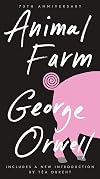
Repino manages to pay homage to the history of sentient-animal stories in the loveliest and most subtle ways, as well--for example the pig chooses the name Bonaparte "because there are too many Napoleons," a nod to Animal Farm. I both enjoyed the story for its show more own sake, and also felt a very thoughtful authorial presence, a thematic resonance, in how Repino chose to shape the story. I'm a fan. show less
Repino manages to pay homage to the history of sentient-animal stories in the loveliest and most subtle ways, as well--for example the pig chooses the name Bonaparte "because there are too many Napoleons," a nod to Animal Farm. I both enjoyed the story for its show more own sake, and also felt a very thoughtful authorial presence, a thematic resonance, in how Repino chose to shape the story. I'm a fan. show less
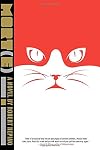
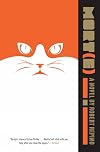
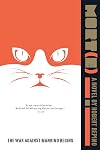
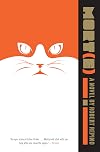
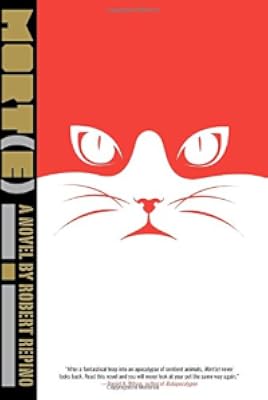
I stumbled onto Mort(e) at my local library, attracted by the striking cover portrait of Mort(e). Animals are transformed into speaking creatures with opposable thumbs, and a war with humans results (The War with No Name). Both humans and animals are portrayed in a very realistic manner. Repino understands cats and soldiers, despite, apparently, being neither.
I usually prefer hard science fiction, where the science and tech are made believable. Repino doesn’t bother much with that part of the story, but his storytelling and characters made this a memorable read.
Sebastian is a neutered and declawed housecat when the Change occurs. Despite his disabilities, his exploits lead to him becoming known as Sebastian the Warrior. He becomes a show more special ops trooper with the Red Sphinx, an all feline unit. This is a perfect touch. If I were recruiting intelligent animal commandos, I know two feral cat colonies where I would start. Sebastian adopts the nom de guerre Mort(e), illustrating both his sardonic sense of humor and erudition, and Repino’s playful use of French.
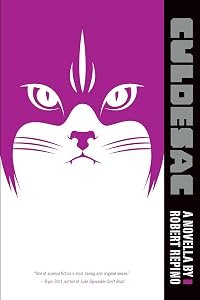
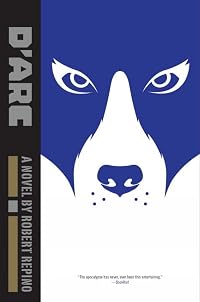
Mort(e) is the best feline character in fiction. Mort(e)’s story continues in D’Arc , and they should be read in order. Culdesac is a novella that should be read after Mort(e), but not necessarily before D’Arc.
Culdesac is the bobcat who commands Red Sphinx. Mort(e) is only a minor character in this work, but Nox is the second best feline character in fiction. Don’t miss her. show less
I usually prefer hard science fiction, where the science and tech are made believable. Repino doesn’t bother much with that part of the story, but his storytelling and characters made this a memorable read.
Sebastian is a neutered and declawed housecat when the Change occurs. Despite his disabilities, his exploits lead to him becoming known as Sebastian the Warrior. He becomes a show more special ops trooper with the Red Sphinx, an all feline unit. This is a perfect touch. If I were recruiting intelligent animal commandos, I know two feral cat colonies where I would start. Sebastian adopts the nom de guerre Mort(e), illustrating both his sardonic sense of humor and erudition, and Repino’s playful use of French.
Mort(e) is the best feline character in fiction. Mort(e)’s story continues in D’Arc , and they should be read in order. Culdesac is a novella that should be read after Mort(e), but not necessarily before D’Arc.
Culdesac is the bobcat who commands Red Sphinx. Mort(e) is only a minor character in this work, but Nox is the second best feline character in fiction. Don’t miss her. show less
Members
- Recently Added By
Lists

Top Five Books of 2015
811 works; 241 members

Read-alike - Hollow Kingdom by Kira Buxton
16 works; 1 member

io9 Book Club
70 works; 4 members

Books Read in 2015
3,299 works; 126 members

Unshelved Book Clubs
579 works; 5 members

Books Read in 2017
4,249 works; 130 members

Cats in Fiction
209 works; 9 members

Adult Stories Involving Animals
76 works; 6 members

Favorite Science Fiction
456 works; 218 members
Author Information
8 Works 881 Members
Some Editions
Awards and Honors
Series

Common Knowledge
- Canonical title
- Mort(e) (e)
- Original publication date
- 2015
- People/Characters
- Mort(e) / Sebastian (e); Culdesac; Wawa; the Queen; Sheba; Bonaparte
- Epigraph
- Then the LORD opened the mouth of the donkey, and it said to Balaam, "What have I done to you, that you have struck me these three times?" Balaam said to the donkey, "Because you have made a fool of me! I wish I had a sword i... (show all)n my hand! I would kill you irhgt now!" But the donkey said to Balaam, "Am I not your donkey, which you have ridden all your life to this day? Have I been in the habit of treating you this way?" And he said, "No." Then the LORD opened the eyes of Balaam, and he saw the angel of the LORD standing in the road, with his drawn sword in his hand; and he bowed down, falling on his face ...
--Numbers 22:28-31
God is love, they once said, but we reversed that . . .
--Margaret Atwood, The Handmaid's Tale - Dedication
- For my family,
and my families - Publisher's editor
- Mark Doten
- Blurbers
- Wilson, Daniel H.; Prcic, Ismet; Jones, Shane; Rambo, Cat; Gallaway, Matthew; Scott, James
Classifications
Statistics
- Members
- 633
- Popularity
- 45,887
- Reviews
- 32
- Rating
- (3.56)
- Languages
- English, German, Turkish
- Media
- Paper, Audiobook, Ebook
- ISBNs
- 13
- ASINs
- 5